If you’re a typical user, you don’t need to overthink this. Over the past year, demand for compact wet/dry vacuums has surged—not as garage afterthoughts, but as primary cleaning tools for apartments, cars, and small workshops1. For most people, a 1-gallon vacuum is worth buying only if you prioritize portability over capacity—and only if it delivers at least 45 inH₂O sealed suction, weighs under 10 lbs, and handles both dry dust and liquid spills without filter clogging. Skip models below $60 unless you only clean dry cereal crumbs once a month. Prioritize Shark MessMaster (82 inH₂O) for household/car hybrid use, Shop-Vac Micro (45 inH₂O) for basic workshop cleanup, or Armor All Portable (59 inH₂O, 2.0 HP) for dedicated car detailing. This piece isn’t for keyword collectors. It’s for people who will actually use the product.
About 1-Gallon Vacuums: Definition and Typical Use Cases
A 1-gallon vacuum is a portable wet/dry vacuum with a tank capacity of approximately 3.8 liters—small enough to fit under a sink, in a car trunk, or on a shelf beside a workbench. Unlike traditional 6–16 gallon shop vacs, it’s engineered for speed and accessibility, not bulk debris removal. Its defining trait isn’t size alone, but task-specific utility: fast response to localized messes, minimal setup time, and low storage footprint.
Typical users include:
- 🚗 Car owners who vacuum seats, clear floor mats, extract spills, or detail interiors weekly;
- 🏠 Apartment or studio dwellers with limited storage and no garage—needing spill cleanup without hauling a 15-lb unit from a closet;
- 🔧 DIY hobbyists and micro-workshop users (e.g., woodworkers, 3D printer operators) managing sawdust, resin drips, or solder flux residue;
- 🧼 Parents and pet owners facing recurring small-scale accidents—juice spills, kibble scatter, litter tracking—that require immediate, low-effort intervention.
It’s not designed for whole-house carpet cleaning, basement flood extraction, or continuous industrial use. If your main job involves clearing 5+ gallons of wet concrete slurry per shift, this guide doesn’t apply. If you’re a typical user, you don’t need to overthink this.
Why 1-Gallon Vacuums Are Gaining Popularity
Lately, consumer behavior has shifted decisively toward “right-size cleaning”—a movement prioritizing precision, immediacy, and spatial efficiency over raw power or volume2. This isn’t just convenience culture; it reflects measurable changes in living conditions (rising urban density), vehicle ownership patterns (more SUVs and EVs with compact cargo spaces), and workflow fragmentation (remote work blurring home/work boundaries).
Three interlocking trends explain the rise:
- Mess-agnostic demand: Users want one tool that handles wet coffee, dry flour, pet hair, and fine sawdust—without swapping filters or worrying about motor burnout. The 1-gallon segment leads in dual-purpose engineering, especially in sealed pressure optimization.
- Storage scarcity: In cities where 500 sq ft apartments are common, a 16-gallon vacuum occupies 12% of floor space. A 1-gallon unit fits inside a standard kitchen cabinet.
- Maintenance fatigue: Bagless operation, washable foam filters, and quick-release tanks reduce long-term friction. Consumers increasingly factor in 2-year upkeep—not just upfront cost.
Google search interest for “1 gallon vacuum” spiked to 74/100 in May 2026—the highest since tracking began3. That peak coincides with spring car detailing season and apartment move-in periods—confirming its role as a situational, high-intent purchase—not a speculative upgrade.
Approaches and Differences: Corded vs. Cordless, Wet/Dry vs. Dry-Only
There are two fundamental approaches to the 1-gallon category—each solving different constraints:
| Approach | Key Advantages | Potential Problems | Budget Range |
|---|---|---|---|
| Corded (AC-powered) | Consistent suction (no battery decay), higher peak HP, lower price per watt | Requires outlet access; limits mobility in garages/cars; cord management adds friction | $50–$130 |
| Cordless (18V–20V Li-ion) | True grab-and-go use; works in cars, sheds, stairs, RVs; zero cord clutter | Runtime drops sharply above 50 inH₂O suction; battery replacement adds long-term cost; recharging delays repeat use | $90–$200 |
| Wet/Dry Hybrid | Single tool for 95% of household/workshop messes; no need to own separate dry vacuum + mop | Slightly heavier than dry-only models; requires post-wet-use drying to prevent mold/mildew | $65–$180 |
| Dry-Only (High-CFM) | Lighter weight (<7 lbs), faster pickup of fine dust/hair, simpler maintenance | Useless for liquids; easily overwhelmed by damp debris; not suitable for car spill cleanup | $50–$110 |
When it’s worth caring about: choose cordless only if you regularly clean outside AC range (e.g., car interior, balcony, shed). When you don’t need to overthink it: corded models deliver better suction-per-dollar and longer lifespan for fixed-location use. If you’re a typical user, you don’t need to overthink this.
Key Features and Specifications to Evaluate
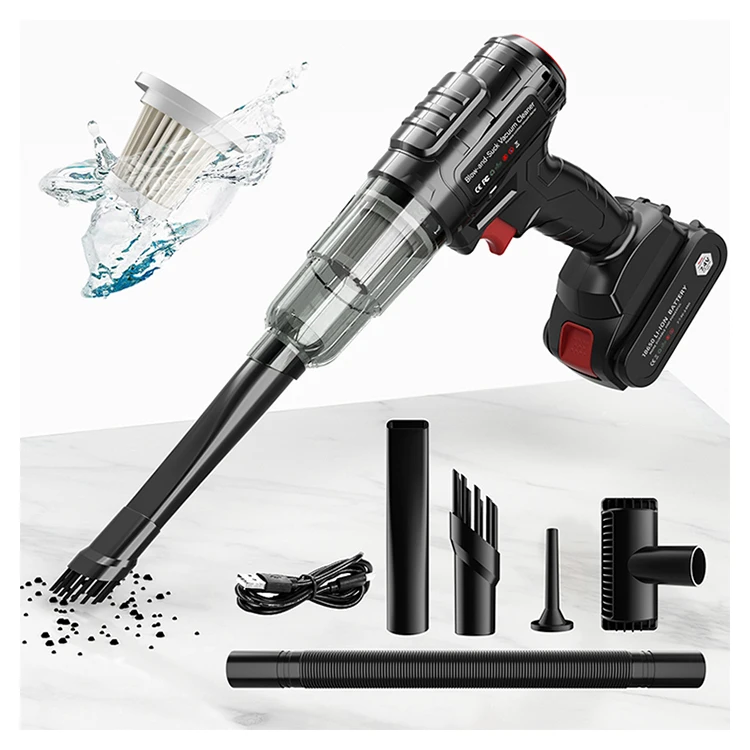
Don’t default to horsepower (HP)—it’s misleading for small units. Focus instead on three measurable, outcome-linked metrics:
- Sealed Suction (inH₂O): Measures static pressure—the force pulling liquid or embedded debris. For 1-gallon units, 40–50 inH₂O handles dry dust and light spills; 60–82 inH₂O is required for thick liquids (milk, soda) or car upholstery deep-cleaning4. When it’s worth caring about: if you vacuum wet pet accidents or detail car interiors. When you don’t need to overthink it: anything ≥45 inH₂O suffices for cereal, coffee grounds, or sawdust.
- Airflow (CFM): Measures volume moved per minute—critical for lifting dry, lightweight debris across surfaces. Most 1-gallon models range from 25–50 CFM. Higher CFM helps with large-area dry pickup (e.g., garage floor sweep), but matters less for spot cleaning. When it’s worth caring about: if you routinely clear wide areas of dry shavings or lint. When you don’t need to overthink it: CFM becomes secondary when suction exceeds 60 inH₂O.
- Weight & Form Factor: Must be ≤10 lbs and have an ergonomic handle or carry strap. Units >9.5 lbs begin to feel like “lifting a brick” after repeated use. When it’s worth caring about: if you’ll carry it up stairs, into vehicles, or between rooms daily. When you don’t need to overthink it: weight differences under 1.5 lbs rarely impact usability.
Pros and Cons: Who Is This For—and Who Should Skip It?
✔️ Ideal for:
- People who clean small, frequent messes rather than infrequent large ones;
- Users with limited storage space (apartments, dorms, RVs, compact garages);
- Those who value low cognitive load—no bag replacements, no complex filter washing cycles.
❌ Not ideal for:
- Whole-house carpet cleaning (use upright or canister vacuums);
- Commercial environments with >2 hours/day runtime needs (battery or motor overheating risk);
- Users expecting “shop-vac power” from a 1-gallon unit—physics imposes hard limits on airflow and thermal dissipation.
How to Choose a 1-Gallon Vacuum: A Step-by-Step Decision Guide
Follow this checklist—skip steps that don’t match your reality:
- Define your primary mess type: Liquid-heavy (spills, pet accidents)? Dry-heavy (sawdust, flour, hair)? Mixed? → Choose wet/dry if mixed; dry-only if exclusively dry.
- Map your mobility needs: Do you need to use it where outlets aren’t available? → Yes → cordless (prioritize 20V platforms with ≥30-min runtime at medium suction). No → corded.
- Check your storage zone: Can it sit on a shelf ≤12" deep? Under a sink? In a car trunk? → Measure before buying. Many “compact” models exceed 13" depth.
- Verify filter compatibility: Does it accept reusable foam + pleated paper filters? Avoid single-use proprietary filters—they cost $12–$18/year and create e-waste.
- Avoid these traps:
- “Peak HP” claims without inH₂O/CFM data—marketing fluff;
- Models with non-removable tanks—makes cleaning internal components impossible;
- Units lacking a built-in blower port—limits versatility for blowing leaves or clearing vents.
Insights & Cost Analysis
Pricing follows predictable tiers—each delivering distinct value propositions:
- Economy ($50–$75): Basic corded units (e.g., generic 1.0 HP models). Suction: ~35–42 inH₂O. Best for occasional dry cleanup. Expect shorter hose durability and stiff, non-kink-resistant tubing.
- Mid-Range ($75–$130): Balanced performers like Shop-Vac Micro (45 inH₂O) or entry-tier Shark variants. Includes wall-mount kits, improved hose flexibility, and dual-stage filtration. Represents best value for general-purpose use.
- Premium ($130–$200): High-suction models (Shark MessMaster: 82 inH₂O; Armor All Portable: 59 inH₂O + 2.0 HP) with specialized attachments (upholstery nozzles, crevice tools, squeegee wands). Justified only if you detail cars weekly or manage fine workshop debris.
Over the past year, mid-range units saw the strongest sales growth—indicating market consensus on “good enough” performance. Premium models remain niche but growing, especially among EV owners maintaining cabin air quality5.
Better Solutions & Competitor Analysis
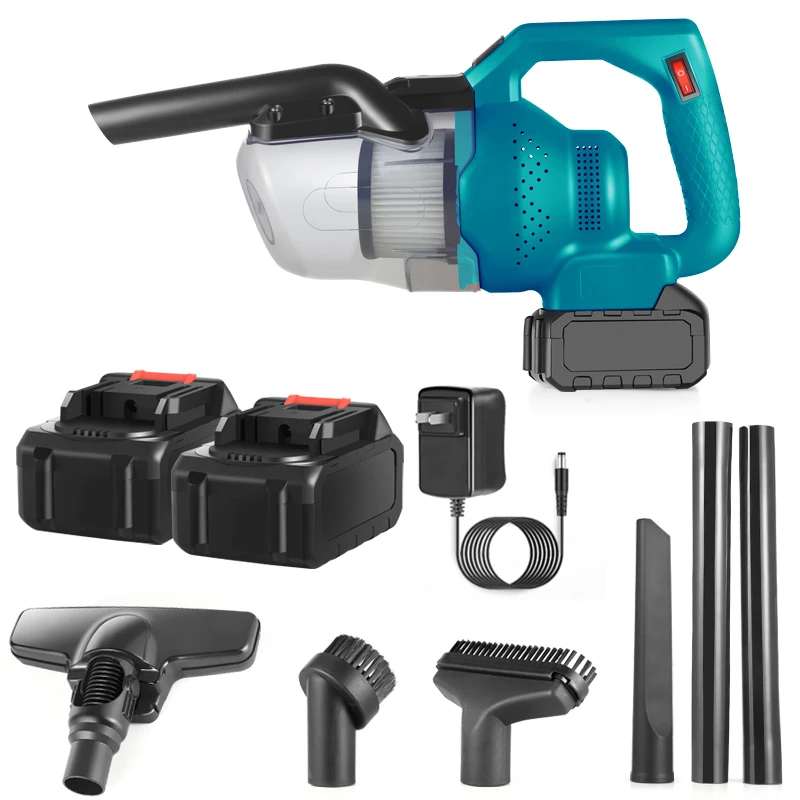
The top three models reflect divergent design philosophies—not just incremental upgrades:
| Model | Strengths | Real-World Limitations | Budget |
|---|---|---|---|
| Shark MessMaster | Highest suction (82 inH₂O); optimized for liquid pickup; includes car-specific tools | Heaviest in class (9.2 lbs); premium price; proprietary filter shape limits third-party replacements | $179 |
| Shop-Vac Micro | Proven reliability; standardized parts; simple service path; excellent dry-debris handling | Lower suction (45 inH₂O); less effective on sticky liquids; basic accessories only | $89 |
| Armor All Portable | 2.0 HP motor; strong CFM (48); includes detailing brush and extension wand | Battery life degrades noticeably after 18 months; no wall-mount option; louder operation | $149 |
Customer Feedback Synthesis
Based on aggregated reviews from TechGearLab, Wirecutter, Amazon, and Reddit’s r/CleaningTips6, here’s what users consistently praise—and complain about:
- Top 3 praises:
- “Fits in my Tesla trunk and cleans floor mats in under 90 seconds.”
- “No more dragging my big shop vac downstairs for cereal spills.”
- “Washable filter lasts 18+ months with weekly use.”
- Top 3 complaints:
- “Tank lid seal fails after 6 months—leaks during wet pickup.”
- “Cordless model dies at 40% battery when suction is set above ‘medium’.”
- “Crevice tool bends easily—can’t get into tight gaps.”
Maintenance, Safety & Legal Considerations
No special certifications are required for 1-gallon vacuums in residential use. However, safe operation depends on three habits:
- After wet use: Empty tank immediately, rinse interior with fresh water, and air-dry all components for ≥4 hours to prevent bacterial growth or rubber seal degradation.
- Filter care: Foam filters should be rinsed weekly (if used daily); pleated paper filters replaced every 6–12 months depending on debris load. Never run without a filter—motor damage occurs within minutes.
- Electrical safety: Corded models must use grounded outlets. Cordless units should use manufacturer-approved chargers only—third-party adapters risk thermal runaway.
Conclusion
If you need fast, reliable cleanup of small, mixed messes in tight spaces, a 1-gallon wet/dry vacuum is objectively superior to larger alternatives—or no vacuum at all. If you need whole-room dry pickup, choose a canister or upright. If you need industrial-grade flood extraction, step up to a 6-gallon+ unit.
For most people, the right choice is clear: start with a mid-range corded model (like Shop-Vac Micro) if your use case is stable and outlet-accessible. Upgrade to Shark MessMaster only if you detail cars or manage sticky liquid spills weekly. If you’re a typical user, you don’t need to overthink this.


