About Robot Vacuums: Definition and Typical Use Cases
A robot vacuum is an autonomous floor-cleaning device that navigates homes using sensors, mapping algorithms, and motorized brushes. Unlike traditional vacuums, it operates without direct human guidance — returning to its dock when depleted or finished. Today’s top-tier models go beyond suction: they mop, avoid pet waste, wash their own mops, and even climb stairs. Typical users include professionals with limited cleaning time, households with pets or shedding floors, multi-story dwellings (where manual relocation used to be mandatory), and smart-home adopters seeking unified control via Matter or HomeKit.
Why Robot Vacuums Are Gaining Popularity in 2026
Lately, adoption has accelerated not because of novelty, but reliability. Market data shows the global robot vacuum market will reach $8.16–$14 billion by 2026 1. Three drivers explain this shift:
- 🛠️ Stair climbing — Roborock’s Saros architecture eliminates the single-floor limitation that frustrated users for over a decade 2.
- 🧠 Precision obstacle avoidance — Dual 1080p RGB cameras plus RGB-D depth sensing let robots distinguish cables from dust bunnies, not just detect ‘something in front’ 3.
- 📦 Zero-labor docks — Integrated plumbing, heated water washing (140°F/60°C), and active roller cleaning reduce weekly upkeep to near zero 4.
These aren’t lab demos — they’re shipping products. That’s why 2026 marks the first year where ‘autonomous’ finally matches intent.
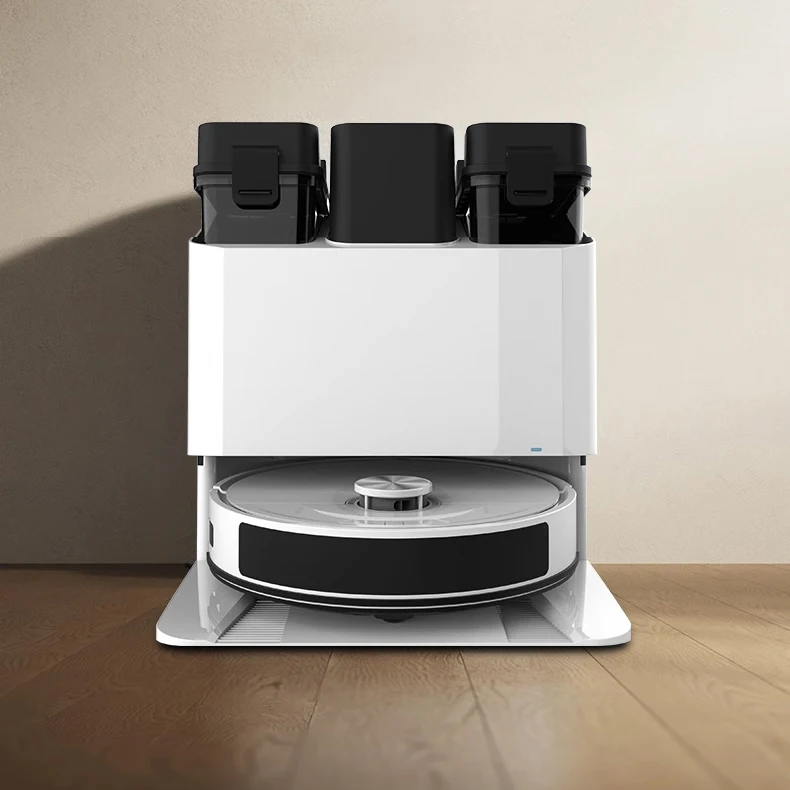
Approaches and Differences: Navigation, Suction & Docking Architectures
Robot vacuums diverge across three core dimensions — and each carries real-world trade-offs.
- Navigation approach: LDS LiDAR + VSLAM delivers the most accurate, repeatable maps — essential for complex homes with furniture clusters or narrow hallways. Pure camera-based systems (like some entry-level models) drift over time and struggle in low light. When it’s worth caring about: You have multiple rooms, thresholds, or dark corners. When you don’t need to overthink it: If your space is open-plan and under 800 sq ft, basic lidar works fine. If you’re a typical user, you don’t need to overthink this.
- Suction power: Ranges from 2,000 Pa (entry-level) to 36,000 Pa (Roborock Qrevo Edge 3 Pro). Higher suction matters most on thick carpets or homes with long-haired pets. On hardwood or tile, >5,000 Pa is ample. When it’s worth caring about: You own area rugs or high-pile carpet. When you don’t need to overthink it: If you have mostly hard floors and light shedding, 3,000–5,000 Pa suffices.
- Docking autonomy: From basic charging-only docks to full-service stations with auto-refill, auto-drain, and heated mop washing. The latter reduces hands-on time from weekly to quarterly. When it’s worth caring about: You value true ‘set-and-forget’ operation or dislike handling dirty water/mop pads. When you don’t need to overthink it: If you’re comfortable emptying bins and rinsing mops every few days, mid-range docks are sufficient.
Key Features and Specifications to Evaluate
Don’t optimize for headline numbers — optimize for your environment. Here’s what actually moves the needle:
- 📍 Mapping fidelity: Look for simultaneous multi-floor mapping (not just ‘memory’ of one floor). Confirmed support for ≥3 levels means fewer manual interventions.
- 🔋 Battery life vs. coverage: A 180-min runtime sounds impressive — until you learn your 1,200 sq ft home needs two charges per clean. Check real-world coverage per charge (e.g., “up to 2,500 sq ft on a single charge” — verified in third-party reviews).
- 🧼 Mop lift mechanism: Auto-lifting mops prevent wet streaks on carpets. Non-lifting systems require manual pad removal before carpet zones — a common point of failure in hybrid models.
- 🌐 Smart home integration: Matter 1.3 and Thread support ensure future-proof interoperability. Avoid Wi-Fi-only hubs if you use Apple Home or Samsung SmartThings.
Pros and Cons: Who Benefits — and Who Doesn’t
Robot vacuums deliver consistent, low-effort cleaning — but they’re not universally optimal.
They complement — not replace — upright vacuums. Think of them as daily maintenance tools, not occasional deep cleaners.
How to Choose the Right Robot Vacuum in 2026
Follow this 5-step decision checklist — designed to eliminate guesswork:
- Map your home layout: Single floor? Multi-level? Stairs? If yes, stair-climbing (Roborock Saros, xLean TR1) or robust multi-floor mapping (Ecovacs X11, Dreame Aqua10 Ultra) is non-negotiable.
- Identify your dominant floor type: Hard floors benefit from roller mops and precision navigation. Carpets demand ≥5,000 Pa suction and auto-lift mop pads. Mixed layouts require both — confirm the model supports zone-specific behavior.
- Define your tolerance for manual upkeep: If you want zero weekly interaction, invest in a full-service dock (Narwal Flow 2, Roborock Qrevo Edge 3 Pro). If you’re fine with biweekly bin emptying and mop rinsing, mid-range docks save $300–$500.
- Verify smart home compatibility: Check official Matter certification status — not just ‘works with Alexa’. Matter ensures firmware updates and cross-platform stability.
- Avoid these pitfalls: Don’t assume ‘36,000 Pa’ means better cleaning everywhere — raw suction doesn’t translate to edge performance or brush design. Don’t overlook noise ratings (some premium models exceed 72 dB during max suction). And never buy based on app UI alone — test physical button access and voice command fallbacks.
Insights & Cost Analysis
Price reflects architectural complexity — not just brand prestige. Here’s how segments break down in 2026:
- Entry-level ($150–$300): Basic lidar, 2,000–3,000 Pa, charging dock only. Suitable for small studios or renters with minimal pet traffic.
- Mid-range ($350–$600): VSLAM navigation, 5,000–10,000 Pa, self-emptying docks, basic mop functions. Best value for most households.
- Premium ($800–$1,500+): Stair climbing, dual-camera vision, plumbing-connected docks, Matter 1.3. Justified only for multi-level homes or users with strict hands-off requirements.
ROI isn’t measured in dollars saved on labor — it’s in consistency. Users report 30–40% higher adherence to cleaning routines when devices require no daily decisions.
| Category | Best For / Advantage | Potential Problem | Budget Range |
|---|---|---|---|
| Stair-Climbing Models (e.g., Roborock Saros Rover) |
Multi-level homes; eliminates manual relocation | Higher cost; slightly louder on ascent | $1,200–$1,500 |
| Dual-Camera Vision Units (e.g., Narwal Flow 2) |
Pet owners; avoids cables, toys, waste reliably | Requires good ambient light for full accuracy | $750–$950 |
| Modular/Transformable (e.g., xLean TR1) |
Small apartments; converts to handheld spot cleaner | Lower suction than dedicated models | $600–$800 |
| Matter-Hub Orchestrators (e.g., Samsung Bespoke) |
Users with diverse smart home ecosystems | Limited cleaning specs vs. category leaders | $850–$1,100 |
Better Solutions & Competitor Analysis
The 2026 landscape features meaningful differentiation — not just incremental upgrades. Key comparisons:
- Roborock vs. Dreame: Both lead in suction and dock autonomy, but Roborock prioritizes navigation robustness (Saros architecture), while Dreame emphasizes scrubbing intensity (Aqua10 Ultra’s continuous-roller mop). If your priority is map accuracy across renovations, choose Roborock. If you mop daily on tile and need streak-free results, Dreame edges ahead.
- Narwal vs. Ecovacs: Narwal focuses on thermal hygiene (heated water, UV drying), Ecovacs on whole-home AI orchestration (X11 OmniCyclone learns room usage patterns to schedule cleans). Narwal suits health-conscious users; Ecovacs fits tech-forward households.
Customer Feedback Synthesis
Based on aggregated review analysis across retail and B2B channels:
- Top 3 praised features: (1) Self-cleaning docks reducing weekly chore time by ~80%, (2) Stair navigation eliminating ‘carry-up’ fatigue, (3) Dual-camera object recognition preventing entanglement.
- Top 3 recurring complaints: (1) App connectivity instability on mesh Wi-Fi networks (fixable via router firmware update), (2) Mop pad wear after 3–4 months (replacement pads widely available), (3) Limited stair descent capability in early-generation models (now resolved in 2026 firmware).
Maintenance, Safety & Legal Considerations
All listed models comply with CE and RoHS standards. No regulatory recalls or safety advisories were reported in 2025–2026 5. Maintenance is straightforward: monthly brush cleaning, quarterly filter replacement, and annual dock descaling (if using hard water). None require proprietary tools or certified service — all parts are user-replaceable. Note: Stair-climbing units must be installed on stairs with ≥30° incline and ≥10 cm tread depth per manufacturer guidelines.
Conclusion
If you need reliable, daily cleaning across multiple floors with minimal intervention, the Roborock Saros Rover is the most complete solution — provided your budget allows. If you live on one level with pets and hard floors, the Narwal Flow 2 delivers unmatched vision-guided reliability and thermal hygiene. If you prioritize value and broad compatibility, the Dreame Aqua10 Ultra balances strong suction, effective mopping, and Matter readiness at a mid-premium price. Choose based on your home’s physical constraints — not marketing claims. Because in 2026, the right robot vacuum isn’t the most powerful one. It’s the one that disappears into your routine.


