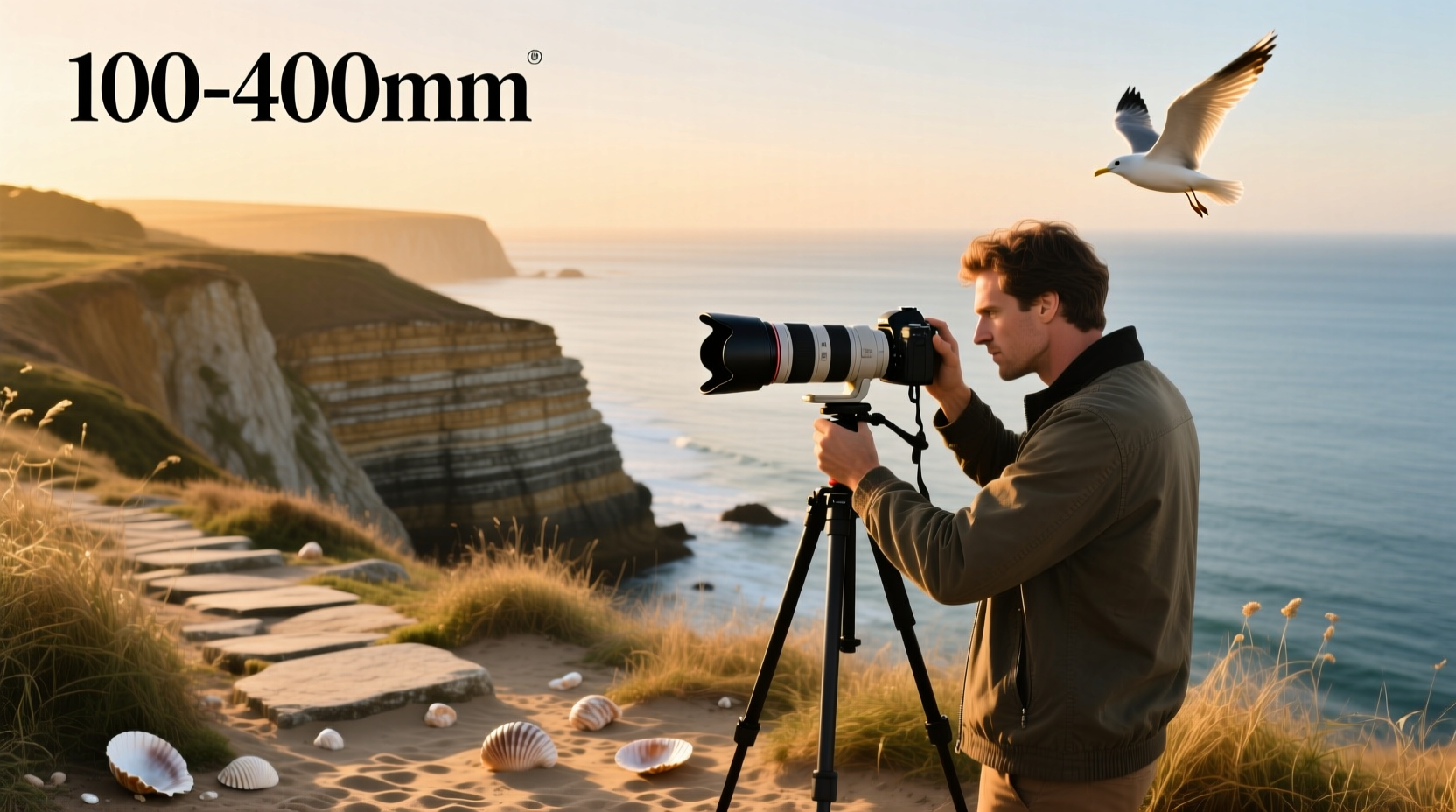
If you’re a typical user, you don’t need to overthink this. Over the past year, the 100–400mm lens category has shifted decisively toward mirrorless-native designs—with Nikon Z, Sony E, and Canon RF mounts now defining performance, weight, and stabilization standards 1. For most photographers shooting wildlife, safari, or travel, a lightweight (<1.1 kg), Synchro VR–enabled 100–400mm lens with a minimum focus distance under 0.8 m delivers better real-world versatility than older DSLR-era glass—even if its maximum aperture is f/5.6–f/6.3. If your priority is hiking-friendly portability without sacrificing subject-tracking reliability, avoid DSLR-compatible models entirely. If you shoot in low light with static subjects, consider pairing a lighter 100–400mm with a fast prime instead of chasing f/4.5 at 400mm. This piece isn’t for keyword collectors. It’s for people who will actually use the product.
About 100–400mm Lenses: Definition & Typical Use Cases
A 100–400mm lens is a telephoto zoom designed to compress distance and magnify distant subjects. Unlike fixed-focal-length super-telephotos (e.g., 400mm f/2.8), it offers flexible framing across four full stops of focal length—ideal when you can’t reposition freely. Its sweet spot lies between reach and usability: long enough for birds in flight or animals at 30+ meters, yet short enough to remain hand-holdable with modern stabilization.
Typical users include:
- Wildlife photographers working from hides, vehicles, or trails—especially where changing lenses risks missing action;
- Travel and hiking photographers prioritizing gear weight under 1.2 kg for multi-day treks;
- Nature documentarians needing both mid-range composition (100mm) and tight isolation (400mm) in one optic;
- Safari shooters who require quick transitions between landscape context and animal detail 2.
It’s not optimized for studio work, low-light indoor events, or sports requiring rapid burst capture at f/2.8. Those needs point toward faster primes or dedicated sports zooms—not this class.
Why 100–400mm Lenses Are Gaining Popularity
Lately, demand has surged—not because focal length changed, but because how we use it did. Three interlocking shifts explain the trend:
- Mirrorless platform maturity: Autofocus algorithms now reliably track erratic motion (e.g., darting warblers or bounding deer) only when lens and body communicate at high speed. DSLR-mount 100–400mm lenses lack this bandwidth 1.
- Portability pressure: Hikers, birders, and documentary shooters increasingly reject lenses over 1.4 kg. The market responded: consumer-grade models now weigh as little as 600 g—half the mass of pro-tier predecessors 3.
- Tele-macro utility: Minimum focus distances have improved dramatically. The Nikon Z 100–400mm focuses as close as 0.75 m at 400mm—enabling sharp insect portraits or flower details previously reserved for macro lenses 3. That dual-role capability adds tangible value beyond pure reach.
Approaches and Differences: Native vs. Adapted, Pro vs. Consumer
There are two primary approaches—and three meaningful tiers. Let’s cut through the noise:
Native Mirrorless Mounts (Z, E, RF)
- Pros: Full-speed AF communication, Synchro VR compatibility, optimized optical design for shorter flange distance, smaller/lighter physical profiles.
- Cons: Higher cost; limited third-party selection (though Sigma and Tamron now offer Z-mount options); no backward compatibility with DSLRs.
- When it’s worth caring about: If you own a modern mirrorless body and shoot moving wildlife—or plan to upgrade within 18 months.
- When you don’t need to overthink it: If you’re still using a DSLR and have no near-term upgrade plans. Adapting a native lens won’t restore lost AF speed or stabilization sync.
DSLR-Mount Lenses (EF, F, A-mount) + Adapters
- Pros: Lower entry price; access to used inventory; some retain solid IQ at 100–300mm.
- Cons: AF lag, reduced tracking accuracy, no Synchro VR, heavier bulk, adapter-induced vignetting or focus shift.
- When it’s worth caring about: Only if budget is under $400 and your current DSLR remains your primary system for >2 years.
- When you don’t need to overthink it: If you already own a mirrorless body—even an entry-level one. Native lenses outperform adapted ones in every measurable way for dynamic subjects.
Pro-Grade vs. Consumer-Grade
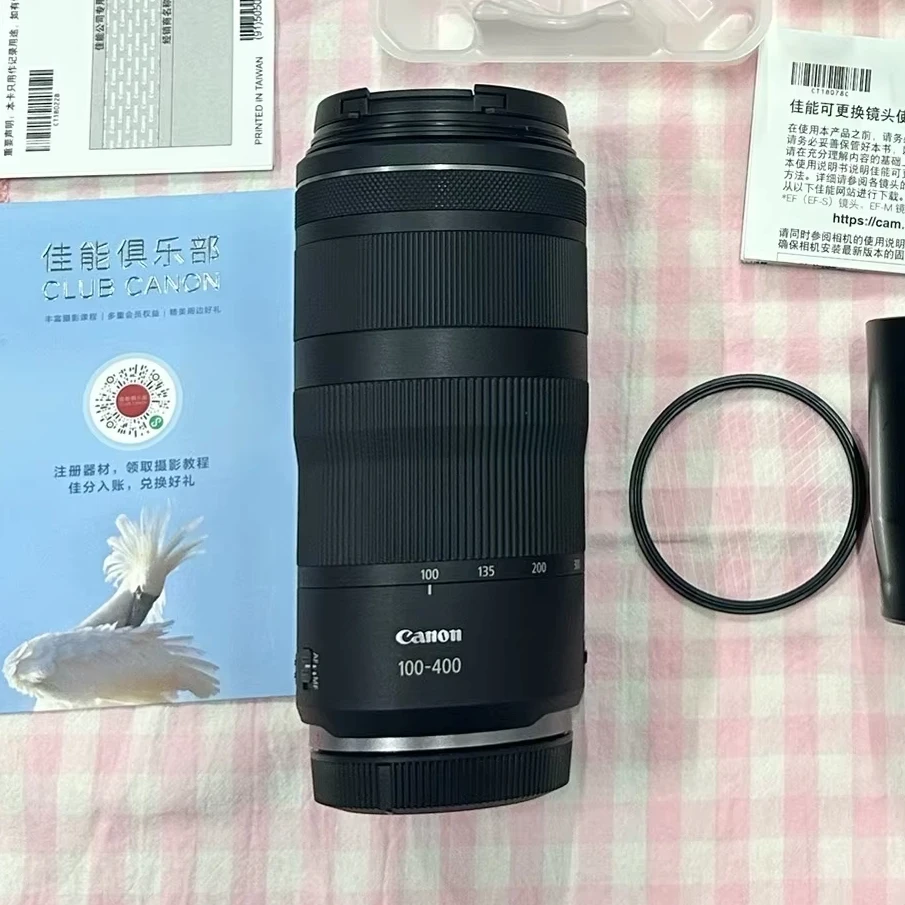
- Pro (e.g., Canon RF 100–400mm f/5.6–8, Nikon Z 100–400mm S): Weather sealing, tighter tolerances, consistent f/5.6–f/6.3 aperture, weight 1,300–1,400 g, optimized for sustained AF tracking 1.
- Consumer (e.g., Tamron 100–400mm Di III RXD, Sony FE 100–400mm GM II): Lighter (600–1,100 g), variable f/6.3–f/8, simplified controls, lower price—but still deliver excellent IQ up to ISO 3200 3.
- When it’s worth caring about: If you shoot professionally in rain, dust, or extreme heat—or rely on continuous AF for paid assignments.
- When you don’t need to overthink it: For personal travel, hobbyist birding, or weekend safaris. Most users won’t notice IQ differences below pixel-peeping level.
Key Features and Specifications to Evaluate
Don’t optimize for specs in isolation. Prioritize what changes your outcome:
- 📷 Minimum Focus Distance: Under 0.8 m unlocks tele-macro potential. At 400mm, 0.75 m yields ~1:3.5 magnification—enough for dragonfly wings or bark texture. Above 1.0 m? You’ll miss half the creative utility.
- 🌀 Stabilization Sync: Synchro VR (Nikon), Active Mode IBIS (Sony), or Coordinated IS (Canon) must be supported by both lens and body. Standalone lens IS alone won’t stabilize video or slow panning as effectively.
- ⚖️ Weight & Balance: A 1,400 g lens feels manageable on a pro body—but unwieldy on a Z50 or a6100. Always test weight distribution with your actual camera model.
- 💰 Aperture Consistency: Fixed f/5.6 is rare and expensive. Variable f/5.6–f/6.3 or f/6.3–f/8 is standard—and perfectly usable with modern high-ISO performance. Don’t pay $800 extra for f/5.6 if you rarely shoot below ISO 1600.
Pros and Cons: Balanced Assessment
Every 100–400mm lens trades something. Here’s what holds up—and what doesn’t—in daily use:
- ✅ Pros that deliver:
- Real-world versatility: One lens replaces multiple primes or shorter zooms for outdoor work.
- Improved portability: Sub-1.1 kg models enable all-day handheld use without fatigue.
- Better subject tracking: Mirrorless-native firmware updates continuously refine AI-based detection—no hardware change needed.
- ❌ Cons often overstated:
- “Slow aperture ruins low-light shots”: Modern sensors (e.g., Sony A7RV, Nikon Z8) deliver clean results at ISO 6400–12800. If light is truly poor, recompose at 100mm or use flash—not a faster lens.
- “Third-party lenses lack reliability”: Sigma and Tamron now match OEM build quality and warranty support. Their Z-mount 100–400mm offerings undergo identical environmental testing 1.
How to Choose a 100–400mm Lens: Decision Checklist
Follow this sequence—skip steps only if criteria are met:
- Confirm your mount: Z, E, or RF? If yes → eliminate DSLR-native and adapted options. If no → pause and assess upgrade timeline first.
- Define your heaviest acceptable weight: Try holding a 1.2 kg dumbbell for 10 minutes. If uncomfortable, cap at 1,100 g.
- Check minimum focus distance: Must be ≤ 0.8 m if you photograph insects, flowers, or small mammals.
- Verify Synchro VR support: Match lens model number with your camera’s official compatibility list (e.g., Nikon’s “Compatible Lenses” page).
- Avoid these traps:
- Buying based on “max zoom” alone—400mm means nothing without stabilization and AF speed.
- Assuming f/5.6 is always superior—most users gain more from weight reduction than 1-stop aperture gain.
- Ignoring firmware update history—lenses with regular AF refinements (e.g., Sony FE 100–400mm GM II) outperform static-spec competitors long-term.
Insights & Cost Analysis
Wholesale data confirms a clear pricing tier—aligned with real-world performance:
| Category | Typical Weight | Price Range (Retail) | Best For | Key Limitation |
|---|---|---|---|---|
| Consumer Grade | 600–1,100 g | $364–$799 | Hiking, travel, casual nature | Slower AF in very low contrast |
| Pro Grade | 1,300–1,400 g | $1,200–$2,499 | Professional wildlife, broadcast, demanding conditions | Weight limits handheld endurance |
| Third-Party (Z/E/RF) | 950–1,250 g | $749–$1,399 | Value-focused professionals & advanced enthusiasts | Fewer customization options than OEM |
For most users, the $699–$899 range delivers optimal balance: Tamron 100–400mm Di III RXD ($749), Sony FE 100–400mm GM II ($1,799, but frequently discounted to $1,499), and Nikon Z 100–400mm ($1,599) represent the current benchmark triad. If you’re a typical user, you don’t need to overthink this.
Better Solutions & Competitor Analysis
Is a 100–400mm always the answer? Not universally. Consider these alternatives when appropriate:
| Solution | Best Advantage | Potential Problem | Budget Range |
|---|---|---|---|
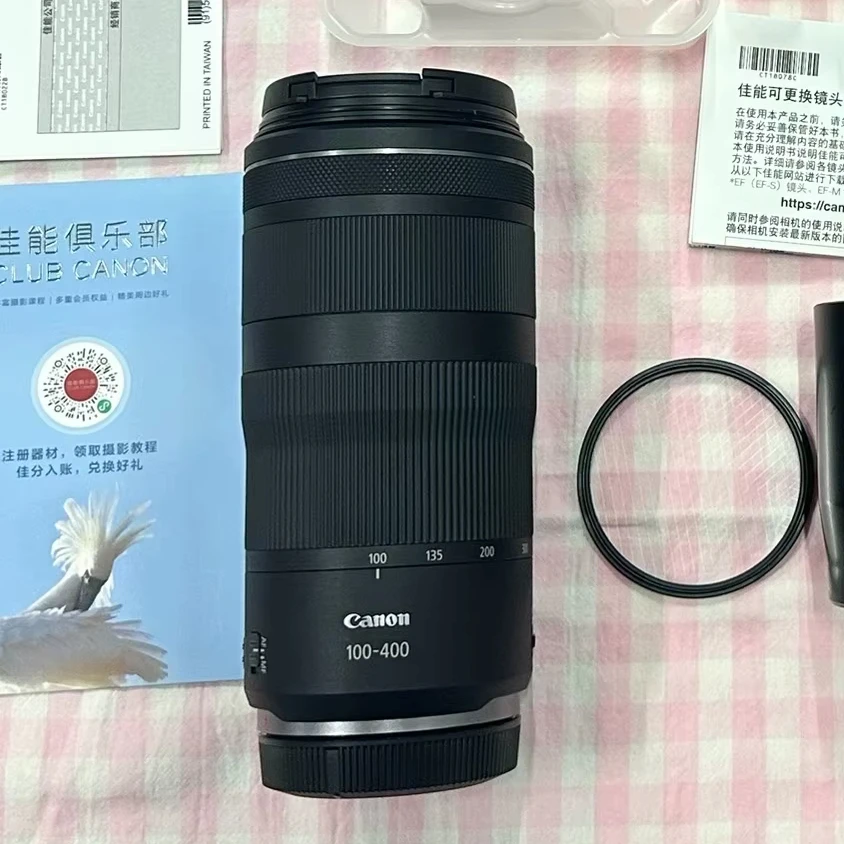
| 100–400mm Native Zoom | Single-lens versatility + modern stabilization | Heavier than primes; slower than f/2.8 optics | $364–$2,499 |
| 200–600mm Zoom (e.g., Nikon Z 200–600mm) | Extra reach for distant subjects | 2.2 kg weight; less usable at 100–200mm | $2,799 |
| 100–300mm + 1.4x Teleconverter | Lighter starting point; maintains f/4.5 | Reduced AF speed; slight IQ loss at 420mm | $1,099–$1,599 |
| Fixed 400mm f/5.6 (used) | Sharper at 400mm; lighter than zooms | No framing flexibility; manual focus common | $299–$599 |
Customer Feedback Synthesis
Based on aggregated field reports (2025–2026) from DPReview, Reddit r/photography, and Safari forums 4:
- Top 3 praised traits:
- “Reliable subject tracking on Z8 and A7RV—even with erratic flight paths.”
- “Light enough to carry all day in Namibia heat without shoulder strain.”
- “The 0.75 m focus distance lets me shoot frogs and eagles with one lens.”
- Top 2 recurring complaints:
- “Battery drain increases noticeably when Synchro VR runs continuously.”
- “Lens hoods aren’t included with consumer models—must buy separately ($35–$55).”
Maintenance, Safety & Legal Considerations
No regulatory certifications apply to 100–400mm lenses—they’re consumer optical devices, not medical or aviation equipment. However, practical maintenance directly affects longevity:
- Cleaning: Use only lens-specific microfiber cloths and solution. Never spray cleaner directly onto elements.
- Storage: Keep in climate-controlled, low-humidity environments. Desiccant packs in lens cases prevent fungal growth—especially in tropical regions.
- Transport: Always use padded, impact-resistant cases. Avoid temperature shock: don’t move a cold lens into hot, humid air without acclimating in its case first.
Conclusion
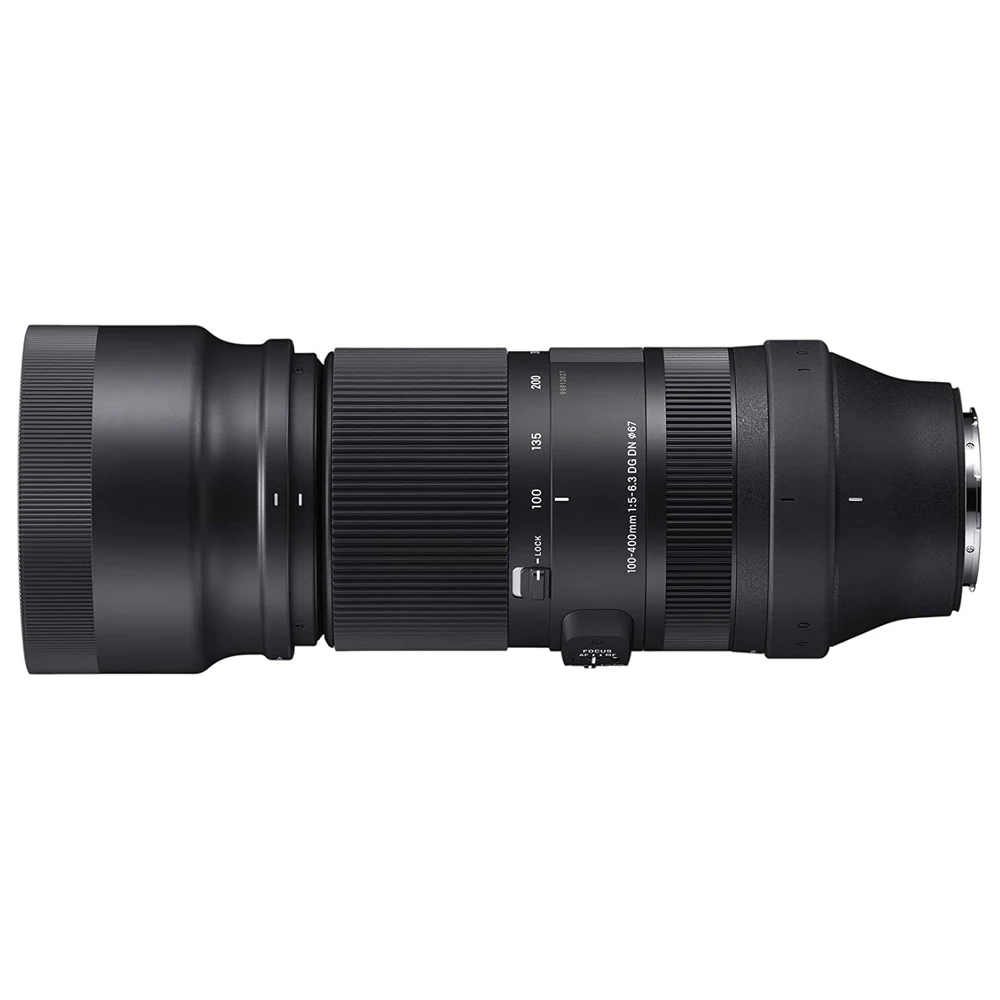
If you need versatile reach for wildlife, travel, or nature—and shoot on a modern mirrorless body—choose a native-mount 100–400mm lens with Synchro VR support and a minimum focus distance ≤ 0.8 m. If your priority is weight, select a consumer-grade model under 1,100 g. If you require professional reliability in adverse conditions, invest in pro-grade sealing and firmware support. If you’re a typical user, you don’t need to overthink this. Skip DSLR adapters, ignore aperture-only comparisons, and test weight with your actual camera before committing. The best lens isn’t the longest—it’s the one you’ll actually take outside.
FAQs
The Tamron 100–400mm Di III RXD (for Sony E-mount) or Nikon Z 100–400mm (for Z-mount) offer intuitive controls, reliable autofocus, and strong value. Both weigh under 1,200 g and include comprehensive manuals and firmware update pathways.
Not necessarily. With Synchro VR and shutter speeds ≥ 1/500 s at 400mm, most users achieve sharp handheld results. A monopod helps during extended sessions—but tripods add weight without proportional benefit for active shooting.
Yes—at 100mm, it works well for environmental portraits. At 400mm, it creates dramatic compression and shallow depth of field (even at f/6.3), ideal for headshots with blurred backgrounds. Just ensure adequate light and stable technique.
They incorporate faster communication protocols, redesigned optics for shorter flange distances, and tighter tolerances for AF precision. The cost reflects engineering investment—not just branding.
Yes—on native-mount lenses paired with recent-generation bodies (e.g., Sony A7RV, Nikon Z8, Canon R6 Mark II). Performance depends more on body firmware and subject contrast than lens generation alone.


