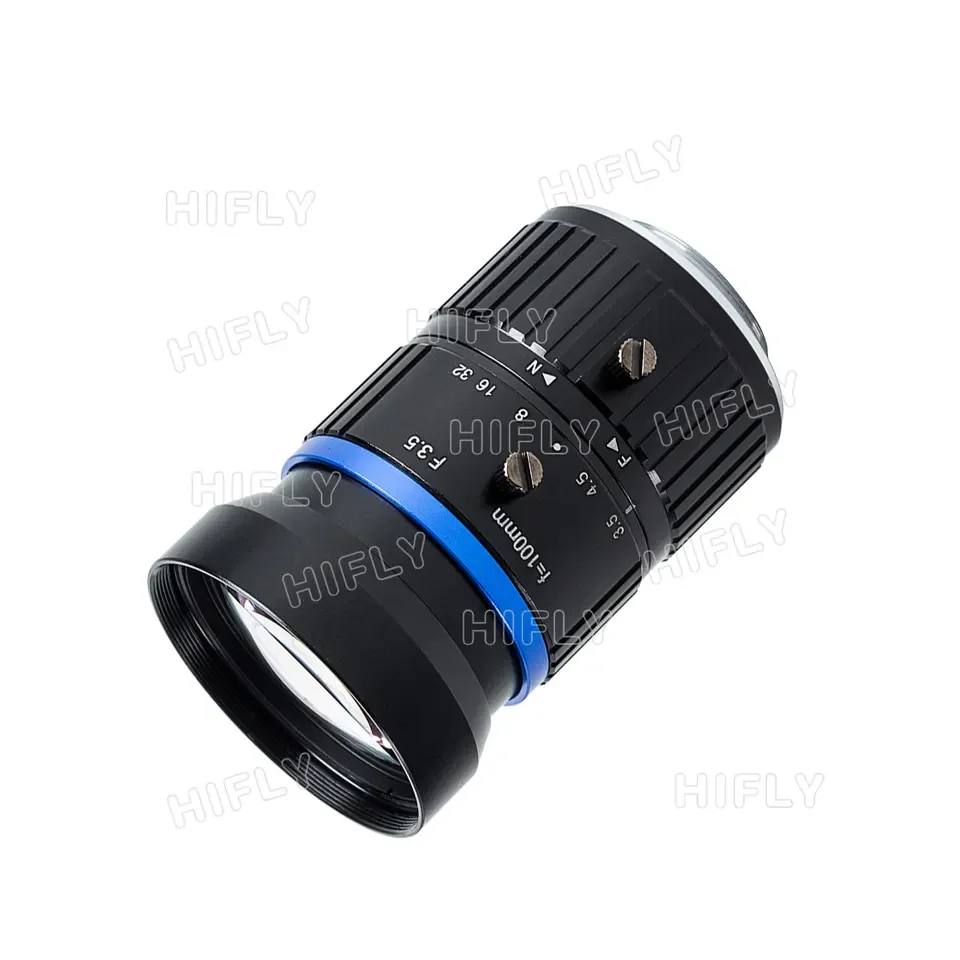
If you’re a typical user—shooting birds on weekend hikes, capturing youth soccer games, or traveling with gear you’ll carry all day—the Canon RF 100–400mm f/5.6–8 IS USM is your strongest starting point. It weighs just 635g, delivers reliable autofocus on modern mirrorless bodies, and costs under $700. But if you shoot in low light (dawn woodland, overcast stadiums) or use a DSLR, the older Canon EF 100–400mm f/4.5–5.6L IS II remains the better value—especially used, where it’s widely available at ~$1,1001. Over the past year, mirrorless-native 100–400mm lenses have become significantly lighter and more responsive—not because specs improved dramatically, but because camera bodies now handle slower apertures (like f/8) without sacrificing shutter speed or ISO control. That shift makes portability a legitimate performance feature, not just a convenience. If you’re a typical user, you don’t need to overthink this.
About 100–400mm Lenses: Definition & Typical Use Cases
A 100–400mm lens is a telephoto zoom covering a versatile focal range: 100mm for tight portraits or environmental details, and 400mm for distant subjects like birds in trees, athletes on fields, or wildlife across savannas. Unlike primes, it offers framing flexibility without swapping glass. It’s not a super-telephoto replacement (e.g., 600mm+), nor is it ideal for indoor events or night street photography—but it hits a precise sweet spot for daylight-driven, subject-at-a-distance work.
Common scenarios include:
- 📷 Wildlife & birding: Capturing behavior from safe distances without disturbing subjects;
- ⚽ Youth and amateur sports: Tracking action from sidelines or bleachers;
- 🌄 Landscape compression: Isolating mountain peaks or distant architecture;
- 🦋 Close-up versatility: Many modern 100–400mm lenses focus as close as 0.8m—making them surprisingly capable for large insects or botanical detail.
Why 100–400mm Lenses Are Gaining Popularity
Lately, demand for 100–400mm lenses has surged—not because photographers suddenly want longer reach, but because they’re rejecting compromise. For years, users chose between heavy pro-grade DSLR telephotos (1.5kg+, $2,000+) and soft, slow third-party zooms. In 2026, that binary is collapsing. Mirrorless systems now enable lightweight, native 100–400mm designs that retain sharpness, stabilization, and tracking accuracy2. Google search interest spiked sharply in May–June 2026—coinciding with peak bird migration and summer tournament seasons3. This isn’t about chasing specs; it’s about carrying less weight while keeping creative options open.
Approaches and Differences: Four Main Types
There are four distinct approaches to the 100–400mm range—and each reflects a different priority: portability, light-gathering, legacy compatibility, or value.
| Type | Key Strength | Main Trade-off | When It’s Worth Caring About | When You Don’t Need to Overthink It |
|---|---|---|---|---|
| Mirrorless-native (e.g., Canon RF, Sony FE GM) | Lightweight + fast AF + in-body stabilization synergy | Often slower max aperture (f/8 at 400mm) | If you hike, travel, or shoot handheld >60% of the time | If you shoot mostly from tripods or hides—and own a high-ISO-capable body |
| DSLR-era pro glass (e.g., Canon EF 100–400mm II) | f/5.6 at 400mm + weather sealing + optical quality | Heavy (1.88kg); requires adapter on mirrorless | If you shoot in rain, dust, or low-light woodlands regularly | If your camera is a DSLR—or you only shoot in bright daylight |
| Budget mirrorless (e.g., Sigma 100–400mm DG DN) | Strong price-to-performance ratio (~$1,000) | No internal zoom (barrel extends); less refined build | If you’re upgrading from kit zooms and want pro-level reach without pro pricing | If you already own a stabilized mirrorless body and prioritize weight savings over absolute ruggedness |
| Hybrid adapters (e.g., EF→RF with control ring) | Retains full function of older lenses on new bodies | Added bulk, slight AF lag, no lens-based IS compensation | If you own an EF 100–400mm II and upgraded to RF—but won’t replace the lens soon | If you’re buying new and haven’t invested in DSLR glass |
Key Features and Specifications to Evaluate
Don’t default to “higher megapixels” or “more IS stops.” Focus on these five measurable traits—and know when each actually impacts results:
- Weight (grams): A 635g lens lets you shoot 3+ hours handheld; 1,880g demands support after 45 minutes. When it’s worth caring about: Any scenario involving walking, hiking, or extended handheld use. When you don’t need to overthink it: Studio, tripod-mounted, or vehicle-based shooting.
- Minimum focus distance (m): Ranges from 0.8m (Canon RF) to 1.8m (older Nikon F). Closer focus enables tighter compositions on medium-sized subjects. When it’s worth caring about: Bird-in-flight shots where subjects approach within 3m—or macro-adjacent work. When you don’t need to overthink it: Shooting animals >10m away or static landscape elements.
- Aperture at 400mm: f/5.6 lets you hit 1/1000s at ISO 800 in overcast light; f/8 requires ISO 1600 or slower shutter. When it’s worth caring about: Dawn/dusk, dense forests, or indoor arenas. When you don’t need to overthink it: Sunny midday conditions with modern sensors (e.g., Canon R6 II, Sony A7RV).
- Weather sealing: Not marketing fluff—it prevents condensation fogging and dust ingress during long outdoor sessions. When it’s worth caring about: Safari, coastal, or monsoon-season use. When you don’t need to overthink it: Controlled backyard or urban park shooting.
- Native mount compatibility: RF, Z, E-mount lenses communicate faster with bodies—enabling eye-AF tracking, focus breathing correction, and firmware updates. When it’s worth caring about: If you rely on subject tracking (birds, athletes). When you don’t need to overthink it: If you manually focus or shoot static scenes.
Pros and Cons: Balanced Assessment
No 100–400mm lens excels in every context. Here’s how real-world usage maps to trade-offs:
- ✅ Pros of lightweight mirrorless lenses: Lower fatigue, easier travel compliance (carry-on size), seamless AF integration, lower entry cost.
- ❌ Cons of lightweight mirrorless lenses: Reduced low-light headroom, fewer physical controls (no focus limiter switch), softer corners wide open at 400mm (correctable in post).
- ✅ Pros of DSLR-era pro lenses: Proven reliability, consistent f/5.6, robust sealing, resale value.
- ❌ Cons of DSLR-era pro lenses: Weight penalties compound quickly with battery grips or extenders; adapters add complexity and cost.
If you’re a typical user, you don’t need to overthink this.
How to Choose a 100–400mm Lens: A Step-by-Step Decision Framework
Follow this checklist—not in order of preference, but in order of consequence:
- Confirm your camera mount first. No amount of adaptation beats native communication. If you own a Canon R-series, start with RF. Nikon Z? Prioritize Z-mount. Sony FE? Stick with FE. Adapters work—but sacrifice responsiveness and sometimes IS sync.
- Assess your primary shooting posture. Do you walk 5km with gear? Carry it up stairs? Shoot from a car window? If yes, weight matters more than f/5.6 vs. f/8. If you shoot from a hide or tripod >80% of the time, prioritize optical quality and sealing.
- Map your typical lighting. Review your last 20 photos taken at 400mm. What was the average ISO? If >1600 in daylight, you likely need f/5.6. If <800, f/8 is sufficient.
- Check used market availability. The Canon EF 100–400mm II appears frequently in excellent condition for $1,050–$1,2504. That’s often cheaper than new RF alternatives—and delivers sharper images at 400mm wide open.
- Avoid these three common missteps:
- Buying based on “maximum zoom” alone (400mm ≠ usable reach without stabilization or AF speed);
- Assuming “f/4.5–5.6” means f/4.5 at 400mm (it doesn’t—it’s f/5.6);
- Overlooking minimum focus distance when photographing smaller wildlife or flora.
Insights & Cost Analysis
Price alone doesn’t reveal value. Consider total cost of ownership—including adapters, tripods, and expected lifespan:
- Canon RF 100–400mm f/5.6–8 IS USM: $699 new. Lightest option (635g). Best for R-series owners prioritizing mobility. Minimal resale depreciation—Canon’s RF ecosystem remains strong5.
- Canon EF 100–400mm f/4.5–5.6L IS II: $1,100 used (excellent condition). Still optically competitive—even against newer glass—at 400mm6. Requires $200 EF–RF adapter for R bodies.
- Sony FE 100–400mm GM OSS: $2,498 new. Fastest AF, best tracking, but 1,395g. Justified only for professionals shooting fast-moving subjects daily.
- Sigma 100–400mm DG DN: $999 new. Strong value, but lacks internal zoom and tactile focus ring damping. Ideal for budget-conscious A7 or Z-mount users.
Better Solutions & Competitor Analysis
| Lens Model | Best For | Potential Issue | Budget Range (USD) |
|---|---|---|---|
| Canon RF 100–400mm | Travel, hiking, beginner-to-intermediate wildlife | f/8 at 400mm limits low-light flexibility | $699 |
| Nikon Z 100–400mm S | Professional wildlife with Z9/Z8; demanding environmental sealing | Heaviest (1,360g); premium price ($2,699) | $2,699 |
| Sigma 100–400mm DG DN | Value-focused Sony/Nikon Z users needing native glass | No internal zoom; barrel extends fully at 400mm | $999 |
| Canon EF 100–400mm II (used) | DSLR owners or RF users willing to adapt | Requires adapter; no in-lens IBIS coordination | $1,050–$1,250 |
Customer Feedback Synthesis
Based on aggregated forum posts, reviews, and community discussions7:
- Most praised: Sharpness at 300–400mm (all top models), image stabilization effectiveness (especially RF and Z variants), and close-focusing capability.
- Most complained about: f/8 aperture limitations in shaded environments, inconsistent focus breathing during video, and lack of programmable buttons on budget models.
- Surprising consensus: Users consistently report that “good technique” (bracing, shutter discipline, proper exposure) matters more than marginal lens differences—especially beyond 300mm.
Maintenance, Safety & Legal Considerations
These lenses require minimal maintenance—but avoid these pitfalls:
- Never extend the barrel fully in dusty or humid conditions—dust and moisture can enter moving parts. Store retracted.
- Use a tripod collar correctly: Tighten both collar screws before mounting. Uneven torque stresses the lens mount.
- No legal restrictions apply—but be aware of local park or reserve rules limiting tripod use or drone-like behavior near wildlife.
Conclusion
If you need lightweight, native performance on a mirrorless body, choose the Canon RF 100–400mm. If you need proven low-light capability and weather resilience, go with the used Canon EF 100–400mm II—especially if you already own EF glass or shoot in variable conditions. If you shoot fast-moving subjects professionally, the Sony FE 100–400mm GM or Nikon Z 100–400mm S justify their cost. Everything else is optimization—not necessity.
This piece isn’t for keyword collectors. It’s for people who will actually use the product.
Frequently Asked Questions
The numbers indicate maximum aperture at the shortest and longest focal lengths. An f/4.5–5.6 lens opens to f/4.5 at 100mm and f/5.6 at 400mm. An f/5.6–8 lens opens to f/5.6 at 100mm and f/8 at 400mm. The latter gathers half as much light at full zoom—requiring either higher ISO or slower shutter speed.
Yes—with the Canon EF–RF adapter. Autofocus and IS remain fully functional, though AF speed may lag slightly behind native RF lenses. Image quality is unchanged.
Yes—if paired with good technique and appropriate lighting. At 400mm, you’ll fill the frame with medium birds (e.g., robins, blue jays) at ~15m, or larger birds (herons, eagles) at ~30m. Add a 1.4x extender for extra reach—but expect reduced AF speed and light loss.
Not always—but highly recommended for stability at 400mm, especially below 1/1000s shutter speed. A gimbal head helps track moving subjects smoothly. Lightweight mirrorless versions (like the RF) are more manageable handheld for short bursts.
Crop-sensor cameras (APS-C) multiply focal length by ~1.5x (Nikon/Sony) or 1.6x (Canon). So a 400mm lens gives ~600mm equivalent reach on APS-C—boosting subject size, but also amplifying camera shake and reducing field of view.