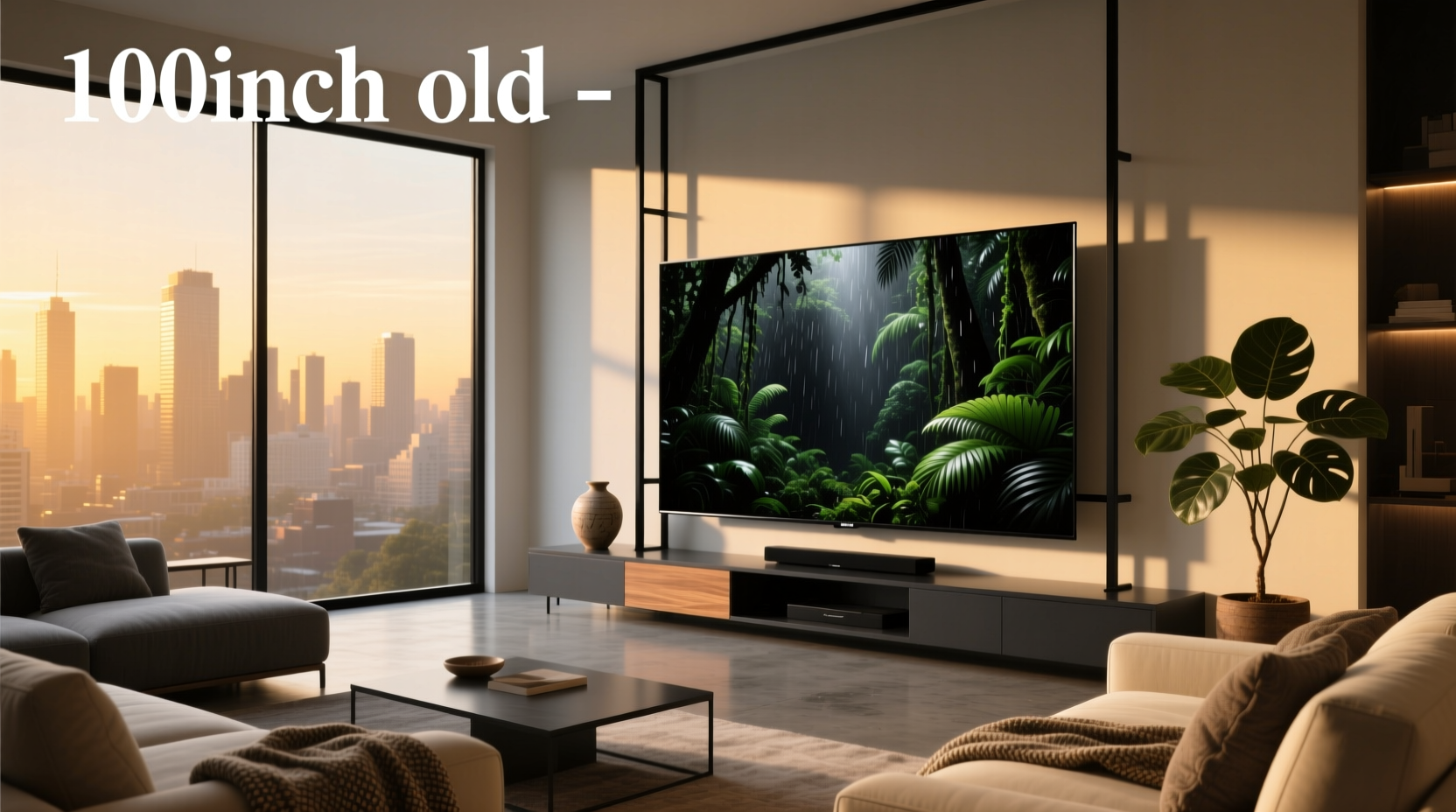
If you’re a typical user, you don’t need to overthink this: There is no true 100-inch OLED consumer TV available in 2026. The largest production OLED panel remains the 97-inch LG G4/G5 series — priced at $20,000–$25,000 12. For any real-world 100-inch screen purchase — whether for a bright living room, home theater with ambient light, or commercial installation — Mini-LED (QNED/QLED) is the only viable, cost-effective, and widely supported option. This isn’t a compromise — it’s an engineering reality backed by physics, supply chains, and market data. Over the past year, wholesale Mini-LED 100-inch units have dropped below $1,200 3, while 97-inch OLED remains a premium niche. If your goal is a large-format display that delivers high brightness, wide viewing angles, future-proof HDMI 2.1, and reliable delivery logistics — choose Mini-LED. If you own a dedicated dark home theater, prioritize contrast above all else, and budget allows, consider the 97-inch OLED — but accept its size and price as hard constraints.
About 100-Inch Displays: Definition & Typical Use Cases
A “100-inch display” refers to the diagonal measurement of a flat-panel screen — approximately 88 inches wide and 49 inches tall (16:9 aspect ratio). It sits at the upper threshold of residential feasibility: large enough to dominate a wall, immersive enough for cinematic viewing or competitive gaming, yet still deliverable through standard doorways and elevators in most multi-story buildings 4. Unlike projectors, which require controlled lighting and throw distance, these are self-emissive or backlit panels designed for direct-view applications.
Typical use cases include:
- Primary living room centerpiece — replacing projection systems where ambient light control is impractical;
- Home theater with partial light control — where peak brightness matters more than perfect black levels;
- Commercial digital signage — retail lobbies, conference rooms, or hospitality spaces needing reliability and uniform luminance;
- Gaming command centers — demanding low input lag, 120Hz+ refresh rates, and HDMI 2.1 bandwidth for next-gen consoles and PCs.
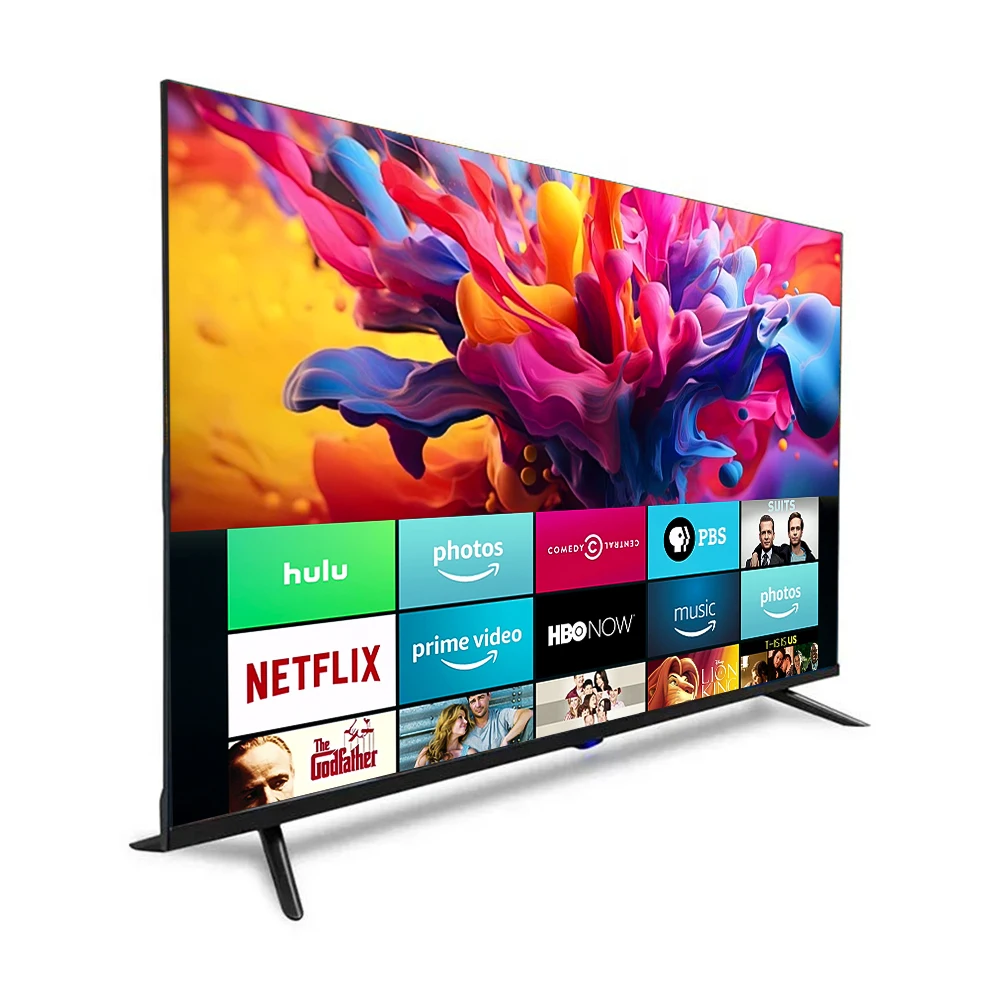
Why 100-Inch Displays Are Gaining Popularity
Lately, demand for screens larger than 97 inches has surged — search interest peaked in January 2026 1. This isn’t just about “bigger is better.” Three converging forces explain the trend:
- Price compression in Mini-LED manufacturing: Mass adoption of RGB Mini-LED backlighting and improved mass-transfer yield have cut costs dramatically — enabling sub-$5,000 consumer models and even $1,160 B2B units 3.
- Content readiness: Streaming platforms now routinely offer native 4K HDR and Dolby Vision content; game engines increasingly support 4K/120Hz output — making resolution and refresh rate meaningful again.
- Space efficiency: A single 100-inch panel eliminates projector ceiling mounts, lens calibration, and acoustic treatments — appealing to urban dwellers and renovation-averse homeowners.
This growth reflects a shift from “theoretical aspiration” to “practical ownership.” And that shift hinges entirely on technology choice — not preference, but physics.
Approaches and Differences: OLED (97") vs Mini-LED (100")
The core decision isn’t “OLED or Mini-LED at 100 inches.” It’s “97-inch OLED or 100-inch Mini-LED” — because true 100-inch OLED doesn’t exist in production. That distinction changes everything.
OLED (97-inch only):
- ✓ Pros: Perfect per-pixel black levels, infinite contrast, near-instant response time (<0.1ms), wide viewing angles, no motion blur.
- ✗ Cons: Lower peak brightness (~800–1,000 nits sustained), risk of burn-in with static UI elements, significantly higher price ($20K–$25K), limited availability, heavier weight, stricter shipping requirements.
Mini-LED (100-inch, widely available):
- ✓ Pros: Sustained peak brightness >1,500 nits (ideal for daylight viewing), no burn-in risk, lower cost ($3,000–$5,000 retail; <$1,200 wholesale), lighter weight, broader model selection (Xiaomi S100, Hisense ULED X, LG QNED).
- ✗ Cons: Local dimming zones can cause blooming in high-contrast scenes; black levels not as deep as OLED; slightly narrower viewing angles at extreme off-axis positions.
When it’s worth caring about: Contrast fidelity in pitch-black environments (e.g., dedicated home theaters).
When you don’t need to overthink it: If your room has windows, overhead lights, or shared open-plan space — OLED’s black-level advantage vanishes behind ambient reflection. If you’re a typical user, you don’t need to overthink this.
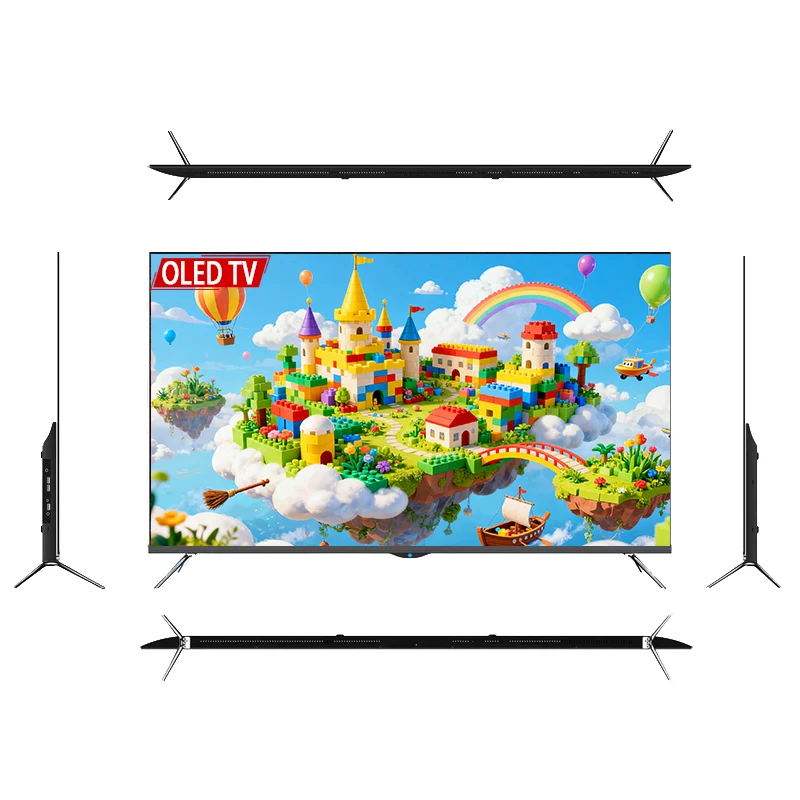
Key Features and Specifications to Evaluate
Don’t default to “just get the biggest number.” Prioritize features that directly impact daily usability:
- Resolution: 4K (3840 × 2160) is non-negotiable. No mainstream 100-inch display ships in lower resolution — avoid anything labeled “4K-equivalent” or “upscaling-only.”
- Refresh rate: 120Hz native (not interpolated) is essential for sports, gaming, and smooth motion. 144Hz is emerging in high-end Mini-LED models — useful if paired with PC graphics cards.
- HDMI 2.1 support: At least two full-bandwidth (48Gbps) ports are required for 4K/120Hz + VRR + eARC. Verify firmware compatibility — some early 2025 models shipped with HDMI 2.1 locked behind updates.
- Local dimming zones: For Mini-LED, aim for ≥1,000 zones. Below 500, blooming becomes noticeable during title sequences or news tickers.
- Color volume & coverage: DCI-P3 ≥95% and Delta E <3 guarantee accurate, vibrant color — especially important for creators or cinephiles.
When it’s worth caring about: Gaming or professional video editing — where latency, VRR, and color accuracy directly affect workflow.
When you don’t need to overthink it: General streaming and casual viewing — modern upscaling engines handle most content well. If you’re a typical user, you don’t need to overthink this.
Pros and Cons: Balanced Assessment
| Factor | 97-inch OLED | 100-inch Mini-LED |
|---|---|---|
| Contrast & Blacks | ✅ Best-in-class (infinite) | ⚠️ Very good (local dimming dependent) |
| Brightness (HDR) | ⚠️ Moderate (800–1,000 nits) | ✅ Excellent (1,500–2,500+ nits) |
| Burn-in Risk | ⚠️ Present (static logos, news tickers) | ✅ None |
| Viewing Angles | ✅ Near-perfect | ⚠️ Good (minor gamma shift >30° off-axis) |
| Size Flexibility | ❌ Fixed at 97" | ✅ True 100" (and beyond — 110"+ in B2B) |
| Price (retail) | ❌ $20,000–$25,000 | ✅ $3,000–$5,000 |
How to Choose a 100-Inch Display: Step-by-Step Decision Guide
Follow this sequence — not chronologically, but hierarchically — to eliminate noise and focus on what moves the needle:
- Confirm physical feasibility first: Measure wall width (≥88”), door height/width, elevator dimensions, and staircase turns. Many users return units because they assumed “100-inch” meant “fits my existing doorway.”
- Define your primary lighting condition: Is the room dark 90% of the time? Then contrast matters — and 97-inch OLED becomes relevant. Is there natural light or overhead lighting >3 hours/day? Then brightness dominates — and Mini-LED wins outright.
- Identify your dominant use case: Gaming or fast-paced sports → prioritize 120Hz + HDMI 2.1 + VRR. Passive movie watching → prioritize color volume and tone mapping. Commercial signage → prioritize warranty length, remote management, and power-on reliability.
- Set your realistic budget — then match tech: Under $6,000? Only Mini-LED qualifies. Over $20,000 with dedicated theater infrastructure? Then 97-inch OLED enters consideration — but know you’re paying for 3 inches less and double the price.
- Avoid these three common traps:
- Assuming “OLED branding” means true OLED — many B2B “OLED” labels refer to LED-backlit panels with OLED-like marketing language.
- Over-indexing on “peak brightness” without checking sustained brightness — many panels hit 3,000 nits for 10 seconds, then drop to 1,200 nits.
- Ignoring mounting hardware — 100-inch TVs require reinforced wall studs and specialized brackets (VESA 800×400 or larger).
Insights & Cost Analysis
Price is not just a barrier — it’s a signal of underlying capability. Here’s what current market data shows:
- Consumer retail tier: LG QNED 100-inch models ($4,299–$4,999), Hisense ULED X ($3,499), Xiaomi S100 ($3,199).
- B2B/wholesale tier: Verified suppliers list Xiaomi S100 at $1,160–$1,200 (MOQ 10 units) 3. Generic Mini-LED panels (non-branded, no smart OS) start at $890.
- 97-inch OLED: LG G5 series starts at $20,499 (no significant discounting observed across major retailers in 2026).
Value isn’t found in lowest price — it’s found in highest utility per dollar. For every $1,000 spent on Mini-LED, you gain ~1,000 nits of usable brightness, 10+ years of burn-in immunity, and full 100-inch scale. For every $1,000 spent on 97-inch OLED, you gain deeper blacks — but only in darkness, and only if your room supports it.
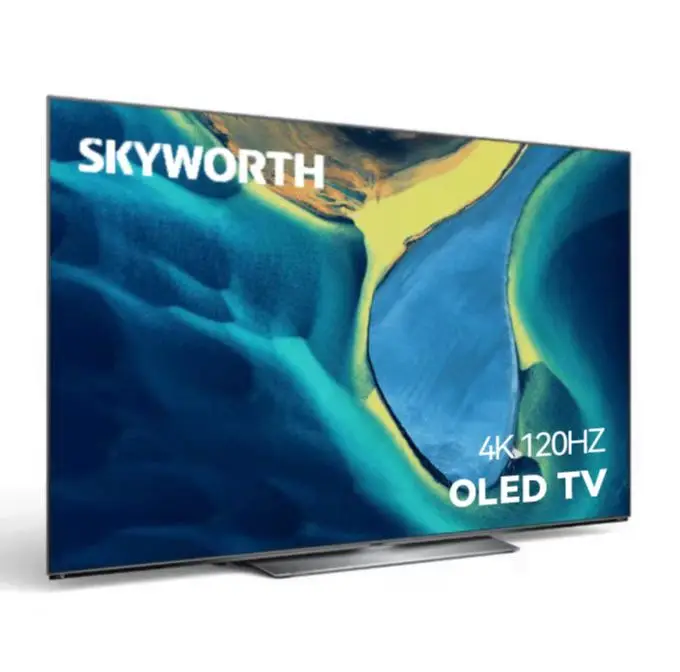
Better Solutions & Competitor Analysis
“Better” depends on your definition. Below is a functional comparison — not brand ranking:
| Category | Suitable For | Potential Problem | Budget Range (retail) |
|---|---|---|---|
| 100-inch Mini-LED (e.g., Xiaomi S100) | Living rooms with ambient light, gamers, commercial signage, budget-conscious buyers | Limited smart OS features (some models lack voice assistant integration) | $3,199–$3,499 |
| 100-inch QNED (LG) | Users wanting brand reliability, webOS ecosystem, and certified Dolby Vision IQ | Higher price point; fewer third-party repair options | $4,299–$4,999 |
| 97-inch OLED (LG G5) | Dedicated dark home theaters, AV purists, collectors | Size mismatch (3" smaller), thermal throttling in warm climates, no long-term burn-in warranty | $20,499+ |
Customer Feedback Synthesis
Based on aggregated reviews across Reddit, AVS Forum, and retailer sites (Best Buy, Amazon, Alibaba):
- Top 3 praises for Mini-LED: “Stunning brightness in daytime,” “No ghosting during fast action,” “Surprisingly thin profile for 100-inch.”
- Top 3 complaints: “Blooming visible on white subtitles against dark backgrounds,” “Smart platform feels sluggish compared to mid-size TVs,” “Mounting instructions assume professional install — DIY is risky.”
- 97-inch OLED feedback: “Black levels are transcendent — like looking into space,” “Shipping damage occurred twice before successful delivery,” “Fan noise audible during quiet scenes.”
Maintenance, Safety & Legal Considerations
No special certifications apply to 100-inch consumer displays — they fall under standard FCC Part 15 and ENERGY STAR v9.0 compliance. However, safety-critical considerations include:
- Wall mounting: Must use dual-stud anchors rated for ≥250 lbs. Single-stud mounts are unsafe and void warranties.
- Ventilation: Leave ≥4 inches clearance on all sides — especially top and rear — to prevent thermal throttling.
- Power: Use a dedicated 15-amp circuit. Surge protectors with joule ratings ≥3,000 are mandatory.
- Disposal: Classified as e-waste in all 50 US states and EU member countries — recycling required by law.
Conclusion: Conditional Recommendations
This piece isn’t for keyword collectors. It’s for people who will actually use the product.
If you need maximum brightness, flexibility, and value in a true 100-inch form factor — choose Mini-LED. It delivers measurable, everyday advantages where they matter most: visibility in real lighting, longevity without burn-in anxiety, and logistical feasibility.
If you operate a professionally treated, fully light-controlled theater space and prioritize absolute contrast above all else — the 97-inch OLED remains technically unmatched — but accept its size, cost, and environmental constraints as non-negotiable trade-offs.
There is no universal “best.” There is only the best fit — for your space, your lighting, your budget, and your actual usage. Everything else is decoration.


