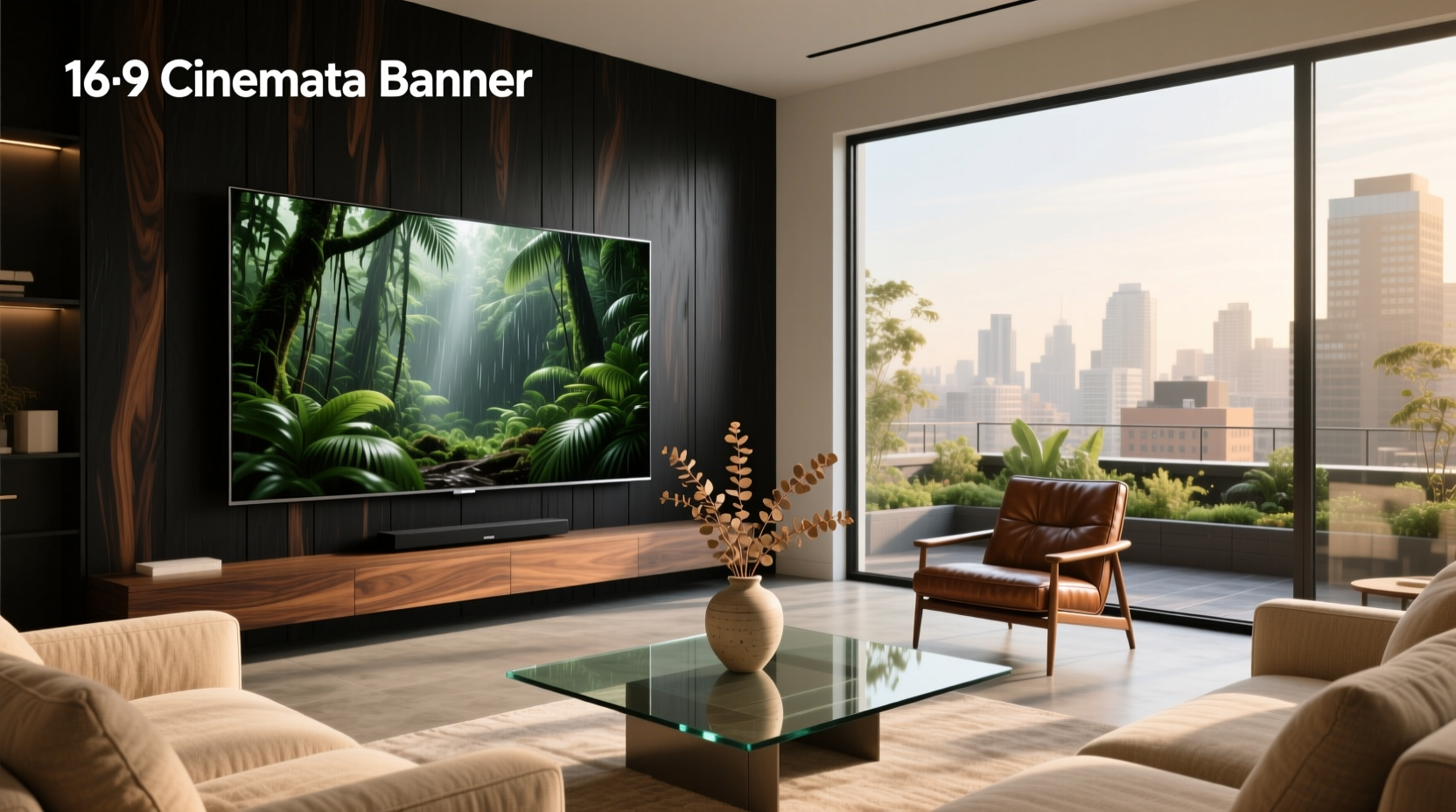
If you’re deciding between a 100-inch TV and a 100-inch Ultra Short Throw (UST) projector in 2026, here’s the direct answer: Choose a Mini-LED TV if your space is a bright, multi-use living room and you game or watch daytime content regularly. Choose a UST laser projector with an ALR screen only if you have a dedicated, light-controlled theater space and prioritize cinematic immersion over convenience or responsiveness. Over the past year, entry-level 100-inch Mini-LED TVs have dropped into the $1,150–$1,500 range—making them not just viable but often more practical than projectors for most households. This shift isn’t incremental; it’s structural. The price-performance inflection point means large-screen ownership is no longer about compromise—it’s about alignment with how you actually live.
About 100-Inch Displays: Definition & Typical Use Cases
A “100-inch display” refers to any screen whose diagonal measurement is exactly 100 inches—roughly 8.3 feet across. It’s not a niche experiment anymore. In 2026, it’s a functional category split across two mature hardware paths: self-emissive flat-panel TVs and reflective projection systems. The typical use cases are sharply divergent:
- 📺 100-inch Mini-LED TV: Living rooms with ambient light, open-plan spaces, multi-purpose entertainment zones, and households where gaming, streaming, video calls, or casual viewing happen throughout the day.
- 🎬 100-inch UST projector + ALR screen: Dedicated home theaters—rooms with controlled lighting, acoustic treatment, and fixed seating. Used primarily for film, high-fidelity audiovisual experiences, and passive viewing sessions.
What defines “typical” isn’t technical capability alone—it’s daily behavior. If you turn on the lights while watching, rearrange furniture seasonally, or host guests who don’t want to dim the room for Netflix, your environment favors a TV. If you close blinds, power off overheads, and treat viewing as a ritual—not background activity—you’re in projector territory.
Why 100-Inch Displays Are Gaining Popularity
Lately, 100-inch displays have moved from “impressive demo unit” to “plausible primary screen.” Three interlocking trends drove this:
- Mini-LED price compression: Once reserved for premium 85-inch models, Mini-LED backlights now ship standard on most 100-inch TVs, delivering 2,000+ nits peak brightness and deep local dimming—critical for large screens that must hold contrast at scale 1.
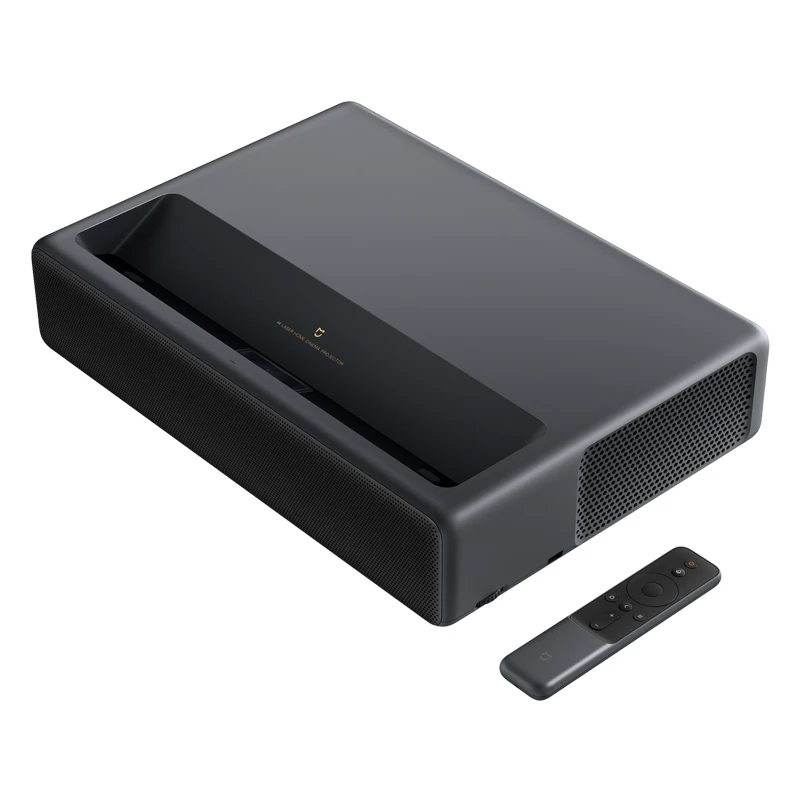
- UST projector maturation: Laser light sources, improved ALR screen coatings, and tighter throw ratios mean reliable 100-inch images can now be cast from just 12–18 inches away—eliminating ceiling mounts and shadow interference 2.
- MicroLED scalability signals: While still premium, TCL’s 163-inch MicroLED model dropped 67% in price over two years—proving ultra-large emissive panels are entering cost curves, not just lab demonstrations 1.
This isn’t hype. It’s measurable deflation in hardware cost per inch—paired with rising expectations for immersive scale. Consumers aren’t chasing size for size’s sake; they’re responding to real improvements in usability, reliability, and integration.
Approaches and Differences
The choice isn’t “TV or projector”—it’s “which physics model fits your room, habits, and priorities?” Here’s how they differ—not in specs alone, but in lived experience:
| Feature | 100-Inch Mini-LED TV | UST Laser Projector + ALR Screen |
|---|---|---|
| Brightness & Ambient Light | 2,000–3,500 nits — works in daylight, near windows, or under lamps. | 2,000–3,000 lumens — requires ambient light control; ALR screen essential for usable contrast 3. |
| Gaming Performance | 144Hz refresh, HDMI 2.1, sub-10ms input lag — competitive and responsive. | Typically 60Hz, higher latency, limited VRR support — fine for casual play, not competitive or fast-paced titles. |
| Installation & Space | Wall-mounting requires reinforced studs (200+ lbs); stand adds depth and footprint. | Compact projector unit; screen adds 3–6 inches depth + mounting complexity; floor space needed for placement. |
| Audio Integration | Built-in Dolby Atmos speakers — adequate for dialogue and music; optional soundbar upgrade. | No built-in audio — soundbar or full surround system required for balanced output. |
| Long-Term Reliability | Known lifespan: 7–10+ years; panel degradation slow and uniform. | Laser light source rated ~20,000 hours; ALR screen coating may fade after 5–7 years of direct sunlight exposure. |
Key Features and Specifications to Evaluate
Don’t optimize for one spec—optimize for what breaks your experience. Ask: When does this matter—and when is it noise?
- Brightness (nits or lumens): When it’s worth caring about — if your room has uncontrolled natural light or overhead fixtures. When you don’t need to overthink it — if you always watch in darkness and own blackout curtains. If you’re a typical user, you don’t need to overthink this.
- Dimming Zones (TV) / Contrast Ratio (Projector): When it’s worth caring about — for HDR movie fidelity and dark-scene detail. When you don’t need to overthink it — if you mostly stream YouTube, sports, or news. Most 2026 Mini-LED TVs exceed 1,000 zones; mid-tier UST projectors hit 1,000,000:1 native contrast.
- HDMI 2.1 & Refresh Rate: When it’s worth caring about — if you own PS5, Xbox Series X, or a high-refresh PC. When you don’t need to overthink it — if your primary use is streaming apps and broadcast TV. If you’re a typical user, you don’t need to overthink this.
- ALR Screen Compatibility (Projector only): When it’s worth caring about — mandatory for any non-dedicated space. When you don’t need to overthink it — irrelevant if you choose a TV.
Pros and Cons
Balance isn’t neutrality—it’s honesty about trade-offs.
✅ 100-Inch Mini-LED TV — Best For:
- Living rooms with windows or open layouts
- Multi-user households (kids, remote work, shared space)
- Gamers, sports fans, and streamers wanting plug-and-play reliability
- Users who value consistent image quality regardless of time of day
⚠️ 100-Inch Mini-LED TV — Limitations:
- Weight (160–220 lbs) demands professional wall-mounting or heavy-duty stand
- Viewing angles narrow slightly at extreme sides (though better than OLED)
- Less “cinematic” black level than high-end projectors in total darkness
✅ UST Projector + ALR Screen — Best For:
- Dedicated home theaters with light control and acoustic tuning
- Viewers prioritizing screen uniformity, zero glare, and filmic texture
- Spaces where wall real estate is constrained but floor space allows projector placement
⚠️ UST Projector + ALR Screen — Limitations:
- ALR screen adds $1,000–$1,800 to total cost 4
- No true “instant on” — warm-up and cool-down cycles add delay
- Screen surface is vulnerable to scratches, dust, and accidental contact

How to Choose a 100-Inch Display: A Step-by-Step Decision Framework
Forget feature checklists. Start with behavior—and eliminate options early.
- Map your lighting reality: Walk through your room at noon, 5 p.m., and 9 p.m. If you can’t darken it below 5 lux without closing blinds *and* turning off all lights, skip UST projectors.
- Define primary use: Is >50% of your screen time gaming, video calls, or live sports? Then TV is objectively superior. If >70% is narrative film or long-form series in quiet conditions, projector remains compelling.
- Assess physical constraints: Measure wall strength (must support ≥250 lbs), floor clearance (for projector throw distance), and ceiling height (for screen mounting).
- Calculate total cost of ownership: Include mount, soundbar, ALR screen (if projector), and potential electrical upgrades. A $1,300 TV may cost less overall than a $1,200 projector + $1,400 screen + $300 soundbar.
- Avoid this trap: Don’t buy a projector hoping to “upgrade the screen later.” ALR performance degrades significantly with cheaper alternatives—cutting corners here ruins the entire investment.
Insights & Cost Analysis
Price tiers in 2026 reflect function—not just brand:
| Category | Typical Price Range (USD) | What You Get |
|---|---|---|
| Entry-Level 100" Mini-LED TV | $1,150–$1,500 | 2,000 nits, 1,000+ dimming zones, HDMI 2.1, 120Hz, basic smart OS |
| Premium 100" Mini-LED TV | $2,100–$4,500 | 3,000+ nits, 2,000+ zones, 144Hz, full Dolby Vision IQ, THX certification |
| Mid-Tier UST Projector (no screen) | $1,400–$2,200 | Laser light source, 4K resolution, Android TV, basic lens shift |
| ALR Screen (100", motorized) | $1,000–$1,800 | Angular Reflective Surface, 0.8–1.2 gain, matte white or grey material |
| Total Projector Setup (realistic) | $2,500–$4,200 | Projector + screen + soundbar + mounting = comparable to premium TV |
Over the past year, the gap closed—but not evenly. The $1,500 TV now outperforms the $2,500 projector in brightness, latency, and consistency. That changes the ROI calculus for everyone except purists.
Better Solutions & Competitor Analysis
There’s no “best brand”—only best fit. What matters is supply-chain maturity and engineering focus:
| Solution Type | Strengths | Potential Issues | Budget Range (USD) |
|---|---|---|---|
| Foshan-sourced Mini-LED TVs | Aggressive pricing; strong local dimming; rapid iteration on firmware | Inconsistent panel binning; limited global warranty coverage | $1,150–$1,800 |
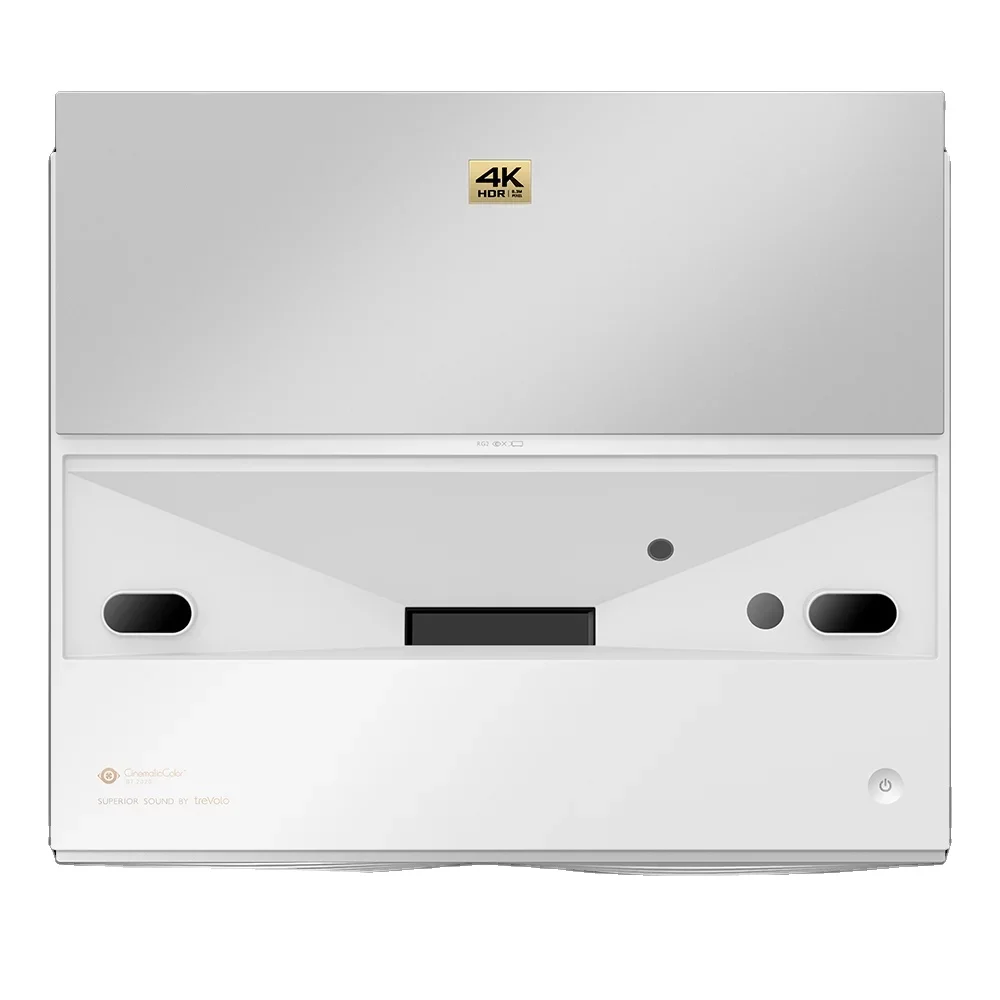
| Shenzhen-based UST Projectors | High lumen output; compact chassis; modular lens options | Thermal noise in sustained use; ALR screen compatibility varies | $1,400–$2,200 |
| Established Brand Premium TVs (e.g., LG, Hisense) | Reliable color science; mature smart platforms; robust service networks | Higher markup; slower spec updates than regional OEMs | $2,100–$4,500 |
Customer Feedback Synthesis
Based on aggregated reviews (CNET, AVS Forum, Reddit r/projectors, Walmart buyer comments), top themes emerge:
- Top Praise for TVs: “No more squinting during afternoon soccer games,” “Gaming feels instant—no input lag surprises,” “Setup took 90 minutes, including leveling.”
- Top Complaint for TVs: “Shipping damage risk is real—insist on white-glove delivery,” “Remote app is clunky; third-party universal remotes help.”
- Top Praise for Projectors: “The screen ‘disappears’—pure immersion,” “Surprisingly bright even at 4 p.m. with good ALR,” “Quiet operation once warmed up.”
- Top Complaint for Projectors: “ALR screen shows every fingerprint and dust mote,” “Fan noise becomes noticeable during quiet scenes,” “Calibration took three evenings and a $200 meter.”
Maintenance, Safety & Legal Considerations
Both solutions demand attention—but different kinds:
- TVs: Ventilation gaps (≥4 inches top/sides); avoid direct sunlight on panel (causes yellowing); wall-mount hardware must meet ANSI/UL 2442 standards for static load ≥4× device weight.
- Projectors: Filter cleaning every 3–6 months; avoid placing near HVAC vents (dust intake); laser safety compliance (IEC 60825-1) verified—no user-serviceable optics.
- Shared Concern: Electrical circuits must support ≥15A continuous draw (especially for premium units). Older homes may require dedicated 20A lines.
Conclusion
This piece isn’t for keyword collectors. It’s for people who will actually use the product.
If you need a single, reliable, all-day screen for a real-world living space—choose a 100-inch Mini-LED TV. It delivers brightness, responsiveness, and simplicity that projectors simply cannot match outside ideal conditions.
If you need maximum screen presence, perfect black levels, and a ritualized viewing environment—choose a UST laser projector with a certified ALR screen, installed in a light-controlled room by professionals.
Everything else is optimization. The 2026 market doesn’t ask you to choose between “good” and “better.” It asks you to choose between “what works where you live” and “what works only where you wish you lived.”


