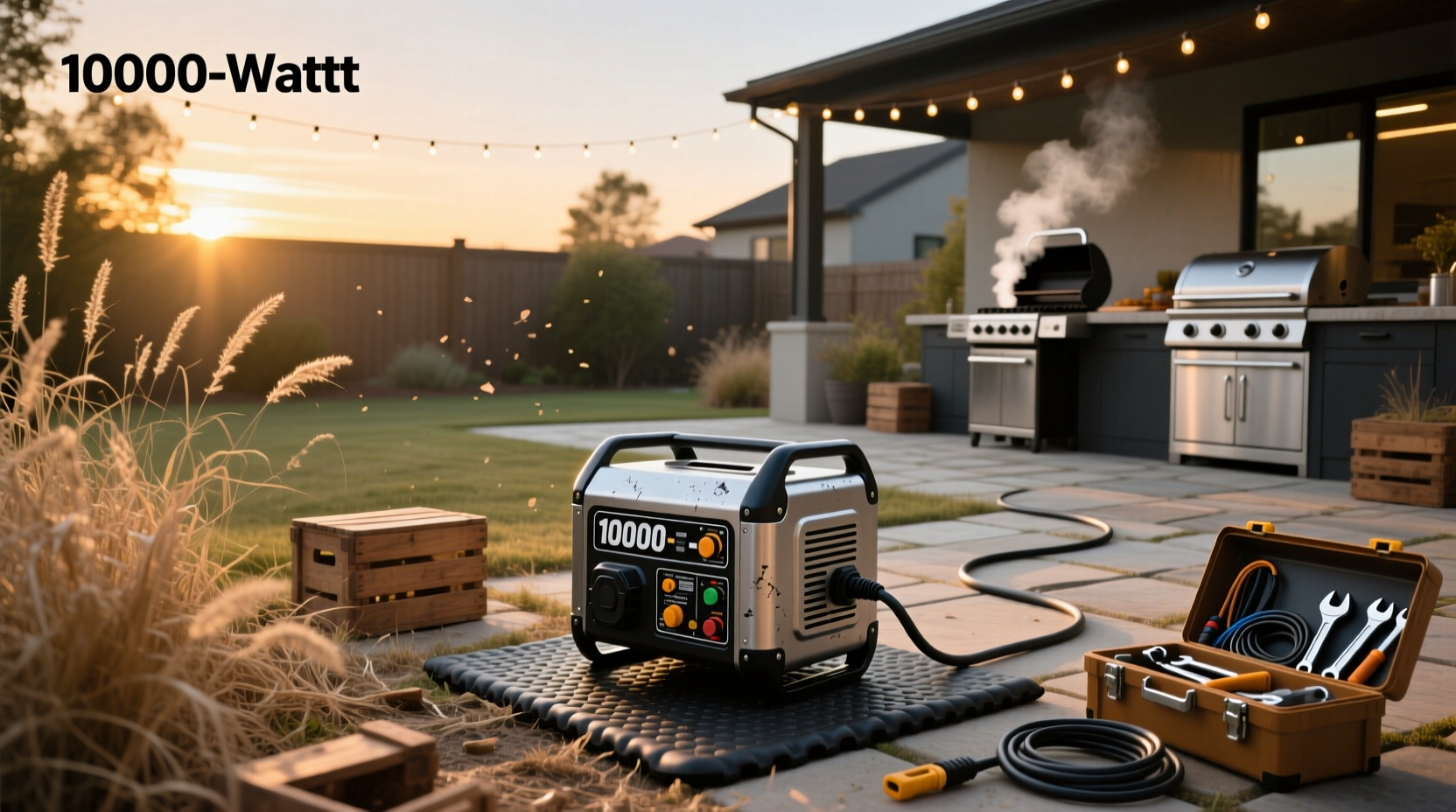
If you’re a typical user, you don’t need to overthink this: For whole-home backup during multi-day outages—or powering a home office plus HVAC—choose a dual-fuel inverter generator rated for 10,000 running watts, with electric start, CO auto-shutdown, and THD under 3%. Over the past year, demand for these units has surged—not because they’re louder or heavier, but because aging grids and climate-driven outages now make reliable, clean power non-negotiable for residential resilience 12. Skip open-frame gas-only models unless you prioritize raw durability over electronics safety—and avoid units without 240V output if you plan to connect via transfer switch.
About 10000 Watt Portable Generators
A 10000 watt portable generator delivers enough continuous (running) power to sustain essential household loads—including refrigerators, well pumps, sump pumps, Wi-Fi routers, medical devices, and even central air conditioning (with proper startup margin). Unlike smaller units (e.g., 2000–3500W), it bridges the gap between “convenience backup” and “whole-house readiness.” It’s not just about wattage—it’s about voltage compatibility (120V/240V), fuel flexibility, noise control, and waveform purity. These generators typically weigh 200–280 lbs and feature heavy-duty wheel kits, making them portable in name and function—but not lightweight. They serve three core use cases: disaster preparedness (especially in hurricane- or wildfire-prone regions), remote work continuity (powering laptops, monitors, VoIP systems, and NAS devices), and job-site support for contractors needing high-output temporary power.
Why 10000 Watt Portable Generators Are Gaining Popularity
Lately, adoption has accelerated—not due to marketing hype, but measurable infrastructure stress. North America’s grid reliability has declined steadily since 2020, with average outage duration up 42% in major metro areas 3. Simultaneously, Asia-Pacific now accounts for ~38% of global portable generator demand, driven by rapid urbanization and monsoon-related blackouts 1. This isn’t about convenience anymore. It’s about risk mitigation: households with home offices can’t afford 48-hour internet loss; families with elderly members rely on powered medical equipment; and small businesses face revenue loss during unplanned downtime. The shift toward dual-fuel inverters reflects a deeper trend: users now expect generator power to behave like utility-grade electricity—not just “enough juice,” but stable, low-THD current safe for sensitive electronics.
Approaches and Differences
Two primary architectures dominate the 10kW class—each serving distinct needs:
| Approach | Key Traits | Pros | Cons |
|---|---|---|---|
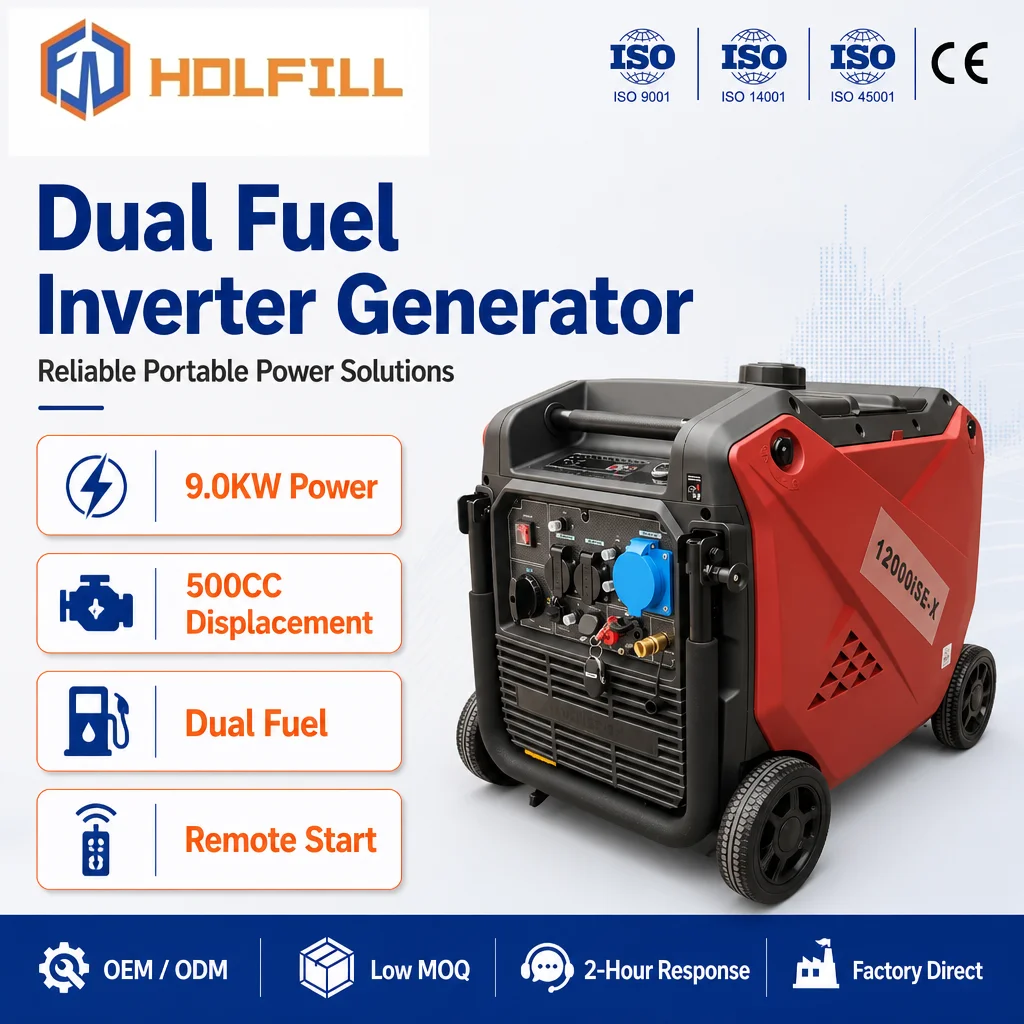
| Dual-Fuel Inverter | Gasoline + propane; inverter-based AC conversion; THD <3%; typically 68–72 dBA | Clean power for laptops & smart appliances; quieter operation; longer fuel shelf life (propane); safer emissions profile | Higher upfront cost; slightly lower peak starting wattage than open-frame equivalents |
| Open-Frame Gas | Gasoline-only; conventional alternator; THD 12–25%; typically 75–82 dBA | Lower purchase price; higher starting wattage (up to 12,500W); simpler maintenance; proven industrial durability | Unsafe for sensitive electronics; louder; gasoline degrades quickly; no CO auto-shutdown standard |
When it’s worth caring about: If you own modern electronics (smart thermostats, SSD-based NAS, gaming PCs), THD matters—low-THD inverters prevent data corruption and premature device failure. When you don’t need to overthink it: If your only load is lighting, fans, and a basic refrigerator—and you’ll store fuel short-term—open-frame units deliver reliable power at lower cost. If you’re a typical user, you don’t need to overthink this.
Key Features and Specifications to Evaluate
Don’t default to “10,000W” as a single number. Focus on these five non-negotiable metrics:
Running vs. Starting Watts: Running watts (8,000–10,000W) indicate sustained capacity. Starting watts (11,000–12,500W) reflect surge capability for compressors and motors. Verify both—never assume 10kW means 10kW startup.
Voltage Output: Must support 120V/240V split-phase. Without 240V, you cannot run dryers, EV chargers, or most central AC units—even if total wattage seems sufficient.
Total Harmonic Distortion (THD): Inverters achieve <3% THD; conventional units range 12–25%. Anything above 6% risks damaging audio gear, LED drivers, and variable-speed appliances.
Fuel Flexibility: Dual-fuel (gas/propane) lets you stock propane long-term—critical when gas stations close post-storm. Tri-fuel adds natural gas compatibility (requires hardline connection).
Safety Systems: CO auto-shutdown is now standard on top-tier models. Electric start is essential—manual pull-starting a 250-lb unit is physically impractical for most adults.
Pros and Cons
Pros: Enables whole-home backup without permanent installation; supports hybrid fuel strategies; quieter than standby generators; avoids permitting hurdles of whole-house systems.
Cons: Requires manual deployment and refueling; not UL 2202 certified for EV charging (check local code before using for Level 2 EV supply); weight limits true mobility—most need two people to move on uneven terrain.
Best suited for: Homeowners in outage-prone zones, remote workers with critical uptime needs, contractors needing mobile high-wattage power.
Not ideal for: Users expecting silent, hands-off operation (like standby units); those without secure outdoor storage (fuel exposure risks); or anyone planning daily use beyond emergency scenarios.
How to Choose a 10000 Watt Portable Generator
Follow this decision checklist—prioritizing real-world impact over spec-sheet perfection:
- Map your actual loads: Use a Kill A Watt meter or online calculator—not manufacturer estimates—to confirm your home’s real running/starting demand. Most homes overestimate by 20–30%.
- Verify 240V compatibility: Check your main panel: if you have a 240V breaker (e.g., for AC or dryer), your generator must output it—and include a compatible L14-30 or L14-50 outlet.
- Confirm THD <3%: Only inverters guarantee this. If your list includes any smart device or inverter-driven appliance, skip non-inverter models.
- Test portability: Look for integrated, heavy-duty wheel kits and folding handles—not aftermarket add-ons. Units over 230 lbs become immobile without them.
- Avoid these common oversights: Ignoring altitude derating (power drops ~3.5% per 1,000 ft elevation); assuming “10kW” covers all startup surges; buying without verifying local noise ordinances (many communities cap 70 dBA at property line).
Insights & Cost Analysis
Current wholesale B2B pricing for dual-fuel 10kW inverters ranges from $340 to $1,200 per unit, depending on certification level, warranty, and OEM origin 4. Consumer retail prices sit between $1,899–$3,499. The $2,400–$2,900 band offers the strongest value: units here include full CO sensors, parallel capability, and 3-year commercial warranties. Below $2,200, expect reduced inverter filtering or omitted 240V outlets. Above $3,200, you’re paying for brand premium—not measurable performance gains. Sourcing from Asia-Pacific manufacturers (e.g., Yancheng Slong, Hangzhou Power Young) provides tighter cost control—but verify ISO 8573-1 air quality compliance and CE/UL 2202 certification before bulk procurement.
Better Solutions & Competitor Analysis
For most residential users, the optimal solution lies between consumer-grade and industrial-grade hardware. The following models represent balanced trade-offs across reliability, features, and service access:
| Model Type | Suitable For | Potential Issue | Budget Range (USD) |
|---|---|---|---|
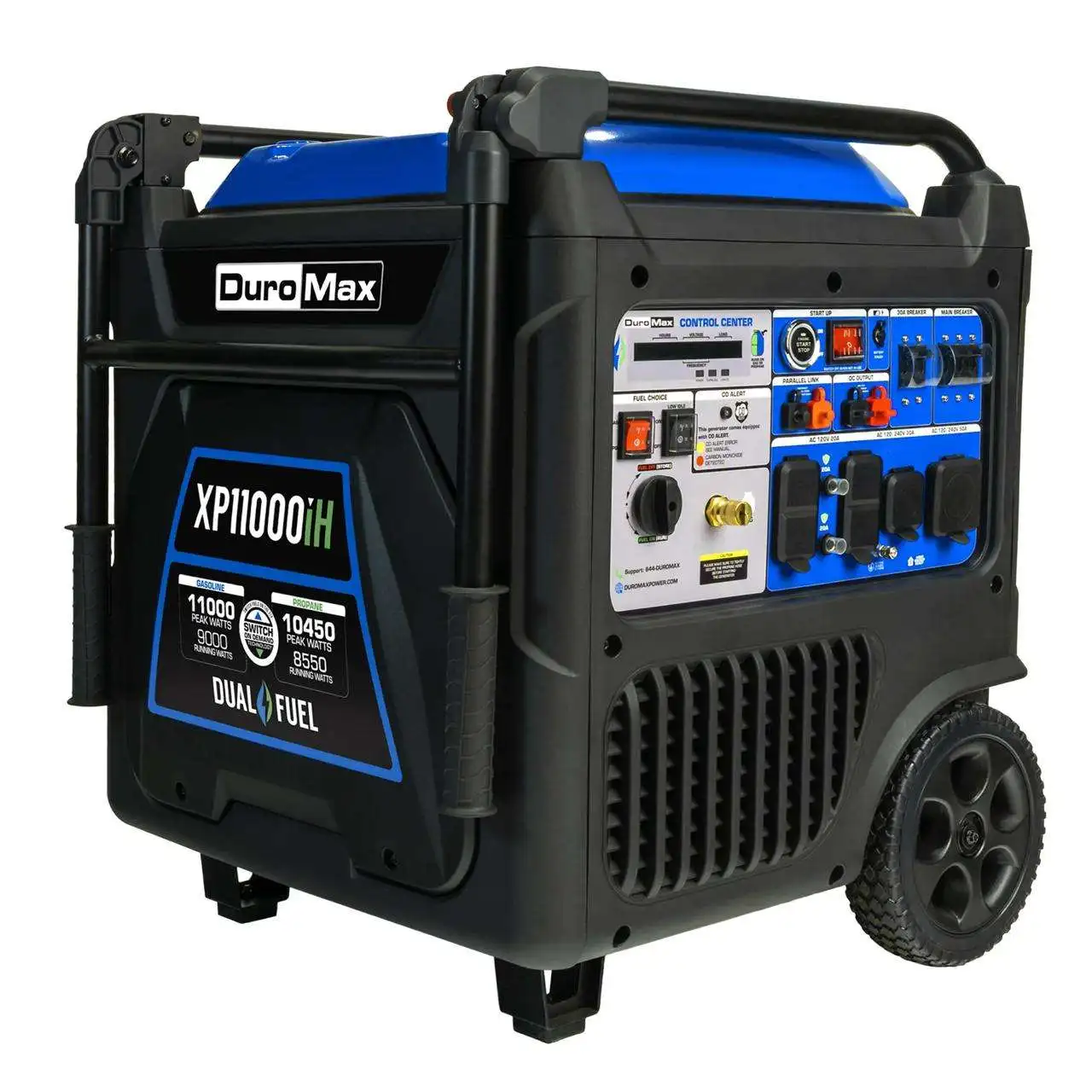
| DuroMax XP11000iH | Homeowners needing clean, quiet, dual-fuel power with strong dealer support | Limited app integration; no built-in Bluetooth | $2,599 |
| Generac GP9500E | Users prioritizing tri-fuel flexibility and rugged simplicity | Higher THD (~4.5%)—not ideal for high-end AV gear | $2,249 |
| Honda EB10000 | Commercial users requiring maximum runtime and field-serviceability | No inverter tech; THD ~15%; louder (78 dBA) | $3,399 |
This piece isn’t for keyword collectors. It’s for people who will actually use the product.
Customer Feedback Synthesis
Based on aggregated reviews from Consumer Reports, Wirecutter, and Reddit’s r/electricians (2024–2025), top recurring themes include:
- Highly praised: Dual-fuel switching during extended outages; electric start reliability; low-noise operation enabling nighttime use; clear digital displays showing real-time load %.
- Frequently cited pain points: Propane regulator compatibility issues with older tanks; wheel kit axle pins bending under repeated load; confusing manual language (especially for non-native English speakers); inconsistent firmware updates for smart features.
Maintenance, Safety & Legal Considerations
Annual maintenance includes oil/filter changes, spark plug inspection, and air filter cleaning—identical to small-engine protocols. Critical safety practices: never operate indoors or in attached garages (CO risk remains high even with doors open); maintain 5+ ft clearance from structures on all sides; ground the unit per NEC Article 250 if connecting to a transfer switch. Legally, most U.S. municipalities require generators over 5kW to comply with EPA Tier 4 final emissions standards—and many enforce local noise ordinances limiting operation to daytime hours only. Always consult your AHJ (Authority Having Jurisdiction) before permanent wiring.
Conclusion
If you need clean, flexible, residential-grade backup for multi-day outages and sensitive electronics, choose a dual-fuel inverter generator with 10,000W running capacity, 240V output, and verified THD <3%. If you need rugged, high-surge power for job sites or rural cabins where electronics aren’t priority—and budget is constrained—opt for an open-frame gas model with verified 12,000W+ starting capacity. If you’re a typical user, you don’t need to overthink this. Prioritize safety certifications, real-world noise levels, and documented fuel efficiency over headline wattage alone.


