If you’re a typical user, you don’t need to overthink this. A 10000-watt amplifier is not for home studios, living-room setups, or even most commercial venues—it’s for extreme-scale sound reinforcement: outdoor festivals with 50+ dB of ambient noise, custom car audio competitions requiring sub-10Hz extension at 125+ dB SPL, or fixed-install line arrays covering stadiums. Over the past year, demand has surged—not because specs got better, but because modular Class-D platforms (like Taramps HD100002 or Cleversound XL-10000) now deliver stable 10kW output at 1Ω with integrated thermal and voltage protection—making them safer and more deployable than earlier generations. If your speakers are rated below 1000W RMS per channel, or your listening distance exceeds 25 meters without acoustic assistance, a 10000W amp is functionally over-engineered. This piece isn’t for keyword collectors. It’s for people who will actually use the product.
About 10000W Amplifiers: Definition and Typical Use Cases
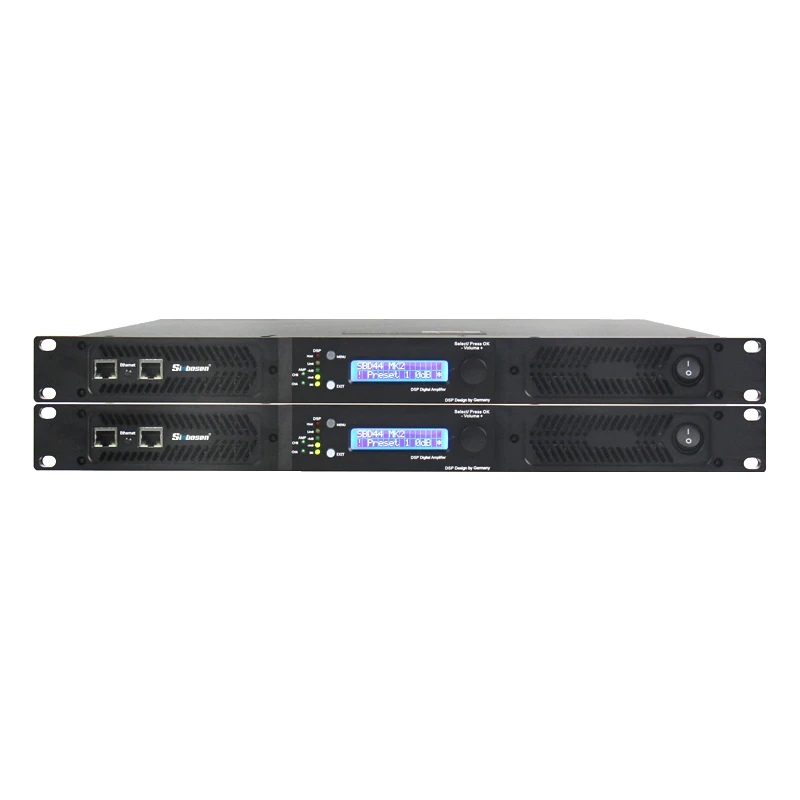
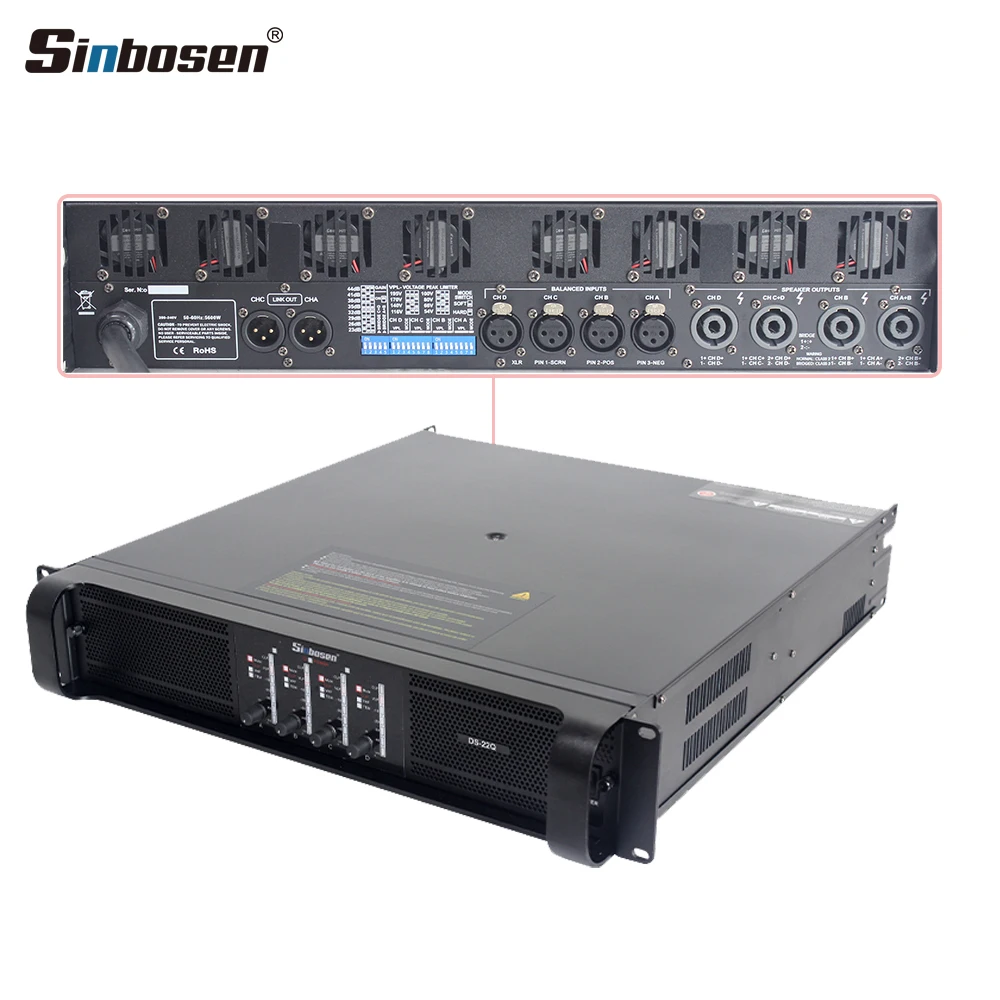
A 10000-watt amplifier refers to a power amplifier whose maximum continuous (RMS) output reaches ~10,000 watts—typically measured at low impedance (1–2Ω), often into reactive loads like high-excursion subwoofer arrays. Crucially, wattage alone doesn’t define capability. What matters is sustained RMS power under real-world thermal and voltage conditions—not peak or MAX ratings that appear in marketing copy. These units fall almost exclusively into two categories: monoblock (1-channel) designs for ultra-low-frequency subwoofer stacks, and multi-channel (usually 4-channel) models for distributed bass or full-range line array drivers.
Typical deployment scenarios include:
- ⚡ Mobile competition audio: Car audio SPL contests where vehicles must achieve >170 dB at the driver’s seat—requiring tightly coupled, impedance-matched subwoofers driven by one or more 10kW amps;
- 🌐 Festival-grade PA systems: Driving large-format horn-loaded sub cabinets (e.g., 2x18" or 4x21") in open-air environments where atmospheric absorption and crowd damping demand massive headroom;
- 🏗️ Permanent installation in industrial venues: Warehouses, arenas, or outdoor amphitheaters where speaker sensitivity is low (<95 dB @ 1W/1m) and cable runs exceed 50 meters—demanding high-voltage drive to overcome losses.
Why 10000W Amplifiers Are Gaining Popularity
Lately, adoption has increased—not due to rising consumer demand, but because system integrators and competition builders now treat 10kW as a threshold spec rather than an outlier. Three interdependent shifts explain this:
- Improved thermal management: Modern Class-D topologies (e.g., TD, GaN-enhanced) sustain 90%+ efficiency at 1Ω loads, reducing heat sink mass and enabling compact chassis—critical for vehicle installations 1;
- Lower entry cost: Entry-level 10kW monoblocks now start near $200 (e.g., Power Acoustik VA1-10000D), down from $1,200+ five years ago—though reliability varies significantly across price tiers 2;
- Standardized protection logic: Smart safeguards (over-temperature, DC offset, short-circuit, and undervoltage lockout) have become baseline—not optional—reducing catastrophic failure risk during high-stress operation 3.
This isn’t about “more volume”—it’s about consistent, distortion-free output under load. If you’re a typical user, you don’t need to overthink this.
Approaches and Differences: Monoblock vs. Multi-Channel
Two architectures dominate the 10000W segment. Neither is universally superior—choice depends entirely on topology, not preference.
| Architecture | Typical Output | Key Advantages | Potential Issues |
|---|---|---|---|
| Monoblock (1-channel) | 10,000W RMS @ 1Ω (e.g., Soundstream AR1‑10000D) | Maximum power density; optimized thermal path; single-load simplicity; ideal for subwoofer arrays | Zero channel flexibility; requires external DSP or crossover for full-range systems |
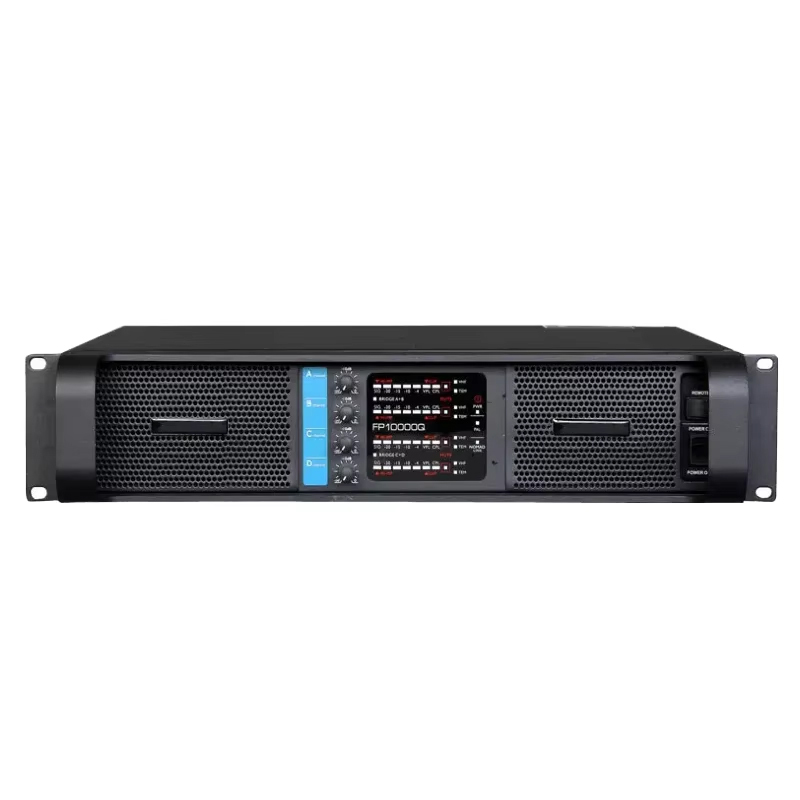
| Multi-Channel (4-channel) | 2,500W RMS × 4 @ 2Ω (e.g., FP10000Q) | Independent gain control per channel; built-in bridging options; supports mixed speaker types (subs + mids) | Lower per-channel headroom; higher total current draw; complex wiring for impedance matching |
When it’s worth caring about: If your rig uses four or more discrete low-frequency cabinets—or if you run bi/tri-amped configurations—you’ll benefit from independent channel control and DSP routing. When you don’t need to overthink it: For dedicated subwoofer stacks (especially in vehicles), monoblocks simplify cabling, reduce ground-loop risk, and improve thermal predictability.
Key Features and Specifications to Evaluate
Spec sheets for 10000W amplifiers are notoriously inconsistent. Focus only on these three verified metrics:
- 📊 RMS power @ real-world impedance: Ignore “MAX” or “PEAK” claims. Look for continuous RMS wattage at 1Ω or 2Ω, measured with 1% THD+N, 20 Hz–20 kHz bandwidth. Verified lab reports (not manufacturer white papers) are rare—but essential for validation.
- ⚡ Input voltage range & current draw: A true 10kW amp at 1Ω draws ~83A at 12V—meaning your alternator must supply ≥150A continuously, plus battery buffer. Units rated for 10–16V input tolerate voltage sag better than those requiring strict 13.8V 4.
- 🌡️ Thermal derating curve: Does output drop linearly above 40°C ambient? Or does it hold 95%+ power up to 65°C? The latter indicates robust heatsink design and fan redundancy.
If you’re a typical user, you don’t need to overthink this.
Pros and Cons: Who Should (and Shouldn’t) Use a 10000W Amplifier
✅ Suitable for:
- Competitive SPL car audio teams with certified measurement protocols;
- Professional touring engineers deploying 16+ cabinet line arrays;
- Large venue installers managing long cable runs (>60m) with passive speakers.
❌ Not suitable for:
- Home theater or hi-fi listeners—even with high-output towers;
- Small clubs or churches using active speakers or powered subs;
- Beginners without multimeter proficiency, wiring experience, or access to a qualified electrician.
A 10000W amplifier won’t make mediocre speakers sound better. It makes capable speakers behave predictably at their physical limits.
How to Choose a 10000W Amplifier: Decision Checklist
Follow this sequence—skip steps at your own risk:
- Verify speaker program power handling: Sum RMS ratings of all connected drivers. Your amp’s RMS output should be ≤1.5× that sum. Exceeding 2× invites mechanical failure.
- Calculate minimum alternator capacity: For car use, add 30% headroom to total current draw. Example: 100A draw → require ≥130A alternator + dual AGM batteries.
- Confirm cooling environment: Will the amp sit in direct sun or enclosed trunk space? If ambient exceeds 45°C, prioritize forced-air models with dual-speed fans.
- Avoid these traps: “10,000W” labels without impedance context; missing THD/N test conditions; no published derating data; no UL/CE certification marks visible on unit or datasheet.
Insights & Cost Analysis
Price correlates strongly with build quality—not just output. Here’s a realistic breakdown:
- Budget tier ($199–$450): Power Acoustik VA1-10000D, Massive Audio DP10K — functional for short bursts, but thermal throttling begins after ~90 seconds at full load. Best for occasional competition use.
- Mid-tier ($750–$1,300): Taramps HD100002, Cleversound XL-10000 — consistent 10kW @ 1Ω with smart protections. Used widely in regional tours and serious car builds.
- Premium tier ($3,500+): Lab Gruppen FP10000Q — 4-channel, networked monitoring, scalable gain, and 5-year warranty. Justified only for mission-critical fixed installs.
Remember: A $200 amp paired with undersized wiring and poor grounding costs more in blown fuses and damaged speakers than a $1,000 unit with proper infrastructure.
Better Solutions & Competitor Analysis
For many users, two 5000W amps outperform one 10000W unit—offering redundancy, easier thermal management, and simpler load balancing. Below is a comparison of common deployment strategies:
| Solution | Best For | Potential Drawbacks | Budget Range |
|---|---|---|---|
| Single 10kW monoblock | Max SPL in confined spaces (cars, small stages) | No redundancy; single point of failure; complex power distribution | $199–$1,300 |
| Dual 5kW monoblocks | Line array sub sections or stereo bass arrays | Higher total footprint; needs matched gain calibration | $800–$2,200 |
| Modular DSP-powered rack (e.g., Crown CDi DriveCore) | Scalable installs with remote monitoring | Steeper learning curve; higher upfront configuration time | $2,800–$5,000+ |
Customer Feedback Synthesis
Based on aggregated reviews across Alibaba, Amazon, and Mercado Libre (2023–2024):
- Top 3 praised features: Reliable 1Ω stability (especially Taramps and Soundstream), intuitive protection LED indicators, compact chassis depth for tight vehicle mounts.
- Top 3 complaints: Inconsistent labeling of RMS vs. MAX ratings (especially budget brands), minimal documentation in English, lack of firmware update paths for DSP-equipped models.
Maintenance, Safety & Legal Considerations
These units operate at currents that can melt copper wire or ignite insulation. Critical requirements:
- 🔌 Use OFC (oxygen-free copper) 0-gauge or larger primary power cable—never repurpose welding cable.
- 🔧 Install ANL or MRBF fuses within 18 inches of the battery terminal—sized to 125% of max current draw.
- 📜 Check local noise ordinances: Many municipalities cap outdoor SPL at 100–105 dB (measured at property line). A 10kW system easily exceeds this without attenuation.
Conclusion
A 10000W amplifier is a tool—not a trophy. It solves specific, high-stakes problems: moving air at scale, overcoming cable loss, or sustaining clean output in thermally hostile environments. If you need extreme SPL with zero margin for thermal roll-off, choose a monoblock with verified 1Ω RMS rating and dual-fan cooling. If you need flexible, multi-zone bass control in a permanent install, prioritize a 4-channel model with networked monitoring and scalable gain. But if your goal is richer tone, tighter imaging, or lower distortion in a domestic or mid-sized venue setting—a 10000W amplifier will not help. In fact, it may harm. If you’re a typical user, you don’t need to overthink this.