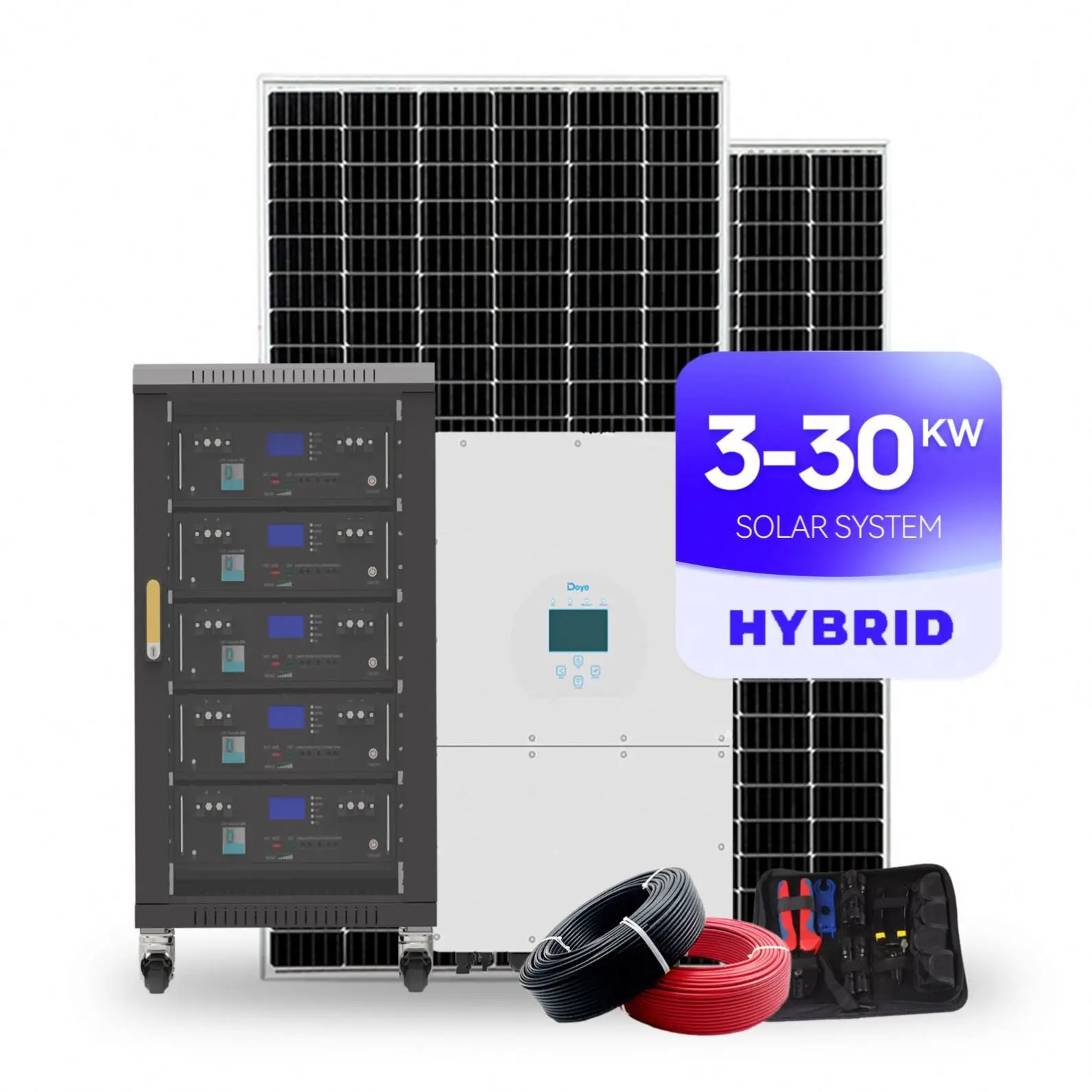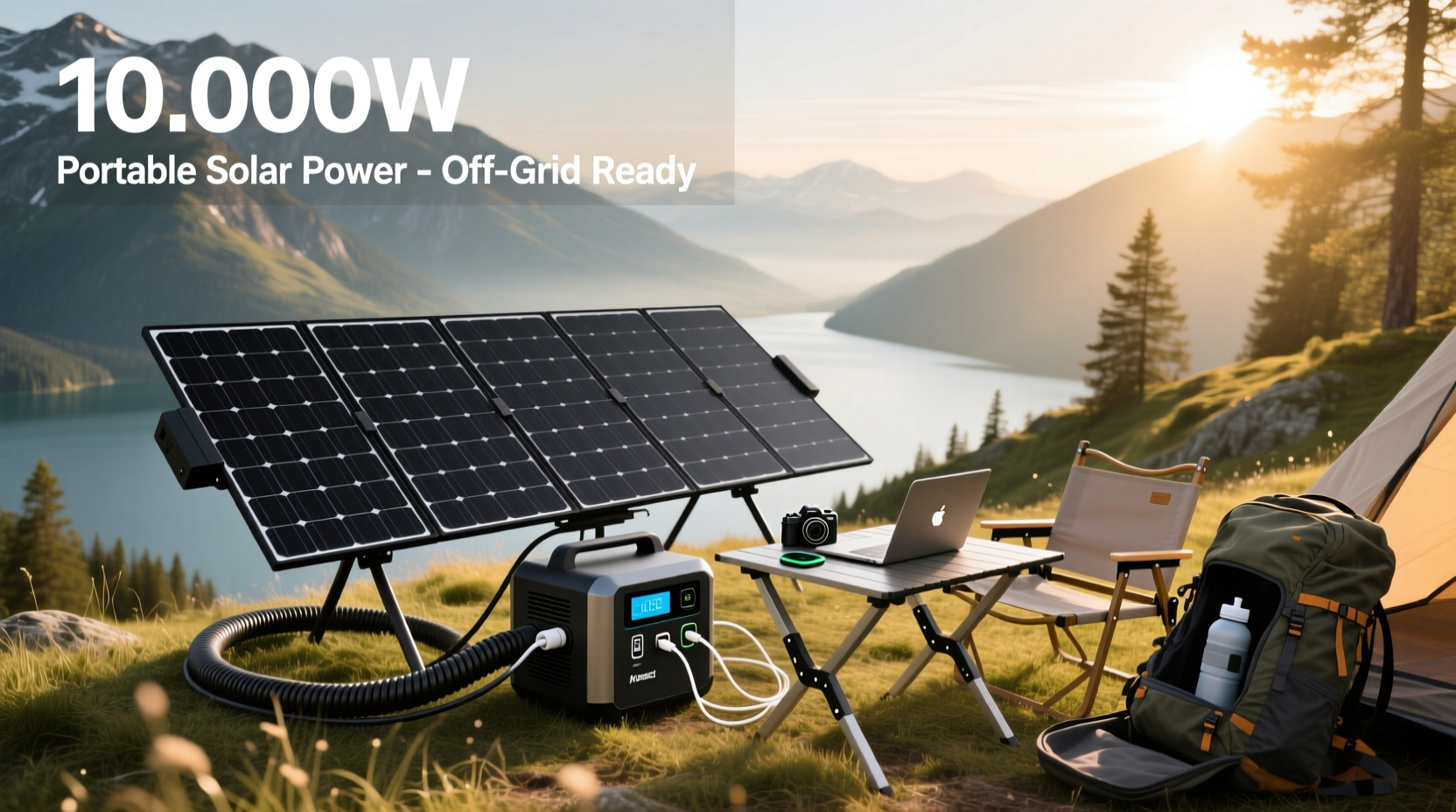
Over the past year, 10000W portable solar panels have shifted from theoretical builds to commercially available, modular systems—yet most buyers still mistake “portable” for “carry-on.” Here’s the direct answer: If you need whole-home backup during grid outages or professional off-grid power for remote sites, a true 10kW portable solar generator is viable—but only as a wheel-mounted, multi-component system (not a single panel). If you’re a typical user, you don’t need to overthink this. Skip all-in-one “10000W portable solar panel” claims that weigh under 100 lbs—they’re either mislabeled inverters, inflated peak ratings, or lack real-world battery storage. Focus instead on three verified components: a 10kW pure-sine inverter with 240V split-phase output, ≥10kWh LiFePO4 battery capacity, and high-efficiency N-Type foldable panels (400–600W each) rated for ≥23.5% efficiency 123. This piece isn’t for keyword collectors. It’s for people who will actually use the product.
About 10000W Portable Solar Panels: Definition & Real-World Use Cases
A “10000W portable solar panel” isn’t one panel—it’s a coordinated energy system designed to deliver up to 10,000 watts of continuous AC power. True portability at this scale means wheel-mounted crates, stackable battery banks, and plug-and-play solar arrays—not backpack-sized gear. These systems serve three distinct user groups:
- 🏠 Homeowners with frequent grid instability: Those needing seamless backup for central air conditioning, well pumps, refrigerators, and lighting across 1,500–2,500 sq ft homes.
- 🛠️ Contractors and field crews: Professionals powering tools, compressors, and communications gear at remote job sites without diesel generators.
- 🏕️ Off-grid homesteaders and tiny-home operators: Users building scalable, zero-emission power for sheds, cabins, or small villas requiring 1–1.5 days of autonomous operation 1.
What it’s not: a camping accessory. A single 10kW panel would be ~20 m² (215 sq ft) and weigh over 350 lbs 4. So when marketers say “portable,” they mean relocatable—not hand-carryable.
Why 10000W Portable Solar Panels Are Gaining Popularity
Lately, two converging shifts have made 10kW portable solar systems more practical than ever:
- ⚡ Higher-voltage DC input support: Modern inverters now accept up to 550Vdc solar input, enabling faster charging and fewer parallel strings—even with compact, high-output panels 5.
- 🔄 Modular expansion architecture: Systems like MyGrid 10K or Foshan-based industrial kits allow users to start with 5kW and add identical units later—avoiding over-provisioning upfront 2.
This isn’t about chasing wattage. It’s about reliability where gas generators fail: noise restrictions, fuel logistics, emissions compliance, and long-term cost per kWh. And unlike fixed rooftop arrays, these systems deploy in under 30 minutes and relocate via trailer or pallet jack 6.
Approaches and Differences: All-in-One vs. Modular vs. DIY
Three main approaches exist—and each serves different priorities:
| Approach | Pros | Cons | Budget Range (USD) |
|---|---|---|---|
| All-in-One Generator (e.g., Nature’s Generator MyGrid 10K) |
Pre-wired, factory-tested; includes ATS for automatic grid switchover; minimal setup time (~15 min) | Fixed configuration; limited upgrade path; lower efficiency due to bundled low-Vmp panels; higher price per usable watt | $12,500–$16,800 |
| Modular Kit (e.g., Foshan OEM + LiFePO4 bank + N-Type panels) |
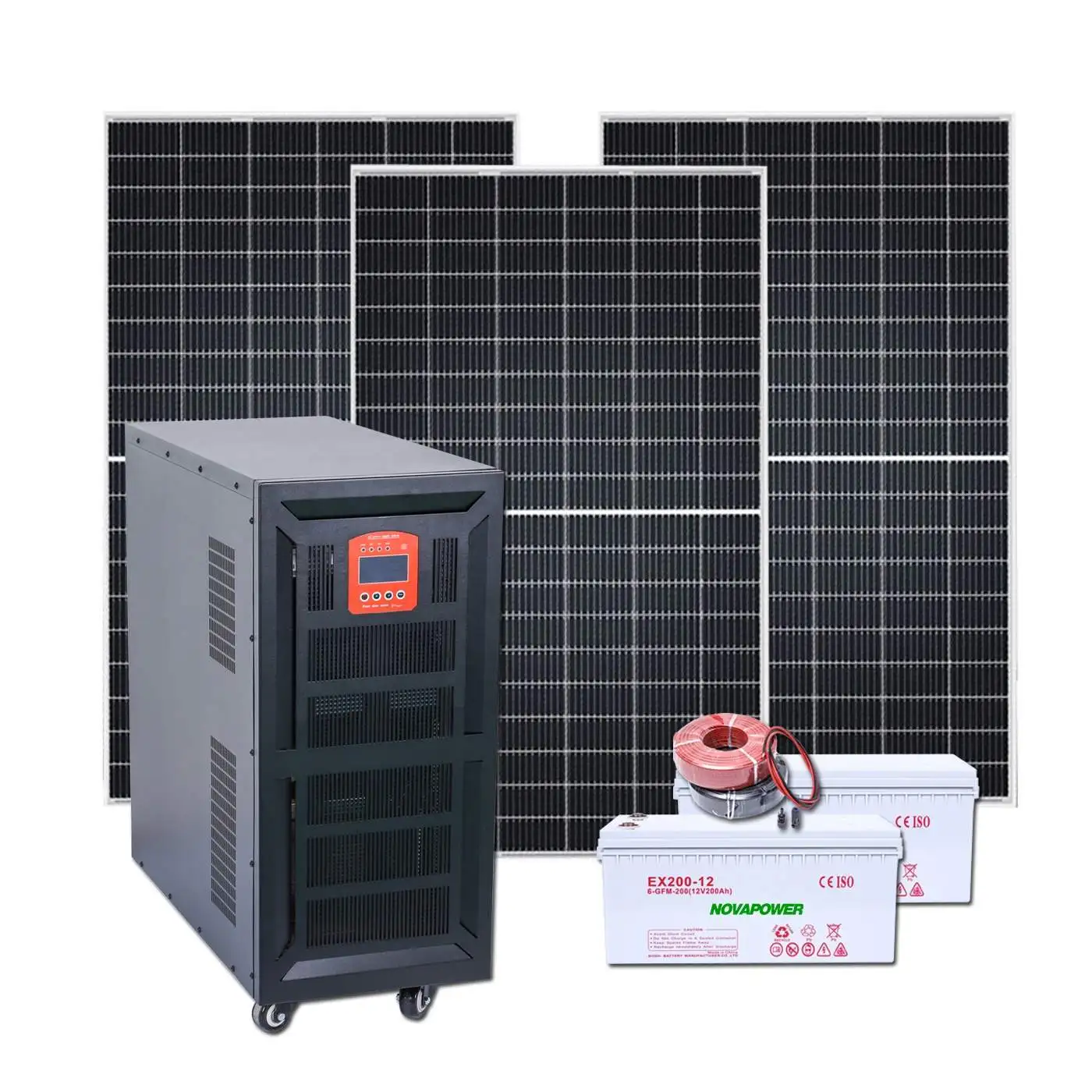
Scalable; supports parallel expansion; choice of best-in-class components; better thermal management; higher real-world yield | Requires basic electrical literacy; 25–30 min setup; supplier coordination needed for warranty alignment | $9,200–$13,400 |
| Detailed DIY Build (Inverter + batteries + panels + charge controller) |
Maximum customization; lowest cost per watt; full control over chemistry, voltage, and cooling | No unified warranty; risk of component mismatch; safety-critical wiring; not recommended unless certified or supervised | $7,800–$10,900 |
When it’s worth caring about: If your priority is first-time reliability (e.g., hurricane-prone region), choose an all-in-one with ATS and UL-certified integration. When you don’t need to overthink it: If you already own a 5kW system and want to double capacity, modular expansion is faster and more efficient than replacing everything.
Key Features and Specifications to Evaluate
Don’t trust headline wattage. Scrutinize these five technical anchors:
- 🔋 Inverter Output Type: Must be pure sine wave and support 120V/240V split-phase. Without 240V, you cannot run dryers, well pumps, or HVAC compressors 1. If you’re a typical user, you don’t need to overthink this—just verify the spec sheet says “split-phase” or “240V output.”
- ⚡ Battery Chemistry: Prioritize LiFePO4. It delivers 3,000+ cycles (vs. 500–800 for NMC lithium-ion), operates safely at wider temperatures, and maintains >80% capacity after 10 years 3. Avoid “lithium” without the “FePO4” suffix.
- ☀️ Solar Panel Efficiency & Type: N-Type monocrystalline panels hit 23.5–25% efficiency—critical when roof or ground space is constrained 7. IBC and TOPCon variants offer marginal gains but steep cost premiums. Stick with proven N-Type.
- 🔌 Max Solar Input Voltage & MPPT Range: Look for ≥450Vdc max input and MPPT range spanning 120–500V. This ensures compatibility with high-Vmp panels and avoids clipping losses on cool, clear days.
- 🛡️ IP Rating & Thermal Management: IP67 is baseline for outdoor durability. Active cooling (fan + heatsink) on the inverter prevents derating above 35°C ambient—a common failure point in summer deployments.
Pros and Cons: Who Benefits—and Who Doesn’t
✅ Best for:
• Homes with 200A service needing full-load backup
• Off-grid builders using automated transfer switches
• Remote operations where refueling is logistically impossible
• Users prioritizing 10+ year battery life over lowest upfront cost
❌ Not suitable for:
• RVs or campers (too heavy; exceeds standard hitch ratings)
• Urban apartments with balcony-only space (requires ≥150 sq ft unshaded area)
• Budget-first buyers expecting sub-$8,000 turnkey solutions
• Users seeking “set-and-forget” operation without basic voltage monitoring
How to Choose 10000W Portable Solar Panels: A Step-by-Step Decision Checklist
- Confirm your load profile first: Use a Kill-A-Watt meter for 72 hours. If your peak draw stays below 4,500W, a 5kW system suffices—and saves $5,000+. Don’t size by “what if” worst-case.
- Verify 240V capability: Check inverter specs—not marketing copy—for “split-phase” or “240V output.” If absent, skip it.
- Require LiFePO4 with cycle count & warranty terms: Minimum 3,000 cycles at 80% DoD, backed by ≥5-year full replacement warranty.
- Avoid “portable” panels sold separately as “10kW ready”: A single 400W panel contributes just 4% of system output. You need 25+ panels—and mounting hardware, cables, and grounding kits. Factor in labor.
- Test shipping & local support: These systems ship on pallets. Confirm freight insurance, lift-gate delivery, and whether firmware updates require overseas servers.
Two common ineffective debates:
• “Monocrystalline vs. polycrystalline”: Irrelevant at 10kW—only monocrystalline (N-Type or PERC) meets efficiency and space requirements.
• “Lead-acid vs. lithium”: Lead-acid can’t sustain 10kW surge loads and fails within 2 years in daily cycling. Don’t consider it.
The one constraint that actually matters: Physical deployment space. Even folded, 25 × 400W panels occupy ~180 sq ft. If your yard or roof can’t accommodate that—or lacks southern exposure—you’ll underproduce regardless of wattage rating.
Insights & Cost Analysis
Realistic installed cost for a functional 10kW portable system ranges from $9,200 (modular kit, self-assembled) to $16,800 (pre-integrated, ATS-ready). Key cost drivers:
- Battery: $3,200–$5,100 (10–13kWh LiFePO4)
- Inverter: $2,400–$3,800 (10kW, 240V, dual-MPPT)
- Panels: $2,600–$3,900 (25 × 400W N-Type, IP67-rated)
- Mounting, cables, breakers: $800–$1,200
ROI emerges after ~7 years versus diesel generation (fuel + maintenance), but value lies in resilience—not payback. For emergency readiness, treat it as insurance: you hope never to use it, but regret skipping it when you do.
Better Solutions & Competitor Analysis
Instead of chasing “10000W portable solar panels” as a monolithic product, optimize for system-level performance. The most effective setups combine:
- N-Type foldable panels (e.g., 450W models from turn1product11 or turn1product36) for rapid deployment and shade tolerance
- Stackable LiFePO4 battery modules (e.g., turn1company51 or turn1company80) with built-in BMS and CAN bus communication
- Inverters supporting both AC coupling (for future grid-tie expansion) and DC fast-charging inputs
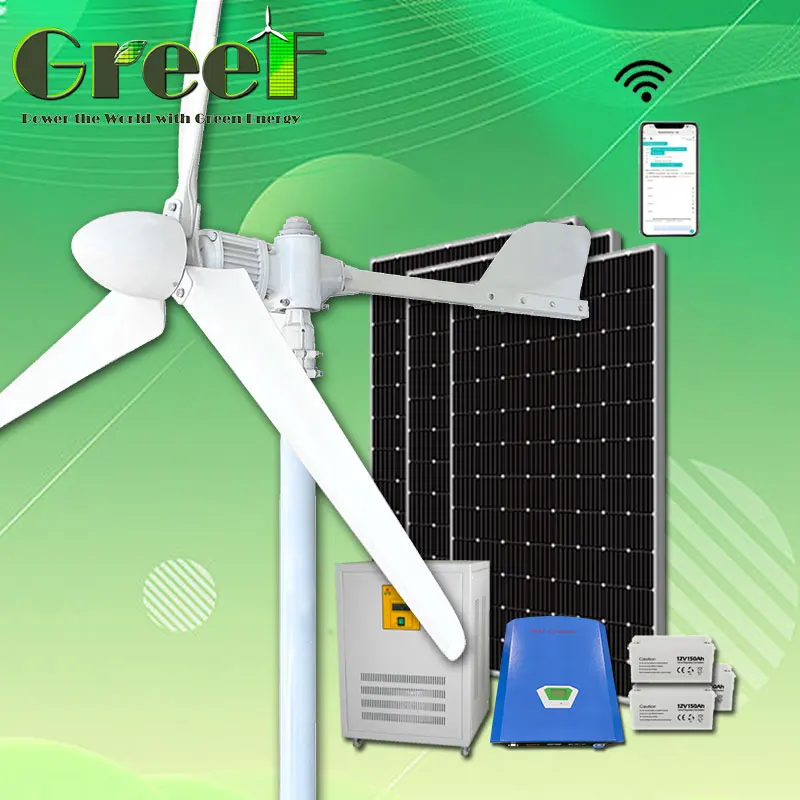
| Feature | High-End Modular (Foshan OEM) | Consumer All-in-One (Nature’s Generator) | DIY Benchmark (Victron + Pylontech) |
|---|---|---|---|
| Real AC Output (continuous) | 10,000W @ 240V | 10,000W @ 120V only (split-phase optional add-on) | 10,000W @ 240V (with Quattro + MultiPlus II) |
| Battery Expandability | Yes (hot-swappable modules) | Limited (proprietary packs) | Yes (standard LV/LiFePO4 protocols) |
| Max Solar Input | 6,000W @ 500Vdc | 4,200W @ 150Vdc | 10,000W @ 450Vdc (dual MPPT) |
| Warranty Support | 3 yr parts, 1 yr labor (local distributor) | 2 yr full, US-based phone support | 5 yr inverter, 7 yr batteries (global, parts-only) |
Customer Feedback Synthesis
Based on aggregated reviews (Reddit r/Generator, SunChees user forums, Amazon B2B listings):
- ✅ Top praise: “Powered our entire house—including AC—during a 36-hour outage,” “Setup took 22 minutes with two people,” “Battery held 92% charge after 18 months of weekly cycling.”
- ⚠️ Frequent complaints: “MPPT firmware update required 3 attempts before stabilizing,” “Wheel mounts bent under 350-lb load on uneven pavement,” “No English manual included—only Chinese PDF with machine translation.”
Maintenance, Safety & Legal Considerations
Maintenance: Clean panels quarterly (water + soft brush); inspect MC4 connectors for corrosion annually; update inverter firmware every 6 months.
Safety: Always disconnect PV input before servicing; use torque wrench on battery terminals (spec: 8–10 N·m); install ground-fault protection per NEC Article 690.43.
Legal: Most US jurisdictions require UL 9540A certification for battery systems and AHJ sign-off for ATS installations. Verify compliance before purchase—especially for insurance claims.
Conclusion: Conditional Recommendations
If you need full-home, 24/7 backup with zero fuel dependency, choose a modular 10kW system with N-Type panels, LiFePO4 batteries, and a 240V split-phase inverter—ideally sourced from ISO9001-certified suppliers 8.
If you want simplicity over scalability, go with an all-in-one unit—but confirm 240V output and minimum 5-year battery warranty.
If your budget is under $8,500 or your space is under 120 sq ft, step down to a 5kW system. You’ll gain 85% of utility at 60% of cost and weight.
Frequently Asked Questions
Yes—if the inverter supports 240V split-phase output and your AC unit draws ≤8,500W startup surge. Most 3–5 ton units fall within this range. Always verify compressor LRA (Locked Rotor Amps) against inverter surge rating.
You’ll need ~180–220 sq ft of unshaded, south-facing ground or roof space for 25 × 400W panels. Folded, each panel occupies ~5.5 sq ft; deployed, ~10.5 sq ft. Ground-mount kits add ~15% footprint.
For standalone, non-permanently wired systems used temporarily (e.g., disaster response), permits are rarely required. However, if connected via ATS to your home’s main panel—even briefly—you must obtain AHJ approval and pass inspection per NEC Article 705.
“10000W solar generator” refers to the complete system (inverter + battery + panels). “10000W portable solar panels” is a misnomer—no single portable panel produces 10kW. It usually describes the solar array component of such a system, typically comprising 25+ individual panels.
With proper maintenance: Inverter (10–15 years), LiFePO4 batteries (10–12 years / 3,000+ cycles), panels (25+ years at 80% output). Real-world lifespan depends on thermal management, depth of discharge, and firmware stability.