Over the past year, demand for reliable 1000m long-range wireless remote controls has accelerated—not because marketing claims got louder, but because real-world deployments in agriculture, logistics, and construction exposed consistent gaps in legacy systems. If you’re a typical user—whether managing irrigation across 200 acres or operating a crane from ground level—you don’t need to overthink this: prioritize LoRa-enabled 433MHz modules with IP66+ rating and encrypted rolling codes. Skip proprietary protocols, avoid Bluetooth or 2.4GHz-based “1km” claims (they rarely exceed 150m outdoors), and verify range under obstruction—not just line-of-sight. This piece isn’t for keyword collectors. It’s for people who will actually use the product.
About 1000m Long Range Wireless Remote Controls
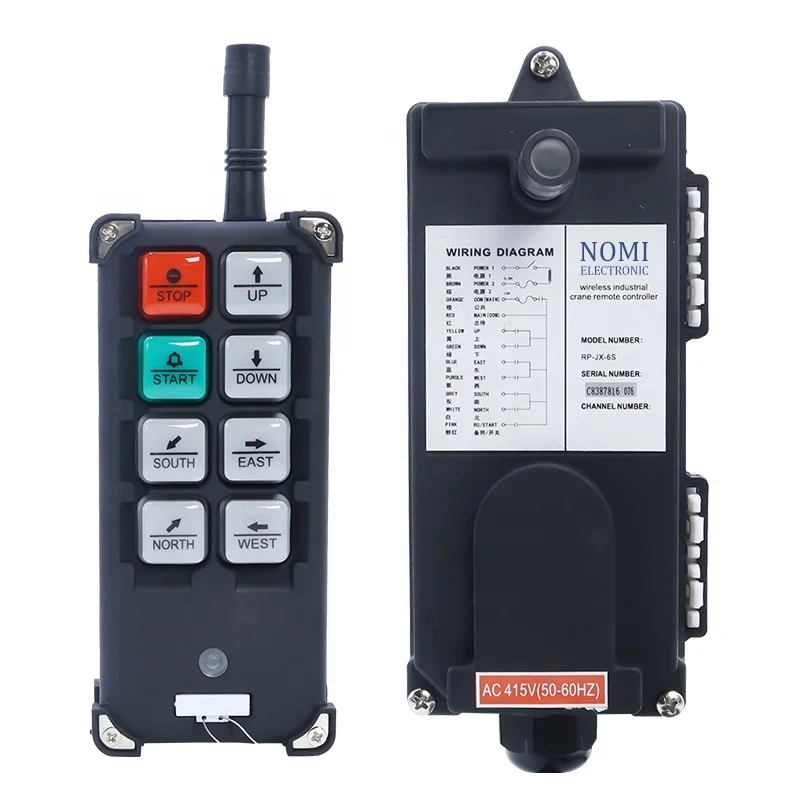
A 1000m long range wireless remote control is a purpose-built system designed to transmit command signals reliably over one kilometer—even through walls, foliage, or light urban clutter. Unlike consumer-grade remotes (e.g., TV or garage door openers), these are engineered for industrial and semi-industrial applications where signal loss means operational delay, safety risk, or equipment downtime. Typical use cases include:
- Agriculture: Starting/stopping submersible pumps or activating valve banks across large, uneven fields 1;
- Industrial logistics: Controlling overhead cranes or hoists from safe distances—reducing cabin exposure and enabling single-person operation 2;
- Construction & infrastructure: Managing site lighting, gate motors, or temporary power distribution without trenching cables 3.
Crucially, “1000m” is not a theoretical maximum—it’s a functional benchmark tied to real-world reliability. That means consistent two-way acknowledgment (where supported), low latency (<300ms), and immunity to RF congestion in shared environments.
Why 1000m Long Range Wireless Remote Controls Are Gaining Popularity
The growth isn’t driven by novelty—it’s rooted in measurable operational shifts. The global industrial wireless remote control market stood at $0.69 billion in 2026 and is projected to reach $1.17 billion by 2035, growing at a CAGR of 6.1% 2. Three forces explain this momentum:
- Safety-first deployment: Operators now routinely work outside hazardous zones—high-voltage substations, chemical storage areas, or active excavation sites. A 1000m remote lets them maintain visual contact while staying out of harm’s way.
- Infrastructure cost avoidance: Running shielded cable over 500 meters costs $3–$7 per meter, plus labor and trenching. A certified wireless kit replaces that with a one-time hardware investment—often paying back in under 12 months 1.
- IoT integration readiness: Modern systems increasingly feed telemetry into SCADA or cloud dashboards. LoRa-based remotes support bidirectional data (e.g., battery status, button press logs), making them compatible with broader automation workflows.
If you’re a typical user evaluating this for field deployment, you don’t need to overthink this: safety and wiring cost savings are the dominant drivers—not smart-home convenience.
Approaches and Differences
Not all “1000m” remotes deliver equal performance. Below are the three most common technical approaches—and why their trade-offs matter in practice:
| Approach | How It Works | Real-World Range (Obstructed) | Key Strengths | Key Limitations |
|---|---|---|---|---|
| Sub-GHz (433MHz / 315MHz) + FSK/OOK | Simple amplitude- or frequency-shift keying on license-free ISM bands | 300–600m (urban); up to 1000m line-of-sight | Low cost, mature tech, widely supported receivers | Vulnerable to interference; no built-in encryption; range drops sharply behind concrete or metal |
| LoRa (Long Range) | Chirp spread spectrum modulation; high link budget, adaptive data rate | 800–1200m (urban/rural); maintains sync even with partial obstruction | Superior noise immunity, low power, scalable to mesh networks, supports telemetry | Slightly higher unit cost; requires matching LoRa receiver (not backward-compatible with OOK) |
| Proprietary 2.4GHz Mesh | Multi-hop relaying using standard Wi-Fi/Bluetooth frequencies | 150–300m (non-line-of-sight); degrades rapidly near machinery or steel structures | Familiar pairing process; often app-controlled | Poor penetration; congested spectrum; unreliable beyond 300m in industrial settings 4 |
When it’s worth caring about: You’re deploying in a factory yard with multiple steel buildings, or across farmland with tree lines and barns. LoRa is objectively more robust here.
When you don’t need to overthink it: You’re controlling a single gate motor in an open field with clear sightlines—433MHz OOK works fine and saves 30–40% on hardware cost.
Key Features and Specifications to Evaluate
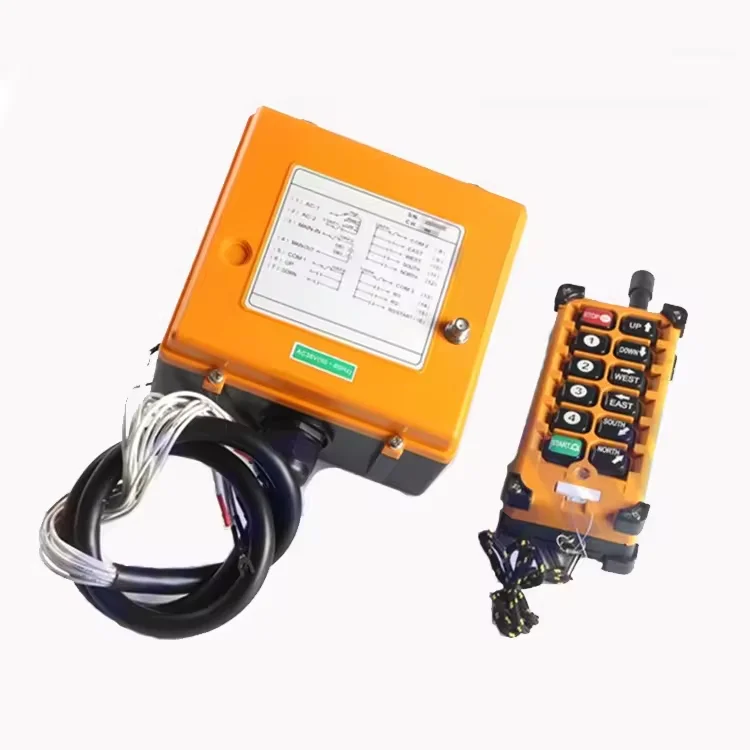
Marketing sheets list dozens of specs—but only five directly correlate with real-world 1000m reliability:
- Frequency band: 433MHz (EU/Asia) or 315MHz (US) is standard for long-range. Avoid 2.4GHz or 5.8GHz unless your use case is indoor-only 1.
- Modulation type: LoRa > FSK > OOK. LoRa’s link budget exceeds 150dB—critical for penetrating obstacles.
- Encrypted rolling code: Prevents replay attacks and co-channel jamming. Look for AES-128 or equivalent—not just “code hopping.”
- Ingress protection: IP66 or IP67 is non-negotiable for outdoor or dusty environments. IP54 won’t survive monsoon season or grain silos.
- Antenna design: External SMA-threaded antennas (not embedded PCB traces) allow gain tuning and repositioning—especially valuable when mounting on moving machinery.
If you’re a typical user installing a remote for a water pump station, you don’t need to overthink antenna gain math—just confirm it ships with a detachable 3dBi rubber duck or better.
Pros and Cons
Let’s be direct: 1000m wireless remotes solve real problems—but they’re not universally appropriate.
✅ Best for: Users needing fail-safe, low-latency control across large physical footprints where cabling is impractical or unsafe. Ideal when operators must remain mobile, visible, and outside hazard zones.
❌ Not ideal for: Applications requiring sub-50ms response (e.g., real-time robotic arm control), ultra-high channel count (>32 independent outputs), or environments with active RF jammers (e.g., military test ranges). Also unsuitable if local regulations prohibit unlicensed 433MHz use—always check regional compliance first.
How to Choose a 1000m Long Range Wireless Remote Control
Follow this 6-step decision checklist—designed to eliminate guesswork:
- Confirm your actual distance requirement: Measure the longest path *with obstructions*. If it’s consistently under 300m, skip LoRa—433MHz OOK suffices.
- Match voltage and load type: DC 12V/24V for small solenoids or LEDs; AC 110V/220V for pumps, motors, or lighting banks. Never mix.
- Verify regulatory compliance: CE/ROHS is baseline. In the US, FCC ID is mandatory. In Japan, use 315MHz + TELEC certification.
- Test the “real-world” claim: Ask suppliers for third-party range test reports—not just lab data. Look for tests conducted in mixed terrain (e.g., forest edge + brick wall).
- Avoid bundled-only kits: Choose modular transmitters and receivers. That way, you can upgrade the receiver later (e.g., add LoRa telemetry) without replacing the entire system.
- Check warranty and support: Industrial-grade units should offer ≥2-year warranty and documented firmware update paths.
Two common ineffective debates: “Should I pick 433MHz or 868MHz?” (868MHz is EU-only and offers no range advantage over 433MHz for 1km). “Do I need 16 channels or 32?” (Most users never exceed 8—start with 4–12 and scale as needed). If you’re a typical user, you don’t need to overthink this.
Insights & Cost Analysis
Based on current 2024–2025 B2B pricing (ex-works, MOQ 10 units):
- Basic 433MHz OOK kit (1Tx + 1Rx, 30A DC): $48–$72
- LoRa-enabled 433MHz kit (1Tx + 1Rx, IP67, AES-128): $89–$135
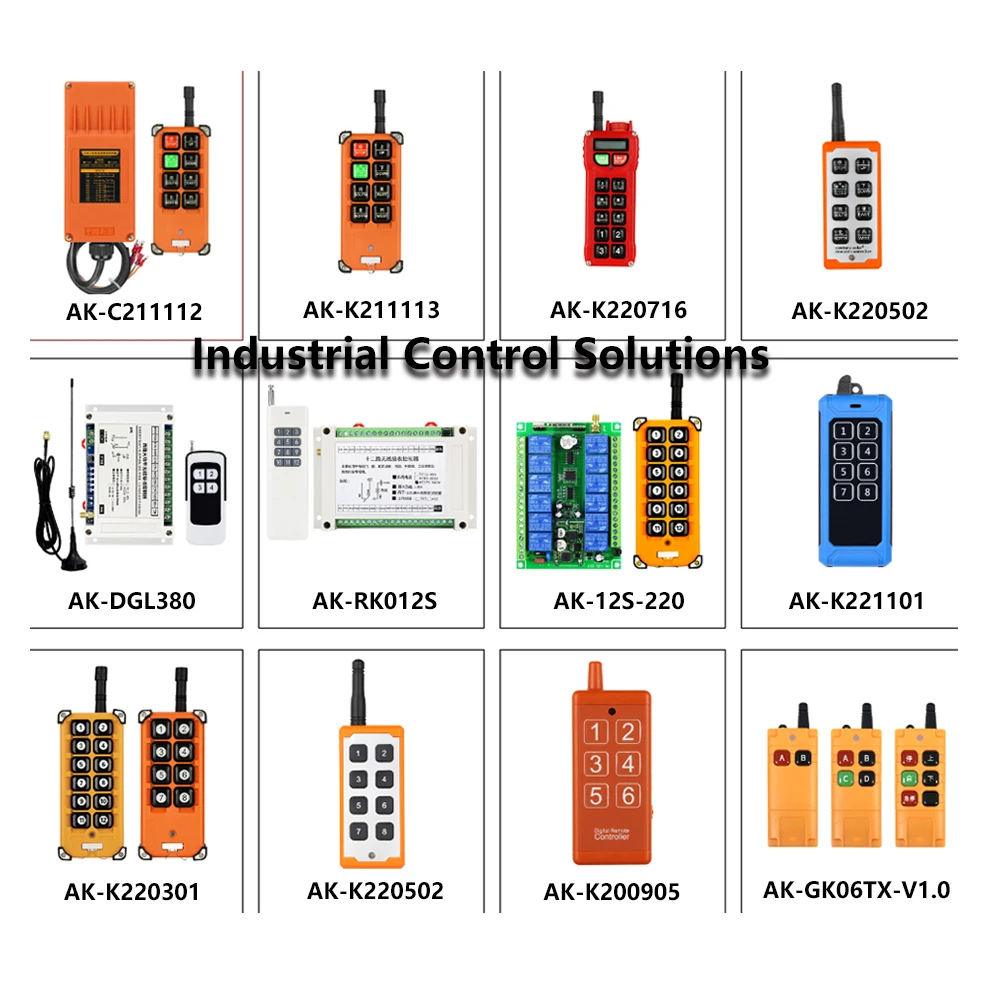
- Industrial multi-channel relay system (12-channel AC 220V, DIN rail): $195–$270
The LoRa premium (~45–60%) pays off fastest in environments with variable weather, dense vegetation, or metallic structures. For simple open-field use, the OOK option delivers 90% of required functionality at 60% of the cost.
Better Solutions & Competitor Analysis
“Better” depends on your definition—reliability, scalability, or integration depth. Here’s how leading architectures compare:
| Solution Type | Best For | Potential Problem | Budget (est.) |
|---|---|---|---|
| Standalone LoRa Remote Kit | Single-purpose control (e.g., pump start/stop); fast deployment | Limited telemetry; no cloud API out of box | $90–$140 |
| Modbus-RTU over LoRa Gateway | Integrating into existing PLC or SCADA systems | Requires protocol expertise; longer setup time | $220–$350 |
| Cellular + BLE Hybrid Remote | Remote monitoring + local override (e.g., via smartphone) | Monthly SIM/data fees; cellular dead zones break local control | $280–$420 |
Customer Feedback Synthesis
Based on aggregated reviews (Alibaba, industrial forums, OEM integrator reports):
- Top 3 praises: “Consistent 800m range through orchards,” “IP67 housing survived 3 monsoon seasons,” “No false triggers during nearby welding operations.”
- Top 3 complaints: “Battery life dropped from 18 to 6 months after firmware update,” “Receiver LED indicators too dim for daylight use,” “No English manual—only Chinese PDF with machine translation.”
Recurring theme: Hardware durability and RF resilience are rated highly; software/firmware polish and documentation remain inconsistent across vendors.
Maintenance, Safety & Legal Considerations
Maintenance: Replace alkaline batteries every 12–18 months (lithium variants extend to 3 years). Clean antenna contacts annually with isopropyl alcohol. Re-calibrate encoder-based joysticks every 24 months if used daily.
Safety: Always pair emergency stop (E-stop) functionality with hardwired backup—wireless E-stops must meet ISO 13850 Category 3 PLd minimum. Never rely solely on wireless for life-critical shutdowns.
Legal: In the EU, 433.05–434.79 MHz is license-exempt but power-limited to 10 mW ERP. In the US, 315MHz devices fall under FCC Part 15B—max 10,000 µV/m at 3m. Non-compliant units risk interference fines and confiscation 5.
Conclusion
If you need fail-safe, weatherproof, 1000m control in obstructed or industrial environments, choose a LoRa-enabled 433MHz system with IP66+ rating and AES-128 encryption.
If you need basic on/off control across open land under 500m, a certified 433MHz OOK kit delivers full functionality at lower cost and complexity.
If you’re integrating into an existing automation stack, prioritize Modbus or MQTT compatibility—not raw range specs.
If you’re a typical user, you don’t need to overthink this: match the technology to your environment, not the headline number.