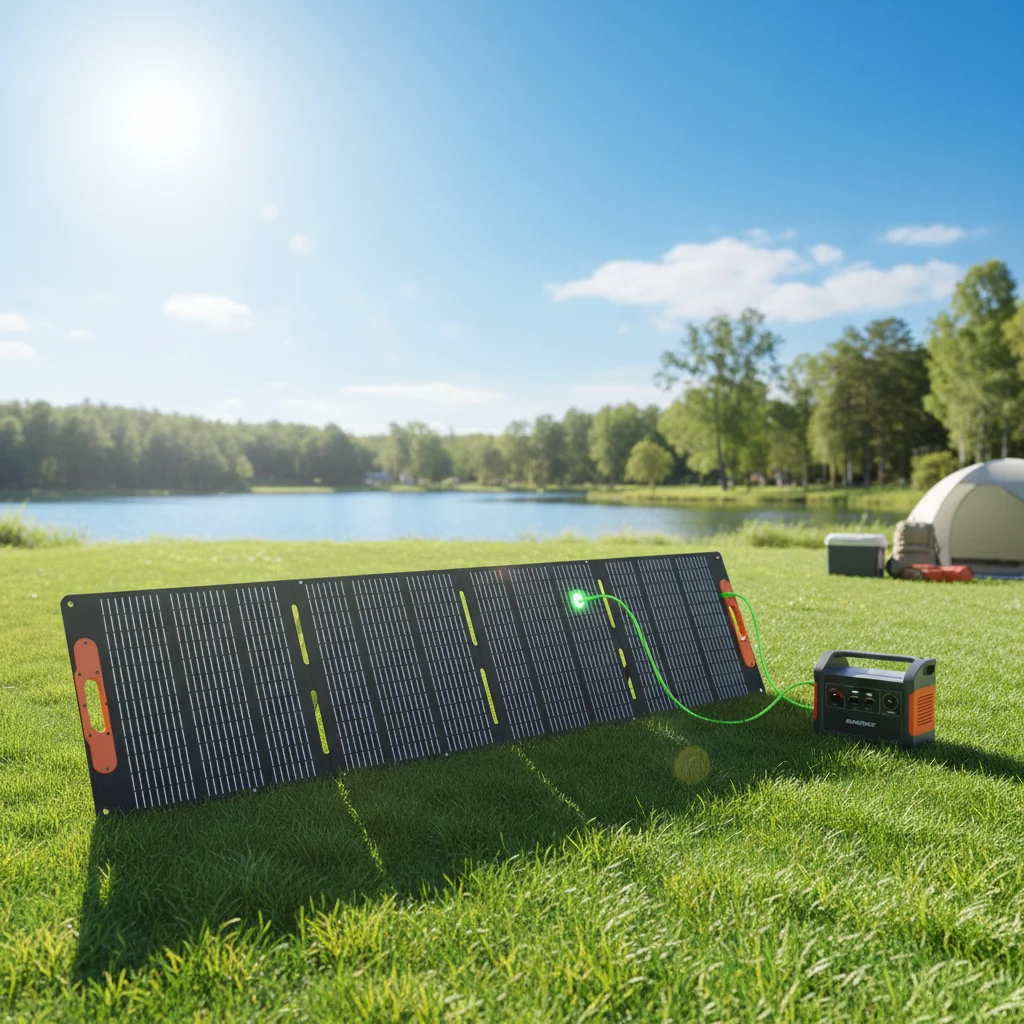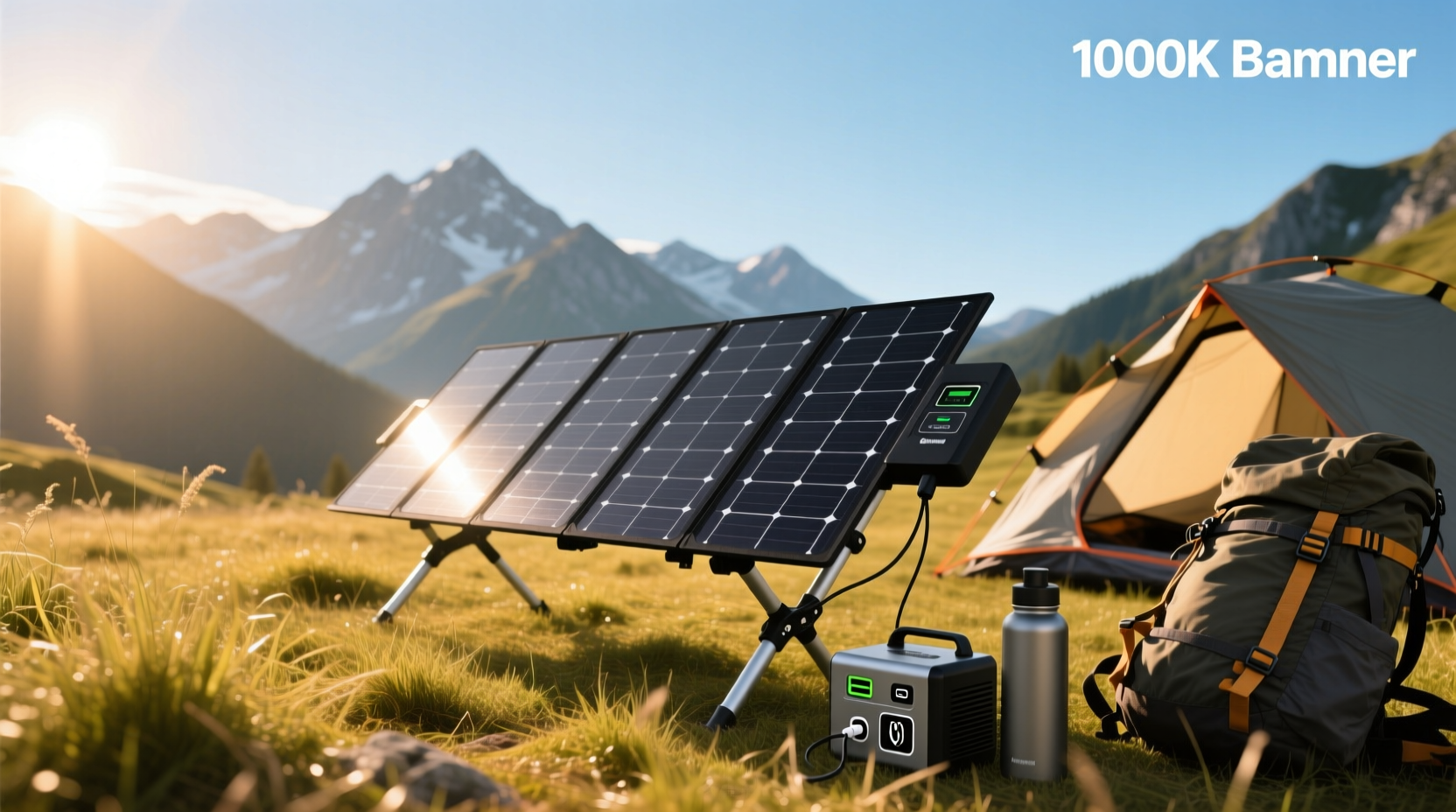
If you’re a typical user aiming for reliable off-grid power or home backup, skip the 1000W single-panel myth: no true 1000W portable panel exists as one unit. Instead, prioritize modular 2×500W or 4×250W foldable systems with N-type monocrystalline cells, MC4 compatibility, and IP67 rating — because real-world output drops 20–40% below nameplate wattage due to angle, shading, and temperature 12. Over the past year, the 1000W-equivalent segment has accelerated fastest—not because panels got bigger, but because users shifted from weekend camping to multi-day resilience and professional field use 3. That’s why this guide cuts past marketing wattage and focuses on what delivers consistent energy: cell tech, connector standardization, and thermal durability.
About 1000W Portable Solar Panels
“1000W portable solar panels” is a functional category—not a physical form factor. There is no commercially available single-panel unit rated at 1000W that remains truly portable (i.e., under 30 kg and foldable into a carryable package). What the market labels “1000W” refers to system-level input capacity: typically two 500W foldables, four 250W units, or one 600W + one 400W configured in series/parallel to feed a compatible power station. These setups serve users who need to recharge high-capacity LiFePO4 stations (e.g., 2000–3000Wh) within 4–6 sun-hours—or sustain refrigeration, CPAP, or small HVAC loads off-grid.
Typical users include: remote contractors powering tools and comms gear; preppers maintaining 72-hour home backup; RVers running AC and induction cooktops; and field researchers operating sensors and satellite uplinks. Portability here means transportable by one person over uneven terrain, not backpackable. Weight targets hover near 0.9 kg per 100W 1—so a true 1000W system weighs ~9 kg minimum, often 11–14 kg with frames and cables.
Why 1000W Portable Solar Panels Are Gaining Popularity
Lately, demand for 1000W-equivalent solar has surged—not from hobbyists, but from users confronting real energy fragility. Power outages now average 8+ hours in 42 U.S. states 4, and fuel-dependent generators face increasing restrictions in parks, neighborhoods, and wildfire zones. Simultaneously, technology matured: N-type monocrystalline cells now reach 22–24% efficiency 2, ETFE lamination resists UV degradation for 10+ years, and IP67-rated folding designs survive dust storms and brief submersion. This convergence made 1000W setups viable where 300W once plateaued.
The shift isn’t about “more watts”—it’s about energy autonomy thresholds. A 300W system recharges a 1000Wh station in ~6–8 hours under ideal conditions. A 1000W setup cuts that to ~2.5–4 hours—enough to fully replenish before sundown, even after partial cloud cover. That reliability gap explains why the >300W segment grew faster than any other in 2025 3.
Approaches and Differences
Three main configurations deliver 1000W input. Each trades portability, setup speed, and long-term yield:
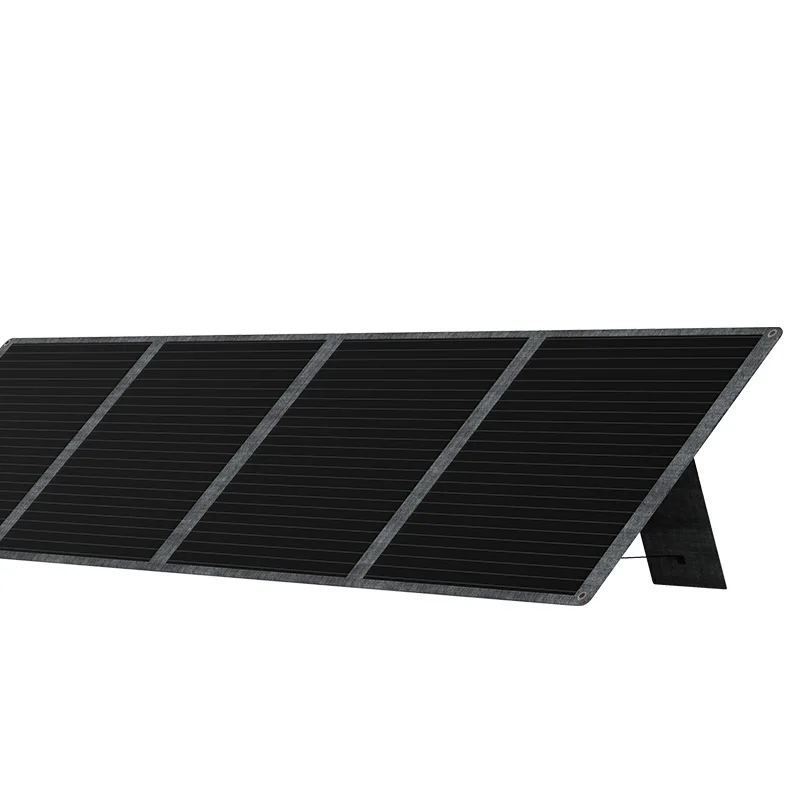
- Modular Foldables (e.g., 2×500W): Two independent panels, each ~25 kg unfolded, folding to ~60×40×8 cm. Pros: Easy to orient individually, replaceable if damaged, compatible with most stations. Cons: Requires dual MC4 inputs or a combiner box; more cable management.
- Integrated Quad-Panel Kits (e.g., 4×250W): Four smaller panels connected via built-in hinges or zippers, unfolding as one large array (~120×180 cm). Pros: Faster deployment, lower wind profile when staked. Cons: One failure disables full string; harder to angle selectively.
- Bifacial + Reflective Ground Setup: Paired with white tarps or snow, bifacial panels gain up to 25% yield 1. Only viable with N-type bifacial models (e.g., EcoFlow’s latest). Pros: Maximizes low-light and diffuse-sun performance. Cons: Adds weight and setup complexity; reflectivity decays with dirt or dew.
If you’re a typical user, you don’t need to overthink this: start with modular 2×500W. It balances repairability, compatibility, and adaptability better than integrated kits—unless your use case demands rapid single-deployment (e.g., emergency response teams).
Key Features and Specifications to Evaluate
Don’t optimize for peak wattage. Optimize for consistent harvest. Here’s what moves the needle—and when it doesn’t:
N-type Monocrystalline Cells: Deliver 0.5–1% higher real-world yield than P-type, especially in heat and partial shade. When it’s worth caring about: If you operate above 25°C ambient or in variable light (forest edges, urban canyons). When you don’t need to overthink it: For short, sunny desert trips—P-type still works, but degrades faster over 3+ years.
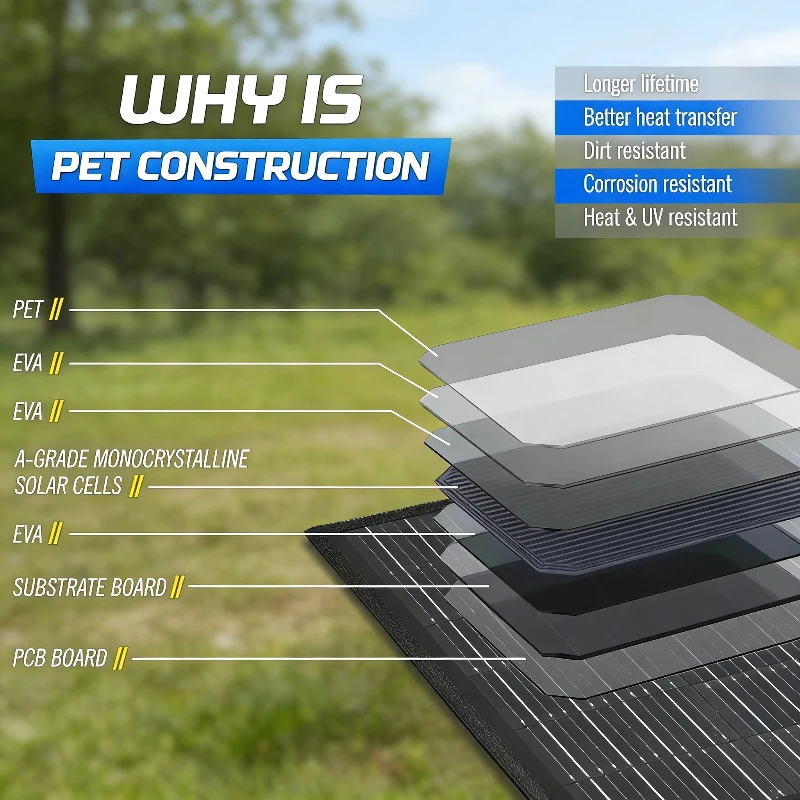
ETFE vs. PET Lamination: ETFE transmits more light, resists micro-cracks, and sheds water/dust. PET yellows after 2–3 years, cutting transmission by up to 12%. When it’s worth caring about: Any use beyond 18 months. When you don’t need to overthink it: Single-season rental or demo units.
MC4 Connectors (Not Proprietary): Universal MC4 lets you mix brands, add panels later, or swap stations. Proprietary ports lock you in—and often limit max input voltage. When it’s worth caring about: If you own or plan to upgrade your power station. When you don’t need to overthink it: If buying an all-in-one bundle and never changing components.
IP67 Rating: Confirmed dust-tight and submersible to 1m for 30 min. Critical for rain, sandstorms, or accidental drops in puddles. When it’s worth caring about: All outdoor use—especially coastal or arid regions. When you don’t need to overthink it: Indoor-only backup (but then, why portable?)
Pros and Cons
Pros of 1000W-Equivalent Systems:
- Recharge 2000–3000Wh power stations in under 5 hours (vs. 10+ for 300W)
- Sustain 500–800W continuous loads (refrigerator + lights + router) without battery drain
- Enable true multi-day autonomy—even with cloudy mornings
- Future-proof for next-gen stations supporting 1500W+ MPPT input
Cons & Limitations:
- No true 1000W single panel exists—expect 11–14 kg total system weight
- Real output rarely exceeds 600–800W sustained due to angle loss, temperature derating, and wiring inefficiencies 1
- High cost: $1,200–$2,800 for quality modular sets (not including power station)
- Requires careful voltage matching—exceeding a station’s max PV input voltage voids warranty
This piece isn’t for keyword collectors. It’s for people who will actually use the product.
How to Choose 1000W Portable Solar Panels
Follow this 5-step decision checklist—designed to eliminate guesswork:
- Confirm Your Power Station’s Input Limits: Check its max PV input voltage (e.g., 60V) and wattage (e.g., 1200W). Never exceed either. Series wiring raises voltage; parallel raises amperage. Use a PV wiring calculator before ordering.
- Prioritize N-type + ETFE + IP67: These three specs define longevity and yield stability. Skip if any is missing—even at 10% lower price.
- Avoid “All-in-One” Bundles Unless You’re Certain: Pre-matched kits limit future upgrades. Modular panels let you scale or replace parts independently.
- Verify MC4 Compatibility: If the panel uses proprietary connectors, assume you’ll pay $80–$120 for an adapter—and risk signal loss or heat buildup.
- Factor in Real-World Yield Gap: Budget for 60–80% of rated wattage. A “1000W” system delivering 700W average over 5 hours = 3.5 kWh/day—not 5 kWh.
If you’re a typical user, you don’t need to overthink this: buy two identical 500W N-type foldables with MC4 and IP67. It’s the most serviceable, scalable, and widely supported configuration in 2026.
Insights & Cost Analysis
Price per watt has dropped 22% since 2023—but only for verified N-type/ETFE/IP67 units. Low-cost “1000W” listings (<$900) almost always use older P-type cells, PET lamination, or lack IP ratings. Here’s a realistic 2026 cost baseline:
- Entry-tier (P-type, PET, IP65): $1,050–$1,350 for 2×500W — expect 15–18% efficiency, 3-year warranty
- Mid-tier (N-type, ETFE, IP67): $1,500–$1,950 — 22–23% efficiency, 5-year warranty, proven field durability
- Premium (N-type bifacial, ETFE, IP67, integrated charge controller): $2,200–$2,750 — best low-light yield, but adds 1.2 kg and complexity
Value tip: Avoid paying for “1000W” branding. Focus on per-panel specs. Two $850 500W panels often outperform one $1,600 “1000W” unit—because redundancy beats single-point failure.
Better Solutions & Competitor Analysis
Top brands meet core benchmarks—but differ in expandability and ecosystem openness:
| Brand / Model Type | Best For | Potential Issue | 2026 Price Range (2×500W) |
|---|---|---|---|
| Jackery SolarSaga Pro | Beginners valuing plug-and-play simplicity | Proprietary connectors; limited third-party compatibility | $1,699 |
| EcoFlow Bifacial 500W ×2 | Users in snowy/coastal or shaded environments | Higher wind load; requires reflective surface for full gain | $2,399 |
| Bluetti PV500 (N-type) | Field professionals needing ruggedness & modularity | Heavier per watt (0.92 kg/100W vs. industry 0.88) | $1,749 |
| Renogy 500W Smart Panel | DIY integrators wanting MC4 + monitoring | Less brand recognition for support outside North America | $1,549 |
Customer Feedback Synthesis
Based on aggregated reviews across Outdoor Gear Lab, Consumer Reports, and Reddit r/prepping (Q1 2026), top recurring themes:
- Highly Praised: “Recharged my Bluetti AC300 from 20% to 100% in 3.2 hours on a clear day.” / “ETFE surface stays clean after rain—no wiping needed.” / “Magnetic closures hold firm in 25 mph wind.”
- Frequent Complaints: “Rated 500W, but meter shows 380W average at noon—manufacturer says ‘normal’.” / “MC4 adapters overheated after 2 hours at full sun.” / “No carrying strap on the hinge side—awkward to lift when folded.”
The consensus: real-world output variance is expected, but build quality (zippers, hinges, cable strain relief) separates durable units from disposable ones.
Maintenance, Safety & Legal Considerations
Maintenance: Wipe ETFE surface monthly with microfiber + water; avoid abrasive cleaners. Inspect MC4 connectors yearly for corrosion—especially near saltwater. Store folded, dry, and unstrapped to prevent hinge fatigue.
Safety: Never touch terminals while panels are exposed to light—they generate voltage even when disconnected. Use gloves when handling in high heat (>40°C); surface temps exceed 65°C.
Legal: No federal U.S. restrictions on portable solar use. Local ordinances may limit ground-mounting in HOAs or national forests (check fire regulations for stakes/tarps). No permits required for under-1kW off-grid systems.
Conclusion
If you need reliable daily recharging of a 2000–3000Wh power station, choose two identical 500W N-type monocrystalline foldables with ETFE lamination, IP67 rating, and MC4 connectors. If you operate in snow, sand, or partial shade and can manage extra weight, add bifacial capability. If your priority is lowest upfront cost and you’ll only use it seasonally, a P-type PET unit meets basic needs—but expect faster efficiency decay. If you’re a typical user, you don’t need to overthink this: stick to the mid-tier spec stack. It delivers the strongest balance of yield, longevity, and interoperability in 2026.
Frequently Asked Questions