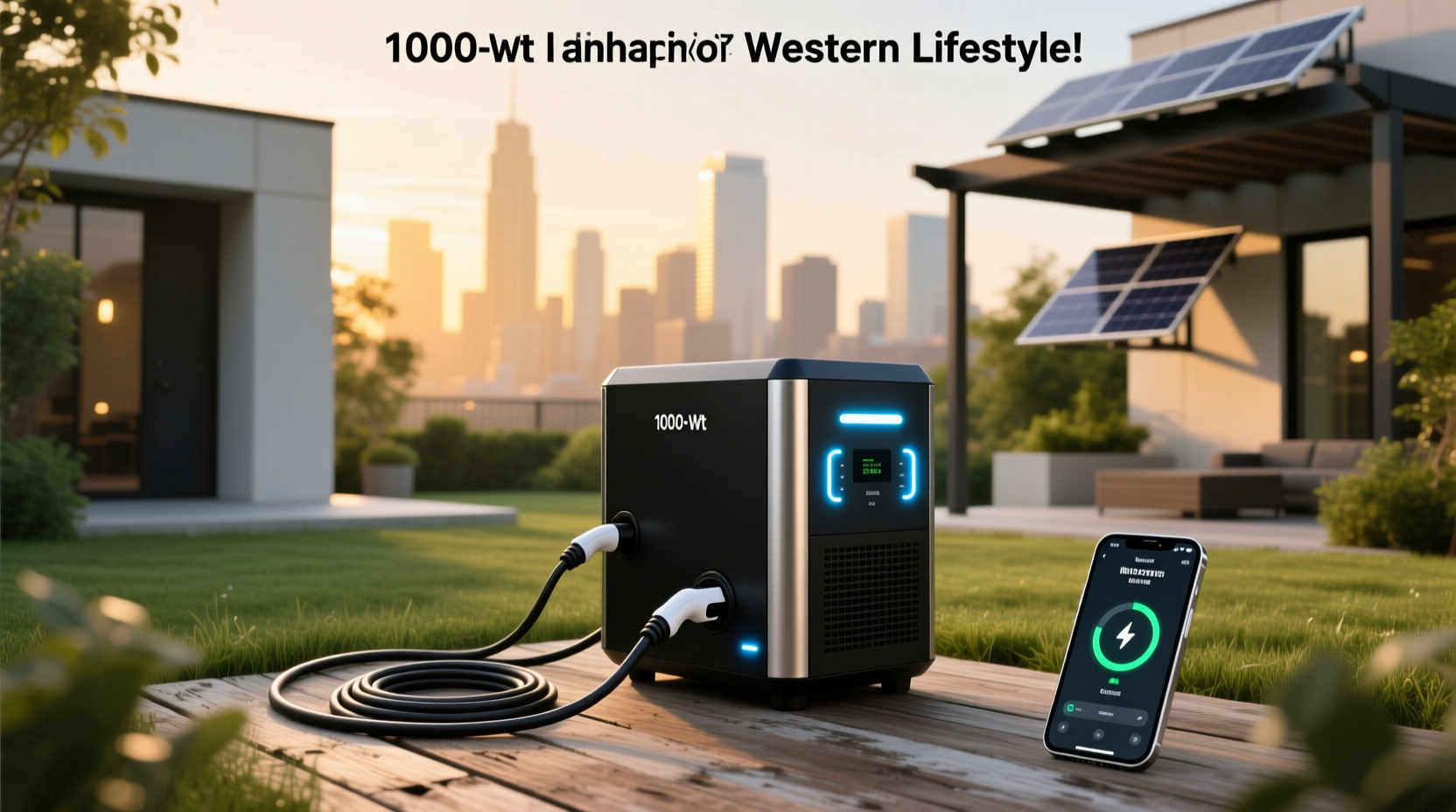
If you’re shopping for a 1000W portable power station in 2026, prioritize LiFePO4 battery chemistry, sub-60-minute AC charging, and at least 2000W surge capacity—these three specs separate reliable daily-use units from short-lived compromises. Over the past year, the 1000W segment has shifted decisively toward lithium iron phosphate (LiFePO4) cells and ultra-fast charging as baseline expectations—not premium add-ons. This isn’t incremental improvement: it’s a functional reset. If you’re a typical user, you don’t need to overthink this. Skip NCM-based models unless price is your only constraint—and even then, expect half the cycle life and higher thermal risk. The most common misstep? Focusing on watt-hours alone while ignoring charge time or surge headroom. The second? Assuming ‘1000W output’ means it can run any 1000W appliance continuously—when in reality, startup surges and sustained load efficiency matter more. What truly affects your outcome isn’t brand loyalty or aesthetic finish—it’s whether the unit supports true UPS mode (<20ms switchover) if you plan to back up home electronics during outages. This piece isn’t for keyword collectors. It’s for people who will actually use the product.
About 1000W Portable Power Stations: Definition & Typical Use Cases
A 1000W portable power station is a self-contained, rechargeable energy system with a rated continuous AC output of approximately 1000 watts and a typical battery capacity between 900Wh and 1200Wh. Unlike smaller 300–600W units designed for phones and lights, or larger 2000W+ systems meant for full-home backup, the 1000W class occupies a strategic middle ground: it powers high-draw devices like refrigerators, microwaves, power tools, and CPAP machines—but remains light enough (usually 25–35 kg) for car camping, job sites, or semi-permanent home installation via transfer switch 1. It’s the first tier where you can realistically replace a gas generator for non-industrial applications—without noise, fumes, or fuel logistics.
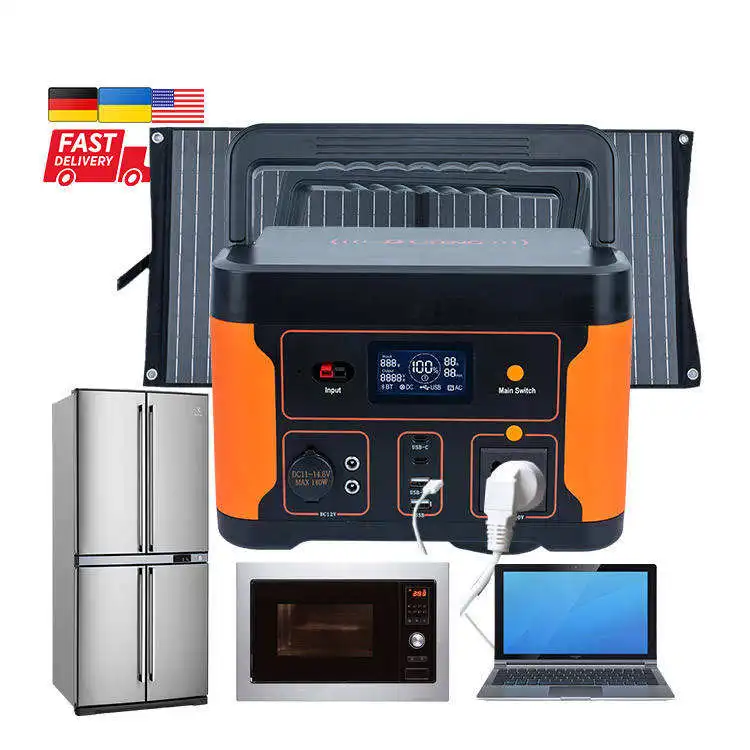
Why 1000W Power Stations Are Gaining Popularity
Lately, demand for 1000W portable power stations has accelerated—not just among outdoor enthusiasts, but also remote workers, small-business owners, and homeowners in fire- or storm-prone regions. Three converging trends explain this: First, rising grid instability. Natural disasters now trigger longer, more frequent outages—making localized, silent backup essential 2. Second, lifestyle shifts: “glamping,” van life, and mobile offices require consistent, clean power for laptops, mini-fridges, and lighting without compromising portability. Third, cost-per-cycle improvements: LiFePO4 batteries now deliver 3,000+ charge cycles—effectively 8–10 years of weekly use—while wholesale pricing has dropped to $130–$500 per unit depending on volume and features 3. That combination—longevity, safety, and affordability—has moved 1000W units from niche gear to mainstream infrastructure.
Approaches and Differences: Common Configurations
Today’s market offers three primary technical approaches for 1000W stations—each with distinct trade-offs:
- LiFePO4 + Dual-Input Fast Charging: Uses lithium iron phosphate cells paired with dual AC/DC inputs (e.g., wall charger + solar input simultaneously). Pros: 3,000+ cycles, stable voltage under load, charges fully in ≤60 minutes. Cons: Slightly heavier than NCM alternatives. When it’s worth caring about: If you’ll use it weekly or for home backup. When you don’t need to overthink it: If you only need occasional weekend use and budget is tight—though longevity loss still applies.
- NCM Lithium + Standard Charging: Older nickel-cobalt-manganese chemistry, often found in entry-tier units. Pros: Lighter weight, lower upfront cost. Cons: ~600–800 cycles, higher thermal expansion risk, slower charging (often 3–4 hours), voltage sag under heavy load. When it’s worth caring about: Only for infrequent, low-stakes use (e.g., tailgating once per season). When you don’t need to overthink it: If you’re comparing two LiFePO4 models—don’t waste time evaluating NCM here.
- Hybrid Inverter Integration: Units engineered for semi-permanent home connection—featuring built-in transfer switches, UPS functionality, and smart app monitoring. Pros: Seamless outage response, grid-synchronization options, remote firmware updates. Cons: Higher price point, requires basic electrical knowledge for safe setup. When it’s worth caring about: If backing up medical devices, routers, or desktop workstations. When you don’t need to overthink it: If you’re using it exclusively off-grid—this adds complexity without benefit.
Key Features and Specifications to Evaluate
Not all 1000W ratings are equal. Here’s what matters—and why:
- 🔋 Battery Chemistry: LiFePO4 is now the de facto standard for durability and safety. NCM is obsolete for regular use. If you’re a typical user, you don’t need to overthink this.
- ⚡ Surge Capacity: Look for ≥2000W. Many appliances (coffee makers, air compressors, fridge compressors) draw 2–3× their rated wattage on startup. A 1000W-rated unit with only 1500W surge will trip instantly.
- 🔌 AC Output Type: Pure sine wave only. Modified sine wave damages sensitive electronics (audio gear, variable-speed tools, some medical devices).
- ⏱️ AC Recharge Time: Benchmark is ≤60 minutes. Anything over 90 minutes signals outdated thermal management or inefficient conversion. Avoid models requiring >2.5 hours unless priced below $250—and even then, verify cycle life.
- 📡 UPS Mode: Critical for home backup. Switchover must be <20ms to prevent rebooting computers or losing unsaved work.
Pros and Cons: Who Is This For?
| Use Case | Well-Suited | Potential Mismatch |
|---|---|---|
| Home emergency backup (router, lights, fridge) | ✅ Yes—with UPS mode, surge headroom, and LiFePO4 longevity | ❌ No—if unit lacks transfer switch compatibility or >20ms switchover |
| Camping / Overlanding | ✅ Yes—especially with solar input, rugged casing, and quiet operation | ❌ No—if weight exceeds 32 kg or lacks DC-DC car charging |
| Job site power (drills, saws, LED lighting) | ✅ Yes—with robust surge rating and weather-resistant ports | ❌ No—if AC outlets are recessed or lack GFCI protection |
| Daily remote work (laptop, monitor, mic) | ✅ Yes—especially with USB-C PD (100W+) and low-noise fans | ❌ No—if fan noise exceeds 45 dB at 1m distance |
How to Choose a 1000W Power Station: A Step-by-Step Decision Framework
Follow this sequence—skip steps only when criteria are met:
- Step 1: Confirm LiFePO4 chemistry. If the spec sheet doesn’t state “LiFePO4” or “LFP”, stop. NCM isn’t suitable for routine use. If you’re a typical user, you don’t need to overthink this.
- Step 2: Verify AC charge time ≤60 min. Check manufacturer test conditions (e.g., “with 1000W AC input”). If unlisted or >75 min, assume real-world performance will be slower.
- Step 3: Cross-check surge rating. It must be ≥2000W. Don’t trust “peak power” claims without a footnote specifying duration (e.g., “2200W for 3 sec”).
- Step 4: Count usable ports. Minimum: 3 AC outlets, 2x USB-C (100W PD), 2x USB-A, 1x 12V carport. Avoid units where AC outlets share a single internal circuit.
- Step 5: Test UPS claim. Search reviews for “switchover time” or “outage test”. If no independent verification exists, assume it’s not true UPS.
⚠️ Avoid these red flags: No UL/CE certification listed, no published cycle life data, missing thermal cutoff specs, or vague “fast charging” language without wattage input details.
Insights & Cost Analysis
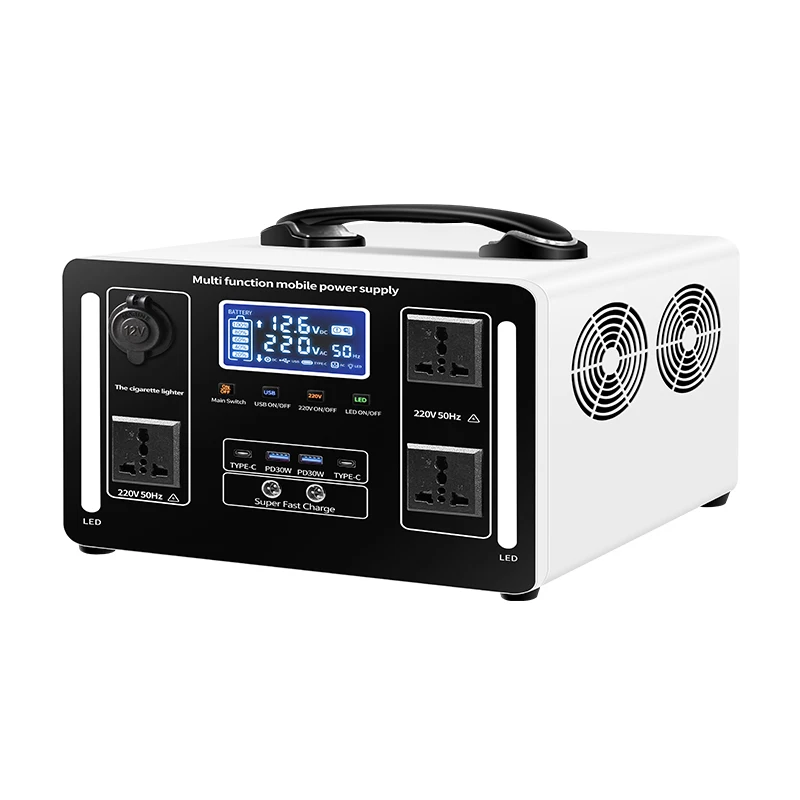
Wholesale B2B pricing for 1000W (≈1024Wh) LiFePO4 units ranges from $130 to $500, depending on order size, surge capability, and included accessories 5. At retail, most verified units fall between $599–$1,299. The sweet spot for value is $799–$949—where you consistently get dual-input fast charging, 2200W surge, and true UPS. Below $650, expect compromises: slower charging, weaker surge, or missing certifications. Above $1,100, you’re paying for brand premium or proprietary software—not core performance gains. For bulk buyers, Shenzhen and Huizhou manufacturers offer OEM/ODM flexibility with MOQs as low as 100 units 6.
Better Solutions & Competitor Analysis
| Category | Suitable For | Potential Problem | Budget Range (Retail) |
|---|---|---|---|
| Entry-tier LiFePO4 (e.g., base-model units with 2000W surge) | Occasional campers, budget-conscious preppers | Limited solar input (≤400W), no app control, basic LCD only | $599–$749 |
| Mainstream Balanced (e.g., EcoFlow Delta 3, Anker Solix C1000) | Home backup users, remote workers, overlanders | Slightly heavier (32–34 kg); app requires cloud login | $899–$1,099 |
| Pro-Grade Hybrid (e.g., Bluetti AC300 + B300S, Jackery Explorer 2000 Pro) | Small business continuity, off-grid cabins, contractors | Requires external transfer switch; steeper learning curve | $1,499–$2,199 |
Customer Feedback Synthesis
Based on aggregated reviews across Outdoor Gear Lab, Reddit r/overlanding, and retailer platforms (Best Buy, Amazon):
✅ Top 3 praised features: “Charges faster than my laptop,” “Runs my fridge overnight without dropping below 20%,” “Silent during nighttime use.”
❌ Top 3 complaints: “App disconnects randomly,” “Solar input capped lower than advertised,” “AC outlets heat up noticeably above 800W load.”
Maintenance, Safety & Legal Considerations
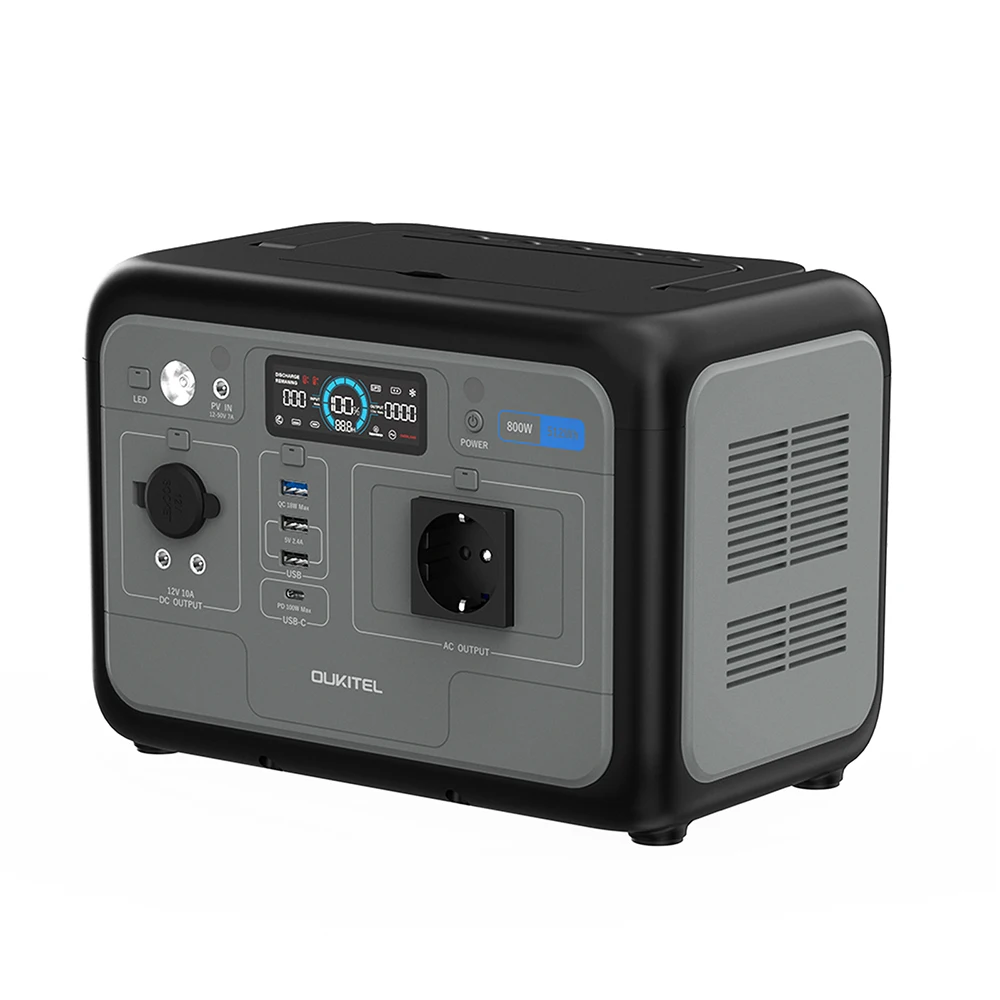
No special maintenance is required beyond keeping vents clear and avoiding full discharge (<10% SOC) for extended storage. All reputable units include over-voltage, over-current, short-circuit, and thermal cutoff protection. Legally, no permit is needed for personal-use portable stations—but permanent home integration via transfer switch may require local electrical inspection. Always verify compliance with UL 1973 (batteries) and UL 1741 (inverters) if used for backup power 7. Avoid uncertified imports lacking English manuals or safety labeling.
Conclusion: Conditional Recommendations
If you need reliable home backup with zero downtime, choose a 1000W unit with certified UPS mode (<20ms), LiFePO4 cells, and ≥2200W surge—expect to pay $899–$1,099.
If you prioritize portability and solar charging for off-grid trips, focus on weight (<30 kg), dual-input charging, and IP rating (IP54 minimum)—$749–$949 delivers best balance.
If your budget is under $650 and usage is infrequent, accept shorter lifespan and slower charging—but verify LiFePO4 chemistry is present. Anything less is false economy.


