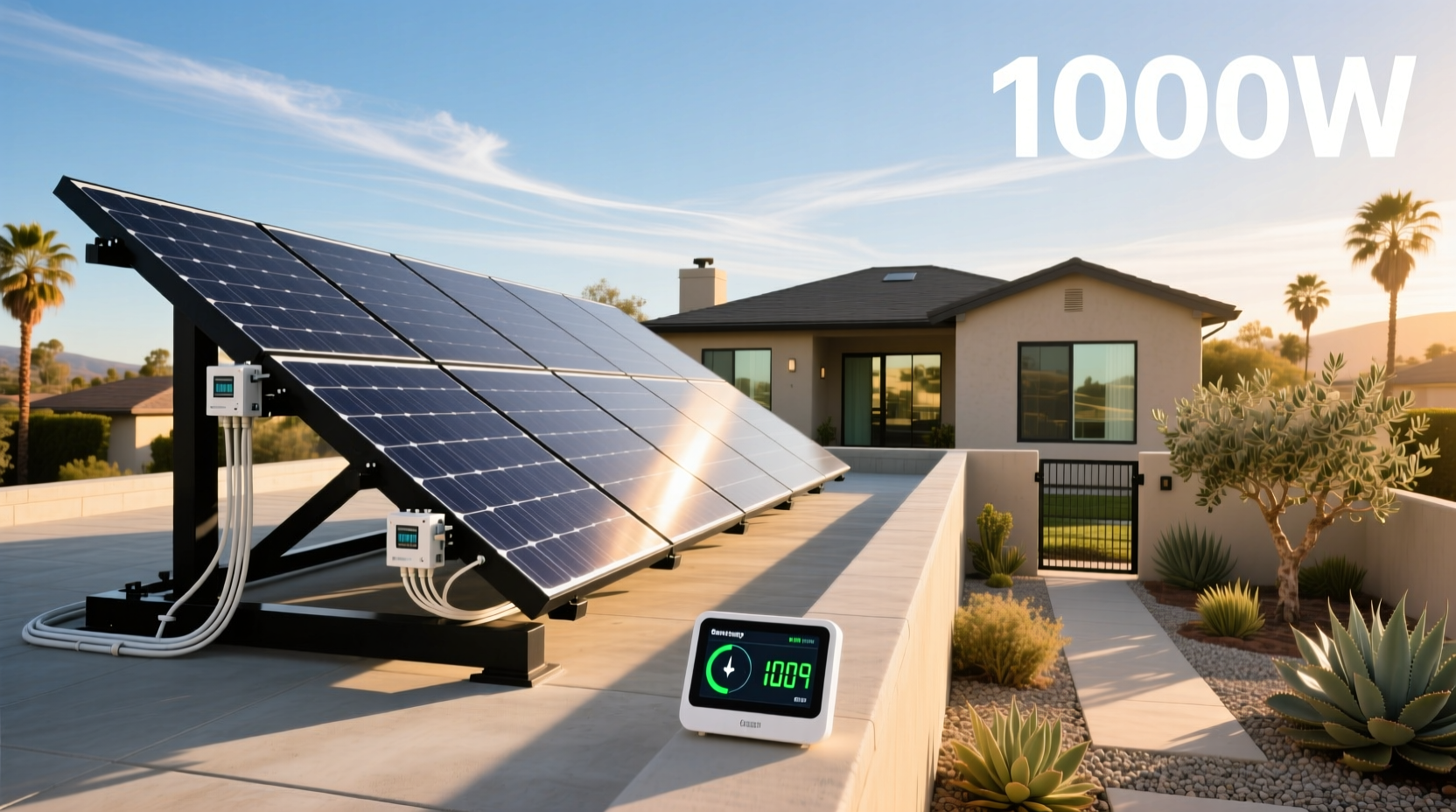
Over the past year, 1000W solar panels have moved from utility-scale prototypes to commercially available modules—and they’re now viable for large residential and light commercial installations. If you’re evaluating high-wattage photovoltaics in 2026, prioritize N-type TOPCon or HJT cell technology, aim for ≥22% conversion efficiency, and verify mechanical load ratings (≥5400Pa snow / ≥2400Pa wind). Skip perovskite-tandem panels for now—they’re not yet field-proven for rooftop use. If you’re a typical user, you don’t need to overthink this: choose Tier 1 HJT for hot climates or TOPCon for balanced cost-efficiency, pair with high-current inverters (e.g., Sungrow SH12RT or Fronius Symo Gen 24), and avoid oversized panels without structural verification. This piece isn’t for keyword collectors. It’s for people who will actually use the product.
About 1000W Solar Panels
A 1000W solar panel is a single photovoltaic module rated to produce up to 1,000 watts of direct current (DC) power under Standard Test Conditions (STC: 1000 W/m² irradiance, 25°C cell temperature, AM1.5 spectrum). Unlike traditional 400–550W panels, these ultra-high-wattage units achieve output through larger silicon wafers (M10 or M12, up to 210mm), advanced cell interconnection (e.g., multi-busbar or shingled layouts), and bifacial designs that capture reflected light from the rear surface1. They are not intended for standard residential rooftops with space constraints or weight limits—but rather for ground-mount systems, flat commercial roofs with ballast, or hybrid microgrids where minimizing footprint and wiring complexity matters most.
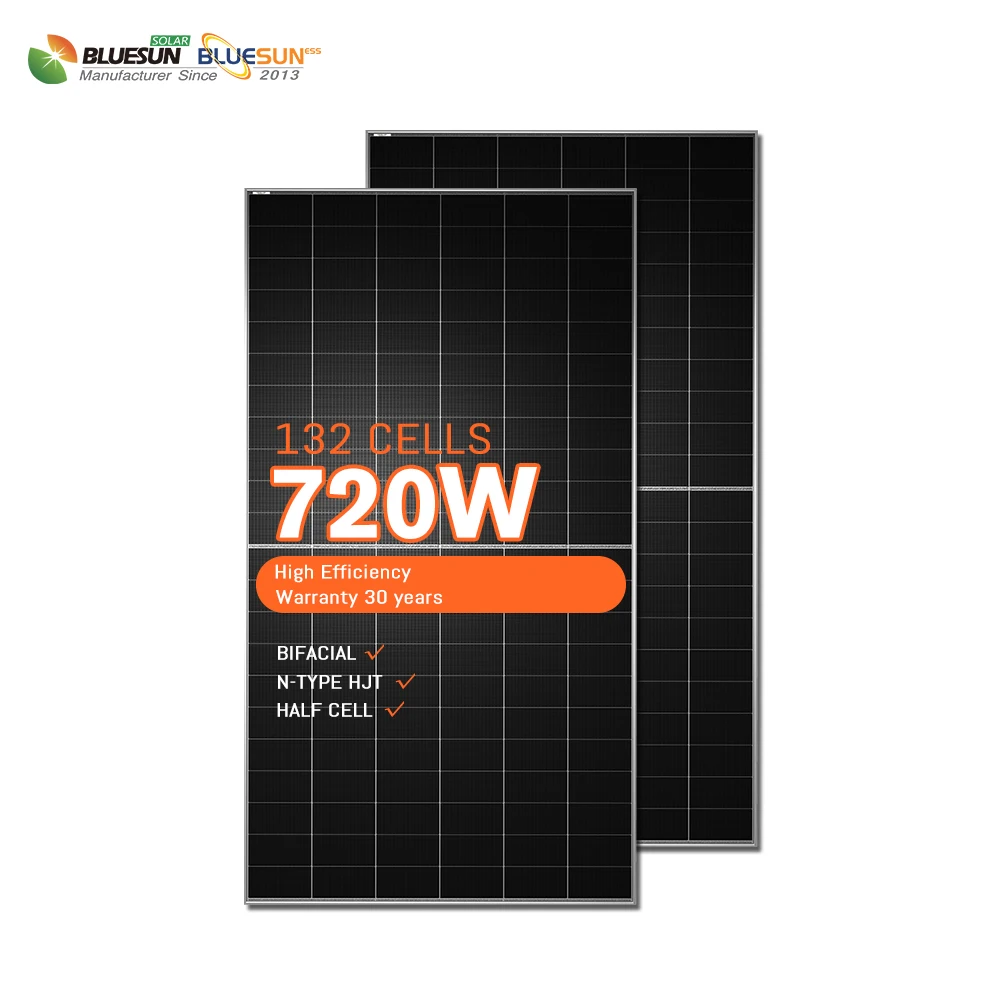
Why 1000W Solar Panels Are Gaining Popularity
Lately, adoption has accelerated—not because homeowners suddenly need 1kW per panel, but because system-level economics improved. Larger wafers reduced manufacturing cost per watt, while higher efficiencies cut balance-of-system (BOS) expenses: fewer mounts, less conduit, reduced labor per kilowatt installed. In 2026, the shift reflects three converging signals: (1) Tier 1 manufacturers now offer 1000W+ modules at ≤$0.10/W wholesale3; (2) HJT and TOPCon technologies matured enough to deliver >24% efficiency with <0.27%/°C temperature coefficient; and (3) buyers increasingly value long-term yield stability—88% output retention after 25 years—over peak STC rating alone4. This isn’t about chasing headline numbers. It’s about lowering lifetime cost per kWh.
Approaches and Differences
Three core cell architectures dominate the 1000W segment—each with distinct trade-offs:
- N-Type TOPCon: Built on passivated contacts, offering strong degradation resistance (0.45%/year average), moderate temperature coefficient (−0.30%/°C), and compatibility with existing production lines. When it’s worth caring about: You need proven durability and mid-tier pricing ($0.08–$0.11/W). When you don’t need to overthink it: You’re installing on a pitched roof with limited space—TOPCon’s size-to-output ratio still lags behind HJT.
- Heterojunction (HJT): Uses thin-film amorphous silicon layers on both sides of crystalline wafer, delivering superior low-light response and the lowest temperature coefficient (−0.26%/°C). When it’s worth caring about: Your site experiences sustained summer temperatures above 35°C or frequent partial shading. When you don’t need to overthink it: You’re budget-constrained and sourcing for a shaded urban roof—HJT’s premium price ($0.12–$0.15/W) won’t translate to meaningful yield gains there.
- Perovskite-Silicon Tandem: Lab cells exceed 34.85% efficiency5, but commercial modules remain rare, unproven in 25-year field cycles, and sensitive to moisture ingress. When it’s worth caring about: You’re a utility developer piloting next-gen tech with dedicated R&D funding. When you don’t need to overthink it: You’re a homeowner or small business owner. If you’re a typical user, you don’t need to overthink this.
Key Features and Specifications to Evaluate
Don’t default to STC wattage. Focus on metrics that predict real-world performance:
- Conversion Efficiency (≥22%): Higher efficiency means smaller physical area for same output—critical when roof space is limited. When it’s worth caring about: You’re retrofitting an older building with structural weight limits. When you don’t need to overthink it: You have ample open land for ground-mount; physical size matters less than total system cost.
- Bifaciality Factor (≥70%): Measures how well the rear side captures diffuse/reflected light. When it’s worth caring about: Installing over white membranes, light-colored gravel, or snow-prone zones. When you don’t need to overthink it: Pitched asphalt shingle roofs—rear-side gain is negligible.
- Mechanical Load Rating: Look for ≥5400 Pa (snow) and ≥2400 Pa (wind). When it’s worth caring about: High-snow regions (e.g., Colorado Rockies) or coastal hurricane zones. When you don’t need to overthink it: Mild inland climates with low wind exposure—standard 3600 Pa frames suffice.
- Temperature Coefficient (≤−0.28%/°C): Lower = less power loss on hot days. When it’s worth caring about: Arizona, Texas, or Middle Eastern deployments. When you don’t need to overthink it: Pacific Northwest or UK—ambient temps rarely push cells above 45°C.
Pros and Cons
1000W panels deliver clear advantages—but only under specific conditions:
- Pros: Fewer panels per kW → lower mounting hardware, wiring, and labor costs; higher energy density per square meter; simplified string design (fewer parallel strings); better compatibility with modern high-voltage inverters.
- Cons: Heavier (up to 42 kg vs. 22 kg for 550W panels); longer lead times due to specialized logistics; stricter racking requirements; not UL 1703-certified for all models (verify before specifying).
If your project involves tight roof geometry, historic building restrictions, or uncertain structural capacity, 1000W panels may introduce more complexity than benefit. If you’re a typical user, you don’t need to overthink this: match panel size to your mounting method—not just your inverter specs.
How to Choose a 1000W Solar Panel
Follow this decision checklist—prioritizing real-world constraints over spec-sheet highlights:
- Confirm structural capacity first: Engage a licensed engineer if adding >25 kg/m² load. Do not assume standard roof framing supports 1000W panels.
- Select cell tech by climate—not hype: HJT for >30°C average summer highs; TOPCon for balanced reliability/cost; skip tandem for residential use until 2027–2028 mass deployment6.
- Verify Tier 1 status via PV Evolution Labs (PVEL) or BloombergNEF—not supplier claims. Avoid modules without 25-year linear power warranty (≥88% at year 25).
- Require full datasheet—not marketing PDF: Check NOCT (Nominal Operating Cell Temperature), PID resistance test results, and fire class rating (Class A preferred).
- Avoid mismatched components: 1000W panels often output >18A DC—ensure your inverter accepts ≥20A input per MPPT and supports ≥1500V DC string voltage.
Insights & Cost Analysis
Wholesale pricing for verified Tier 1 1000W modules in Q2 2026 ranges from $0.07 to $0.15 per watt, depending on volume and technology7. At 100 panels (100 kW system), that’s $7,000–$15,000 before BOS. While $0.07/W sounds compelling, panels below $0.09/W often lack independent certification (IEC 61215, IEC 61730) or robust PID resistance. The sweet spot for most commercial projects: $0.095–$0.115/W for N-type TOPCon with ≥23% efficiency and ≥89% 25-year retention.
| Technology | Best For | Potential Issue | Budget Range (per W) |
|---|---|---|---|
| N-Type TOPCon | Residential retrofits, moderate climates, long-term ROI focus | Slightly higher temp coefficient than HJT | $0.08–$0.11 |
| HJT | Hot climates, commercial flat roofs, high-albedo sites | Premium cost; limited installer familiarity | $0.12–$0.15 |
| Bifacial + Tracker | Utility-scale, desert farms, snow-prone zones | Requires precise ground clearance & maintenance access | $0.13–$0.16 |
Better Solutions & Competitor Analysis
For most users, pairing a 1000W panel with a grid-forming inverter (e.g., Enphase IQ8+ or Sol-Ark 12K) delivers more resilience than chasing marginal efficiency gains. But if your goal is future-proofing without over-engineering, consider modular alternatives:
- Two 550W panels + smart optimizer: Offers redundancy—if one fails, the other maintains ~90% output. Easier to replace, lighter, and widely supported.
- 700W HJT + battery-integrated inverter: Balances high efficiency with AC-coupled flexibility—ideal for backup-critical sites.
The real bottleneck isn’t panel wattage—it’s system integration. Prioritize compatibility over headline specs.
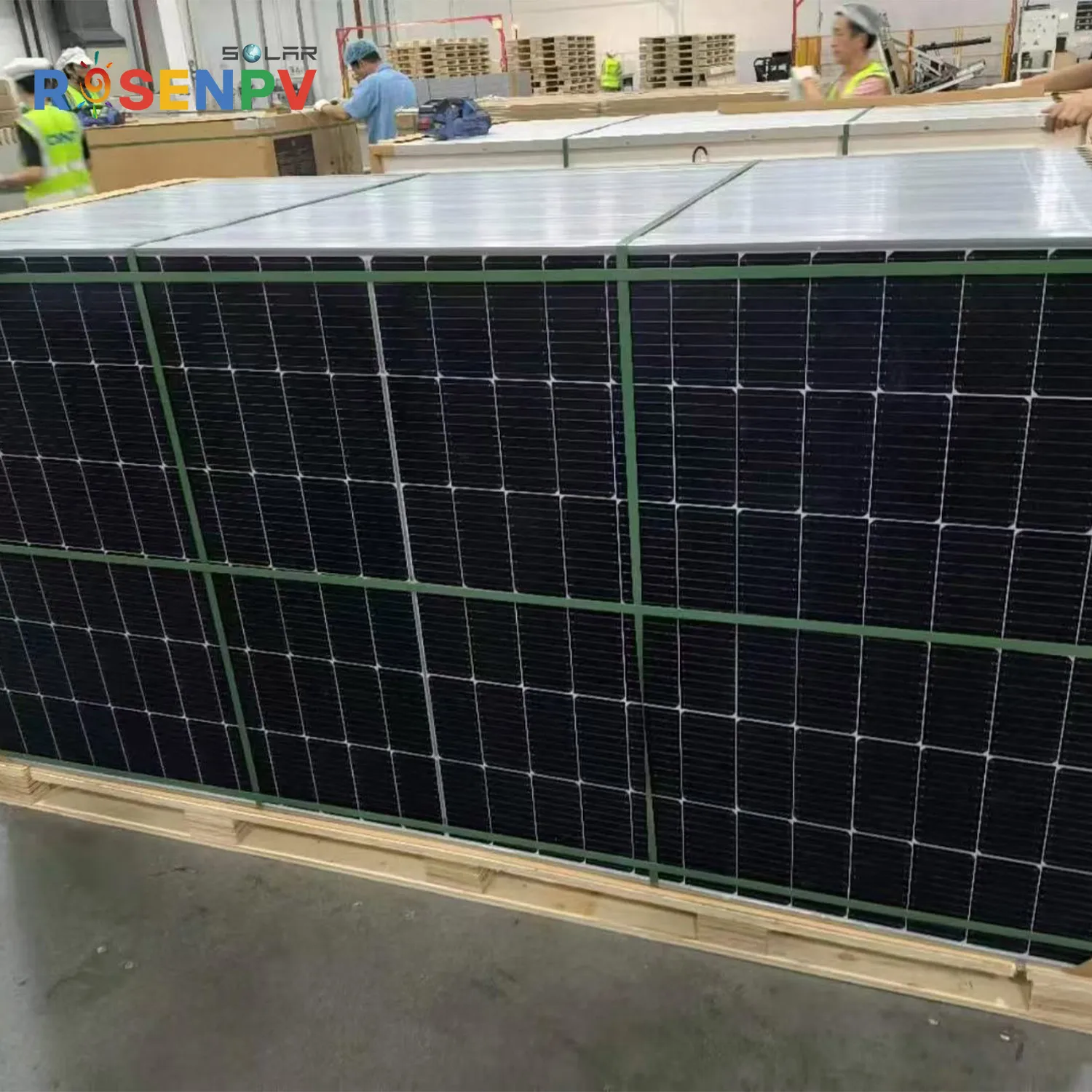
Customer Feedback Synthesis
Based on aggregated installer surveys and B2B procurement forums (r/solarenergy, SolarPowerWorld, SEIA contractor network), top recurring themes include:
- Highly praised: Reduced conduit runs (up to 35% less copper), faster commissioning, cleaner aesthetic on large roofs.
- Frequently cited pain points: Delayed shipments due to port congestion, inconsistent frame stiffness across batches (causing microcrack risk during installation), and sparse local technician training on high-current DC handling.
Maintenance, Safety & Legal Considerations
No special cleaning routine is required—but avoid high-pressure washers (>1000 PSI), which can damage anti-reflective coatings or delaminate bifacial backsheets. Safety-wise, 1000W panels operate at higher DC voltages and currents: always de-energize using rapid shutdown devices compliant with NEC 2023 Article 690.12. Legally, verify local AHJ acceptance—some jurisdictions require engineering sign-off for panels exceeding 40 kg or 2.3 m in length. CE marking is mandatory for EU import; UL 61730 remains the U.S. benchmark. Do not install uncertified modules—even if priced attractively.
Conclusion
1000W solar panels are not universally “better”—they’re situationally optimal. If you need maximum energy per square meter on a structurally sound, unshaded site and plan to pair them with modern high-current inverters and professional engineering oversight, they deliver measurable BOS savings. If you’re upgrading a legacy roof, operating in a humid coastal zone, or managing a tight timeline, stick with proven 550–650W N-type modules. Don’t chase wattage headlines. Match technology to your site’s thermal profile, structural reality, and maintenance capacity. This piece isn’t for keyword collectors. It’s for people who will actually use the product.


