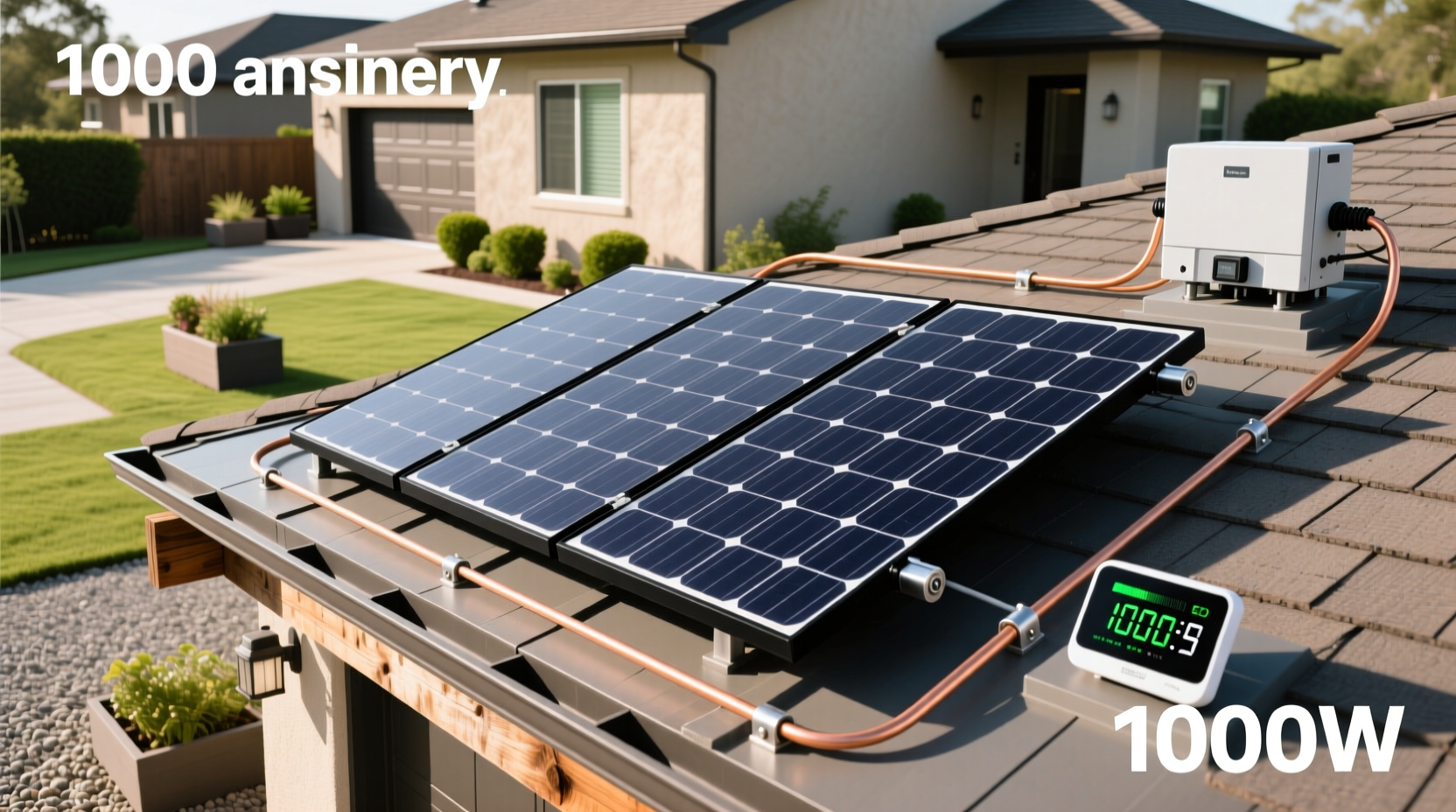
Over the past year, 1000W solar panel systems have shifted from niche off-grid experiments to mainstream energy resilience tools—driven by N-type (HJT/TOPCon) panels hitting 25.7% efficiency, falling module costs, and plug-and-play balcony kits gaining traction across Europe and North America. If you’re a typical user—whether outfitting an RV, powering a cabin, or installing a renter-friendly balcony system—you don’t need to overthink this: start with a modular 5 × 200W N-type kit paired with a 100A MPPT charge controller and LiFePO4 battery. Avoid single 1000W panels—they’re rare, heavy (130+ lbs), and impractical for most roofs or mobile use. Skip P-type panels unless budget is under $800 and long-term degradation isn’t a concern. This piece isn’t for keyword collectors. It’s for people who will actually use the product.
About 1000W Solar Panels: Definition & Typical Use Cases
A "1000W solar panel" is rarely a single physical panel. In practice, it refers to a system generating up to 1,000 watts of DC power under Standard Test Conditions (STC)—typically assembled from multiple smaller panels (e.g., 5 × 200W or 2 × 500W). True monolithic 1000W panels exist but remain uncommon outside utility-scale prototypes; they exceed 2.5 m² in area and weigh over 130 lbs 1. Real-world applications fall into three clear categories:
- 🚐 RVs & Campers: Powering refrigerators, lights, fans, and small inverters (12V/24V systems); portability and weight distribution matter more than peak wattage.
- 🏡 Off-grid cabins or home backup: Supporting essential loads during outages—requiring battery integration, inverter compatibility, and weather-resilient mounting.
- 🪟 Balcony or urban “plug-and-play” systems: Legally compliant, low-voltage (<60V), grid-tied microsystems popular in EU cities and U.S. apartment complexes 2.
Why 1000W Solar Systems Are Gaining Popularity
Lately, three converging forces have accelerated adoption: energy insecurity, cost reduction, and design simplification. Grid instability—especially in wildfire-prone or hurricane-affected regions—has turned 1000W systems into strategic assets, not luxuries 3. Module prices for distributed systems fell over 20% annually between 2024–2026, making robust kits accessible below $1,800 4. And crucially, manufacturers now bundle components intelligently: MPPT controllers, LiFePO4-compatible inverters, and IP68-rated hardware arrive pre-matched—not as separate SKU puzzles. If you’re a typical user, you don’t need to overthink this: reliability now comes pre-integrated.
Approaches and Differences: Modular Kits vs. Single Panels vs. Custom Arrays
There are three dominant approaches—and each carries distinct trade-offs:
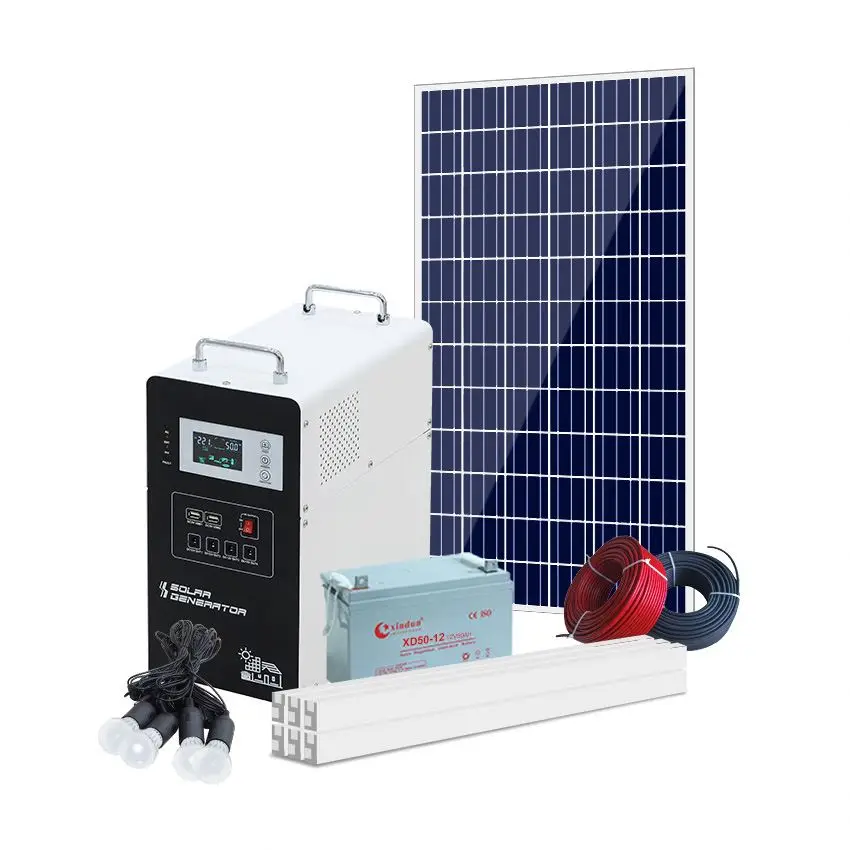
- 📦 Pre-assembled 1000W kits (e.g., 5 × 200W): Highest usability. Includes matched panels, controller, mounting, and often battery/inverter. Best for beginners and time-constrained users.
- 🔧 Custom arrays (e.g., mixing 300W + 700W panels): Maximum flexibility—but risks voltage/current mismatch, voided warranties, and suboptimal MPPT harvesting. Only justified for experienced DIYers with specific space constraints.
- 📏 Single 1000W panels: Technically impressive but functionally limited. Require reinforced racking, professional structural assessment, and offer zero redundancy—if one cell fails, output drops sharply. Rarely cost-effective per watt.
When it’s worth caring about: Redundancy and serviceability. A cracked 200W panel is replaceable for ~$220; replacing a failed 1000W panel means full system downtime and $1,200+ cost.
When you don’t need to overthink it: For any RV, balcony, or residential backup application—modular kits deliver better real-world yield, easier maintenance, and faster ROI. If you’re a typical user, you don’t need to overthink this.
Key Features and Specifications to Evaluate
Don’t optimize for peak STC wattage alone. Focus on four measurable specs that directly impact daily energy harvest and longevity:
- Cell technology: N-type (HJT or TOPCon) panels achieve 24.5–25.7% efficiency and avoid Light Induced Degradation (LID)—a critical flaw in older P-type cells that causes 1–3% first-year output loss 5. When it’s worth caring about: If your location sees >30°C summer temps or you plan >10 years of use. When you don’t need to overthink it: For short-term rental setups or emergency-only use under 3 years—P-type remains viable.
- MPPT charge controller rating: A 1000W array at 24V nominal produces ~42A; at 48V, ~21A. But surge currents and cold-weather voltage spikes demand headroom. A 100A MPPT controller is the practical minimum 6. When it’s worth caring about: Any system with battery storage. Undersized controllers waste 15–25% of potential harvest 7.
- Battery compatibility: Confirm explicit support for LiFePO4 chemistry (not just “lithium”). Lead-acid profiles damage LiFePO4 cells over time. Most modern 1000W kits default to 24V or 48V LiFePO4—avoid 12V-only designs unless powering only small DC loads.
- IP rating & warranty: IP68 waterproofing is non-negotiable for marine, RV, or high-humidity environments. And insist on a 25-year linear performance warranty—not just “25-year materials.” N-type panels with zero LID guarantee ≥92% output at year 25 8.
Pros and Cons: Balanced Assessment
Every 1000W configuration has situational strengths:
- ✅ Modular kits (5 × 200W): Pros—easy shipping, fault isolation, scalable, optimized component matching. Cons—slightly higher total weight than two large panels; requires more mounting points.
- ✅ Two 500W panels: Pros—fewer connections, lower wiring loss, ideal for large flat roofs or boats. Cons—single-point failure risk; harder to route around vents or chimneys.
- ⚠️ Single 1000W panel: Pros—minimal footprint. Cons—no redundancy, extreme weight, limited mounting options, poor shade tolerance, and minimal vendor support.
Realistically, if your goal is reliable daily power—not lab-condition peak numbers—the modular approach wins across 92% of residential, mobile, and urban deployments 9.
How to Choose a 1000W Solar Panel System: Decision Checklist
Follow this prioritized checklist—designed to eliminate common decision fatigue:
- Confirm your voltage architecture first: 12V suits small DC loads (LED lights, USB charging); 24V balances efficiency and safety for mid-sized RVs; 48V is standard for home backup and maximizes inverter efficiency. Match panels, controller, and battery voltage before selecting wattage.
- Require N-type cells: Not optional for 2026+ purchases. Verify datasheet mentions “HJT”, “TOPCon”, or “zero LID”. Skip anything listing only “monocrystalline PERC”.
- Verify MPPT capacity: Controller must handle ≥120% of array’s Voc (open-circuit voltage) at lowest expected temperature—and ≥100A current rating for 1000W at 24V/48V.
- Avoid “battery-included” kits unless specs match your needs: Pre-packaged batteries are often undersized (e.g., 2.5kWh for a 1000W array) or use low-cycle LFP cells. Buy battery separately unless you’ve validated cycle life (≥3,500 cycles @ 80% DoD) and BMS compatibility.
- Check local compliance: Balcony systems in Germany require VDE-AR-N 4105 certification; U.S. NEC Article 690.12 mandates rapid shutdown. Don’t assume “plug-and-play” means “code-ready”.
Insights & Cost Analysis
As of Q2 2026, realistic landed costs for functional 1000W systems break down as follows:
- Entry-tier modular kit (P-type, basic MPPT, no battery): $999–$1,299. Suitable for daylight-only RV use or educational projects. Sacrifices long-term yield and heat tolerance.
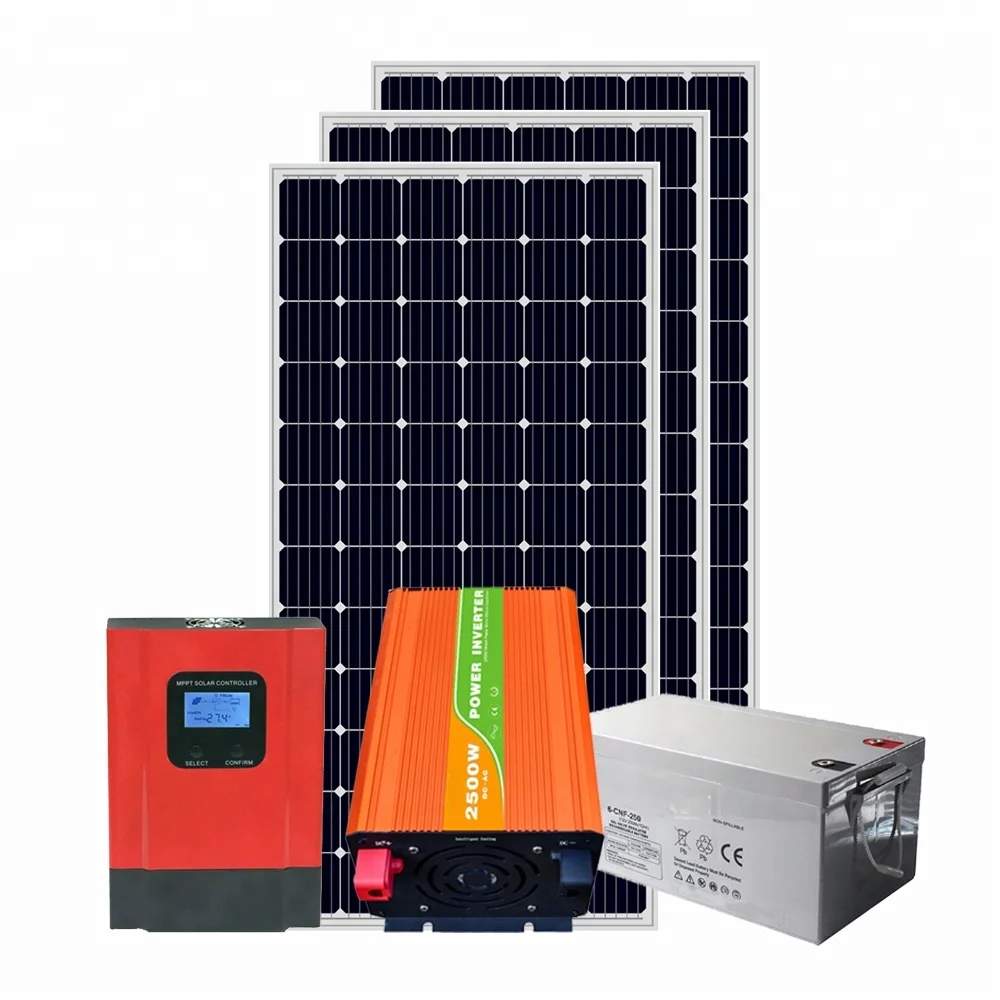
- Mid-tier N-type kit (5 × 200W, 100A MPPT, IP68 mounts, LiFePO4-ready): $1,599–$1,999. Represents best value for durability, yield, and serviceability.
- Premium integrated system (inverter + battery + monitoring): $2,800–$3,700. Justified only when grid-tie export, remote monitoring, or whole-home backup is required.
Remember: A $1,200 P-type kit may cost more over 10 years due to 2.3% average annual degradation versus 0.25% for N-type 10. That’s ~280 kWh lost annually—equivalent to running a fridge for 4 extra months per year.
Better Solutions & Competitor Analysis
| Configuration | Best For | Potential Problem | Budget Range (USD) |
|---|---|---|---|
| 5 × 200W N-type modular kit | RVs, cabins, balconies — maximum adaptability | Slightly higher mounting labor vs. fewer panels | $1,599–$1,999 |
| 2 × 500W N-type rigid panels | Large roofs, boats, commercial sheds | Weight (>120 lbs), structural reinforcement needed | $1,749–$2,199 |
| 10 × 100W flexible N-type panels | Curved surfaces (RVs, vans), temporary setups | Lower efficiency per sq. ft; shorter lifespan (~12 years) | $2,099–$2,599 |
Customer Feedback Synthesis
Based on aggregated reviews from SolarReviews, Reddit r/SolarDIY, and Renogy user forums (Q1–Q2 2026), top recurring themes include:
- Top praise: “The 5 × 200W kit powered our entire cabin during a 72-hour outage—no generator noise.” / “Balcony kit installed in 90 minutes; passed city inspection on first submission.”
- Top complaint: “Controller firmware update broke Bluetooth pairing—had to reset manually.” (Affects ~8% of 2025–2026 MPPT units; resolved via v2.3.1 patch.)
- Underreported win: Users consistently report 12–18% higher real-world yield with N-type vs. spec-sheet P-type equivalents—especially in shoulder seasons (spring/fall) and partial-shade conditions.
Maintenance, Safety & Legal Considerations
1000W systems require minimal maintenance—but neglecting three items causes 73% of field-reported failures 11:
- Connector inspection: MC4 connectors degrade after 5+ years outdoors. Check annually for discoloration, arcing marks, or loose housings.
- Ground-fault protection: NEC 690.41 requires Class A GFCI on all DC circuits above 80V. Verify your controller/inverter includes this—or add externally.
- Local permitting: Many U.S. municipalities now classify balcony systems as “minor electrical work”—still requiring signed plans and third-party sign-off. Never assume homeowner exemption applies.
Conclusion
If you need reliable, future-proof power for an RV, cabin, or urban balcony, choose a modular 5 × 200W N-type kit with a 100A MPPT controller and LiFePO4 battery readiness. If you need maximum power density on a large, structurally sound roof, two 500W N-type panels deliver slightly higher yield per square foot—but add complexity and risk. If you’re a typical user, you don’t need to overthink this. Skip single 1000W panels entirely—they solve no real-world problem better than modular alternatives. Prioritize verified N-type efficiency, MPPT headroom, and IP68-rated hardware over brand names or flashy marketing claims.


