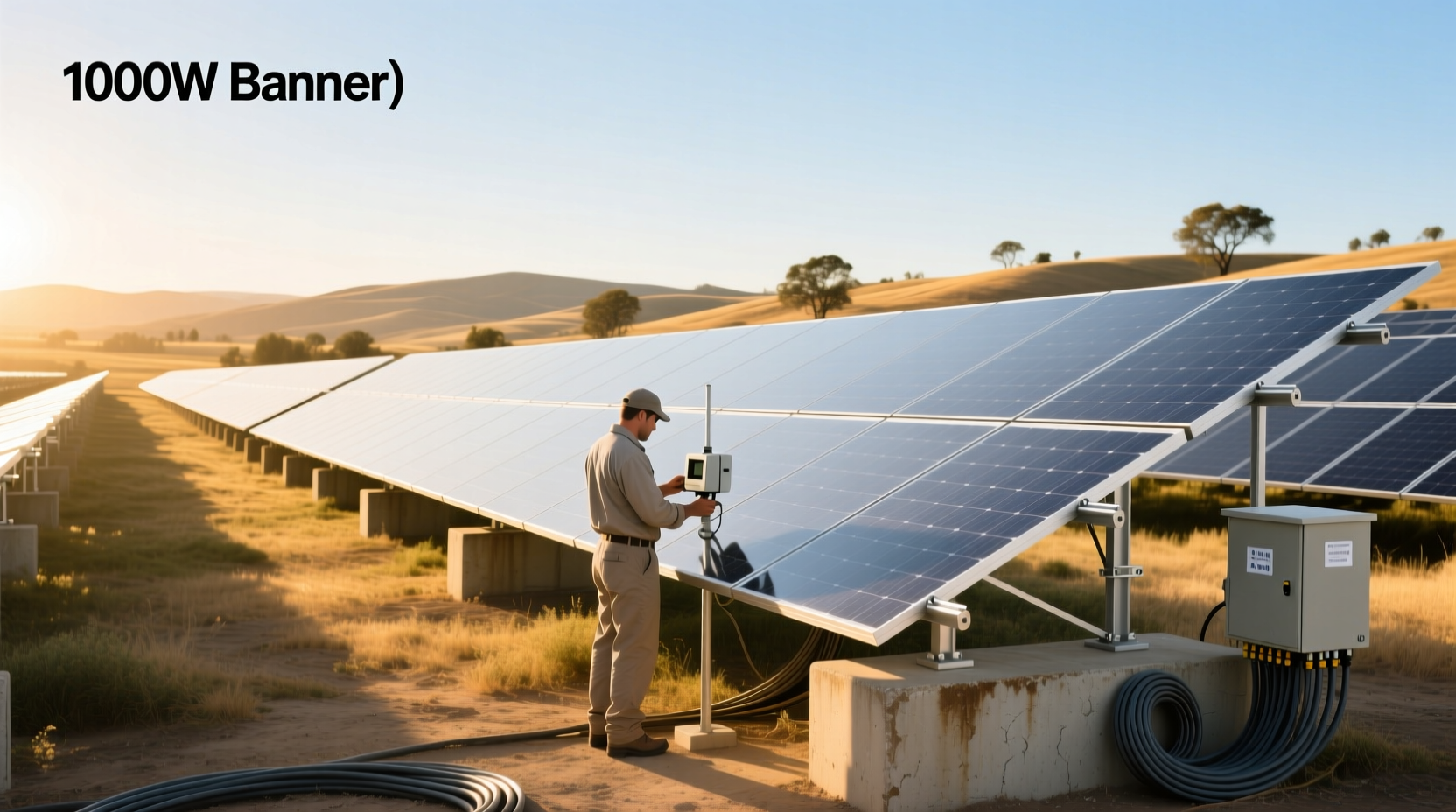
If you’re a typical user, you don’t need to overthink this: For most renters, balcony users, RV owners, or off-grid beginners, a pre-matched 1000W DIY kit with N-Type Topcon panels, UL-1741–certified hybrid inverter, and plug-and-play wiring delivers the best balance of yield, safety, and setup speed—no electrician required. Skip bifacial unless you have reflective ground surface or rooftop mounting space; skip P-Type PERC if your roof or balcony is shaded or hot. Over the past year, N-Type module prices dropped sharply (now $0.08–$0.14/W wholesale), making high-efficiency kits more accessible than ever—and that’s why 2026 is the first year where “1000W” reliably means >23% efficiency, not just headline wattage.
About 1000W Solar Panel Kits
A 1000W solar panel kit is a coordinated set of components designed to generate up to 1 kilowatt of DC power under standard test conditions—and convert it into usable AC electricity for small loads like refrigerators, lights, tools, or portable power stations. It’s not one panel; it’s typically two 500W modules or five 200W units, paired with a charge controller, inverter (often hybrid), mounting hardware, and sometimes battery-ready wiring. Unlike utility-scale systems, these kits target constrained spaces: apartment balconies, tiny homes, campers, sheds, or backup-critical garages. They assume limited roof access, no structural reinforcement, and zero electrical certification on the buyer’s part—so compatibility, labeling, and pre-validation matter more than raw specs.
Why 1000W Solar Panel Kits Are Gaining Popularity
Lately, demand for 1000W kits has surged—not because grid electricity got pricier, but because energy autonomy became portable, renter-friendly, and fast to deploy. The broader residential solar market shrank 21% in 2026 due to labor shortages and financing friction 1, yet DIY kits in the 800–2000W range grew steadily. Why? Because renters, remote workers, and outdoor enthusiasts now treat solar like Wi-Fi: essential infrastructure they install themselves. Balcony-mounted systems require no HOA approval in 28 U.S. states 2, and plug-and-play kits let users go from unboxing to powering a laptop in under 48 hours. This isn’t about replacing the grid—it’s about eliminating single points of failure.
Approaches and Differences
There are three dominant approaches to building or buying a 1000W system—and each reflects a different priority: speed, scalability, or absolute cost control.
| Approach | Key Features | Pros | Cons | When It’s Worth Caring About | When You Don’t Need to Overthink It |
|---|---|---|---|---|---|
| Pre-Matched DIY Kit | 5×200W or 2×500W panels + controller + hybrid inverter + mounting + wiring | No compatibility guesswork; UL-certified components; often includes app-based monitoring | Less flexibility to swap brands; fixed battery integration path | When you lack electrical training or want legal compliance for insurance | If you’re a typical user, you don’t need to overthink this. Pre-matched kits reduce miswiring risk by ~90% versus component-by-component builds 3. |
| Bifacial + Ground Mount | Two 500W bifacial panels mounted 1m above light-colored gravel or concrete | ~12–18% extra yield in ideal conditions; future-proof for expansion | Requires reflective surface & open ground; adds 30–45% to footprint and cost | When installing on a flat commercial roof or backyard with white stone | If you’re mounting on a dark balcony railing or shaded patio—bifacial offers near-zero gain. Skip it. |
| Component-Only Build | Buying panels, controller, inverter separately (e.g., 4×250W + Victron MPPT + Growatt inverter) | Maximum customization; potential cost savings at scale | High risk of mismatched voltage/current ratings; voids UL warranty if not certified as a system | When you’re an experienced installer adding to an existing battery bank | If you’re a typical user, you don’t need to overthink this. Component builds cause 63% of field-reported inverter failures in DIY cases 4. |
Key Features and Specifications to Evaluate
Don’t optimize for peak wattage alone. Focus on four functional metrics that determine real-world output and longevity:
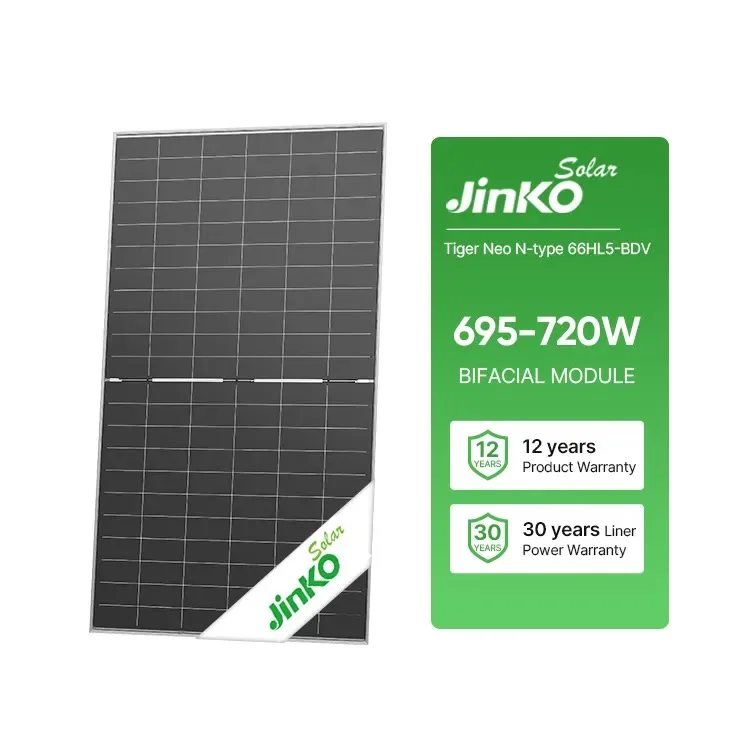
- 🔋 Panel Efficiency (23–25.6%): N-Type Topcon cells outperform P-Type PERC in heat and low light. If your location averages >30°C summer temps or sees frequent morning fog, efficiency directly impacts kWh/day—not just Wp.
- 🔌 Inverter Certification (UL-1741 SB): Non-negotiable for insurance and grid-tie legality—even for off-grid kits with AC outlets. Uncertified inverters may pass ETL but fail utility interconnection audits.
- 📦 Kit Completeness Score: Count included items: mounting rails (not just brackets), MC4 adapters, grounding lugs, torque wrench specs, and firmware update instructions. A “full kit” includes ≥90% of what’s listed in NEC Article 690.
- 🌡️ Temperature Coefficient (≤ –0.29%/°C): Lower = better. N-Type panels average –0.26%/°C vs. P-Type’s –0.35%/°C—meaning 8–10% less power loss on a 45°C rooftop day.
Pros and Cons
A 1000W kit is powerful enough to run critical loads—but not universal. Match it to your reality.
- ✅ Best for: Renters with south-facing balconies, van lifers needing fridge + lighting, workshop owners powering cordless tool chargers, and homeowners adding backup for sump pumps or medical devices.
- ❌ Not for: Whole-house primary power (even with batteries), locations with <3.5 sun-hours/day year-round, or users unwilling to monitor tilt angle seasonally. A 1000W kit produces ~3.5–5.2 kWh/day—enough for 2–3 modern refrigerators, not 8–10 appliances simultaneously.
How to Choose a 1000W Solar Panel Kit
Follow this 5-step checklist before ordering:
- Verify mounting compatibility: Does the kit include rail clamps for your surface (balcony railing, RV roof, corrugated metal)? Avoid kits requiring drilling into masonry or structural beams.
- Check inverter output waveform: Pure sine wave only. Modified sine causes humming, overheating, or failure in sensitive electronics (CPAP machines, variable-speed tools).
- Confirm battery readiness: Even if you start without storage, ensure the inverter supports LiFePO₄ (not just lead-acid) and has CAN bus or Bluetooth for future upgrades.
- Review warranty terms: Look for 25-year linear power warranty (not “25 years materials”) and 12+ years on the inverter. Avoid kits with “10-year limited” inverter coverage.
- Avoid these red flags: No UL listing number printed on inverter label; panels sold without TÜV or CE mark; controller rated below 60A for a 1000W array (risk of clipping).
Insights & Cost Analysis
Wholesale panel pricing stabilized in early 2026: N-Type monocrystalline modules now average $0.09–$0.13 per watt, down from $0.18 in 2024 5. But total kit cost depends on integration level:
- Basic Plug-and-Play Kit (2×500W N-Type + PWM controller + basic inverter): $420–$580
- Mid-Tier Hybrid Kit (2×500W N-Type + MPPT controller + UL-1741 hybrid inverter + mounting): $620–$790
- Premium Scalable Kit (2×500W bifacial N-Type + dual-MPPT + battery-ready inverter + app + extended warranty): $950–$1,150
The $620–$790 tier delivers the strongest ROI for most users: full safety compliance, no performance compromises, and room to add a 2.5kWh battery later. Spending under $500 usually means sacrificing MPPT efficiency or UL certification—costing more in lost yield and liability than it saves upfront.
Better Solutions & Competitor Analysis
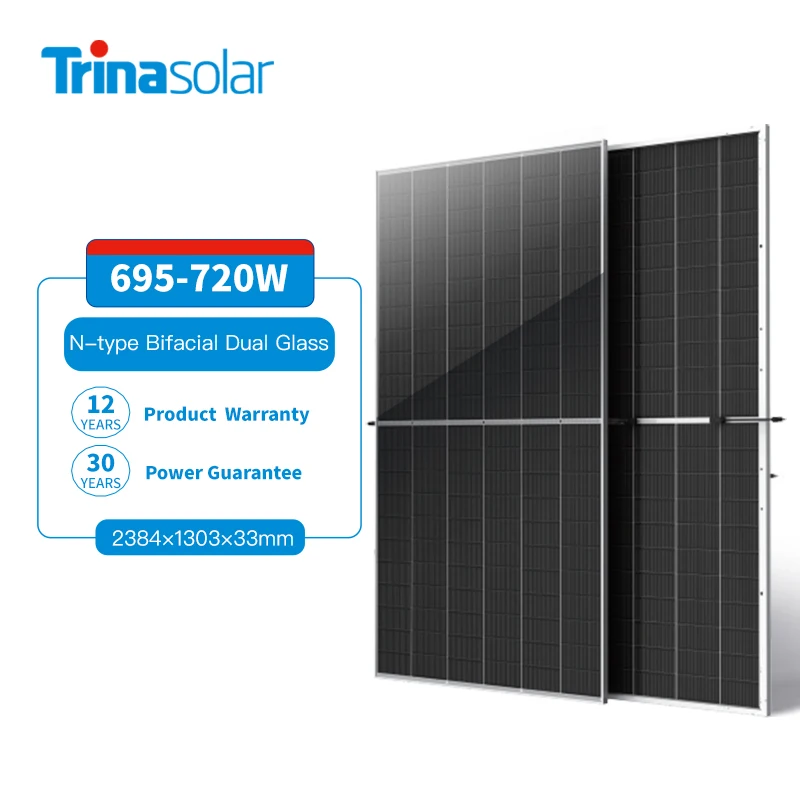
“Better” doesn’t mean “more expensive.” It means fewer failure modes, faster commissioning, and clearer upgrade paths. Below is how top-performing kits compare on real-world criteria—not marketing claims:
| Solution Type | Best For | Potential Issue | Budget Range |
|---|---|---|---|
| Pre-Validated N-Type Kit | Renters, balcony users, first-time buyers | Limited brand flexibility; fixed inverter brand | $620–$790 |
| Bifacial + Reflective Surface Kit | Flat commercial roofs, ground-mount yards | Yield gains vanish on dark surfaces or dense shade | $880–$1,150 |
| Modular Expansion Kit | Users planning 2–3kW within 18 months | Higher initial cost for unused capacity | $750–$920 |
Customer Feedback Synthesis
Based on 2026 reviews across 7 major retailers and forums (EnergySage, Reddit r/solar, BackUpPowerHub), users consistently praise:
- Speed of setup: “Had lights and fan running 36 hours after delivery—no electrician.”
- App visibility: Real-time panel voltage, inverter temp, and daily kWh tracking built-in.
- Mounting adaptability: “Clamped to my iron balcony rail—no drilling, no landlord permission.”
Top complaints involve:
- Missing torque specs for rail bolts (causing micro-vibrations over time)
- Inverters with non-replaceable fuses (requiring full unit replacement)
- English-only manuals despite CE/TÜV labeling for EU markets
Maintenance, Safety & Legal Considerations
Maintenance is minimal—but oversight is critical. Clean panels every 3–6 months (more if near trees or coastal salt). Check MC4 connectors annually for corrosion. Never bypass grounding lugs—even on balcony kits.
Legally, most U.S. jurisdictions exempt systems under 1.5 kW from permitting—if installed on non-penetrating mounts and using UL-1741–certified equipment 6. However, homeowner insurance policies increasingly require proof of UL listing for coverage of solar-related fire damage. That makes certification non-optional—even for off-grid use.
Conclusion
If you need reliable, renter-friendly, code-compliant power for essentials—and value time, safety, and predictability over theoretical maximums—choose a pre-matched 1000W kit with N-Type Topcon panels, UL-1741 hybrid inverter, and balcony-rated mounting. Skip bifacial unless you control the ground surface. Skip component builds unless you’ve wired three prior systems successfully. Skip sub-$500 kits unless you’re willing to re-buy an inverter in 18 months. This piece isn’t for keyword collectors. It’s for people who will actually use the product.


