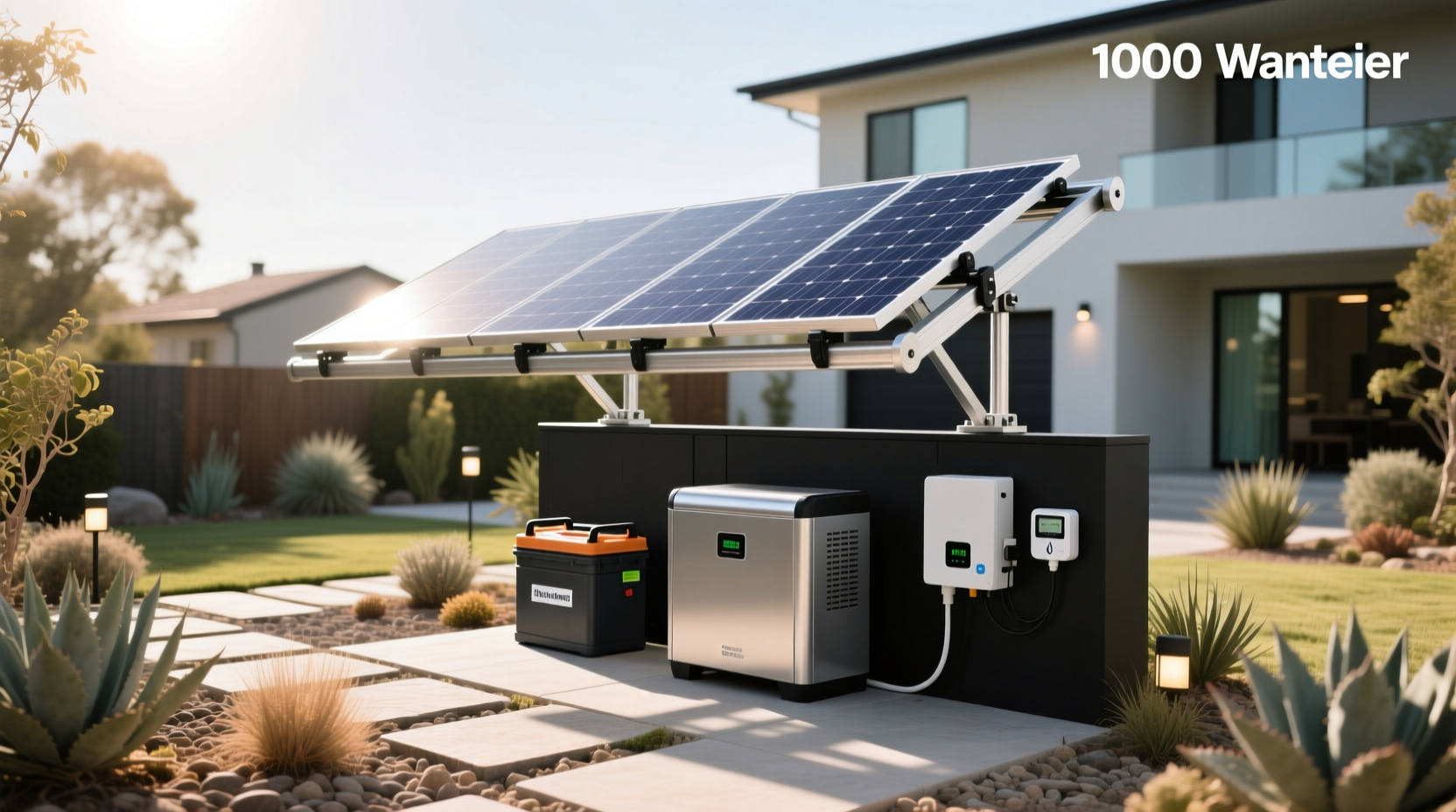
Over the past year, the 1000 watt solar panel kit has evolved from a generic power bundle into a precision-engineered energy system — and that shift changes everything about how you choose one. If you’re a typical user, you don’t need to overthink this: skip single-panel claims (they don’t exist commercially), prioritize N-Type or TOPCon panels at ≥22% efficiency, and only consider kits with integrated LiFePO4 batteries if your use case involves overnight loads or mobility. For RVs, go modular (e.g., 4 × 250W or 5 × 200W); for fixed cabins, choose compact high-wattage arrays (2 × 500W). Space remains the silent bottleneck: expect 50–70 sq ft minimum — but higher efficiency cuts that by up to 31%. This piece isn’t for keyword collectors. It’s for people who will actually use the product.
About 1000W Solar Panel Kits: Definition & Typical Use Cases
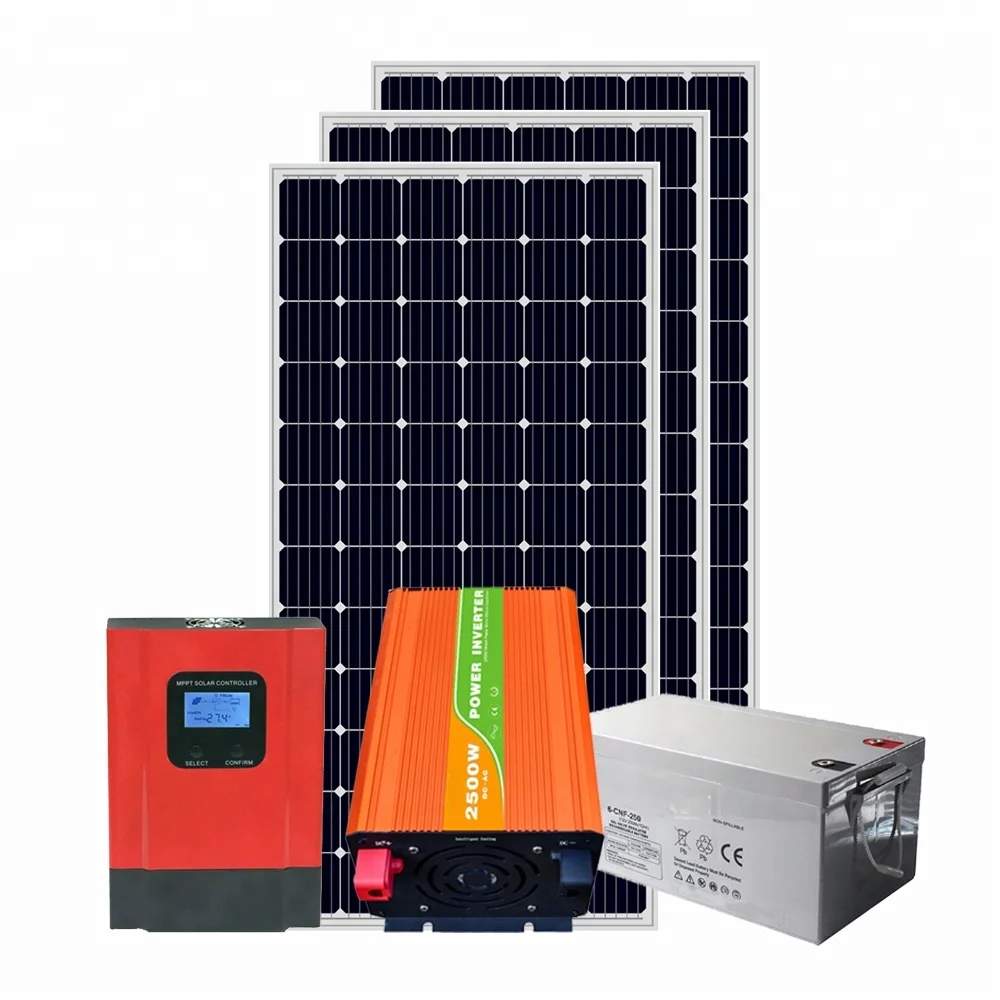
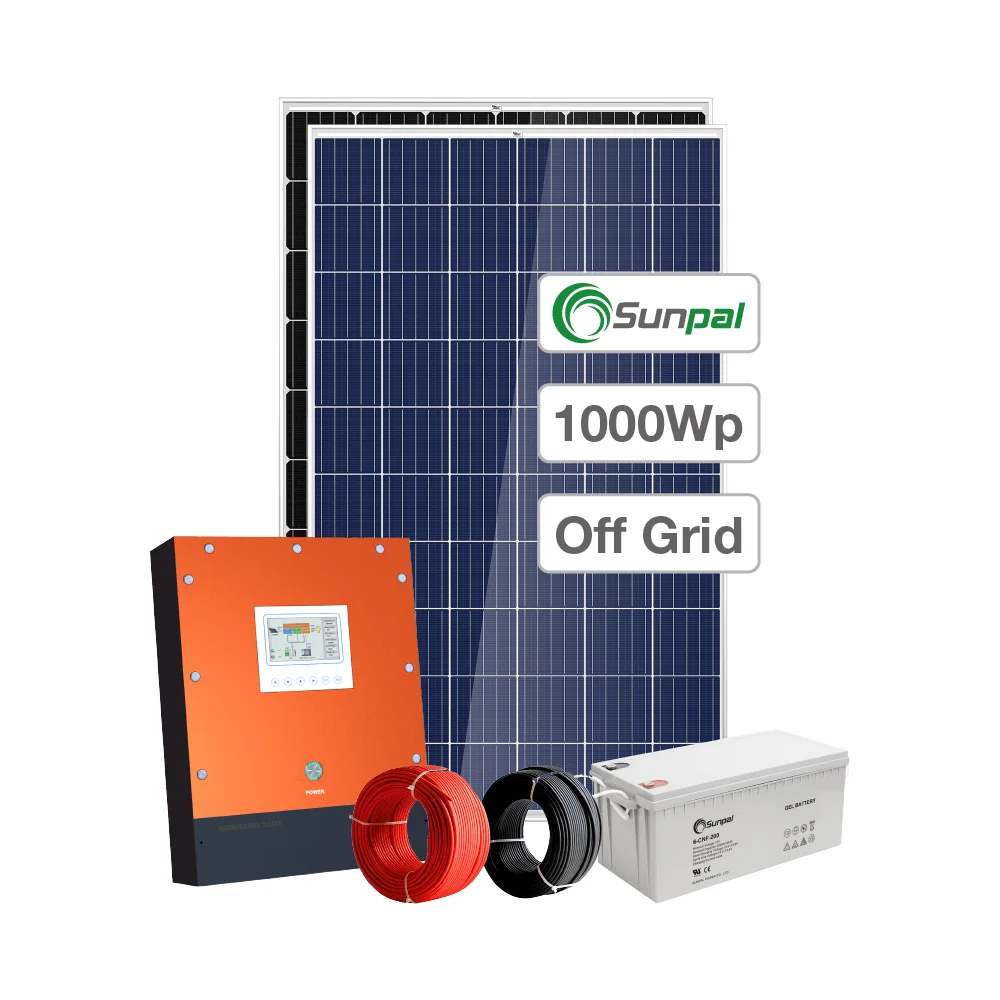
A 1000W solar panel kit is not a single panel — it’s a coordinated system designed to deliver ~1 kilowatt of DC power under standard test conditions (STC). As confirmed across industry sources, no commercially viable, UL-listed 1000W monolithic solar panel exists for residential or mobile applications1. Instead, every functional 1000W kit today combines multiple panels (typically 2–10 units), a charge controller (MPPT standard), mounting hardware, wiring, and often an inverter and/or battery. These kits serve three primary user segments:
- RV & van lifers: Need lightweight, low-profile, shade-tolerant setups with 12V/24V compatibility and portability.
- Off-grid cabin owners: Require reliability, long warranties (25-year panel output guarantees), and seamless LiFePO4 battery pairing for multi-day autonomy.
- Home backup supplementers: Use 1000W as a partial array — often roof-mounted, grid-tied with battery backup, or AC-coupled to existing systems.
If you’re a typical user, you don’t need to overthink this: your application determines 80% of the right configuration. Don’t start with wattage — start with where and how it’ll be installed.
Why 1000W Solar Panel Kits Are Gaining Popularity
Lately, demand for 1000W solar panel kits has surged—not because 1kW is magic, but because it hits a critical usability threshold. At this scale, systems reliably power refrigerators, LED lighting, laptops, small pumps, and communication gear for 1–3 days without sun — enough for meaningful resilience, yet small enough to avoid permitting complexity in most U.S. jurisdictions2. The trend is reinforced by three concrete shifts:
- Efficiency leap: N-Type and TOPCon cells now deliver 20–23% efficiency — meaning a 1000W array occupies ~31% less space than a 2015-era equivalent3.
- Battery convergence: Over 70% of top-selling 1000W kits now include or are pre-configured for LiFePO4 storage — driven by falling battery costs and user demand for blackout-ready power4.
- Aesthetic standardization: “All-black” monocrystalline panels dominate both rooftop and portable categories — not just for looks, but because black frames reduce thermal stress and improve frame rigidity on moving platforms like RVs5.
When it’s worth caring about aesthetics or cell type? When mounting on a visible RV roof or historic home facade. When you don’t need to overthink it? For temporary ground-mount setups or utility sheds — performance matters more than finish.
Approaches and Differences
There are two dominant structural approaches to building a 1000W solar panel kit — and they reflect fundamentally different priorities:
| Approach | Typical Configuration | Key Advantages | Potential Drawbacks |
|---|---|---|---|
| High-Wattage Array | 2 × 500W or 3 × 350W panels | Fewer connections → lower failure points; minimal roof footprint; simpler wiring; optimal for fixed mounts | Less flexible placement; heavier per panel (25–30 kg); harder to transport or reposition |
| Modular Kit | 4 × 250W, 5 × 200W, or 10 × 100W | Easier to distribute across uneven surfaces (e.g., RV roof bumps); lighter per unit; replaceable individually; better partial-shade tolerance | More wiring complexity (series/parallel balancing); higher connector count; increased risk of mismatch losses |
When it’s worth caring about wiring topology? If your installation site experiences frequent tree shade, dust accumulation, or variable orientation (e.g., curved RV roof). Half-cut cell panels — now standard in 2026 kits — mitigate this, but modular layouts add redundancy. When you don’t need to overthink it? On south-facing, unobstructed roofs — high-wattage arrays deliver identical output with less labor.
Key Features and Specifications to Evaluate
Don’t default to wattage alone. A 1000W label tells you little about real-world yield. Focus instead on these five measurable specifications — each tied directly to daily energy harvest:
- Panel efficiency (≥22%): Higher efficiency means more watts per square foot — critical for space-constrained RVs or heritage roofs. N-Type/TOPCon panels consistently outperform P-Type in heat and low light6.
- Temperature coefficient (≤ −0.30%/°C): Panels lose output as they heat up. A coefficient of −0.26%/°C (common in TOPCon) yields ~8% more summer output than −0.40%/°C (older PERC).
- MPPT controller efficiency (≥97.5%): Converts variable DC to stable battery voltage. Anything below 96% wastes meaningful energy — especially during dawn/dusk or cloud transitions.
- Low-light performance rating: Not always published, but ask suppliers for irradiance response curves at 200 W/m². Kits with bifacial gain or anti-reflective coatings perform better under overcast skies.
- Warranty structure: Look for separate 12–15-year product warranty + 25-year linear power output guarantee (e.g., ≥87% at year 25).
When it’s worth caring about temperature coefficient? In Arizona, Texas, or Florida — where panel surface temps regularly exceed 65°C. When you don’t need to overthink it? In Pacific Northwest or coastal Maine — ambient temps keep panels cooler, narrowing performance gaps.
Pros and Cons
A 1000W solar panel kit delivers tangible benefits — but only when matched to realistic expectations:
- ✅ Pros: Enables meaningful off-grid capability without full-system complexity; qualifies for the full 30% federal tax credit (FTC) as part of residential solar investment; scalable (add panels later); reduces grid dependence for critical loads.
- ❌ Cons: Does not power HVAC, electric water heaters, or EV chargers; requires active load management (e.g., running fridge compressor only during peak sun); battery add-ons increase cost 3–5× and require ventilation/space planning.
It’s suitable if you need reliable power for lights, comms, refrigeration, and device charging — especially in mobile or remote settings. It’s not suitable if your goal is whole-home backup during extended outages, or if you lack >50 sq ft of unshaded, structurally sound mounting area.
How to Choose a 1000W Solar Panel Kit: A Step-by-Step Decision Guide
Follow this sequence — skipping steps invites mismatched expectations:
- Confirm physical space: Measure available area. 1000W at 22% efficiency needs ~55 sq ft. If you have ≤45 sq ft, prioritize 23%+ panels — or reconsider scale (e.g., 800W).
- Define primary use case: Is this for an RV (prioritize weight, 12V compatibility, flexible mounting)? A cabin (prioritize battery integration, 25-year warranty, cold-weather startup)? Or home supplement (prioritize UL 1741 SA compliance for grid-tie)?
- Decide on battery inclusion: If you need power after sunset or during clouds, budget for LiFePO4 (10–12 kWh typical for 1000W input). If you only need daytime operation, skip it — controllers and inverters work fine standalone.
- Verify certification stack: Ensure panels carry UL 61215 (safety), IEC 61730 (fire), and CE. Avoid kits listing “CE” without notified body number — it’s often self-declared and meaningless.
- Avoid these three common pitfalls: (1) Assuming “1000W” means 1000W every hour — real-world average is 3–5 peak sun hours/day; (2) Buying panels without matching voltage to your controller’s input range (e.g., 48V panels into 30V max controller); (3) Ignoring mounting hardware specs — many RV kits ship with non-rated Z-brackets unsuitable for highway vibration.
Insights & Cost Analysis
As of mid-2026, installed residential solar averages $2.50–$3.50 per watt before incentives2. For a 1000W kit, that translates to:
- Panels + controller + mounting only: $2,500–$3,500
- With 10kWh LiFePO4 battery: +$10,000–$20,000 (driven by cell chemistry and BMS sophistication)
- Net cost after 30% FTC: $1,750–$2,450 (panels only); batteries qualify separately under IRA’s Energy Credit.
Value tip: Kits priced <$1,500 before incentives almost always cut corners — either using outdated P-Type cells (<20% efficiency), omitting MPPT, or sourcing uncertified components. At the high end ($2,800+), you’re paying for certified N-Type, UL 1741 SA inverters, and 25-year service support — justified for cabins, less so for weekend RV trips.
Better Solutions & Competitor Analysis
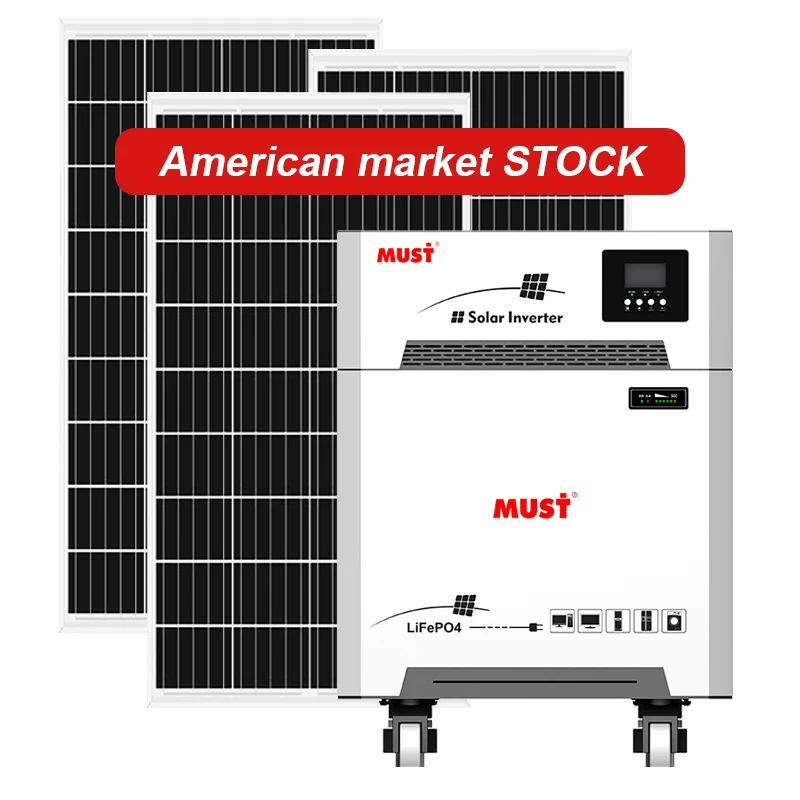
Some users conflate “1000W kit” with “portable solar generator.” That’s a category error. True 1000W kits are expandable, serviceable, and built for longevity. Integrated generators (e.g., EcoFlow Delta Pro, Bluetti AC300) bundle panels, battery, and inverter — convenient, but less repairable and harder to upgrade. Below is a functional comparison:
| Solution Type | Best For | Potential Issue | Budget Range (Pre-FTC) |
|---|---|---|---|
| Modular 1000W Kit (e.g., Renogy, GoGreenSolar) | DIYers, RV owners needing customization, cabin builders prioritizing longevity | Requires basic electrical knowledge; component sourcing adds time | $2,500–$3,500 (panels only) |
| All-in-One Generator (e.g., EcoFlow Delta 2 Max + panels) | Users wanting plug-and-play, minimal setup, and app monitoring | Limited panel expansion beyond 1,600W; battery degradation affects entire unit | $3,200–$5,800 (full system) |
| Hybrid Approach (Kit + third-party LiFePO4) | Those optimizing for battery cycle life, warranty flexibility, and future upgrades | Requires voltage/communication compatibility checks (e.g., CAN bus vs. RS485) | $3,800–$6,000 (full system) |
Customer Feedback Synthesis
Aggregating verified reviews (EcoFlow, Renogy, GoGreenSolar, Anker, and independent forums like r/solarenergy), top recurring themes emerge:
- Most praised: Reliability of MPPT controllers in variable weather; ease of expanding modular kits; quiet operation vs. gas generators; rapid ROI in high-electricity-cost states (CA, HI, NY).
- Most complained about: Inconsistent labeling of “1000W” (some kits list STC sum but omit derating for real-world loss); vague battery cycle-life claims; mounting hardware failing under sustained vibration (especially non-automotive-grade brackets); missing low-voltage disconnect specs in manuals.
If you’re a typical user, you don’t need to overthink this: read the spec sheet — not the marketing headline. Cross-check “rated output,” “max input voltage,” and “operating temperature range” against your location and use case.
Maintenance, Safety & Legal Considerations
Maintenance is minimal but non-zero: clean panels quarterly (more often in dusty or pollen-heavy areas); inspect MC4 connectors annually for corrosion; verify torque on mounting bolts every 6 months on RVs. Safety-wise, always de-energize before handling — DC arcs from 1000W arrays can sustain plasma at >60V. Legally, most 1000W kits fall under NEC Article 690.7(A) as “limited energy systems” — exempt from full interconnection review if DC-coupled and under 1,500V. However, battery integration triggers additional fire code requirements (e.g., NFPA 855 spacing, ventilation). Consult your local AHJ before finalizing plans.
Conclusion
If you need reliable, expandable, long-term power for an RV, cabin, or home supplement — and you have ≥55 sq ft of usable, unshaded space — a well-specified 1000W solar panel kit is a mature, cost-effective solution in 2026. Choose high-efficiency N-Type or TOPCon panels (≥22%), pair them with a certified MPPT controller, and only add LiFePO4 if overnight autonomy matters. Skip gimmicks (“1000W single panel”), ignore inflated wattage claims, and prioritize verifiable specs over glossy renders. If your goal is simplicity over serviceability, consider a premium all-in-one generator — but know you’re trading upgrade path for convenience.


