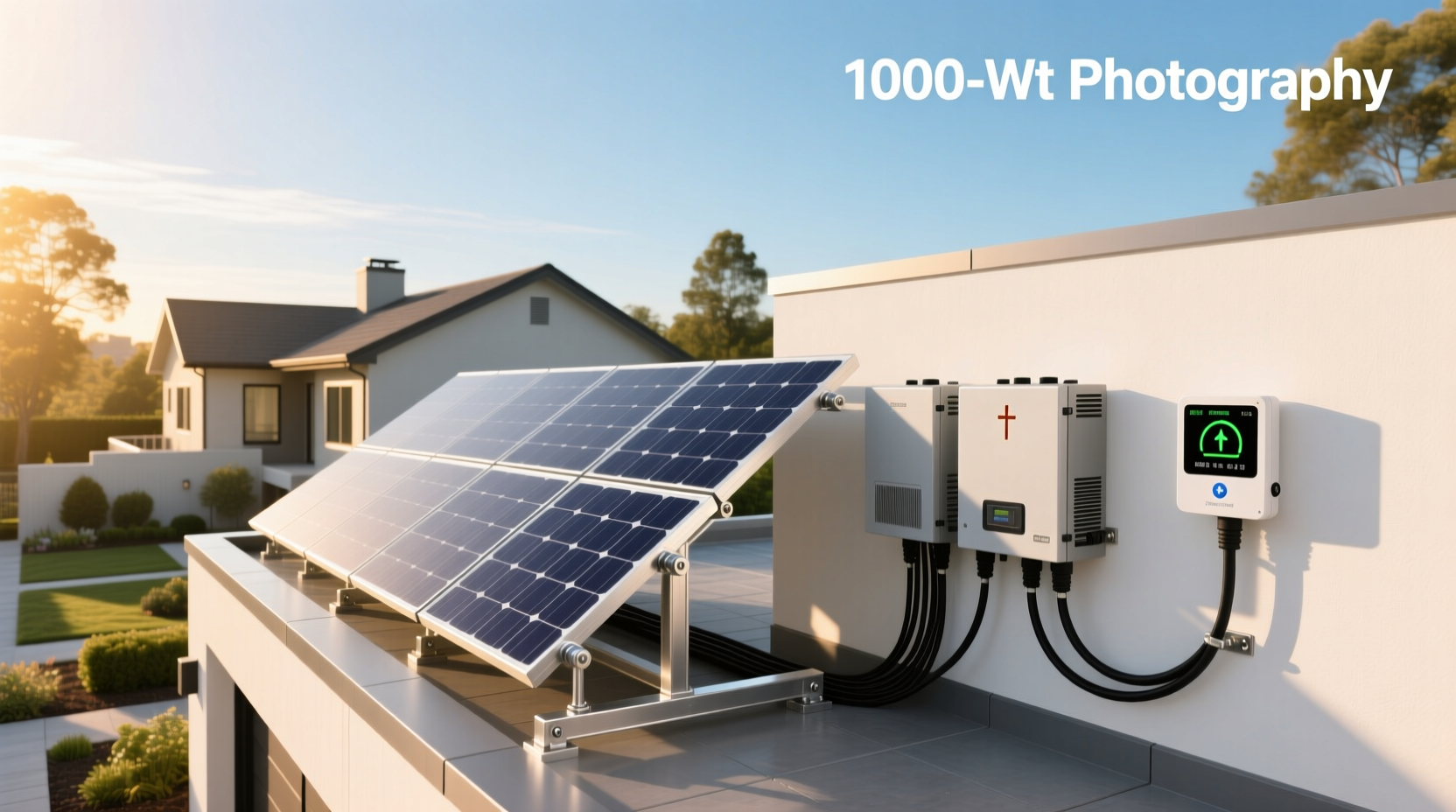
If you’re a typical user deciding between a fixed off-grid kit and a portable solar generator for home backup, RV use, or emergency readiness—start with a LiFePO4-based 1000W solar power system that includes N-type monocrystalline panels (≥22% efficiency) and a pure sine wave inverter. Over the past year, pricing for 1kW systems has stabilized near historic lows ($0.34/Wdc), while reliability expectations have risen sharply—especially after widespread grid instability events across North America and Europe in early 20261. That means your decision isn’t about whether to go solar—it’s about choosing the right integration level, battery chemistry, and scalability path without overpaying for features you won’t use. If you’re a typical user, you don’t need to overthink this.
About 1000W Solar Power Systems: Definition & Typical Use Cases
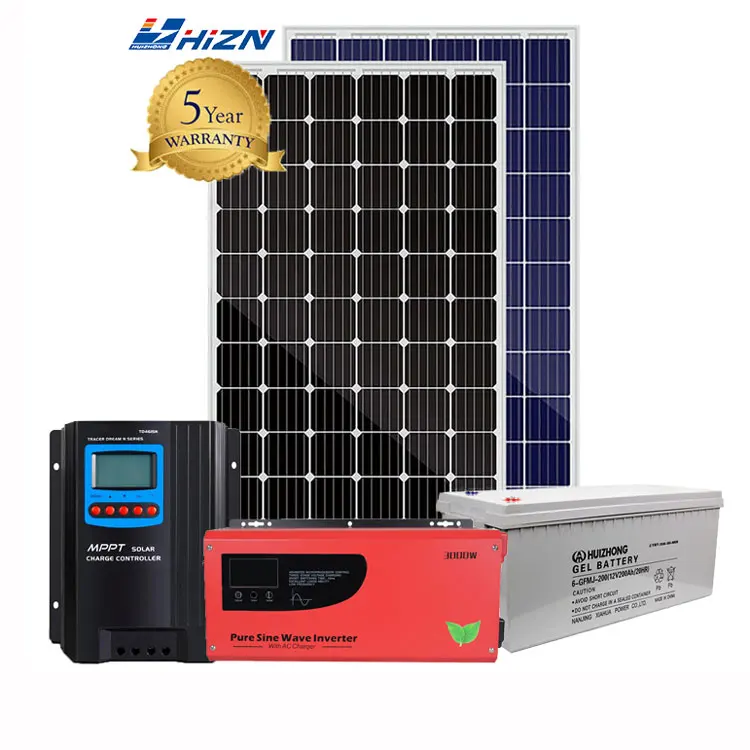
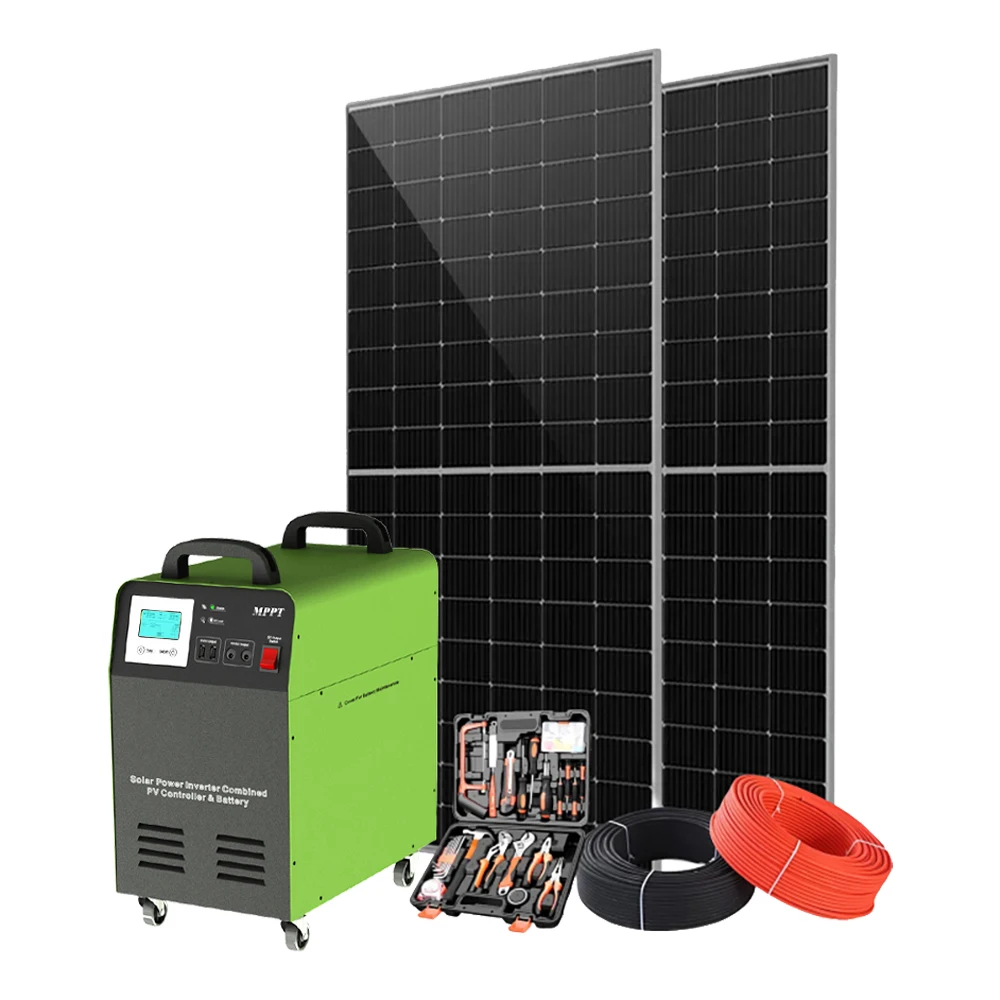
A 1000W solar power system refers to a photovoltaic setup capable of generating up to 1 kilowatt of DC power under standard test conditions (STC). It is not a single product—but a functional category spanning two distinct hardware archetypes: 🛠️ fixed off-grid kits (panels + charge controller + external battery bank) and 🔋 portable solar generators (integrated lithium battery, MPPT charge controller, pure sine wave inverter, and often foldable panels).
Typical users include:
- RV and van lifers needing reliable, silent power for refrigeration, lighting, and device charging;
- Cabin or off-grid homeowners seeking supplemental or full-time energy independence;
- Homeowners in high-electricity-cost regions (e.g., California, Germany, Australia) using 1000W as a bill-reduction anchor point2;
- Emergency preppers prioritizing rapid deployment and battery longevity over peak output.
Why 1000W Solar Power Systems Are Gaining Popularity
Lately, the 1000W capacity has crystallized as the global residential benchmark—not because it powers everything, but because it delivers optimal balance: enough output to offset 30–50% of average daily household load (≈3–5 kWh), yet compact enough for rooftops, balconies, and vehicle mounting. This shift reflects two converging realities:
- Economic necessity over idealism: 92% of new U.S. residential adopters cite electricity rate volatility as their top driver—not carbon reduction3.
- Grid fragility as catalyst: With utility curtailment events up 41% YoY in Q1 2026, consumers now treat even small-scale solar as infrastructure—not an accessory4.
This piece isn’t for keyword collectors. It’s for people who will actually use the product.
Approaches and Differences: Fixed Off-Grid Kits vs. Portable Generators
The first major decision isn’t which brand, but which architecture. Your choice determines installation complexity, portability, scalability, and long-term serviceability.
| Feature | Fixed Off-Grid Kit | Portable Solar Generator |
|---|---|---|
| Core Components | Rigid/flexible panels, MPPT charge controller, external LiFePO4 battery bank, wiring, mounting | All-in-one unit: battery + inverter + controller + ports + (often) foldable panels |
| Installation | Requires mounting, grounding, DC wiring, battery enclosure — best with basic electrical literacy | Plug-and-play: unfold panels, connect cable, power on — minimal tools needed |
| Scalability | High: add panels, batteries, or inverters independently | Low-to-moderate: some allow external battery expansion (e.g., Bluetti AC200P), most do not |
| Mobility | Low: panels and batteries are heavy and separate | High: units weigh 30–60 lbs; panels fold to ~3 ft × 2 ft |
| When it’s worth caring about | You plan to expand beyond 1kW, own land or a permanent structure, or need >5,000 cycles over 10+ years | You move frequently, lack DIY confidence, or prioritize speed-of-deployment during outages |
| When you don’t need to overthink it | If you only need 1000W for one location and won’t upgrade soon — integrated solutions simplify maintenance | If you already own quality panels or have space for roof mounting — fixed kits avoid redundant panel purchases |
Key Features and Specifications to Evaluate
Not all 1000W systems deliver equal value. Prioritize these four technical attributes — each tied directly to real-world performance, safety, and lifespan.
- 🔋 Battery Chemistry: LiFePO4 vs. NMC
LiFePO4 offers 3,000+ charge cycles and thermal stability at lower cost per cycle. NMC degrades faster above 35°C and drops to ~500 cycles. When it’s worth caring about: Daily cycling (e.g., off-grid cabin), hot climates, or >5-year ownership. When you don’t need to overthink it: Occasional backup use (<5x/year) — NMC may suffice if priced significantly lower. - ☀️ Panel Efficiency & Type: N-Type vs. P-Type Monocrystalline
N-Type cells achieve 24–25.6% lab efficiency and lower degradation (0.25%/yr vs. 0.45%). When it’s worth caring about: Limited roof/balcony space or high-temperature environments. When you don’t need to overthink it: Ample mounting area and moderate climate — standard monocrystalline (22–23%) delivers comparable annual yield at lower cost. - ⚡ Inverter Output: Pure Sine Wave Only
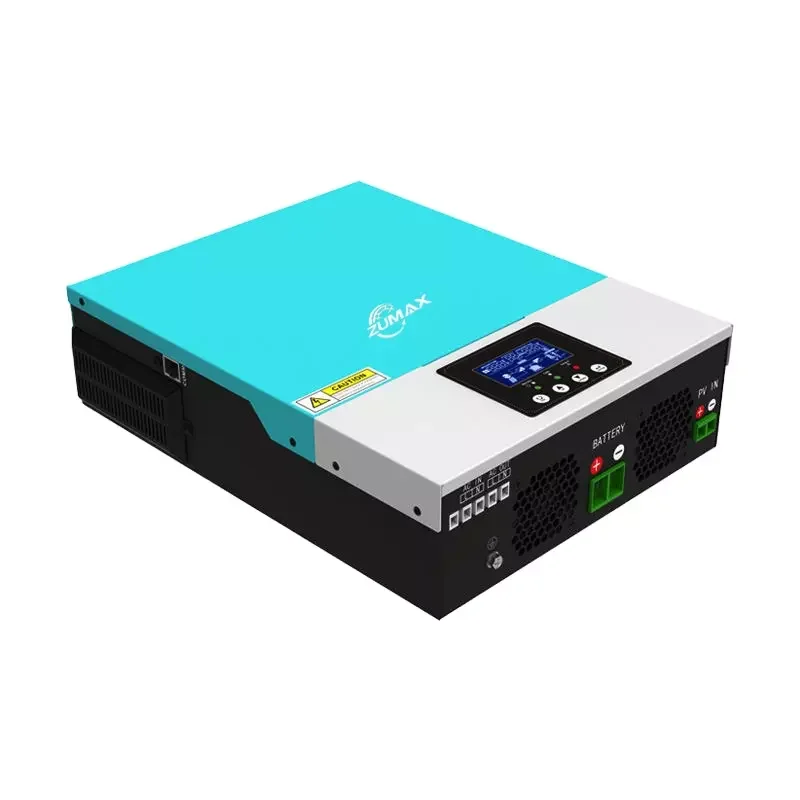
Modified sine wave risks damaging sensitive electronics (CPAP machines, medical devices, variable-speed tools). Pure sine wave is non-negotiable for modern households. If you’re a typical user, you don’t need to overthink this. - ⏱️ Charge Time & Input Flexibility
Top Gen 2 units support 1-hour AC fast charging and accept ≥1000W solar input (not just “1000W rated”). Verify solar input ceiling, not just battery capacity. When it’s worth caring about: Frequent multi-day outages or reliance on solar-only recharge. When you don’t need to overthink it: You have reliable grid access for overnight topping-off.
Pros and Cons: Who Is This Right For?
A 1000W solar power system is neither universally ideal nor inherently limited—it’s a tool whose fit depends on usage rhythm and physical context.
- ✅ Best suited for: Households consuming ≤15 kWh/day; RV/cabin owners with consistent sun exposure; renters using balcony-mounted kits; users seeking energy resilience, not full grid independence.
- ❌ Not designed for: Whole-home backup (requires ≥5kW+), air conditioning loads >12,000 BTU, or continuous 24/7 operation without supplemental generation.
How to Choose a 1000W Solar Power System: A Step-by-Step Decision Framework
Follow this five-step checklist — designed to eliminate common missteps before purchase.
- Define your primary use case: Emergency backup? Daily off-grid living? RV power? This dictates architecture (portable vs. fixed) more than anything else.
- Verify real-world solar input rating: Don’t trust “1000W compatible” labels. Confirm the unit accepts ≥1000W at the MPPT input, not just battery capacity.
- Check battery depth-of-discharge (DoD): LiFePO4 units typically allow 80–100% DoD. Avoid systems advertising “1000Wh” but limiting usable capacity to 600Wh.
- Review warranty terms — not just duration: Look for cycle-based warranties (e.g., “3,000 cycles to 80% capacity”) over vague “5-year coverage.”
- Avoid bundled panels unless tested together: Third-party foldable panels often underperform due to impedance mismatch. Prefer kits where panels and controllers are validated as a set.
Insights & Cost Analysis: Realistic Budget Expectations
As of mid-2026, wholesale hardware costs have settled near $0.34/Wdc for N-type panels1. But total system cost depends heavily on integration level:
- Entry-tier portable generators (e.g., Bluetti EB70S + 2×200W panels): $359–$400 — suitable for lighting, phones, and small fans.
- Mid-tier all-in-one units (e.g., Jackery 2000 Pro, Anker Solix F2000): $499–$749 — supports refrigerators, microwaves, and CPAPs for 8–12 hours.
- Fixed off-grid kits (1000W panels + 2.56kWh LiFePO4 + MPPT controller): $1,100–$1,280 wholesale — highest long-term value for permanent setups.
Remember: Cheapest upfront ≠ lowest lifetime cost. A $399 unit with 500-cycle NMC battery may cost more per usable kWh over 5 years than a $699 LiFePO4 model.
Better Solutions & Competitor Analysis
No single vendor dominates. Instead, differentiation lies in engineering cohesion — how well panels, controller, and battery communicate. Below are representative options aligned to use-case priorities:
| Solution Type | Best For | Potential Issue | Budget Range (USD) |
|---|---|---|---|
| Bluetti AC180T | Portability + high solar input (1400W) | Limited external battery expansion | $1,199 |
| Jackery Explorer 2000 Pro | User-friendly interface, strong retail support | Lower DoD (80%) vs. competitors | $1,398 |
| Tunto 1000W Fixed Kit | DIY scalability, ISO9001-certified B2B supply | Requires assembly & configuration | $1,150 (wholesale) |
| Anker Solix F2000 | Fast AC charging (1 hr), Gen 2 firmware | Foldable panels sold separately | $749 |
Customer Feedback Synthesis
Based on aggregated reviews (Q1–Q2 2026) across Amazon, specialty retailers, and B2B platforms:
- Top 3 praised features: LiFePO4 longevity (users report >2,000 cycles at 92% capacity), pure sine wave stability with medical devices, and intuitive app monitoring (Bluetooth + Wi-Fi).
- Top 3 recurring complaints: Inconsistent foldable panel output (up to 22% below spec in partial shade), confusing charge-state indicators on budget units, and lack of UL 9540A certification documentation for some LiFePO4 modules.
Maintenance, Safety & Legal Considerations
1000W systems sit at the regulatory threshold where local rules begin to apply:
- Maintenance: Panel cleaning (2–4x/year), firmware updates (quarterly), and visual inspection of terminals and vents. No oil changes or filter replacements.
- Safety: All units should carry CE, RoHS, and UN38.3 certifications. LiFePO4 units must include cell-level voltage monitoring and thermal cutoffs. Avoid uncertified “white-label” power stations.
- Legal: In most U.S. jurisdictions, standalone 1000W systems under 120V and <1.5kVA do not require permits — unless connected to the grid. Always confirm with local AHJ before hardwiring.
Conclusion: Conditional Recommendations
If you need plug-and-play reliability for travel or emergency use, choose a portable solar generator with verified 1000W+ solar input, LiFePO4 chemistry, and pure sine wave output — start with models like the Anker Solix F2000 or Bluetti AC180T.
If you need long-term, scalable, site-specific power for a cabin, workshop, or secondary residence, invest in a fixed off-grid kit with N-type panels, a 40A+ MPPT controller, and a modular LiFePO4 bank — Tunto and Poweroak offer ISO9001-certified B2B options with MOQs as low as 1 set.
If you’re a typical user, you don’t need to overthink this.


