If you’re a typical user, you don’t need to overthink this. Over the past year, the 1000Wh portable power station has become the definitive sweet spot — balancing capacity, portability, and real-world usability. As of 2026, LiFePO4 battery chemistry is now universal, charging times have dropped to under 60 minutes for top models, and modularity (like stackable expansion batteries) is no longer optional — it’s expected. For most home backup or extended off-grid use, skip units with NCM or older lithium-ion cells; avoid anything under 1200W continuous AC output; and prioritize units with at least 300W solar input if you plan to recharge outdoors. The Anker SOLIX C1000 leads on speed and value, the EcoFlow Delta 2/3 excels in ecosystem flexibility, and the Jackery Explorer 1000 v2 remains the most trusted entry point — but only if your needs are straightforward. This piece isn’t for keyword collectors. It’s for people who will actually use the product.
About 1000Wh Power Stations: Definition & Typical Use Cases
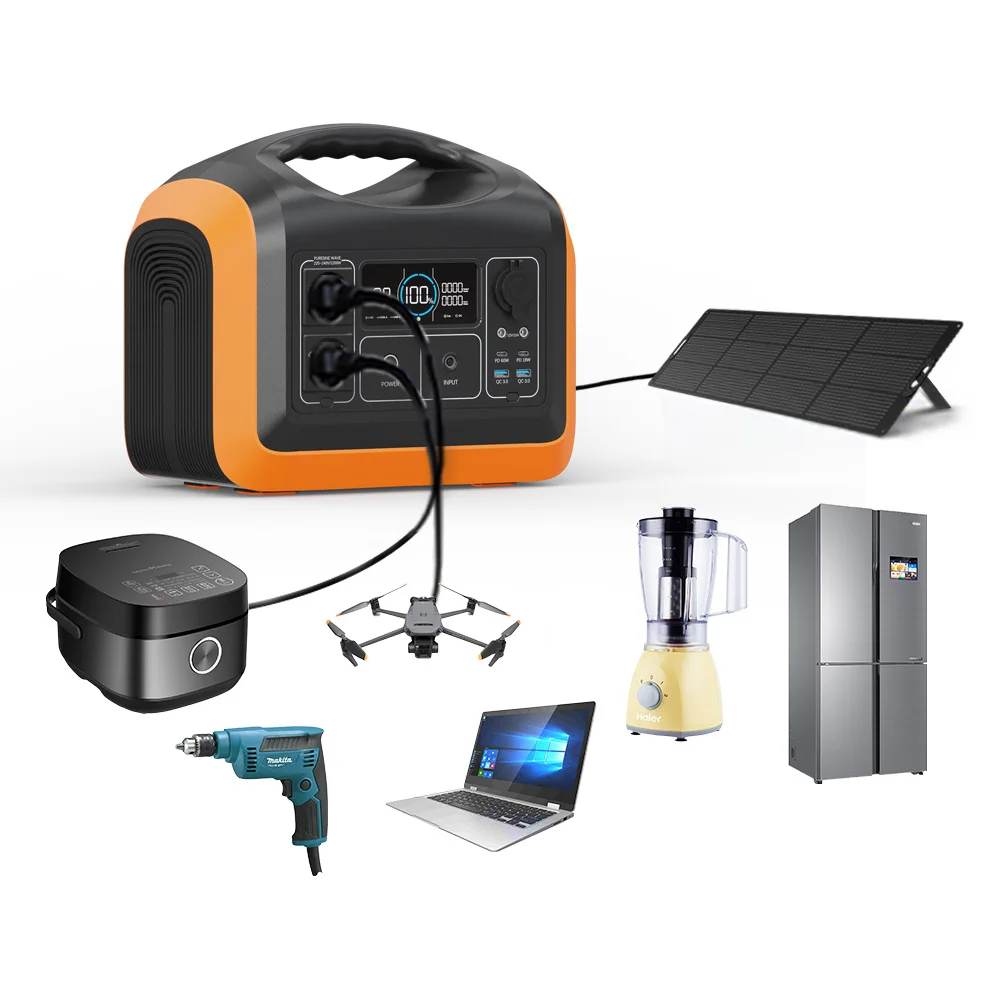
A 1000Wh (or 1kWh) portable power station is a self-contained, battery-powered energy hub capable of storing enough electricity to run a mid-sized refrigerator for ~10 hours, charge a laptop 15–20 times, or power a CPAP machine for two full nights 1. It’s not a generator — it produces silent, zero-emission DC-to-AC power via an integrated inverter and battery pack. Unlike smaller 300–500Wh units (which suit day trips or phone charging), or larger 2000+Wh systems (often too heavy or expensive for casual users), the 1000Wh class hits a functional inflection point: sufficient for multi-day camping, emergency home backup during outages, mobile work setups (e.g., photographers, field technicians), and even light RV support.
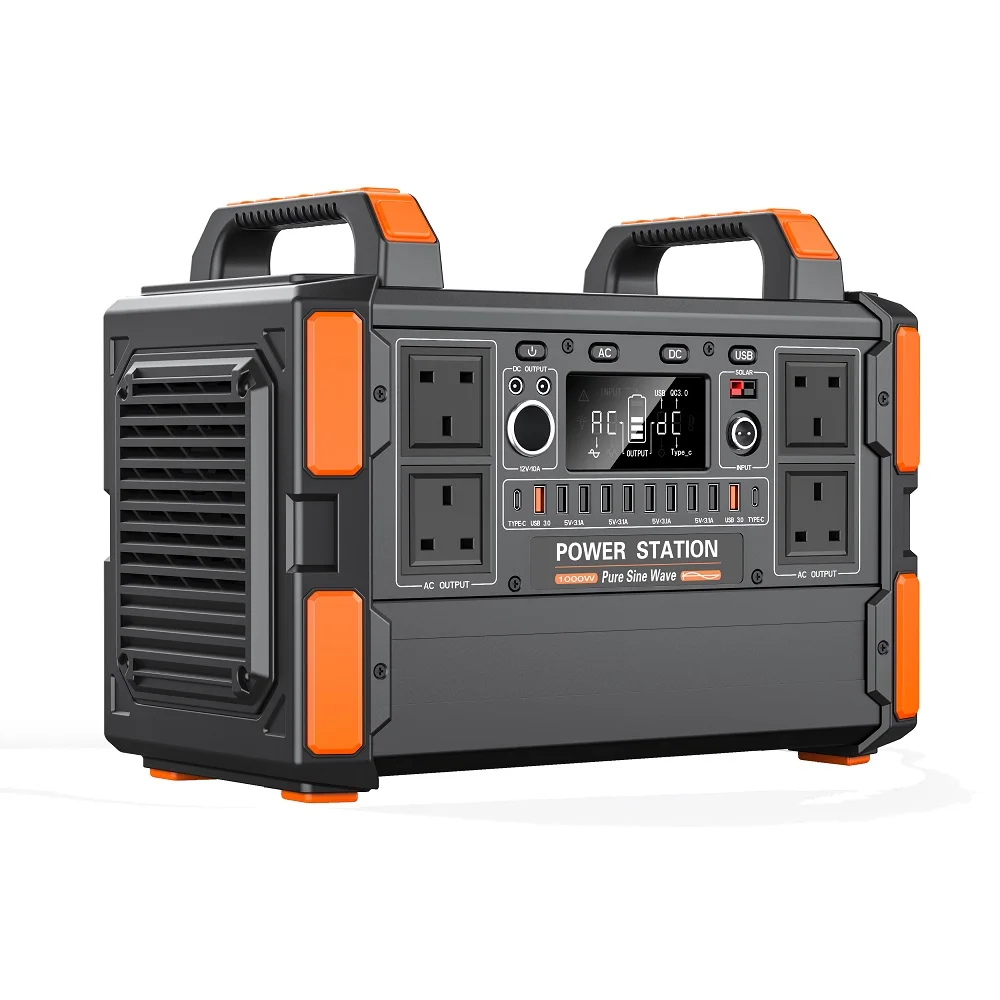
Real-world applications include: powering essential medical devices during grid failure; running lights, fans, and small appliances in a blackout; supporting remote video editing rigs on location; and enabling silent, emissions-free tailgating or festival setups. It’s not for running central air or electric stoves — those demand sustained 3000W+ output and far higher capacity.
Why 1000Wh Power Stations Are Gaining Popularity
Lately, adoption has surged — not just among outdoor enthusiasts, but homeowners, remote workers, and small-business owners preparing for climate-related disruptions. Three converging shifts explain this: First, LiFePO4 battery standardization. Once a premium feature, it’s now mandatory. These cells deliver 3,000–4,000+ charge cycles (vs. ~500 for older NCM), operate safely across wider temperature ranges, and degrade far more predictably 2. Second, charging speed has collapsed from 8+ hours to under 60 minutes — a change that redefines usability. Third, modular expandability means users can start at 1000Wh and scale to 2000Wh or 3000Wh later, avoiding premature obsolescence. If you’re a typical user, you don’t need to overthink this: these aren’t incremental upgrades — they’re foundational improvements in reliability and workflow integration.
Approaches and Differences: Common Configurations
Today’s market offers three dominant structural approaches — each with clear trade-offs:
- Single-unit sealed design (e.g., Jackery Explorer 1000 v2): All-in-one chassis with fixed battery. Pros: Simpler interface, lower failure points, easier to transport. Cons: No capacity expansion; battery replacement requires service or full unit swap. When it’s worth caring about: You prioritize plug-and-play simplicity and rarely exceed 1000Wh in practice. When you don’t need to overthink it: Your use case is predictable — e.g., weekend camping or short-term outage prep.
- Modular + expansion battery system (e.g., EcoFlow Delta 2/3): Base unit docks with optional external packs. Pros: Scalable capacity, future-proofing, often faster AC/solar input. Cons: Higher upfront cost, extra weight when expanded, more cables. When it’s worth caring about: You anticipate growing energy needs — say, adding a second fridge or upgrading to a larger solar array. When you don’t need to overthink it: You’ll never add more than one expansion pack — then the price delta shrinks significantly.
- Hybrid-solar-optimized architecture (e.g., Anker SOLIX C1000): Prioritizes ultra-fast wall charging (45 min) and wide-voltage solar input (up to 400W). Pros: Best-in-class recharge flexibility, robust MPPT efficiency. Cons: Slightly heavier; fewer third-party accessory options than open-ecosystem brands. When it’s worth caring about: You rely heavily on solar and need rapid recovery between cloudy days. When you don’t need to overthink it: You mostly charge from the wall — then speed alone makes it compelling.
Key Features and Specifications to Evaluate
Don’t default to watt-hours alone. A 1000Wh rating tells you storage — not delivery capability. Focus on five measurable dimensions:
- Battery Chemistry: Only consider LiFePO4. NCM or generic “lithium-ion” labels signal outdated or lower-lifespan designs. When it’s worth caring about: You plan >3 years of regular use. When you don’t need to overthink it: Even light users benefit from LiFePO4’s thermal stability — so this isn’t optional.
- Inverter Output: Minimum 1200W continuous, 2000W surge. Below that, you risk tripping on startup loads (e.g., compressors, power tools). When it’s worth caring about: You’ll run coffee makers, microwaves, or space heaters. When you don’t need to overthink it: If your heaviest load is a 600W blender, 1200W is ample headroom.
- Solar Input Support: Look for ≥300W MPPT input (not just “solar compatible”). Higher input = shorter solar recharge time (5–8 hrs full sun vs. 12+ hrs on 100W). When it’s worth caring about: You camp off-grid >3 days without access to grid power. When you don’t need to overthink it: Solar is a backup — not your primary source — then 200W may suffice.
- Port Variety & PD Power: At least 2x 100W USB-C PD ports (for laptops), 3x AC outlets, and a 12V car socket. Missing any limits device compatibility. When it’s worth caring about: You run multiple high-wattage electronics simultaneously (e.g., camera battery charger + laptop + drone controller). When you don’t need to overthink it: Most users won’t saturate all ports — but having them prevents mid-trip bottlenecks.
- App & Monitoring: Bluetooth or Wi-Fi app with real-time SOC, input/output graphs, and firmware updates. Not a luxury — it’s how you verify health and diagnose issues early. When it’s worth caring about: You manage multiple units or deploy remotely. When you don’t need to overthink it: Even solo users benefit from seeing remaining runtime before a storm hits.
Pros and Cons: Balanced Assessment
1000Wh stations deliver unmatched versatility — but they’re not universally optimal.
- Pros: Silent operation, zero emissions, low maintenance, scalable capacity, broad device compatibility, and increasingly fast recharge. Ideal for urban apartments (no fuel storage), coastal areas (no gas fumes), and noise-sensitive environments (campgrounds, neighborhoods).
- Cons: Higher initial cost than basic generators; limited runtime for high-wattage appliances; performance degrades in extreme cold (<0°C); and physical weight (typically 25–35 lbs) demands deliberate handling. They also require proactive solar or grid recharging — unlike fuel-based alternatives with on-demand refills.
If you need reliable, quiet, long-life backup for essential electronics and light appliances — and you’re willing to plan recharges — a 1000Wh LiFePO4 unit is objectively the best balance point in 2026. If you need to run HVAC or well pumps continuously, step up to 2000Wh+ or hybrid solutions.
How to Choose a 1000Wh Power Station: Step-by-Step Decision Guide
Follow this checklist — and avoid the two most common decision traps:
- Trap #1: Prioritizing peak wattage over sustained output. A 3000W surge rating sounds impressive — until you realize its continuous output is only 1000W. Always check the continuous AC rating first.
- Trap #2: Ignoring cell-level certification. “LiFePO4” on the box doesn’t guarantee quality. Look for UL 1973 or IEC 62619 certification — proof the cells meet international safety standards 3.
- Define your critical loads: List every device you’ll power *simultaneously*, note their wattage (check nameplates or use a Kill-A-Watt meter), and sum them. Add 20% buffer.
- Verify battery chemistry and cycle life: Confirm LiFePO4 and ≥3000 cycles. Skip anything labeled “lithium-ion” without explicit chemistry disclosure.
- Check real-world charging specs: Wall charge time ≤60 min? Solar input ≥300W? Both matter — especially if you lack consistent grid access.
- Assess expandability path: Does the manufacturer sell official expansion batteries? Are they priced transparently? Avoid “modular” claims without verified accessories.
- Review warranty & service: Top brands offer 3–5 year warranties with responsive U.S.-based support. Avoid units with only 1-year coverage or opaque repair policies.
Insights & Cost Analysis
Pricing reflects both engineering maturity and supply-chain leverage. Factory-direct wholesale starts at $80–$209/unit for bulk orders — but those lack certifications, branding, or consumer-ready packaging 4. Retail-grade, certified units range from $350–$450. Within that band:
- $350–$399: Entry-tier LiFePO4 units (e.g., Jackery Explorer 1000 v2) — strong reliability, moderate speed, limited expansion.
- $400–$430: Mid-tier performance (e.g., Anker SOLIX C1000) — fastest charging, robust solar input, intuitive app.
- $430–$450: Ecosystem-focused (e.g., EcoFlow Delta 2) — seamless expansion, highest surge capacity, longest warranty.
If you’re a typical user, you don’t need to overthink this: paying $450 instead of $350 gains you ~15 minutes faster charging and one extra expansion slot — valuable, but not transformative for most.
| Model Type | Best For | Potential Drawback | Budget Range (USD) |
|---|---|---|---|
| Jackery Explorer 1000 v2 | First-time buyers, simplicity, trusted reliability | Limited expandability; slower solar input (~200W) | $350–$380 |
| Anker SOLIX C1000 | Speed-focused users, solar-reliant setups | Fewer third-party accessories; slightly heavier | $400–$430 |
| EcoFlow Delta 2 | Future scalability, high-power tools, app-centric workflows | Steeper learning curve; higher base cost | $430–$450 |
Customer Feedback Synthesis
Based on aggregated reviews across Outdoor Life, Wirecutter, Consumer Reports, and Reddit’s r/overlanding 5, top recurring themes include:
- Highly praised: App responsiveness, battery longevity after 18+ months, quiet operation, and USB-C PD consistency across devices.
- Most frequent complaint: Inconsistent solar charging behavior in partial shade — a physics limitation, not a defect. Users expect full-rated input regardless of conditions.
- Under-discussed strength: Built-in battery management systems (BMS) now prevent over-discharge far more reliably than 2022–2023 models — reducing premature capacity loss.
Maintenance, Safety & Legal Considerations
No routine maintenance is required beyond keeping vents unobstructed and firmware updated. Store at 30–50% charge if unused for >3 months. Avoid charging below 0°C or discharging below −10°C — LiFePO4 tolerates cold better than NCM, but extreme lows still reduce efficiency and cycle life.
Legally, no permits are needed for personal use. However, units sold in the U.S. must comply with FCC Part 15 (EMI) and UL 1973 or UL 9540A (battery safety). Always verify certification marks on packaging or spec sheets — not just marketing copy.
Conclusion
For most users in 2026, a 1000Wh LiFePO4 power station is the most rational, versatile, and future-resilient choice available. If you need silent, safe, long-life backup for essentials — and value speed, modularity, and real-world reliability over theoretical peak specs — prioritize units with ≥1200W continuous output, ≥300W solar input, and verified LiFePO4 cells. The Anker SOLIX C1000 delivers the strongest balance of speed and value. The EcoFlow Delta 2 suits users planning to scale. The Jackery Explorer 1000 v2 remains ideal for beginners. This piece isn’t for keyword collectors. It’s for people who will actually use the product.