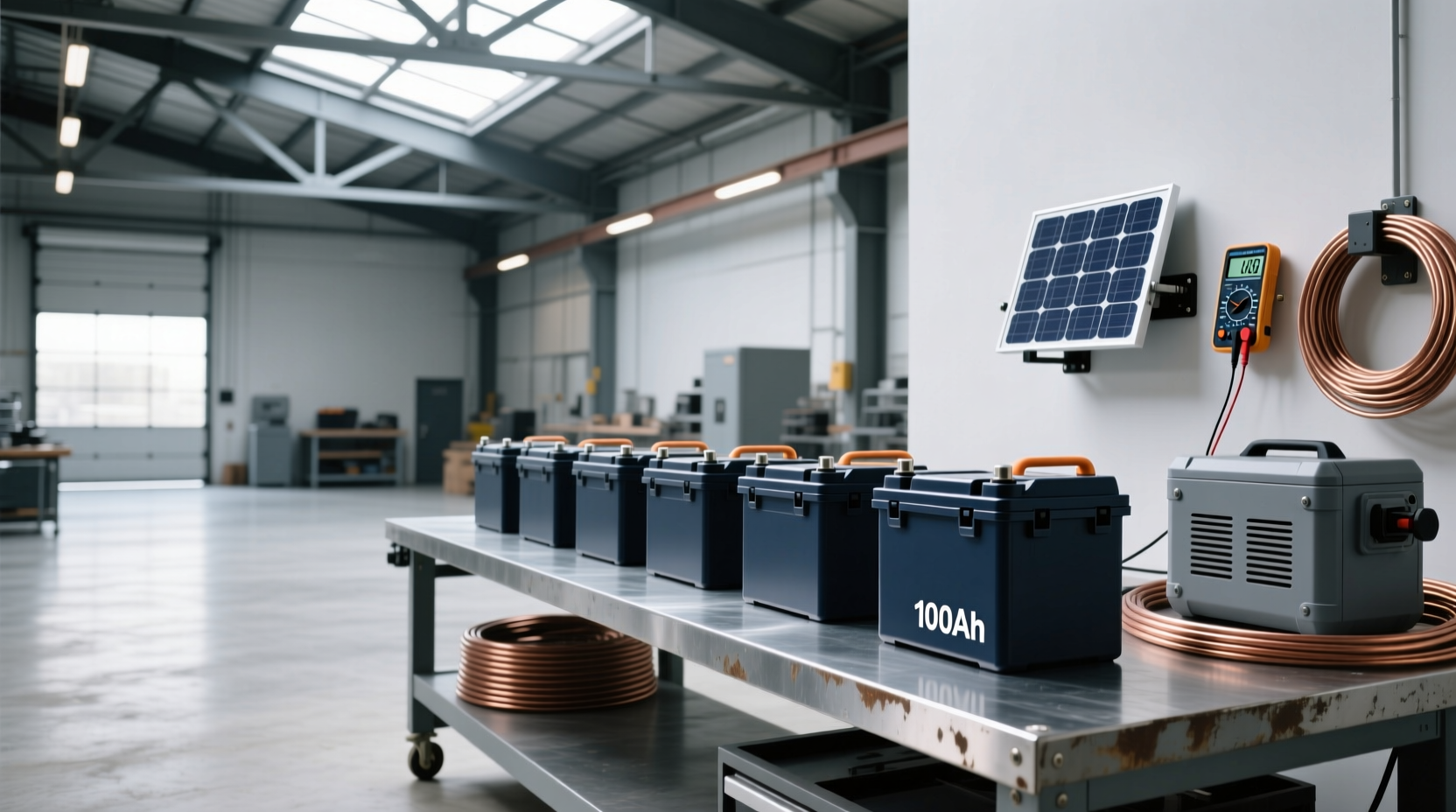
If you’re a typical user—running an RV, off-grid cabin, or small solar setup—you don’t need to overthink this. As of early 2026, the 100 amp hour (100Ah) LiFePO4 battery remains the most practical drop-in replacement for lead-acid systems—but only if it includes three non-negotiable features: a smart BMS with Bluetooth monitoring, low-temperature charge protection, and a Group 24 physical footprint. Skip models without those—even if they’re $20 cheaper. Over the past year, supply shortages have pushed prices up over 20%, making missteps costlier than ever. So prioritize reliability over novelty, verify BMS firmware updates are supported, and avoid ‘budget’ units that cut corners on thermal management. This piece isn’t for keyword collectors. It’s for people who will actually use the product.
About 100Ah Batteries: Definition & Typical Use Cases 🔋
A 100 amp hour (100Ah) battery stores enough energy to deliver 100 amps for one hour—or 10 amps for 10 hours—under ideal conditions. In practice, capacity depends on discharge rate, temperature, and chemistry. Today, nearly all high-value 100Ah units use Lithium Iron Phosphate (LiFePO4) chemistry—not lithium cobalt or NMC—because of its superior safety, thermal stability, and cycle life (typically 3,500–5,000 cycles at 80% DoD). Unlike lead-acid, LiFePO4 maintains >12.8V across 90% of its discharge curve, enabling consistent power for inverters, fridges, and pumps.
Typical users include:
- 🚐 RV and camper van owners replacing flooded or AGM batteries for dry camping and winter travel;
- ☀️ Residential solar users adding backup storage to 1–3 kW arrays;
- ⚓ Marine users powering trolling motors, chartplotters, and lighting on smaller vessels;
- 🛠️ DYI solar installers building modular, scalable banks using standardized Group 24 form factors.
What defines a ‘100Ah’ unit today isn’t just nominal capacity—it’s how intelligently that capacity is managed and protected. That shift is why older buying criteria no longer apply.
Why 100Ah Batteries Are Gaining Popularity in 2026 📈
Lately, demand for 100Ah LiFePO4 batteries has surged—not because specs improved dramatically, but because real-world constraints intensified. Two interlocking forces explain the trend:
- Structural cell shortage: Manufacturers are prioritizing large-format 300–460Ah cells for utility-scale projects, leaving 100Ah cells in short supply through early 2026. Backlogs now stretch 4–6 months 1. This scarcity has driven price appreciation and heightened scrutiny of build quality.
- Rising expectations for environmental resilience: Users no longer accept ‘winter shutdown.’ A growing share require charging below 0°C—and self-heating pads, combined with low-temp cutoff logic, are now baseline requirements, not premium add-ons 2.
These aren’t abstract trends—they reflect actual pain points: frozen batteries mid-trip, inconsistent app data, mismatched trays requiring custom mounting. If you’re a typical user, you don’t need to overthink this: choose only models that pass both the Bluetooth verification test (open the app before buying) and the heating activation check (does it warm *before* charging starts, or only after?).
Approaches and Differences: Drop-In vs. Smart-Integrated vs. DIY-Modular
Three broad approaches dominate the 100Ah market—and each serves distinct needs:
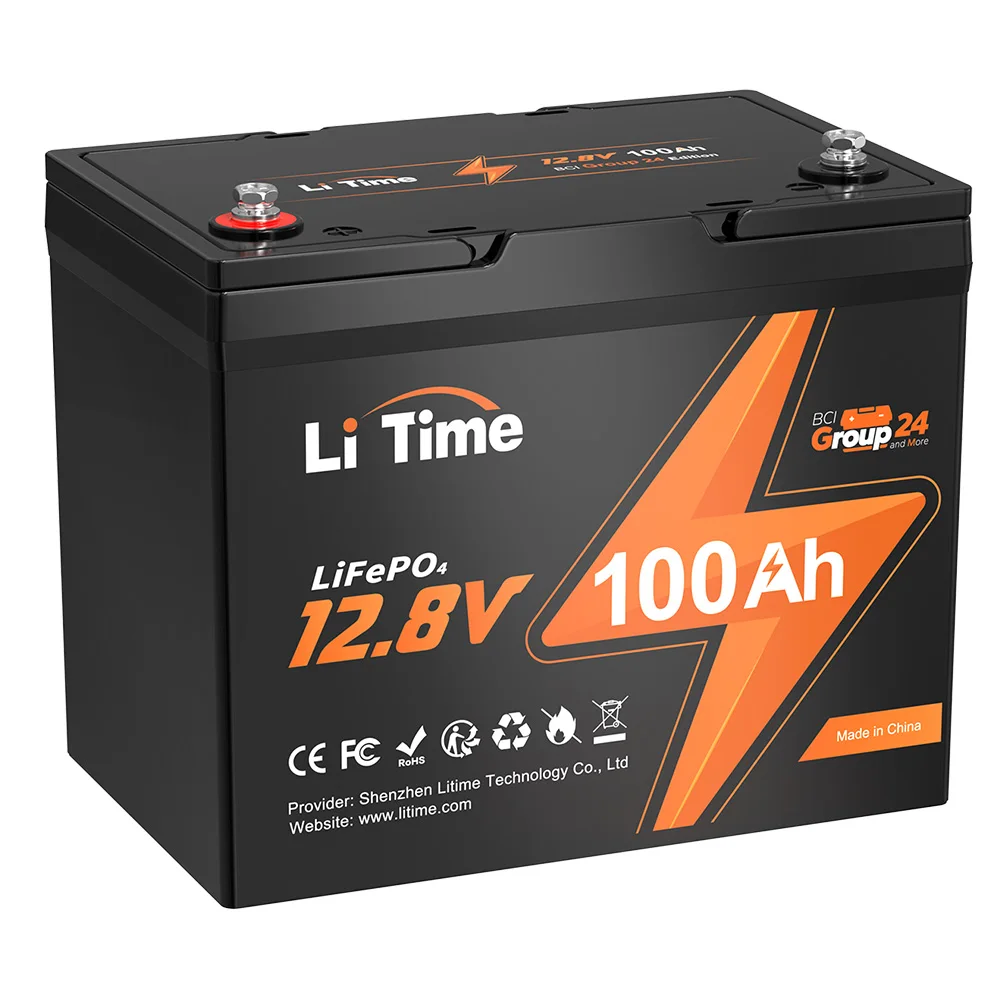
- 📦 Drop-in replacements (e.g., LiTime Group 24, Propow): Designed to fit standard Group 24 battery boxes and terminals. Pros: plug-and-play installation, widely compatible. Cons: limited communication options unless explicitly Bluetooth-enabled; some omit active heating.
- 📡 Smart-integrated systems (e.g., Battle Born, Victron): Built for ecosystem compatibility—CANbus-ready, BMS data exportable to Venus OS or VRM. Pros: remote diagnostics, firmware updates, seamless integration with inverters/chargers. Cons: higher cost ($200–$300), less flexible for mixed-brand setups.
- 🧩 DYI-modular kits (e.g., SOK, TEZE with Daly BMS): Often sold with external BMS access points or configurable settings. Pros: transparent specs, community-supported tuning, lower entry price. Cons: requires basic multimeter/BMS knowledge; warranty support varies.
When it’s worth caring about: if your inverter lacks CANbus or your charge controller doesn’t support external BMS signals, smart-integrated models add little value. When you don’t need to overthink it: for a single-battery RV upgrade with no existing lithium infrastructure, a well-reviewed drop-in unit with Bluetooth and heating is sufficient.
Key Features and Specifications to Evaluate ⚙️
Don’t default to Ah rating alone. Focus on these five measurable features—each tied directly to real-world performance:
- BMS intelligence: Look for Bluetooth 5.0+ with a stable app (check recent Play/App Store reviews). Verify it displays real-time voltage per cell, state of charge (SoC), and historical logs. If the app crashes or lacks firmware update history, walk away.
- Low-temp protection: Must include hardware-level cutoff below 0°C for charging—and active heating that engages *before* charging begins. Passive warming (e.g., relying on ambient heat) fails in sub-zero garages or overnight parking.
- Continuous discharge rating: Minimum 100A is standard—but if you run a 1,500W inverter or high-draw fridge compressor, aim for ≥150A continuous and ≥300A peak. Underspec’ing here causes premature BMS shutdown.
- Cycle life at 80% DoD: Reputable brands publish this at 4,000+ cycles. Avoid vague claims like “10-year lifespan” without supporting test data.
- Physical compliance: Group 24 dimensions (10.25″ × 6.81″ × 8.88″) ensure tray fit. Non-standard footprints force brackets, drilling, or wasted space.
If you’re a typical user, you don’t need to overthink this: cross-check the spec sheet against these five items. If any are missing or ambiguously worded, assume it’s a compromise.
Pros and Cons: Who Benefits—and Who Should Look Elsewhere
100Ah LiFePO4 batteries excel in specific scenarios—but they’re not universally optimal.
| Scenario | Well-Suited For | Less Suitable For |
|---|---|---|
| Space-constrained installations | RVs with tight battery compartments, marine engine rooms, compact solar sheds | Large off-grid homes needing >10kWh storage—better served by 300Ah+ units |
| Users upgrading from lead-acid | Those seeking direct replacement, minimal rewiring, and predictable runtime | Users with aging alternators or non-lithium-optimized chargers—may need voltage regulator upgrades |
| Winter-capable operation | Users in northern climates or frequent cold-weather campers—with verified heating | Units lacking self-heating or relying on external heaters (adds complexity and failure points) |
When it’s worth caring about: if your use case involves temperatures below 5°C during charging, heating isn’t optional—it’s foundational. When you don’t need to overthink it: if you live in mild climates and only use the battery seasonally, passive thermal design may suffice.
How to Choose a 100Ah Battery: A Step-by-Step Decision Guide
Follow this actionable checklist before ordering:
- Confirm your physical constraint: Measure your battery tray. If it fits Group 24, stick with it. Don’t buy a ‘slim’ or ‘low-profile’ variant unless you’ve verified clearance on all six sides.
- Test the app before purchase: Search the model name + “app review” on YouTube or Reddit. Watch for reports of pairing failures, unresponsive UI, or missing SoC calibration.
- Verify heating activation logic: Manufacturer sites often bury this. Look for phrases like “pre-charge heating” or “active warming below 0°C.” Avoid units that say “heated” without specifying *when* heat activates.
- Check BMS discharge limits against your load: Add up your continuous wattage (e.g., fridge: 60W, lights: 20W, vent fan: 30W = 110W ≈ 9A @12V). Multiply by 1.5 for safety margin. Your BMS must sustain that current.
- Avoid ‘too cheap’ traps: Sub-$130 100Ah units almost always use recycled cells, omit heating, or lack UL/certified BMS. One failure can damage connected gear—and void other warranties.
Common pitfalls: assuming “Bluetooth” means reliable connectivity; trusting Amazon ratings without filtering for 2025–2026 reviews; ignoring terminal orientation (some Group 24 units place posts on opposite ends).
Insights & Cost Analysis: What You’ll Actually Pay in 2026
Due to the structural shortage, average landed prices rose sharply in late 2025 and remain elevated. Here’s what’s realistic today:
- Budget-tier (DIY-focused): $143–$158 — e.g., TEZE 12V 100Ah (Bluetooth + self-heating, Daly BMS) 3
- Mid-tier (balanced features): $151–$171 — e.g., LiTime Group 24 (semi-solid state electrolyte claim, 4,000-cycle rating)
- Premium-tier (ecosystem-integrated): $205–$218 — e.g., Battle Born or Victron units (CANbus, extended warranty, certified thermal management)
Note: Prices exclude shipping, taxes, and potential import duties. Bulk orders (≥10 units) may reduce per-unit cost by 8–12%, but lead times exceed 12 weeks. If you’re a typical user, you don’t need to overthink this: the $150–$165 range delivers the best balance of verified heating, Bluetooth stability, and Group 24 compatibility.
Better Solutions & Competitor Analysis
While 100Ah remains the dominant ‘drop-in’ size, some users benefit from alternatives—especially as supply tightens. Below is a concise comparison of top-performing 100Ah options and their closest functional alternatives:
| Category | Best Fit Advantage | Potential Issue | Budget Range (USD) |
|---|---|---|---|
| TEZE 12V 100Ah | Verified Bluetooth + self-heating; Daly BMS allows parameter tuning | Limited brand recognition outside DIY forums; no official US service center | $150–$158 |
| LiTime Group 24 | Consistent Group 24 fit; strong 2025–2026 user feedback on app stability | Semi-solid state claim lacks third-party validation; heating not confirmed below −10°C | $151–$171 |
| Victron SmartLithium | Seamless Venus OS integration; robust IP55 enclosure | No built-in heating—requires external heater kit ($85+) | $205–$218 |
| 300Ah Alternative (e.g., EcoFlow Delta Pro) | Higher energy density; fewer interconnects; better long-term $/kWh | Won’t fit Group 24 trays; requires new mounting and cabling | $499–$549 |
Customer Feedback Synthesis
Aggregating 2025–2026 reviews from RV forums, DIY Solar communities, and retailer pages reveals clear patterns:
- Top 3 praised features: (1) App responsiveness and SoC accuracy, (2) ability to charge at −15°C without manual intervention, (3) quiet operation (no relay clicking or fan noise).
- Top 3 complaints: (1) Inconsistent Bluetooth range (>3m from phone), (2) slow initial heating cycle (takes 10–15 min to reach 5°C), (3) vague documentation on BMS reset procedures after deep discharge.
Notably, no major brand received widespread criticism for cell quality—suggesting Tier-1 LiFePO4 suppliers (CATL, BYD, EVE) dominate the 100Ah segment. The differentiation lies in BMS implementation and thermal control—not core chemistry.
Maintenance, Safety & Legal Considerations
LiFePO4 batteries require far less maintenance than lead-acid—but neglecting basics still risks failure:
- Maintenance: No watering or equalization needed. Wipe terminals quarterly. Update BMS firmware annually if supported.
- Safety: All reputable 100Ah units include over-voltage, under-voltage, over-current, and short-circuit protection. Ensure your charger/inverter supports LiFePO4 profiles (14.2–14.6V absorption, 13.5V float).
- Legal: No federal U.S. certification is mandatory for standalone 12V batteries—but UL 1973 or UN38.3 testing is strongly advised for transport and insurance purposes. Check local fire codes if installing in habitable spaces (e.g., RV living areas).
Conclusion: Conditional Recommendations
If you need a reliable, plug-and-play 100Ah battery for an RV, marine vessel, or small solar system—and plan to use it in variable or cold conditions—choose a Group 24 unit with verified Bluetooth monitoring, pre-charge self-heating, and ≥100A continuous BMS rating. Prioritize models reviewed in 2025–2026, not legacy listings. If you’re a typical user, you don’t need to overthink this: skip the cheapest option, avoid non-Group 24 variants unless you’ve modified your tray, and confirm app functionality before checkout. For users with CANbus infrastructure or multi-battery banks, invest in Victron or Battle Born. For budget-conscious DIYers, TEZE or LiTime offer the strongest 2026 value balance.


