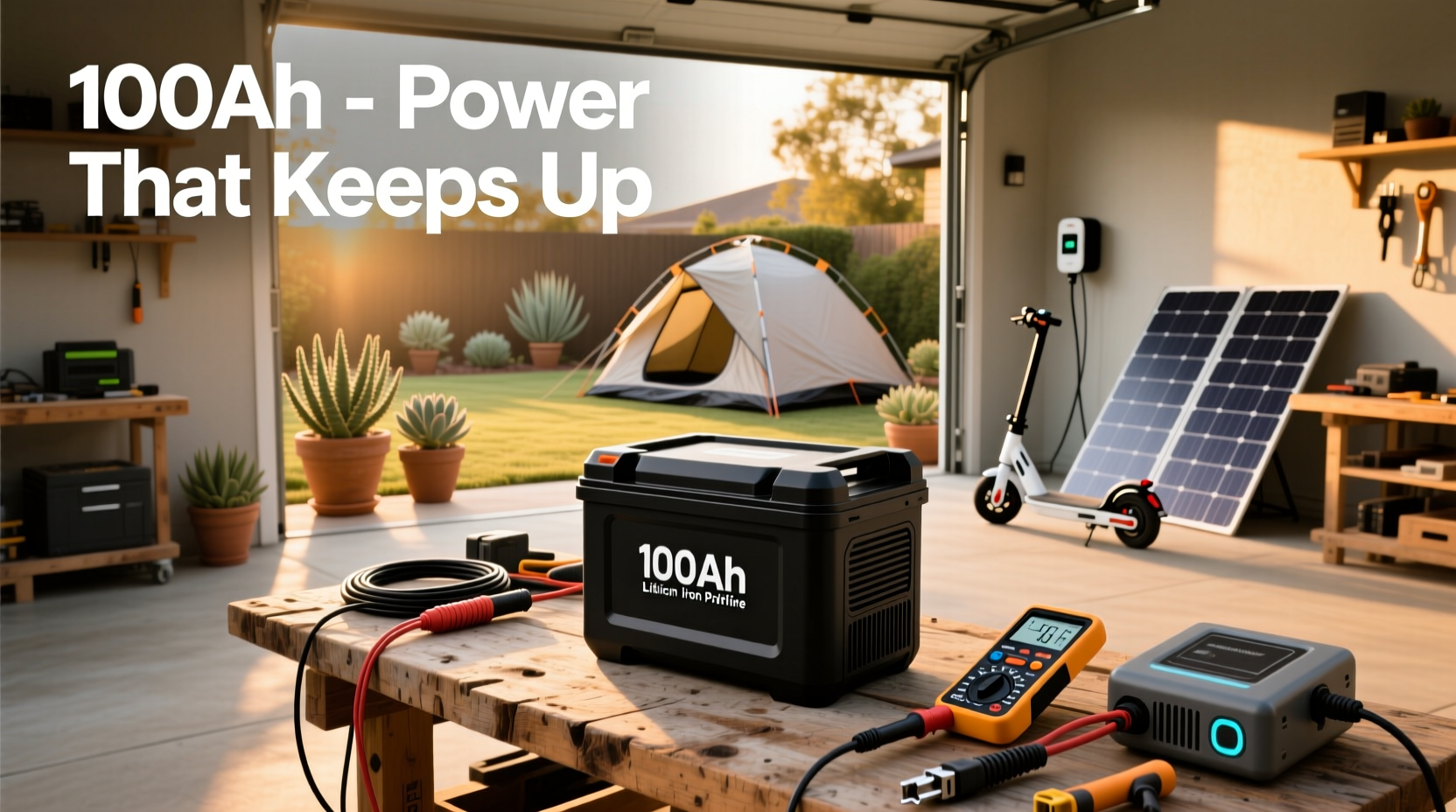
Over the past year, the 100Ah battery market has shifted decisively toward LiFePO4 — not because it’s “trendy,” but because its real-world advantages now outweigh cost concerns for most RV, marine, and solar users. If you’re a typical user, you don’t need to overthink this: choose a certified 12V LiFePO4 battery with self-heating and Bluetooth-enabled BMS unless your use case is strictly short-term, low-budget starting or backup in mild climates. Avoid units under 20 lbs (a red flag for misrepresented capacity), skip generic BMS claims without series/parallel specs, and never charge standard LiFePO4 below 0°C without built-in low-temp protection. This piece isn’t for keyword collectors. It’s for people who will actually use the product.
About 100Ah Batteries: Definition & Typical Use Cases 🔋
A 100Ah (amp-hour) battery stores enough energy to deliver 100 amps for one hour—or 10 amps for 10 hours—at its rated voltage (most commonly 12V). But amp-hour ratings alone are misleading without context: usable capacity, voltage stability, and cycle life vary drastically across chemistries. The 100Ah size has become the functional sweet spot for mobile and off-grid applications where space, weight, and longevity matter more than raw price per Ah.
Typical scenarios include:
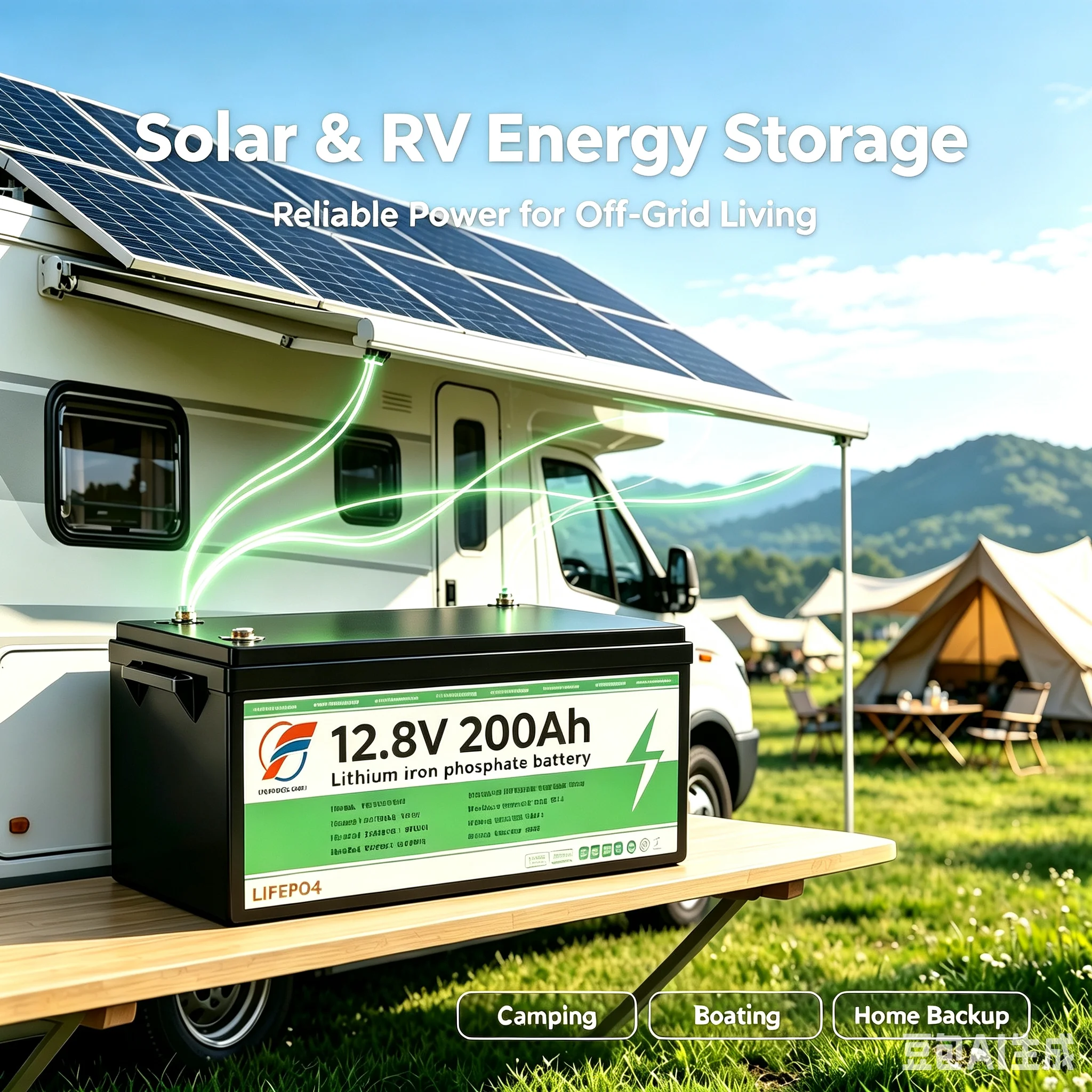
- 🚐 RV house banks: Powering lights, fans, fridges, and inverters over multi-day dry camping trips.
- ⛵ Marine auxiliary power: Running chartplotters, radios, bilge pumps, and cabin lighting without draining the starter battery.
- ☀️ Solar storage (residential/DIY): Storing midday PV output for evening use—especially in off-grid cabins or backyard solar kits.
- 🔧 Worksite/portable power: Supporting cordless tool charging stations, portable welders, or field monitoring gear.
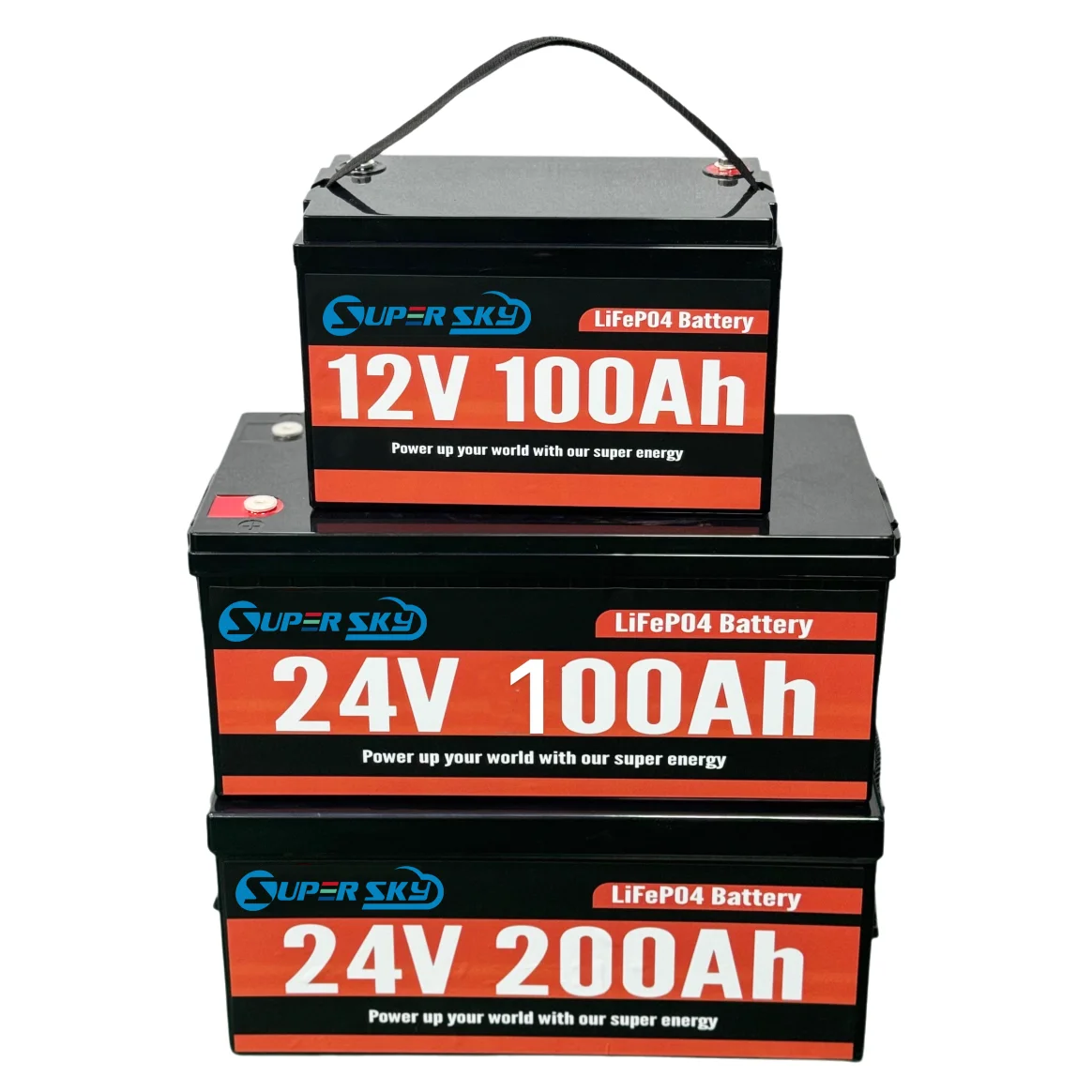
Why 100Ah Batteries Are Gaining Popularity 📈
Lately, three converging signals have accelerated adoption: (1) global lithium battery prices hit $108/kWh in 2025—down from $137/kWh in 2023 1; (2) search volume for “100Ah battery” spiked sharply in mid-2026, aligning with rising DIY solar kit sales 2; and (3) LiFePO4 now holds 24.8% of revenue in the >100Ah stationary storage segment—up from 12.3% in 2022 3.
This isn’t hype—it’s physics meeting economics. Lithium iron phosphate cells deliver stable voltage (12.8–13.4V under load), near-zero self-discharge, and predictable aging. When paired with modern BMS intelligence, they eliminate the guesswork of state-of-charge estimation that plagues lead-acid users.
Approaches and Differences: LiFePO4 vs Lead Acid
The two dominant options aren’t just different technologies—they represent divergent ownership models. Here’s how they compare on what matters most:
| Feature | LiFePO4 (12V 100Ah) | Lead Acid (AGM/Flooded, 12V 100Ah) |
|---|---|---|
| Usable capacity | 80–100 Ah (full depth-of-discharge safe) | ~50 Ah (only 50% discharge recommended) |
| Cycle life | 3,000–6,000+ cycles (10–15 years) | 300–500 cycles (3–5 years) |
| Weight | 23–28 lbs (~25 lbs typical) | 60–70 lbs |
| Charging time | 2–4 hours (with proper charger) | 6–12 hours (slow absorption phase) |
| Low-temp charging | Only with self-heating or external warming | Works down to −20°C—but capacity drops sharply |
| When it’s worth caring about | Long-term ROI, weight-sensitive installs, frequent deep cycling | Budget-constrained projects with infrequent, shallow use |
| When you don’t need to overthink it | If you’ll replace the battery every 3 years anyway—and won’t monitor voltage daily | If your application is engine starting only (not house loads) |
Key Features and Specifications to Evaluate ⚙️
Don’t default to Ah rating or price. Focus on these five measurable traits:
- Cell grade & certification: Look for UL 1973, UN38.3, or IEC 62619—these verify safety testing. Grade-A prismatic or cylindrical LFP cells (e.g., CATL, BYD, EVE) outperform unbranded pouch cells long-term.
- BMS intelligence: A good BMS monitors individual cell voltages—not just pack voltage—and enforces low-temp charge cutoff (<0°C) and over-voltage protection. If it doesn’t specify series support (e.g., “2S/4S compatible”), assume it’s parallel-only.
- Self-heating capability: Not all “low-temp” batteries heat themselves. True self-heating uses internal resistive elements powered by incoming charge current—verified by spec sheets showing “heating range: −20°C to +5°C.”
- Physical footprint & terminals: Slim-profile designs (≤6.5” tall) fit RV battery boxes. M8 or threaded copper terminals beat spring clips for high-current reliability.
- Warranty terms: Reputable brands offer 5–10 year warranties covering capacity retention (e.g., “≥80% after 5 years”). Beware “10-year limited warranty” that excludes degradation claims.
Pros and Cons: Balanced Assessment ✅ / ❌
LiFePO4 is better when:
- You need >5 years of service without replacement.
- Weight savings directly improve vehicle efficiency or payload (e.g., Class B RVs, sailboats).
- Your loads demand stable voltage—like sensitive electronics or inverters with narrow input ranges.
Lead acid remains viable when:
- Your budget is under $120 and usage is seasonal, shallow-cycle (e.g., weekend camper trailer with LED lights only).
- You already own a compatible AGM charger and lack space for a lithium-specific charger upgrade.
- Operating temperature stays consistently above 5°C—and you accept shorter lifespan.
If you’re a typical user, you don’t need to overthink this: LiFePO4 delivers measurable gains in usable energy, longevity, and maintenance freedom. The break-even point is usually reached by Year 3—even before factoring in labor/time saved on replacements.
How to Choose a 100Ah Battery: Step-by-Step Decision Guide 📋
Follow this checklist—not in order of preference, but in order of consequence:
- Define your climate zone: If winter lows dip below 0°C, eliminate any battery without verified self-heating or external heating pad compatibility. Charging at −5°C without heating permanently damages LFP anodes 4.
- Map your system architecture: Will you expand later? If yes, confirm BMS supports series connection (e.g., 2×12V → 24V) and includes balancing between packs. Parallel-only setups limit future flexibility.
- Check weight vs. spec sheet: A genuine 100Ah LiFePO4 weighs ≥23 lbs. Units listing “100Ah” at 17–19 lbs almost always use inflated C/20 ratings or low-density cells 5.
- Verify Bluetooth or CAN bus access: Real-time SOC, voltage per cell, and historical logs help diagnose issues early. Skip batteries that require proprietary dongles or apps with no export function.
- Avoid these red flags: No published cycle life data; vague “industrial grade” claims; missing UL/UN certifications; BMS firmware updates only via Windows PC (no Mac/Linux support).

Insights & Cost Analysis 💰
Price alone misleads. Consider total cost of ownership (TCO) over 7 years:
- Entry-level LiFePO4: $320–$420 (e.g., verified Chinese OEMs with local US/EU warehouses). Delivers ~5,000 cycles at 80% DoD.
- Premium LiFePO4: $550–$780 (e.g., North American–assembled with full traceability). Adds self-heating, dual CAN/Bluetooth, and 10-year capacity warranty.
- AGM Lead Acid: $180–$260—but requires replacement every 3–4 years. TCO over 7 years: $540–$780, plus labor and downtime.
At $108/kWh average, a true 12V 100Ah LiFePO4 stores 1.28 kWh. That’s $138/kWh equivalent—still below lead-acid’s effective $200+/kWh TCO when factoring replacement labor and usable energy loss.
Better Solutions & Competitor Analysis 🏭
| Solution Type | Best For | Potential Issue | Budget Range (12V 100Ah) |
|---|---|---|---|
| Certified LiFePO4 w/ self-heating | Cold-climate RV/marine users needing reliability | Higher upfront cost; requires compatible charger | $550–$780 |
| Value-tier LiFePO4 (no heating) | Mild-climate solar or garage workshop use | No cold-weather charging; may require manual winter storage | $320–$420 |
| High-quality AGM | Short-term rental trailers or infrequent backup | Heavy; degrades rapidly if cycled daily | $180–$260 |
| Modular 50Ah LiFePO4 x2 | Users prioritizing redundancy and serviceability | Requires dual BMS coordination; slightly lower energy density | $360–$500 |
Customer Feedback Synthesis 🗣️
Based on aggregated reviews (Reddit r/SolarDIY, Solar-Electric Forum, Facebook RV groups):
- Top praise: “No more guessing state-of-charge—Bluetooth app shows exact % and cell balance.” “Lost 40 lbs vs old AGM—noticeable difference towing.” “Still at 94% capacity after 2.5 years and 1,200 cycles.”
- Top complaint: “Assumed ‘low-temp’ meant ‘works in cold’—didn’t realize it only *disables* charging below 0°C. Had to add external heater.” “BMS app crashed on iOS 17—no fix for 3 months.”
Maintenance, Safety & Legal Considerations ⚠️
Maintenance: LiFePO4 requires near-zero maintenance—no watering, no equalization charges. Keep terminals clean and torque-checked annually.
Safety: Thermal runaway risk is extremely low in LFP (vs. NMC), but improper charging or physical damage can still cause fire. Always use a lithium-specific charger with CC/CV profile and temperature sensing.
Legal: Shipping lithium batteries by air is restricted (UN3480). Ground shipping is standard. Some regions require UL certification for permanent residential solar installations—verify local code compliance before purchase.
Conclusion: Conditional Recommendations 🎯
If you need reliable, long-term energy for RV, marine, or solar—choose LiFePO4. If you live where temperatures regularly fall below freezing, prioritize self-heating. If your budget is constrained and usage is light/seasonal, a quality AGM remains defensible—but know you’re trading longevity for upfront savings.
There’s no universal “best” 100Ah battery. There’s only the right one for your constraints: climate, expansion plans, weight limits, and how many times you want to lift and replace it. Start there—and everything else follows.


