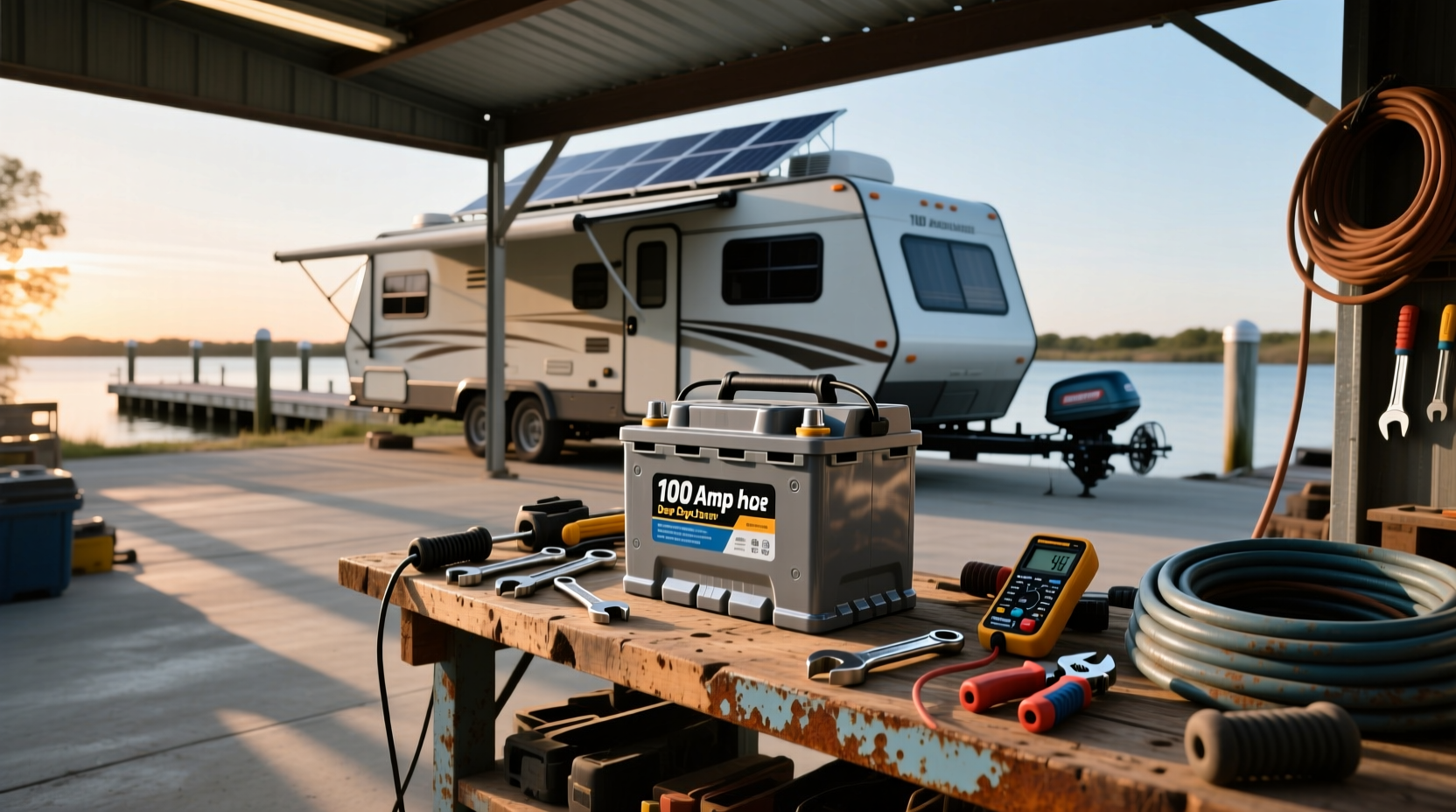
If you’re choosing a 100 amp hour deep cycle battery for RV, solar storage, or marine use — go with LiFePO4 unless your budget is under $250 and you’ll only discharge it shallowly (≤30%) once or twice per week. Over the past year, LiFePO4 has become the default high-value choice: it delivers 3–5× more usable energy over its lifetime than AGM, weighs half as much, and now costs just 2–3× more upfront — while offering 50–70% lower lifetime cost per kWh 12. If you’re a typical user, you don’t need to overthink this. This piece isn’t for keyword collectors. It’s for people who will actually use the product.
About 100Ah Deep Cycle Batteries: Definition & Typical Use Cases 🔋
A 100 amp hour (Ah) deep cycle battery stores electrical energy for repeated discharge and recharge cycles — unlike starter batteries, which deliver short bursts of power. The “100Ah” rating indicates theoretical capacity at a 20-hour discharge rate (i.e., 5A for 20 hours), but real-world usable capacity depends heavily on chemistry, temperature, and depth of discharge (DOD).
Common applications include:
- RVs & Campers: Powering lights, refrigerators, water pumps, and inverters off-grid or during boondocking;
- Solar Energy Storage: Storing daytime PV generation for nighttime or cloudy-day use (often in 12V or 24V banks);
- Marine Systems: Running trolling motors, chartplotters, and cabin electronics without draining the engine-start battery;
- Backup Power: Supporting security systems, medical devices, or small home loads during grid outages.
What matters most isn’t just “100Ah” — it’s how much of that 100Ah you can safely use, how many times you’ll get it, and whether it works reliably when temperatures drop below freezing.
Why 100Ah Deep Cycle Batteries Are Gaining Popularity 📈
Deep cycle batteries aren’t trending because they’re new — they’re trending because their role has expanded. Solar adoption grew 22% globally in 2025 3, and RV ownership in North America hit record highs — both driving demand for reliable, long-life energy storage. The 100Ah size sits at a practical sweet spot: large enough for meaningful off-grid runtime, small enough for easy installation and thermal management.
More importantly, users are shifting from asking “Which brand?” to asking “Which chemistry delivers value *over time*?” That question — grounded in total cost of ownership (TCO), not sticker price — is what makes 2026 different. LiFePO4 now dominates high-use segments not because it’s “cooler,” but because it solves real pain points: weight, lifespan anxiety, and inconsistent voltage sag under load.
Approaches and Differences: LiFePO4 vs AGM ⚙️
Two chemistries dominate the 100Ah deep cycle market: Lithium Iron Phosphate (LiFePO4) and Absorbed Glass Mat (AGM) lead-acid. They’re not interchangeable — each serves distinct operational realities.
✅ LiFePO4: High-Cycle, Lightweight, Voltage-Stable
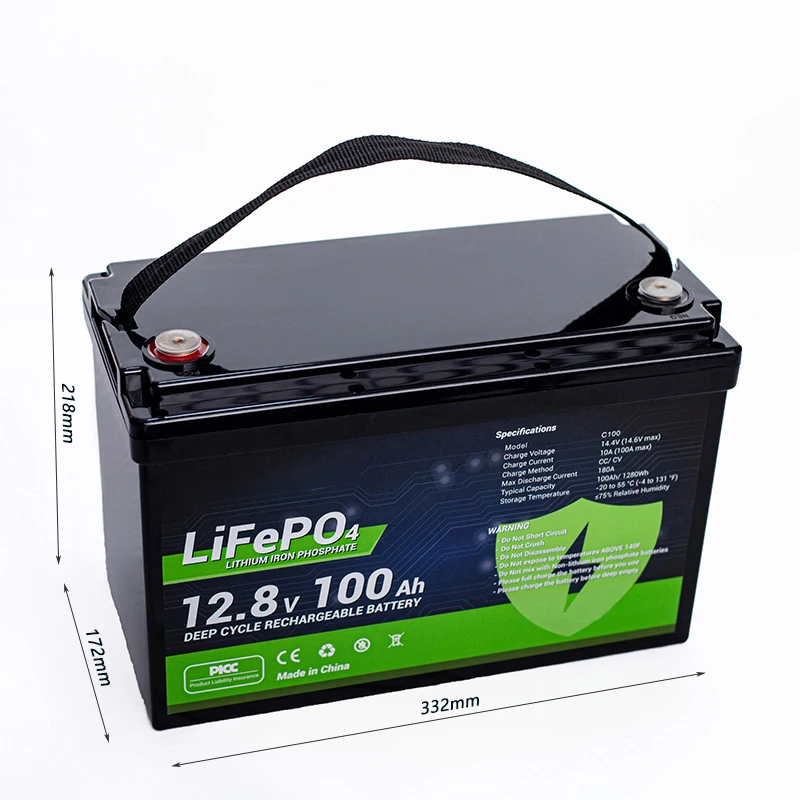
Pros: 3,000–7,000 cycles (vs. 300–500 for AGM), 95–98% charge efficiency, flat voltage curve (13.2–13.4V across 90% of DOD), 80–100% usable capacity, 50–70% lighter (~26–31 lbs), no maintenance required.
Cons: Higher upfront cost ($300–$950), limited charging below 0°C without built-in heaters, requires compatible lithium-rated chargers/inverters, sensitive to overvoltage or reverse polarity.
When it’s worth caring about: Daily cycling (e.g., solar daily charge/discharge, full-time RV living), weight-sensitive installs (trailers, kayaks, van conversions), or where consistent voltage matters (inverters, sensitive electronics).
When you don’t need to overthink it: If your battery sees ≤1 full cycle per week and stays above 50% state of charge, LiFePO4’s longevity advantage won’t materialize before replacement anyway. If you’re a typical user, you don’t need to overthink this.
✅ AGM: Budget-Friendly, Cold-Tolerant, Charger-Compatible
Pros: Lower initial cost ($180–$350), wide charger compatibility (no lithium-specific settings needed), safe operation down to −20°C for discharging, simple disposal/recycling infrastructure.
Cons: Only ~50% usable capacity (50Ah of a 100Ah rating), 80–85% efficiency, voltage drops steadily under load (causing dimming lights or inverter shutdowns), 300–500 cycles, heavier (60–70 lbs), gradual capacity loss even when unused.
When it’s worth caring about: Backup-only use (e.g., sump pump, emergency lighting), seasonal camping with infrequent deep discharge, or installations in unheated spaces where lithium low-temp charging cutoff would leave you stranded.
When you don’t need to overthink it: If your system includes a generator or shore power >90% of the time, and you never drop below 70% SOC, AGM’s limitations rarely surface. You’re not paying for longevity you won’t use.
Key Features and Specifications to Evaluate 🔍
Don’t optimize for Ah alone. Focus on these five measurable specs — all verifiable in datasheets:
- Usable Capacity (Ah @ specified DOD): Ask: “How many Ah can I draw before hitting 10% SOC?” LiFePO4 typically guarantees ≥80Ah at 80% DOD; AGM rarely exceeds 50Ah at 50% DOD.
- Cycle Life @ Specified DOD: Look for “cycles to 80% retained capacity.” LiFePO4: 3,000 @ 80% DOD; AGM: 300–500 @ 50% DOD. Don’t compare apples to oranges — check test conditions.
- BMS Capabilities: For LiFePO4, verify low-temp charge cutoff (e.g., disables charging below 0°C), cell balancing, and overcurrent protection. No BMS = avoid.
- Charge Acceptance Rate (A): How fast it accepts charge matters for solar or alternator charging. Most 100Ah LiFePO4 accept 50–100A continuously; AGM maxes at ~25A without overheating.
- Temperature Range (Charging vs. Discharging): AGM discharges fine at −20°C but charges poorly below 0°C. LiFePO4 discharges well down to −20°C but *requires* heating or external warm environment to charge below 0°C.
Pros and Cons: Balanced Assessment ✅❌
LiFePO4 is better if: You cycle daily, prioritize weight savings, need stable voltage, or plan to own the battery >5 years. Its TCO is 50–70% lower than AGM over 10 years — verified across solar and RV field data 1.
AGM remains valid if: Your use case is truly intermittent (≤1 deep cycle/month), you lack lithium-compatible charging infrastructure, or you operate in sustained sub-zero environments without heater integration. In those cases, LiFePO4’s advantages vanish — and its cold-charge limitation becomes a hard failure mode.
How to Choose a 100Ah Deep Cycle Battery: Step-by-Step Decision Guide 📋
- Map your usage pattern: Estimate average daily depth of discharge (e.g., “I run a 50W fridge for 12h = 600Wh ≈ 50Ah from a 12V system”). If average DOD >30%, LiFePO4 pays back faster.
- Check your charging sources: Does your alternator, solar charge controller, or shore-power converter support lithium profiles? If not, budget for upgrades — or stick with AGM.
- Evaluate thermal environment: Will the battery sit in an unheated trailer or boat compartment? If winter lows regularly dip below 0°C *and* you need to recharge there, confirm the LiFePO4 model includes an active heater or external heating pad option.
- Calculate 5-year TCO: Include replacement cost (AGM likely needs 2–3 replacements; LiFePO4 may last entire period), electricity wasted due to inefficiency (AGM loses ~15% per cycle), and labor/time cost of swapping heavy units.
- Avoid these common missteps:
- Buying “100Ah” LiFePO4 without verifying BMS low-temp cutoff — leads to permanent damage in cold climates;
- Assuming “deep cycle AGM” means 80% DOD capability — most fail prematurely beyond 50%;
- Ignoring voltage compatibility — some LiFePO4 models output 14.6V max, which may trigger overvoltage alarms on older inverters.
Insights & Cost Analysis: Beyond the Sticker Price 💰
Let’s compare realistic 5-year ownership for a single 100Ah unit powering a modest RV solar setup (average 60Ah daily draw):
| Cost Factor | 100Ah AGM | 100Ah LiFePO4 |
|---|---|---|
| Upfront Cost | $240 | $599 |
| Expected Lifespan (Cycles) | 400 @ 50% DOD | 4,000 @ 80% DOD |
| Total Usable Energy Delivered | ~20,000 Ah (≈24 kWh) | ~320,000 Ah (≈384 kWh) |
| Energy Loss (Efficiency) | 15% per cycle → +3.6 kWh wasted | 2% per cycle → +0.8 kWh wasted |
| Replacement Needs (5 yrs) | 2–3 units | 0–1 unit |
| Estimated 5-Year TCO | $520–$720 | $599–$799 |
| Cost per kWh Delivered | $21–$30/kWh | $1.6–$2.1/kWh |
Yes — LiFePO4 costs more upfront. But its 16× greater energy throughput and near-zero degradation mean it wins decisively on cost-per-kWh. That’s why the market shifted: $2.99 billion global deep cycle battery market now grows at 7.7–8.1% CAGR, with LiFePO4 capturing >60% of new solar and RV volume 45.
Better Solutions & Competitor Analysis 🏭
| Solution Type | Best For | Potential Issue | Budget Range (2026) |
|---|---|---|---|
| Entry-Level LiFePO4 (BMS basic, no heater) | Temperate-climate solar/RV users with lithium-ready gear | Fails to charge below 0°C — requires external heating solution | $300–$450 |
| Premium LiFePO4 (Heated, Bluetooth, dual CAN) | Cold-climate users, professional installers, marine applications | Over-engineered for occasional campers; premium pricing | $650–$950 |
| High-Quality AGM (TPPL or enhanced carbon) | Backup power, seasonal use, budget-constrained upgrades | Still limited to ~50% usable capacity; no path to longer life | $280–$350 |
| 24V or 48V LiFePO4 Banks (two 100Ah in series) | Higher-power inverters (>2kW), commercial solar, EV auxiliary systems | Requires balanced charging across strings; added complexity | $1,100–$1,800 |
Customer Feedback Synthesis 🗣️
Based on aggregated reviews across RV forums, solar communities, and retail platforms (2025–2026):
- Top 3 LiFePO4 Praises: “No more voltage sag — fridge runs silently all night”; “Replaced two AGMs in three years; this one’s still at 98% after 18 months”; “Weight difference made van install possible.”
- Top 3 LiFePO4 Complaints: “Charged fine all winter until one -15°C morning — then BMS locked out and wouldn’t reset”; “Bluetooth app disconnects randomly”; “Spec sheet says 100Ah — but actual tested capacity was 92Ah at 0.5C discharge.”
- Top 3 AGM Praises: “Plugged right in — no settings to change”; “Worked perfectly for 4 years in my shed-based backup system”; “Easy to replace at any auto parts store.”
- Top 3 AGM Complaints: “Died after 14 months of weekend use — dealer said ‘normal’”; “Voltage dropped so low my inverter shut off at 60% SOC”; “Too heavy to lift alone — had to rewire my battery box.”
Maintenance, Safety & Legal Considerations ⚠️
Maintenance: LiFePO4 requires zero maintenance. AGM needs periodic terminal cleaning and voltage checks — though it’s sealed, sulfation still occurs if left at low SOC for >30 days.
Safety: Both chemistries are safe when used within spec. LiFePO4 has superior thermal runaway resistance vs. other lithium types (e.g., NMC), but improper charging remains a fire risk. AGM is inherently stable but can vent hydrogen if overcharged — ensure ventilation.
Legal/Compliance: For shipping or export, verify UN3480 (Li-ion) or UN2794 (lead-acid) classification. Reputable suppliers provide SDS (Safety Data Sheets) and ISO 9001/14001 certification — prioritize those 6.
Conclusion: Conditional Recommendations 🎯
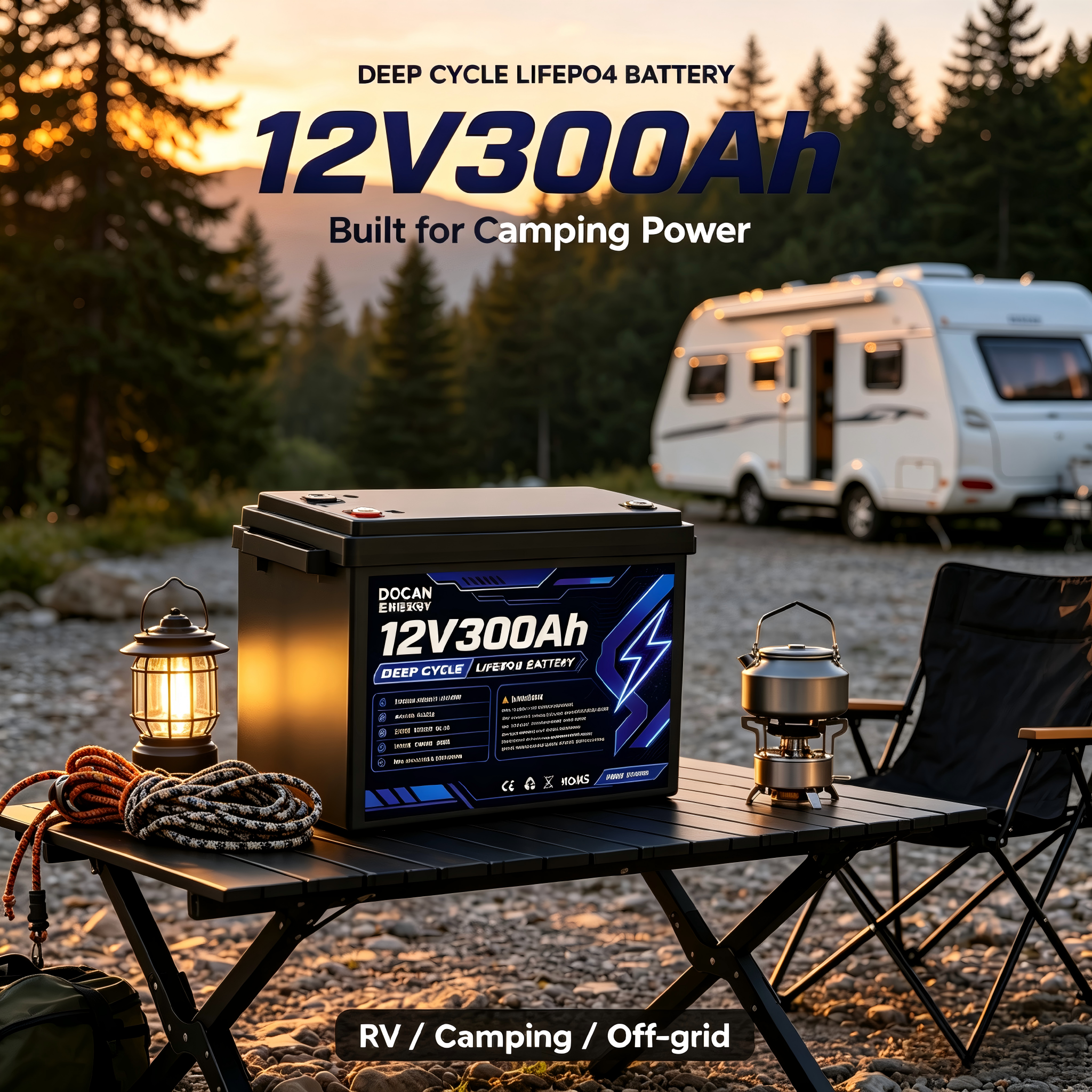
If you need daily, deep, reliable power — choose LiFePO4. Its higher initial cost is offset by longevity, efficiency, and usability — especially as prices continue falling and cold-weather models mature.
If you need simple, predictable, low-infrastructure backup — AGM still fits. But recognize its limits: it’s not a “deep cycle” solution in practice unless used very gently.
If you’re a typical user, you don’t need to overthink this. Match chemistry to your real-world duty cycle — not marketing claims. Prioritize verified BMS features over brand names. And never sacrifice cold-weather charging capability for cost savings if your climate demands it.


