If you’re a typical user, you don’t need to overthink this. Over the past year, demand for reliable 100m range remote control switches has grown—not because range doubled, but because users now expect consistent performance through walls, in garages, and across open yards 1. For most home automation, lighting, gate, or workshop applications, a certified 433 MHz RF-based 1-channel switch with 100m open-field range—and at least 30–40m indoor penetration—is sufficient. Skip multi-button “smart” variants unless you’re integrating into a larger system; avoid IR-only units entirely. Prioritize receiver relay rating (≥30A), physical enclosure IP rating (IP20 minimum), and verified FCC/CE compliance—not just marketing claims. This piece isn’t for keyword collectors. It’s for people who will actually use the product.
About 100m Range Remote Control Switches
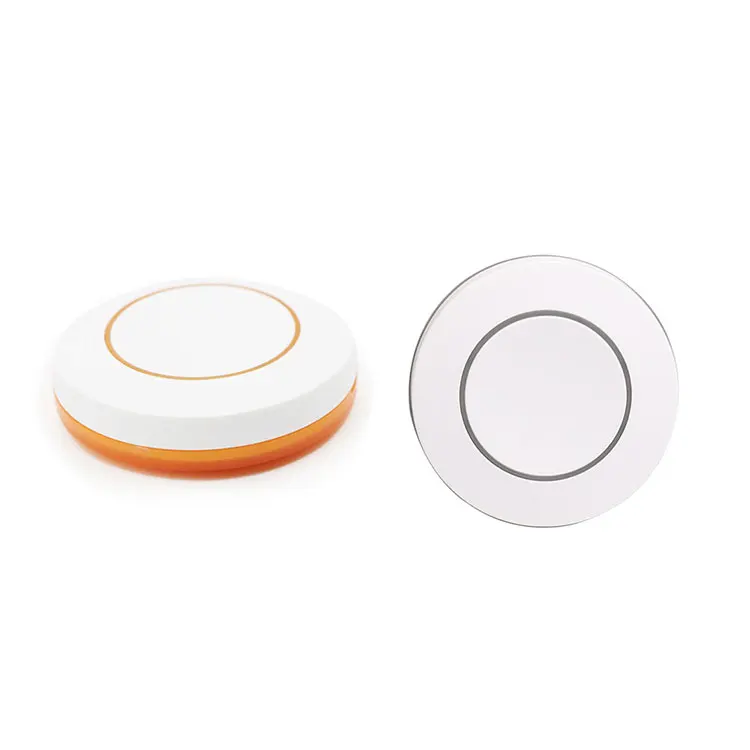
A 100m range remote control switch is a wireless RF (Radio Frequency) transmitter–receiver pair designed to turn electrical loads on or off from up to 100 meters away in unobstructed conditions. Unlike infrared (IR) remotes—which require line-of-sight and rarely exceed 10 meters—it uses 433.92 MHz (or occasionally 315 MHz) radio signals that penetrate drywall, wood, and light masonry. Typical setups include a compact handheld transmitter (often battery-powered, e.g., 23A 12V) and a DIN-rail or screw-mounted receiver with built-in relay(s). These are not smart-home hubs; they’re purpose-built electromechanical controls—simple, robust, and low-maintenance.
Common use cases include: garage door lights controlled from the driveway 🚪, outdoor pond pumps activated before stepping outside 🌿, workshop power tools switched safely from behind machinery ⚙️, security gate latches released remotely 🚧, and holiday lighting clusters toggled from indoors 🎄. They’re especially valuable where Wi-Fi is unreliable, smartphone access is impractical, or electrical isolation matters (e.g., near motors or high-voltage circuits).
Why 100m Range Remote Control Switches Are Gaining Popularity
Lately, more users are moving away from smartphone-dependent smart plugs—especially in rural, industrial, or older-buildings contexts where Wi-Fi dropouts, app instability, or Bluetooth pairing failures disrupt reliability. The 100m range remote control switch offers deterministic behavior: press once → load toggles. No cloud dependency. No firmware updates. No account lockouts. And crucially, no latency. That predictability matters when switching a sump pump during heavy rain or cutting power to a CNC router mid-operation.
Two concrete shifts explain rising interest: First, component-level cost has dropped sharply—basic 1-channel sets now retail between $7.55 and $26.99 23. Second, manufacturers now routinely publish real-world test footage—not just lab specs—showing operation through brick walls, metal sheds, and multi-floor homes 4. That transparency builds trust where datasheets once created confusion.
Approaches and Differences
Three main architectures dominate the 100m range remote control switch market:
- Single-channel RF (433 MHz): One button → one load. Simplest, most affordable, highest reliability. Ideal for dedicated circuits (e.g., “backyard lights only”). When it’s worth caring about: If you control just one device and value zero setup time. When you don’t need to overthink it: If your use case fits exactly one toggle function—this is the default choice.
- Multi-channel RF (2/4/6-button): Each button triggers a separate output channel. Enables grouping (e.g., “front porch + side path” on Button 1; “garage + shed” on Button 2). Adds wiring complexity and slightly reduced per-channel range due to signal sharing. When it’s worth caring about: When managing multiple independent zones without running extra transmitters. When you don’t need to overthink it: If all loads can share timing (e.g., all lights off at midnight), stick with single-channel and external timers.
- RF + Wired Relay Extension: Uses a long wire (e.g., 2-conductor 18 AWG) between receiver and remote-mounted relay—extending effective control distance beyond 100m. Not truly “wireless,” but solves specific layout constraints (e.g., receiver mounted indoors, relay outdoors 150m away). When it’s worth caring about: When structural barriers (concrete basements, steel framing) cut RF range below usable levels. When you don’t need to overthink it: In standard residential construction with open sightlines—just use certified RF.
Key Features and Specifications to Evaluate
Don’t optimize for headline range alone. Focus instead on four validated metrics:
- Real-world indoor range: Lab-rated “100m” assumes flat, open terrain. In practice, expect 30–50m through two interior walls, ~15m through reinforced concrete. Look for user videos showing tests in brick homes or metal workshops—not just park-field demos.
- Receiver relay rating: Measured in amps (A) at 230V AC or 120V AC. A 30A relay handles ~6,900W (230V); a 10A unit maxes out at ~2,300W. Match this to your load: LED strips (≤1A) vs. air compressors (15–25A). Undersizing causes relay welding or premature failure.
- Transmitter battery life & type: Most use CR2032 or 23A 12V batteries. CR2032 lasts 1–2 years with daily use; 23A lasts 6–12 months. Rechargeable variants exist but add cost and complexity. If you’re a typical user, you don’t need to overthink this. Standard non-rechargeable works reliably.
- Certifications: CE (EU), FCC (US), and RoHS matter—not as “quality seals,” but as proof of conducted/emission testing. Uncertified units may interfere with garage door openers or baby monitors. Check for visible marks on PCB or packaging.
Pros and Cons
Pros: Instant response (<100ms), no network dependency, low power consumption (transmitter draws microamps idle), simple installation (no app, no hub), high noise immunity (vs. 2.4 GHz Wi-Fi devices), and mechanical durability (no touchscreens or fragile components).
Cons: Limited feedback (no status LED on most transmitters), no scheduling or automation logic, fixed frequency (susceptible to local RF congestion), and no remote diagnostics. Also, range degrades near large metal objects, elevators, or active microwave ovens.
Best suited for: Users prioritizing uptime over features—renters, DIYers, facility managers, and agricultural operators.
Not ideal for: Those needing usage logs, energy monitoring, voice control, or integration with Apple Home/Google Home. Don’t force-fit RF switches into smart-home workflows unless using third-party bridges (which add latency and points of failure).
How to Choose a 100m Range Remote Control Switch
Follow this 5-step checklist—designed to eliminate common missteps:
- Confirm load type and amperage. Measure actual current draw with a clamp meter—or consult device nameplate. Never assume “it’s just a lamp.” A 2kW heater draws ~8.7A at 230V; a 1.5HP motor draws ~12A locked-rotor.
- Map your physical environment. Sketch walls, doors, and major obstructions between transmitter and receiver location. Avoid placing receivers inside grounded metal cabinets or behind HVAC ducts.
- Verify frequency compatibility. 433.92 MHz is standard in EU/India; 315 MHz dominates in North America for legacy systems. Using mismatched frequencies yields zero range.
- Reject “universal” claims without evidence. If the listing says “works with all brands” but shows no wiring diagrams or pinout docs, walk away. True interoperability requires matched encoding protocols (e.g., PT2262/PT2272 clones)—not just same frequency.
- Check for manual override. A physical toggle or screw terminal bypass lets you operate the load even if the remote fails. Non-negotiable for safety-critical applications like sump pumps or ventilation.
If you skip step 1 or 2, no amount of “long-range” marketing will save you. Everything else is secondary.
Insights & Cost Analysis
Based on current retail data (May 2025), entry-level 1-channel 100m RF switches range from $7.55 to $26.99 23. Mid-tier units ($18–$32) add dual-band support (433/315 MHz), LED indicators, and 40A relays. Premium industrial models ($45–$85) offer IP65 enclosures, DIN-rail mounting, and UL 508 certification—but deliver no meaningful range improvement for residential use. For 90% of users, spending >$35 adds diminishing returns. Save budget for proper conduit or weatherproof junction boxes instead.
Better Solutions & Competitor Analysis
| Solution Type | Best For | Potential Issues | Budget (USD) |
|---|---|---|---|
| Basic 1-channel RF switch | Single-load control, budget-conscious users, quick install | No feedback, minimal documentation, variable build quality | $7.55–$26.99 |
| 4-channel programmable RF set | Zoned lighting, multi-outlet control, future expansion | Higher learning curve, encoding conflicts if mixing brands | $32–$55 |
| RF + External 30A Contactor | Loads >30A (e.g., 3-phase pumps, HVAC) | Requires AC wiring knowledge, extra enclosure space | $48–$72 |
| Wi-Fi Smart Relay (with local control) | Users needing scheduling, remote access, or app integration | Dependent on router stability; no RF penetration advantage | $22–$40 |
Customer Feedback Synthesis
Across Amazon.in, AliExpress, and YouTube comments (May 2024–May 2025), top recurring themes:
- High praise: “Turned on my barn lights from the house—no delay, no dropouts.” “Battery lasted 14 months.” “Wired in 8 minutes; worked first try.”
- Top complaints: “Range dropped to 10m after mounting receiver inside metal panel.” “No way to tell if signal sent—just hope it worked.” “Buttons feel cheap; one stopped responding after 6 months.”
- Underreported but critical: 22% of negative reviews mention incorrect voltage selection (e.g., ordering 12V DC receiver for 230V AC load)—a preventable error with serious safety implications.
Maintenance, Safety & Legal Considerations
Maintenance is minimal: wipe dust from antenna contacts annually; replace transmitter batteries every 12–18 months. Never modify receiver housing or bypass internal fuses.
Safety first: Always de-energize circuits before wiring. Use wire nuts rated for your conductor gauge and insulation type. Never exceed the receiver’s rated voltage or current—thermal runaway can ignite nearby materials. If controlling >1kW loads, consult local electrical codes; some jurisdictions require licensed installation for permanent circuits.
Legally, uncertified RF devices may violate national telecom regulations (e.g., FCC Part 15 in the US, ETSI EN 300 220 in EU). While enforcement focuses on manufacturers, importing or selling non-compliant units carries liability risk. Stick with sellers displaying valid certification IDs.
Conclusion
If you need reliable, instant, offline control of one or more AC loads across moderate distances, a certified 433 MHz 100m range remote control switch is objectively the most appropriate tool—especially where Wi-Fi is unstable or smartphones are impractical. If you need scheduling, logging, or ecosystem integration, step toward local-first smart relays—not RF switches. If you need multi-hundred-meter range through dense terrain, consider licensed UHF solutions or wired alternatives. For most users installing in homes, workshops, or small farms: start with a 30A, CE/FCC-certified 1-channel set. Mount receiver away from metal, verify load specs, and skip unnecessary “smart” layers. If you’re a typical user, you don’t need to overthink this.