If you’re a typical user, you don’t need to overthink this. For most outdoor enthusiasts, van lifers, and emergency preppers, the best 100W foldable solar panel in 2026 is a monocrystalline unit with ETFE coating, integrated USB-C Power Delivery (PD) up to 100W, and an IP65 or IP67 rating — priced between $65 and $85. Avoid PET-coated panels older than 2024; skip models claiming “100W USB-C output” without independent verification of sustained wattage under real sunlight 1. Over the past year, the shift from PET to ETFE and the rise of direct-laptop charging via built-in PD ports have made older 100W panels functionally obsolete for many use cases — not because they stopped working, but because newer models deliver more usable energy per square inch, last longer in UV exposure, and eliminate conversion losses.
About 100W Foldable Solar Panels
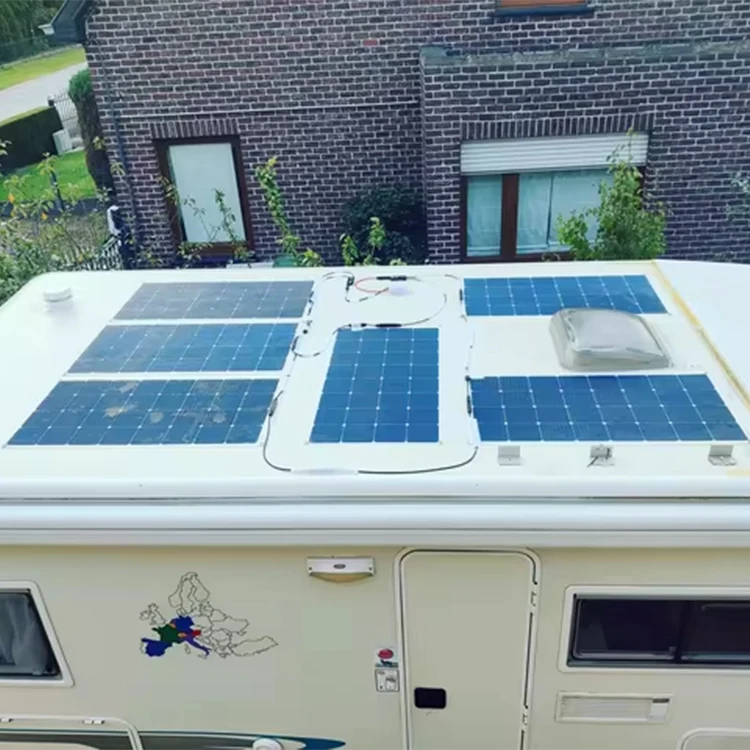
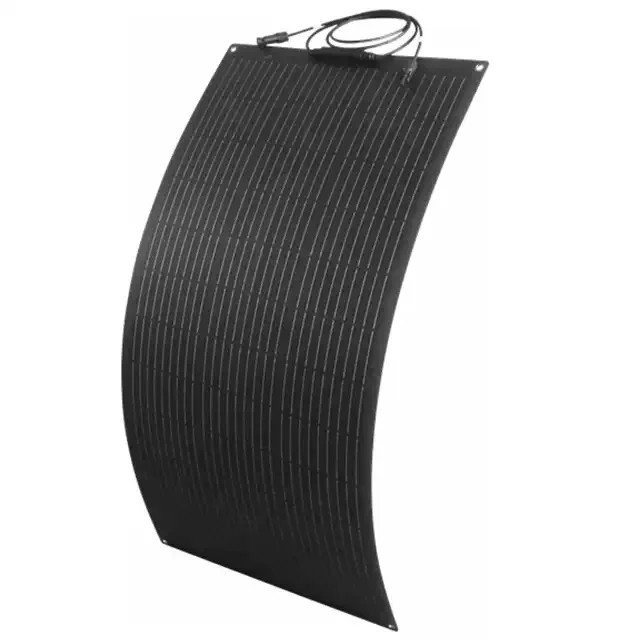
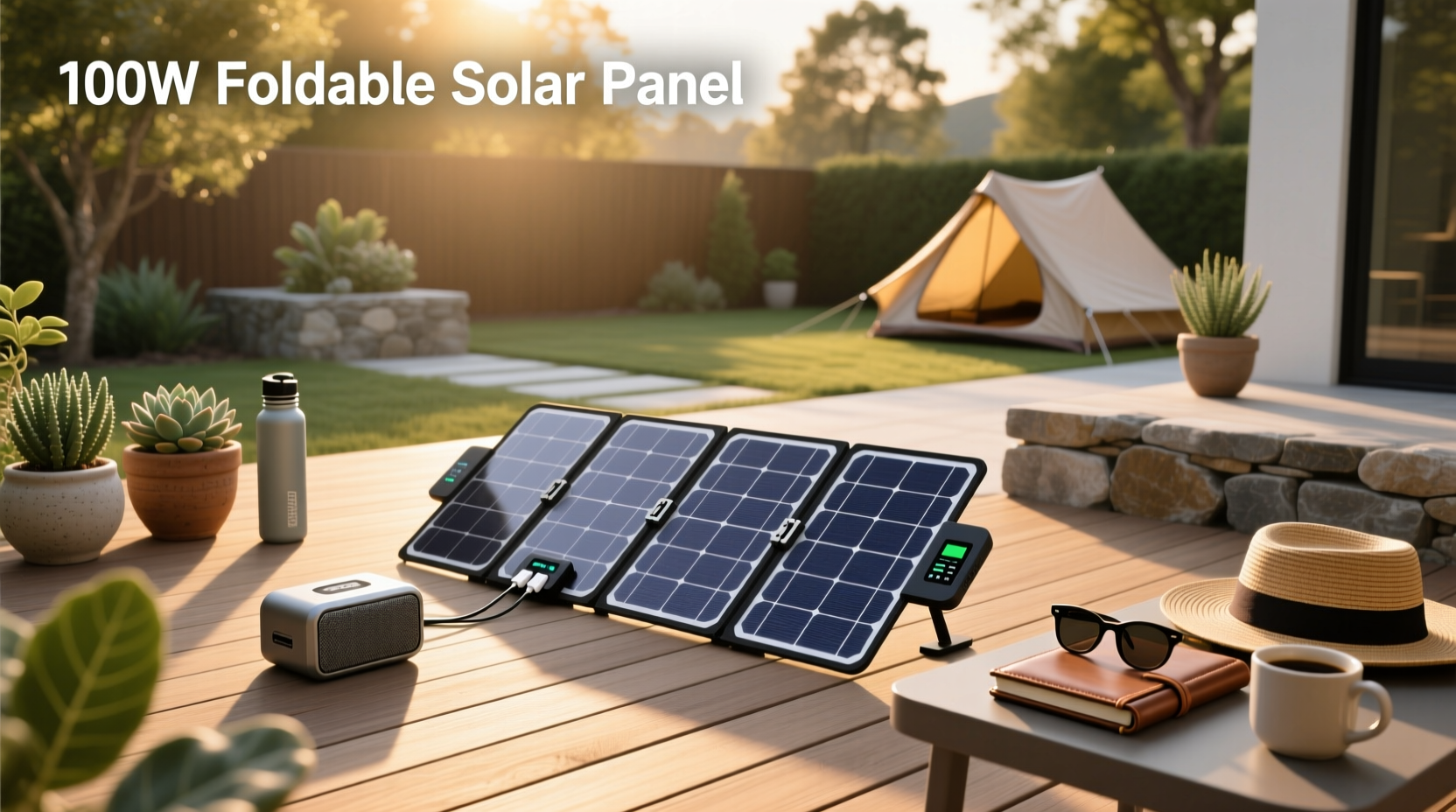
A 100W foldable solar panel is a portable photovoltaic device designed to convert sunlight into electricity for charging batteries, power stations, laptops, and other DC or USB-powered gear. Unlike rigid rooftop arrays or fixed ground-mount systems, these units use flexible, lightweight monocrystalline cells laminated between durable polymer layers and folded into compact carry bags — typically measuring ~20 × 20 inches when open and ~18 × 12 × 2 inches when folded. They weigh between 8–12 lbs (3.6–5.5 kg), making them viable for backpacking, car camping, RV roof mounting, marine use, and rapid-deployment emergency kits 2.
Typical use cases include:
- 🏕️ Charging a 500–1000Wh LiFePO4 power station (e.g., EcoFlow River 2 Pro or Jackery Explorer 1000) during multi-day off-grid trips
- 💻 Directly powering or topping up a MacBook Pro or Windows laptop via USB-C PD — no inverter or AC adapter needed
- 📡 Keeping satellite messengers (Garmin inReach), ham radios, or CPAP devices running during grid outages
- 🚤 Supplementing onboard battery banks on small boats or sailboats where space and weight are constrained
Why 100W Foldable Solar Panels Are Gaining Popularity
Lately, demand has surged—not just as niche accessories, but as core components of resilient personal energy ecosystems. Three interlocking trends explain why:
- Outdoor lifestyle acceleration: “Van life,” dispersed camping, and overlanding have normalized mobile power needs. A 100W panel delivers enough daily yield (300–500Wh under good sun) to sustain lights, refrigeration, comms, and computing without refueling 3.
- Resilience-driven adoption: With climate-related grid failures increasing across North America and Europe, households and small businesses now treat portable solar + storage as insurance — not luxury. The $2.3B market size projected for 2026 reflects this behavioral shift 4.
- Hardware convergence: Modern panels no longer require separate charge controllers or adapters. Integrated MC4 outputs, XT60 compatibility, and native USB-C PD eliminate bottlenecks — turning a single panel into a plug-and-play subsystem.
This isn’t about chasing watts. It’s about eliminating friction in energy access — and that’s why the 100W segment dominates mid-tier portability: high enough yield for meaningful use, low enough mass for daily handling.
Approaches and Differences
There are three primary approaches to deploying 100W foldable solar — each defined by how the panel connects to your load:
| Approach | How It Works | Pros | Cons |
|---|---|---|---|
| Direct USB-C PD Charging | Panel includes built-in USB-C PD port delivering up to 100W directly to laptops, tablets, or PD-compatible power banks | No extra hardware; zero conversion loss; fast, silent, simple | Output varies significantly with angle, cloud cover, and temperature; not all “100W PD” claims reflect real-world sustained output 1 |
| MC4-to-Power Station | Panel connects via MC4 cables to a portable power station (e.g., Bluetti EB70S, EcoFlow Delta 2) | Stable voltage regulation; MPPT optimization; ability to chain multiple panels; works with any compatible station | Requires compatible station; adds cable clutter; introduces 5–10% conversion loss |
| XT60 or Anderson Plug Integration | Uses rugged XT60 or Anderson SB50 connectors for direct DC input into custom-built battery banks or RV house systems | Highest efficiency for DC-native loads; scalable; robust for permanent or semi-permanent installs | Requires technical knowledge; not plug-and-play; limited consumer support |
When it’s worth caring about: If you regularly charge laptops or need reliable off-grid computing, prioritize integrated USB-C PD — but verify lab-tested output curves, not just headline specs.
When you don’t need to overthink it: If your main goal is topping up a 1000Wh power station while hiking or boondocking, MC4 compatibility matters far more than PD branding. If you’re a typical user, you don’t need to overthink this.
Key Features and Specifications to Evaluate
Not all 100W panels perform alike. Here’s what actually moves the needle — and when it doesn’t:
- Cell Type & Efficiency: Monocrystalline only. Look for 21–23% lab-rated efficiency. Poly or amorphous cells at this wattage indicate cost-cutting — lower yield per square foot, faster degradation. When it’s worth caring about: In shaded or low-light conditions (dawn/dusk, forest edges). When you don’t need to overthink it: Full-sun desert use — even 19% panels hit nominal output.
- Coating Material: ETFE (Ethylene Tetrafluoroethylene) has replaced PET in premium 2025–2026 models. ETFE offers >95% light transmission vs. PET’s ~88%, resists yellowing, handles heat better, and sheds dust/rain naturally. When it’s worth caring about: Long-term ownership (>2 years), high-UV environments (Southwest US, Australia, high-altitude). When you don’t need to overthink it: Occasional weekend use in temperate zones — PET still functions, just ages faster.
- Durability Rating: IP65 = splash resistant. IP67 = submersible up to 1m for 30 min. Real-world difference? IP67 panels survive heavy rain, accidental drops in puddles, and marine spray — IP65 may fail after prolonged downpour. When it’s worth caring about: Boating, coastal camping, or emergency kits stored outdoors. When you don’t need to overthink it: Car trunk storage or backyard use — IP65 is sufficient.
- Connectors: MC4 is universal. XT60 is preferred for high-current DC builds. USB-C PD must be spec-compliant (USB-IF certified) and list sustained output — not peak. When it’s worth caring about: If you own multiple brands of power stations or plan to upgrade later. When you don’t need to overthink it: Using one known station — match its input spec first.
Pros and Cons
Pros:
- Lightweight and packable — fits in most SUV trunks or cargo vans
- Zero fuel, zero noise, zero emissions during operation
- Scalable: Two 100W panels often outperform one 200W unit due to flexible positioning
- Enables true off-grid computing — no need for bulky inverters or AC adapters
Cons:
- Output depends entirely on sun angle, cloud cover, and panel temperature — real-world yield is rarely 100W continuous
- Foldable designs sacrifice some long-term structural rigidity vs. rigid panels — hinges and seams are wear points
- “100W USB-C PD” marketing is frequently misleading; actual sustained output often falls to 60–85W in field conditions 1
- ETFE panels cost ~$15–$25 more than PET equivalents — justified only for users planning >18 months of regular use
How to Choose a 100W Foldable Solar Panel
Follow this 5-step decision checklist — and avoid these three common pitfalls:
- Define your primary load: Laptop? Power station? Both? If laptop charging is essential, confirm USB-C PD is present and rated for sustained 65W+ output (not just “up to 100W”).
- Verify cell tech and coating: Search the model number + “spec sheet”. Reject anything listing “poly” or omitting ETFE/PET. No spec sheet = walk away.
- Check physical specs: Weight ≤12 lbs, folded thickness ≤2.5 inches, and includes a stable kickstand or grommets for ground anchoring.
- Review warranty & certifications: Minimum 5-year product warranty. Look for CE, RoHS, and ISO9001 — especially if claiming IP67 5. Fake IP ratings are rampant.
- Compare real-world reviews: Prioritize videos showing side-by-side yield tests (e.g., “Harbor Freight 100W vs Rich Solar 100W”) over Amazon star counts 6.
Avoid these:
• Assuming “100W” means consistent output — it’s a lab rating under ideal STC (Standard Test Conditions)
• Prioritizing lowest price over ETFE and IP67 — budget panels degrade visibly within 12 months in full sun
• Ignoring MC4 polarity — reversed polarity can damage power stations
Insights & Cost Analysis
Wholesale B2B pricing for certified 100W foldable monocrystalline panels ranges from $50–$80/unit, depending on coating (PET vs. ETFE), certification level, and order volume 7. Retail prices reflect added logistics, branding, and channel margins:
- Budget tier ($55–$69): PET coating, IP65, basic MC4, no USB-C PD — acceptable for occasional use, but expect 15–20% efficiency drop after 18 months.
- Mid-tier ($70–$89): ETFE coating, IP67, integrated USB-C PD (65W sustained), 10-year materials warranty — best value for regular users.
- Premium tier ($90–$130): Includes smart charge controller, Bluetooth monitoring, dual-axis kickstands, or military-grade fabric — justified only for commercial or expedition use.
For most individuals, the $70–$89 range delivers optimal longevity-to-cost ratio. Spending less invites premature replacement; spending more adds features rarely used in practice.
Better Solutions & Competitor Analysis
The market has consolidated around three functional archetypes — not brands, but engineering priorities:
| Category | Suitable For | Potential Issue | Budget Range |
|---|---|---|---|
| Ease-of-Use Focus (e.g., Jackery SolarSaga 100W) | Beginners, brand-loyal users, those prioritizing setup speed | Higher markup; limited repairability; PET coating on older batches | $99–$129 |
| Durability Focus (e.g., BougeRV ISE192) | Marine, off-road, long-term owners | Heavier than average; fewer color options; slower retail distribution | $79–$89 |
| Value Engineering (e.g., JJN 100W 9BB) | Budget-conscious buyers, secondary panels, DIY integrators | Inconsistent QC; minimal documentation; no USB-C PD | $59–$69 |
This piece isn’t for keyword collectors. It’s for people who will actually use the product.
Customer Feedback Synthesis
Based on aggregated reviews across OutdoorGearLab, Consumer Reports, and Reddit communities 89:
Top 3 Compliments:
- “Folded size fits perfectly behind my Jeep rear seat.”
- “Charged my MacBook Pro from 20% to 85% in 72 minutes — no adapter needed.”
- “Survived six months of Pacific Northwest rain with zero delamination.”
Top 3 Complaints:
- “USB-C port stopped negotiating above 45W after three months.”
- “Kickstand snapped on first use — cheap plastic hinge.”
- “No way to verify if ‘IP67’ claim is real — no test footage or certification ID.”
Maintenance, Safety & Legal Considerations
Maintenance: Wipe with damp microfiber cloth; avoid abrasive cleaners. Store dry and unfolded if possible — prolonged folding accelerates crease fatigue. Inspect hinges and grommets every 3 months.
Safety: Never cover an operating panel — heat buildup damages cells and wiring. Avoid connecting to lithium batteries without a charge controller unless the panel explicitly states “controller-free” (rare at 100W).
Legal: No federal registration required for portable solar under 100W in the U.S. Some HOAs restrict visible installation — but foldable panels used temporarily (e.g., on a picnic table) fall outside most CC&Rs. Always check local fire codes if integrating into RV or marine DC systems.
Conclusion
If you need reliable, daily-use solar for laptops and mid-sized power stations — choose an ETFE-coated, IP67-rated 100W foldable panel with verified USB-C PD output (65W+ sustained) in the $70–$89 range. If you only need supplemental charging for a single power station twice a month — a certified PET/IP65 model at $60–$65 is sufficient. If you’re building a custom marine or expedition system — prioritize XT60 compatibility and third-party validation over brand name. If you’re a typical user, you don’t need to overthink this.
Frequently Asked Questions