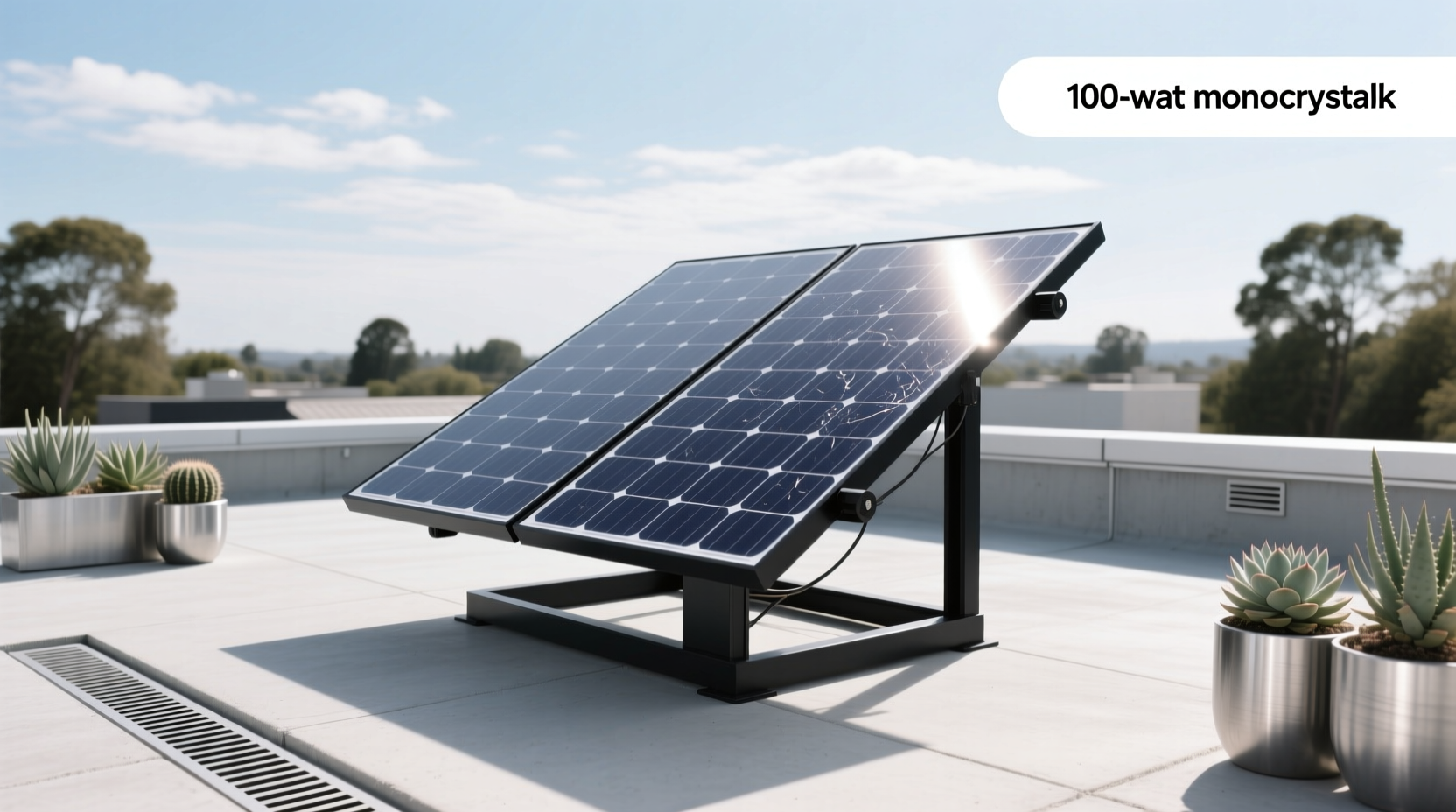
If you’re a typical user—camping, powering a van, or topping up a portable power station—you don’t need to overthink this. Choose a foldable N-type 100W monocrystalline solar panel with ETFE coating, IP67-rated junction box, and MC4 connectors. It delivers 22–24% efficiency, yields 350–550 Wh/day in real conditions, and avoids the heat degradation risks of flexible panels or the mounting complexity of rigid units. Over the past year, N-type cells have become standard—not premium—and bifacial designs now add measurable albedo gain (5–15%) on boats or light-colored rooftops1. That shift means older P-type 100W panels are no longer competitive on durability or low-light output2. This piece isn’t for keyword collectors. It’s for people who will actually use the product.
✅ Quick decision rule: For portability + reliability → foldable. For permanent roof mount → rigid glass. For curved surfaces (RV roof, boat deck) → flexible ETFE—but only if airflow is guaranteed.
About 100W Monocrystalline Solar Panels
A 100W monocrystalline solar panel is a compact photovoltaic module built from single-crystal silicon wafers, optimized for high conversion efficiency and space-constrained applications. Unlike polycrystalline or thin-film alternatives, monocrystalline cells offer superior performance per square foot—critical when mounting on RV roofs, van ceilings, or backpacks. In 2026, nearly all new 100W monocrystalline panels use N-type silicon, which reduces light-induced degradation and improves electron mobility3. Typical use cases include:
- Charging portable power stations (e.g., Jackery, EcoFlow, Bluetti)
- Supplementing 12V battery banks in campervans and off-grid sheds
- Emergency backup for cabins, trail cameras, or remote sensors
- Bifacial deployment on white-painted decks or sand—capturing reflected light
Why 100W Monocrystalline Solar Panels Are Gaining Popularity
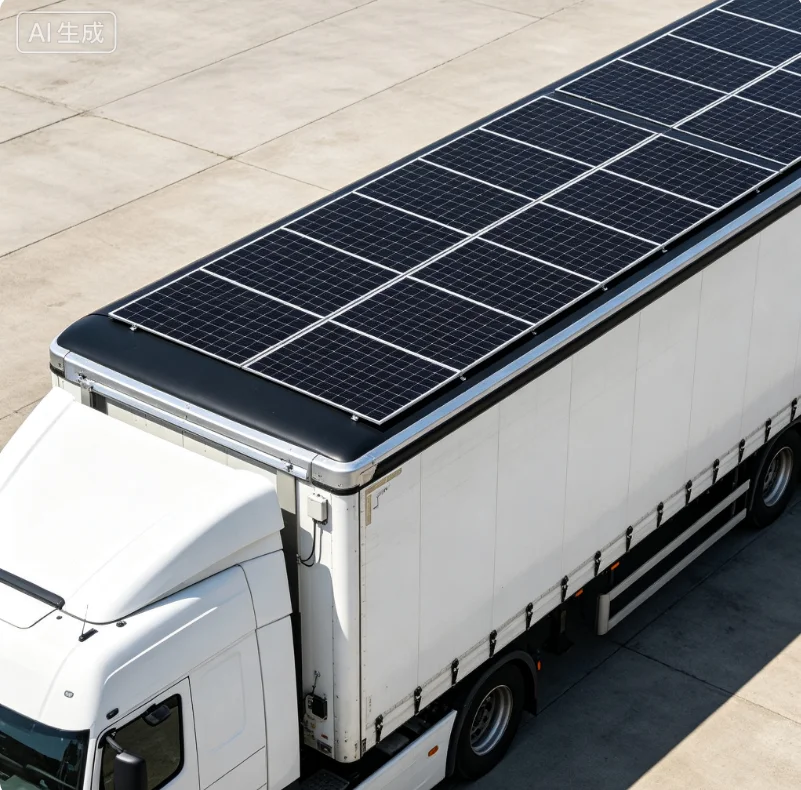
Lately, demand for 100W monocrystalline solar panels has surged—not because they’re cheaper, but because their value density has improved dramatically. Efficiency jumped from ~15% in 2020 to 22–25% in 20264, and N-type cells now dominate mid-tier B2B supply chains. Users aren’t buying “just another panel”—they’re solving specific constraints: limited roof area, weight limits, or intermittent shade exposure. The rise of modular power stations (500–2000Wh capacity) created natural pairing demand: one or two 100W panels deliver meaningful daily input without requiring complex wiring or tilt kits. If you’re a typical user, you don’t need to overthink this—just match your mounting surface and daily energy goal.
Approaches and Differences: Rigid vs Flexible vs Foldable
The market has matured into three distinct physical categories—each solving different problems, not just aesthetic preferences.
| Form Factor | Best Use Case | Key Strength | Potential Issue |
|---|---|---|---|
| Rigid (Glass) | Permanent roof mounts (vans, sheds, cabins) | 25-year warranty; best thermal dissipation; highest long-term yield stability | Heavy (~7–9 kg); requires professional mounting; zero flexibility for curves |
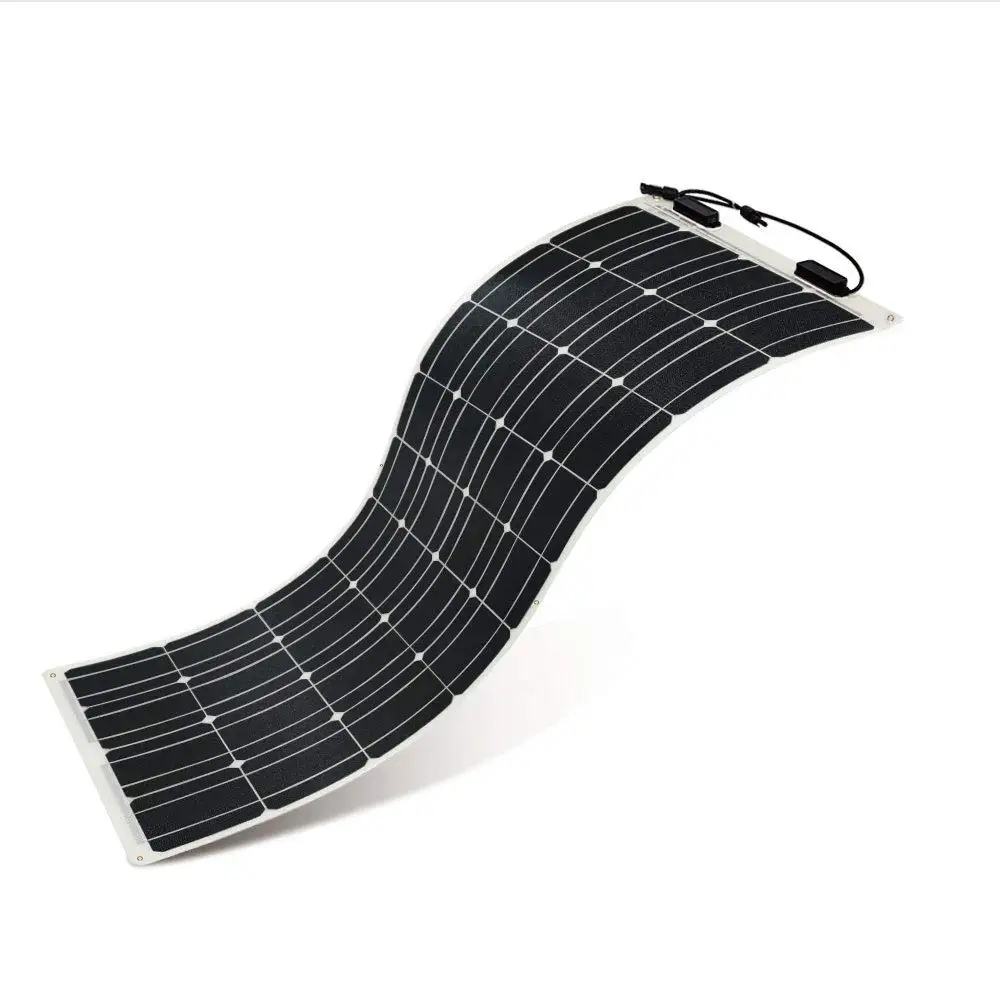
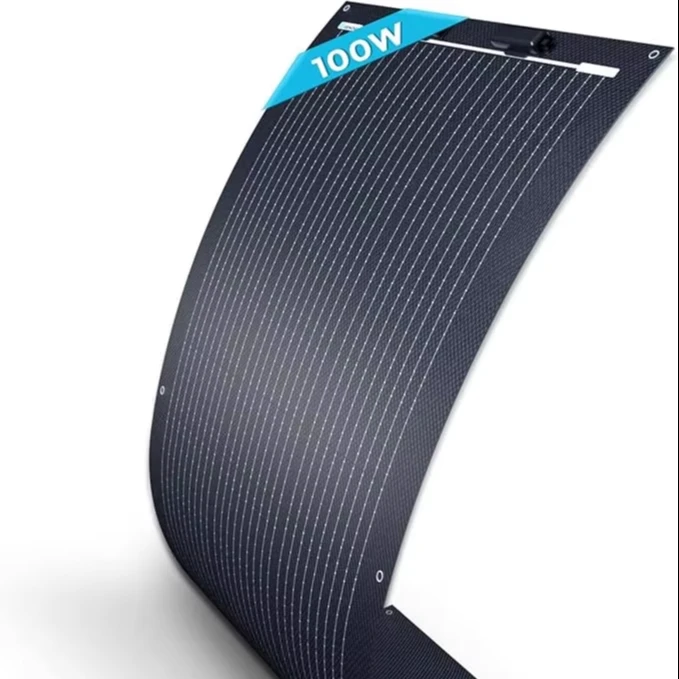
| Flexible (ETFE) | Curved fiberglass or aluminum RV roofs, marine decks | Lightweight (~2.5–3.5 kg); conforms to gentle curves; UV-resistant ETFE surface | Heat buildup degrades output faster if airflow is restricted; no frame = higher risk of microcracks during flex |
| Foldable (Portable) | Camping, emergency kits, rotating deployments | Lightest (~2–2.8 kg); includes kickstand & carry bag; fastest setup; often bifacial | Lower long-term durability than rigid; hinge wear after ~500 cycles; less stable in wind |
When it’s worth caring about: Your mounting surface geometry and whether you’ll move the panel weekly or leave it installed for years.
When you don’t need to overthink it: If you’re using it with a portable power station and pack it up after every trip—choose foldable. If you’re a typical user, you don’t need to overthink this.
Key Features and Specifications to Evaluate
Don’t default to wattage alone. Real-world usability depends on four technical anchors:
- Voltage & Compatibility: Most 100W panels output ~18–22V Voc (open-circuit). Confirm your charge controller or power station accepts that range—especially important for lithium batteries with narrow MPPT windows. Panels labeled “12V” are nominal; actual Voc must be ≤30V for safe connection to common 12V systems5.
- Efficiency & Cell Type: N-type > PERC > standard P-type. Look for ≥22% efficiency—verified by independent lab reports (not just datasheet claims). Bifacial adds value only where albedo is high (snow, white roofs, sand).
- Weather Protection: IP67 or IP68 rating on the junction box ensures dust/water resistance. Avoid panels with only IP65 or unlisted ratings if used near saltwater or heavy rain.
- Connectors & Diodes: MC4 is universal. Bypass diodes (≥3) reduce shading losses—if one cell is shaded, others still produce. Skip panels with only 1 or 2 diodes.
Pros and Cons: Balanced Assessment
No form factor wins universally. Trade-offs are real—and predictable.
- Rigid panels excel in longevity and cooling but fail where weight or curvature matters. They’re ideal for fixed installations where ROI spans 10+ years—but overkill for weekend users.
- Flexible panels solve curve-mounting problems yet introduce thermal risk. If airflow is poor (e.g., glued directly to fiberglass), output drops 10–15% after 12 months6. Not recommended unless your surface truly can’t accept rigid frames.
- Foldable panels prioritize speed and portability. Their lightweight ETFE frontsheet resists UV better than PET, but hinges and zippers wear faster than glass edges. Best for users who value deploy/retract time over 15-year lifespan.
How to Choose a 100W Monocrystalline Solar Panel: Decision Checklist
Follow this sequence—skip steps only if you’ve already ruled out a category.
- Define your primary use: Permanent? Portable? Curved surface?
- Check your power station specs: Max PV input voltage, MPPT range, connector type (MC4 or Anderson?).
- Verify real-world efficiency: Look for third-party test data (e.g., PV Evolution Labs, RETScreen) — not just manufacturer claims.
- Confirm weather rating: IP67 minimum for marine or rainy climates.
- Avoid these: Panels with PET coating (UV degradation in <2 years), no bypass diodes, or Voc >32V without explicit controller compatibility notes.
Insights & Cost Analysis
Price reflects function—not just brand. B2B bulk pricing stabilized in 2026:
- Rigid panels: $0.12–$0.28/W → $12–$28 per 100W unit (ex-factory; no shipping or customs)
- Flexible panels: $0.30–$0.45/W → $30–$45 per 100W unit (ETFE-coated, N-type)
- Foldable panels: $60–$140 per unit (retail; includes frame, stand, cable, bag)
For end users, the $80–$110 foldable segment offers the strongest balance: N-type cells, ETFE, IP67, and MC4. Below $70, compromises appear—often in diode count or coating quality. If you’re a typical user, you don’t need to overthink this.
Better Solutions & Competitor Analysis
“Better” depends on context—not specs alone. Here’s how top-performing models align with user priorities:
| Solution Type | Advantage for Specific Need | Realistic Limitation |
|---|---|---|
| N-type bifacial foldable | +8–12% daily yield on light-colored ground or decks; fastest setup | No benefit on asphalt or grass; requires reflective surface to activate |
| Rigid with aluminum frame | 25-year linear warranty; passive cooling maintains peak output in summer | Requires drilling; not suitable for leased vehicles or temporary sites |
| Flexible with integrated USB-C | Direct device charging—no power station needed for phones/lights | USB-C output rarely exceeds 15W; inefficient for battery charging |
Customer Feedback Synthesis
Based on aggregated reviews across CNET, SolarReviews, and DIY Solar Forum7:
✅ Top 3 praised features: Quick-connect MC4 cables, sturdy folding mechanism, consistent output in morning/evening low-light.
❌ Top 3 complaints: Zipper failure on carry bags (foldable), adhesive lift on flexible panels after 18 months, inconsistent Voc labeling causing controller errors.
Maintenance, Safety & Legal Considerations
These panels require minimal maintenance—but neglect causes measurable loss:
• Clean monthly with water and soft cloth (avoid abrasive cleaners on ETFE).
• Inspect hinges and zippers biannually; lubricate with silicone-based spray.
• Never cover active panels—heat buildup damages cells and voids warranties.
• No federal permitting required for under-150W standalone use in the U.S.; local HOA or marina rules may apply to mounting hardware.
Conclusion
If you need portability, fast setup, and reliable daily input for a power station or 12V system—choose a foldable N-type 100W monocrystalline panel with ETFE coating and IP67 protection. If you need decade-long roof integration with maximum thermal stability—choose a rigid glass panel with 25-year warranty and aluminum frame. If you must mount on a gentle curve with no frame options—choose a flexible ETFE panel, but ensure ≥2 cm airflow beneath it at all times. Everything else is optimization—not necessity.
FAQs
How much power does a 100W monocrystalline solar panel actually produce per day?
Between 300–600 Wh, depending on sun hours, tilt angle, temperature, and shading. Realistic average: 400–450 Wh/day in temperate zones with clear skies.
Can I connect two 100W panels to my power station?
Yes—if your station supports the combined Voc (e.g., two 22V panels in series = 44V) and total wattage (≤ station’s max PV input). Always check the manual first.
Do I need a separate charge controller?
No—most modern portable power stations include built-in MPPT controllers rated for 100W+ input. Standalone panels without integrated regulation require an external controller.
What’s the difference between N-type and P-type monocrystalline cells?
N-type uses phosphorus-doped silicon, offering lower degradation (<0.4%/year), better low-light response, and no light-induced degradation (LID). P-type suffers from LID and higher long-term decay.
Is a 100W panel enough to run a fridge?
Not continuously—most 12V fridges draw 30–60W while running, but cycling adds up to 300–500Wh/day. A 100W panel can sustain it *only* with full sun, good orientation, and a healthy battery buffer.


