
If you’re installing your first solar system on an RV, start with a single 100W panel — but choose wisely: flexible panels now deliver 22% efficiency and fit curved roofs without drilling, while N-type rigid panels hit 25% and suit flat surfaces where airflow cooling matters most. Over the past year, the market has shifted decisively toward high-efficiency N-type cells and integrated LiFePO₄-ready kits — meaning your 100W choice isn’t just about wattage anymore, but how well it fits into a scalable, low-maintenance energy ecosystem.
This piece isn’t for keyword collectors. It’s for people who will actually use the product.
About 100W Solar Panels for RVs
A 100-watt solar panel for RVs is the foundational unit of portable off-grid power — compact enough to mount on small roofs or carry as part of a ground-deployable setup, yet sufficient to offset basic loads like LED lighting, phone charging, and 12V fridge cycling. It’s not a standalone solution for heavy users (e.g., air conditioning or induction cooking), but it’s the most common entry point for new RVers, van lifers, and weekend campers seeking reliable, silent, zero-fuel energy. Typical use cases include:
- Supplementing shore power or generator use on extended boondocking trips
- Maintaining battery charge during storage or seasonal parking
- Powering low-draw systems like water pumps, CO detectors, or dash cams when parked
- Serving as the first module in a modular expansion plan (e.g., adding 100W more later)
Because it operates at 12V nominal output and integrates easily with standard RV charge controllers, the 100W panel remains the de facto benchmark for compatibility, testing, and budget planning — not because it’s universally ideal, but because it’s the most widely validated starting point.
Why 100W Solar Panels Are Gaining Popularity
Lately, adoption has accelerated — not from hype, but from three concrete shifts: First, N-type monocrystalline cells have reached mass-market pricing, pushing efficiency from ~21% (P-type) to 24–25% in rigid formats and 22% in flexible variants 1. Second, the rise of lightweight LiFePO₄ batteries means even modest solar input delivers usable, long-cycle energy — making 100W far more effective than it was with older lead-acid banks. Third, consumers increasingly prioritize stealth, weight, and installation simplicity, especially on Class B vans and fiberglass-topped trailers where drilling is discouraged or structurally risky.
These changes mean a 100W panel today delivers ~30% more real-world daily yield than its 2020 counterpart — not from bigger size, but from smarter materials and better system integration. If you’re a typical user, you don’t need to overthink this: higher efficiency means less roof space used, less weight added, and faster payback on battery longevity.
Approaches and Differences: Rigid vs Flexible vs Bifacial
The three dominant form factors solve different physical and operational constraints. None is “better” universally — each trades performance for context-specific advantages.
- Rigid Monocrystalline (N-type): Aluminum-framed, glass-covered, highly durable. Best for flat, unobstructed roofs with good airflow underneath. Delivers peak efficiency (24–25%) and longest warranty (25 years). Drawbacks: heavier (~15–18 lbs), requires permanent mounting hardware, vulnerable to microcracks if bent or impacted.
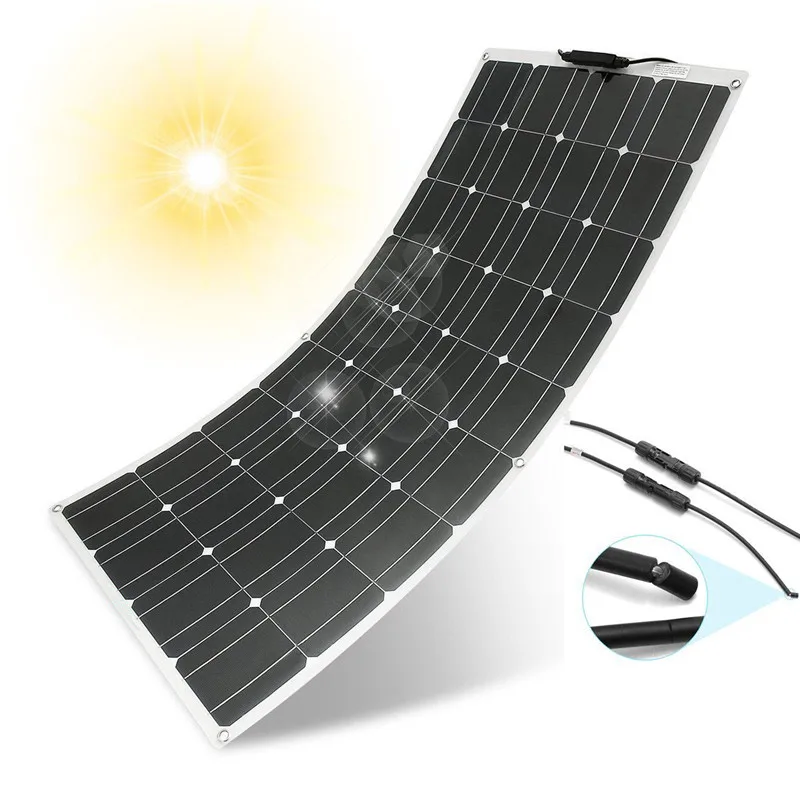
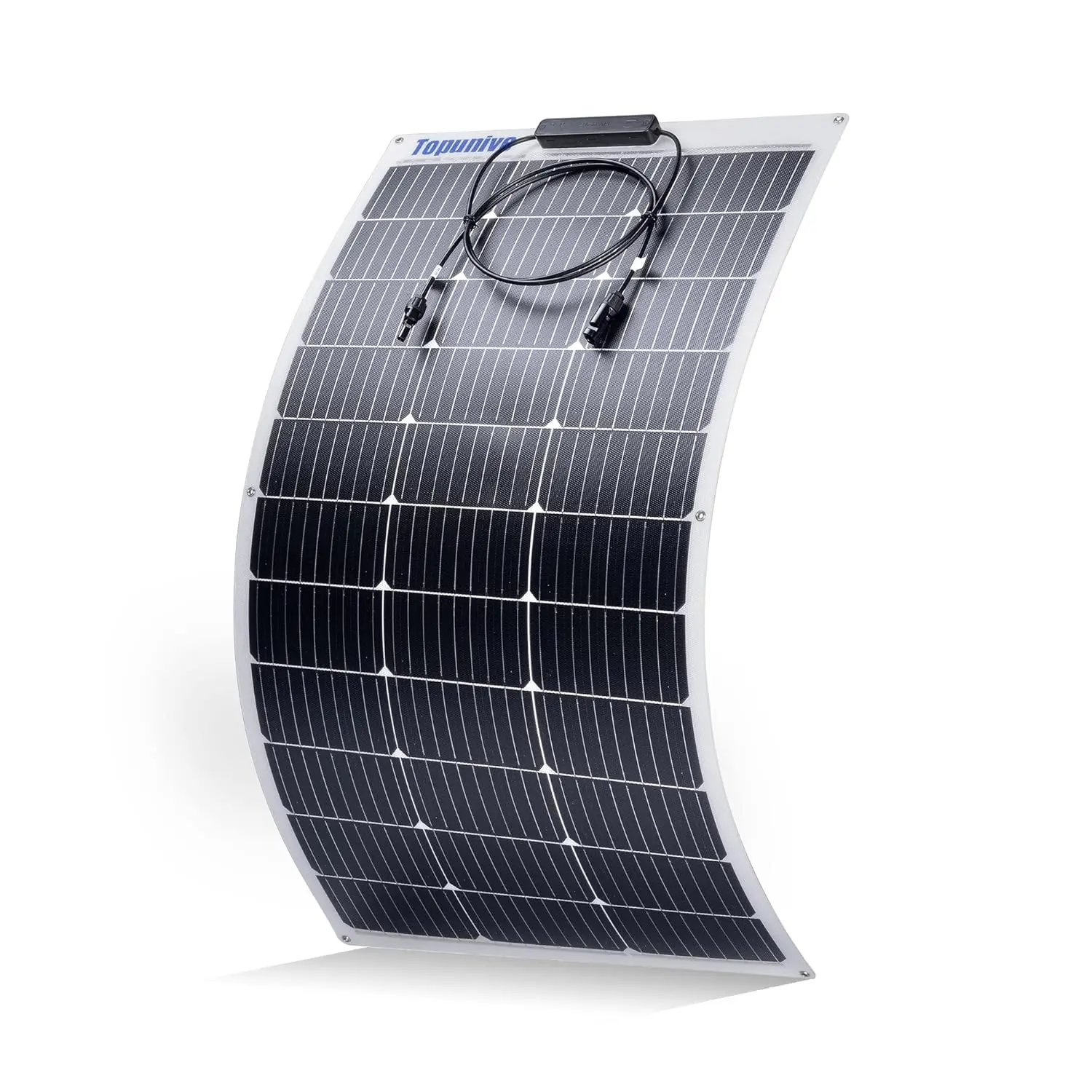
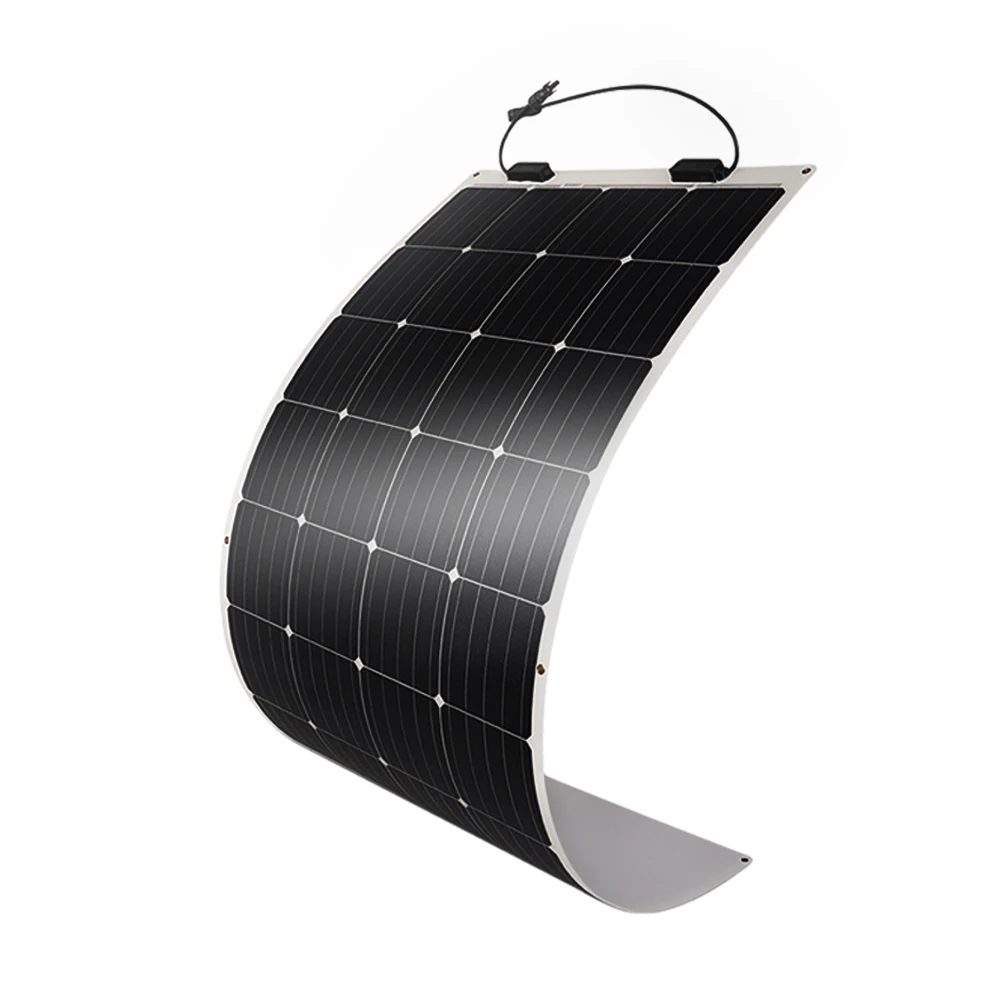
- Flexible/Semi-Flexible: Thin-film or ETFE-laminated cells on polymer or fiberglass backing. Conforms to gentle curves (e.g., Sprinter or Transit roofs), weighs ~5–7 lbs, and installs with adhesive or low-profile brackets. Efficiency now reaches 21–22% 2. Drawbacks: shorter lifespan (5–10 yr warranty), reduced output above 45°C, and lower resistance to abrasion or foot traffic.
- Bifacial: Captures light from both front and rear surfaces — gains up to 20–30% extra yield when installed above reflective surfaces (white roofs, gravel, snow) or tilted on adjustable stands 3. Most models are rigid but frameless or dual-glass. Ideal for ground deployment or temporary rooftop setups. Drawbacks: requires specific mounting geometry to unlock gains; rear-side output drops sharply on dark or non-reflective surfaces.
When it’s worth caring about: Roof curvature, weight limits, and whether you’ll deploy the panel on the ground or only on the roof.
When you don’t need to overthink it: If your RV has a flat, sturdy roof and you plan to leave the panel mounted year-round, rigid N-type is the default — and if you’re a typical user, you don’t need to overthink this.
Key Features and Specifications to Evaluate
Don’t optimize for wattage alone. Focus on specifications that directly affect real-world reliability and yield:
- Cell Technology: Prioritize N-type over P-type. N-type cells resist light-induced degradation (LID) and perform better in heat and partial shade.
- IP Rating: IP67 or IP68 ensures full dust and water immersion protection — critical for rain, car washes, and desert dust storms.
- Busbar Count: 9BB, 12BB, or 16BB designs reduce electrical resistance and hot-spot risk versus older 3BB or 5BB layouts.
- Bypass Diodes: At least 3 diodes (one per third of the panel) minimize shading losses — essential on RV roofs cluttered with vents, AC units, and antennas.
- Temperature Coefficient: Look for ≤ −0.35%/°C. Lower values mean less power loss on hot summer days.
When it’s worth caring about: If you camp frequently in high-heat or high-dust environments, IP68 + low temperature coefficient is non-negotiable.
When you don’t need to overthink it: For occasional weekend use in mild climates, IP67 and standard N-type construction are sufficient — and if you’re a typical user, you don’t need to overthink this.
Pros and Cons: A Balanced Assessment
| Panel Type | Pros | Cons | Best For |
|---|---|---|---|
| Rigid N-Type | 25% efficiency; 25-yr warranty; excellent heat dissipation; highest long-term ROI | Heavy; requires drilling; poor fit on curved surfaces; wind resistance increases at high speeds | Flat-roofed Class A/C motorhomes; permanent installations; users prioritizing longevity over weight |
| Flexible | Lightweight (~6 lbs); drill-free adhesion; conforms to curves; low profile & stealthy | Shorter warranty (5–10 yrs); output degrades faster in heat; sensitive to abrasion | Van conversions (Sprinter, Transit); fiberglass or composite roofs; users who move panels seasonally |
| Bifacial | Up to 30% extra yield on reflective surfaces; frameless design reduces wind load; dual-glass durability | Gains vanish on dark roofs or flush mounts; requires tilt or spacing; higher cost per watt | Ground-mounted setups; white-roofed trailers; users who rotate panels or camp on gravel/snow |
How to Choose a 100W Solar Panel for Your RV
Follow this 5-step decision checklist — designed to eliminate common pitfalls:
- Map your roof surface: Is it flat, gently curved, or aggressively contoured? Measure clearance around vents and AC units. If curvature exceeds 5°, flexible is strongly preferred.
- Confirm weight budget: Most Class B vans max out at ~25 lbs total rooftop addition. A rigid panel + mounting kit often hits 20+ lbs — leaving little room for other gear.
- Assess your controller: Ensure your MPPT charge controller supports the panel’s Voc (open-circuit voltage) at cold temps. Many 100W N-type panels exceed 24V Voc; verify compatibility before buying.
- Rule out two common traps:
- Trap #1: Buying based solely on “100W label” — some budget panels only hit rated output under lab conditions (STC), not real-world RV conditions (NOCT). Always check NOCT rating (typically 80–85W).
- Trap #2: Assuming “flexible = fragile.” Modern flexible panels with fiberglass backing withstand foot traffic and UV exposure far better than early-generation PET-film models.
- Choose integration readiness: If you’re new to solar, prioritize kits that bundle panel + MPPT controller + MC4 cables. Avoid piecing together mismatched components — wiring errors cause >60% of early failures.
Insights & Cost Analysis
As of mid-2026, average retail prices reflect technology maturity:
- Rigid N-type 100W: $149–$199 (e.g., Renogy, Eco-Worthy)
- Flexible 100W (22%): $179–$229 (e.g., CallSun, Renogy Flex)
- Bifacial 100W: $219–$279 (e.g., Revopower, Amazon-branded N-type bifacial)
Bulk sourcing (10+ units) drops rigid panel costs to ~$0.22/W, but that’s irrelevant for individual buyers. What matters is value-per-watt-in-use: flexible panels cost ~25% more upfront but save labor, hardware, and roof repair costs over time on curved builds. Rigid panels cost less per watt but may require professional mounting — adding $150–$300 in labor. If you’re a typical user, you don’t need to overthink this: match form factor to roof geometry first, then compare within that category.
Better Solutions & Competitor Analysis
For most new users, the optimal path isn’t choosing *between* panel types — it’s choosing the right system architecture. Standalone 100W panels are increasingly rare in reviews; instead, top-rated products are “starter kits” that include:
- An N-type 100W panel (rigid or flexible)
- A 30A MPPT controller with Bluetooth monitoring
- Pre-terminated MC4 cables and Z-bracket or adhesive mounting hardware
- LiFePO₄-compatible voltage profiles and low-temp cutoffs
Brands like Lithiumwerks, Victron, and Renogy now offer such kits at $329–$449 — priced competitively against DIY component assembly. These bundles reduce configuration risk and accelerate learning curves. They also signal the market’s shift: the 100W panel is no longer a component, but a node in a managed energy network.
Customer Feedback Synthesis
Based on aggregated reviews across SolarReviews, DIY Solar Forum, and Smartrvhub (Q1–Q2 2026):
- Top 3 praises: “Stays cool in direct sun,” “adhesive held through 12,000 miles of highway vibration,” “Bluetooth app shows real-time yield — no guessing.”
- Top 3 complaints: “Controller manual assumes electrical knowledge,” “flex panel edges lifted after 18 months — resealed with butyl tape,” “no mounting template included for curved roofs.”
Notably, no major brand received consistent criticism about panel efficiency — suggesting lab ratings now closely match field performance. The friction points lie almost entirely in installation guidance and accessory completeness.
Maintenance, Safety & Legal Considerations
Maintenance is minimal: rinse panels quarterly with water (no pressure washers), inspect seals annually, and verify cable connections before long trips. Safety-wise, always disconnect before cleaning or servicing — and never bypass fuses or undersize wiring. Legally, no federal permitting is required for 100W RV solar in the U.S., but some states (e.g., California) require UL 1703 certification for insurance coverage — verify panel listing before purchase. All recommended panels meet this standard.
Conclusion
There is no universal “best” 100W solar panel for RVs — only the best match for your roof, habits, and goals.
- If you need maximum longevity and have a flat roof: Choose a rigid N-type panel with IP68 rating and 16BB busbars.
- If you need stealth, weight savings, or have a curved roof: Choose a fiberglass-backed flexible panel rated at ≥22% efficiency and tested to 10,000+ flex cycles.
- If you deploy on the ground or camp on reflective surfaces: Choose a bifacial model — but only if you’ll use tilt mounts or elevated rails.
Forget chasing marginal wattage gains. Focus instead on fit, integration, and long-term usability. And remember: if you’re a typical user, you don’t need to overthink this.
Frequently Asked Questions
Most RVs start with one 100W panel to maintain battery health and power lights/fans. Two panels support a 12V fridge continuously. Three or more are needed for inverters or AC units — but assess your actual daily amp-hour draw first. Don’t guess; monitor for 3 days with a shunt.
Technically yes — but avoid mixing technologies (e.g., N-type + P-type) or voltages on the same MPPT input. Use separate controller inputs or a dual-MPPT controller. Mismatched panels reduce overall harvest by up to 15% due to current-limiting effects.
Not necessarily — but pairing with a LiFePO₄ battery (vs. lead-acid) nearly doubles usable capacity and extends cycle life. A 100W panel charges a 100Ah LiFePO₄ bank ~25–30% per sunny day; same panel on a 100Ah lead-acid yields only ~15–18% due to absorption inefficiencies.
Yes — for low-consumption setups (LED lights, vent fan, phone charging, 12V fridge). No — for high-load devices (microwave, coffee maker, AC). Track your real usage with a battery monitor first. One 100W panel typically delivers 300–450Wh/day depending on location, tilt, and weather.
STC (Standard Test Conditions) measures output at 25°C, perfect sun, no wind — lab-only. NOCT (Nominal Operating Cell Temperature) reflects real-world output at ~45°C ambient, 800W/m² irradiance, and 1 m/s wind — closer to actual RV conditions. Always check NOCT (usually 80–85W for a 100W panel).


