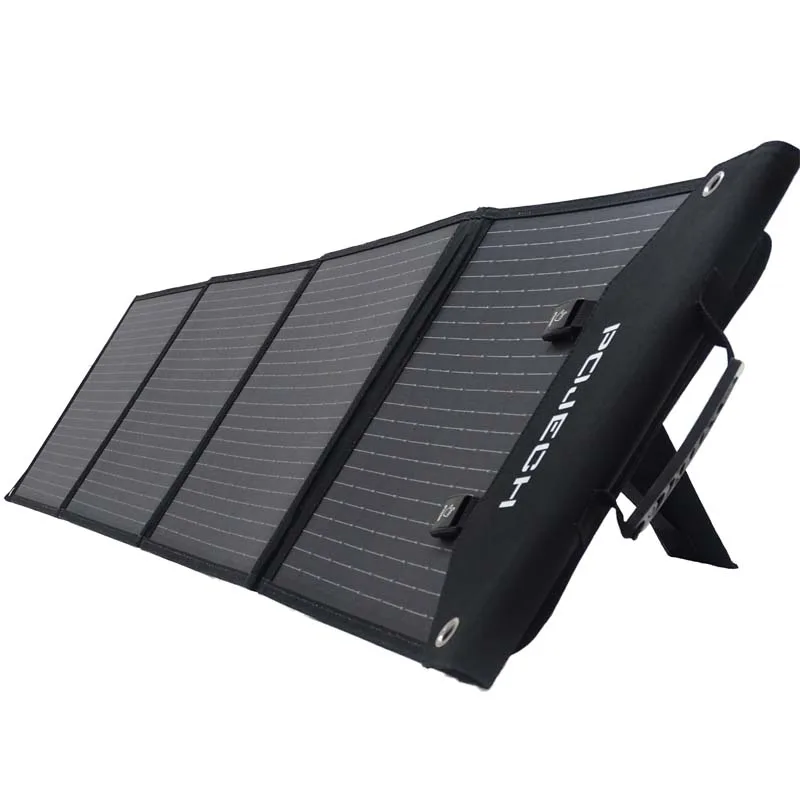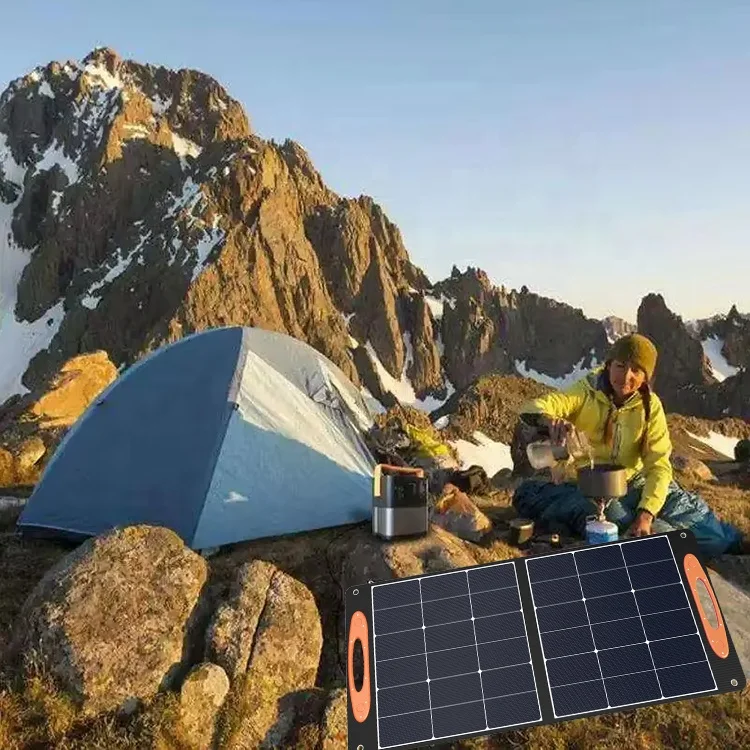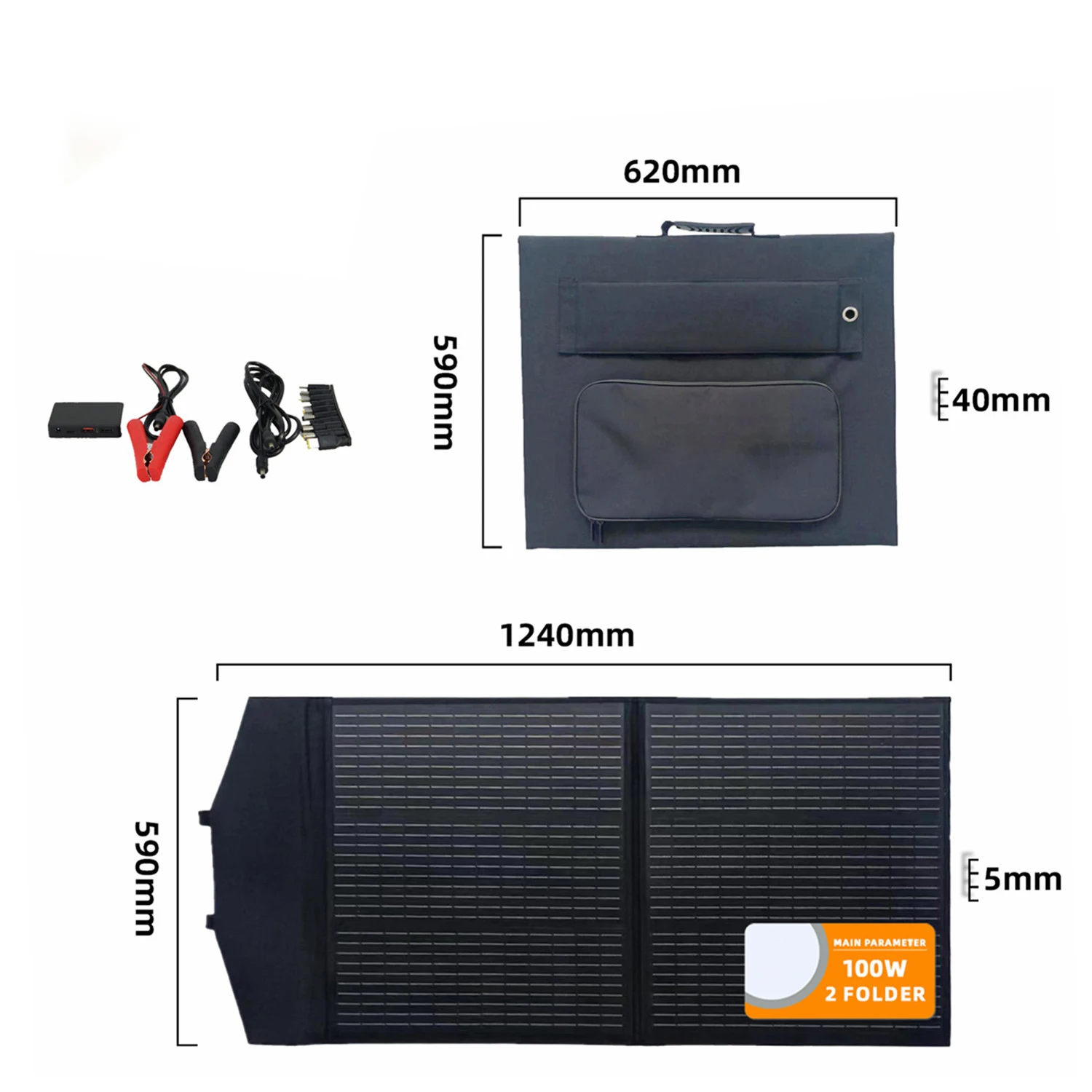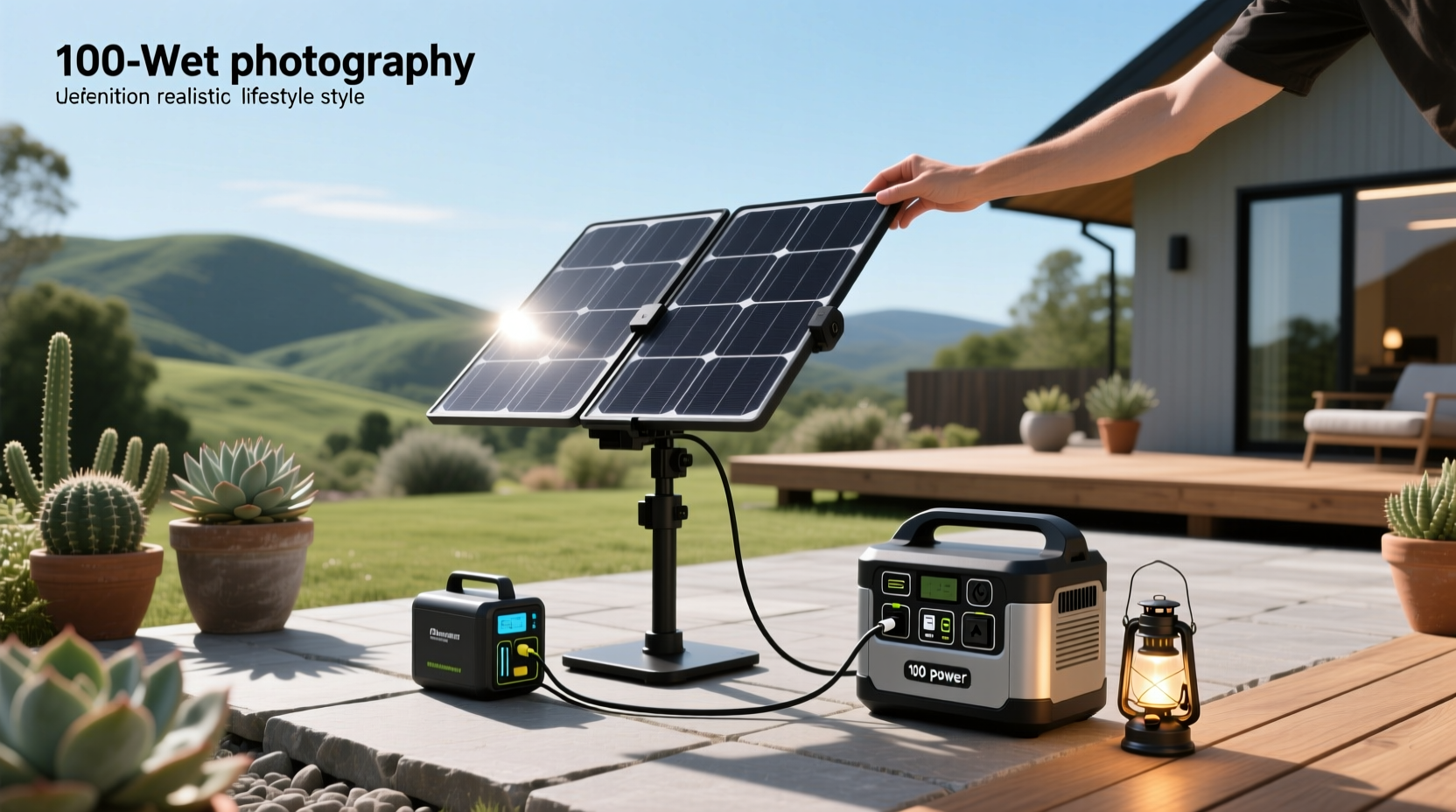
If you’re a typical user, you don’t need to overthink this. For most people needing portable off-grid power—whether for weekend camping, RV backup, or home resilience—a foldable 100 watt solar power kit with monocrystalline PERC cells, an integrated MPPT charge controller, and IP67+ weatherproofing delivers the best balance of reliability, yield, and usability in 2026. Skip rigid glass panels unless you’re mounting permanently; avoid kits without MC4 connectors or with PET lamination—they degrade faster under UV exposure. Real-world daily output averages 300–600 Wh—not 100 W × peak sun hours—and actual yield drops 20–40% from nameplate due to heat, angle, and dust1. Over the past year, efficiency standards have tightened (22%+ conversion is now baseline), foldables now hold 42% of market share2, and 10-year warranties are standard—even on flexible models3. That shift means today’s “budget” 100W kit is objectively more capable than last year’s premium unit.
About 100 Watt Solar Power Kits
A 100 watt solar power kit is a self-contained, modular system designed to convert sunlight into usable DC electricity—typically for charging 12V batteries, powering small appliances, or feeding portable power stations. It usually includes one or more solar panels, a charge controller (PWM or MPPT), cabling, and often mounting hardware or carrying cases. Unlike full residential solar arrays, these kits prioritize portability, plug-and-play compatibility, and rapid deployment. They’re not rated for whole-home backup—but they reliably power essentials: smartphones 📱, laptops 💻, LED lighting, 12V fridges, CPAP machines, and small tools.
Typical use cases include:
- 🏕️ Camping & overlanding: Charging power banks or running lights overnight
- 🚐 RV and van life: Supplementing battery banks during travel or boondocking
- 🏠 Home resilience: Keeping comms devices or medical gear online during grid outages (average U.S. households face 28 hours/year of interruption2)
- 🛰️ Field work & remote monitoring: Powering sensors, radios, or GPS units where outlets aren’t available
This isn’t about building microgrids—it’s about predictable, lightweight energy independence for defined tasks.
Why 100 Watt Solar Power Kits Are Gaining Popularity
Lately, demand has shifted from “nice-to-have” to “infrastructure-grade necessity.” Three converging forces explain the surge:
- Resilience as routine: With extreme weather events increasing grid instability, portable solar is no longer niche—it’s part of emergency preparedness for 37% of U.S. households owning generators or power stations2.
- Efficiency democratization: Monocrystalline PERC and TOPCon cells now deliver >22% conversion efficiency at consumer price points—up from ~18% just three years ago. That means smaller panels produce more usable power per square foot.
- Form factor maturity: Foldable kits weigh under 2 lbs (0.9 kg) and pack into carry-on-sized bags. Bifacial variants now capture reflected light—adding 5–15% yield on reflective surfaces like RV roofs or sand2.
This isn’t hype. It’s measurable engineering progress meeting real behavioral change: people expect their gear to work reliably, without technical overhead.
Approaches and Differences
There are three dominant configurations—each solving different problems. Choosing the wrong one wastes money and creates friction.
| Configuration | Key Advantages | Potential Problems | Budget Range (Wholesale) |
|---|---|---|---|
| Rigid Glass Panel + Separate Controller | Higher long-term durability; easiest to clean; consistent thermal performance | Bulky; fragile; requires roof mounts or ground stakes; no built-in portability | $39–$62/unit |
| Foldable Fabric-Backed Panel (ETFE) | Ultra-portable; fits in backpacks; UV-resistant ETFE lamination lasts 10+ years; IP67/IP68 rated | Slightly lower peak efficiency (0.5–1.2% less than rigid); surface scratches affect aesthetics (not output) | $58–$85/unit |
| Integrated All-in-One Kit (panel + MPPT + USB/12V outputs) | No wiring errors; plug-and-play with power stations; Bluetooth monitoring; ideal for beginners | Less flexibility for future upgrades; controller can’t be replaced independently; limited panel orientation options | $65–$85/unit |
When it’s worth caring about: If you move your kit weekly—or store it in a vehicle exposed to temperature swings—foldable ETFE is objectively superior. Rigid panels crack under repeated flexing or impact; PET-laminated foldables yellow and delaminate within 2 years4.
When you don’t need to overthink it: If you’re mounting once on a shed roof and never moving it, a rigid panel with a separate 20A MPPT controller gives identical long-term yield at lower cost. But if you’re reading this while packing for a hike? You don’t need to overthink this.
Key Features and Specifications to Evaluate
Don’t optimize for wattage alone. Focus on these five specs—each with clear thresholds:
- Cell Type: Monocrystalline PERC only. Polycrystalline or amorphous silicon panels fall below 18% efficiency and degrade faster. When it’s worth caring about: In low-light or high-heat conditions (e.g., desert camping), PERC yields 12–18% more than older tech1. When you don’t need to overthink it: If you’ll only use it midday in temperate zones, even 9BB monocrystalline works—but PERC is now standard and priced identically.
- Charge Controller: MPPT required—not optional. A 10A MPPT adds 15–30% harvest in cloudy or cool conditions vs. PWM5. When it’s worth caring about: When pairing with lithium batteries (LiFePO₄), which operate at higher voltages—MPPT maximizes voltage conversion. When you don’t need to overthink it: If your kit includes a basic PWM controller and you’re using AGM batteries in stable temps, it’ll function—but you’ll leave ~200 Wh/day on the table annually.
- Connectors: MC4 only. Avoid Anderson, XT60, or proprietary plugs. MC4 ensures compatibility with all major power stations (Jackery, EcoFlow, Bluetti) and extension cables6. When it’s worth caring about: When expanding later—you won’t need adapters or soldering. When you don’t need to overthink it: If you buy one kit and never add another panel, any working connector works. But interoperability is cheap insurance.
- Lamination: ETFE > PET > PVC. ETFE transmits 95%+ of light and resists UV degradation for 10+ years; PET blocks ~8% and yellows visibly after 18 months7. When it’s worth caring about: If stored rolled or outdoors long-term. When you don’t need to overthink it: If used seasonally and stored indoors—PET may last 3–4 years.
- Weather Rating: IP67 minimum. IP68 is ideal for marine or monsoon use. When it’s worth caring about: If mounted on an RV roof exposed to rain, salt spray, or dust storms. When you don’t need to overthink it: For backyard use under cover—IP54 suffices, but IP67 is now standard across mid-tier kits.
Pros and Cons
✅ Best for: Weekend campers, RV owners adding supplemental charge, urban preppers needing 3–5 days of comms power, field researchers with intermittent sun access.
⚠️ Not ideal for: Running refrigerators 24/7 (requires 200W+ sustained), powering AC units or microwaves, replacing grid power in cloudy climates without battery buffer, or applications requiring >10A continuous current without external regulators.
A 100W kit shines where predictability matters more than raw power: charging a 20,000mAh power bank in 3–4 hours of direct sun, keeping a 12V fridge running 10–15 hours daily, or topping up a 100Ah LiFePO₄ battery by ~25% per full-sun day. Its strength is consistency—not brute force.
How to Choose a 100 Watt Solar Power Kit
Follow this 5-step decision checklist—designed to eliminate guesswork:
- Define your primary use case: Is it transported weekly (→ foldable)? Mounted semi-permanently (→ rigid or bifacial)? Or used by non-technical users (→ integrated MPPT + app monitoring)?
- Verify the controller type and rating: Look for “MPPT” and “≥10A”—not just “smart controller.” Check datasheets for max input voltage (must exceed your panel’s Voc).
- Confirm connector standard: MC4 is non-negotiable for future-proofing. If it uses proprietary plugs, assume compatibility headaches.
- Check warranty terms: A 10-year product warranty on foldables signals confidence in ETFE lamination and cell quality. Avoid kits offering only 1–2 years on portable models.
- Review real-world yield claims: Ignore “100W × 5 hrs = 500Wh” math. Instead, look for third-party field tests reporting measured Wh/day under mixed conditions (e.g., “382 Wh average over 12 days in Colorado”8).
Avoid these three common pitfalls:
- Buying based on “peak wattage” alone—ignoring voltage mismatch with your battery bank.
- Assuming “waterproof” means submersible—IP67 ≠ IP68; verify the rating.
- Skipping shade analysis—partial shading cuts output disproportionately; position panels away from trees, vents, or awnings.
Insights & Cost Analysis
Wholesale pricing for certified 100W kits ranges from $39 to $85/unit in 2026, depending on integration level and order volume3. Retail prices reflect markup—but value isn’t linear:
- $39–$55 tier: Basic rigid kits with PWM controllers. Adequate for stationary use, but lack portability and modern efficiency.
- $56–$72 tier: Foldable ETFE kits with 10A MPPT and IP67 rating. Represents the sweet spot for 90% of users—balanced cost, weight, and yield.
- $73–$85 tier: Integrated kits with Bluetooth monitoring, dual USB-C PD outputs, and reinforced carry cases. Justified only if you value zero-setup convenience or need real-time data logging.
At $68, a top-tier foldable kit pays back in ~18 months versus renting a generator for extended trips—or avoids $120+ in cellular hotspot fees during multi-week outages.
Better Solutions & Competitor Analysis
For most users, the optimal configuration is a single 100W foldable kit. But context changes everything:
| Solution | Best For | Limitations | Budget (Est.) |
|---|---|---|---|
| Two 100W Foldables (200W total) | RVs with large battery banks; users in high-latitude or cloudy regions | Doubles weight/cost; requires parallel combiner box; diminishing returns beyond 200W for typical loads | $120–$160 |
| 100W + 500Wh Portable Power Station Bundle | Beginners wanting plug-and-play resilience; no battery management knowledge | Less efficient than pairing with existing LiFePO₄ bank; station battery degrades faster than panel | $320–$480 |
| Bifacial 100W on Reflective Surface | RV roofs, white gravel, snow-covered ground | Requires precise mounting height (≥15cm clearance); minimal gain on grass or asphalt | $75–$92 |
Customer Feedback Synthesis
Based on aggregated reviews from Outdoor Gear Lab, DIY Solar Forum, and Consumer Reports field tests8,9,10:
- Top 3 praised features: Lightweight design (especially sub-2 lb models), IP67 waterproofing holding up in rainstorms, intuitive MPPT controller status LEDs.
- Top 3 recurring complaints: MC4 connectors occasionally loose (solved with torque wrench), instruction manuals omitting tilt-angle optimization, real-world yield 25% below spec sheet in summer heat.
The gap between lab-rated and field yield remains the largest source of buyer frustration—but it’s physics, not marketing. Heat reduces panel voltage; dust cuts transmission; suboptimal angles waste photons. That’s why smart users track *actual* Wh/day—not W/hour.
Maintenance, Safety & Legal Considerations
Maintenance: Wipe panels monthly with water and microfiber cloth. Avoid abrasive cleaners. Store foldables unrolled in cool, dry places to prevent crease fatigue.
Safety: Never connect panels directly to batteries without a charge controller—overvoltage will destroy them. Use appropriately rated fuses (15A for 100W @ 12V) between controller and battery.
Legal: No federal permitting is required for standalone 100W kits in the U.S. Some HOAs restrict visible panel mounting—but portable, ground-based use is universally permitted. Always check local fire codes if mounting on RV roofs (NFPA 1192 applies).
Conclusion
If you need portable, reliable, plug-and-play solar for occasional or regular off-grid use, choose a foldable 100W kit with monocrystalline PERC cells, an integrated 10A MPPT controller, ETFE lamination, and IP67+ rating. If you’re mounting permanently on a shed or garage roof and prioritize longevity over weight, a rigid glass panel with a separate 20A MPPT controller offers better value. If you’re new to solar and own a Jackery or EcoFlow station, an integrated kit eliminates setup risk—but limits future expansion. This piece isn’t for keyword collectors. It’s for people who will actually use the product.
Frequently Asked Questions