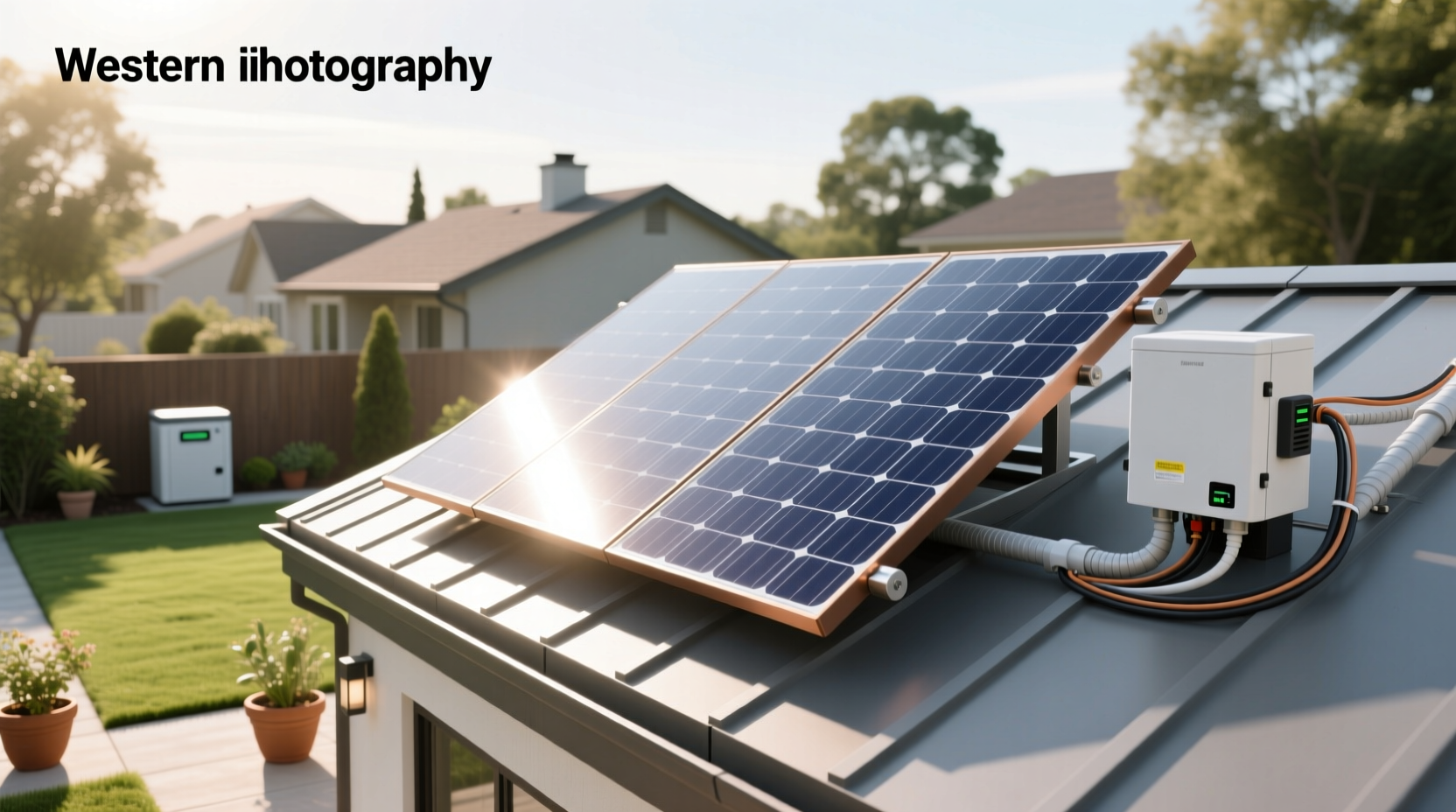
Over the past year, the 100-watt solar panel has shifted from a niche accessory to a mainstream off-grid tool—driven by rising grid instability, surging outdoor recreation demand, and measurable gains in monocrystalline efficiency 1. If you’re a typical user—camping weekly, prepping for outages, or outfitting an RV—you don’t need to overthink this: start with a foldable 100W monocrystalline panel measuring ~20″ × 27″ when folded and weighing under 10 lbs. That’s the sweet spot for versatility, ease of transport, and reliable output (300–600 Wh/day). Rigid panels (~42″ × 20″, 14–16 lbs) suit permanent roof mounts; flexible ones (~40″ × 20″, 4–5 lbs) work only on curved surfaces—but both require mounting prep most casual users skip. This piece isn’t for keyword collectors. It’s for people who will actually use the product.
About 100W Solar Panel Size
A “100W solar panel” refers to a photovoltaic module rated to produce up to 100 watts of DC power under standard test conditions (STC: 1000 W/m² irradiance, 25°C cell temperature, AM1.5 spectrum). But wattage alone tells you nothing about physical fit. Size—and how it maps to your installation space—is the first real constraint. Unlike household appliances, solar panels aren’t standardized across form factors. A 100W output can be packed into three distinct physical profiles: rigid, flexible, and portable/foldable—each serving different structural, thermal, and mobility needs.
Typical use cases include:
- Camping & day trips: Foldable panels stow in backpacks or car trunks; kickstands allow quick ground deployment.
- RV and van life: Rigid panels bolt directly to flat roofs; flexible panels conform to curved fiberglass or aluminum surfaces.
- Emergency backup: Portable units plug directly into solar generators (e.g., Jackery, EcoFlow) via MC4 or XT60 connectors—no wiring expertise needed.
- Off-grid cabins or sheds: Rigid panels mount on tilt racks or pole mounts for seasonal optimization.
Why 100W Solar Panel Size Is Gaining Popularity
Lately, demand for 100W panels has accelerated—not because they’re “more powerful,” but because they strike a rare balance: enough output to charge essential devices (a laptop for ~7.5 hours, a WiFi router for ~12 hours, or 5–10 smartphones 2), yet small and light enough for one-person handling. The global portable solar market is projected to reach $1.8 billion by 2026, growing at 13.2% CAGR—with North America accounting for 38% of that share 1. Consumers aren’t buying watts—they’re buying resilience, autonomy, and spatial flexibility. When grid outages last longer than expected—or when you’re 30 miles from the nearest outlet—size becomes synonymous with readiness.
This shift reflects deeper behavioral changes: fewer buyers are installing full rooftop arrays. Instead, they’re curating modular, scalable systems. A single 100W panel is low-risk entry; two or three can scale cleanly. And unlike larger panels, 100W units rarely exceed weight or footprint thresholds that trigger permitting, HOA restrictions, or vehicle payload concerns.
Approaches and Differences
Three physical approaches dominate the 100W category. Each solves a different problem—and introduces new trade-offs.
🔷 Rigid Panels
Dimensions: ~42″ × 20″ × 1.4″ | Weight: 14–16 lbs
When it’s worth caring about: You’re mounting permanently on an RV roof, shed, or cabin with flat, load-bearing structure.
When you don’t need to overthink it: If you’re setting up temporarily for weekend camping—rigid panels are over-engineered, heavy, and slow to deploy.
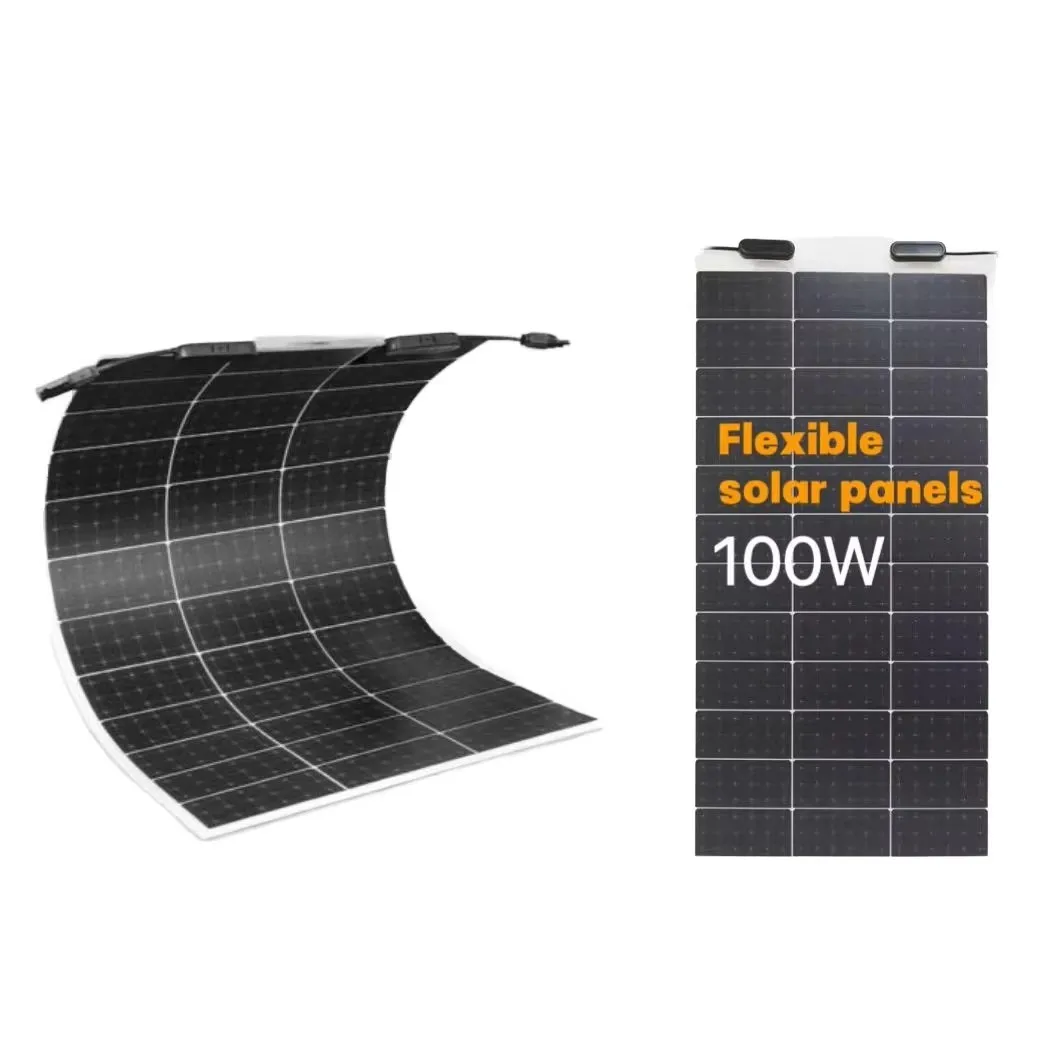
🔷 Flexible Panels
Dimensions: ~40″ × 20″ × 0.1″ | Weight: 4–5 lbs
When it’s worth caring about: Your surface is curved (boat deck, van roof arch) and cannot support rigid brackets or foot mounts.
When you don’t need to overthink it: If your surface is flat—or if you’ll expose the panel to prolonged UV without shade rotation—flexible PET or TPT laminates degrade faster than ETFE-coated rigid or foldable units 3.
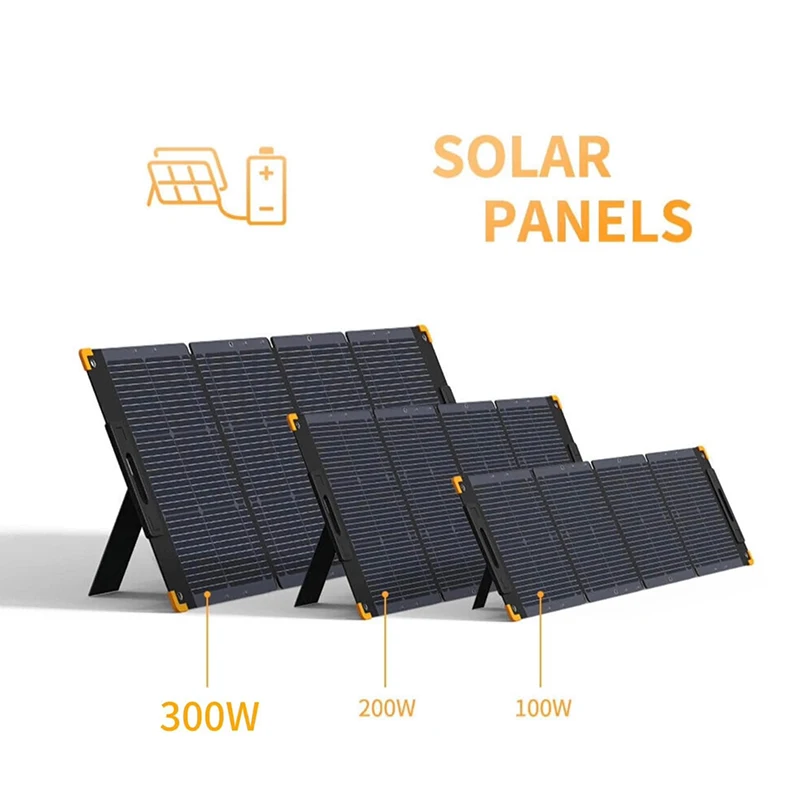
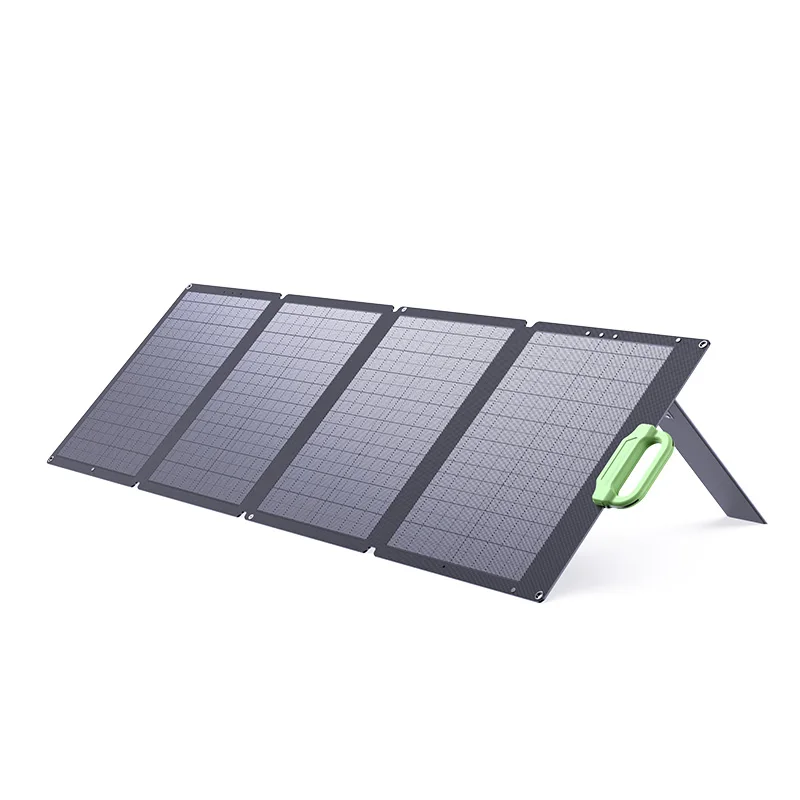
🔷 Portable/Foldable Panels
Dimensions (folded): ~20″ × 27″ × 1.5″ | Weight: 7–9.5 lbs
When it’s worth caring about: You value speed, simplicity, and zero permanent modification—especially for shared vehicles or rental setups.
When you don’t need to overthink it: If you already own a compatible solar generator with MPPT input and USB-C passthrough, foldable panels integrate seamlessly. No extra charge controller needed.
Key Features and Specifications to Evaluate
Don’t default to wattage or price alone. Focus on four measurable specs that directly impact real-world usability:
- Cell type: Monocrystalline only. Polycrystalline 100W panels exist but deliver ~12–15% lower efficiency in low-light or high-heat conditions 4. If you’re a typical user, you don’t need to overthink this: avoid polycrystalline entirely.
- Lamination material: ETFE (ethylene tetrafluoroethylene) > PET > TPT. ETFE offers superior UV resistance, heat dissipation, and scratch tolerance—critical for panels left outdoors for weeks 5.
- Connector type: MC4 is universal and weatherproof. Avoid proprietary or barrel-jack outputs unless explicitly matched to your generator’s input.
- Weather rating: IP67 or IP68 means dust-tight and submersible (1m for 30 min). IP65 is acceptable for rain, but not for wash-down or dusty trail use.
Pros and Cons
| Type | Pros | Cons | Best For |
|---|---|---|---|
| Rigid | Lowest $/watt; longest lifespan (25+ yrs); highest durability | Heavy; requires drilling/mounting; no portability | Permanent RV or cabin installations |
| Flexible | Lightweight; conforms to curves; low wind profile | Shorter lifespan (5–8 yrs); degrades faster under UV; adhesive failure risk | Boats, curved van roofs, temporary marine use |
| Portable/Foldable | Plug-and-play; includes kickstand & carry bag; fastest setup | Slightly higher $/watt; hinge wear over time; less efficient per sq. ft. than rigid | Camping, emergencies, renters, beginners |
How to Choose a 100W Solar Panel: A Step-by-Step Guide
Follow this checklist before purchasing—designed to eliminate guesswork and prevent mismatched expectations:
- Define your primary use case first. Is it daily commuting? Weekend hiking? Full-time van dwelling? Emergency backup? Your answer dictates form factor—not vice versa.
- Measure your available space. Don’t rely on “fits in trunk.” Measure length, width, and clearance height where the panel will sit or mount. Folded dimensions matter more than deployed size for portables.
- Check compatibility with your existing gear. Does your solar generator accept MC4 input? What’s its max PV input voltage? Most 100W panels output 18–22V Voc—safe for all mainstream 12V/24V inputs.
- Avoid these three common oversights:
- Buying flexible panels for flat surfaces (adhesive won’t hold long-term without surface prep)
- Assuming “100W” means consistent output (real-world yield is 60–80% of STC rating due to heat, angle, and soiling)
- Skipping warranty review—premium brands offer 10-year linear power output warranties; budget models often cap at 12 months 6
Insights & Cost Analysis
Consumer pricing for 100W panels ranges from $70 to $200, depending on construction and features. Here’s what drives cost differences:
- $70–$100: Entry-level rigid or basic foldable units—monocrystalline cells, PET lamination, IP65 rating, 12–18 month warranty.
- $100–$150: Mid-tier foldable or flexible—ETFE lamination, IP67 rating, MC4 + USB-C outputs, 5-year warranty.
- $150–$200: Premium portable—TOPCon monocrystalline cells (23–24% efficiency), reinforced hinges, dual-angle kickstand, 10-year output warranty.
For most users, the $100–$150 range delivers optimal balance: ETFE protection and IP67 rating significantly extend usable life versus cheaper alternatives—especially in desert or coastal environments. If you’re a typical user, you don’t need to overthink this: pay the extra $30 for ETFE. It pays back in longevity.
Better Solutions & Competitor Analysis
The most meaningful upgrade isn’t higher wattage—it’s smarter integration. Leading 2026 models now embed features that reduce friction, not just boost power:
| Feature | Standard 100W Panel | Better Alternative | Why It Matters |
|---|---|---|---|
| Angle adjustment | Fixed or single-angle kickstand | Dual-angle aluminum kickstand (0°/45°) | 45° maximizes winter sun capture; 0° enables low-profile stowing or snow shedding. |
| Output ports | MC4 only | MC4 + USB-C PD (up to 30W) | Charge phones/laptops directly—no generator required for short-day use. |
| Cell architecture | Standard PERC | TOPCon monocrystalline | 2–3% higher efficiency in diffuse light and high temperatures—critical for cloudy mornings or hot afternoons. |
Customer Feedback Synthesis
Based on aggregated reviews across top retailers and forums (r/diySolar, Outdoor Gear Lab), users consistently praise:
- Speed of setup — “Had it charging my EcoFlow in under 90 seconds.”
- Sturdiness of kickstand — “No wobble, even on gravel.”
- ETFE clarity retention — “Still looks new after 8 months of full sun.”
Top complaints involve:
- Hinge fatigue in budget foldables after ~200 openings/closings
- Inconsistent MC4 polarity labeling causing reverse-polarity alerts on some generators
- Flexible panel adhesive lifting after 6–9 months on van roofs (especially without surface etching)
Maintenance, Safety & Legal Considerations
No special permits are required for standalone 100W panels used with portable generators. However:
- Cleaning: Rinse monthly with water; use microfiber cloth and mild soap for stubborn grime. Avoid abrasive pads.
- Storage: Foldables should be stored partially open or fully deployed—not tightly compressed—to relieve hinge tension.
- Safety: Never cover an active panel—heat buildup can damage cells or connectors. Always disconnect before cleaning.
- Legal: In most U.S. jurisdictions, panels under 200W used off-grid with battery storage fall outside utility interconnection rules. Confirm local fire code setbacks if mounting permanently on structures.
Conclusion
If you need portability, speed, and zero-installation readiness, choose a foldable 100W monocrystalline panel with ETFE lamination, IP67 rating, and dual-angle kickstand. If you need maximum durability and lowest lifetime cost on a flat, permanent surface (RV roof, shed), choose a rigid 100W panel with Z-bracket compatibility. If you need conformity to curves and ultra-low weight—and accept shorter service life—choose a flexible panel with industrial-grade adhesive and verified UV resistance. Over the past year, the gap between “good enough” and “actually resilient” has narrowed: today’s best 100W panels deliver real-world reliability, not just lab-rated wattage. Your choice isn’t about power—it’s about fit.


