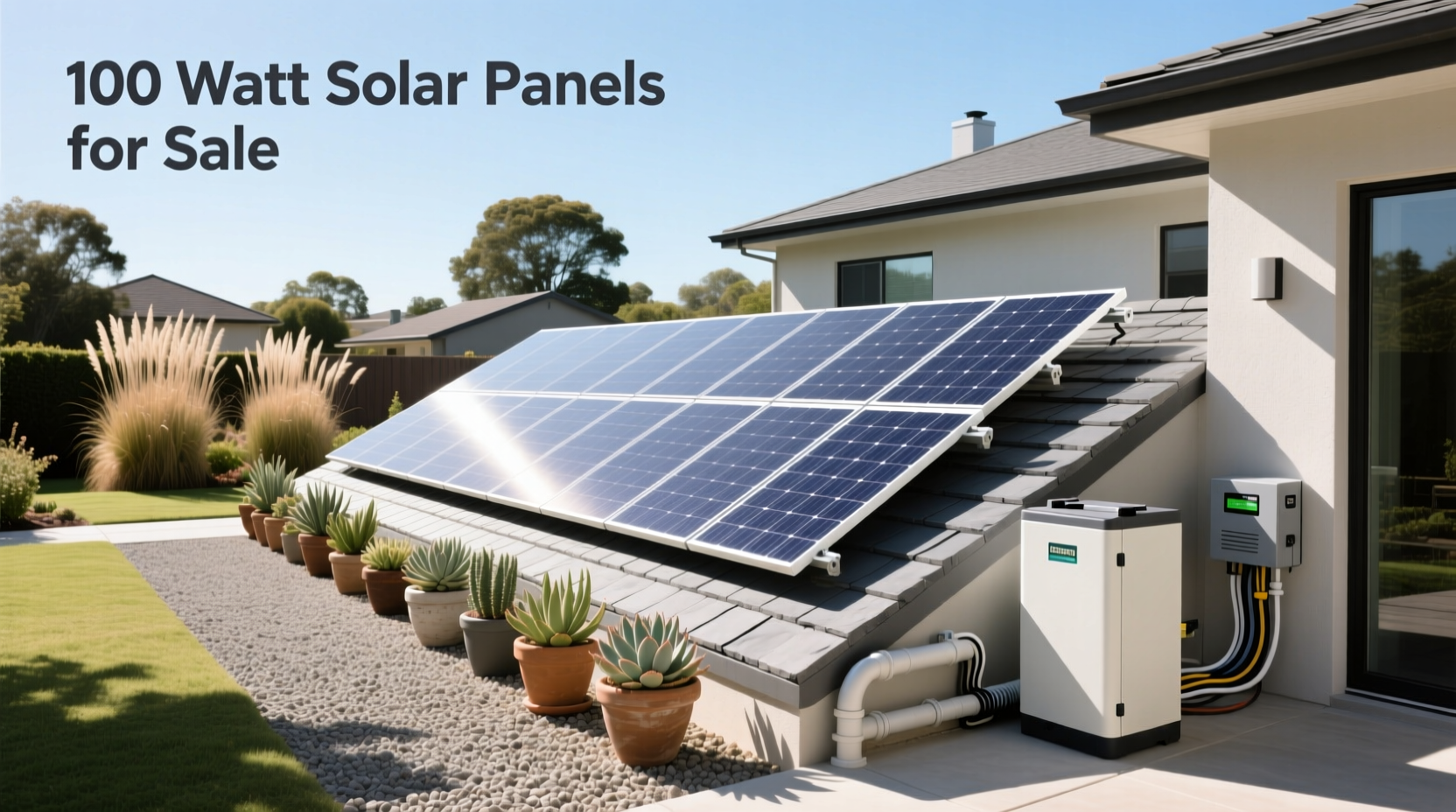
If you’re a typical user—camping, RVing, or building a small off-grid backup—you need a monocrystalline 100W panel with IEC 61215 and UL 61730 certification, at least a 10-year product warranty, and ETFE lamination if portability matters. Over the past year, efficiency gains (23–25% via PERC/N-type cells) and ultra-lightweight ETFE-flexible builds (<1 kg) have made 100W units significantly more capable per square foot—and more reliable in partial shade or high heat. If you’re a typical user, you don’t need to overthink this. Skip bifacial unless you’ll mount it vertically over reflective ground; skip bulk orders under $0.20/W unless you’re sourcing for OEM integration. This piece isn’t for keyword collectors. It’s for people who will actually use the product.
About 100W Solar Panels: Definition & Typical Use Cases
A 100 watt solar panel is a standardized photovoltaic module rated to produce up to 100 watts of DC power under Standard Test Conditions (STC: 1000 W/m² irradiance, 25°C cell temperature, AM1.5 spectrum). In practice, real-world output averages 60–85W daily depending on orientation, tilt, shading, and climate. These panels are not standalone power sources—they’re designed as modular inputs for battery charging systems.
Typical applications include:
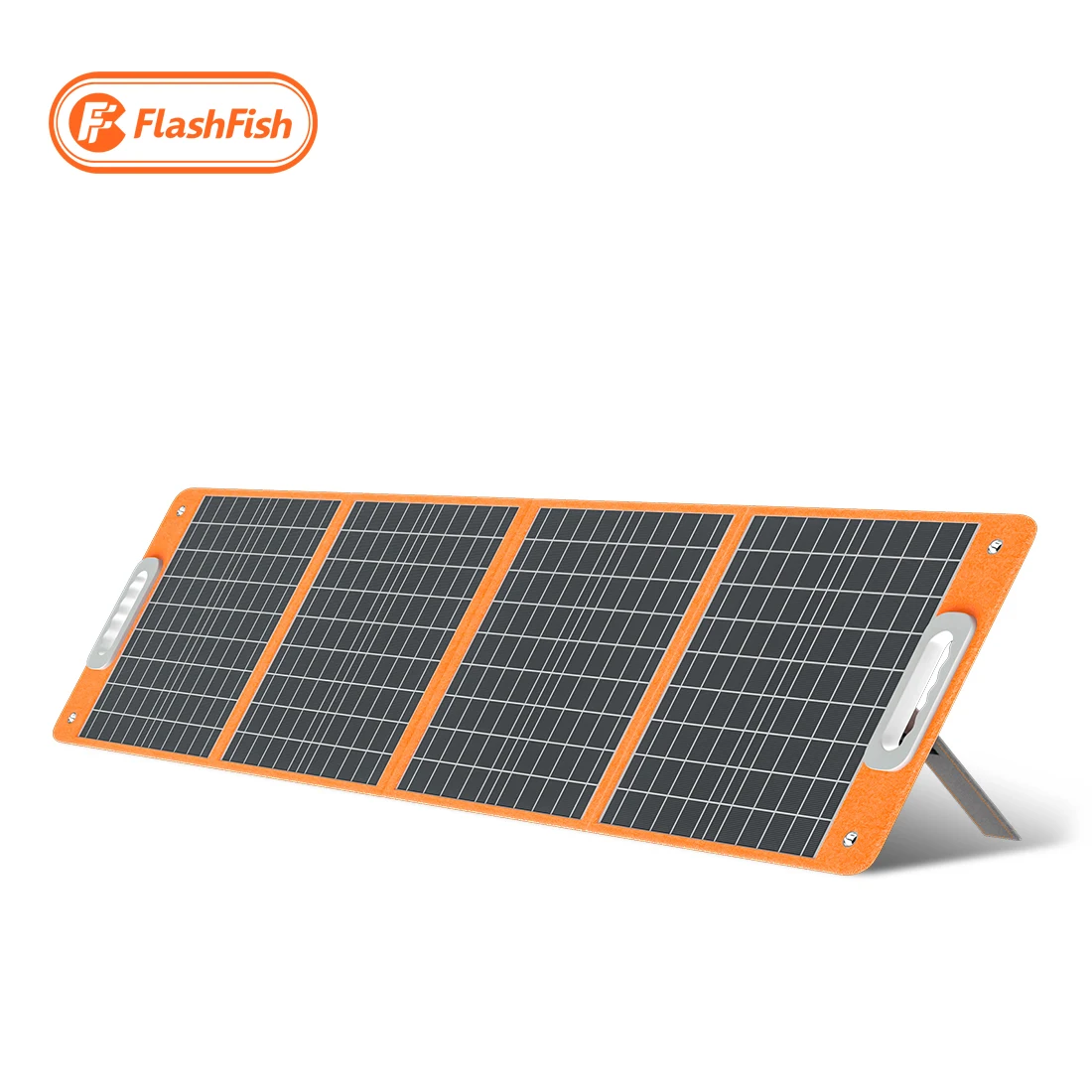
- ⛺ Camping & backpacking: Charging 12V batteries or portable power stations (e.g., Jackery, EcoFlow) for lights, phones, and small fridges;
- 🚐 RVs and van conversions: Supplementing alternator charging and extending boondocking time without generator use;
- ⚡ Emergency resilience: Keeping medical devices, radios, or comms gear powered during grid outages;
- 🛰️ Marine use: Mounting on curved cabin tops or bimini tops where rigid glass panels won’t conform.
They rarely power large loads directly (e.g., microwaves, AC units), but they reliably sustain low-wattage electronics over multi-day periods when paired with a 20–50Ah lithium battery and MPPT charge controller.
Why 100W Solar Panels Are Gaining Popularity
Lately, demand for 100 watt solar panels for sale has accelerated—not because they’re new, but because their role has evolved. The portable solar panel market is projected to reach $8.76 billion by 2034 at a CAGR of 16.4% 1. Outdoor recreation drives ~35% of that growth—especially among younger demographics prioritizing self-reliant, low-infrastructure travel 2. Simultaneously, rising frequency of extreme weather events has shifted consumer behavior from “nice-to-have” to “must-deploy” energy resilience.
This isn’t about scaling up capacity—it’s about precision matching. A 100W unit hits a functional sweet spot: large enough to offset meaningful load (e.g., 4–6Ah/day into a 12V LiFePO₄ battery), yet compact enough to fold, stow, or mount without structural modification. That balance explains why it’s become the de facto standard for entry-level off-grid kits—and why retailers now stock more 100W SKUs than any other single wattage tier.
Approaches and Differences
Three main physical formats dominate the 100 watt solar panels for sale landscape—each with distinct trade-offs:
1. Rigid Glass-Mounted (Monocrystalline)
- Pros: Highest durability, best long-term degradation rate (~0.45%/year), easiest to clean, widest compatibility with roof rails and Z-brackets.
- Cons: Heavier (8–10 kg), inflexible, requires flat mounting surface, vulnerable to microcracks if mounted on vibrating surfaces (e.g., RV roofs).
- When it’s worth caring about: If you plan to install permanently on an RV roof or shed and expect >5 years of service.
- When you don’t need to overthink it: If you’ll only use it seasonally on the ground or car hood—rigidity adds unnecessary weight and setup friction.
2. Semi-Flexible (ETFE-Laminated)
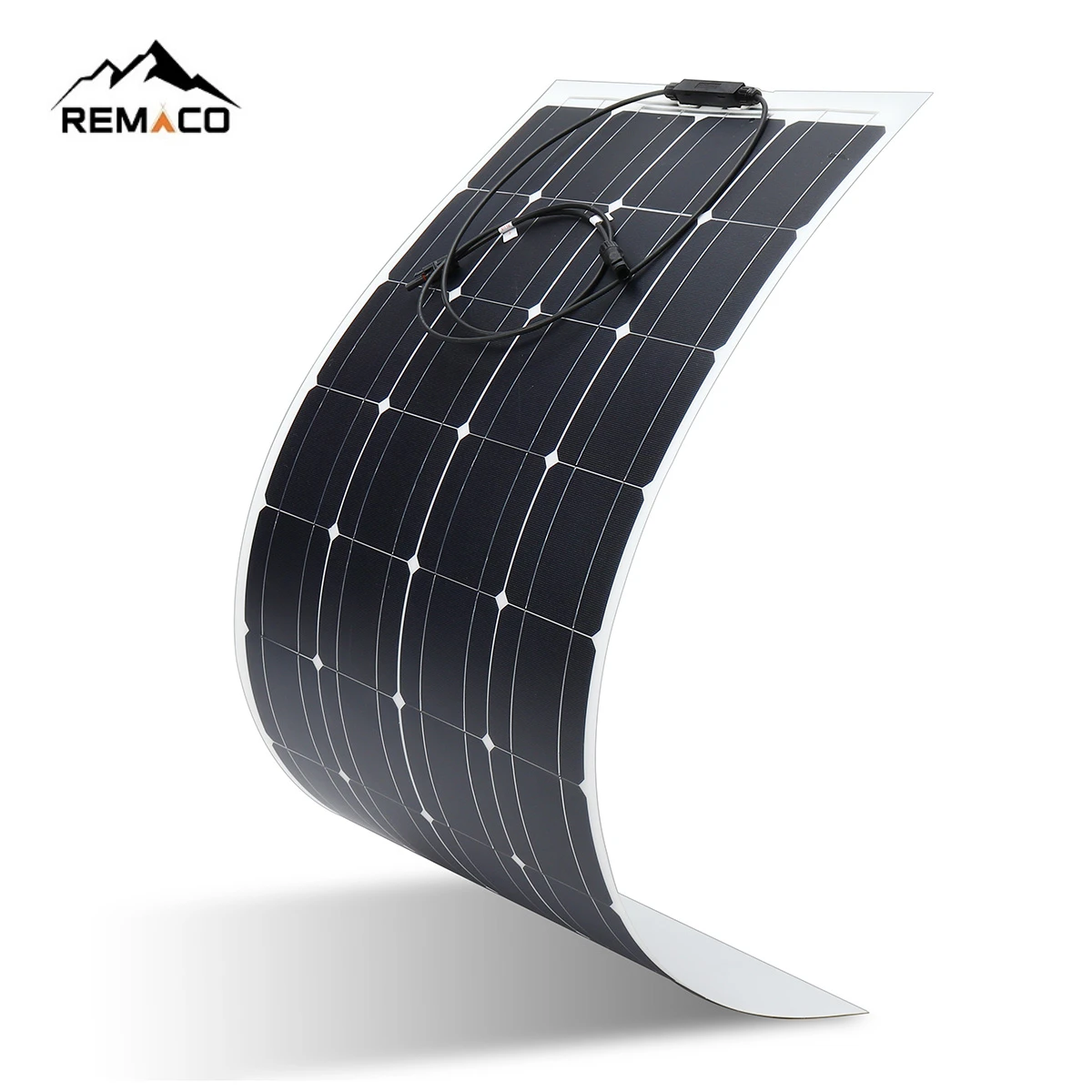
- Pros: Weighs under 1 kg, conforms to gentle curves (boats, camper shells), resistant to hail and impact, no glass breakage risk.
- Cons: Slightly lower peak efficiency (typically 22–24%), shorter product warranty (often 5–8 years vs. 10+), sensitive to abrasion if dragged across gravel.
- When it’s worth caring about: If you need to mount on fiberglass, aluminum, or marine decks—or pack it in a backpack.
- When you don’t need to overthink it: If you’ll keep it on a ground mat or folding stand—flexibility offers no advantage there.
3. Bifacial Portable
- Pros: Up to 30% higher yield when placed over reflective surfaces (white gravel, sand, snow); dual-side capture improves diffuse-light performance.
- Cons: Requires elevated mounting (≥20 cm off ground) and reflective substrate; no gain on asphalt or grass; often heavier and pricier.
- When it’s worth caring about: If you regularly camp on light-colored terrain or own a white-roofed RV with ground-mounted tilt kit.
- When you don’t need to overthink it: If you’ll use it on dirt, forest floor, or blacktop—bifacial provides negligible benefit.
Key Features and Specifications to Evaluate
Don’t default to wattage alone. These five specs determine real-world usability:
- ✅ Cell Technology: Monocrystalline PERC or N-type cells deliver 23–25% efficiency—critical for low-light dawn/dusk harvest and thermal stability above 35°C. Polycrystalline panels at 100W are obsolete for new purchases.
- ✅ Certifications: IEC 61215 validates performance under stress (thermal cycling, humidity freeze); UL 61730 confirms electrical safety for North American installations 3. Panels without both lack third-party validation.
- ✅ Warranty Terms: Tier-1 manufacturers offer 10–12 years product warranty + 25-year linear performance guarantee (≥80% output at year 25). Anything less signals higher risk of early failure.
- ✅ Open-Circuit Voltage (Voc): Must stay below your charge controller’s max input (e.g., most 12V MPPT controllers accept ≤100V Voc). For 100W panels, Voc typically ranges 21–23V (12V nominal) or 42–46V (24V nominal).
- ✅ Temperature Coefficient: Look for ≤ −0.35%/°C. Lower = better sustained output in hot climates. N-type cells often hit −0.29%/°C.
If you’re a typical user, you don’t need to overthink this. Prioritize certification and warranty over minor Voc differences—most modern 100W panels fall within safe MPPT ranges.
Pros and Cons: Balanced Assessment
Who benefits most?
- DIY campers needing plug-and-play battery top-up without rewiring;
- RV owners seeking supplemental charge during travel days;
- Preppers building layered backup for communications and lighting;
- Small-scale marine users avoiding permanent deck penetrations.
Who should look elsewhere?
- Homeowners aiming to offset grid consumption (100W is too small—start at 400W+);
- Users expecting silent, continuous 100W output in cloudy rain (real output drops to 5–15W);
- Those without a compatible charge controller or battery bank (a 100W panel can damage a lead-acid battery without regulation).
How to Choose 100W Solar Panels: A Step-by-Step Decision Guide
- Confirm your battery voltage: Match panel nominal voltage (12V/24V) to your system. Most portable power stations accept 12–50V DC input—verify compatibility before purchase.
- Verify certifications: Search the manufacturer’s spec sheet for “IEC 61215” and “UL 61730.” If absent, assume untested.
- Check warranty fine print: Does “25-year performance warranty” apply to all buyers—or only registered commercial users? Is labor covered?
- Assess mounting method: Will you use a ground mat, roof mount, or portable stand? Choose rigidity or flexibility accordingly.
- Avoid these pitfalls:
- Buying panels labeled “100W” without STC test reports—some list Pmax under ideal lab conditions only;
- Pairing with PWM controllers (inefficient for 100W+ panels—MPPT recovers 20–30% more energy);
- Ignoring cable gauge: 10 AWG minimum for runs >3m to prevent voltage drop.
Insights & Cost Analysis
Price per watt has stabilized—but value varies sharply by build quality. As of mid-2026:
- Budget rigid panels: $0.50–$0.70/W → $50–$70/unit (often missing UL 61730 or full IEC testing);
- Mid-tier certified panels: $0.80–$1.20/W → $80–$120/unit (PERC, ETFE options, 10-year warranty);
- Premium portable kits: $1.50–$2.00/W → $150–$200/unit (includes carry case, MC4 adapters, tilt legs, and UL listing).
The $80–$120 range delivers the strongest ROI for most users. Below $70, certification gaps widen; above $150, you’re paying for accessories—not core panel performance.
Better Solutions & Competitor Analysis
| Category | Best For | Potential Issue | Budget Range (per unit) |
|---|---|---|---|
| Certified Monocrystalline (Rigid) | Permanent RV roof mounts, long-term reliability | Weight & inflexibility limit portability | $85–$115 |
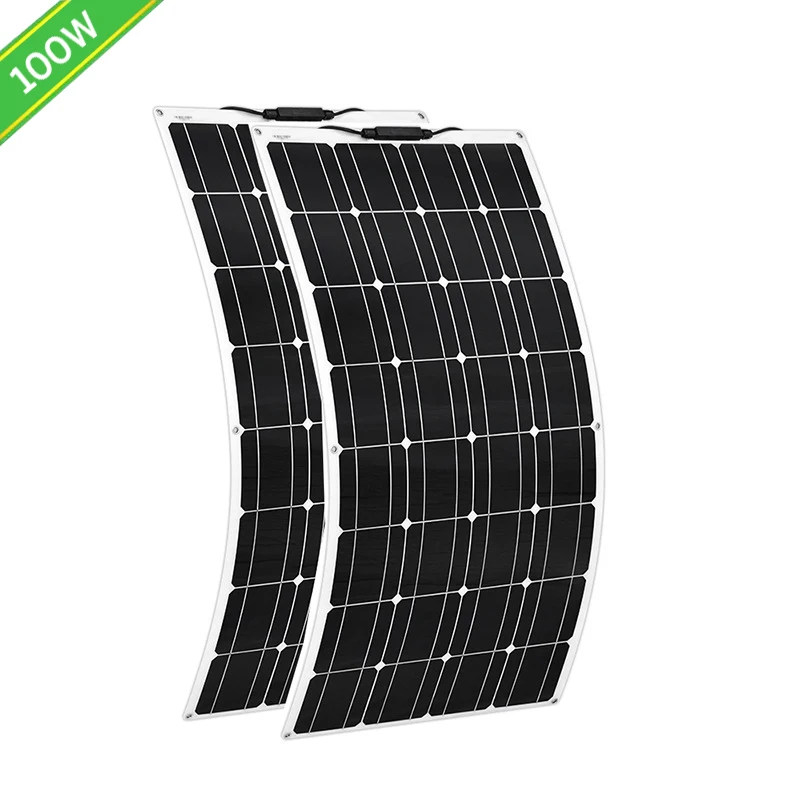
| ETFE Flexible | Marine, curved surfaces, backpacking | Shorter warranty; surface scratches reduce longevity | $100–$140 |
| Bifacial w/ Ground Kit | High-yield seasonal camping on light terrain | No advantage on dark or uneven ground; extra setup | $130–$180 |
| “Plug-and-Play” Kits | Beginners wanting zero-config setup | Proprietary connectors limit future expansion | $150–$200 |
Customer Feedback Synthesis
Based on aggregated reviews across outdoor forums, retailer pages, and DIY communities (e.g., iRV2, DIY Solar Forum), top recurring themes:
- Highly praised: “Charges my EcoFlow Delta 2 from 20% to 80% in 4.5 hours on clear day”; “Stays cool even at 95°F—no thermal rollback like older models.”
- Frequent complaints: “MC4 connectors arrived loose—had to crimp replacements”; “No mounting hardware included despite ‘ready-to-install’ claim”; “Performance drops sharply after 6 months of direct UV exposure (non-ETFE model).”
Maintenance, Safety & Legal Considerations
Maintenance: Clean monthly with water and soft cloth; avoid abrasive cleaners on ETFE. Inspect MC4 connectors for corrosion annually.
Safety: Never touch terminals while exposed to sunlight—DC voltage remains live. Always fuse between panel and charge controller (15A minimum for 100W @ 12V).
Legal: No federal permitting required for portable, non-permanent 100W setups in the U.S. Some HOAs restrict visible RV solar—check covenants. UL 61730 satisfies NEC Article 690.4 requirements for equipment listing.
Conclusion
If you need reliable, field-deployable power for camping, RV use, or emergency readiness, choose a 100 watt solar panel with monocrystalline PERC/N-type cells, IEC 61215 + UL 61730 certification, and a 10+ year product warranty. If you prioritize weight and curve-mounting, select ETFE-laminated. If you want simplicity and speed, skip bifacial unless your terrain reflects light. If you’re a typical user, you don’t need to overthink this. Focus on certification and warranty—not marketing claims about “world’s thinnest” or “AI-optimized.”


