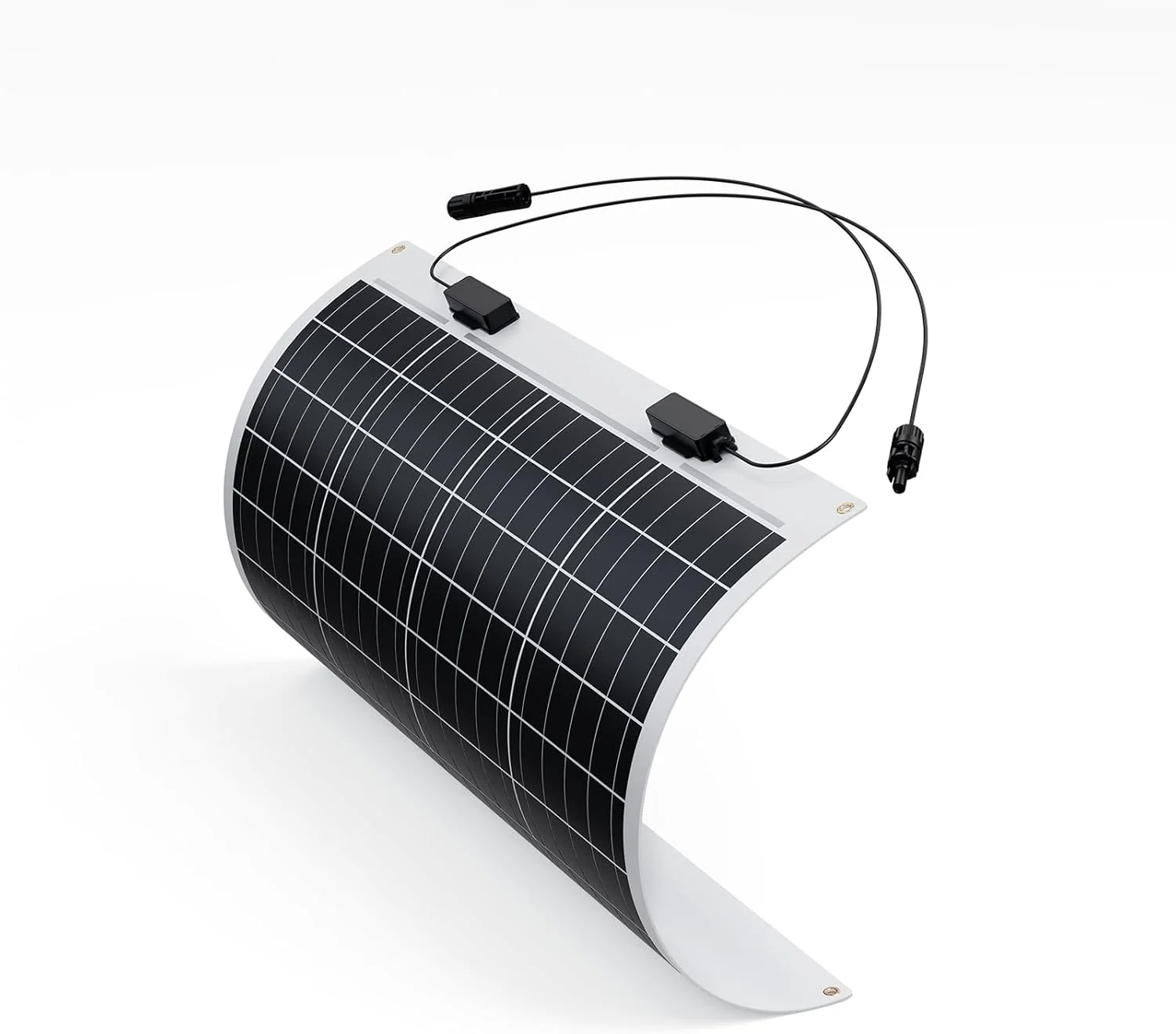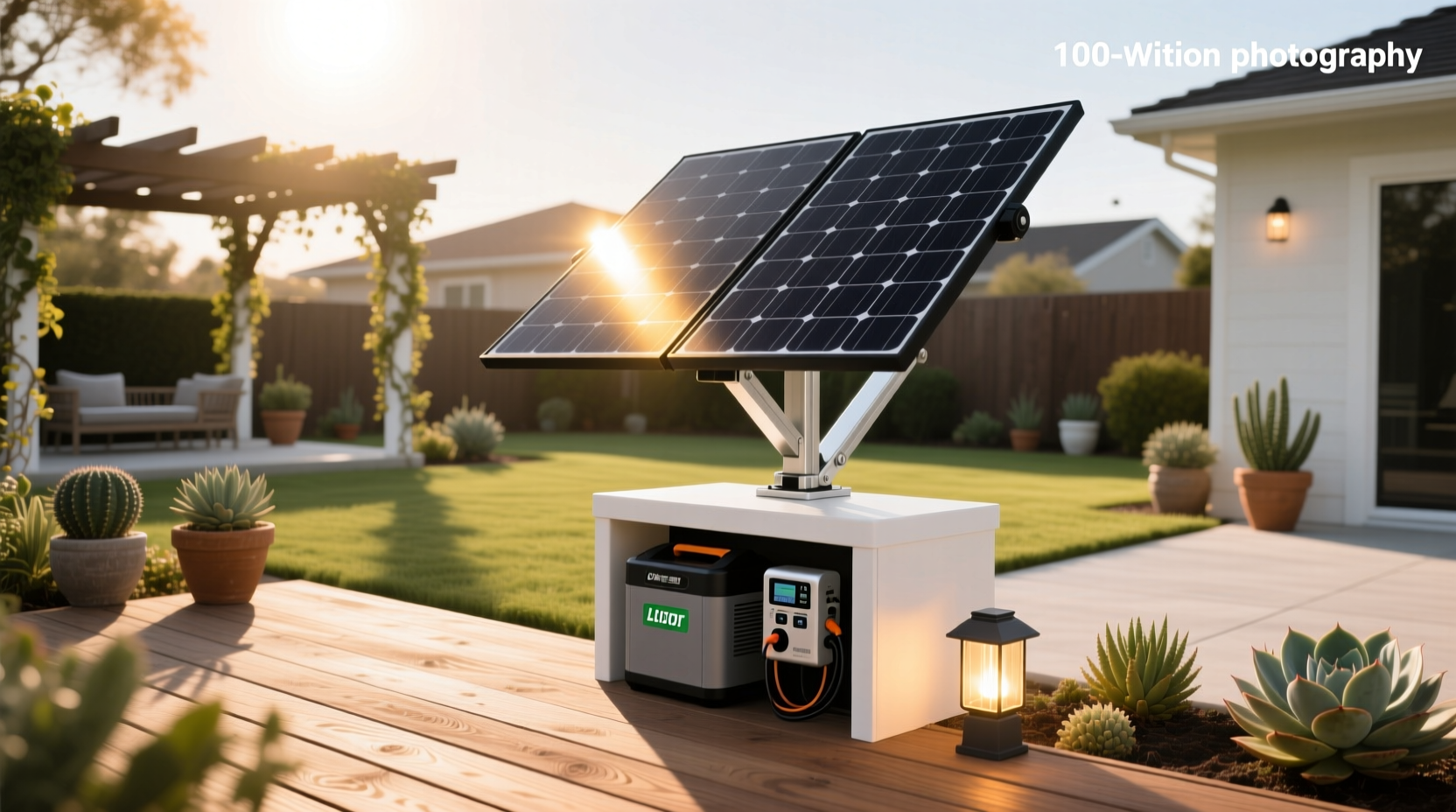
If you’re a typical user—camping weekly, prepping for outages, or powering a van or shed—you don’t need to overthink this. Over the past year, 100W solar systems have become the dominant choice in portable energy, capturing over 45% of global sales 1. The reason? They strike the best balance between portability (under 3 kg for top models), real-world output (24–25% efficiency with Monocrystalline PERC cells), and compatibility with modern power stations 2. Skip rigid, heavy 200W+ panels unless you’re permanently mounting on an RV roof—and avoid PWM controllers at all costs. For most people, a foldable ETFE-coated kit with MPPT charge control and USB-C PD output is the only configuration worth considering. This guide cuts through the noise: no brand hype, no technical rabbit holes—just what moves the needle for actual use.
About 100W Solar Systems: Definition & Typical Use Cases
A 100W solar system refers to a photovoltaic setup capable of generating up to 100 watts of peak DC power under Standard Test Conditions (STC). In practice, real-world output averages 60–85W per hour depending on sun angle, temperature, and shading. Unlike residential rooftop arrays, these systems are designed for mobility, modularity, and plug-and-play integration—especially with portable power stations (e.g., Jackery, EcoFlow, Bluetti).
Typical users include:
- 🏕️ Campers & backpackers: Charging phones, lights, and small fans during multi-day trips;
- 🚐 Van lifers & overlanders: Topping up house batteries without generator noise or fuel;
- 🏠 Home emergency users: Powering routers, medical devices, or LED lighting during grid outages;
- 🛥️ Boat owners: Maintaining bilge pumps or navigation gear where curved surfaces rule out rigid panels.
This isn’t about powering refrigerators or air conditioners—it’s about reliable, silent, fuel-free energy for essential electronics. If your goal is full-home off-grid living, a 100W system is a starting point, not a solution.
Why 100W Solar Systems Are Gaining Popularity
Lately, three converging forces have elevated the 100W segment from niche accessory to mainstream tool:
- Rising grid instability: Extreme weather events caused 1,800+ major U.S. power outages in 2025 alone 3. A 100W panel + 1,000Wh power station can run a Wi-Fi router, phone charger, and LED lamp for 3–4 days—enough to stay connected and safe.
- The ecosystem effect: Over 70% of portable power station buyers add a compatible 100W solar panel within their first year 1. Manufacturers now design panels and stations as interoperable units—not standalone products.
- Material science gains: ETFE coatings and Monocrystalline PERC cells have pushed lab-tested efficiencies to 24–25%, while weight dropped ~35% since 2021 4. That means more power in less space—and less strain on your backpack or roof rack.
If you’re a typical user, you don’t need to overthink this: these improvements aren’t theoretical—they’re shipped, tested, and priced within reach.
Approaches and Differences: Portable, Flexible & Off-Grid Kits
Today’s 100W solar systems fall into three functional categories—each solving distinct physical and logistical constraints.
| Category | Best For | Key Advantages | Potential Problems |
|---|---|---|---|
| Portable Foldable Kits | Camping, hiking, tailgating, temporary setups | Lightweight (<3 kg), rugged ETFE coating, built-in handles & kickstands, easy stowage | Folding mechanisms wear over time; less wind-resistant than fixed mounts |
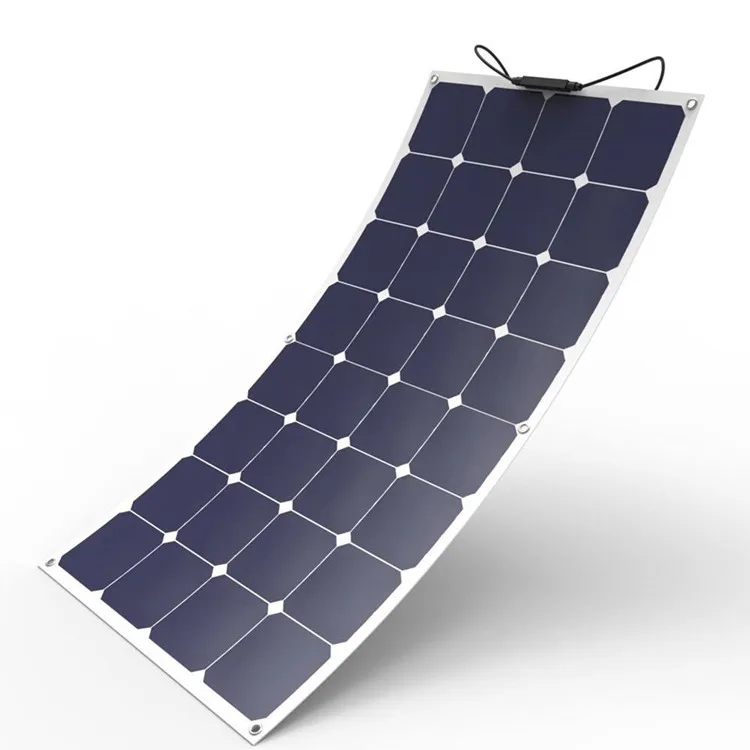
| Flexible Panels | Marine decks, RV curved roofs, teardrop trailers | Bendable (up to 30°), adhesive-mount ready, ultra-low profile, zero wind lift | Lower heat tolerance; output drops faster above 45°C; not designed for foot traffic |
| Complete Off-Grid Kits | Sheds, cabins, remote workshops, backup for home circuits | Includes panel + MPPT controller + battery cables + mounting hardware; plug-and-play wiring | Less portable; often uses older PWM controllers in budget bundles; battery not always included |
Key Features and Specifications to Evaluate
Not all 100W panels deliver equal real-world value. Here’s what to verify—and when it truly matters:
- Cell Type: Monocrystalline PERC
When it’s worth caring about: If you have limited surface area (e.g., a 1.2m x 0.5m RV roof), PERC cells deliver >23% efficiency—critical for squeezing max output from small footprints 1.
When you don’t need to overthink it: If you’re buying a complete kit for backyard use and have ample space, standard monocrystalline works fine—but avoid polycrystalline or thin-film. - Durability Rating: IP67 or IP68
When it’s worth caring about: For marine or all-season outdoor use, IP68 ensures full submersion resistance and dust-tight seals.
When you don’t need to overthink it: If storing indoors between trips, IP65 is sufficient—but never accept ‘IP rated’ without a number. - Surface Coating: ETFE (not PET)
When it’s worth caring about: ETFE transmits ~5% more light and resists scratches, yellowing, and UV degradation far longer—vital for 5+ year ownership 2.
When you don’t need to overthink it: If you’ll replace the panel every 2 years, PET is acceptable—but you’ll pay more long-term for lower yield. - Output Ports: USB-C PD (60W+) & DC 5521
When it’s worth caring about: Direct-charging laptops or high-power devices avoids inverter losses and adds flexibility.
When you don’t need to overthink it: If you only charge phones and lights via your power station, DC-only is adequate.
Pros and Cons: Who It’s For—and Who Should Look Elsewhere
✅ Pros:
- Light enough for backpacking (top models weigh just 2.8 kg);
- Fast ROI for emergency prep—replaces disposable batteries and gas generators for low-load needs;
- Scalable: Most MPPT controllers support adding a second 100W panel later;
- No permits or inspections required for standalone use.
❌ Cons & Limitations:
- Cannot power high-wattage appliances (e.g., microwaves, coffee makers, AC units);
- Output plummets under partial shade—even one leaf on a cell cuts total output by 30–50%;
- Winter performance drops significantly at higher latitudes due to shorter days and lower sun angles;
- Flexible panels require professional adhesive application for warranty validity.
If you’re a typical user, you don’t need to overthink this: a 100W system delivers tangible value if your daily load stays below 300Wh. Beyond that, step up to 200W—or pair two 100W units.
How to Choose a 100W Solar System: A Step-by-Step Decision Framework
Follow this checklist before purchase—designed to eliminate common missteps:
- Confirm your primary use case: Backpacking → prioritize weight (<3 kg) and foldability. Marine → insist on flexible + marine-grade connectors. Home backup → verify MPPT controller compatibility with your existing power station.
- Check controller type: Always choose MPPT. PWM controllers waste up to 30% of available energy—especially critical when input is limited to 100W 5. If the kit doesn’t specify “MPPT”, assume it’s PWM—and walk away.
- Verify expansion headroom: Does the included charge controller support ≥200W input? If not, future upgrades require replacing the entire controller—adding $80–$120 in cost and complexity.
- Avoid bundled ‘battery-included’ kits unless battery chemistry is LiFePO4: Lead-acid batteries degrade fast in partial-charge cycles and add 8–12 kg. LiFePO4 lasts 3× longer and weighs half as much 6.
- Test the angle guidance: Top 2026 models include app-based sun-angle optimization. If yours doesn’t, use a free tool like Sun Surveyor or Solar Angle Calculator—manual adjustment adds ~15% yield.
Insights & Cost Analysis
As of mid-2026, pricing reflects value-added features—not raw cell cost:
- Portable foldable kits: $220–$340 (ETFE + MPPT + USB-C PD);
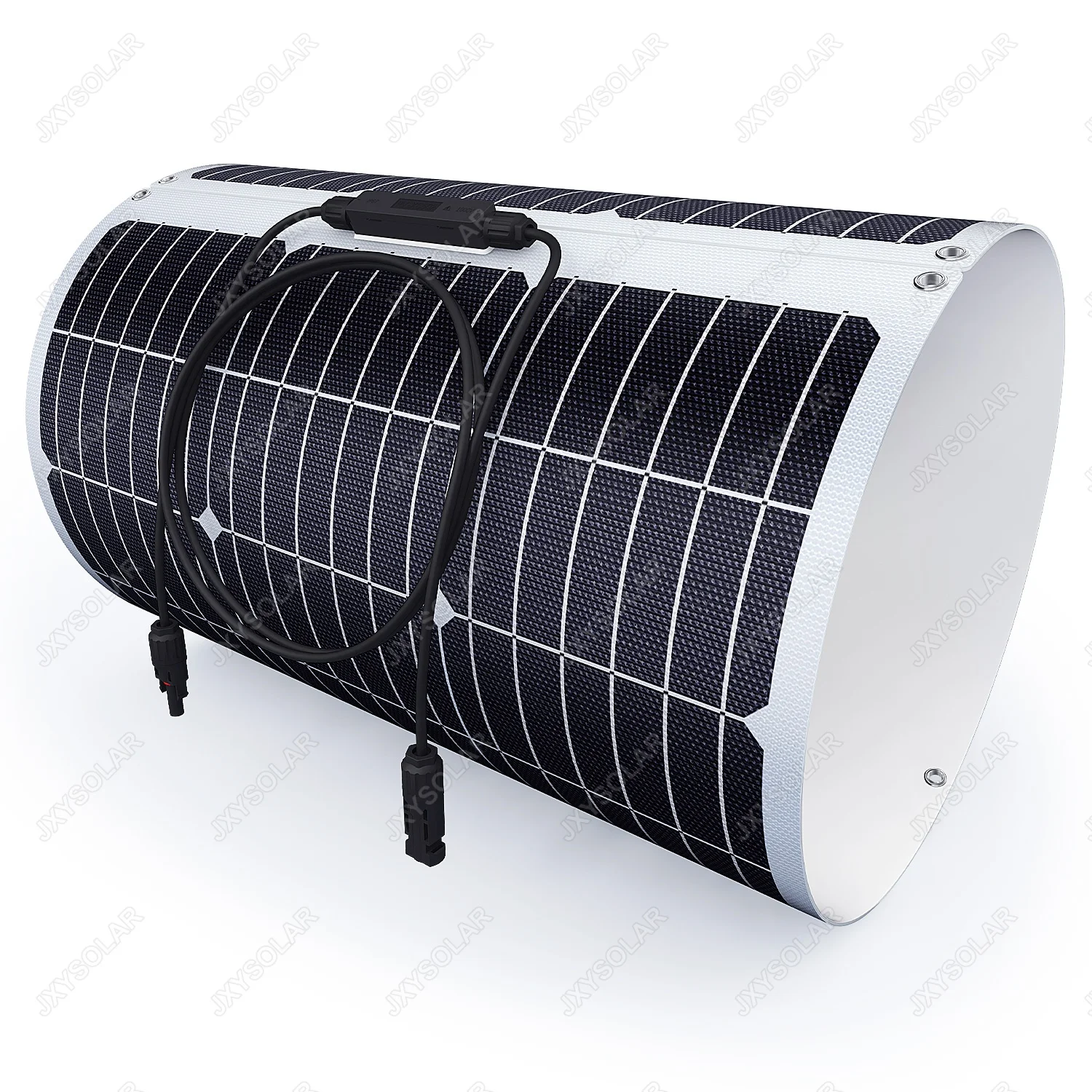
- Flexible panels: $290–$410 (marine-grade adhesive kit included);
- Off-grid starter kits (panel + MPPT + cables): $260–$380; batteries sold separately.
Bundled kits consistently save 15–20% versus buying components individually—a meaningful difference when building a reliable system. Avoid ‘budget’ kits under $180: they almost always use PET film, PWM controllers, or unverified cell efficiency claims.
Better Solutions & Competitor Analysis
While 100W remains optimal for most mobile users, two emerging alternatives deserve mention:
| Solution | Advantage Over 100W | Trade-Off | Best When |
|---|---|---|---|
| 120W Semi-Flexible Hybrid | ~20% more output in same footprint; retains bend radius | $70–$110 premium; heavier (~3.4 kg) | You need marginal extra power but can’t add a second panel |
| 100W + 20W USB-C Supplement Panel | Plug-and-play boost for phones/laptops; no controller upgrade needed | No impact on main battery charging; purely for direct-device use | Your power station already has full 100W input, but you want faster laptop charging |
Customer Feedback Synthesis
Based on aggregated reviews across Outdoor Gear Lab, Consumer Reports, and SolarReviews (2025–2026):
- Top 3 praises: “Folds compactly into my pack,” “USB-C PD charges my MacBook Pro in 2.5 hours,” “Survived monsoon season on my sailboat roof.”
- Top 3 complaints: “No built-in angle indicator—had to prop with rocks,” “Connector pins bent after 6 months of folding,” “Controller lacks Bluetooth monitoring (unlike my power station).”
These reflect real friction points—not flaws in core technology. Angle aids and reinforced connectors are now standard on 2026 premium models.
Maintenance, Safety & Legal Considerations
Maintenance: Wipe ETFE surface monthly with microfiber + water; avoid abrasive cleaners. Inspect folding hinges annually for play or cracking.
Safety: Never connect or disconnect under load. Use MC4 connectors rated for ≥15A. Store panels flat—never rolled tightly.
Legal: Standalone 100W solar systems used with portable power stations require no permits, inspections, or utility interconnection agreements in all 50 U.S. states and EU member nations. Only grid-tied or permanent rooftop installations trigger regulatory review.
Conclusion: Conditional Recommendations
If you need portable, reliable, and scalable energy for camping, van life, or home backup—choose a foldable 100W kit with ETFE coating, MPPT controller, and USB-C PD output. It’s the most validated, widely supported, and cost-efficient entry point into solar power today.
If you’re mounting on a curved marine or RV surface—choose a flexible 100W panel with marine-grade adhesive and IP68 rating. Don’t compromise on UV resistance or bend certification.
If you lack electrical experience and want zero-wiring setup—choose a complete off-grid kit with pre-terminated cables and clear labeling—but verify MPPT and LiFePO4 compatibility first.
This piece isn’t for keyword collectors. It’s for people who will actually use the product.
Frequently Asked Questions