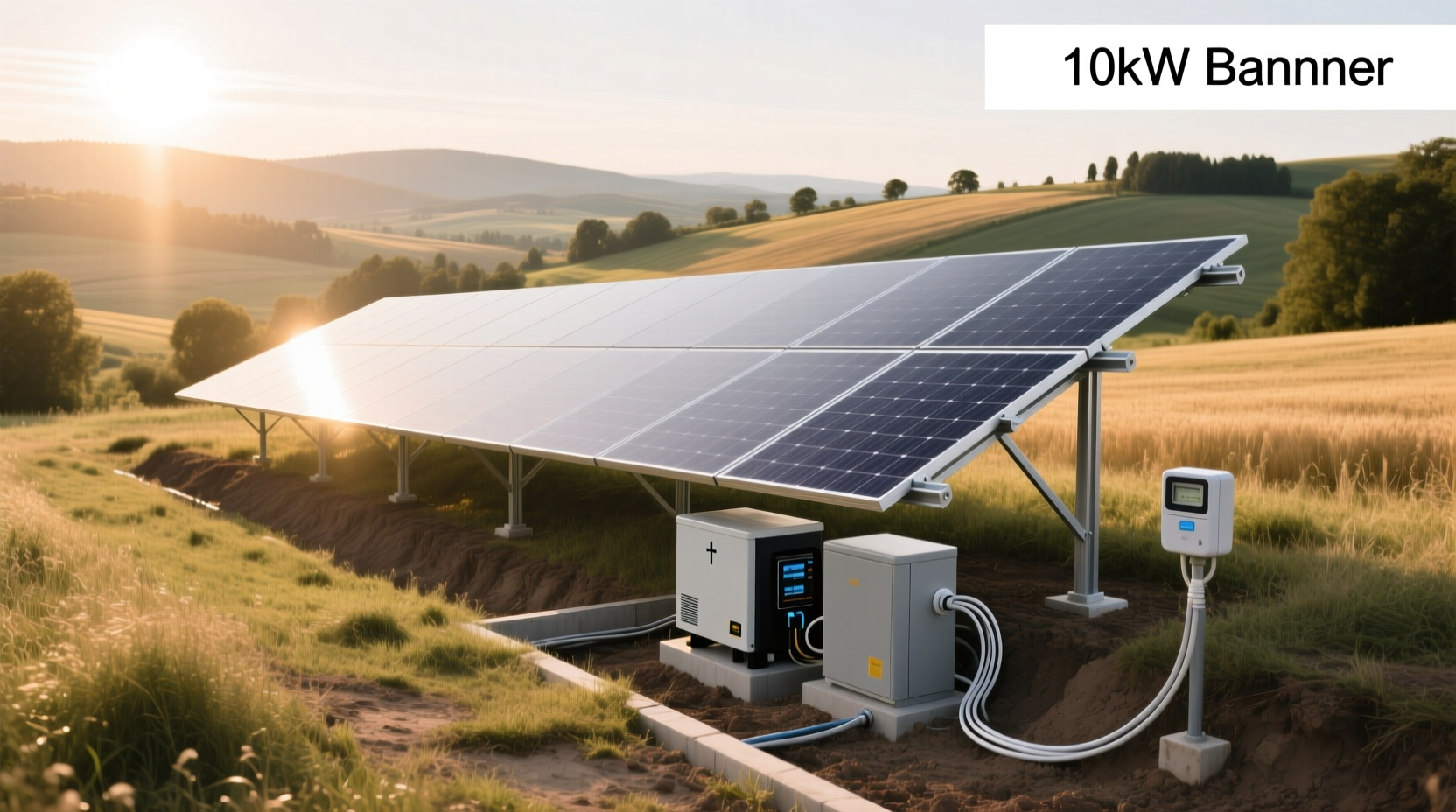
If you’re a typical user considering a 10kW ground mount solar kit in 2026, start here: skip motorized trackers unless your budget exceeds $32,000 — fixed-tilt bifacial kits deliver the best yield-to-cost ratio for most residential plots. Prioritize racking with seasonal tilt adjustment (10°–60°), verify UL-listed inverters, and get soil tested before quoting. DIY kits under $15,000 exist, but only if you’re comfortable with trenching, grounding, and utility interconnection paperwork — otherwise, professional install adds ~$8,000 but secures incentives and warranty validity.
Over the past year, the 10kW ground mount solar kit market has shifted decisively toward bifacial panels and modular, soil-adaptive racking — not because they’re ‘new,’ but because real-world yield gains (5–12% over monofacial) now consistently offset their modest premium 1. This isn’t theoretical: SEIA’s Q2 2026 report confirms bifacial adoption in ground-mount systems rose from 28% to 47% YoY, driven by lower module pricing and proven albedo gain on gravel or light-colored surfaces 2. If you’re weighing options today, this change matters — it reshapes what “value” means in a 10kW ground mount solar kit.
About 10kW Ground Mount Solar Kits
A 10kW ground mount solar kit is a pre-engineered package — including panels, racking, inverter(s), wiring, and mounting hardware — designed to generate ~12,000–16,000 kWh/year on open land. Unlike rooftop systems, it requires dedicated ground space (typically 500–800 sq ft), foundation engineering (ground screws or concrete piers), and longer DC/AC runs to the main panel. It’s not just ‘solar on dirt’: it’s a site-specific infrastructure decision. Typical users include rural homeowners with unused acreage, farms seeking energy resilience, and off-grid cabins needing scalable generation. It’s also the default choice when roof space is shaded, structurally unsound, or oriented poorly (3).
Why 10kW Ground Mount Solar Kits Are Gaining Popularity
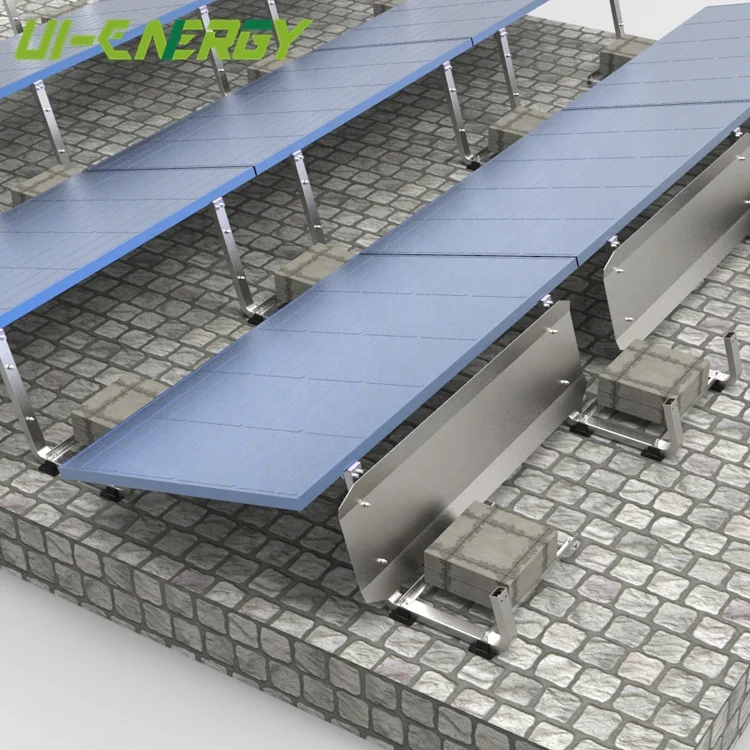
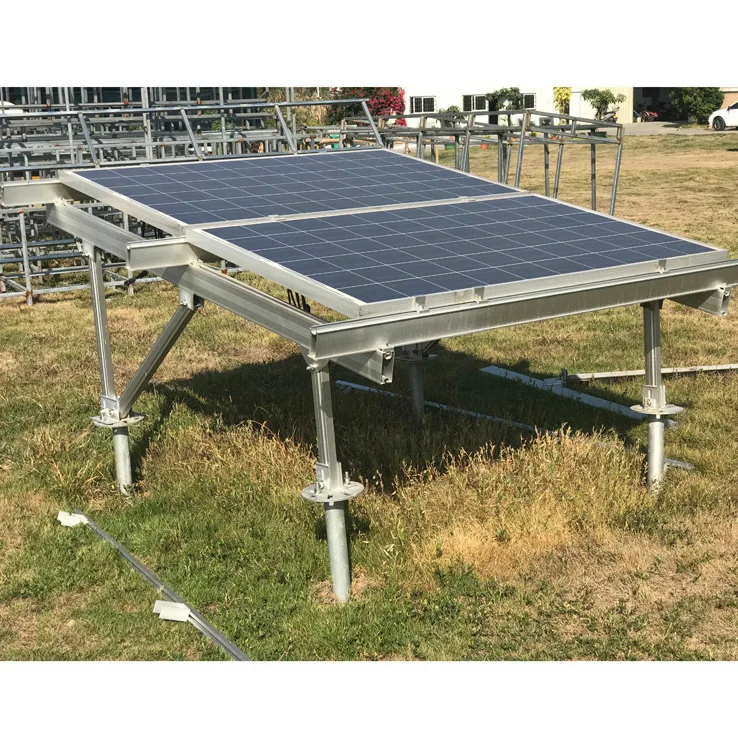
Two forces are accelerating adoption: predictable economics and increasing technical flexibility. First, utility rates have risen 8.2% nationally since 2023 (EIA), making self-generation more urgent — and ground mounts offer higher annual output than equivalent rooftop systems due to unrestricted orientation, cooling, and zero shading 4. Second, racking has evolved: lightweight aluminum frames now support seasonal tilt changes without tools, and ground screws cut installation time by 40% versus concrete piers — especially in sandy or loamy soils 5. This isn’t just about power — it’s about control, scalability, and long-term serviceability.
Approaches and Differences
There are three dominant approaches to deploying a 10kW ground mount solar kit — each with clear trade-offs:
- Fixed-tilt, monofacial panels: Lowest upfront cost ($20,000–$24,000). Simple, durable, widely supported. Yield is predictable but static — ~10–15% less than bifacial in reflective conditions.
- Fixed-tilt, bifacial panels + reflective surface: Moderate cost increase ($2,200–$3,500 extra), but delivers 5–12% more annual energy — especially over white gravel, sand, or snow. If you’re a typical user, you don’t need to overthink this: the ROI window shortens by 1–2 years in most U.S. regions 1.
- Dual-axis tracking: Highest yield (+25–30% vs. fixed-tilt), but adds $7,000–$12,000 and mechanical complexity. Maintenance increases, and wind-load certification becomes critical. When it’s worth caring about: commercial sites with >1 acre and high electricity demand. When you don’t need to overthink it: residential lots under 0.5 acres — the added cost rarely pays back before year 12.
Key Features and Specifications to Evaluate
Don’t optimize for specs — optimize for context. Here’s what actually moves the needle:
- ⚙️ Tilt adjustability range: Look for 10°–60° manual adjustment. Covers optimal angles for summer (low sun) and winter (high sun). Non-adjustable racking locks you into one season’s performance.
- 📍 Foundation compatibility: Does the kit include ground screw anchors (ideal for loose, sandy, or clay soils) or require concrete? Soil testing costs $200–$500 but prevents costly rework 6.
- 🔌 Inverter certification: Must be UL 1741 listed and compatible with your utility’s interconnection requirements. Microinverters add cost but simplify expansion; string inverters are cheaper but require careful voltage-drop calculations over long trench runs.
- 🔋 Panel tier & warranty: Tier-1 manufacturers (per BloombergNEF) offer 25-year linear power warranties. Avoid ‘Tier-2’ kits with 10-year product warranties — they’re often rebranded surplus stock.
Pros and Cons
| Aspect | Advantage | Limitation |
|---|---|---|
| Energy Output | 20–30% higher annual yield than rooftop equivalents (no shading, better airflow, optimal tilt) | Output drops sharply on sloped or rocky terrain — site prep may double labor costs |
| Scalability | Easy to expand later (add rows, upgrade inverter) without structural roof limits | Requires contiguous, unshaded land — trees or future construction can invalidate ROI |
| DIY Viability | Kits under $15,000 exist (e.g., GoGreenSolar, SunWatts); full BOM available online | Most manufacturers void panel/inverter warranties if not installed by NABCEP-certified pros |
| Maintenance | Ground-level access simplifies cleaning and inspection — no ladders or roof work | More exposed to debris, wildlife nesting, and irrigation overspray — periodic visual checks needed |
How to Choose a 10kW Ground Mount Solar Kit
Follow this 5-step decision checklist — and avoid these three common traps:
- Test your soil first. Rocky, marshy, or highly compacted soil makes ground screws ineffective and forces concrete piers — adding $2,500–$5,000. Skip this step, and your quote is fiction.
- Measure trench distance. Every extra 50 feet of buried conduit adds ~$300 in materials and labor — and increases voltage drop risk. If your array sits >100 ft from the main panel, consider a transformerless inverter or DC optimizers.
- Verify interconnection rules. Some utilities cap ground-mount system size at 110% of historical usage — meaning a 10kW kit may need load analysis before approval.
- Compare ‘kit price’ vs. ‘installed price’. Many listings show $12,000 kits — but omit shipping, permits ($500–$1,200), engineering stamps ($800), and electrical inspections ($200).
- Require UL listing documentation — not just ‘meets UL standards.’ Ask for the actual UL 1741 certificate number for the inverter and UL 2703 for the racking.
This piece isn’t for keyword collectors. It’s for people who will actually use the product.
Insights & Cost Analysis
Nationally, a professionally installed 10kW ground mount solar kit averages $25,800 pre-incentive, or $2.58/W — up 3.2% from 2025 due to rising steel and logistics costs 4. But regional variance is steep:
- Texas: $20,390 ($2.04/W) — low permitting fees, competitive installer market
- Massachusetts: $29,693 ($2.97/W) — higher labor, stricter structural codes, snow-load engineering
- DIY kits: $8,000–$15,000 ($0.80–$1.50/W) — but factor in $1,800–$3,500 for electrician sign-off, permits, and inspection 5.
The biggest cost lever isn’t panels — it’s labor and engineering. If you’re a typical user, you don’t need to overthink panel brand comparisons. Focus instead on racking adaptability and inverter reliability: those determine 80% of long-term uptime.
Better Solutions & Competitor Analysis
| Solution Type | Best For | Potential Issue | Budget Range (Pre-Incentive) |
|---|---|---|---|
| Bifacial + gravel bed | Users with flat, sunny land and 3+ years horizon | Gravel must be light-colored and maintained — darkening cuts bifacial gain | $24,500–$27,200 |
| Single-axis tracker (fixed azimuth) | Farms or large properties where yield-per-area matters | Higher wind-load risk; requires certified structural engineer stamp | $30,000–$34,500 |
| Modular screw-mount kit (e.g., IronRidge GRM) | DIYers with sandy/loam soil and electrical experience | Not suitable for heavy clay or rock — foundation failure risk | $11,800–$14,300 (kit only) |
Customer Feedback Synthesis
Based on Reddit, Ecowatch, and SolarLab reviews (2025–2026), users consistently praise:
- “Ease of leveling” — kits with laser-guided base plates cut setup time by half;
- “Clear torque specs” — eliminates guesswork during bolt tightening;
- “Pre-labeled conduit paths” — reduces wiring errors during commissioning.
Top complaints involve:
- Missing anchor templates (forcing custom drilling);
- No English-language assembly diagrams (common with imported kits);
- Under-specified grounding lugs — requiring third-party upgrades.
Maintenance, Safety & Legal Considerations
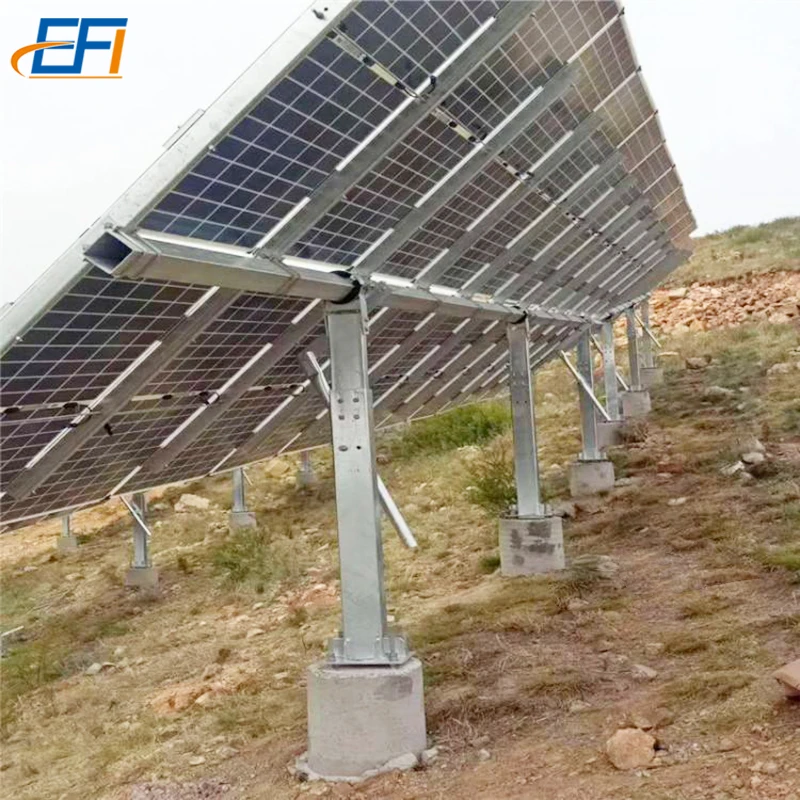
Annual maintenance is minimal: inspect racking bolts (torque check every 2 years), clean panels 1–2x/year (rain often suffices), and verify vegetation clearance (minimum 3 ft radius). Safety hinges on proper grounding — NEC Article 690.47 requires grounding electrode conductors sized per Table 250.66. Legally, most jurisdictions require engineered drawings stamped by a licensed structural engineer — especially for systems >10kW or in high-wind zones (ASCE 7-22). Also confirm local zoning allows accessory structures — some HOAs restrict height or visibility.
Conclusion
If you need maximum energy per dollar on stable, open land, choose a bifacial 10kW ground mount solar kit with seasonal tilt adjustment and ground-screw-compatible racking. If your soil is rocky or your utility imposes strict interconnection caps, reconsider — a well-sized rooftop system may deliver better net value. If you’re a typical user, you don’t need to overthink panel efficiency differences above 22%. Focus instead on racking integrity, inverter certification, and foundational readiness. The kit is only as strong as its weakest link — and that’s rarely the panels.


