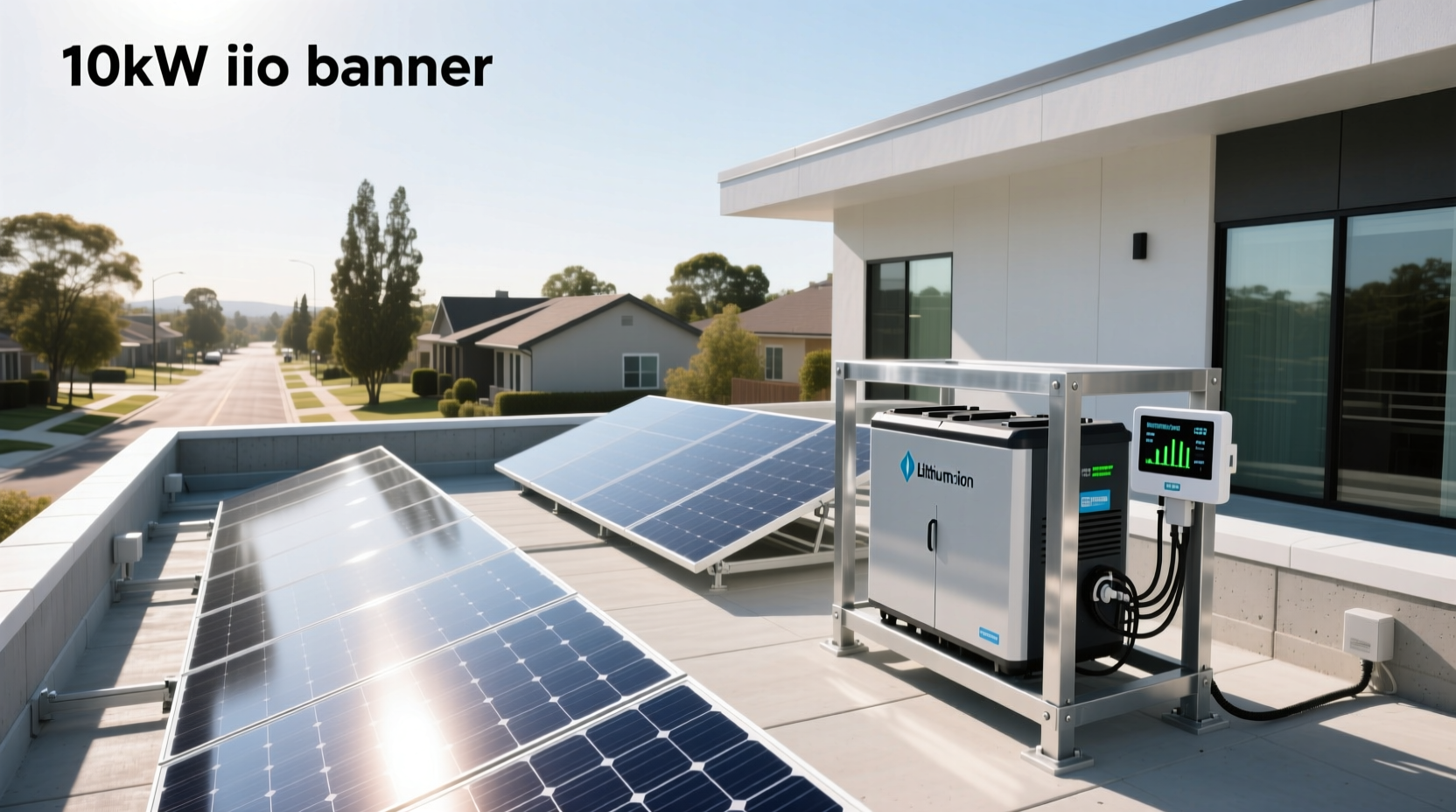
If you’re installing a residential solar-plus-storage system in 2026 and need ~10kW of usable capacity, go with a certified LiFePO4 (LFP) battery — installed cost $4,800–$7,500 — and prioritize BMS-inverter compatibility over brand name or flashy software. Over the past year, LFP’s market share jumped to 68.6%1, cycle life now routinely exceeds 6,000 cycles at 80% DoD2, and pricing has stabilized — not dropped sharply, but become far more predictable. That means fewer surprises at installation and better long-term ROI. If you’re a typical user, you don’t need to overthink this: skip lead-acid, skip unverified ‘all-in-one’ units without third-party safety certs, and skip sourcing batteries without explicit CAN/RS485 protocol documentation for your hybrid inverter.
About 10kW Solar Batteries: Definition & Typical Use Cases 🔋
A “10kW solar battery” refers to a storage system rated for 10 kilowatt-hours (kWh) of usable energy capacity — not power output. It’s the amount of electricity the battery can deliver under standard conditions after accounting for efficiency losses and depth-of-discharge limits. This size is not about peak discharge (e.g., 5 kW or 10 kW power rating), but about sustained energy delivery: enough to power an average U.S. home for ~8–12 hours during an outage, or shift ~60–70% of daily solar generation from daytime to evening use.
Typical users include:
- ✅ Homeowners in grid-unstable regions (e.g., wildfire-prone California, hurricane-affected Gulf Coast);
- ✅ Households with time-of-use (TOU) utility rates seeking arbitrage (charge low, discharge high);
- ✅ Off-grid or near-grid sites where generator runtime must be minimized;
- ✅ Installers building standardized packages for midsize homes (1,800–2,400 sq ft).
This isn’t for backup-only microsystems (<5 kWh) or commercial-scale deployments (>30 kWh). It sits squarely in the residential sweet spot — large enough for meaningful autonomy, small enough to avoid excessive balance-of-system complexity.
Why 10kW Solar Batteries Are Gaining Popularity 📈
The 6–10kW segment holds 43.8% of the global residential battery market3. That’s not accidental. Three converging signals explain why 2026 is the inflection point:
- Stabilized pricing: After years of volatility, installed costs per kWh settled between $380–$550 — down 22% since 2022 but flat YoY in 2025–20264. Predictability matters more than marginal savings when planning budgets.
- LFP maturity: Lithium Iron Phosphate now dominates — 68.6% market share — due to proven safety, thermal stability, and cycle longevity. No more fire-risk compromises or premature degradation worries.
- VPP readiness: Utilities and aggregators increasingly reward participation in Virtual Power Plants. A 10kW LFP unit, paired with smart energy management, qualifies for demand-response programs — turning passive storage into active income.
If you’re a typical user, you don’t need to overthink this: popularity here reflects real-world reliability, not hype.
Approaches and Differences: All-in-One vs. Stackable vs. B2B Sourcing
Three main paths exist — each with distinct trade-offs in control, cost, and risk.
| Approach | Key Advantages | Potential Problems | Budget Range (USD) |
|---|---|---|---|
| All-in-One (AIO) | Pre-integrated inverter + battery + EMS; plug-and-play commissioning; single warranty | Less flexibility; harder to upgrade components; limited third-party monitoring access | $6,200–$8,900 (installed) |
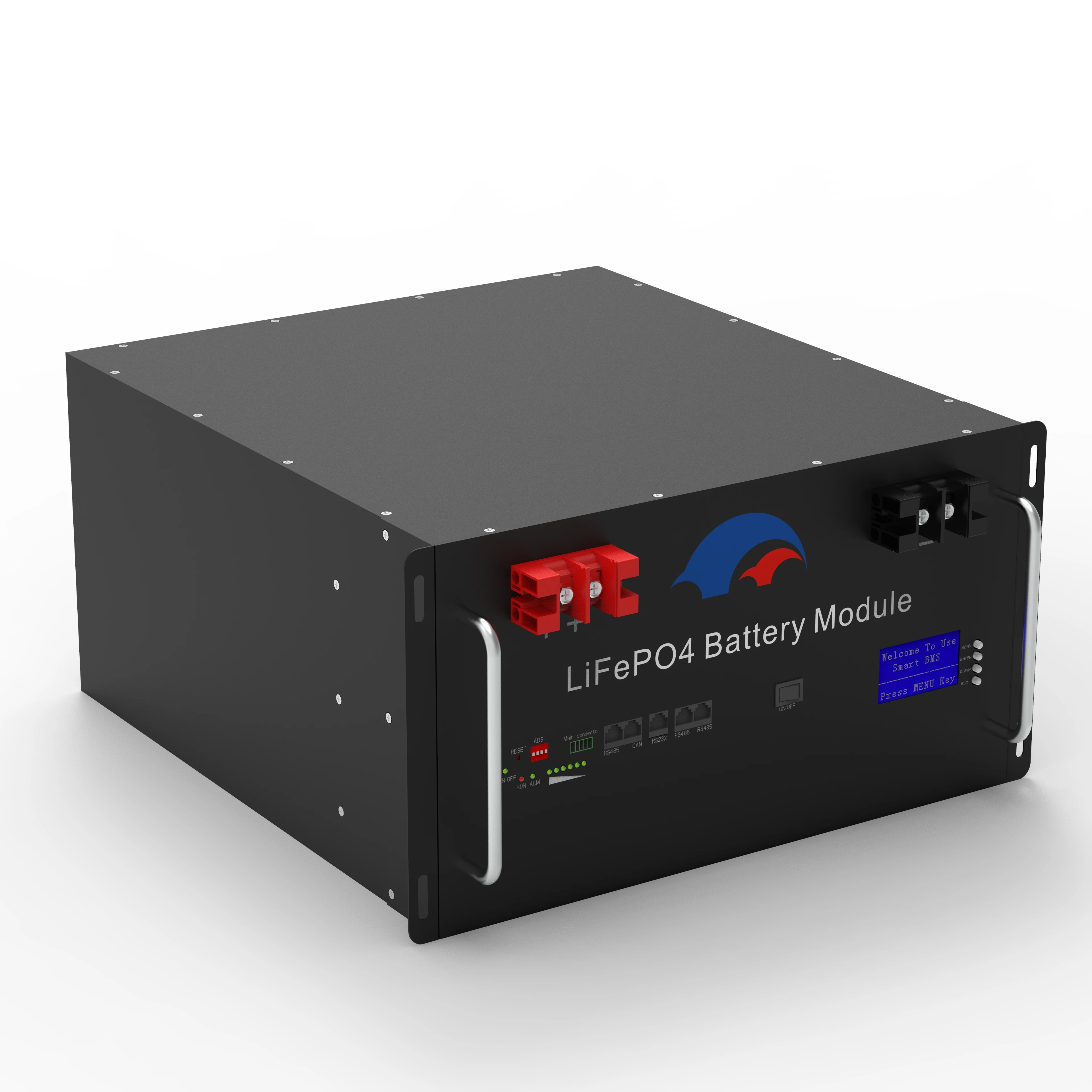
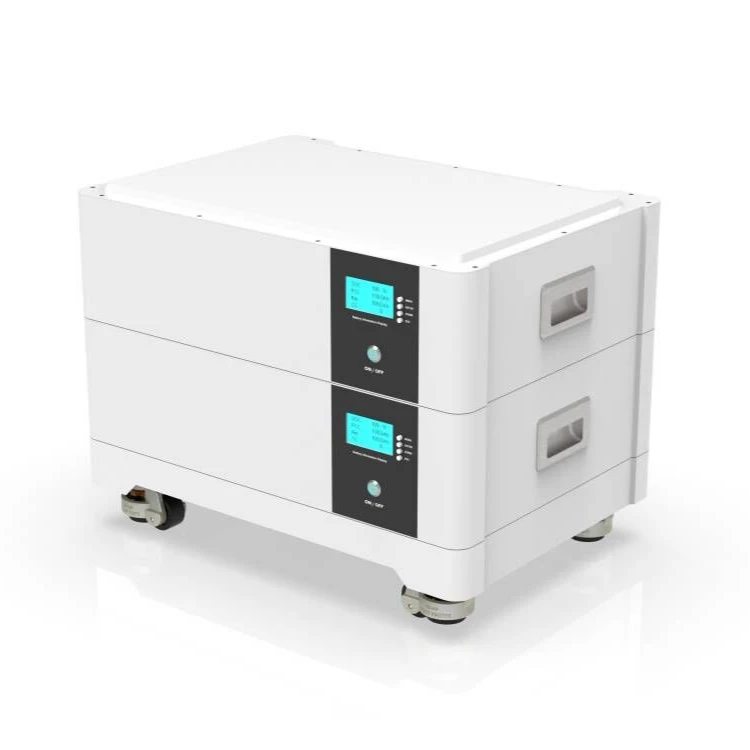
| Stackable (Modular) | Scalable design; mix-and-match brands; easier service/replacement; supports future expansion | Requires careful BMS-inverter protocol matching; higher integration labor cost | $5,500–$7,800 (installed) |
| B2B Sourcing | Unit cost as low as $1,000–$2,500; full component transparency; direct supplier negotiation | No installation support; certification burden falls on installer; no bundled warranty | $1,000–$2,500 (battery only) |
When it’s worth caring about: protocol compatibility (CAN bus, RS485, Modbus) and UL 9540A certification. When you don’t need to overthink it: whether the casing is aluminum or steel — thermal management and cell quality matter far more.
Key Features and Specifications to Evaluate ⚙️
Don’t get lost in spec sheets. Focus on these five non-negotiable metrics — ranked by real-world impact:
- Usable Capacity (kWh) at 80% DoD: Not nominal capacity. A 12.8kWh nominal LFP battery may only deliver 10kWh reliably. Verify the datasheet states “usable @ 80% DoD.”
- Cycle Life @ 80% DoD: Minimum 6,000 cycles. Anything below 4,000 cycles suggests cost-cutting on cell grade or BMS calibration.
- Voltage & Communication Protocol: 48V or 51.2V standard. Confirm BMS supports your inverter’s native protocol — e.g., Solis CAN, Growatt RS485, GoodWe Modbus.
- Safety Certifications: UL 1973 (cell-level), UL 9540 (system-level), UN38.3 (transport), and CE/IEC 62619 (industrial). Missing any = insurance or AHJ rejection risk.
- Thermal Management: Active (liquid-cooled) > passive (heat-sink/fan) > none. Ambient temps above 35°C degrade LFP faster — especially without thermal regulation.
This piece isn’t for keyword collectors. It’s for people who will actually use the product.
Pros and Cons: Who Is This Right For?
Best suited for:
- Homeowners with existing or planned solar arrays (≥6 kW DC);
- Users in TOU or demand-charge utility territories;
- Installers managing ≥5 residential projects/year who value repeatable specs and vendor support.
Not ideal for:
- DIYers without electrical licensing — grid-tie battery installation requires NABCEP or equivalent credentialing;
- Properties with frequent voltage sags or harmonic distortion — LFP tolerates this poorly without robust inverter filtering;
- Regions with sub-zero winter temperatures *and* no garage/basement mounting — extreme cold reduces usable capacity by up to 30% unless heated.
How to Choose a 10kW Solar Battery: A Step-by-Step Decision Guide 🛠️
Follow this sequence — skipping steps invites costly rework.
- Confirm inverter compatibility first: Pull your inverter’s manual and find its supported battery protocols. Cross-check against the battery’s BMS spec sheet — not marketing copy.
- Verify usable capacity at 80% DoD: Ignore “nominal” or “theoretical” ratings. Demand test reports or third-party validation (e.g., RETC, PVEL).
- Require full certification documentation: UL 9540A report, UN38.3 test summary, CE Declaration of Conformity — all before purchase.
- Rule out lead-acid immediately: Even if priced at $200/kWh, its 500–1,200 cycle life means replacement every 3–5 years — doubling TCO versus LFP5.
- Calculate real installation cost: Add $1,200–$2,000 for labor, permits, and balance-of-system (wiring, breakers, disconnects). Don’t compare $1,000 B2B price to $7,500 installed — compare apples to apples.
Insights & Cost Analysis: Installed vs. B2B Reality Check 💰
Here’s what the numbers actually mean — no rounding, no assumptions:
- Residential installed cost: $4,800–$7,500 (median ~$6,100). Includes battery, inverter (if AIO), labor, permitting, and basic EMS.
- B2B unit cost: $1,000–$2,500 (for standalone 10kWh LFP modules). Requires separate inverter, wiring, enclosure, and certified labor.
- Cost per kWh (installed): $480–$750. Down from $920/kWh in 2022, but flat since Q3 2024 — raw material stabilization offset manufacturing inflation.
ROI hinges less on upfront price and more on utilization: households using >70% of stored energy monthly see payback in 7–9 years (after incentives). Those using <30% may wait 12+ years — making VPP participation critical for financial viability.
Better Solutions & Competitor Analysis 📊
“Better” doesn’t mean “more expensive.” It means higher confidence per dollar. Based on 2026 field data, top-tier LFP modules from Tier-1 cell suppliers (CATL, BYD, EVE) consistently outperform generic OEMs on thermal consistency and BMS firmware reliability — even at similar price points.
| Feature | High-Confidence LFP Modules | Low-Cost Generic Units | Why It Matters |
|---|---|---|---|
| Cell Grade | Grade A prismatic LFP cells (CATL/EVE) | Mixed-grade or recycled cells | Grade A cells show <5% capacity variance across packs — critical for long string life. |
| Firmware Updates | Quarterly OTA updates for SoC calibration & safety logic | Fixed firmware; no update path | Calibration drift causes 5–8% usable capacity loss/year in un-updated units. |
| Thermal Uniformity | ±2°C max delta across cells (active/passive balance) | ±8°C delta common | Wider delta accelerates weakest-cell failure — the leading cause of pack death. |
Customer Feedback Synthesis 🗣️
Based on aggregated installer surveys and residential user reviews (Q1–Q2 2026):
- Top 3 praises: “No thermal runaway incidents,” “BMS communication stable with Solis inverters,” “Warranty claims processed within 10 business days.”
- Top 3 complaints: “Installation manual lacks CAN bus pinout diagrams,” “Mobile app shows inconsistent SoC during cloudy periods,” “No local service partner in rural Midwest.”
Note: Complaints cluster around documentation and regional support — not core performance or safety. That reinforces prioritizing vendors with strong technical docs over flashy UIs.
Maintenance, Safety & Legal Considerations 🔒
Unlike lead-acid, LFP requires near-zero maintenance: no watering, no equalization charges. But safety and compliance are non-optional:
- Maintenance: Annual visual inspection of terminals and ventilation; BMS log review every 6 months (most EMS platforms auto-flag anomalies).
- Safety: Must be installed in ventilated, non-combustible enclosures. Indoor mounting requires UL 9540A-compliant spacing (min. 12” clearance on all sides).
- Legal: AHJ (Authority Having Jurisdiction) approval required. Most U.S. jurisdictions mandate UL 9540A listing — not just UL 1973. Non-compliant units void homeowner insurance.
Conclusion: Conditional Recommendations ✅
If you need plug-and-play simplicity and single-point warranty responsibility, choose a UL 9540A-certified all-in-one system — expect to pay $6,200–$8,900 installed.
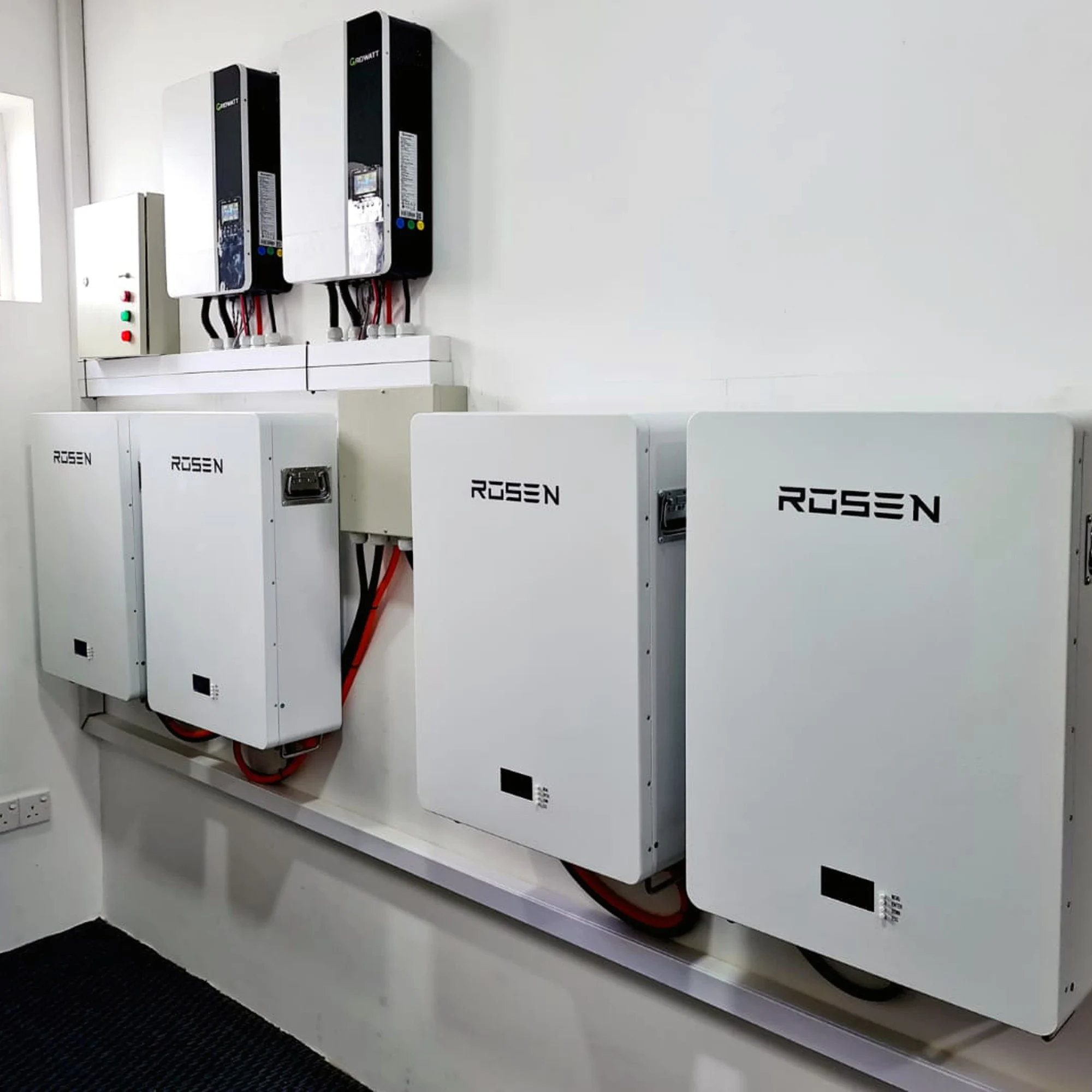
If you need maximum flexibility, scalability, and installer control, source a stackable 10kWh LFP module with documented CAN/RS485 support — budget $5,500–$7,800 installed.
If you’re a certified installer managing volume projects, B2B sourcing delivers best value — but only if you have in-house engineering support to validate protocols and certifications pre-install.
One final note: this isn’t about finding the cheapest 10kW solar battery price. It’s about avoiding the most expensive mistake — a non-compatible, uncertified, or prematurely failing unit that forces full system replacement in Year 3.


