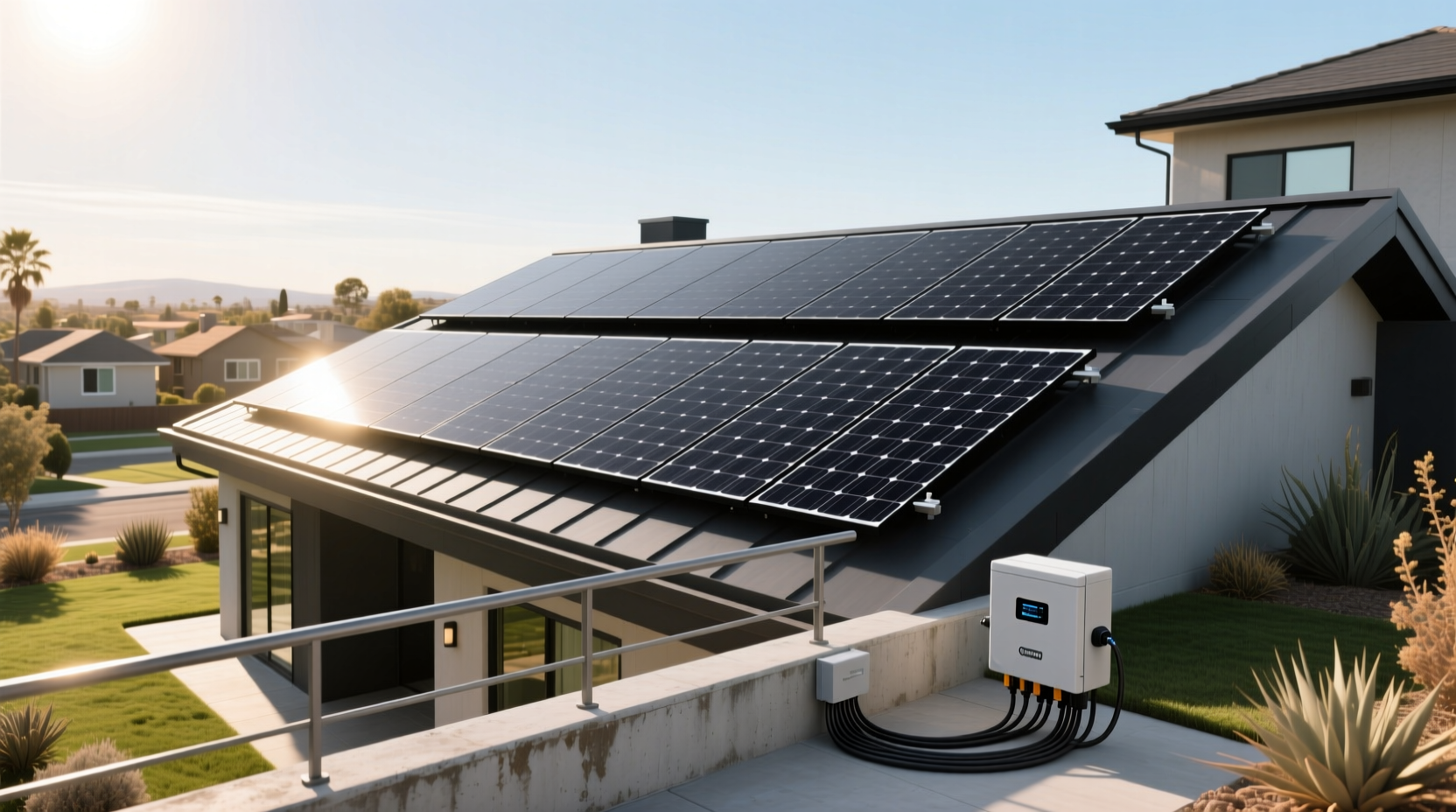
Over the past year, the 10kW solar panel system has become the most widely adopted residential scale—not because it’s the largest, but because it’s the first size that reliably powers homes with heat pumps, EV chargers, and storage without requiring custom engineering. If you’re a typical user, you don’t need to overthink this: go hybrid-ready (solar + battery), overbuild capacity by 20%, and source hardware from ISO-certified B2B suppliers—not installer-marked kits. The national average installed price is $25,800 before the 30% federal tax credit 1, but self-installed B2B kits start at $6,500—making this the only solar scale where DIY-adjacent procurement meaningfully shifts ROI. Skip leases, skip microinverters unless your roof has heavy shading, and skip quoting based on today’s bill alone.
About 10kW Solar Panel Systems
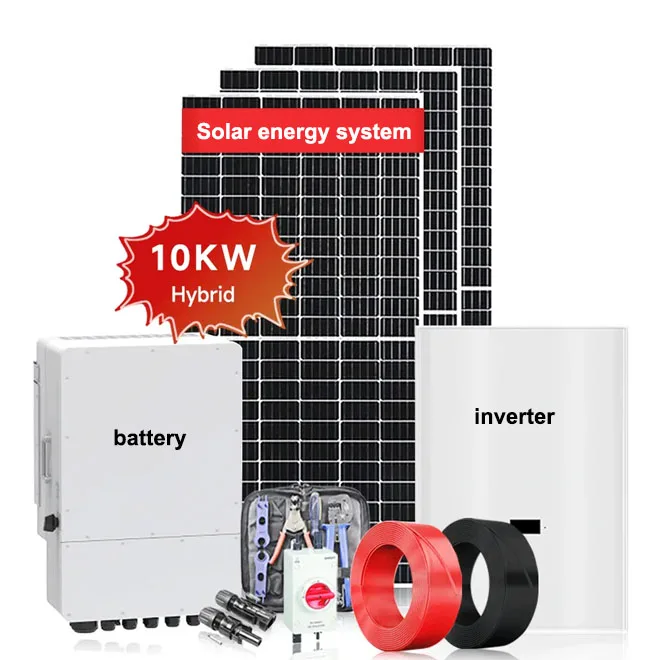
A 10kW solar panel system refers to a photovoltaic array capable of generating up to 10 kilowatts of DC power under standard test conditions (STC). In practice, it usually consists of 20–25 modern panels (400W–500W each), occupying 600–800 sq ft of unshaded roof space 2. It’s not a one-size-fits-all solution—but rather the smallest system that comfortably supports full electrification: powering an electric vehicle (charging ~30–40 miles per day), running a cold-climate heat pump, and feeding a 10–15 kWh home battery. Unlike smaller systems (e.g., 6–8 kW), a 10kW setup rarely requires midday curtailment in most U.S. climates—and unlike larger systems (12+ kW), it avoids excessive permitting complexity or structural reinforcement in standard residential builds.
Why 10kW Solar Panel Systems Are Gaining Popularity
Lately, 10kW systems have surged—not due to marketing hype, but because they align precisely with three converging realities: rising household electricity demand (driven by EVs and heat pumps), collapsing battery prices, and tightening grid reliability. In 2026, 91% of new residential solar installations include battery storage 3. That means standalone solar is now functionally obsolete for most buyers. A 10kW system is the minimum viable platform for true energy independence: large enough to offset >90% of annual usage *and* charge a car overnight, yet compact enough to avoid utility interconnection delays or transformer upgrades. If you’re a typical user, you don’t need to overthink this: this isn’t about “going green”—it’s about avoiding $200+/month rate hikes and keeping lights on during outages.
Approaches and Differences
There are three primary ways to acquire a 10kW solar panel system—each with distinct trade-offs:
- Full-service turnkey installation: A local contractor handles design, permitting, equipment, labor, and warranty. Pros: convenience, single-point accountability. Cons: highest cost ($25,800 avg), limited equipment choice, potential installer instability (21% market contraction in 2026 3). When it’s worth caring about: if your roof is complex, you lack technical confidence, or you value speed over savings. When you don’t need to overthink it: if you live in Texas or Arizona and have a simple south-facing roof—you’ll likely pay 20–30% more than necessary.
- B2B hardware kit + certified installer: You buy panels, inverter, racking, and battery from a verified supplier (e.g., Alibaba-verified Tier 1 exporters), then hire a local electrician for commissioning. Pros: 40–50% lower hardware cost ($6,500–$9,500), access to lab-tested N-type TopCon panels, full spec control. Cons: requires coordination, no bundled warranty. When it’s worth caring about: if you’ve done HVAC or electrical work before—or know a licensed installer open to third-party gear. When you don’t need to overthink it: if you’re sourcing from ISO/CE/TUV-certified suppliers with 500+ export transactions 4.
- DIY-plus-support model: You install racking and wiring yourself, then hire an electrician only for final inspection and grid connection. Pros: deepest cost savings, full ownership of specs. Cons: high time investment, liability risk, permitting variance by jurisdiction. When it’s worth caring about: if you’re mechanically skilled, have rooftop access, and live in a state with streamlined DIY rules (e.g., California, Colorado). When you don’t need to overthink it: if your city requires stamped engineering drawings—skip DIY entirely.
Key Features and Specifications to Evaluate
Not all 10kW systems deliver equal value. Focus on these five measurable criteria—ranked by real-world impact:
- Panel efficiency & cell type: 20%+ efficiency is now baseline. Prioritize N-type TopCon or bifacial panels—they degrade slower, perform better in heat and low light, and offer longer warranties. When it’s worth caring about: if your roof space is tight (<700 sq ft) or you live in a hot, humid climate (e.g., Florida, Texas). When you don’t need to overthink it: if you have ample roof area and live in the Pacific Northwest—monocrystalline PERC panels remain perfectly adequate.
- Inverter architecture: Hybrid inverters (not string or micro) are non-negotiable if you plan battery storage—even if adding it later. They enable AC-coupled or DC-coupled expansion without rewiring. When it’s worth caring about: if you own an EV or plan to buy one within 3 years. When you don’t need to overthink it: if you’re installing solar solely for bill reduction and have no battery plans—though this scenario is increasingly rare.
- Monitoring capability: Look for systems with CT clamps (current transformers) on both grid feed and main panel—so you see real-time consumption vs. export. When it’s worth caring about: if you want to optimize EV charging times or shift loads to match solar production. When you don’t need to overthink it: if your utility offers 100% net metering with no time-of-use rates—basic generation-only monitoring suffices.
- Warranty structure: Tier 1 panels must offer ≥25-year linear performance warranty (not just “80% at year 25”). Inverters need ≥12-year coverage, extendable to 20. When it’s worth caring about: if you plan to stay in your home >10 years. When you don’t need to overthink it: if you’re renting or plan to sell within 5 years—focus on upfront cost, not longevity.
- Federal & state incentive alignment: Ensure your chosen equipment qualifies for the 30% federal ITC and any state-specific rebates (e.g., CA SGIP, NY Megawatt Block). When it’s worth caring about: if you’re financing via loan—ITC reduces principal. When you don’t need to overthink it: if you’re paying cash and live in a state with no add-on incentives—just verify ITC eligibility.
Pros and Cons
A 10kW solar panel system delivers strong returns—but only when aligned with realistic expectations and constraints.
- Pros: Delivers 13,000–16,000 kWh/year (U.S. average), covers ~100% of typical household use 5; enables seamless EV charging and backup power with battery; qualifies for full federal tax credit; future-proofs against rising rates and grid instability.
- Cons: Requires significant roof space and structural assessment; payback period stretches to 8–12 years if financed at current interest rates; installer bankruptcy risk remains elevated (21% sector contraction); battery adds $8,000–$14,000 before incentives 6.
If you need resilience and long-term rate insulation, choose 10kW + battery. If you need minimal upfront cost and only bill reduction, a 6–8 kW system may be more appropriate.
How to Choose a 10kW Solar Panel System
Follow this five-step decision checklist—designed to eliminate common regrets:
- Start with load, not legacy bills: Use 12 months of utility data—but add projected EV or heat pump usage (e.g., +4,000–6,000 kWh/year). Then apply the “20% rule”: size for 12 kW DC if your calculated need is 10 kW AC. This avoids costly upgrades later 7.
- Reject leasing/PPA offers outright: Leases lock you into fixed escalators, complicate home sales, and forfeit tax credits. Ownership—even with a solar loan—is consistently superior for ROI 2.
- Vet suppliers—not just brands: For B2B kits, confirm ISO 9001, CE, and TÜV Rheinland certification. Check Alibaba/Global Sources for “Verified Supplier” status and ≥500 completed export orders. Avoid “white label” distributors with no factory ties.
- Require hybrid inverter compatibility: Even if skipping battery now, ensure your inverter supports AC- or DC-coupled storage and includes built-in consumption monitoring. Enphase IQ8+ or Sol-Ark 12K are representative examples.
- Confirm permitting pathway: Ask your installer or AHJ (Authority Having Jurisdiction) whether your chosen equipment triggers additional review—especially for UL 1741 SA compliance or rapid shutdown requirements.
Insights & Cost Analysis
Costs vary significantly—not by technology, but by procurement method and geography:
| Procurement Method | Avg. Total Cost (2026) | Hardware Cost Only | Key Variables |
|---|---|---|---|
| Turnkey (national avg) | $25,800 | N/A | Labor markup (45–60%), permitting, soft costs |
| Turnkey (low-cost state) | $20,390 (TX) | N/A | Lower permitting fees, competitive installer market |
| Turnkey (high-cost state) | $29,693 (MA) | N/A | High labor rates, complex inspections |
| B2B Kit + Installer | $14,500–$18,000 | $6,500–$9,500 | Installer labor only (~$5,000–$7,000), no markup |
The $11,000+ gap between turnkey and kit-based acquisition isn’t theoretical—it reflects real hardware margins. And it’s not about “cutting corners”: lab-tested Tier 1 panels from verified exporters often outperform branded equivalents in thermal coefficient and low-light response 8. If you’re a typical user, you don’t need to overthink this: spend time vetting suppliers, not comparing panel wattage spreadsheets.
Better Solutions & Competitor Analysis
“Better” doesn’t mean “more expensive”—it means matching capability to actual need. Below is how leading approaches compare across critical dimensions:
| Solution Type | Best For | Potential Problem | Budget Range (Hardware Only) |
|---|---|---|---|
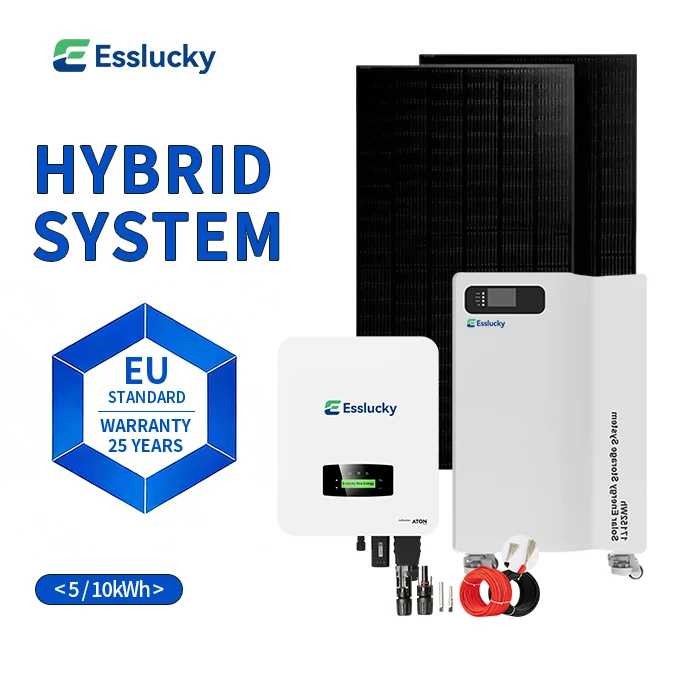
| Hybrid-ready 10kW kit (N-type panels + Sol-Ark/SMA hybrid inverter) | Homeowners planning EV + battery within 3 years | Requires technical coordination; no bundled support | $7,800–$9,500 |
| Microinverter-based 10kW (Enphase IQ8+) | Homes with complex shading or multiple roof planes | No native battery coupling; AC-coupling adds cost/complexity | $8,200–$10,100 |
| String inverter + DC optimizer (SolarEdge) | Budget-conscious buyers needing shade mitigation | Single point of failure (inverter); less flexible for future storage | $6,500–$7,900 |
| Lease / PPA | Zero-upfront buyers who prioritize convenience over equity | Long-term cost > ownership; limits home resale flexibility | $0 (but 20–25% higher lifetime cost) |
Customer Feedback Synthesis
Based on aggregated forum analysis (Reddit r/solar, SolarPanelTalk, Facebook groups), top recurring themes include:
- Top praise: “Our 10kW system covers 100% of usage *and* charges our Tesla overnight—even in December.” “The hybrid inverter let us add a 15kWh battery two years later—no rewiring.”
- Top complaint: “We sized for last year’s bill—forgot the heat pump. Now we’re importing 20% from the grid in winter.” “Installer went bankrupt after handover—we couldn’t get warranty service.”
This confirms two truths: future-proofing (the 20% rule) and installer stability are the dominant drivers of satisfaction—not panel brand or inverter model.
Maintenance, Safety & Legal Considerations
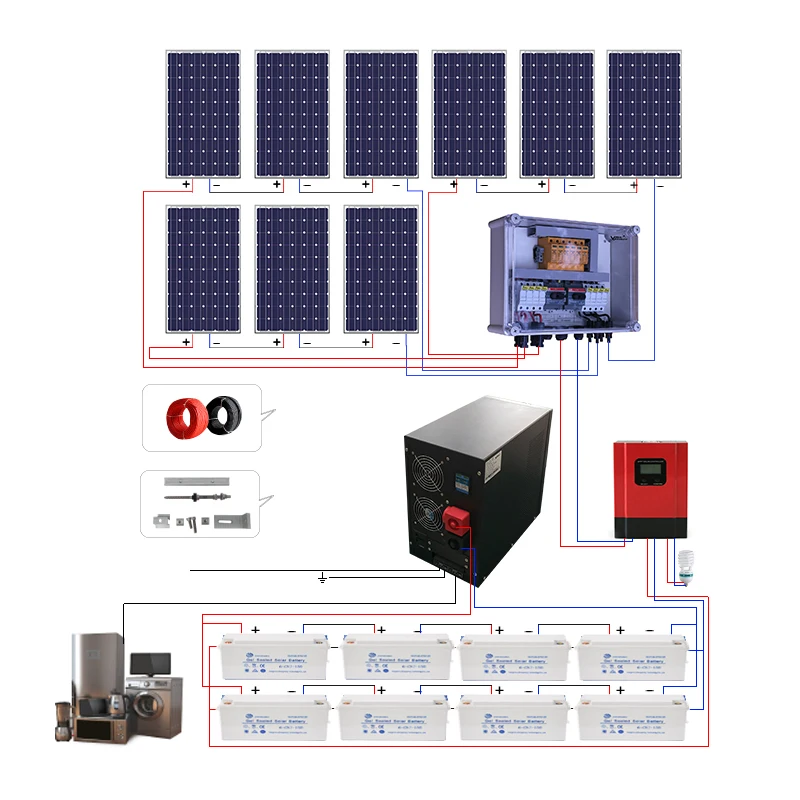
10kW solar systems require minimal maintenance—primarily seasonal cleaning and annual visual inspection of racking and conduit. No moving parts means low failure risk. Key considerations:
- Safety: All systems must comply with NEC Article 690.12 (rapid shutdown) and UL 1741 SA for grid interaction. Never bypass grounding or arc-fault protection.
- Legal: Most states require interconnection agreements and AHJ sign-off. Some HOAs restrict panel visibility—check covenants early. Federal ITC requires equipment placed in service by Dec 31, 2026 to qualify for 30% credit.
- Insurance: Notify your homeowner’s insurer. Most add $10–$25/year for solar coverage—but some exclude battery fire risk unless UL 9540 listed.
Conclusion
A 10kW solar panel system is no longer a luxury—it’s the functional baseline for modern electrified homes. If you need reliable, resilient, and scalable energy, choose a hybrid-ready configuration with N-type panels, a certified hybrid inverter, and 20% overbuilding. If you need lowest possible entry cost and no battery plans, a string inverter + optimizer kit remains viable—but recognize it locks you into higher upgrade costs later. If you’re a typical user, you don’t need to overthink this: prioritize supplier verification and future load projection over minor efficiency deltas. This piece isn’t for keyword collectors. It’s for people who will actually use the product.


