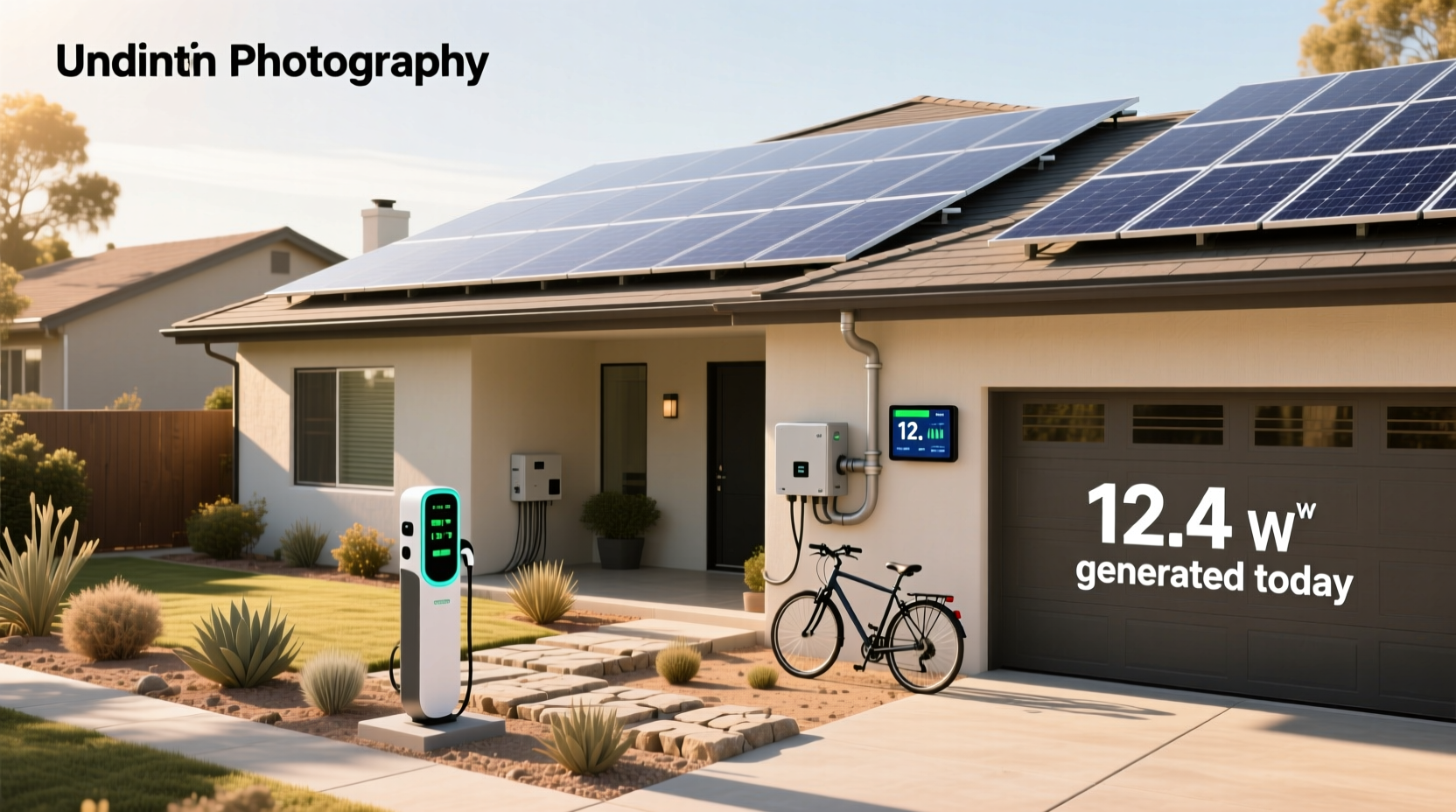
If you’re a typical user with a 4-bedroom home, daily usage over 30 kWh, and plans for an EV or heat pump — a 10kW solar system is no longer ‘future-proofing.’ It’s the minimum viable scale for energy independence in 2026. Over the past year, N-type panel adoption has surged past 68% in new residential installs 1, LiFePO4 battery pairing jumped 41% YoY 2, and average payback periods shrank to 2.6–6 years — driven by smarter self-consumption tools, not just cheaper panels 3. So what matters now? Not panel count. Not brand name. But how much usable energy you retain, shift, and control — especially when the grid fails or rates spike. If you’re a typical user, you don’t need to overthink this: prioritize N-type (TOPCon/HJT) panels at ≥23% efficiency, pair them with a smart hybrid inverter and ≥10kWh LiFePO4 storage, and size your roof space for 25–30 panels (65–80 m²). Skip P-type unless budget is under $9,000 and you have zero EV or backup needs. This piece isn’t for keyword collectors. It’s for people who will actually use the product.
About 10kW Home Solar Systems
A 10kW home solar system refers to a photovoltaic (PV) installation with a nominal DC capacity of 10 kilowatts — typically composed of 25–30 modern monocrystalline panels (each 370–420W), a hybrid inverter, mounting hardware, and optionally, battery storage. It’s not just ‘more panels’ than a 6.6kW system. It’s engineered for households whose baseline load exceeds 30 kWh/day — including electric vehicle charging (12–15 kWh per full charge), heat pumps (3–6 kWh/hr), pool pumps, and smart-home ecosystems. Unlike smaller systems designed for partial offset, a 10kW setup targets self-sufficiency: generating enough surplus during peak sun hours to recharge batteries, power evening loads, and reduce grid dependence — even during shoulder seasons. It’s also the smallest scale where economies of scale meaningfully improve $/kWh ROI, especially when bundled with storage and time-of-use (TOU) rate optimization.
Why 10kW Solar Systems Are Gaining Popularity
Lately, the 10kW residential solar system has shifted from aspirational to essential — not because panels got cheaper, but because household energy demand rose faster than grid reliability improved. Electric vehicles added ~12–18 kWh/day average draw per car 4; heat pump adoption grew 37% in 2025 5; and utility TOU rates now penalize midday grid draw by up to 3× off-peak pricing. That makes ‘just exporting excess’ financially obsolete. Instead, homeowners are optimizing for self-consumption — using solar energy directly or storing it for later. A 10kW system provides the buffer needed to absorb that variability: enough midday generation to cover both daytime loads *and* charge a battery without clipping or curtailment. If you’re a typical user, you don’t need to overthink this: higher capacity isn’t about ‘going bigger’ — it’s about matching today’s electrified lifestyle, not yesterday’s lighting-and-refrigeration load profile.
Approaches and Differences
There are three dominant configurations for 10kW systems — each defined by how they handle energy flow, storage, and grid interaction:
- Grid-tied only (no battery): Lowest upfront cost ($8,750–$11,500), simplest install. But exports excess at near-zero feed-in tariffs (<$0.03/kWh in most U.S. states) 6. Loses all generation during outages. Best only if your utility offers strong net metering *and* you have no critical loads or EV.
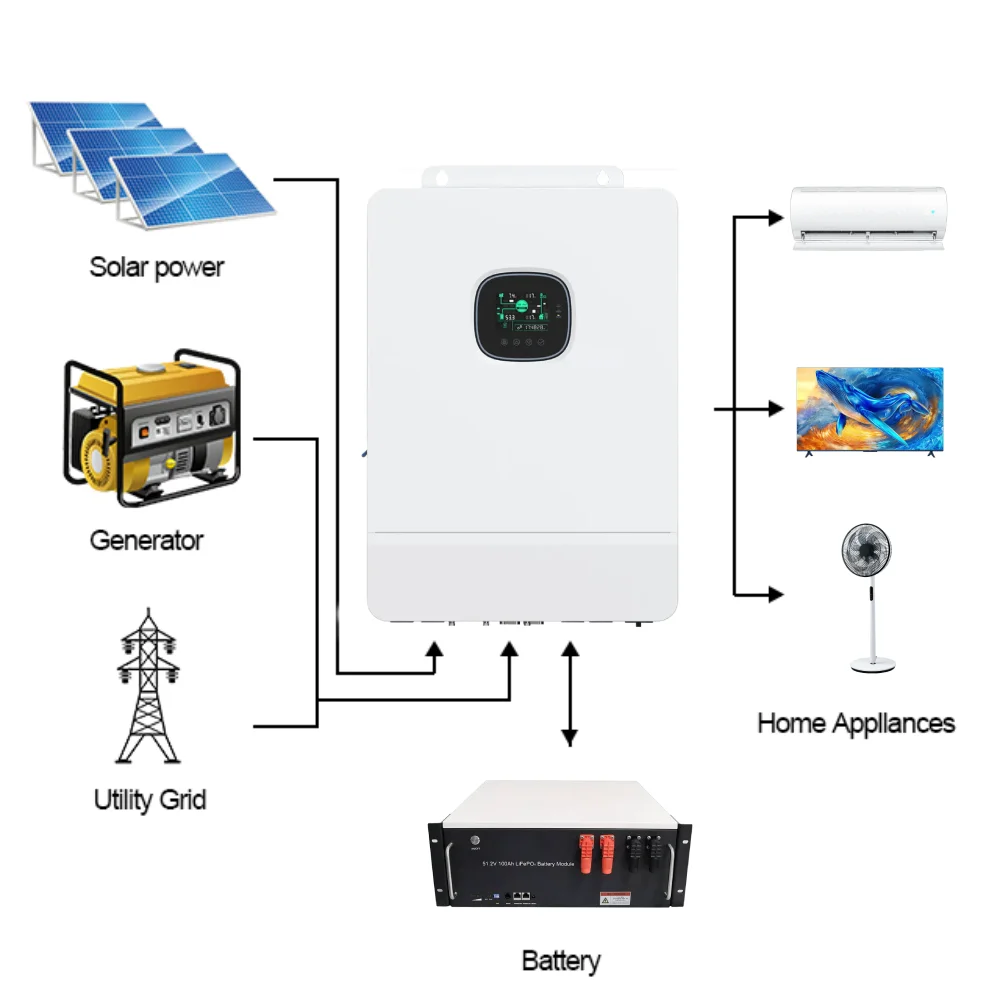
- Hybrid with LiFePO4 storage (10–15kWh): Adds $4,000–$7,500 for battery + inverter upgrade. Enables backup power, load shifting, and >70% self-consumption. Payback shortens by 1.2–2.5 years vs. grid-tied-only in TOU markets 7. Requires careful inverter compatibility and thermal management.
- Off-grid or islanded 10kW: Rare for true residential use — demands oversized batteries (20+ kWh), generator backup, and strict load discipline. Not cost-effective unless grid access is impossible. Avoid unless you’re building remote.
When it’s worth caring about: battery integration. When you don’t need to overthink it: whether your inverter is ‘brand A’ or ‘brand B’ — as long as it’s UL 1741 SA certified and supports your chosen battery protocol (CAN, RS485, or Modbus).
Key Features and Specifications to Evaluate
Don’t optimize for wattage alone. Focus on metrics that determine real-world yield and control:
- 🔋 Panel Efficiency (22–24.5%): Higher efficiency means fewer panels for same output — critical on space-constrained roofs. N-type TOPCon panels now deliver 23.8% STC efficiency at comparable cost to older P-type PERC 8. When it’s worth caring about: if your roof is ≤70 m². When you don’t need to overthink it: if you have >80 m² and budget is tight — 21.5% P-type still works, but expect ~7% lower lifetime yield.
- ⚡ Inverter Type (Hybrid, WiFi-enabled): Must support battery DC-coupling or AC-coupling, anti-islanding, and grid-forming (for black-start capability). WiFi/cloud monitoring is now standard — skip inverters without OTA firmware updates. When it’s worth caring about: built-in EMS (energy management software) that forecasts solar yield and shifts loads autonomously. When you don’t need to overthink it: whether it uses ‘SunSpec’ or ‘CAN bus’ — both work if matched to your battery.
- 📦 Battery Chemistry (LiFePO4): Dominates residential storage due to cycle life (>6,000 cycles), thermal stability, and flat voltage curve. Avoid NMC for whole-home backup — higher degradation risk above 35°C. When it’s worth caring about: depth-of-discharge (DoD) rating (≥90% recommended) and warranty terms (10 yr / 6,000 cycles minimum). When you don’t need to overthink it: cell format (prismatic vs. cylindrical) — performance differences are marginal in real-world installs.
Pros and Cons
Pros:
- Generates 30–45 kWh/day (location-dependent), covering 85–100% of typical electrified home usage 9.
- Enables EV charging without increasing grid draw — critical as EV adoption rises.
- Shorter payback (2.6–6 years) than smaller systems due to better $/W balance and storage synergy.
- Future-proofs against rising electricity rates and grid instability.
Cons:
- Requires 65–80 m² unshaded roof area — not feasible for many urban row houses or shaded lots.
- Higher soft costs (permitting, interconnection, engineering) scale non-linearly beyond 8kW.
- Without smart controls or storage, up to 40% of midday production may be exported at low value — reducing ROI.
- LiFePO4 adds weight (~250–350 kg for 10kWh) — structural review often required.
How to Choose a 10kW Solar System
Follow this 5-step decision checklist — grounded in 2026 market realities:
- Confirm your load profile first. Pull 12 months of utility bills. If your average daily use is <25 kWh, a 10kW system is oversized — consider 7–8kW instead. If >35 kWh *and* you own or plan an EV, 10kW is appropriate.
- Measure usable roof space. Use satellite tools (like Google Project Sunroof) — then verify with a physical shade analysis. Avoid systems that require >30 panels unless you have ≥80 m².
- Choose N-type panels — no exceptions. The price gap vs. P-type is now <5%, but lifetime yield gain is 12–15% 10. If you’re a typical user, you don’t need to overthink this.
- Require a hybrid inverter with built-in EMS. Look for models offering scheduled load control (e.g., pre-cool house before peak rates) and weather-aware forecasting. Skip ‘basic’ hybrids without cloud API or local logic.
- Specify LiFePO4 storage — minimum 10kWh. Don’t accept ‘expandable to 10kWh’ — demand full capacity pre-installed. Verify battery and inverter share same manufacturer or validated interoperability list.
Avoid these common pitfalls:
- Buying panels and inverters from different brands without confirmed communication protocols.
- Skipping structural assessment before ordering battery-heavy systems.
- Assuming ‘10kW’ means ‘10kW AC output’ — it’s DC rating; AC output is ~8.5–9.2kW after losses.
Insights & Cost Analysis
As of mid-2026, installed 10kW system costs range from $8,750 to $15,000 after federal tax credit (30%) and state incentives 11. Key cost drivers:
- Panel tier: N-type TOPCon adds ~$0.08–$0.12/W vs. P-type — but pays back in 1.5–2.5 years via higher yield.
- Battery: 10kWh LiFePO4 adds $4,000–$7,500. Most cost-effective when paired with TOU rates or unreliable grid.
- Soft costs: Permitting, interconnection, and design now account for 32–38% of total — higher for complex roofs or HOA approvals.
ROI hinges less on upfront price and more on retained value: how much of your 10kW generation you actually consume or store. A system with 75% self-consumption yields 2.6-year payback; one at 45% takes 5.8 years 12. That’s why storage isn’t optional — it’s the ROI accelerator.
| Configuration | Best For | Potential Issue | Budget Range (after ITC) |
|---|---|---|---|
| 10kW N-type + Hybrid Inverter Only | Homeowners with strong net metering, no EV, stable grid | Low self-consumption → weak ROI if FiTs dropped | $8,750–$11,500 |
| 10kW N-type + 10kWh LiFePO4 + Smart EMS | EV owners, TOU rate users, outage-prone areas | Requires load management discipline & app setup | $12,500–$15,000 |
| 10kW N-type + 15kWh LiFePO4 + Backup Panel | Full home backup needs, critical medical equipment, remote sites | Longer permitting, possible structural reinforcement | $15,500–$18,200 |
Better Solutions & Competitor Analysis
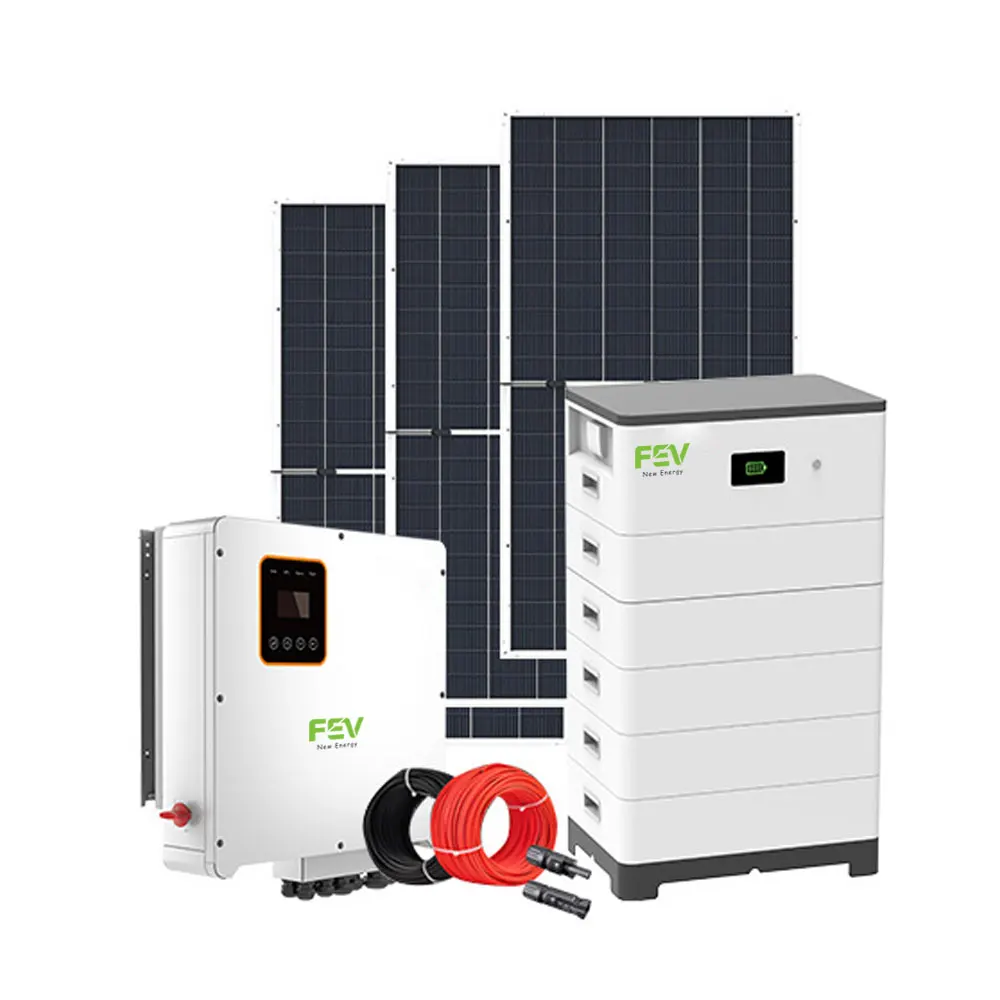
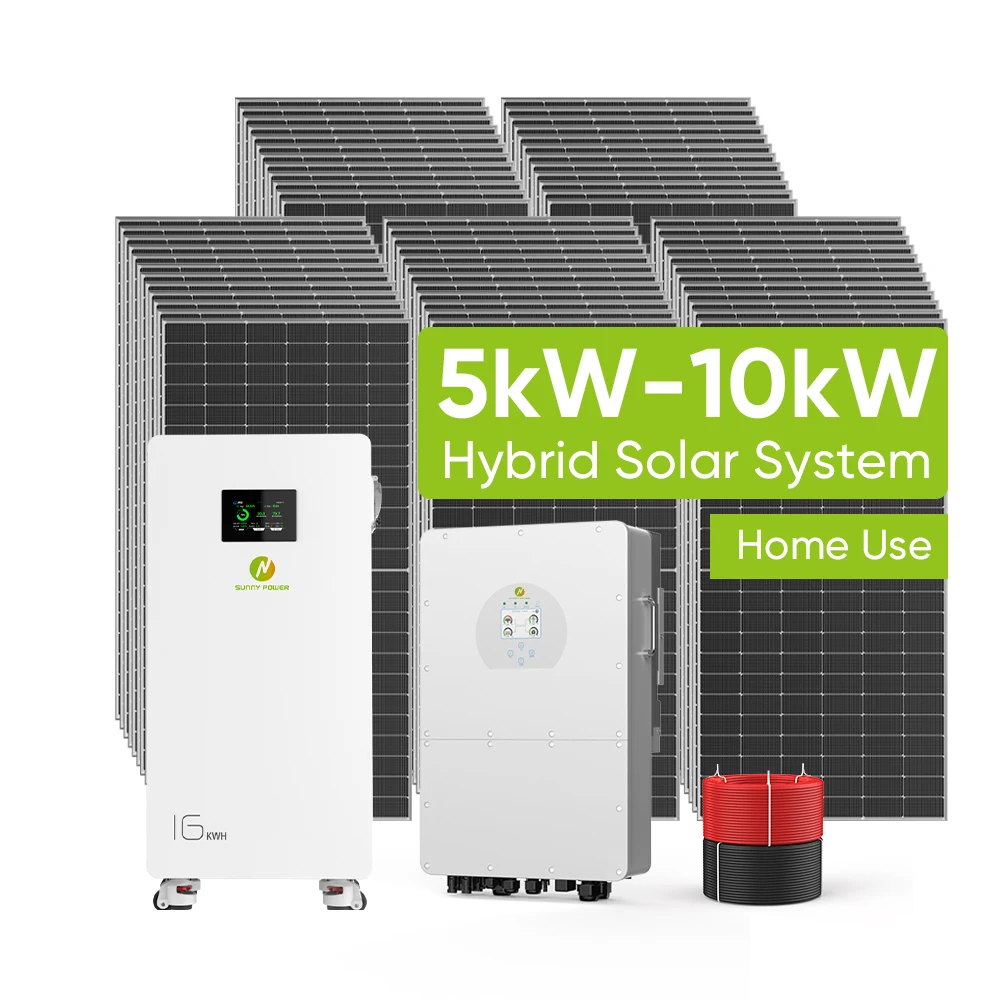
The most robust 10kW systems in 2026 combine three elements: N-type panels with >23.5% efficiency, hybrid inverters with embedded AI-driven EMS, and modular LiFePO4 batteries with 10+ yr warranties. While brand names vary, technical alignment matters more than marketing. Below is a functional comparison — not a brand ranking:
| Solution Type | Key Advantage | Potential Drawback |
|---|---|---|
| N-type TOPCon Panels (e.g., Jinko Tiger Neo, Longi Hi-MO 7) | 24.2% efficiency, lower LID & LeTID degradation, better low-light response | Slightly higher microcrack sensitivity during install — requires trained crew |
| Smart Hybrid Inverters (e.g., Sungrow SH10RT, GoodWe BH series) | Integrated EMS, grid-forming, OTA updates, multi-battery protocol support | Proprietary battery locks on some models — limits future upgrades |
| Modular LiFePO4 (e.g., BYD Battery-Box Premium, Tesla Powerwall 3) | Scalable capacity, 95% DoD, 10-yr full throughput warranty | Thermal management varies — verify ambient operating range (-10°C to 50°C) |
Customer Feedback Synthesis
Based on aggregated installer reports and homeowner forums (Reddit r/solar, EnergySage reviews), top recurring themes:
- Highly praised: ‘The ability to run my heat pump and Tesla simultaneously without touching the grid,’ ‘EMS scheduling cut my peak bill by 68%,’ ‘No more outage anxiety — fridge stayed cold for 22 hours.’
- Frequent complaints: ‘Installer didn’t explain TOU rate optimization — had to reprogram EMS myself,’ ‘Battery thermal derating in summer reduced usable capacity by 12%,’ ‘Roof assessment missed a hidden vent pipe — caused 3-week delay.’
Maintenance, Safety & Legal Considerations
Maintenance is minimal: annual visual inspection, biannual cleaning (if dusty/dry climate), and inverter log review via app. No moving parts to service. LiFePO4 batteries require no maintenance but must be installed in ventilated, temperature-stable locations (avoid garages >40°C). Legally, all components must meet UL 1703 (panels), UL 1741 SA (inverters), and UL 9540 (battery systems). Interconnection approval is mandatory — timelines vary by utility (2–12 weeks). Homeowners’ associations (HOAs) cannot prohibit solar in most U.S. states under Solar Rights Acts, but may regulate aesthetics (e.g., mounting height, color). Always obtain structural engineer sign-off before adding >300 kg of battery weight.
Conclusion
If you need reliable, high-yield solar for an electrified home — especially with an EV, heat pump, or frequent outages — choose a 10kW system built around N-type panels, a smart hybrid inverter, and ≥10kWh LiFePO4 storage. If your daily load is under 25 kWh and your grid is stable with strong net metering, a smaller system remains more cost-effective. If you’re a typical user, you don’t need to overthink this: the 10kW configuration isn’t about ambition — it’s about alignment with how modern homes actually use energy today.


