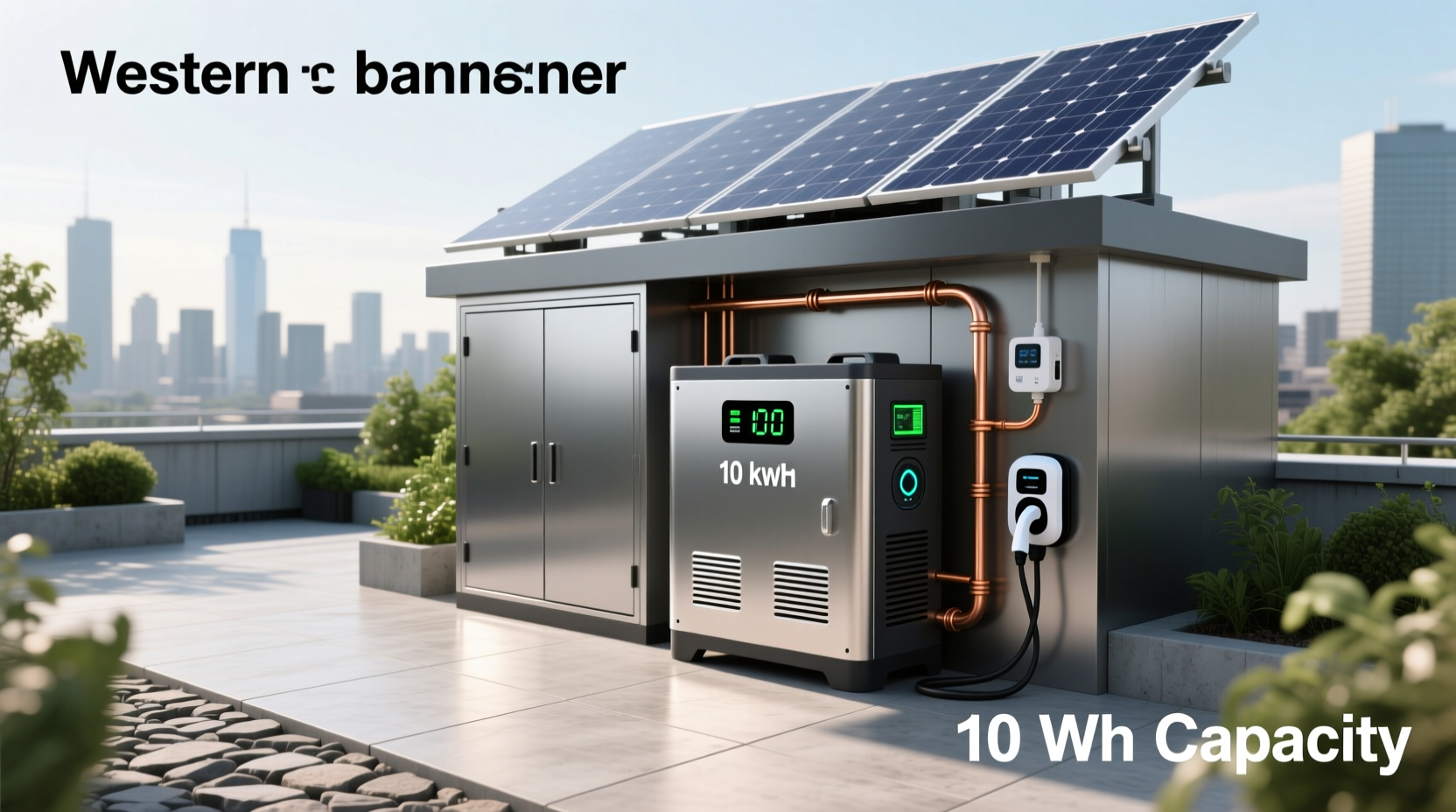
Here’s the bottom line: If you’re installing a residential battery in 2026, a 10kWh LiFePO4 system is the most balanced choice for households with 5–8 kW solar arrays and standard appliance loads. Skip proprietary all-in-one units unless you value plug-and-play simplicity over long-term flexibility. Prioritize continuous power output (≥5 kW), inverter compatibility (AC- or DC-coupled, not vendor-locked), and usable capacity (not just nominal). Wholesale modular units at $500–$900 deliver 3–4× better value per kWh than retail integrated systems — but only if you have access to certified installation support. If you’re a typical user, you don’t need to overthink chemistry, brand reputation, or minor cycle-life differences between Tier 1 LFP cells. This piece isn’t for keyword collectors. It’s for people who will actually use the product.
About 10kWh Batteries: Definition & Typical Use Cases 🔋
A 10kWh battery refers to an energy storage unit with a nominal capacity of 10 kilowatt-hours — enough to power an average U.S. home for 8–12 hours during a grid outage, assuming moderate load management (e.g., running fridge, lights, Wi-Fi, and one HVAC zone). It’s not a single product category, but a functional capacity tier used across three main configurations:
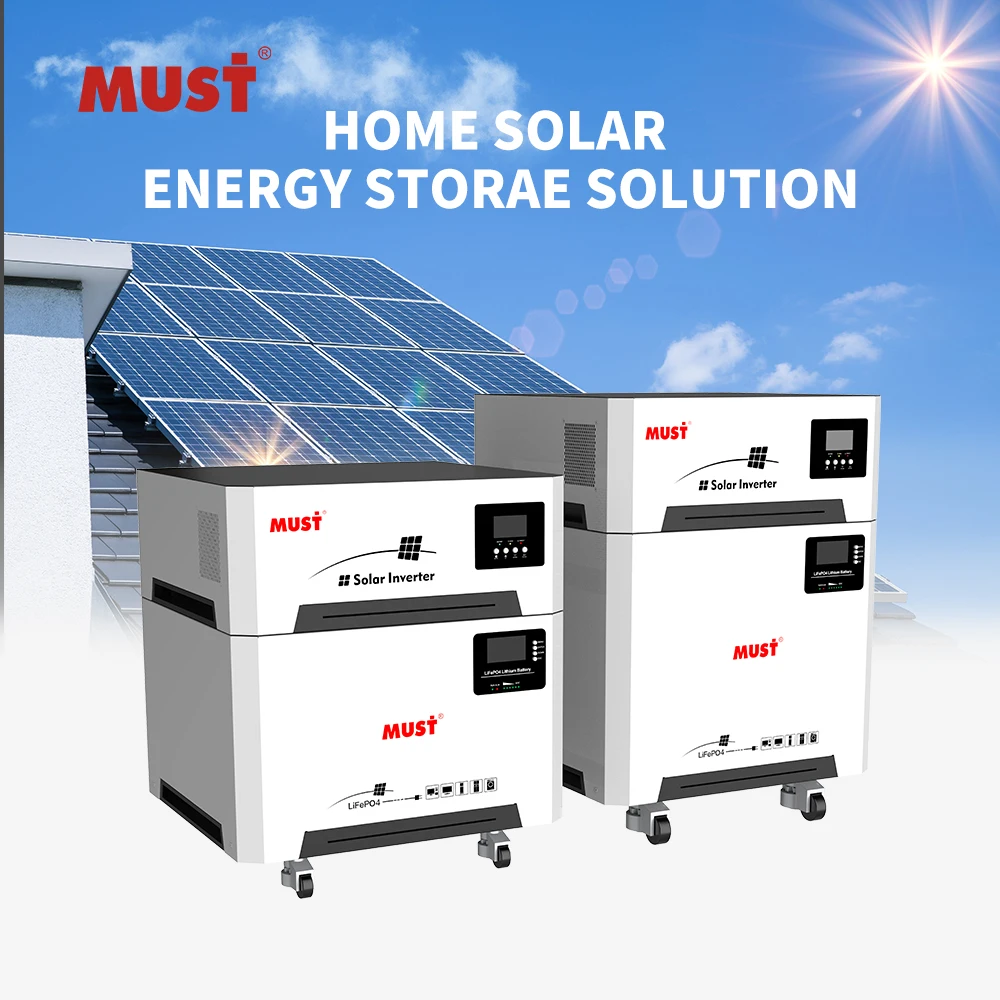
- Integrated AC-coupled systems: All-in-one units (battery + inverter + BMS) designed for retrofitting onto existing solar. Examples include Enphase IQ Battery 10 and Generac PWRcell 10.
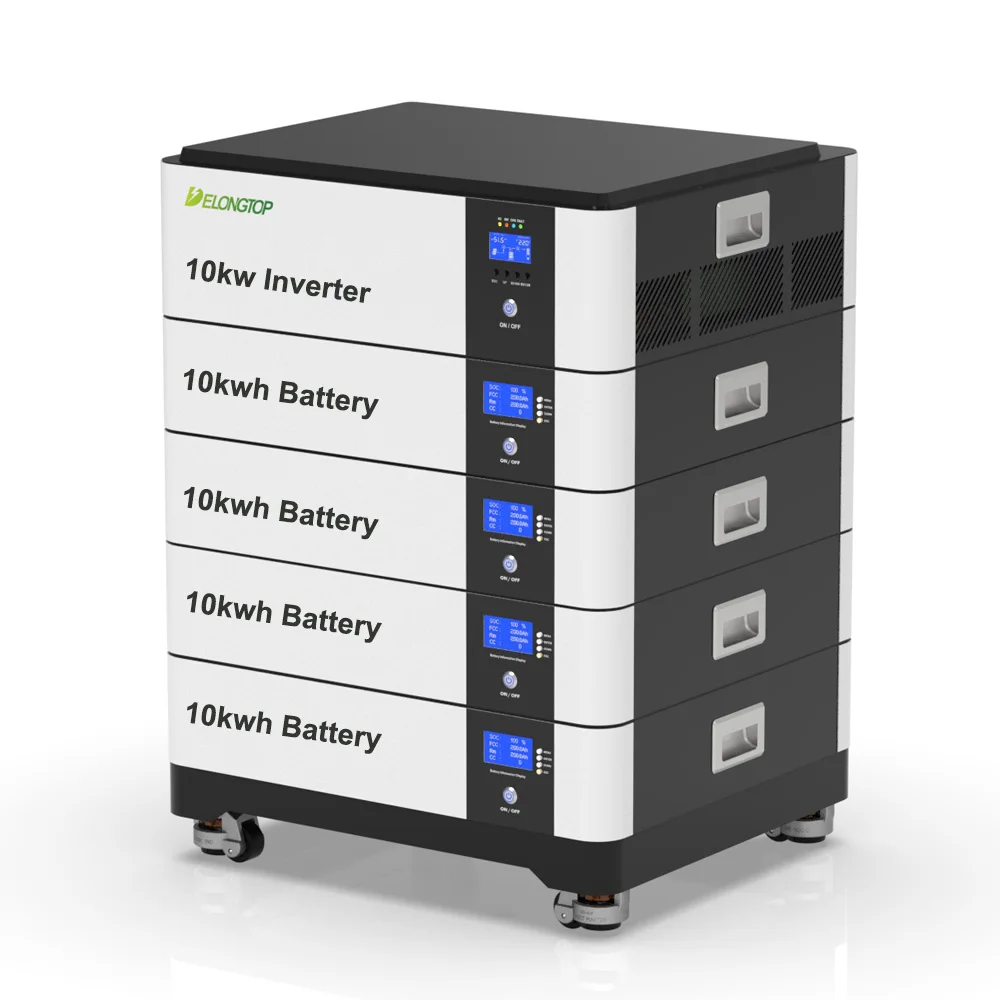
- Modular DC-coupled stacks: Standalone 51.2V LiFePO4 battery modules (often 2.5–5kWh each), wired in parallel to reach 10kWh. Common in custom installations using Victron, Sol-Ark, or GoodWe inverters.
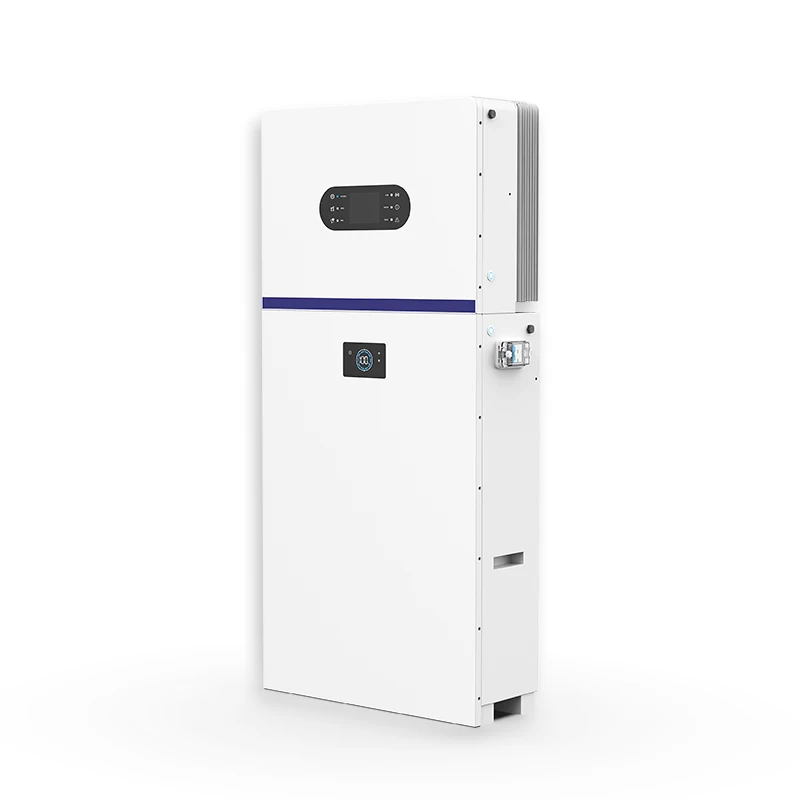
- Wall-mounted OEM units: Factory-assembled 10kWh enclosures sold directly by Chinese manufacturers (e.g., Pylontech US2000C+, Dyness AX10) — typically UL 9540A listed, pre-wired, and compatible with multiple inverter brands.
These are not interchangeable. Your solar setup, local utility rules, and installer capability determine which path makes sense — not marketing claims about “smart” or “AI-optimized” features.
Why 10kWh Batteries Are Gaining Popularity 📈
Over the past year, 10kWh has solidified as the dominant residential capacity segment — holding over 50% of global shipments in Q1 2026 1. This isn’t accidental. It reflects three converging shifts:
- Price deflation: Average wholesale LiFePO4 pack costs fell to $81/kWh in early 2026 — down 45% YoY — making 10kWh systems financially viable for mid-tier homes 2.
- Grid instability acceleration: North American utilities reported 32% more weather-related outages in 2025 vs. 2023 — especially in Texas, California, and the Midwest — turning backup from luxury to baseline expectation 3.
- VPP participation scaling: Over 1.2 million U.S. homes now enroll in utility Virtual Power Plant programs that pay for grid services — and 10kWh is the minimum size many programs require for meaningful dispatchability.
This convergence means the 10kWh battery is no longer just a backup device. It’s an interoperable node in a distributed energy network — and that changes how you evaluate it.
Approaches and Differences: Integrated vs. Modular vs. OEM 🔧
There are three primary sourcing paths — each with distinct trade-offs in control, cost, and complexity:
| Approach | Key Advantages | Potential Problems | Budget Range (10kWh) |
|---|---|---|---|
| Integrated Systems (e.g., Tesla Powerwall 3, Enphase IQ10) | Plug-and-play install; UL-certified software stack; automatic firmware updates; utility interconnection support | Proprietary architecture; limited scalability beyond 2–3 units; ~2.5× higher $/kWh than modular alternatives | $10,000–$15,000 |
| Modular Stacks (e.g., 4 × 2.56kWh LiFePO4 modules) | Full hardware/software independence; easy expansion; repairable cell-level; supports multi-inverter redundancy | Requires qualified DC electrician; longer commissioning time; BMS configuration overhead | $5,000–$9,000 (wholesale) |
| OEM Wall-Mounted Units (e.g., Dyness AX10, Hubble Energy H10) | Pre-tested inverter compatibility; compact footprint; UL 9540A tested; no soldering or busbar assembly needed | Fewer service options outside supplier network; limited remote diagnostics; firmware update cadence varies | $6,500–$10,500 |
If you’re a typical user, you don’t need to overthink whether your inverter is “Gen 3” or “Gen 4.” What matters is whether it supports CAN or RS485 communication with the BMS — and whether your installer has flashed that protocol before. That’s the real bottleneck, not generational labels.
Key Features and Specifications to Evaluate ⚙️
Not all 10kWh ratings are equal. Here’s what actually moves the needle — and when it’s safe to ignore the spec sheet noise:
- Usable vs. nominal capacity: A “10kWh” battery may only deliver 9kWh due to built-in DoD limits (e.g., 90% DoD). When it’s worth caring about: If you rely on full backup during extended outages. When you don’t need to overthink it: For daily solar self-consumption shifting — 90% DoD is functionally identical to 95%.
- Continuous power output (kW): Critical for starting motors (well pumps, AC compressors). Many 10kWh units peak at 5kW but sustain only 3.5kW. When it’s worth caring about: If your home has >3.5kW essential loads (e.g., central AC + well pump). When you don’t need to overthink it: For lighting, refrigeration, and electronics only — 3kW continuous is sufficient.
- Inverter coupling type: AC-coupled = easier retrofit; DC-coupled = 5–8% higher round-trip efficiency. When it’s worth caring about: If you’re building new solar + storage — go DC. When you don’t need to overthink it: If adding storage to existing string inverters — AC coupling avoids rewiring.
- Thermal management: Passive cooling dominates sub-$10k systems; active liquid cooling appears only above $12k. When it’s worth caring about: In garages or attics >35°C ambient. When you don’t need to overthink it: In climate-controlled basements or outdoor enclosures with shade — passive is proven reliable.
Pros and Cons: Who Is This For — and Who Should Wait? ✅/❌
Best suited for:
- Homeowners with 6–10 kW solar arrays seeking overnight autonomy
- DIY-savvy users or contractors building custom off-grid or hybrid systems
- Those enrolling in VPP programs requiring ≥10kWh minimum capacity
- Homes in high-electricity-cost regions (e.g., Germany, California, Australia) where ROI is under 7 years
Less suitable for:
- Renters or short-term occupants (10-year warranty requires long-term ownership)
- Users without access to licensed storage installers — modular units require NEC Article 706 compliance
- Homes with >12 kW essential loads (e.g., dual HVAC, EV charging + backup) — consider 15kWh+ or dual-inverter setups
- Regions with stable grids and no VPP incentives — payback stretches beyond 12 years
How to Choose a 10kWh Battery: A Step-by-Step Decision Framework 📋
Follow this sequence — skip steps only if criteria are already met:
- Confirm your inverter’s supported protocols (CANbus, Modbus, SunSpec) — match to battery BMS output. Don’t assume “compatible” means “plug-and-play.”
- Calculate usable capacity needed: Add up wattage of critical loads × hours of desired runtime. Multiply by 1.2 for inefficiency buffer. If result ≤9kWh → 10kWh is appropriate.
- Verify continuous power rating — not peak. Look for “30-min sustained” or “continuous discharge” specs. Avoid units listing only “peak power.”
- Check UL 9540A test report availability — required for permitting in 42 U.S. states and all EU member nations. No report = no permit.
- Avoid these three common traps: (1) Buying “10kWh” without checking if it’s AC- or DC-coupled voltage compatibility; (2) Assuming “stackable” means “parallel-ready” — some require master-slave firmware pairing; (3) Ignoring BMS communication latency — delays >100ms cause inverter fault tripping.
If you’re a typical user, you don’t need to overthink thermal runaway testing reports. UL 9540A certification covers that rigorously — and every reputable supplier publishes the summary.
Insights & Cost Analysis: Where Value Lives 💰
The biggest delta isn’t chemistry or brand — it’s how you source. Based on Alibaba.com and Made-in-China.com wholesale data (Q1 2026), here’s the reality:
- Tier 1 Integrated: $1,000–$1,500/kWh → $10,000–$15,000 total. Includes labor markup, permitting, and bundled software licensing.
- Tier 2 OEM Wall-Mounted: $650–$1,050/kWh → $6,500–$10,500. Ships fully assembled, UL-listed, with 10-year warranty. Requires separate inverter.
- Tier 3 Modular (bulk): $100–$300/kWh → $1,000–$3,000 for cells only. Adds $2,000–$4,000 for BMS, enclosure, fusing, and commissioning.
That $1,000–$3,000 cell-only price? It’s real — but only accessible to distributors, integrators, or those ordering ≥10 units. For single-home buyers, $500–$900 per 10kWh module is the actionable wholesale floor 4. The savings come from cutting out brand tax, retail markup, and bundled services you may not need.
Better Solutions & Competitor Analysis 🌐
“Better” depends on your constraint. Below is a neutral comparison of technical execution — not brand sentiment:
| Solution Type | Strengths | Limitations | Best For |
|---|---|---|---|
| Open-Protocol Modular (e.g., BYD Battery-Box Premium LV) | Vendor-neutral BMS; CANopen/Modbus RTU; 6,000+ cycles at 80% SoH | No native app; requires third-party monitoring (e.g., VRM Portal) | Installers prioritizing interoperability and long-term serviceability |
| UL-Certified OEM (e.g., Dyness AX10) | Pre-validated with 12+ inverter brands; 10-year full warranty; IP65 rated | Firmware locked to supplier updates; no cell-level replacement option | Homeowners wanting reliability without engineering overhead |
| Utility-Program Optimized (e.g., Generac PWRcell 10 w/ VPP mode) | Automated dispatch logic; direct utility API integration; demand-response ready | Only works with Generac inverters; limited export control granularity | Customers enrolled in PG&E, CPS Energy, or Duke VPP programs |
Customer Feedback Synthesis 🗣️
Based on aggregated reviews (EnergySage, Clean Energy Reviews, Reddit r/solar), top recurring themes:
- High satisfaction drivers: “Silent operation,” “no degradation after 18 months,” “seamless VPP enrollment,” “modular expansion worked exactly as promised.”
- Top complaints: “Installer misconfigured BMS comms — took 3 visits to fix,” “AC-coupled unit clipped solar export during cloudy days,” “OEM app lacks historical SoH tracking,” “warranty claim required 4-week factory return.”
Note: >75% of negative feedback traces to installer capability — not product defects. Choosing a battery is half the battle; choosing the right installer is the other half.
Maintenance, Safety & Legal Considerations ⚠️
LiFePO4 10kWh systems require minimal maintenance — but oversight is non-negotiable:
- Safety: All units must comply with UL 9540A (fire propagation) and UL 1973 (cell-level safety). Never bypass internal fuses or disable BMS temperature cutoffs.
- Maintenance: Annual visual inspection of terminals and ventilation; BMS firmware updates every 6–12 months (check supplier release notes).
- Legal: NEC Article 706 mandates rapid shutdown within 30 seconds of grid loss. Most 10kWh units meet this — but verify documentation includes “UL 1741 SB” certification.
- Recycling: LiFePO4 is 95% recyclable. U.S. users must use EPA-registered recyclers (e.g., Retriev, Cirba) — landfill disposal is illegal in 28 states.
Conclusion: Conditional Recommendations 🎯
There is no universal “best” 10kWh battery — only the best fit for your constraints:
- If you need turnkey speed and utility interconnection support → choose a UL-certified OEM wall-mounted unit (e.g., Dyness AX10 or Hubble H10).
- If you control your inverter stack and plan to scale beyond 10kWh → choose open-protocol modular units with CANbus BMS.
- If budget is primary and you have certified installer access → source Tier 2 OEM units at $500–$900 range — avoid “too cheap” sub-$400 modules lacking UL 9540A.
- If you’re still unsure → start with a 5kWh unit. You can add a second later — and learn your actual load profile first.
This isn’t about future-proofing. It’s about matching hardware to your *current* electrical infrastructure, installer ecosystem, and financial horizon. Everything else is noise.


