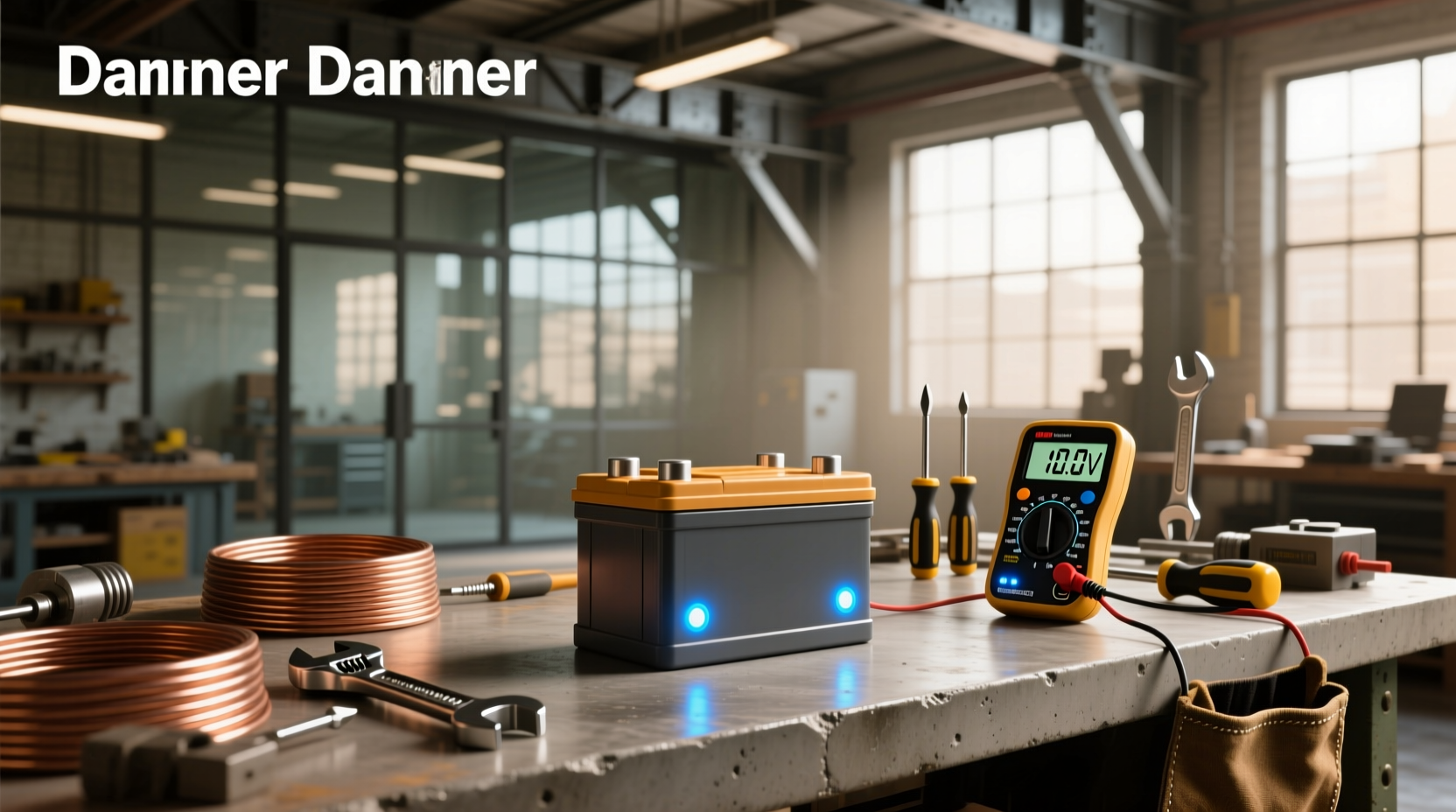
Over the past year, confusion around “10 volt battery” has intensified—not because more 10.0V cells exist, but because three distinct battery types now routinely measure near 10V under real-world conditions: 10.8V lithium-ion packs (for power tools), 9.6V Ni-MH packs (for legacy electronics), and fresh 9V alkaline batteries (which read ~9.9–10.2V off the shelf)12. If you’re a typical user replacing a smoke detector, powering a cordless drill, or sourcing for OEM tool kits, you don’t need to overthink this: match your device’s nominal voltage spec first—then verify chemistry and discharge capability. Don’t substitute a 10.8V Li-ion pack into a 9.6V Ni-MH device—even if both read ~10V at rest. This piece isn’t for keyword collectors. It’s for people who will actually use the product.
About 10 Volt Batteries: Definition and Typical Use Cases
The phrase “10 volt battery” is not a standardized cell format—it’s a voltage proximity descriptor. No major international standard defines a 10.0V primary or rechargeable cell. Instead, users encounter batteries in this range through three well-established categories:
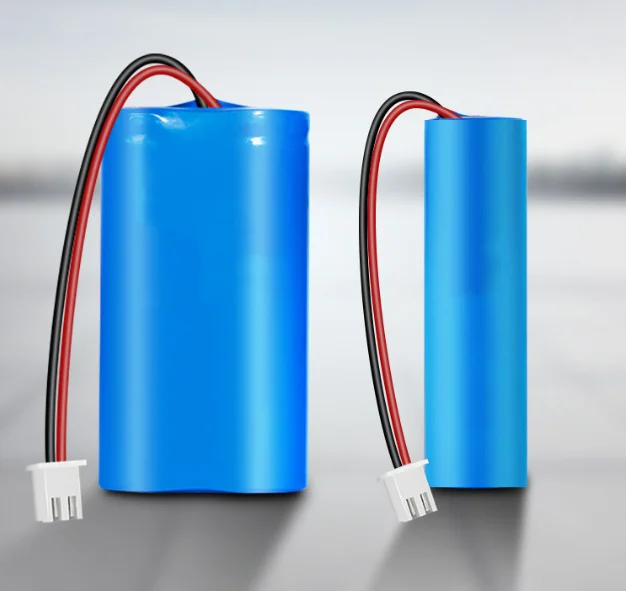
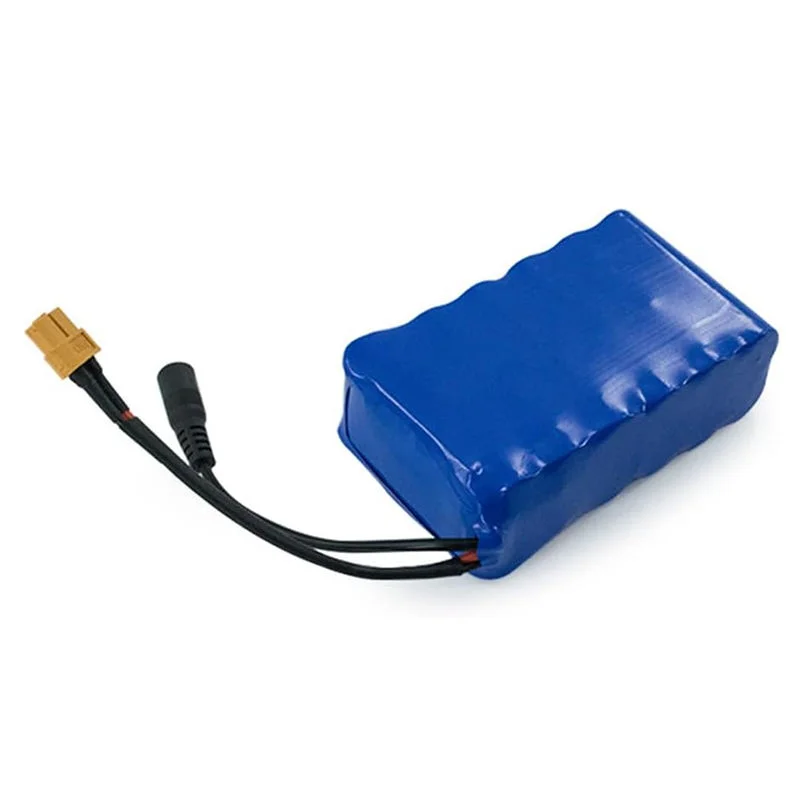
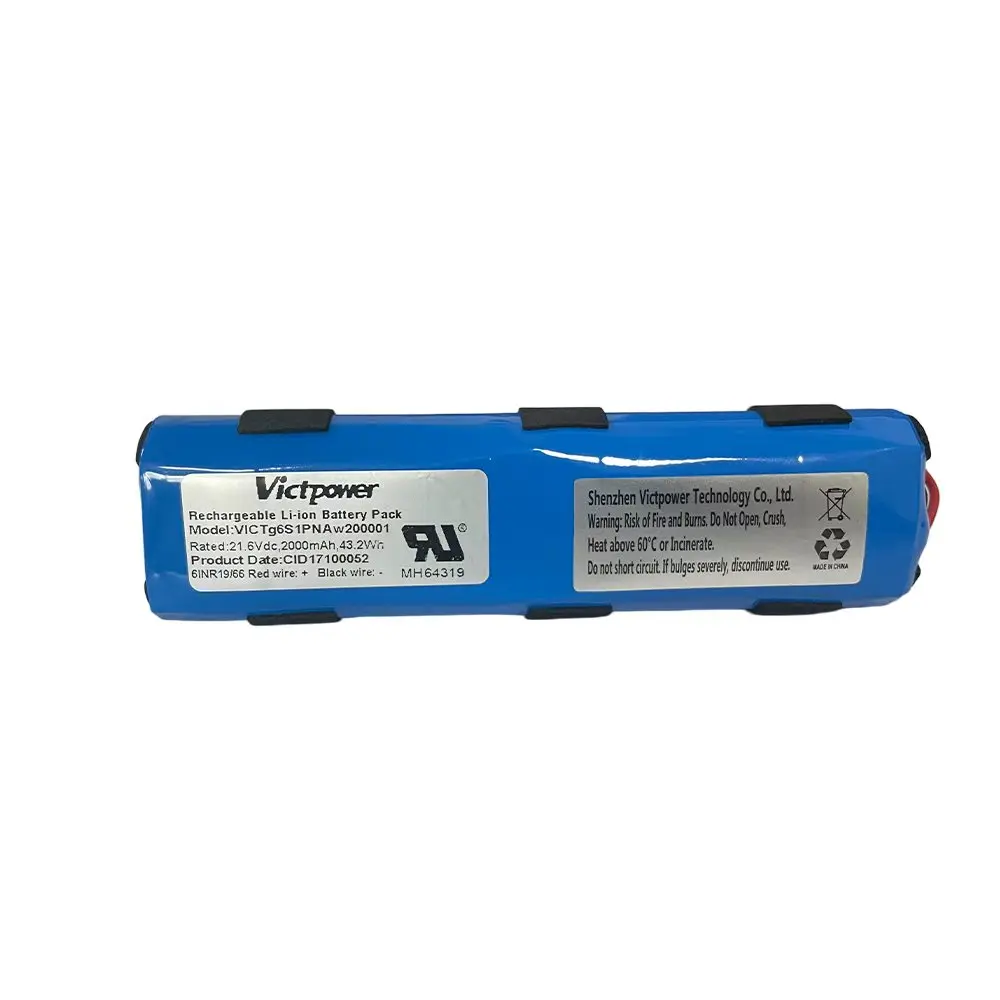
- 🔋10.8V Lithium-ion (Li-ion) packs: Three 3.6V cells in series. Dominant in modern cordless power tools (e.g., drills, impact drivers), portable medical monitors, and some UAV ground stations. Nominal voltage is fixed at 10.8V; fully charged voltage reaches ~12.6V, resting voltage ~11.1V, and cutoff ~9.0V.3
- 🔋9.6V Nickel-Metal Hydride (Ni-MH) packs: Eight 1.2V cells in series. Still used in older industrial test equipment, RC transmitters, and legacy security panels. Voltage stays relatively flat (~9.6–10.4V) during discharge but drops sharply near end-of-life.
- 🔋Fresh 9V alkaline (PP3): Six 1.5V zinc-carbon or alkaline cells internally. Measures ~9.9–10.2V when brand-new and unused, then settles to ~9.0V within hours of load application. Common in smoke alarms, guitar pedals, and handheld multimeters.
When it’s worth caring about: You’re integrating into a safety-critical system (e.g., fire alarm backup), designing a custom PCB with tight voltage tolerances, or procuring at scale for OEM tool rebranding.
When you don’t need to overthink it: Replacing a dead 9V in your carbon monoxide detector—or swapping a worn-out 10.8V drill battery with an identical-spec replacement.
Why 10 Volt Batteries Are Gaining Popularity
Lately, demand for batteries operating in the 9.6–10.8V range has accelerated—not due to new chemistry breakthroughs, but because of application convergence. Compact power tools now require higher energy density without weight penalty; low-power IoT sensors need stable voltage windows that align with LDO regulator inputs; and legacy industrial gear remains in service longer than expected. The global lithium-ion battery market alone is projected to grow at a 14.2% CAGR through 2036, with 10.8V configurations representing the largest volume segment for sub-12V professional tools3. Meanwhile, sustainability pressures are pushing manufacturers toward second-life reuse programs for spent 10.8V packs—especially in stationary energy buffering for solar microgrids4. This shift makes long-term supply chain planning more urgent—and increases scrutiny on cycle life, BMS integration, and recycling certifications.
Approaches and Differences
Three approaches dominate the 10V-range landscape. Each serves different priorities—and misalignment causes most field failures.
| Category | Key Strengths | Key Limitations | Budget Range (USD) |
|---|---|---|---|
| 10.8V Li-ion Packs | High energy density (Wh/kg), lightweight, low self-discharge (~2%/month), integrated BMS standard in 2026 models | Requires dedicated charger; sensitive to over-discharge (<9.0V); limited high-temp performance; recycling infrastructure still developing | $12–$45 per pack |
| 9.6V Ni-MH Packs | Wide temperature tolerance (-20°C to 60°C), excellent cycle life (1200+ cycles), tolerant of partial charging | Higher self-discharge (20–30%/month), heavier than Li-ion, voltage sag under load, declining OEM support | $8–$22 per pack |
| Fresh 9V Alkaline | Ubiquitous, shelf-stable (up to 10 years), zero charging needed, safe disposal (non-rechargeable) | Low capacity (~565 mAh typical), poor high-drain performance, voltage drops rapidly under load, not rechargeable | $1.20–$4.50 per unit |
If you’re a typical user, you don’t need to overthink this: For cordless tools, choose 10.8V Li-ion. For vintage test gear or budget-sensitive deployments, 9.6V Ni-MH remains viable. For smoke detectors and low-power sensors, premium 9V alkalines (e.g., Energizer Ultimate Lithium or Panasonic Evolta) deliver best-in-class shelf life and cold-weather reliability.
Key Features and Specifications to Evaluate
Selecting wisely means looking beyond voltage labels. Four specs determine real-world suitability:
- Nominal voltage tolerance: Confirm your device accepts ±0.3V deviation. A 10.8V tool designed for 10.8V±0.2V may disable or throttle output if fed a 9.6V pack—even if both show “10V” on a multimeter.
- Capacity (mAh or Ah): Not interchangeable across chemistries. A 2000 mAh 9.6V Ni-MH delivers ~19.2 Wh; a 2000 mAh 10.8V Li-ion delivers ~21.6 Wh—12.5% more usable energy.
- Discharge rate (C-rating): Power tools demand ≥2C continuous discharge; a smoke detector needs only 0.01C. Using a low-C 9.6V Ni-MH pack in a high-torque drill risks thermal shutdown.
- Cycle life & BMS features: Modern 10.8V Li-ion packs include cell balancing, overcurrent protection, and state-of-charge estimation. Verify BMS firmware supports your charger protocol—especially for third-party replacements.
When it’s worth caring about: You’re managing a fleet of 50+ tools or deploying 200+ remote sensors.
When you don’t need to overthink it: Swapping one 10.8V battery for another from the same OEM—same model number, same revision.
Pros and Cons
✅ 10.8V Li-ion wins for: Weight-sensitive applications (handheld tools), high-drain intermittent loads, long shelf life *when stored at 40–60% charge*, and compact form factors.
⚠️ 10.8V Li-ion struggles with: Extreme cold (<0°C), unregulated charging environments, and applications requiring >5-year maintenance-free operation without monitoring.
✅ 9.6V Ni-MH wins for: Wide ambient temperature ranges, partial-charge flexibility, predictable end-of-life voltage drop (enables simple low-battery warnings), and cost-per-cycle longevity in moderate-use scenarios.
⚠️ 9.6V Ni-MH struggles with: Shelf storage (>6 months without refresh), weight constraints, and devices expecting flat voltage profiles (e.g., analog meter movements).
✅ Fresh 9V alkaline wins for: Ultra-low-cost deployment, zero-maintenance installations (smoke alarms), simplicity, and regulatory compliance in consumer-grade products.
⚠️ Fresh 9V alkaline struggles with: Any application drawing >25 mA continuously, environments below -10°C, or systems requiring >12 months of uninterrupted operation.
How to Choose a 10 Volt Battery: A Step-by-Step Decision Guide
Follow this checklist before ordering—or before installing:
- Verify device nameplate voltage: Look for “Input: 10.8V DC” or “Battery: 9.6V Ni-MH”. Do not rely on multimeter readings of old batteries.
- Identify required chemistry: Check user manual or OEM parts list. Substituting Li-ion for Ni-MH can damage internal regulators.
- Assess load profile: Is current draw steady (e.g., sensor logging) or pulsed (e.g., impact driver)? Match C-rating accordingly.
- Review environmental conditions: Below 0°C? High humidity? Vibration exposure? Ni-MH often outperforms Li-ion here.
- Avoid these common errors:
- Using a 10.8V Li-ion pack in a 9.6V Ni-MH charger (fire risk)
- Assuming “10V” on packaging guarantees compatibility with 10.8V tools
- Storing Li-ion fully charged for >3 months (accelerates degradation)
If you’re a typical user, you don’t need to overthink this: Match the OEM part number first. Then confirm voltage, chemistry, and physical footprint. Everything else follows.
Insights & Cost Analysis
Price alone misleads. Consider total cost of ownership:
- A $15 generic 10.8V Li-ion pack may last 300 cycles before capacity drops to 70%. At $0.05/cycle, it’s economical—if you replace it every 6 months.
- A $22 branded 9.6V Ni-MH pack lasts 1200 cycles. At $0.018/cycle, it wins for infrequent, long-duration use—even with higher upfront cost.
- A $2.50 premium 9V alkaline lasts 5–7 years in a smoke detector. Its effective cost is <$0.0005/hour of standby operation.
For procurement teams: Bulk orders of 10.8V Li-ion packs from Shenzhen-based ODMs (e.g., General Electronics Technology) start at $8.90/unit MOQ 1,000—provided BMS firmware and connector type are pre-validated5.
Better Solutions & Competitor Analysis
While no universal “best” exists, smarter integration is emerging:
| Solution Type | Best For | Potential Issue | OEM Supplier Examples |
|---|---|---|---|
| Smart 10.8V Li-ion with BLE telemetry | Fleet management, predictive maintenance, tool usage analytics | Requires gateway infrastructure; adds $3–$5/unit cost | Bak Technology, TTI (Milwaukee), Bosch Professional |
| Hybrid 9.6V Ni-MH + Li-ion hybrid packs | Military/comms gear needing wide temp + high pulse power | Complex BMS; limited commercial availability | Saft, Tadiran |
| Long-life 9V lithium (Li-FeS₂) | Smoke alarms, asset trackers, cold-storage sensors | Non-rechargeable; higher unit cost than alkaline | Energizer Ultimate Lithium, Panasonic Evolta |
Customer Feedback Synthesis
Based on aggregated reviews (Amazon, ToolGuyD, BatterySpace forums, and industrial distributor feedback):
- Top praise for 10.8V Li-ion: “Same torque as OEM,” “charges in 45 minutes,” “no memory effect.”
- Top complaint for 10.8V Li-ion: “Third-party pack failed after 18 months—BMS stopped reporting SOC accurately.”
- Top praise for 9.6V Ni-MH: “Still works after 5 winters in a gate controller,” “easy to refresh with basic charger.”
- Top complaint for 9V alkaline: “Died in 8 months in a garage sensor—likely due to temperature swings.”
Maintenance, Safety & Legal Considerations
All 10V-range batteries require responsible handling:
- Li-ion: Never puncture, incinerate, or immerse. Store at 40–60% charge in cool, dry locations. Discard if swollen or leaking.
- Ni-MH: Fully discharge every 3–6 months to prevent voltage depression (not memory effect). Avoid deep freeze storage.
- Alkaline: Remove from devices before long-term storage. Do not mix old/new or different brands in same device.
Regulatory note: Shipping >100 units of Li-ion batteries internationally requires UN38.3 test reports and proper Class 9 hazardous material labeling. Ni-MH and alkaline face fewer restrictions—but always verify carrier requirements.
Conclusion
If you need high power in minimal weight, choose a certified 10.8V Li-ion pack with documented BMS compatibility. If you need reliability across extreme temperatures and decades of service life, 9.6V Ni-MH remains technically sound—and often more cost-effective over time. If you need zero-maintenance, ultra-low-risk operation for low-drain electronics, invest in long-shelf-life 9V alkalines (look for 10-year rating and lithium-iron disulfide variants). There is no universal “10 volt battery.” There is only the right voltage, chemistry, and specification—for your exact use case, environment, and duty cycle.


