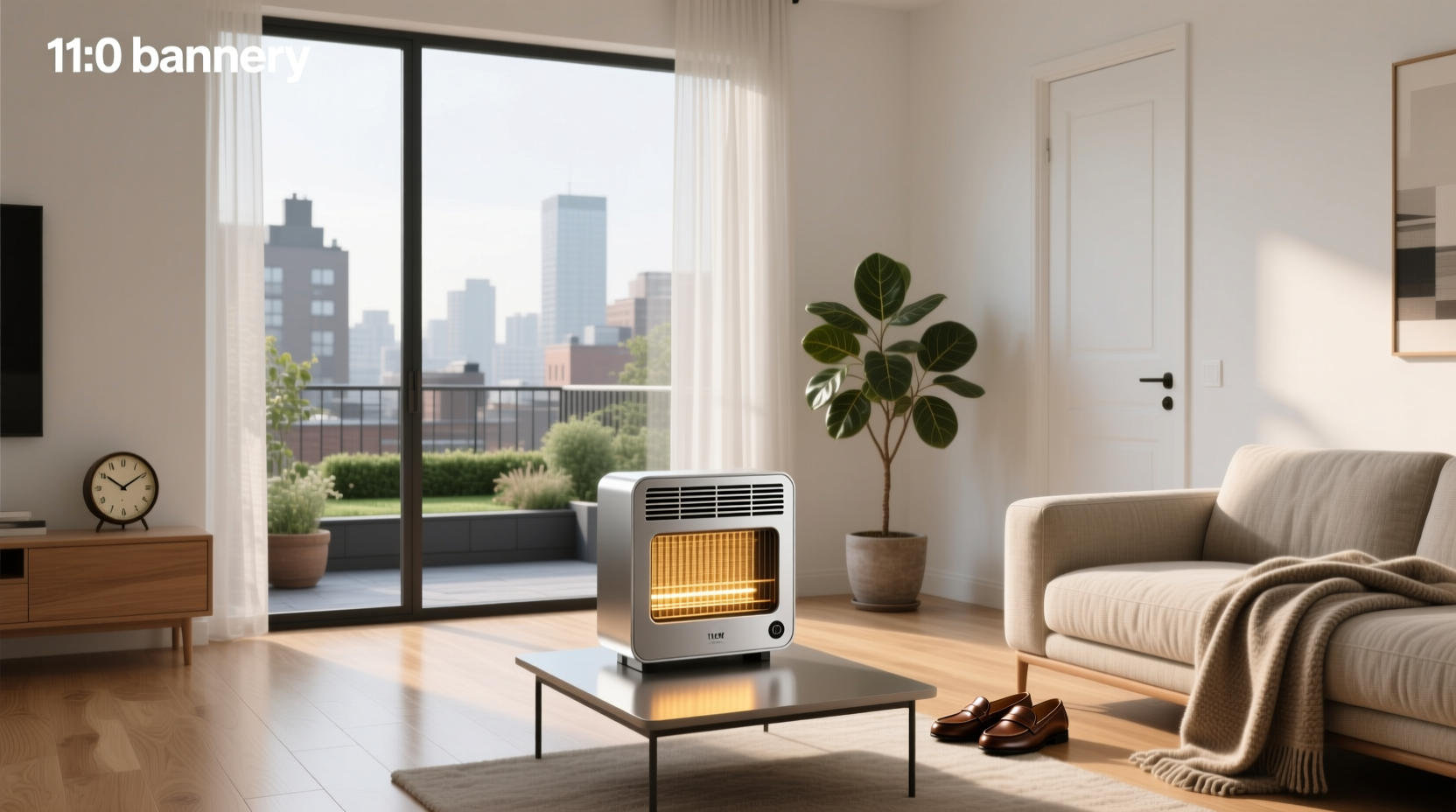
If you’re a typical user, you don’t need to overthink this. For most homes in North America, a UL- or ETL-certified 1500W ceramic (PTC) heater with tip-over and overheat protection is the safest, most efficient choice for rooms up to 200 sq. ft. Avoid fan-forced models if noise matters — they’re louder but faster to warm large spaces. Skip infrared unless you heat open garages or drafty workshops. And never plug any 110V heater into an extension cord: it’s a fire risk, not a convenience. Over the past year, eco-models now make up 23% of U.S. sales 1, and Wi-Fi integration has moved from premium luxury to standard expectation — meaning your next heater should be controllable before you walk in the door.
About 110V Heaters: Definition and Typical Use Cases
A 110V heater is a plug-in electric space heater designed for standard North American household outlets (120V nominal, commonly called “110V”). It draws power directly from a wall receptacle without hardwiring or special circuits. These units are distinct from 240V baseboard or whole-home systems — they’re portable, modular, and intended for zone heating: warming only occupied rooms rather than entire houses.
Typical use cases include:
- 🏠 Supplementing central heating in bedrooms, home offices, or basements;
- 🏢 Heating small apartments or studio units where ducted HVAC isn’t available;
- 🏭 Temporary warmth in workshops, garages, or construction trailers (if rated for such environments);
- 🎓 Personal desk-side heating for remote workers or students during winter months.
They’re not meant for continuous 24/7 operation in unattended spaces — that’s a safety and efficiency boundary baked into both UL standards and real-world energy bills.
Why 110V Heaters Are Gaining Popularity
Lately, three converging forces have made 110V heaters more relevant than ever. First, rising utility costs push consumers toward targeted heating instead of heating unused square footage 2. Second, urbanization and smaller living spaces increase demand for compact, wall-mountable, or low-footprint solutions — especially among renters who can’t modify wiring 3. Third, smart home adoption has reshaped expectations: 2026 buyers assume Wi-Fi, app scheduling, and voice control are baseline — not extras 1.
This isn’t about replacing furnaces. It’s about precision — matching heat delivery to human behavior. You heat where you sit, when you’re there, and stop when you leave. That behavioral alignment is why growth in the plug-in heater market is projected at 5.8% CAGR through 2033 4.
Approaches and Differences: Common Types & Trade-Offs
Not all 110V heaters work the same way — and how they generate and distribute heat changes everything: runtime, noise, air quality impact, and suitability for specific rooms.
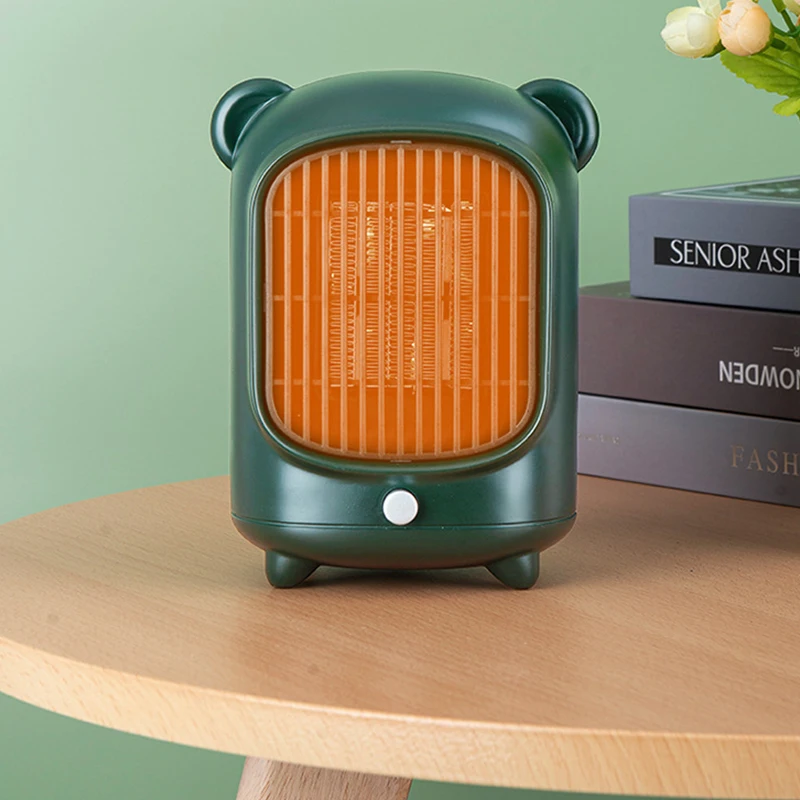
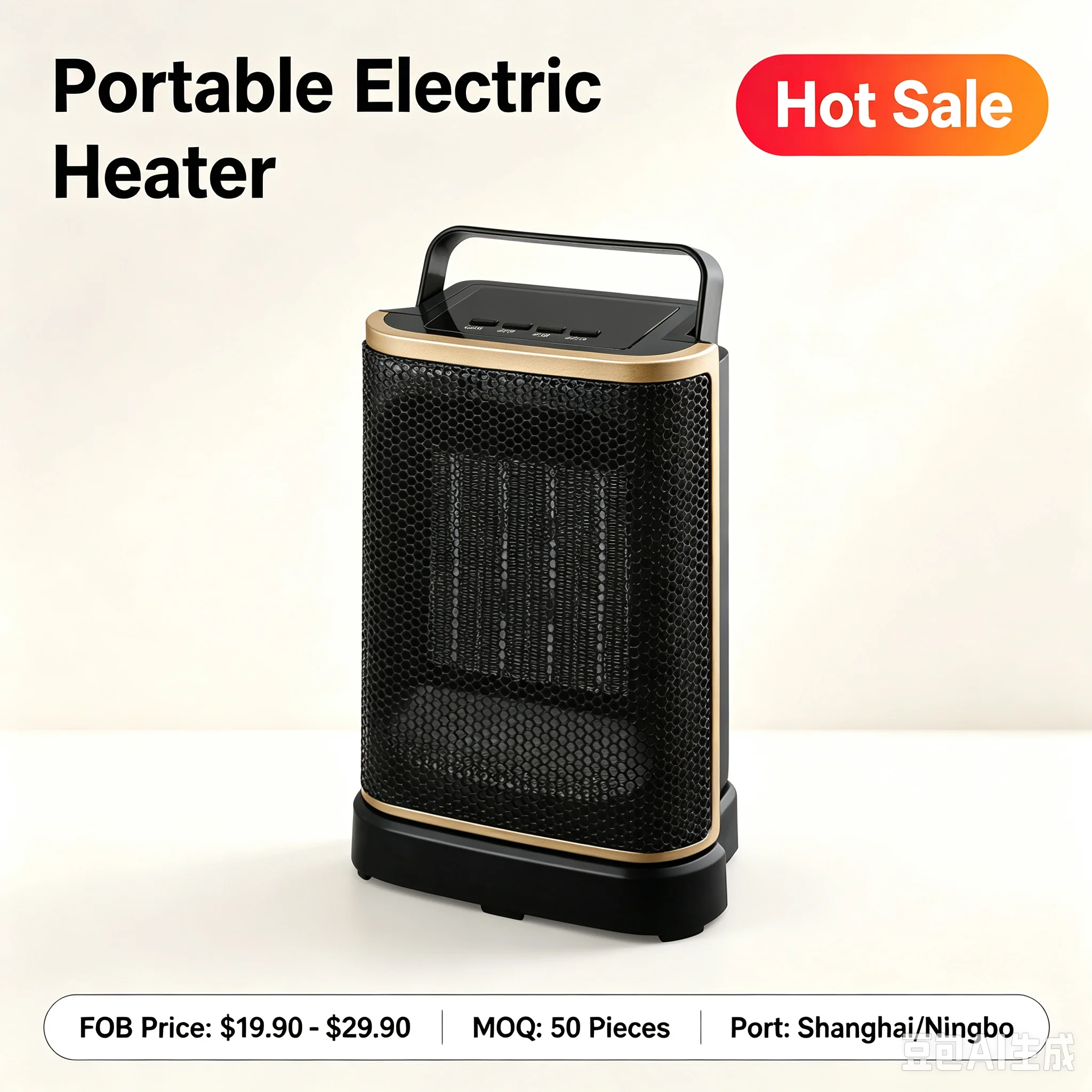
Ceramic (PTC) Heaters
How it works: Uses Positive Temperature Coefficient ceramic elements that self-regulate resistance as they heat — preventing runaway temperatures.
- ✅ Pros: Cool-touch exteriors, fast warm-up, built-in safety cutoffs, lightweight, widely certified.
- ⚠️ Cons: Fan noise (though quieter than older models), limited range — best for direct line-of-sight zones.
When it’s worth caring about: If you have kids, pets, or shared living spaces — PTC’s inherent thermal stability makes it the default safe choice.
When you don’t need to overthink it: For bedside or desk use under 150 sq. ft., a basic 1000–1500W PTC model meets >90% of needs.
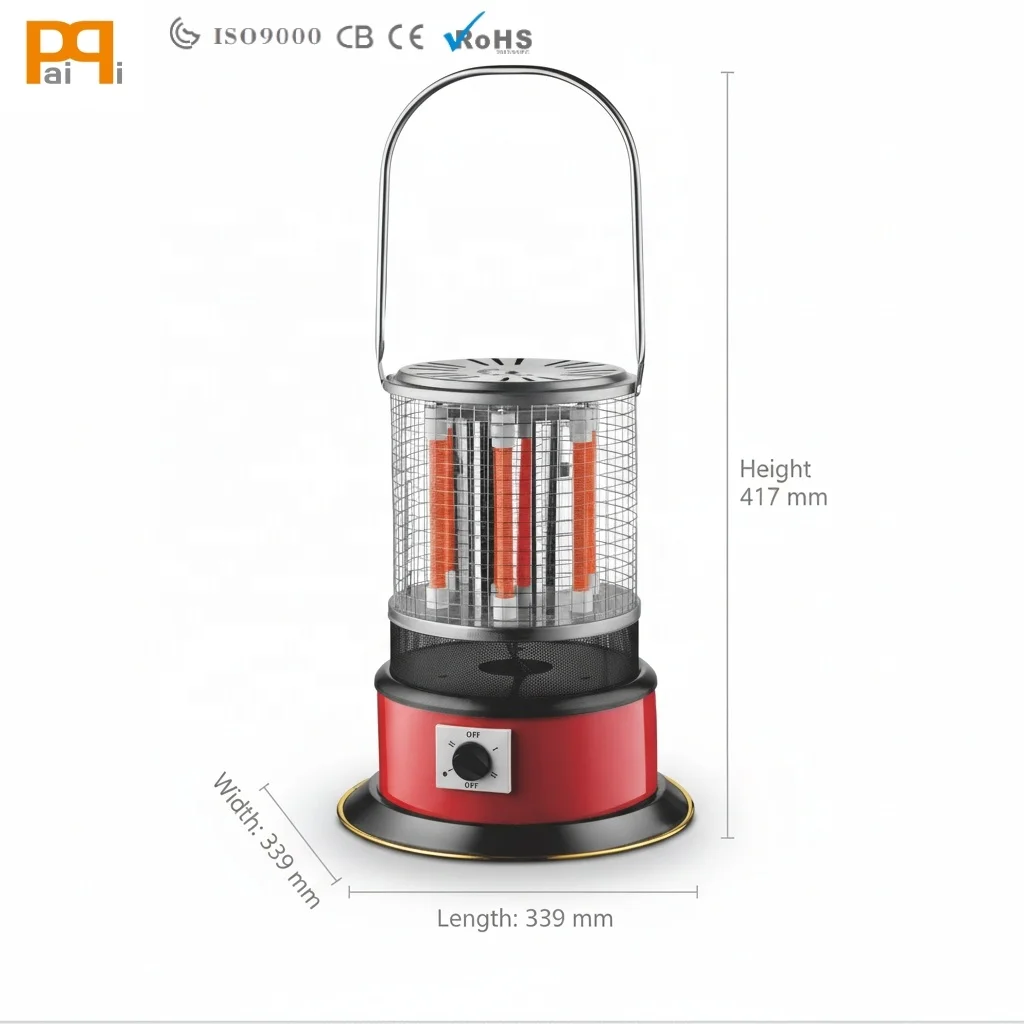
Infrared Heaters
How it works: Emits electromagnetic radiation that warms objects and people directly — like sunlight — rather than heating air.
- ✅ Pros: Silent operation, no air drying, effective in high-ceiling or drafty areas (garages, sunrooms).
- ⚠️ Cons: Uneven room coverage (warms what’s in front), slower ambient temperature rise, fewer UL-listed residential models.
When it’s worth caring about: If you spend hours in a single chair (e.g., reading nook, home workshop) and hate dry throats or fan hum.
When you don’t need to overthink it: For general bedroom or living room heating — infrared adds complexity without clear benefit over convection.
Oil-Filled Radiators
How it works: Electric element heats sealed oil, which slowly transfers warmth via convection — mimicking traditional radiators.
- ✅ Pros: Silent, steady output, retains heat after shutoff, ideal for all-night use.
- ⚠️ Cons: Slow to warm up (15–25 min), heavy (30–40 lbs), limited portability.
When it’s worth caring about: If you need overnight warmth in a closed office or guest room and prioritize quiet consistency over speed.
When you don’t need to overthink it: In open-plan spaces or multi-person rooms — their slow response doesn’t match dynamic occupancy.
Key Features and Specifications to Evaluate
Ignore marketing fluff. Focus on these five measurable criteria — each tied to real outcomes:
| Feature | What to Check | Why It Matters |
|---|---|---|
| Wattage & Circuit Load | Max 1500W (12.5A @ 120V). Verify nameplate rating. | Exceeding 1500W risks tripping breakers or overheating outlets. This is non-negotiable physics — not a suggestion 5. |
| Safety Certifications | UL 1278 or ETL listing visible on unit or packaging. | Third-party verification of tip-over shutoff, overheat sensors, and electrical insulation. Unlisted units lack independent safety validation. |
| Thermostat Type | Adjustable dial (mechanical) vs. digital programmable (with timer/schedule). | Digital thermostats reduce energy waste by ±1°F accuracy and prevent manual forgetfulness — proven to cut runtime by ~22% 6. |
| Noise Level | Rated ≤50 dB(A) for bedroom use; ≤45 dB(A) preferred. | Fan-forced models often hit 55–65 dB — comparable to a running dishwasher. Convection and oil-filled units operate silently. |
| Smart Integration | Wi-Fi + app control (not just Bluetooth); compatibility with Alexa/Google Home. | Pre-heating while commuting or geofencing-based auto-shutoff delivers tangible efficiency gains — especially for commuters or shift workers. |
Pros and Cons: Balanced Assessment
Every 110V heater involves trade-offs. Here’s how to weigh them objectively:
- ✅ Pros of modern 110V heaters: Immediate zone control, zero emissions at point-of-use, no duct losses, easy installation, increasing smart interoperability.
- ⚠️ Cons to acknowledge: Higher per-BTU electricity cost vs. natural gas (in most regions); limited whole-home capacity; requires vigilant outlet management (no daisy-chaining); performance drops sharply in uninsulated or drafty spaces.
Best suited for: Renters, supplemental heating, small-to-medium rooms, users prioritizing safety and simplicity.
Not suited for: Whole-house primary heating, poorly insulated attics or garages (unless specifically rated), unattended operation for >2 hours, or households unwilling to audit circuit loads.
How to Choose a 110V Heater: A Step-by-Step Decision Guide
Follow this sequence — skip steps only when context allows:
- Confirm outlet & circuit capacity: Is the outlet on a dedicated 15A or 20A circuit? If shared with lamps, TVs, or chargers, downgrade to ≤1200W.
- Measure room size: Up to 150 sq. ft. → 1000W ideal; 150–200 sq. ft. → 1500W ceiling; larger? Consider two lower-wattage units over one oversized one.
- Prioritize safety features: Tip-over switch + overheat sensor are mandatory. “Cool-touch” housing is strongly advised for homes with children or pets 5.
- Match heat delivery to use pattern: Desk use → ceramic PTC; overnight → oil-filled; open living area → fan-forced (if noise tolerable).
- Avoid these common pitfalls:
- Using power strips or extension cords (fire hazard — 1500W draws near-max current);
- Placing heaters under desks or behind furniture (blocks airflow, triggers overheat shutoff);
- Assuming “smart” means “energy-saving” — without scheduling or occupancy sensing, it’s just remote control.
Insights & Cost Analysis
Price ranges reflect function, not just brand:
- Basic ceramic (1500W, mechanical thermostat, no smart): $45–$75
- Mid-tier (digital thermostat, quiet fan, UL-certified): $85–$130
- Premium smart (Wi-Fi, app, voice control, energy monitoring): $140–$220
The jump from $75 to $130 often buys real value: quieter fans, tighter temperature control, and reliable safety hardware. But the $140+ tier only pays off if you’ll use scheduling daily — otherwise, it’s feature bloat. For most users, $85–$130 hits the sweet spot between reliability and capability.
Better Solutions & Competitor Analysis
| Category | Best For | Potential Issue | Budget Range |
|---|---|---|---|
| Ceramic (PTC) | Most homes: safety, speed, versatility | Fan noise may disrupt sleep or focus | $45–$130 |
| Oil-Filled Radiator | Overnight/office use: silent, steady heat | Slow warm-up; heavy; no rapid adjustment | $80–$160 |
| Infrared Panel | Workshops, sunrooms: targeted, draft-resistant | Limited room-wide warmth; fewer safety certifications | $120–$250 |
| Smart Wall-Mounted | Renters wanting permanent-feel control | Requires mounting; limited portability; higher install friction | $150–$280 |
Customer Feedback Synthesis
Aggregated from lab-tested reviews 6, Wirecutter 7, and Amazon top-reviewed units:
- 👍 Highest praise: “Shuts off instantly when tipped,” “holds temp within 1°F,” “app remembers my schedule across devices.”
- 👎 Top complaints: “Fan gets louder after 6 months,” “Wi-Fi disconnects weekly,” “thermostat drifts ±3°F over time.”
Notice the pattern: reliability and consistency — not raw power — dominate satisfaction. That’s why certifications and build quality outweigh flashy specs.
Maintenance, Safety & Legal Considerations
Maintenance: Wipe dust from grilles monthly. Vacuum intake vents every 3 months. Never cover or obstruct airflow — doing so triggers overheat shutoff or creates fire risk.
Safety: Maintain 3-ft clearance from combustibles (curtains, bedding, paper). Plug directly into wall outlets — never power strips. Test tip-over switch monthly by gently tilting unit.
Legal: UL or ETL certification is required for sale in the U.S. Non-compliant units violate federal consumer safety law (16 CFR Part 1120). Some municipalities restrict unvented electric heaters in rental units — check local ordinances before installing permanently.
Conclusion
If you need fast, safe, flexible warmth for a single room — choose a UL-certified 1500W ceramic (PTC) heater with digital thermostat and tip-over protection.
If you need silent, all-night heat in a closed space — choose an oil-filled radiator with adjustable thermostat.
If you already use smart home routines and want pre-heating or geofenced control — invest in a Wi-Fi-enabled model with robust app support and OTA updates.
This piece isn’t for keyword collectors. It’s for people who will actually use the product. If you’re a typical user, you don’t need to overthink this.


