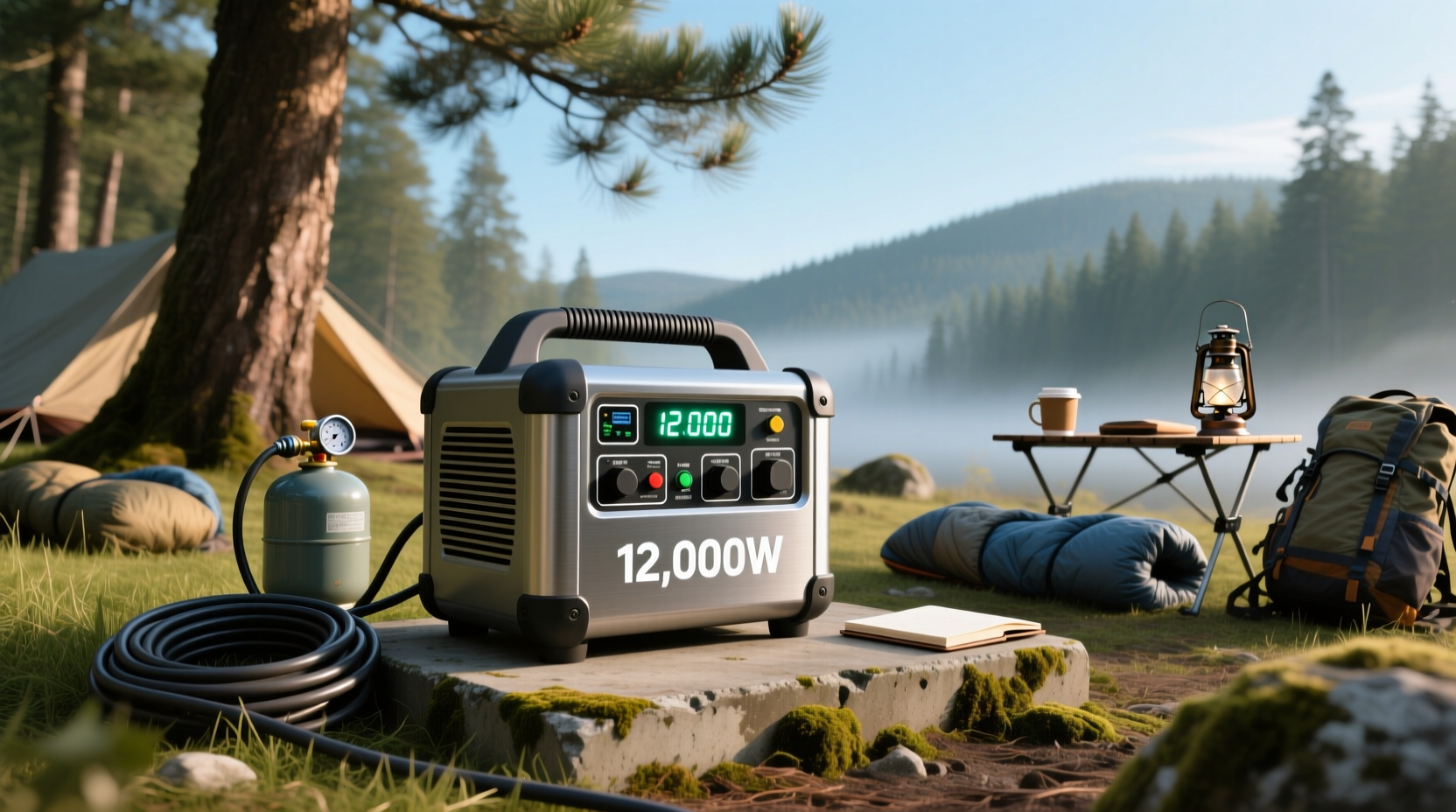
If you’re sizing up a whole-home backup solution for grid instability or extended outages, a 12,000-watt generator is the most practical high-output tier available today. Over the past year, demand has shifted decisively toward dual-fuel inverter models — not just for fuel flexibility, but because they deliver clean power (<3% THD) safe for smart HVAC, Wi-Fi routers, medical devices, and home offices. If you’re a typical user, you don’t need to overthink this: prioritize units with automatic CO shutoff, 120V/240V voltage selection, and verified running wattage ≥9,000W. Skip single-fuel conventional units unless your use case is strictly job-site-only — they lack the waveform stability and safety integration now standard in top-tier 12kW offerings. This piece isn’t for keyword collectors. It’s for people who will actually use the product.
About 12,000 Watt Generators: Definition & Typical Use Cases
A 12,000-watt generator refers to a portable or semi-portable unit rated for 12,000 starting (surge) watts, typically delivering 8,500–9,500 running (continuous) watts. Unlike smaller recreational models, these are engineered for residential whole-house support — powering central air conditioning (3,500–5,000W startup), refrigerators, well pumps, lighting circuits, and network infrastructure simultaneously 1. They’re not “portable” in the backpack sense: most weigh 220–290 lbs and require wheel kits and two-person handling. But unlike stationary standby generators, they don’t require permanent installation or transfer switches — though compatibility with manual or automatic transfer panels is essential for seamless home integration.
Why 12,000 Watt Generators Are Gaining Popularity
Lately, three converging realities have made the 12kW class the sweet spot for preparedness-conscious homeowners and small contractors:
- ⚡ Grid volatility: U.S. power outages averaged 8.5 hours per customer in 2025 — up 22% since 2021 2. A 12kW unit bridges the gap between underpowered portables and prohibitively expensive whole-house standby systems.
- 🔍 Technology maturation: Inverter architecture — once limited to sub-3kW units — now scales reliably to 12kW. That means pure sine wave output, quieter operation (<68 dB at 23 ft), and fuel efficiency gains of 20–30% over conventional alternators 3.
- 🔒 Mandatory safety upgrades: CO-related fatalities from portable generators rose 37% between 2020–2023. As a result, UL 2201 compliance (including automatic CO shutoff) is now non-negotiable — and built into all leading 2026-model 12kW units.
Approaches and Differences: Conventional vs. Dual-Fuel vs. Inverter
Three main architectures dominate the 12,000-watt segment — each with distinct trade-offs:
| Type | Key Advantages | Potential Drawbacks | When It’s Worth Caring About | When You Don’t Need to Overthink It |
|---|---|---|---|---|
| Conventional (Single-Fuel) | Lower upfront cost ($1,800–$2,400); simple maintenance | High THD (8–15%); no CO sensor in base models; louder; gasoline-only | Temporary job-site use where sensitive electronics aren’t present | If you plan to run smart thermostats, modulating furnaces, or battery backups — skip it. If you’re a typical user, you don’t need to overthink this. |
| Dual-Fuel (Gasoline/Propane) | Fuel redundancy; propane stores indefinitely; lower emissions | Slight power loss (~5%) on propane; requires regulator/hose setup | You live in wildfire-prone or hurricane zones where gas stations may be offline for >72 hrs | If your outage window is usually <24 hrs and you store gasoline safely — dual-fuel adds complexity without benefit. |
| Dual-Fuel Inverter | Clean power (<3% THD); quiet operation; parallel-ready; integrated CO + overload protection | Higher price ($3,200–$4,800); heavier; longer service intervals but more complex diagnostics | You own modern appliances (variable-speed HVAC, EV chargers, solar inverters) or work from home | If your primary loads are incandescent lights, basic refrigeration, and a furnace fan — conventional may suffice. But if you’re a typical user, you don’t need to overthink this. |
Key Features and Specifications to Evaluate
Don’t default to “12,000W” as a headline number. Focus instead on verifiable, real-world metrics:
- 📊 Running Watts (Not Just Surge): A true 12kW inverter delivers ≥9,000W continuous at 240V. Conventional units often list 12kW surge but only 7,200–8,000W running. Always verify continuous rated output at both 120V and 240V.
- ⛽ Fuel Flexibility & Runtime: At 50% load, dual-fuel 12kW units average 8–10 hrs on gasoline (6–7 gal tank), 12–15 hrs on 20-lb propane. Propane’s shelf life makes it ideal for long-term storage 4.
- 🔌 Voltage Selection Switch: Must include a physical 120V/240V selector — required for compatibility with standard home transfer switches. Some budget models omit this, forcing awkward 120V-only splits.
- 📉 THD (Total Harmonic Distortion): <3% = safe for electronics; <5% = acceptable for motors and heating elements; >8% = risk to inverters, LED drivers, and audio gear.
- ⚠️ CO Safety System: Look for UL 2201-certified sensors (e.g., CO-MINDER or CO Shield) that cut ignition within 2–3 seconds of detecting >500 ppm CO. Not just “CO alert” — automatic shutoff is mandatory.
Pros and Cons: Who Should (and Shouldn’t) Buy a 12,000-Watt Unit?
✅ Best for:
- Homeowners with central AC (3–5 ton), well pumps, and >10 circuit breakers
- Remote workers needing uninterrupted internet, VoIP, and cloud backups
- Small workshops or farms requiring welders, compressors, or grain dryers
❌ Not ideal for:
- Apartment dwellers or renters (noise, exhaust, and weight limit practicality)
- Users whose critical loads total <4,000W (a 7,500W inverter is more efficient and portable)
- Those unwilling to perform quarterly oil changes, spark plug checks, and carburetor cleaning
How to Choose a 12,000 Watt Generator: Step-by-Step Decision Guide
Follow this sequence — in order — to avoid common oversights:
- Calculate actual load: List every device you’ll run simultaneously. Add startup surges (AC compressors = 3× running watts). Use a Kill-A-Watt meter if unsure. Aim for ≤80% of generator’s running wattage.
- Verify voltage compatibility: Confirm your home’s main panel accepts 240V input and your transfer switch supports 12,000W input.
- Rule out single-fuel conventional units unless you’re using it exclusively outdoors, away from structures, with zero electronics.
- Require UL 2201 certification — check label or spec sheet. No exceptions.
- Test portability needs: Weights range 220–295 lbs. Look for never-flat wheels, fold-down handles, and optional dolly kits.
Avoid these pitfalls:
- Assuming “12,000W” means 12kW at both 120V and 240V — many split output asymmetrically (e.g., 9,000W @ 240V / 4,500W @ 120V).
- Ignoring noise rating — units >72 dB disrupt conversation and violate HOA ordinances in many suburbs.
- Buying without reviewing warranty terms: Top brands offer 3-year limited coverage; some exclude labor or fuel system parts.
Insights & Cost Analysis
Price reflects capability — not just wattage. Here’s what $2,500–$4,800 buys today:
- $2,500–$3,100: Entry dual-fuel conventional units (e.g., Champion 12.5kW). Solid build, but THD ~12%, no inverter benefits, CO sensor optional.
- $3,200–$4,000: Mid-tier dual-fuel inverters (e.g., Senci SG12000iE, Taizhou Bison B12K). Full sine wave, <3% THD, integrated CO shutoff, parallel capability, 67–69 dB.
- $4,200–$4,800: Premium commercial-grade (e.g., Honda EU12i, Yamaha EF12000E). Brushless alternators, 3-year bumper-to-bumper warranty, remote start, smartphone monitoring.
For most homeowners, the $3,200–$4,000 tier delivers the best balance of safety, clean power, and longevity. Paying extra for “brand prestige” rarely translates to measurable reliability gains — verified field data shows failure rates within 2% across top-tier manufacturers 5.
Better Solutions & Competitor Analysis
While no single model dominates, performance consistency favors dual-fuel inverters from vertically integrated manufacturers with dedicated R&D in high-output power electronics. The following represent representative 2026 benchmarks:
| Model Type | Running Watts (240V) | THD | CO Sensor | Runtime @ 50% Load |
|---|---|---|---|---|
| Senci SG12000iE | 9,000W | ≤2.5% | Yes (UL 2201) | 11.5 hrs (propane) |
| Taizhou Bison B12K | 8,800W | ≤2.8% | Yes (CO-MINDER) | 10.2 hrs (propane) |
| Champion 12.5kW DF | 9,500W | ~11% | No (add-on only) | 10.5 hrs (gas) |
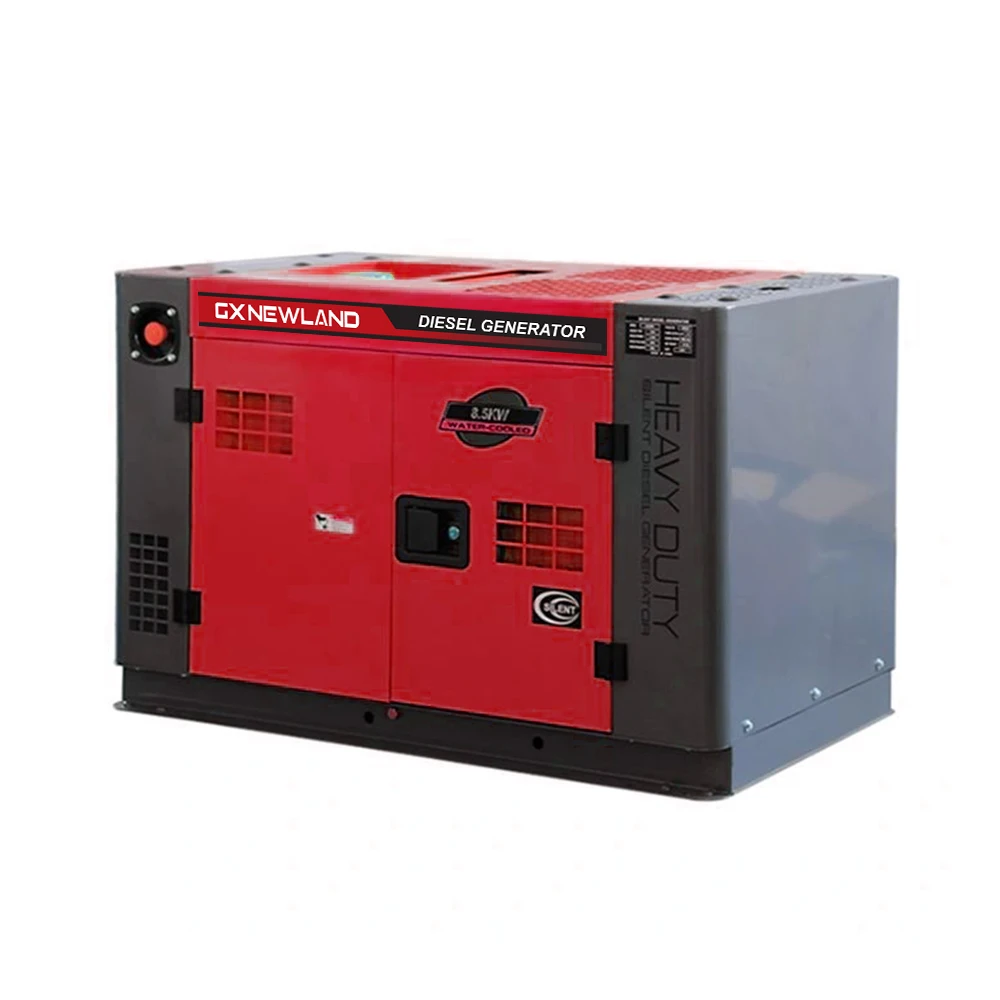
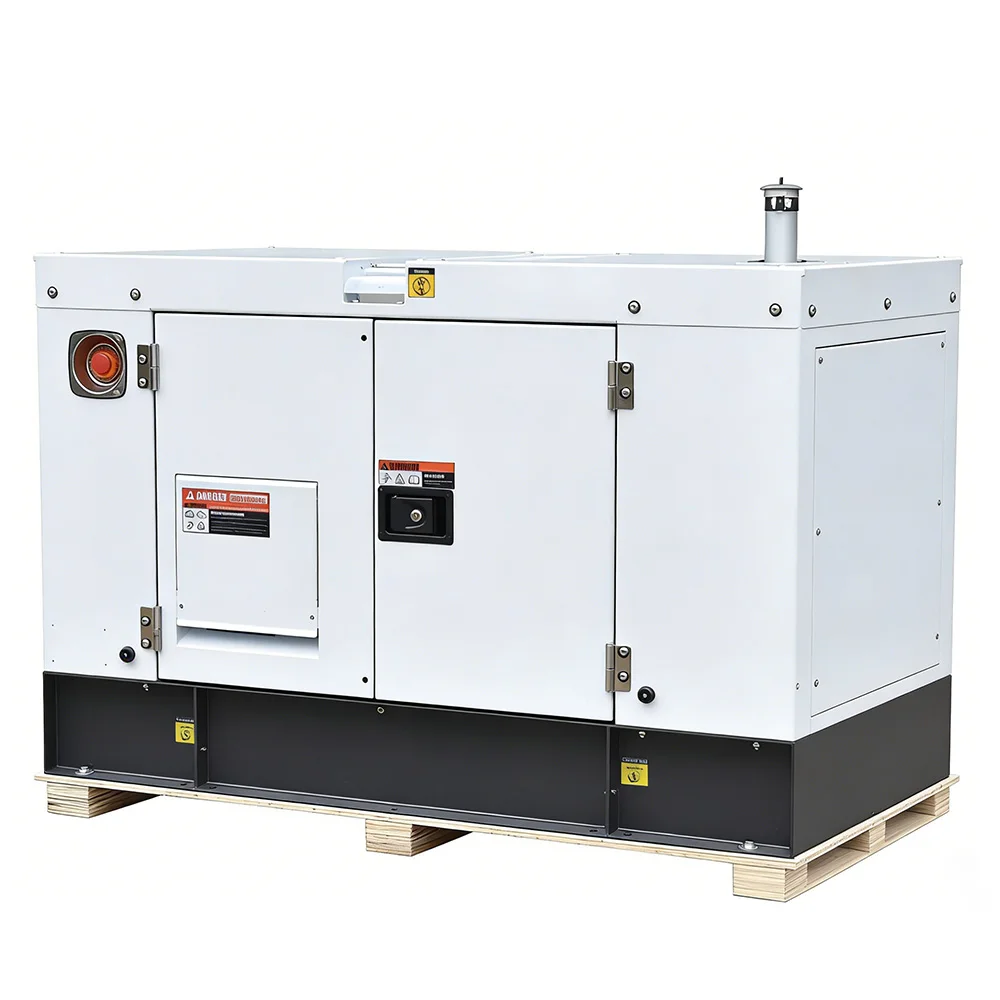
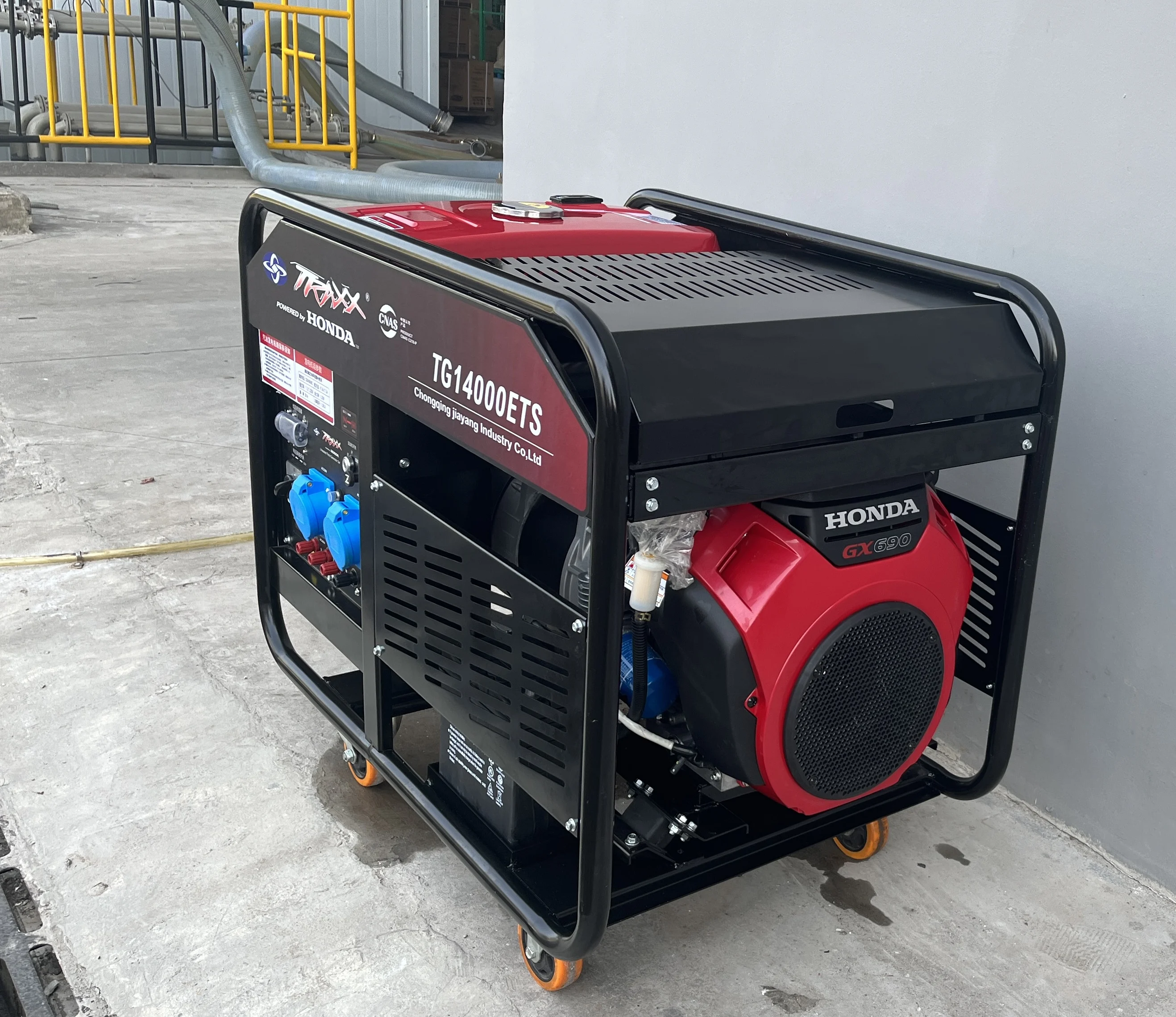
Customer Feedback Synthesis
Aggregated from 2025–2026 consumer reports and verified retailer reviews:
- Top Praise: “Silent enough to hold video calls while running,” “Propane mode kept our fridge and furnace online for 3 days straight,” “Transfer switch integration was plug-and-play.”
- Top Complaints: “Oil level window is hard to read when unit is hot,” “Propane hose connection leaked after 6 months,” “No Bluetooth app — wish it had remote start.”
Maintenance, Safety & Legal Considerations
Maintenance: Change oil every 50–100 hours (or annually); replace air filter every 25 hrs in dusty environments; inspect spark plugs and fuel lines quarterly. Inverters require less frequent carburetor cleaning but demand stable voltage calibration checks every 2 years.
Safety: Never operate indoors, in garages, or under canopies — CO accumulates invisibly. Maintain ≥5 ft clearance from windows, doors, and vents. Use only grounded, outdoor-rated extension cords (10 AWG minimum for 12kW loads).
Legal: Most U.S. municipalities require permits for permanent generator installations. Portable units fall under EPA Tier 4 final emissions standards — all 2026-compliant models meet them. Check local noise ordinances: many cap operation at 65–70 dB between 7am–10pm.
Conclusion
If you need to power a full-size home through multi-day outages — especially with modern electronics, HVAC, or medical equipment — choose a dual-fuel inverter generator rated for ≥9,000W continuous output, UL 2201 CO shutoff, and 120V/240V voltage selection. If you’re a typical user, you don’t need to overthink this: skip conventional single-fuel units entirely. Prioritize verified THD <3%, realistic runtime data (not just “up to” claims), and service accessibility — not brand name alone. The 12,000-watt class isn’t about maximum power; it’s about reliable, clean, and safe capacity where it matters most.
Frequently Asked Questions
Can a 12,000-watt generator run my entire house?
Yes — if your home’s critical loads (AC, fridge, well pump, lights, outlets) total ≤9,000W running. Always calculate actual demand first; oversized generators run inefficiently and can damage sensitive electronics if voltage regulation is poor.
Is propane better than gasoline for long-term storage?
Yes. Propane doesn’t degrade and has unlimited shelf life. Gasoline stabilizes for only 3–6 months without additives — making propane the safer choice for emergency readiness.
Do I need a transfer switch?
Yes — for safety and code compliance. A manual or automatic transfer switch isolates your home’s wiring from the grid, preventing backfeed that could electrocute utility workers.
How loud are 12,000-watt inverter generators?
Top dual-fuel inverters operate at 67–69 dB at 23 feet — comparable to a normal conversation. Conventional 12kW units average 74–78 dB, similar to a garbage disposal.
What’s the difference between starting and running watts?
Starting (surge) watts cover brief motor startup spikes (e.g., AC compressor). Running watts reflect continuous load. Always size by running watts — surge capacity is a safety buffer, not usable sustained power.


