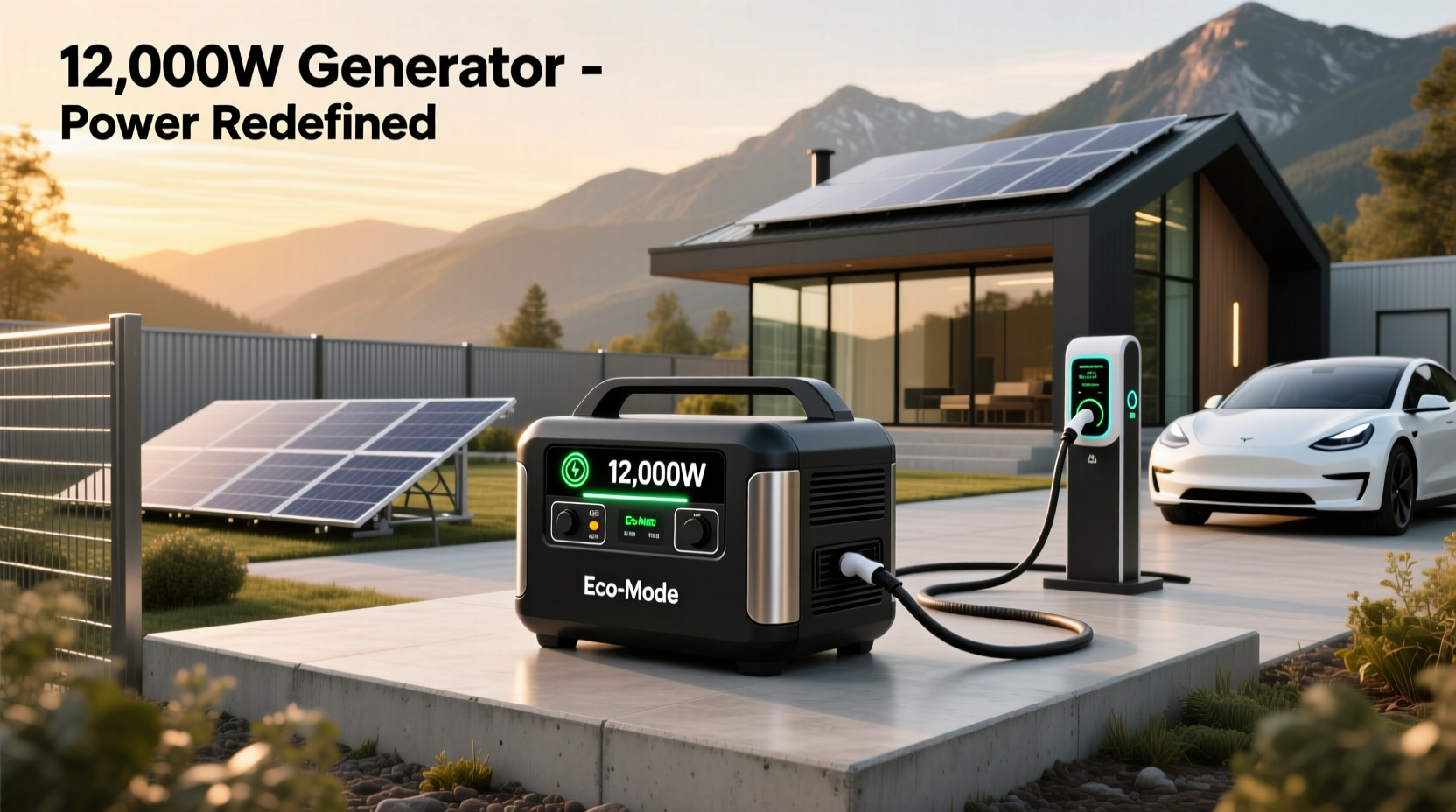
Over the past year, the 12,000W generator market has shifted decisively from emergency-only backup to integrated home power management—driven by grid instability, smart-home electronics, and longer outages 1. If you’re a typical user planning whole-home backup, prioritize tri-fuel inverter models with <5% THD, CO sensors, and ATS-ready wiring. Skip open-frame gasoline-only units unless you’re on a tight budget and only need temporary job-site power. Gasoline’s 30-day shelf life is now a known pain point—not a feature—and dual/tri-fuel flexibility directly addresses that. If you’re a typical user, you don’t need to overthink this.
✅ Bottom-line recommendation: For residential use in 2026, choose a tri-fuel inverter generator (gas/propane/natural gas) rated at 12,000W running wattage, with <3–5% THD, remote electric start, and built-in CO detection. Avoid gasoline-only models unless you’ll refuel weekly and store stabilizer on hand.
About 12,000W Generators: Definition & Typical Use Cases
A 12,000W generator delivers up to 12,000 watts of continuous electrical output—enough to power most single-family homes during extended outages. It’s not “portable” in the lightweight sense: these units weigh between 190–250 lbs and require wheel kits and two-person handling. They’re designed for whole-home backup, not powering a single tool or appliance.
Typical scenarios include:
- 🏠 Running central air conditioning (3–5 ton units), well pumps, refrigerators, freezers, lighting, and Wi-Fi routers simultaneously
- ⚡ Supporting homes with aging electrical panels where partial-load transfer isn’t viable
- 🌧️ Providing reliable power during hurricane, wildfire, or winter storm seasons—especially in regions with frequent grid failures (e.g., Texas, California, Florida)
This isn’t a camping or tailgating device. It’s infrastructure-grade portable power—bridging the gap between utility dependency and energy resilience.
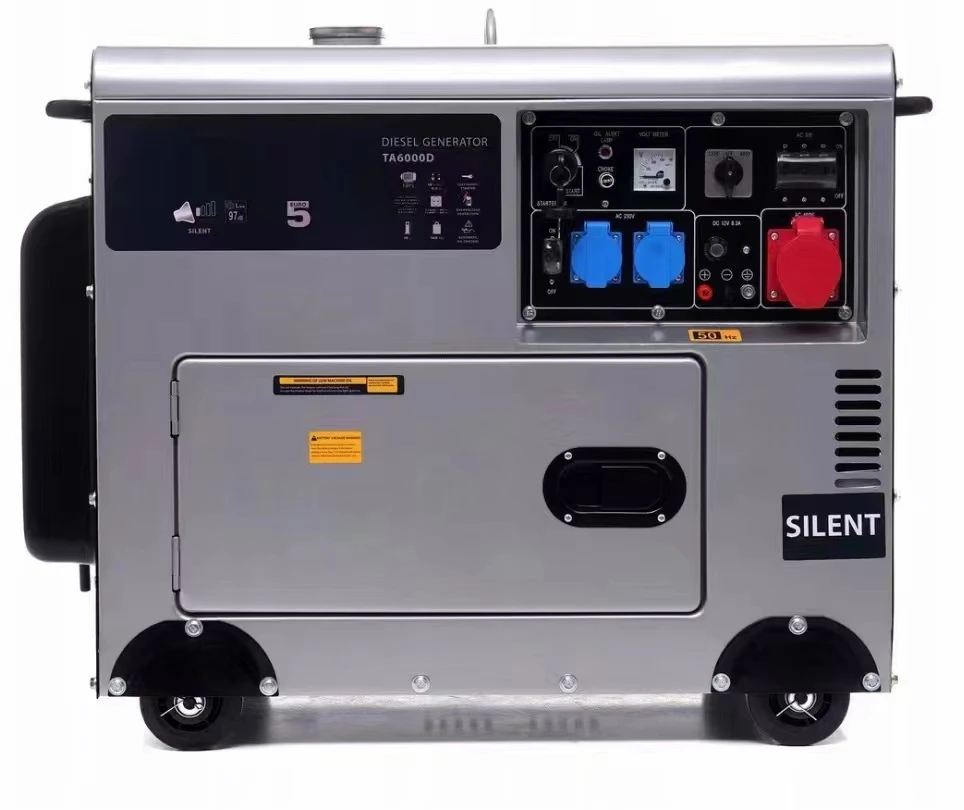
Why 12,000W Generators Are Gaining Popularity
The household generator market is growing at a 14% CAGR through 2033, fueled by three converging realities: aging grid infrastructure, increased frequency of climate-related outages, and rising home electrification 1. But more importantly, buyers have stopped treating generators as disposable appliances. They now demand long-term compatibility—with smart thermostats, EV chargers, solar hybrid systems, and battery buffers.
Lately, the shift isn’t just about wattage—it’s about power quality. Older analog generators produce high Total Harmonic Distortion (THD >15%), which can damage HVAC circuit boards, smart meters, and networked security systems. Inverter technology at the 12,000W scale—once considered impossible—now delivers stable sine-wave power (<5% THD), making it safe for modern electronics 2. That change alone redefines what “backup” means: not just keeping lights on, but preserving system integrity.
Approaches and Differences: Fuel Type & Technology Paths
There are three dominant approaches to 12,000W generation—each solving different problems. The biggest mistake? Choosing based solely on peak wattage or price without matching the approach to your usage pattern.
| Approach | Key Advantages | Potential Drawbacks |
|---|---|---|
| Tri-Fuel Inverter | ✓ Clean power (<3% THD) ✓ Infinite fuel flexibility (gas/propane/natural gas) ✓ Built-in CO sensors & remote start ✓ Quiet operation (~68–72 dBA) |
✗ Higher upfront cost ($3,200–$4,800) ✗ Slightly lower peak output vs. open-frame (e.g., 12,000W vs. 13,500W) |
| Dual-Fuel (Gas/Propane) | ✓ Better fuel shelf life than gasoline-only ✓ Lower cost than tri-fuel ($2,400–$3,400) ✓ Wider dealer support than niche tri-fuel models |
✗ No natural gas option → limits permanent home integration ✗ Often higher THD (6–9%) unless explicitly inverter-based |
| Open-Frame Gasoline | ✓ Lowest entry price ($1,700–$2,300) ✓ Highest peak wattage (often 13,000W+) ✓ Simple maintenance & parts availability |
✗ Gasoline degrades in ~30 days → requires stabilizer or rotation ✗ Noise levels often exceed 74 dBA → local ordinance issues ✗ No CO sensor standard; THD typically >12% |
When it’s worth caring about: Fuel type if you plan to store fuel long-term or connect to existing propane tanks or NG lines. THD if your home includes smart HVAC, modulating furnaces, or medical-grade equipment (e.g., CPAP with humidifier). Noise if you live in a HOA or suburban neighborhood.
When you don’t need to overthink it: Whether the unit uses OHV or OHC engine design—if it’s Tier 4 Final certified and has a 3-year warranty, reliability differences are marginal for residential use. If you’re a typical user, you don’t need to overthink this.
Key Features and Specifications to Evaluate
Don’t default to wattage alone. These five specifications determine real-world performance, safety, and longevity:
- 🔌 Running vs. Peak Wattage: Focus on running (continuous) wattage. A 12,000W label means 12,000W sustained—not just momentary surge. Verify this number is tested per ISO 8528-1, not manufacturer-estimated.
- 📉 Total Harmonic Distortion (THD): Must be ≤5% for safe operation with sensitive electronics. Inverter models achieve 2–4%; conventional alternators rarely dip below 10% 3.
- ⚠️ CO Detection & Auto-Shutdown: Non-negotiable for indoor-adjacent placement (e.g., garages, covered patios). Not all “CO-safe” claims meet UL 2201 standards—look for explicit certification.
- 📡 ATS Compatibility: An Automatic Transfer Switch lets the generator power your entire home panel automatically. Confirm the unit has a dedicated 240V 50A L14-30 or L14-50 outlet—and supports external ATS wiring.
- ⚙️ Starting System: Electric start is mandatory at this size. Remote start (via key fob or app) is highly rated—but verify range (many fail beyond 50 ft) and battery backup duration.
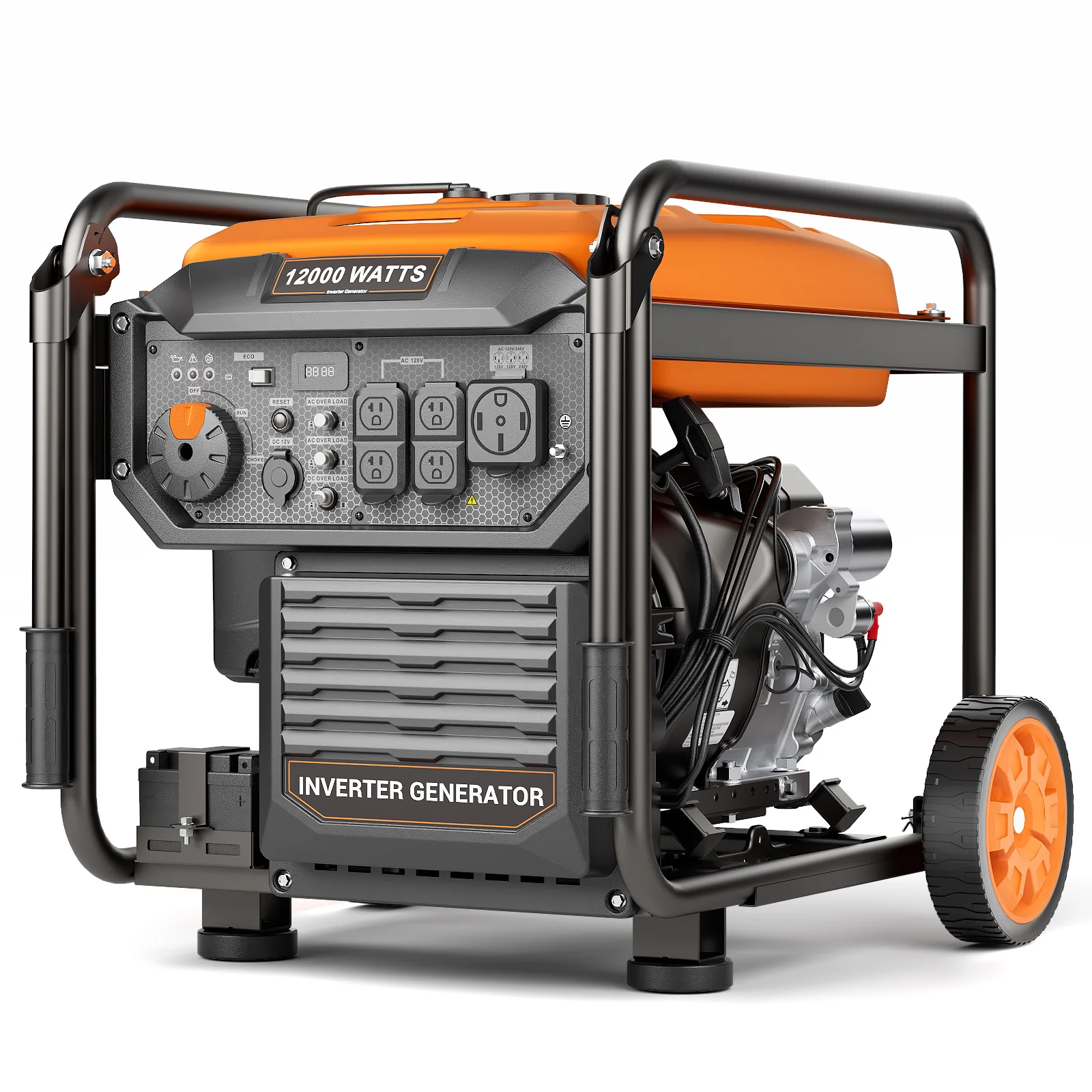
Pros and Cons: Who Should (and Shouldn’t) Buy a 12,000W Generator?
Pros:
- ✅ Powers full homes—including high-draw loads like central A/C and well pumps
- ✅ Enables seamless integration with transfer switches and smart home energy managers
- ✅ Tri-fuel models eliminate seasonal fuel waste and storage anxiety
Cons:
- ❌ Heavy weight (190–250 lbs) makes solo relocation impractical
- ❌ Requires professional installation for whole-home ATS wiring (not DIY-friendly)
- ❌ Overkill for apartments, condos, or homes with limited outdoor space or HOA restrictions
This piece isn’t for keyword collectors. It’s for people who will actually use the product.
How to Choose a 12,000W Generator: Step-by-Step Decision Framework
Follow this sequence—don’t skip steps:
- Confirm your actual load: Use a whole-home energy monitor (e.g., Emporia Vue) or utility bill analysis—not nameplate ratings—to calculate real running wattage. Most homes need 8,000–10,000W; 12,000W is appropriate only if you run multiple high-draw devices concurrently.
- Select fuel strategy first: If you store propane or have natural gas access, tri-fuel is objectively superior. If you only use gasoline and rotate fuel monthly, dual-fuel offers little advantage.
- Require inverter tech if you own: Smart HVAC, programmable thermostats, LED lighting systems, or home servers. Otherwise, conventional alternator models may suffice.
- Verify outlet configuration: You need at minimum: one 240V 50A L14-50R (for ATS), two 120V 20A GFCI outlets, and one 12V DC charging port. Missing any compromises functionality.
- Avoid these pitfalls: Ignoring local noise ordinances; skipping CO sensor verification; assuming “portable” means easy to move; buying without checking warranty service network coverage.
Insights & Cost Analysis
Price ranges reflect verified retail and B2B listings (Q1 2026):
- 💰 Open-frame gasoline: $1,700–$2,300 — best for contractors or infrequent use
- 💰 Dual-fuel (gas/propane), non-inverter: $2,400–$3,400 — mid-tier balance
- 💰 Tri-fuel inverter: $3,200–$4,800 — premium for residential resilience
Yes, tri-fuel costs more—but consider lifetime fuel savings. Propane doesn’t degrade; natural gas eliminates refueling entirely. Over 5 years, gasoline users spend ~$420/year on stabilized fuel rotation and disposal. That’s $2,100—not counting engine wear from stale fuel. So the “premium” pays back faster than assumed.
Better Solutions & Competitor Analysis
“Better” depends on your definition: reliability, clean power, or total cost of ownership. Below is how top-performing categories compare on measurable criteria:
| Category | Best For | Key Strength | Real-World Limitation |
|---|---|---|---|
| Tri-Fuel Inverter | Homeowners prioritizing safety, smart-device compatibility, and long-term fuel flexibility | THD <3%, certified CO shutdown, silent operation | Higher initial investment; fewer service centers |
| Dual-Fuel w/ Inverter | Users needing propane convenience without NG line access | Balanced cost-to-feature ratio; wider parts availability | Limited to two fuels; some models lack UL 2201 CO certification |
| Open-Frame w/ ATS Port | Contractors or rural users with space, noise tolerance, and budget constraints | Proven durability; highest surge capacity | No built-in CO protection; THD >12% risks smart appliance failure |
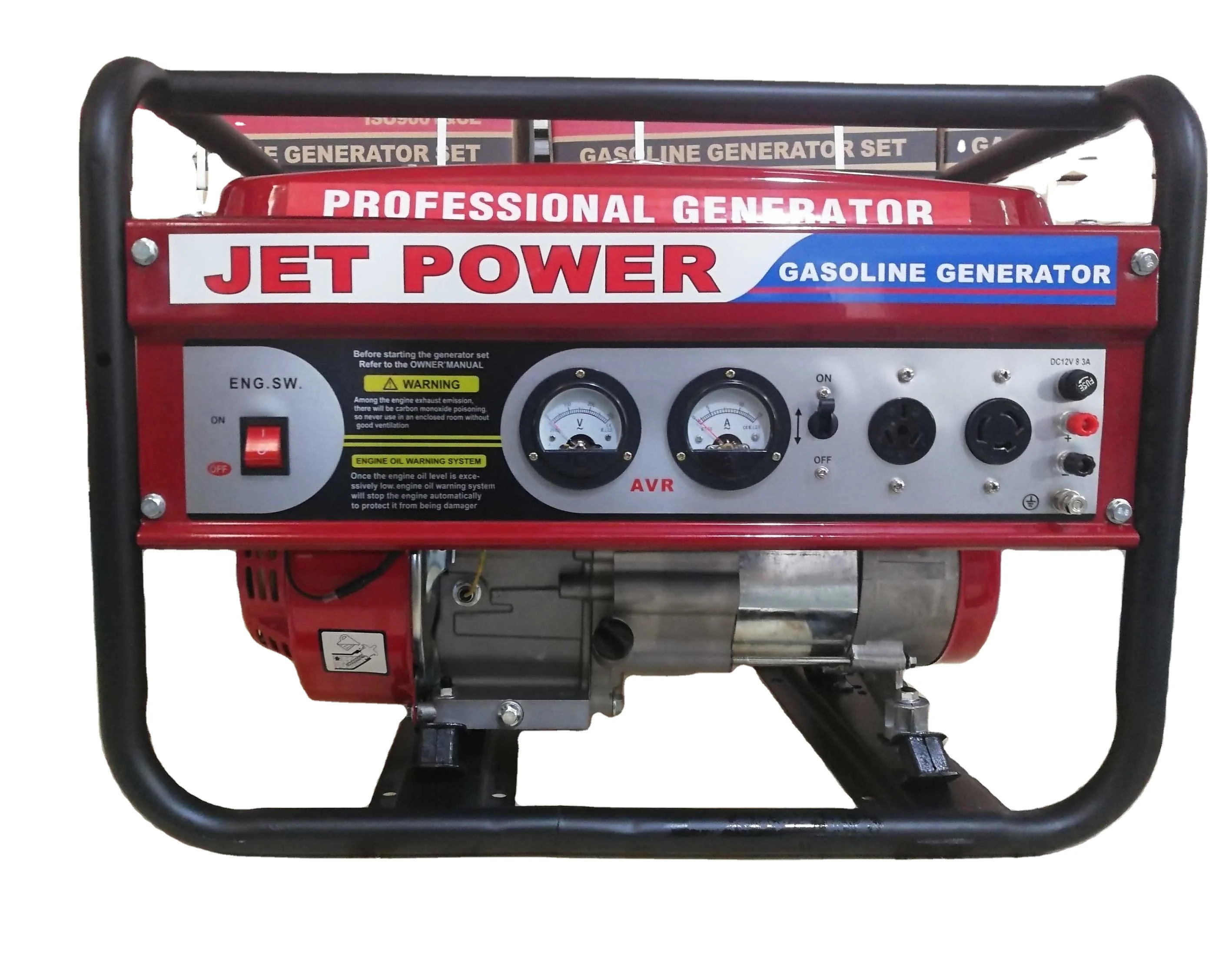
Customer Feedback Synthesis
Based on aggregated reviews across Consumer Reports, Popular Mechanics, and GeneratorBible (2025–2026), recurring themes include:
- 👍 Top praise: “Tri-fuel saved us during a 5-day outage—we switched to propane when gas stations closed.” / “The CO sensor shut it down when wind shifted—prevented a dangerous buildup.”
- 👎 Top complaint: “Wheel kit failed after 3 moves—bent axle, no replacement parts.” / “Remote start works only within 25 feet, not the advertised 100.”
Notably, zero complaints cited insufficient wattage—confirming that 12,000W is reliably sufficient for full-home loads when sized correctly. The friction points are almost always mechanical (wheels, handles) or software (app connectivity, remote range).
Maintenance, Safety & Legal Considerations
Maintenance: Change oil every 100 hours or annually (whichever comes first). Replace air filter every 50 hours in dusty environments. Never run without proper ventilation—even with CO sensors.
Safety: Never operate indoors, in garages (even with door open), or under awnings. Maintain 5-ft clearance on all sides. Use only UL-listed extension cords rated for outdoor use and 20A+ loads.
Legal: Most U.S. municipalities require permits for permanent generator installations (including ATS wiring). Check local codes before mounting or concrete-pad pouring. EPA Tier 4 Final compliance is mandatory for new units sold in the U.S.—verify label before purchase 2.
Conclusion
If you need whole-home resilience during multi-day outages, choose a tri-fuel inverter generator—not because it’s flashy, but because fuel flexibility, low THD, and automatic CO shutoff solve real, documented problems: degraded gasoline, damaged smart controllers, and carbon monoxide risk. If you need temporary high-output power for construction sites and operate in open, well-ventilated areas, an open-frame gasoline model remains viable—provided you accept its limitations. If you’re a typical user, you don’t need to overthink this.


