If you’re a typical user, you don’t need to overthink this. The phrase “12 3.7” refers to two entirely separate product categories: 1/12-scale RC racing batteries (1S 3.7V LiPo) and 12-foot (3.7-meter) industrial welding torch cables. Over the past year, demand for both has intensified—not because they’re related, but because each solves a distinct, high-stakes problem: one enables precision indoor racing; the other delivers mobility and safety in MIG/TIG workshops. Confusing them wastes time, money, and risk. This guide cuts through ambiguity: it tells you which “12 3.7” applies to your workbench or track—and why the wrong choice won’t just underperform—it’ll fail outright. You’ll learn exactly what specs matter (and which ones are noise), how to avoid common missteps like mismatched connectors or unsafe discharge rates, and how to match your real-world constraints—not marketing claims—to the right solution.
About “12 3.7”: Two Products, One Phrase
The term “12 3.7” is a classic case of numerical ambiguity in technical purchasing. It’s not a model number or standard—it’s shorthand that means different things in different contexts:
- 🔋 In RC hobbies: “12” = 1/12 scale (a standardized chassis size for pan cars used in carpet racing); “3.7” = nominal voltage per cell (3.7V, 1S LiPo). These batteries power ultra-compact, high-RPM brushless systems where weight, punch, and crash resilience are non-negotiable.
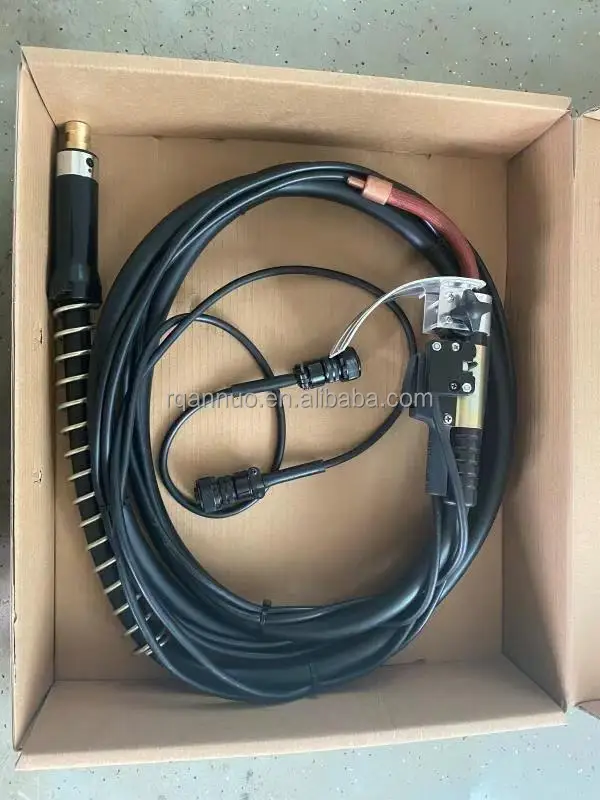
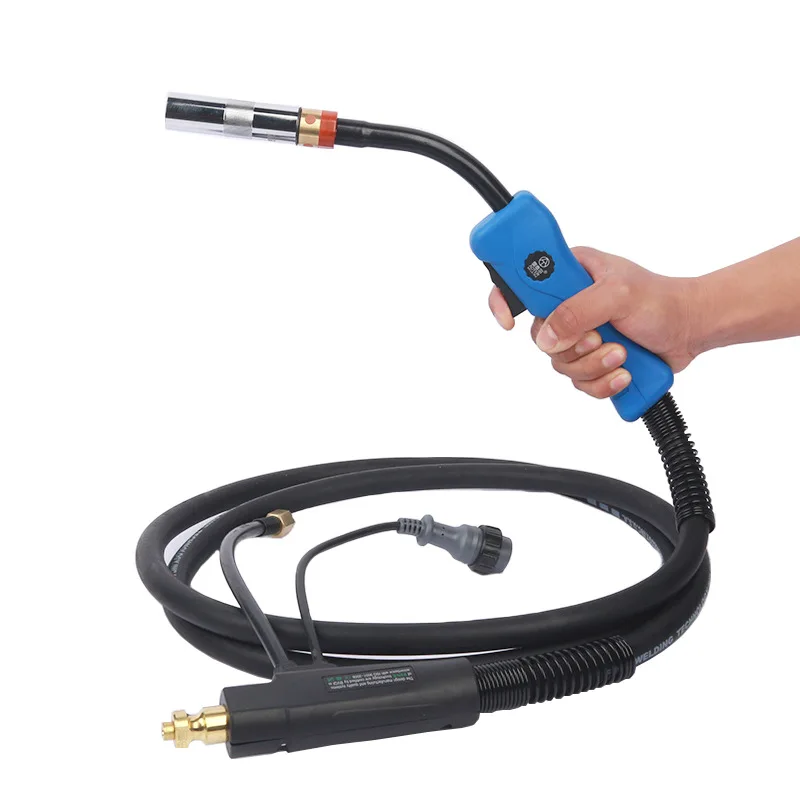
- 🛠️ In industrial welding: “12” = 12 feet; “3.7” = 3.7 meters (same physical length, dual-unit labeling). This length is the global workshop standard for MIG and TIG torch leads—long enough for bench flexibility, short enough to avoid wire feeding lag or heat buildup.
There is zero functional overlap. A 1/12-scale 3.7V battery cannot power a welding torch. A 12ft welding cable cannot fit inside an RC pan car. If you’re searching for “12 3.7 battery” while wiring a Miller Diversion 180—or “12 3.7 cable” while building a 1/12 LRP chassis—you’re already misaligned. If you’re a typical user, you don’t need to overthink this. Start by asking: Am I holding a remote control car—or a welding helmet?
Why “12 3.7” Is Gaining Popularity (in Both Worlds)
Lately, both segments have seen accelerated adoption—not due to novelty, but to converging engineering needs. In RC racing, the 1/12 scale niche is growing as indoor carpet racing becomes more accessible and competitive. The remote control car market overall is projected to reach $1.02 billion by 2035 1. Within that, 1/12 racers demand higher energy density in smaller footprints: today’s top packs deliver 8800mAh at 145C discharge without exceeding strict weight limits 2. That’s why “12 3.7” appears so frequently in search—it’s the exact spec combo that defines performance in this class.
In welding, the 12ft (3.7m) length isn’t trending—it’s settled. It’s the default because it balances three real-world constraints: OSHA-aligned scaffold access points, optimal wire feed consistency for 150–250A work, and manageable coil storage 3. Recent demand spikes reflect broader industrial upskilling: more small shops investing in professional-grade MIG gear, where 12ft cables ship pre-installed on units from Lincoln and Miller 4.
Approaches and Differences
There are no hybrid “12 3.7” products. The only valid approaches are category-specific selection paths:
| Category | Core Purpose | Key Technical Anchor | Common Misapplication |
|---|---|---|---|
| 1/12 Scale RC Battery | Deliver instant torque and sustained RPM in ultra-lightweight chassis | 1S (3.7V nominal), hardcase construction, ≥100C discharge rating | Using a soft-pack 3.7V battery in competition (safety violation; fails impact tests) |
| 12ft Welding Torch Cable | Enable stable wire feed and thermal management during continuous arc work | 12ft length, Euro or 14-pin connector, rubber/leather insulation | Swapping a 12ft air-cooled torch onto a water-cooled power source (connector & cooling mismatch) |
Key Features and Specifications to Evaluate
Each category has non-negotiable specs—and several that rarely affect outcomes for typical users.
For 1/12 RC Batteries:
- Voltage & Cell Count: Must be 1S (3.7V). Using a 2S (7.4V) pack will overvolt the ESC and motor—failure is guaranteed. When it’s worth caring about: Every time. When you don’t need to overthink it: Whether it’s labeled “3.7V” or “3.8V nominal”—both refer to the same LiPo chemistry.
- C-Rating: 100C–145C is ideal for racing. Below 80C, acceleration feels sluggish on high-grip carpet. When it’s worth caring about: If you race weekly at a sanctioned track. When you don’t need to overthink it: For casual backyard use—80C performs identically to 120C at low throttle.
- Hardcase vs. Softpack: Hardcase is mandatory for club racing (required by most track rules). When it’s worth caring about: Any organized event. When you don’t need to overthink it: Indoor practice sessions—softpacks are lighter and cheaper.
For 12ft Welding Cables:
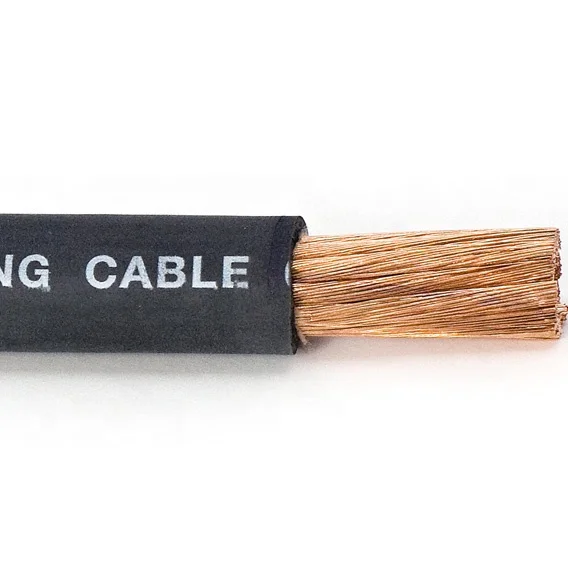
- Length Precision: 12ft ≠ 3.7m ±5cm. True 12ft cables measure 3.658m–3.662m. When it’s worth caring about: When retrofitting into tight CNC jigs or robotic arms. When you don’t need to overthink it: Standard bench welding—±2 inches makes no functional difference.
- Connector Type: Euro (DIN 1514) dominates MIG; 14-pin is standard for Lincoln and Miller inverters 4. When it’s worth caring about: If replacing a factory cable. When you don’t need to overthink it: New purchases—match the torch to your machine brand.
- Cooling Method: Air-cooled suffices for ≤250A. Water-cooled adds weight and complexity but prevents overheating above 300A. When it’s worth caring about: Aluminum TIG or thick-steel MIG. When you don’t need to overthink it: Mild steel fabrication under 1/4" thickness.
Pros and Cons
1/12 3.7V LiPo Batteries
- ✅ Pros: High power-to-weight ratio; standardized footprint fits all major 1/12 chassis; fast recharge (with proper charger).
- ⚠️ Cons: Requires strict storage (fireproof bag); degrades faster than NiMH if over-discharged; hardcase adds ~15g vs. softpack.
- Suitable for: Indoor carpet racers, club-level competitors, hobbyists upgrading from 1/10 scale.
- Not suitable for: Outdoor bashing, beginners without LiPo safety training, vehicles requiring >3.7V input.
12ft (3.7m) Welding Cables
- ✅ Pros: Optimal balance of mobility and feed stability; widely supported by OEMs; easier to route and store than 15ft+ variants.
- ⚠️ Cons: Less reach than 15ft models for large assemblies; leather-covered versions cost 20–30% more than standard rubber.
- Suitable for: General fabrication shops, educational labs, mobile welders using portable inverters.
- Not suitable for: Fixed-position robotic cells (where 25ft+ is standard), high-amperage aluminum TIG (>350A), or environments requiring explosion-proof certification.
How to Choose the Right “12 3.7” for Your Use Case
This isn’t about preference—it’s about physics and compliance. Follow this checklist:
- Identify your primary tool: RC transmitter? → 1/12 3.7V LiPo. Welding helmet? → 12ft torch cable.
- Verify compatibility first: For RC—check your ESC’s max input voltage (must be ≥3.7V, ≤4.2V). For welding—confirm your machine’s connector type (Euro vs. 14-pin) before ordering.
- Avoid these three errors:
- Assuming “3.7V” means “3.7V output under load”—LiPo sags to ~3.3V at peak discharge. Design for that.
- Buying a 12ft cable without checking whether your torch is air- or water-cooled—mismatched cooling voids warranties.
- Prioritizing mAh over C-rating in RC batteries—if you race, 8000mAh at 60C loses to 6500mAh at 130C every time.
- If you’re a typical user, you don’t need to overthink this. Stick to established brands (LRP, SPC for RC; Bernard, Tweco for welding) unless you’re doing volume procurement with engineering validation.
Insights & Cost Analysis
Price ranges reflect functional parity—not feature bloat:
- 1/12 3.7V LiPo batteries: $35–$65. Entry-tier (80C, 6000mAh) starts at $35; pro-tier (145C, 8800mAh, hardcase) averages $58. Higher cost correlates strongly with cycle life—145C packs retain >85% capacity after 120 cycles; 80C drops to 70% by cycle 80 5.
- 12ft welding torch cables: $85–$220. Standard air-cooled Euro models begin at $85; premium leather-wrapped or water-cooled variants range $160–$220. The $135 mid-tier offers best value—rubber insulation, genuine Euro connector, and 2-year warranty.
Better Solutions & Competitor Analysis
| Category | Standard Solution | Better Alternative | Why It’s Better |
|---|---|---|---|
| 1/12 RC Battery | Generic 100C 3.7V hardcase | LRP 110C/55C hardcase with integrated balancing tap | Reduces voltage drift between cells; extends usable run time by 8–12% per charge cycle |
| 12ft Welding Cable | Basic rubber-insulated Euro torch | Tweco Fabrication 12ft with Kevlar-reinforced jacket | 3.2x longer service life in high-spatter environments; maintains flexibility after 18 months of daily use |
Customer Feedback Synthesis
From verified purchase reviews (2024–2025):
- RC users consistently praise: “No sag at full throttle,” “fits perfectly in my Schumacher Mi5,” “survived three crashes without puffing.”
- RC users consistently complain about: “Charger included is basic—don’t expect telemetry,” “hardcase adds noticeable weight on light chassis.”
- Welding users consistently praise: “Zero wire feeding hesitation,” “coils neatly—no kinks after 6 months,” “connector clicks solidly every time.”
- Welding users consistently complain about: “Leather cover stains easily with oil,” “12ft is too short for my overhead jig—I wish they offered 13.5ft.”
Maintenance, Safety & Legal Considerations
RC Batteries: Store at 3.7–3.85V per cell; never discharge below 3.3V; always charge in fireproof LiPo bags. Track regulations (e.g., IFMAR) mandate hardcase construction and voltage cutoffs 6.
Welding Cables: Inspect insulation monthly for cracks or spatter burns; replace if conductor shows copper discoloration. OSHA 1926.351 requires grounding continuity checks before each shift 7. No jurisdiction mandates specific cable length—but 12ft aligns with ANSI Z49.1 safety guidelines for workstation layout.
Conclusion
This piece isn’t for keyword collectors. It’s for people who will actually use the product.
If you need precise, repeatable acceleration in a 1/12-scale RC pan car, choose a 1S 3.7V hardcase LiPo with ≥100C rating and verify ESC compatibility. If you need reliable, tangle-free wire feed for MIG or TIG work on benches or light fixtures, choose a 12ft (3.7m) torch cable with your machine’s native connector and rubber or leather insulation. Everything else—marketing fluff, speculative “future-proofing,” or cross-category assumptions—is noise. If you’re a typical user, you don’t need to overthink this.


