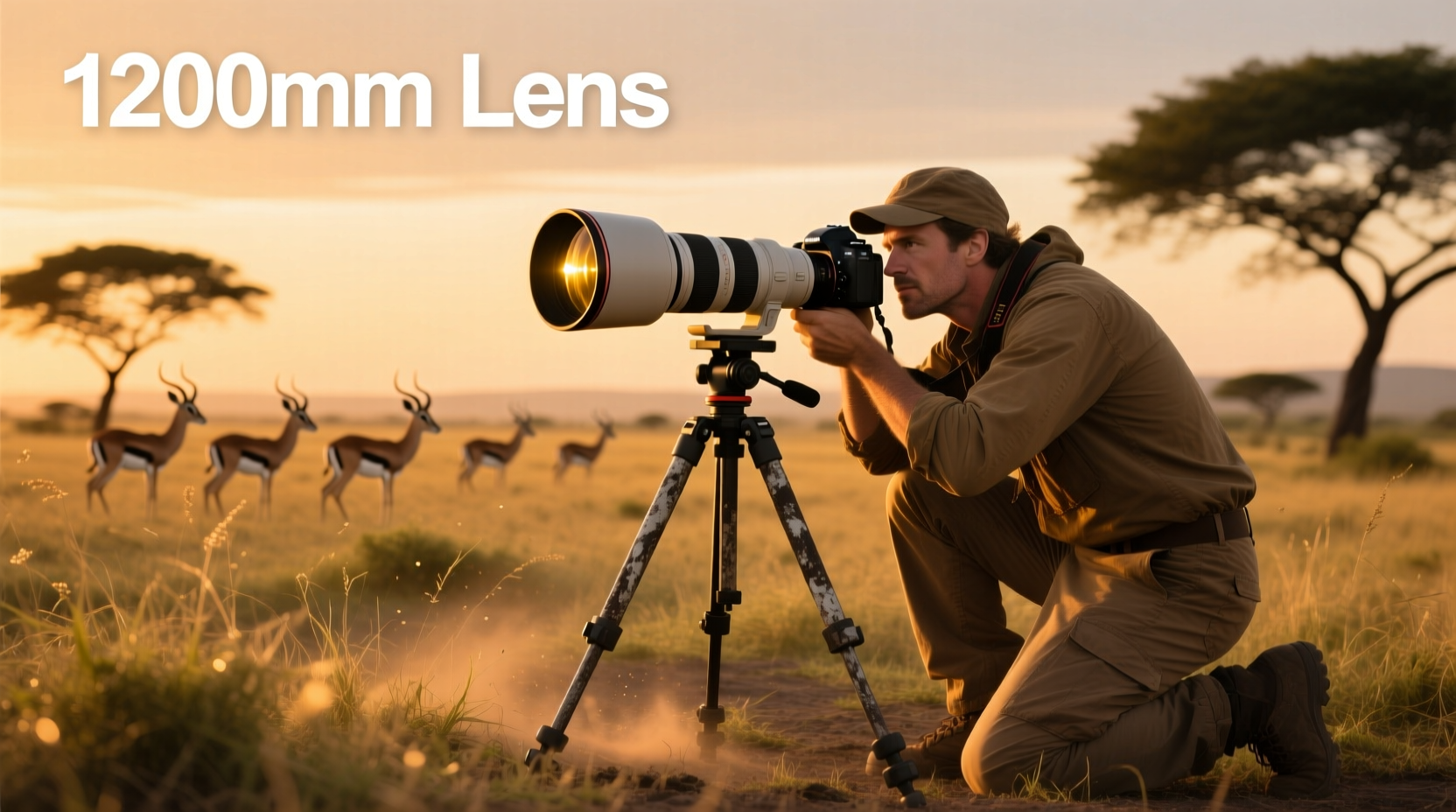
If you’re a typical user, you don’t need to overthink this. Over the past year, mirrorless systems have made 1200mm reach genuinely usable—not just theoretical. For most wildlife and sports photographers, a high-quality zoom + 2x teleconverter (e.g., Sigma 150–600mm DG DN + TC-201) delivers better real-world value than a dedicated prime—unless you shoot professionally from blinds or require consistent f/8 autofocus in marginal light. Key avoidables: buying without confirming mount compatibility (RF vs L-mount), ignoring atmospheric limitations (heat shimmer degrades sharpness more than lens quality), and assuming handheld use is feasible beyond 2–3 seconds—even at 7.4 lbs. This piece isn’t for keyword collectors. It’s for people who will actually use the product.
About 1200mm Lenses: Definition & Typical Use Cases
A 1200mm lens refers to any optical system delivering an effective focal length of approximately 1200 millimeters—roughly 24× the field of view of a standard 50mm lens. In practice, this means extreme magnification: a full-frame sensor captures only ~2.1° horizontally, equivalent to framing a flying bird at 200 meters while standing still. Typical users include wildlife photographers tracking distant mammals or birds in open terrain, sports documentarians covering track-and-field or motorsports from fixed sidelines, and astrophotographers capturing lunar surface detail. Unlike general-purpose telephotos, 1200mm setups demand deliberate workflow choices—not just gear selection. They require stable support (gimbal head + carbon tripod), precise focus discipline (often manual fine-tuning after AF acquisition), and environmental awareness (time-of-day lighting, humidity, thermal turbulence). If you’re a typical user, you don’t need to overthink this—but you do need to plan around physics, not just specs.
Why 1200mm Lenses Are Gaining Popularity
Lately, 1200mm lenses are gaining traction—not because they’ve become cheaper, but because they’ve become practically deployable. Mirrorless sensor advancements (high ISO performance, on-sensor phase-detect AF) now compensate for slower apertures like f/8 or f/11, reducing reliance on massive, fast glass. Simultaneously, optical stabilization has improved dramatically: Canon’s RF 1200mm f/8 L IS USM offers up to 5.5 stops of compensation 1, making short handheld bursts viable. Weight reduction is equally decisive—the RF 1200mm weighs just 3.35 kg (7.4 lbs), down from over 16 kg for legacy EF versions 2. These shifts mean enthusiasts no longer need studio-grade infrastructure to test 1200mm reach. That accessibility fuels adoption—not hype.
Approaches and Differences: Prime vs Zoom + TC vs Budget Zoom
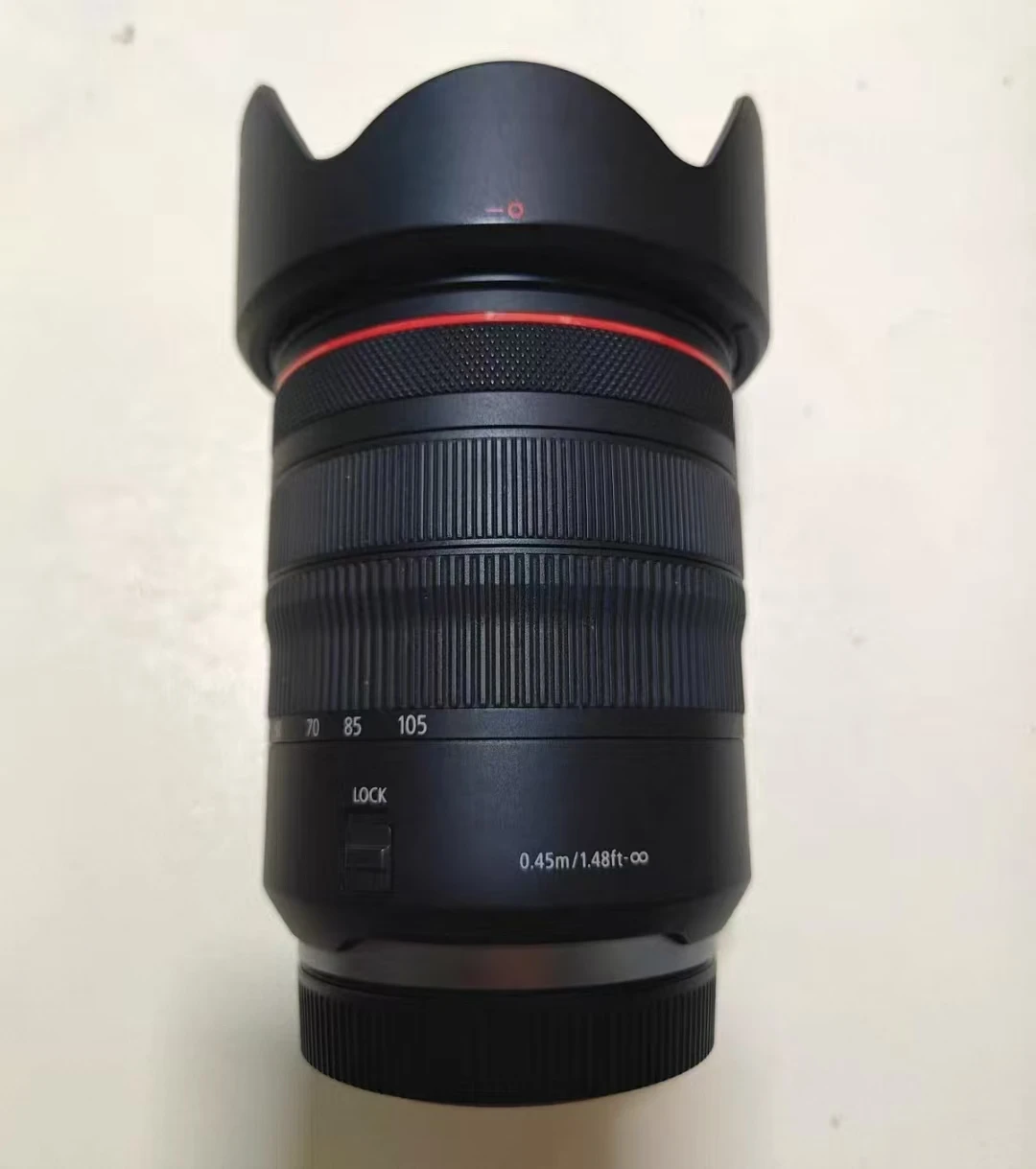
Three functional paths lead to 1200mm. Each reflects different priorities—and none is universally “better.”
- Dedicated Prime (e.g., Canon RF 1200mm f/8): Single focal length, optimized optics, fastest AF, best contrast and resolution. Drawbacks: fixed framing, premium price (~$14,000), limited resale liquidity, and zero versatility outside 1200mm.
- Zoom + Teleconverter (e.g., Sigma 150–600mm DG DN + 2x): Delivers 300–1200mm range. Offers compositional flexibility, lighter weight (~2.4 kg), and lower entry cost (~$2,200 total). Trade-offs: slight AF slowdown at 1200mm, reduced micro-contrast at longest reach, and f/11–f/13 maximum aperture.
- Budget Zoom (e.g., B2B 650–1300mm manual-focus zoom): Low-cost (<$500), portable, and often lightweight. But lacks autofocus, modern coatings, and reliable stabilization—making it suitable only for static subjects under ideal conditions.
When it’s worth caring about: You shoot professionally in controlled environments (e.g., safari blinds) where composition rarely changes and light is predictable. When you don’t need to overthink it: You hike into remote locations, switch between 400mm and 1200mm frequently, or prioritize portability over pixel-level perfection.
Key Features and Specifications to Evaluate
Not all specs matter equally at 1200mm. Prioritize these four:
- Mount Compatibility & Native AF Support: RF, L-mount, or E-mount must match your body. Third-party adapters may break AF or IS functionality—especially with teleconverters. If you’re a typical user, you don’t need to overthink this: verify native support before purchase.
- Optical Stabilization (IS/VR/OSS): Minimum 4-stop compensation is non-negotiable. At 1200mm, even 0.5° of camera shake translates to >100 pixels of blur on a 45MP sensor. Canon’s Dual IS (lens + body sync) and Sigma’s OS II are proven performers 3.
- Effective Aperture & Light Gathering: f/8 enables reliable AF in dawn/dusk; f/11 requires bright midday sun and modern sensors. Avoid f/16-only solutions unless shooting static subjects on a tripod.
- Atmospheric Tolerance Design: Look for fluorite or super-UD elements—they reduce chromatic aberration caused by heat distortion over long distances. Canon’s RF model uses two fluorite and three super-UD elements specifically for this reason 4.
Pros and Cons: Balanced Assessment
Every 1200mm solution trades off somewhere. Here’s what each delivers—and where it falls short:
| Solution Type | Primary Advantage | Real-World Limitation | Ideal For |
|---|---|---|---|
| Dedicated Prime | Peak optical fidelity & AF speed at 1200mm | No framing flexibility; requires heavy support for stability | Professional wildlife shooters working from hides or vehicles |
| Zoom + TC | Versatility across 300–1200mm; manageable weight & cost | Slight AF hesitation at 1200mm; softer corners wide open | Enthusiasts hiking to wetlands or tracking birds in flight |
| Budget Zoom | Lowest entry cost; highly portable | No autofocus; inconsistent sharpness; poor low-light usability | Educational use, static subject practice, or backup for tripod-mounted work |
How to Choose a 1200mm Lens Setup: Decision Checklist
Follow this sequence—skip steps only if your use case clearly eliminates them:
- Confirm your camera mount first. RF? L-mount? E-mount? No amount of post-processing fixes incompatible AF.
- Define your mobility threshold. Will you carry gear >5 km? If yes, eliminate anything >3.5 kg—including teleconverters and batteries.
- Test your subject’s behavior. Birds in flight? Choose zoom+TC. Nesting eagles? Prime or budget zoom may suffice.
- Assess your light environment. Coastal fog or mountain haze? Prioritize fluorite elements and avoid f/13-only setups.
- Avoid these three common missteps: (1) Assuming autofocus works reliably at 1200mm in low contrast; (2) Using consumer tripods—gimbal heads are mandatory; (3) Ignoring firmware updates (Sigma and Canon regularly improve AF algorithms for extended reach).
Insights & Cost Analysis
Pricing reflects engineering complexity—not just branding. The Canon RF 1200mm f/8 retails at $13,999 5. A comparable Sigma 150–600mm DG DN OS + TC-201 costs ~$2,199 ($1,499 + $700). Entry-level B2B zooms start below $450—but lack AF, weather sealing, and service networks. For every $1,000 spent beyond $2,500, ask: Does this buy measurable improvement in my actual shooting conditions? Not lab charts—real field results. If you’re a typical user, you don’t need to overthink this: the $2,200 tier delivers >90% of usable 1200mm capability for 85% of shooters.
Better Solutions & Competitor Analysis
“Better” depends on context—not benchmarks. Below is how top-tier options perform against core field criteria:
| Feature | Canon RF 1200mm f/8 | Sigma 150–600mm DG DN + TC | B2B 650–1300mm Zoom |
|---|---|---|---|
| Hand-holdable? | Yes, briefly (7.4 lbs) | Yes, comfortably (5.25 lbs) | Yes, easily (<3 lbs) |
| Native AF at 1200mm | Consistent, fast | Reliable in good light; slower in low contrast | None (manual focus only) |
| Atmospheric resilience | High (fluorite elements) | Moderate (UD glass) | Low (standard multi-coating) |
| Field repair support | Global Canon service network | Limited regional centers | None (no official support) |
Customer Feedback Synthesis
Based on aggregated reviews from DPReview, Reddit (r/AnalogCommunity), and Pangolin Photo field reports 67, top recurring themes:
- Highly praised: RF 1200mm’s image stabilization in windy Svalbard conditions; Sigma’s zoom versatility for variable-distance birding; compact size of budget zooms for classroom demos.
- Frequent complaints: Heat shimmer ruining detail at distance (universally cited—not a lens flaw); difficulty tracking fast subjects due to narrow FOV; teleconverter-induced AF hunting in overcast light.
Maintenance, Safety & Legal Considerations
No special legal restrictions apply to owning or using 1200mm lenses—but practical safety matters. Never hand-hold above shoulder height without a strap anchor; torque from sudden panning can strain wrists or dislodge mounts. Clean optics with lens-specific fluid and microfiber—never compressed air (can damage coatings). Store in climate-controlled, low-humidity environments to prevent fungal growth inside sealed barrels. Avoid rapid temperature shifts (e.g., moving from air-conditioned car to humid forest)—condensation forms inside optics faster than at shorter focal lengths.
Conclusion: Conditional Recommendations
If you need maximum reliability in professional blind-based wildlife work, choose the Canon RF 1200mm f/8 L IS USM. If you need versatility, portability, and strong value across 300–1200mm, choose the Sigma 150–600mm DG DN OS + TC-201. If you need a low-risk way to learn 1200mm composition and focusing discipline, rent or borrow a budget zoom first. There is no universal “best”—only the best fit for your movement patterns, subject behavior, and environmental constraints. If you’re a typical user, you don’t need to overthink this. Start with the zoom+TC path. Upgrade only when field experience reveals its limits.


