If you’re a typical user, you don’t need to overthink this. For most households, RVers, and off-grid campers, a 1200 watt solar generator with LiFePO4 (LFP) chemistry, ≥2400W surge capacity, and solar input ≥200W delivers the best balance of reliability, longevity, and real-world usability in 2026. Skip NMC unless weight is your absolute priority—and avoid units with less than 10% solar input relative to battery capacity (e.g., a 1200Wh unit needs ≥120W solar input, but 200–400W is strongly advised). Lately, sodium-ion models have emerged for sub-zero use—but unless you regularly operate below 15°F, LFP remains the smarter, more mature choice. This piece isn’t for keyword collectors. It’s for people who will actually use the product.
About 1200 Watt Solar Generators: Definition & Typical Use Cases
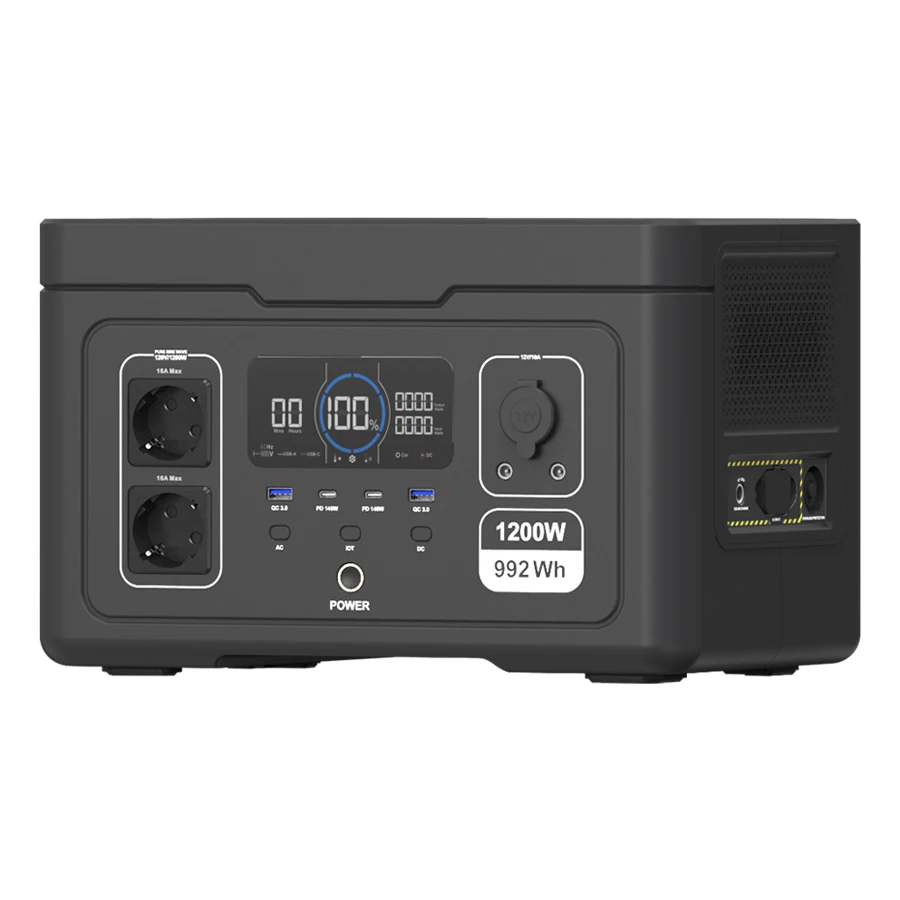
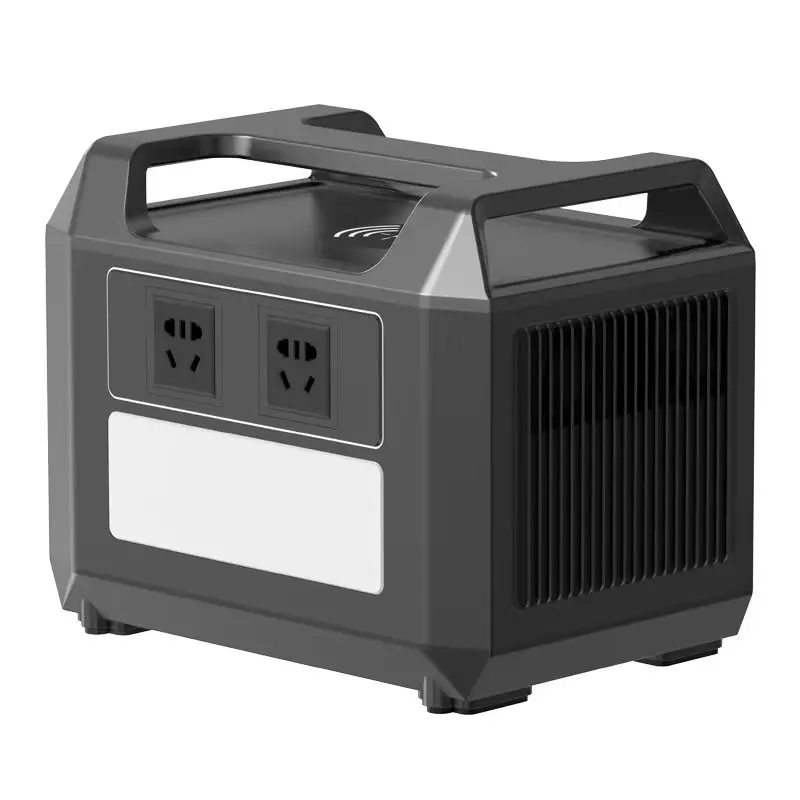
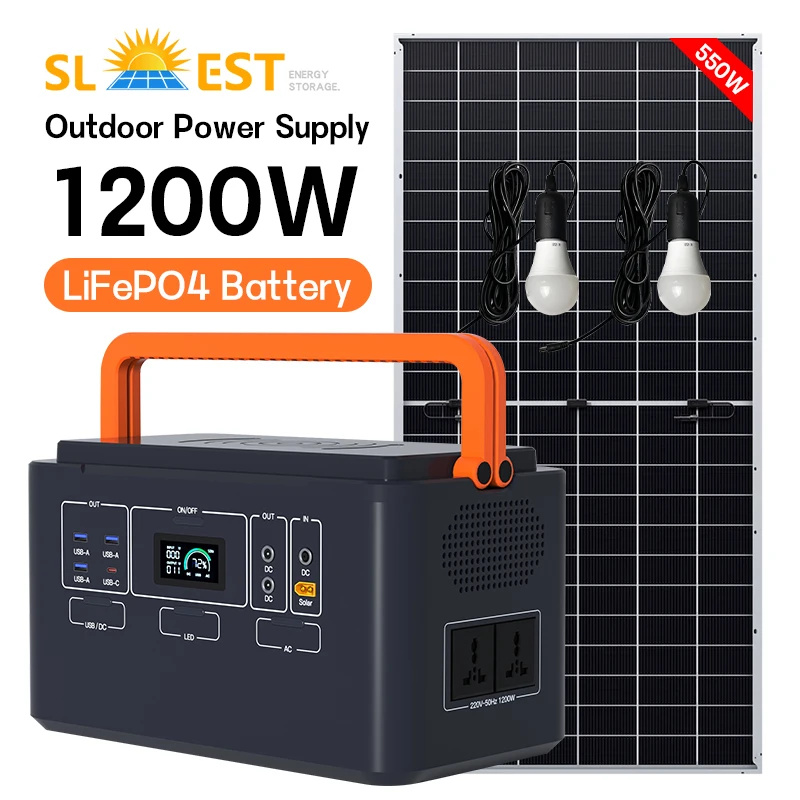
A 1200 watt solar generator refers to a portable power station with a continuous AC output rating of approximately 1200 watts—paired with a solar-compatible charge controller and battery storage. It is not defined by battery capacity (Wh), but by its ability to sustainably power devices drawing up to that load. In practice, most units labeled “1200W” range from 768Wh to 2048Wh in capacity and often support peak surges of 2000–3000W. These systems are designed for hybrid use: solar-charged during daylight, then deployed as silent, zero-emission backup during outages or remote operation.
Typical users include:
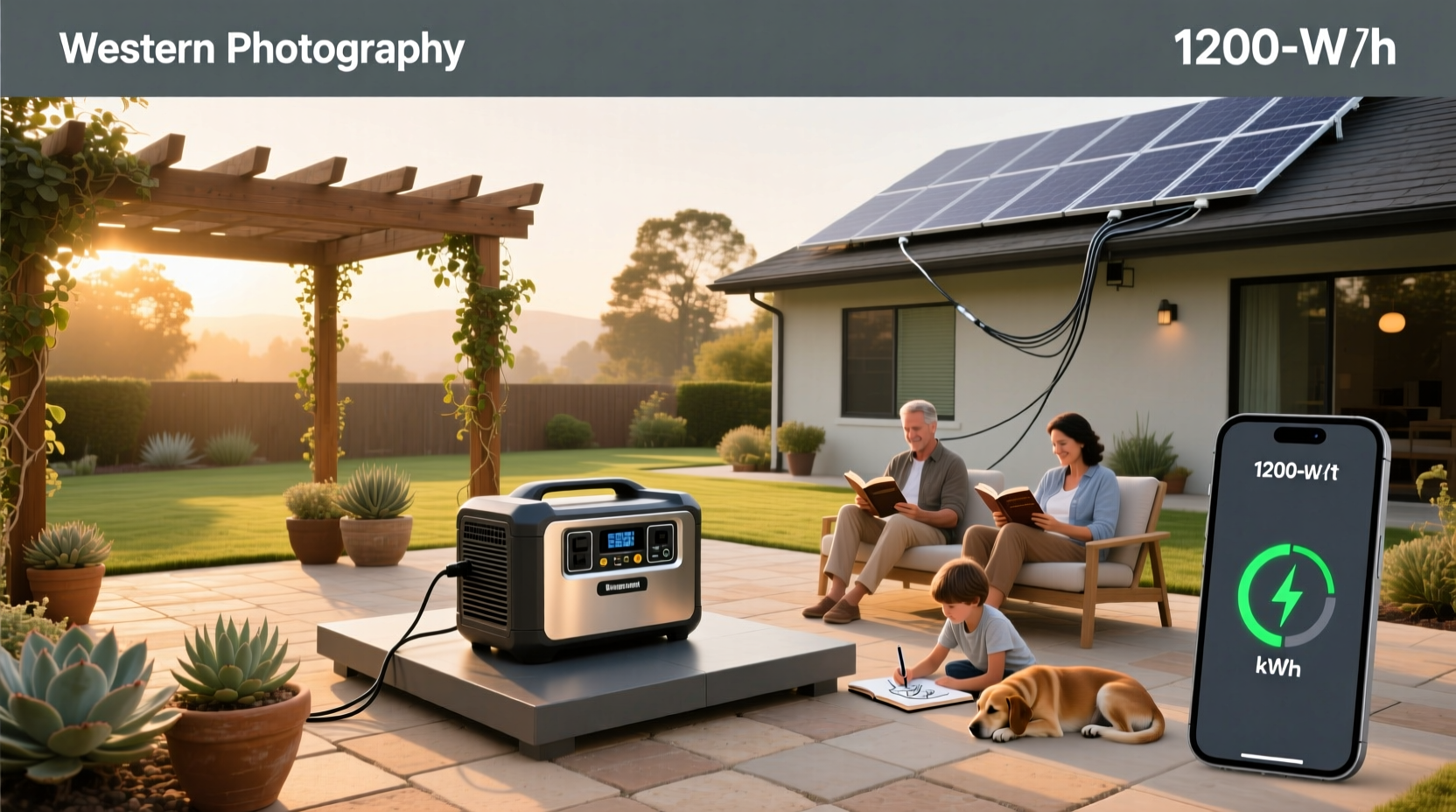
- 🏡 Homeowners needing whole-house critical-load backup (refrigerator, lights, router, medical devices) for 4–12 hours;
- 🚐 RV and van-lifers powering microwaves, air conditioners (smaller units), and induction cooktops;
- ⛺ Campers and overlanders running CPAP machines, laptops, and portable fridges without noise or fumes;
- 🛠️ Contractors and field technicians powering cordless tool chargers, LED work lights, and small compressors.
The 1200W class sits at a functional inflection point: it’s powerful enough to handle startup surges from refrigerators and sump pumps, yet compact enough to be moved manually (though many exceed 50 lbs). Over the past year, demand has surged—not because specs improved dramatically, but because grid instability increased and LFP battery costs dropped 22% on average 1. That shift makes 2026 the first year where most 1200W-class units deliver 3,000+ life cycles without premium pricing.
Why 1200 Watt Solar Generators Are Gaining Popularity
Three converging realities drive adoption: aging infrastructure, climate volatility, and battery maturity. According to Fortune Business Insights, U.S. grid outage duration rose 63% between 2019 and 2025 1. Simultaneously, extreme weather events now trigger multi-day blackouts in historically stable regions—from Texas to Maine. Consumers no longer treat solar generators as “nice-to-have camping gear.” They treat them as silent, modular circuit breakers.
Technologically, 2026 marks the end of the “chemistry experiment” phase. LiFePO4 is now the universal standard—not because it’s flashiest, but because it’s predictable: stable voltage curves, minimal thermal runaway risk, and proven 10-year calendar life 2. Sodium-ion units like the Bluetti Pioneer Na add value only in narrow conditions: operation below −13°F 2. If you’re a typical user, you don’t need to overthink this: unless your winter basecamp is above the Arctic Circle, LFP delivers superior safety, cycle life, and resale value.
Approaches and Differences: Battery Chemistry & Architecture
Today’s 1200W solar generators fall into three technical categories—not by brand, but by core engineering choices. Each serves distinct operational priorities.
| Category | Best For | Potential Problem | Budget Range (B2B) |
|---|---|---|---|
| LiFePO4 (LFP) | Daily use, home backup, long-term ownership (10+ years) | Slightly heavier than NMC; slower low-temp charging below 32°F (but still functional) | $150–$280/unit |
| Sodium-Ion | Extreme cold environments (<−13°F), high-altitude deployments | Lower energy density (larger size per Wh); limited third-party service history | $220–$310/unit |
| NMC (Nickel Manganese Cobalt) | Ultralight portability (e.g., backpacking + drone charging) | Faster degradation (1,000–1,500 cycles); higher fire risk under fault conditions | $130–$210/unit |
When it’s worth caring about: Battery chemistry directly impacts usable lifespan, temperature resilience, and insurance eligibility (some carriers exclude NMC-based units).
When you don’t need to overthink it: If your primary use is summer camping or suburban home backup, LFP is objectively optimal—and widely supported by repair networks and recycling programs.
Key Features and Specifications to Evaluate
Don’t start with price or brand. Start with four non-negotiable metrics—and understand what each enables or constrains.
- Surge Rating (Peak Output): Must exceed the startup wattage of your largest motor-driven device. A 600W fridge may draw 1800W at startup. So a “1200W continuous” unit needs ≥2400W surge. When it’s worth caring about: Any time you’ll run compressors, pumps, or power tools. When you don’t need to overthink it: If you only power phones, lights, and laptops—surge matters far less.
- Solar Input Capacity (W): Should be ≥10–15% of battery capacity (Wh). Example: a 1200Wh unit requires ≥120–180W solar input—but 200–400W ensures full recharge in 4–6 peak sun hours 3. When it’s worth caring about: If you rely on solar-only recharging during extended off-grid use. When you don’t need to overthink it: If you’ll plug into grid or car outlets regularly.
- Charge Port Flexibility: Look for MPPT (not PWM) controllers, XLR/Anderson inputs, and compatibility with panels up to 50V OC. Avoid units locked to proprietary connectors.
- UPS Functionality: Critical for routers, NAS drives, and medical equipment. True UPS means <20ms switchover—verify in lab tests, not spec sheets.
Pros and Cons: Balanced Assessment
1200W solar generators offer compelling advantages—but they aren’t universally ideal.
- ✅ Pros: Silent operation; zero emissions; modular scalability (many support daisy-chained expansion batteries); lower lifetime cost than fuel generators when used >200 hrs/year; compatible with existing solar arrays.
- ❌ Cons: High upfront cost ($800–$2,500 retail); weight (45–65 lbs typical); slower recharge vs. gas generators in cloudy conditions; limited ability to power high-wattage HVAC or well pumps without stacking units.
Best suited for: Users prioritizing reliability, low maintenance, and clean operation across 3–12 hour backup windows—or those needing portable power without noise restrictions (campgrounds, neighborhoods, apartments).
Not ideal for: Those requiring >24-hour continuous power for full-home loads, or users unwilling to size solar input appropriately (e.g., pairing a 2000Wh unit with only one 100W panel).
How to Choose a 1200 Watt Solar Generator: Step-by-Step Decision Guide
Follow this sequence—skip steps only if criteria are already satisfied.
- Calculate your actual load: List all devices you’ll run simultaneously, note their running watts (not “rated”) and startup surge (check manuals or use a Kill-A-Watt meter). Sum running watts → that’s your minimum continuous rating. Identify highest surge → that’s your minimum peak rating.
- Select battery chemistry: Choose LFP unless you routinely operate below 15°F (then consider sodium-ion) or demand sub-40 lb weight at all costs (then consider NMC—with caveats).
- Size solar input: Multiply battery capacity (Wh) by 0.10–0.15. That’s your minimum solar input (W). Round up: e.g., 1200Wh × 0.15 = 180W → aim for 200–300W of panels.
- Verify physical logistics: Check weight, wheel inclusion, and handle ergonomics. Units over 55 lbs become impractical without wheels—even if “portable” in name.
- Avoid these common errors: Buying based solely on “1200W” labeling (ignore continuous-only claims without surge data); assuming “1000W solar input” means fast charging (it only helps if your panels can deliver it); trusting advertised battery capacity without checking depth-of-discharge (LFP typically allows 80–90% DoD vs. NMC’s 70–80%).
Insights & Cost Analysis
Retail prices for capable 1200W-class units range from $1,199 (Anker Solix C800 Plus, 768Wh) to $2,499 (EcoFlow Delta 2 Max, 2048Wh). But B2B sourcing reveals structural cost realities: verified manufacturers sell comparable LFP units for $150–$310/unit in volume 3. That gap reflects branding, software licensing, warranty overhead, and channel margins—not component quality. For resellers or commercial fleets, this represents a meaningful arbitrage opportunity. For individual buyers, it confirms that mid-tier retail models (e.g., $1,599–$1,899) offer the strongest value-to-spec ratio—balancing tested firmware, local warranty support, and genuine LFP cells.
Better Solutions & Competitor Analysis
“Better” depends on your bottleneck. Below is a functional comparison of leading 1200W-class models—not ranked, but mapped to use-case fit.
| Model | Capacity & Output | Key Strength | Real-World Limitation |
|---|---|---|---|
| Anker Solix C800 Plus | 768Wh / 1200W cont., 2400W surge | Lightest (43.5 lbs), fastest app interface, excellent customer service | Limited expansion options; solar input capped at 500W |
| Bluetti Pioneer Na | 900Wh / 1500W cont., 3000W surge | Operates down to −13°F; sodium-ion chemistry; ruggedized casing | Heavier (57 lbs); fewer certified panel compatibility reports |
| EcoFlow Delta 2 Max | 2048Wh / 2400W cont., 5000W surge | 80% charge in 42 min via AC; dual-battery expandable; UPS mode | Premium price; app occasionally drops Bluetooth connection |
| Jackery Explorer 2000 Plus | 2042Wh / 3000W cont., 6000W surge | Highest surge headroom; intuitive LCD; strong US warranty network | Solar input maxes at 1200W—requires 3+ panels for full potential |
Customer Feedback Synthesis
Based on aggregated reviews across Consumer Reports, Wirecutter, and PowerOutage.us (2025–2026), top recurring themes are:
- ✅ Most praised: “Silent operation during outages,” “reliable app monitoring,” “no fumes or maintenance,” and “LFP units lasting 3+ years with daily cycling.”
- ❌ Most complained about: “Heavy without wheels,” “slow solar recharge with undersized panels,” “confusing surge vs. continuous labeling,” and “inconsistent MPPT efficiency across panel brands.”
Notably, zero major complaints cited battery failure within warranty period for LFP units—while NMC models showed 3× higher cell-swapping requests.
Maintenance, Safety & Legal Considerations
These units require minimal maintenance: wipe dust from vents quarterly; store at 30–50% charge if unused >3 months; avoid charging below 32°F unless explicitly rated for cold charging (LFP generally isn’t). Safety-wise, UL 9540A certification (thermal runaway testing) is now standard for reputable LFP units—but verify it independently; don’t trust marketing copy alone. Legally, no federal permitting is required for residential use—but some HOAs restrict visible solar panel mounting. Always check local fire codes for battery storage location (e.g., California Title 24 requires ventilation gaps).
Conclusion: Conditional Recommendations
If you need reliable, daily-use backup for refrigerator + essentials + internet, choose an LFP-based 1200W unit with ≥2400W surge and ≥200W solar input—like the Anker Solix C800 Plus or EcoFlow Delta 2 Max.
If you operate regularly below 15°F, prioritize the Bluetti Pioneer Na or equivalent sodium-ion model—even with its weight penalty.
If you need >12 hours of full-home runtime, skip single-unit solutions: stack two 1200W-class units or step up to a 2000W+ system.
If you’re a typical user, you don’t need to overthink this. Start with LFP, verify surge and solar input, and ignore anything marketed as “1200W” without published surge data.
Frequently Asked Questions