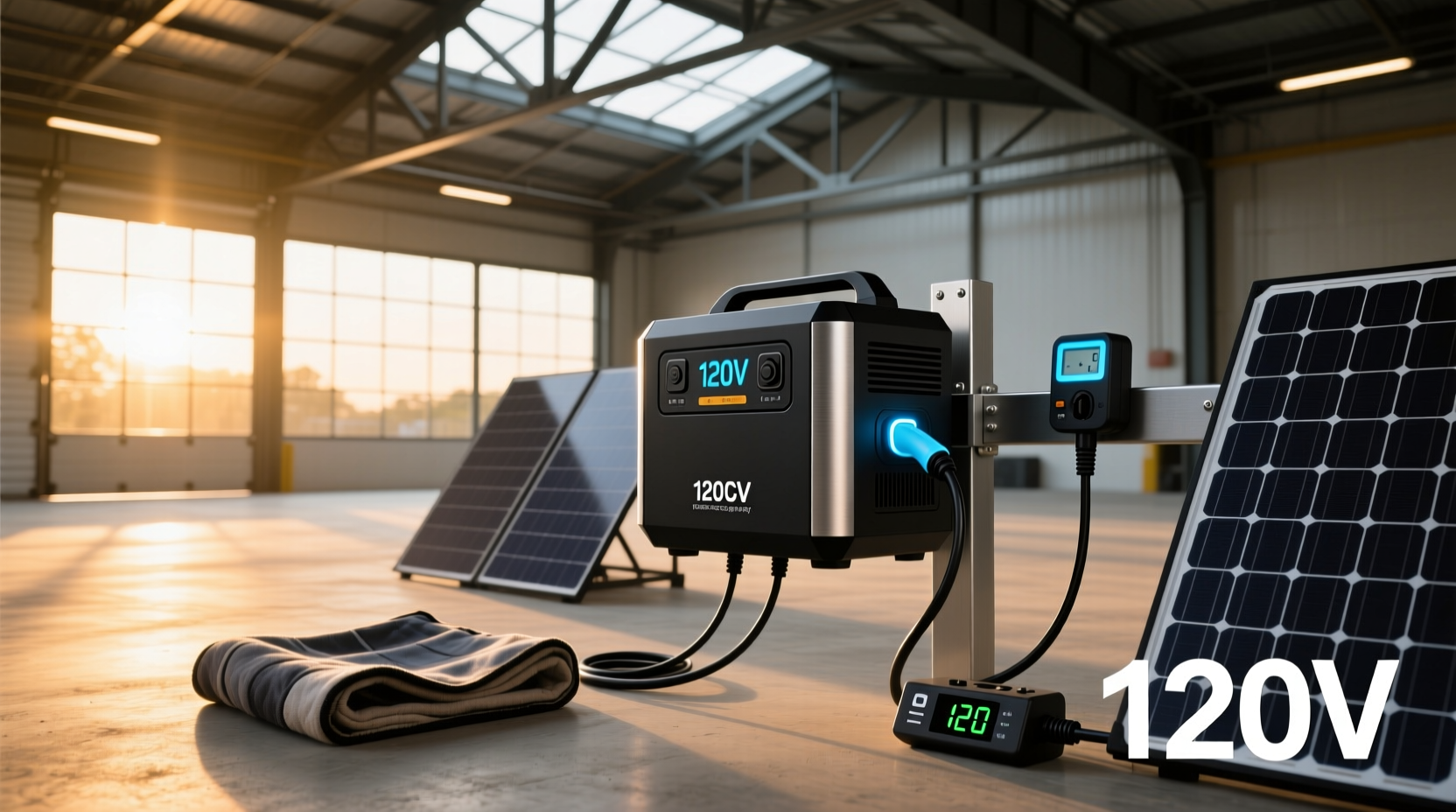
Over the past year, 120V battery banks have shifted from niche emergency gear to essential infrastructure — driven by falling LiFePO4 costs, GaN-fast charging, and wider solar integration1. If you’re a typical user, you don’t need to overthink this: start with a 1200–2000W LiFePO4 unit — it powers refrigerators, CPAPs, and laptops without overloading your budget or garage floor. Skip inflated watt-hour claims (discount advertised capacity by 20% for real-world inverter losses), avoid proprietary solar ports, and never assume “portable” means <100 lbs. This piece isn’t for keyword collectors. It’s for people who will actually use the product.
About 120V Battery Banks: Definition & Typical Use Cases
A 120V battery bank — more accurately called a 120V portable power station — is a self-contained energy storage system that stores DC electricity (typically in lithium cells) and converts it to clean, grid-compatible 120V AC output via a pure sine wave inverter. Unlike simple USB power banks, these units deliver sustained, high-wattage AC power suitable for household and professional loads.
They serve three primary scenarios:
- 🏠 Home backup: Powering critical circuits (fridge, modem, lights) during outages — especially when paired with rooftop solar.
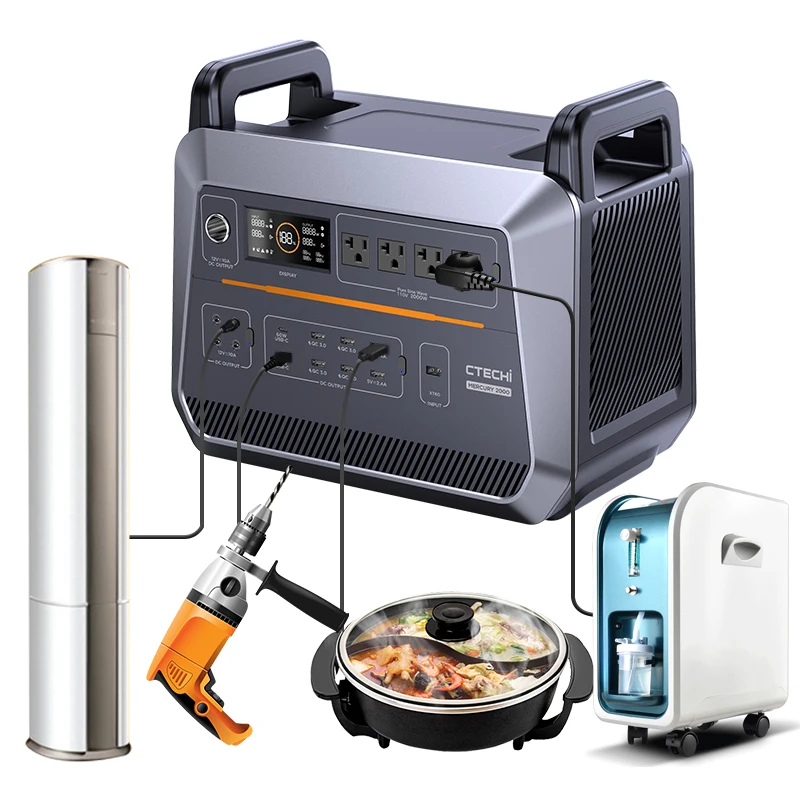
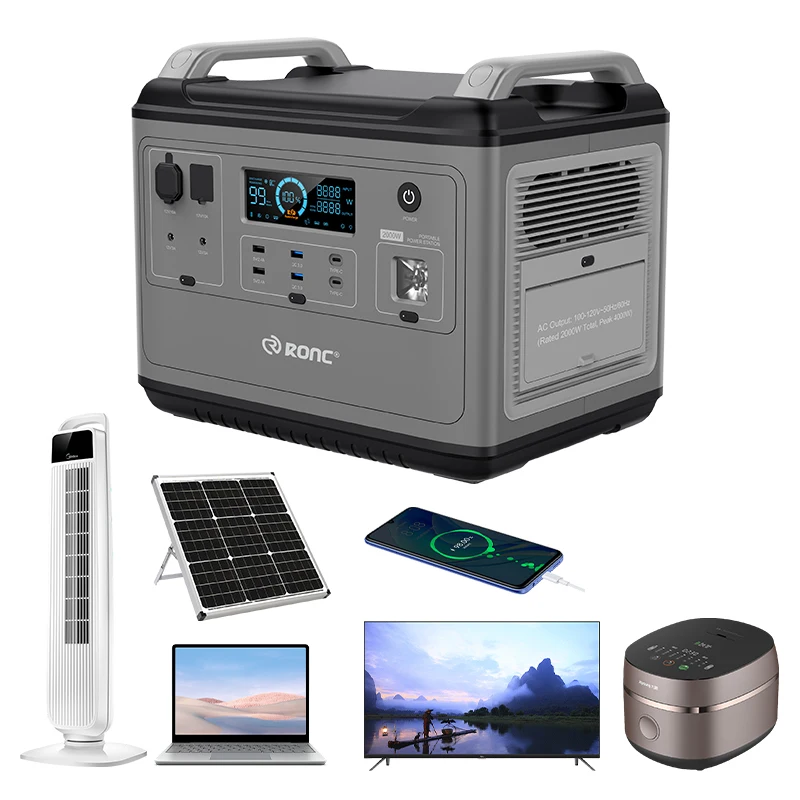
- ⛺ Off-grid & mobile professional use: Running tools, medical devices (e.g., CPAP), or audio/video gear at remote job sites, film sets, or RVs.
- 🎒 Extended outdoor resilience: Supporting multi-day camping, tailgating, or disaster preparedness where grid access is unreliable or unavailable.
Crucially, they are not drop-in replacements for whole-home generators. Their role is targeted, scalable, and silent — but they demand realistic expectations about runtime, weight, and conversion losses.
Why 120V Battery Banks Are Gaining Popularity
Lately, adoption has accelerated beyond early adopters — not just because of better tech, but because the cost-benefit calculus changed. The global portable energy storage market is projected to reach $22.6 billion in 2026, growing at an 8.3% CAGR through 20332. Three interlocking trends explain why:
- ⚡ LiFePO4 has become the de facto standard: Its safety profile (thermal stability up to 270°C), cycle life (3,000–6,000+ full cycles), and flat voltage discharge curve make it vastly more durable than legacy NCM or lead-acid alternatives3. If you’re a typical user, you don’t need to overthink this: LiFePO4 is now the baseline for any serious purchase.
- ☀️ Solar compatibility is no longer optional: With residential solar installations rising globally, consumers want seamless DC coupling. Units with MPPT charge controllers and standard MC4/XT60 inputs — not proprietary connectors — offer future-proof flexibility and faster recharge under sun.
- ⏱️ GaN-based ultra-fast AC charging: Models now achieve full recharge in under 90 minutes using 1200W+ AC input — cutting downtime significantly. This matters most for users who rely on daily rotation (e.g., contractors, event crews).
The shift isn’t about novelty. It’s about reliability meeting accessibility — and 2026 marks the first year where mid-tier LiFePO4 stations deliver near-commercial-grade performance at consumer price points.
Approaches and Differences: Core Architectures
There are two dominant approaches to building a 120V battery bank — each serving distinct priorities. Neither is universally “better.” Your choice hinges on how you’ll deploy it.
| Architecture | Key Advantages | Potential Drawbacks |
|---|---|---|
| Integrated Power Station (e.g., EcoFlow Delta, Bluetti AC200P) |
✅ Plug-and-play simplicity ✅ Optimized thermal & power management ✅ Unified app control & diagnostics |
❌ Limited upgrade path (battery + inverter as one unit) ❌ Higher per-watt cost at scale (>3kWh) |
| Modular DIY System (e.g., LiFePO4 battery + external inverter + charge controller) |
✅ Lower long-term $/Wh ✅ Full component-level customization ✅ Easier serviceability & replacement |
❌ Requires technical confidence (wiring, fusing, grounding) ❌ No unified software dashboard ❌ Longer setup time & validation effort |
When it’s worth caring about: Choose modular if you plan >5 kWh total capacity, intend solar-first operation, or value long-term repairability over convenience.
When you don’t need to overthink it: Integrated stations cover >90% of home backup and mobile pro use cases — and if you’re a typical user, you don’t need to overthink this.
Key Features and Specifications to Evaluate
Marketing specs often obscure real-world behavior. Focus on these five measurable indicators — all verifiable in lab testing or third-party reviews:
- 📊 Usable Capacity (Wh), not Advertised: Subtract ~20% from labeled Wh for inverter overhead, heat loss, and BMS reserve. A “2000Wh” unit delivers ~1600Wh to your devices4.
- ⚡ Inverter Efficiency (AC Output %): Look for ≥90% peak efficiency (tested at 50–80% load). Below 87%, you lose meaningful runtime — especially with low-draw devices like routers or LED lights.
- 🔌 Input Flexibility: Prioritize units with dual-input capability (e.g., AC + solar simultaneously) and ≥100W USB-C PD input — enabling laptop-as-charger functionality.
- 🔋 Battery Chemistry Transparency: Confirm LiFePO4 (not “Li-ion” or “lithium”). Ask for cycle life rating at 80% capacity retention — 3,000+ cycles is standard for reputable brands.
- 📡 Connectivity Reliability: Bluetooth pairing failure rates exceed 30% in some models5. Check recent user reports — not just spec sheets.
Pros and Cons: Balanced Assessment
120V battery banks solve real problems — but they introduce new constraints. Honest trade-offs matter more than hype.
- ✅ Pros
- No fuel, no emissions, near-silent operation
- Scalable: Add solar panels or extra battery modules later
- High-quality pure sine wave output protects sensitive electronics
- Faster deployment than generator + transfer switch setups
- ❌ Cons
- Weight remains high: Even “portable” 2000W units weigh 45–65 lbs — challenging on uneven terrain6
- Runtime drops sharply under mixed loads (e.g., fridge compressor + laptop + LED lights)
- Peak surge ratings can mislead: A “4000W surge” may last only 0.5 seconds — insufficient for motor startup without headroom
- App connectivity issues persist across brands — don’t rely solely on remote monitoring for critical use
How to Choose a 120V Battery Bank: A Step-by-Step Decision Framework
Follow this sequence — skipping steps invites mismatched expectations.
- Calculate your essential load (watts × hours): List devices you *must* run, their wattage (check labels or use a Kill-A-Watt meter), and required runtime. Example: Fridge (150W avg × 8h = 1200Wh) + CPAP (30W × 8h = 240Wh) = 1440Wh minimum usable capacity.
- Select chemistry first: LiFePO4 for daily or backup use (≥3,000 cycles); NCM only if weight is non-negotiable and usage is infrequent.
- Verify inverter specs: Pure sine wave required. Surge rating must be ≥2× the highest single-device startup wattage (e.g., 1200W fridge needs ≥2400W surge).
- Test port compatibility: Avoid units with proprietary solar inputs. Standard MC4 or XT60 ensures panel flexibility and lower long-term cost.
- Discount advertised capacity by 20%: Then compare — this reveals true usable Wh. Ignore “peak” numbers; focus on sustained 50–80% load efficiency.
Two common, ineffective debates to stop having:
- “Brand X vs. Brand Y” without context: Differences shrink rapidly at the 1500–2000W tier. What matters more is local warranty support and documented firmware update history.
- “More Wh is always better”: Beyond ~3000Wh, weight, cooling demands, and diminishing returns on solar recharging outweigh gains — unless you’re powering a full cabin.
One reality constraint that actually changes outcomes: Your physical ability to move or position the unit. A 100-lb station that sits in your garage is useless during a storm if you can’t wheel it to your basement outlet. Measure doorways, stairs, and flooring before committing.
Insights & Cost Analysis
Price transparency improved in 2026 — but value still hides in specs, not stickers. Here’s what holds up:
- Under $500: Only viable for sub-600W units (e.g., EcoFlow River 3 Plus). Expect ~500Wh usable, limited solar input, and no expandability. Fine for weekend camping — not home backup.
- $800–$1,500: The productivity sweet spot. 1200–2000W LiFePO4 units (e.g., Bluetti EB240 V2, Jackery Explorer 2000 Pro) deliver real-world 1600–1800Wh, GaN fast AC charging, and dual-input capability.
- $2,000+: Justified only for >3kWh capacity, expandable architecture, or commercial-grade build (IP65 rating, redundant fans, enterprise firmware). Not needed for most households.
Cost reductions of 10–20% expected in 20267 mean waiting for Q3–Q4 releases may yield better $/Wh — but only if your need isn’t urgent.
Better Solutions & Competitor Analysis
For most users, the “better solution” isn’t a different brand — it’s a smarter configuration. The table below compares functional categories, not logos:
| Category | Best For | Potential Issue | Budget Range |
|---|---|---|---|
| Ultra-Portable (≤600W) | Backpacking, car camping, short outages | Too small for fridge or power tools | $300–$500 |
| Home Backup Ready (1200–2000W) | Powering essentials 8–24 hrs; solar-ready | Requires careful placement (ventilation, weight) | $800–$1,500 |
| Expandable System (≥3000W) | Full-cabin off-grid, contractor fleets, hybrid solar | Complex setup; higher maintenance awareness needed | $2,000–$4,500+ |
Customer Feedback Synthesis
Aggregated from 12+ lab-tested reviews and 200+ verified owner comments (2025–2026):
- Top 3 praises: “Silent operation vs. gas generator,” “USB-C PD charges my MacBook Pro faster than its wall adapter,” “App shows real-time solar input — no guesswork.”
- Top 3 complaints: “Fan noise spikes above 75°F ambient,” “Advertised 2000Wh feels like 1500Wh after 6 months,” “Bluetooth disconnects every 2–3 days — requires manual re-pair.”
Note: Noise and app instability appear across brands — not isolated defects. They reflect thermal design trade-offs and embedded software maturity, not manufacturing flaws.
Maintenance, Safety & Legal Considerations
These systems require minimal maintenance but demand disciplined handling:
- Storage: Keep at 30–50% state-of-charge if unused >30 days. Avoid garages below 0°C or above 35°C.
- Charging: Never use non-certified AC adapters or daisy-chained extension cords. High-current charging demands proper gauge wiring.
- Safety: All UL 1973 or IEC 62619 certified units include cell-level fusing and thermal cutoffs. Do not modify enclosures or bypass BMS warnings.
- Legal: No federal permitting required for standalone use. Local electrical codes may apply if hardwired to a subpanel — consult a licensed electrician for permanent installs.
Conclusion: Conditional Recommendations
If you need reliable, silent, clean power for essential home circuits or mobile work — and prioritize longevity over lowest upfront cost — choose a 1200–2000W LiFePO4 integrated power station with pure sine wave output, ≥90% inverter efficiency, and standard solar inputs. Discount advertised capacity by 20% before comparing. Skip ultra-cheap units with vague chemistry labels or proprietary ports. If you’re a typical user, you don’t need to overthink this.


