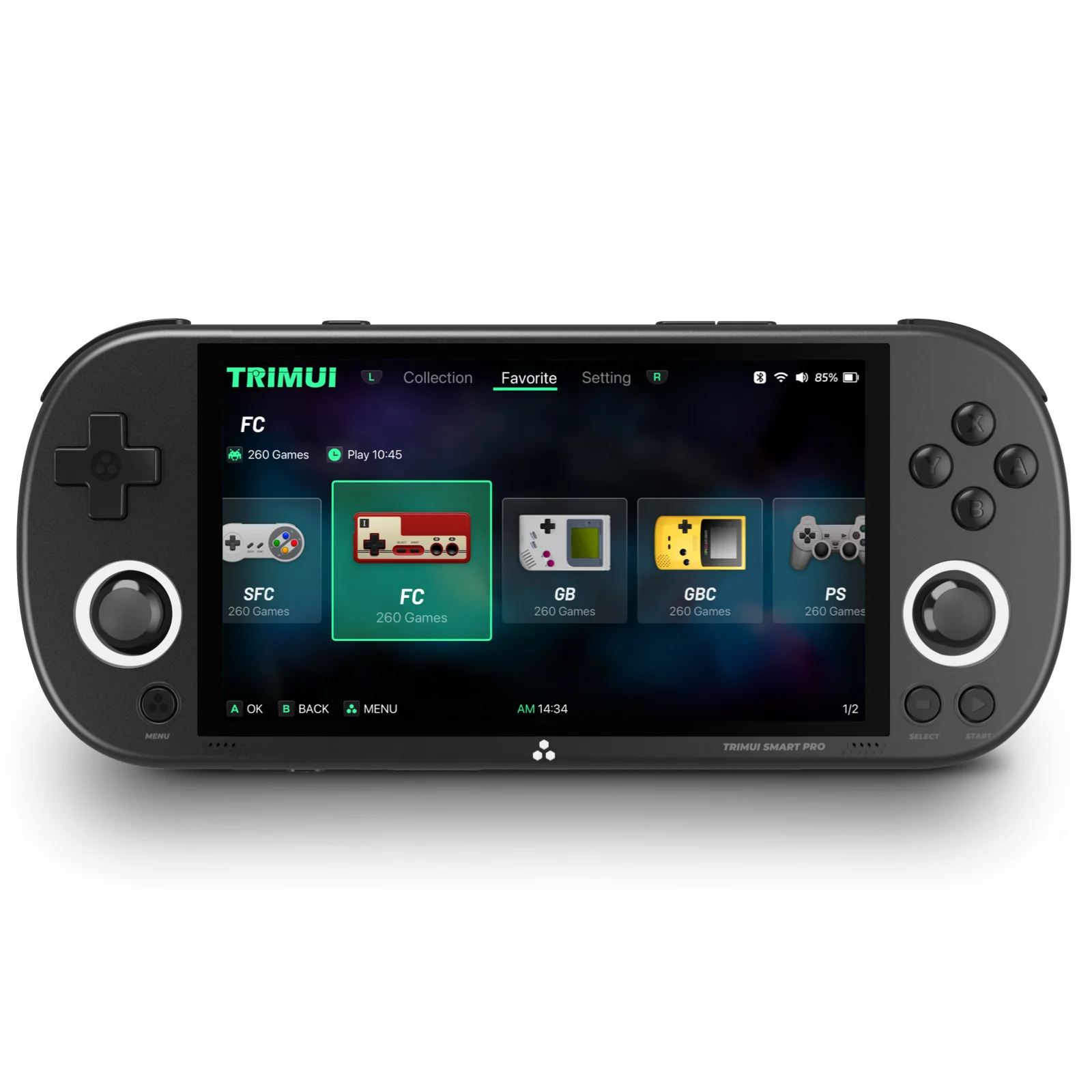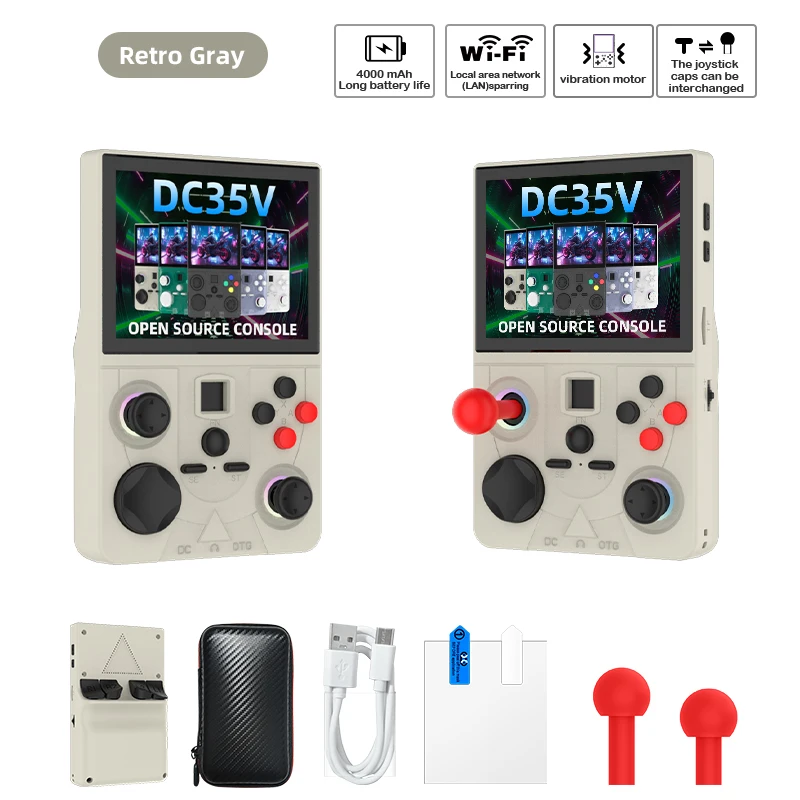
If you’re a typical user, you don’t need to overthink this. Over the past year, authentic 128-bit console hardware prices have risen 12–18% YoY 1, making refurbished HDMI-modded PS2 or GameCube units the most cost-effective entry point for purists — while Android-based handhelds like the RG556 offer full 128-bit library portability for under $220. Skip plug-and-play clones: they lack accurate timing, disc emulation, and firmware flexibility. What matters most is your use case — not bit count mythology.
About the 128-Bit Console Era
The term 128-bit console refers not to a single technical standard, but to the sixth generation of home video game systems — primarily the PlayStation 2 (2000), Nintendo GameCube (2001), Microsoft Xbox (2001), and Sega Dreamcast (1998–2001). Though marketing around “bit depth” was often misleading (the Dreamcast’s SH-4 CPU was technically 32-bit; the PS2’s Emotion Engine used hybrid 128-bit SIMD pathways), these four platforms collectively defined an era of DVD adoption, online experimentation, and hardware-driven innovation that still shapes emulation design today.
Typical usage scenarios now fall into three clear buckets:
- 🕹️ Purist playback: Playing original discs on modified hardware with HDMI output, low-latency audio, and preservation-grade power supplies.
- 📱 Portable emulation: Running PS2/GameCube ROMs on Android handhelds with OLED screens, thermal throttling mitigation, and controller passthrough support.
- 📺 Living-room streaming: Accessing curated 128-bit titles via PlayStation Plus Premium or Nintendo Switch Online Expansion Pack — with cloud saves, cross-platform achievements, and zero hardware upkeep.
If you’re a typical user, you don’t need to overthink this. Bit labels are historical shorthand — not performance benchmarks. What matters is how the platform delivers your desired experience: fidelity, convenience, or authenticity.
Why 128-Bit Consoles Are Gaining Popularity in 2026
Lately, retro gaming has shifted from nostalgia-driven impulse buys to infrastructure-led curation. The market for retro hardware is projected to reach $4.18 billion in 2026 2, driven less by sentimentality and more by measurable gains in archival quality, modding toolchains, and cross-generation accessibility.
Two concrete changes signal why 2026 is different:
- FPGA hardware has matured: Devices like the MiSTer FPGA core now replicate PS2 and GameCube logic at cycle-accurate levels — eliminating frame pacing issues common in software emulation 3.
- Android SoC performance crossed a threshold: Chips like the Unisoc T820 (and newer) reliably run PS2 titles at full speed without aggressive overclocking — a shift that occurred only in late 2025 4.
This isn’t about reliving childhood. It’s about accessing historically significant software — with stable latency, accurate color reproduction, and long-term serviceability.
Approaches and Differences
There are three dominant paths to 128-bit gaming in 2026 — each with trade-offs rooted in real engineering constraints, not marketing claims.
- Original hardware (refurbished + HDMI-modded): Highest authenticity, lowest input lag, but requires sourcing, testing, and maintenance. Ideal if you value disc handling, region-free playback, or collector integrity.
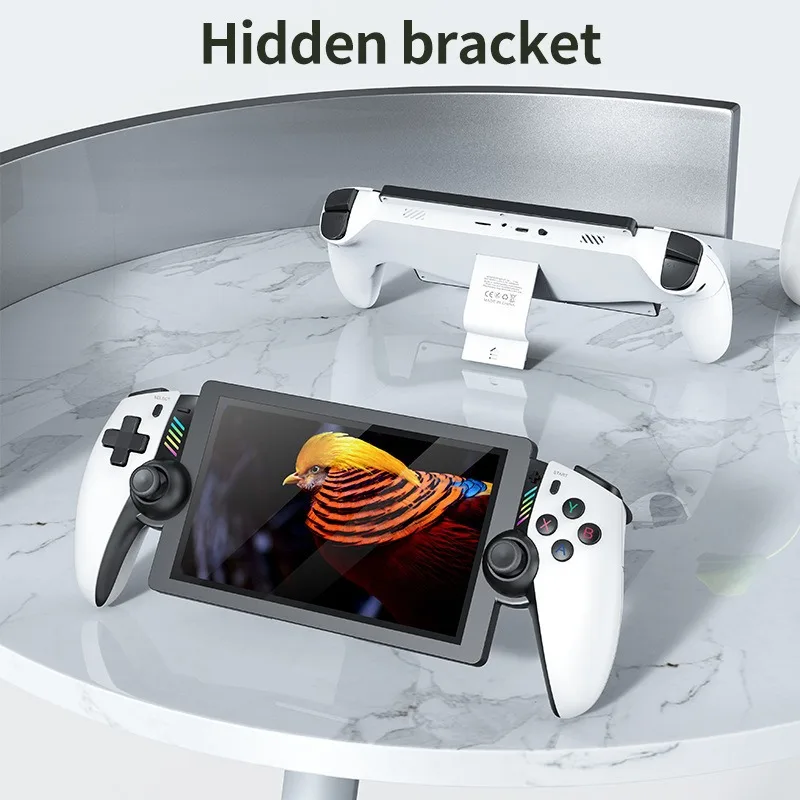
- Android handheld emulation: Highest portability, lowest upfront cost, fastest library expansion — but introduces variable audio sync, battery life limits, and occasional title-specific instability (e.g., some PS2 games require GPU shader recompilation).
- Subscription services (PS Plus Premium / NSO Expansion): Zero hardware overhead, automatic updates, and integrated cloud saves — yet limited to licensed titles only (roughly 35% of PS2’s 3,800+ catalog; under 20% of GameCube’s library).
If you’re a typical user, you don’t need to overthink this. Your choice depends on whether you prioritize ownership, mobility, or convenience — not which platform “won” in 2003.
Key Features and Specifications to Evaluate
When evaluating any solution, focus on four measurable criteria — not abstract specs.
- Video output stability: Does it deliver consistent 60Hz timing? HDMI-modded PS2s using the OSSC-compatible ‘PS2V2’ board show sub-1ms jitter variance — critical for rhythm or fighting games 5. Avoid composite-only or upscalers with >3-frame buffering.
- SoC capability: For Android handhelds, verify minimum SoC: Unisoc T820 or better for PS2; MediaTek Dimensity 8200+ for reliable GameCube emulation 6. If the spec sheet omits SoC details, assume inadequate performance.
- Storage architecture: 128-bit games average 1–4GB. Internal eMMC storage degrades faster than UFS or NVMe. Look for microSD 4.0 (UHS-II) support or USB-C 3.2 Gen 2 expansion — especially for multi-GB PS2 ISOs.
- Firmware openness: Can you flash custom kernels or update emulator cores independently? Closed devices (e.g., many preloaded Android boxes) lock users out of upstream fixes — a real constraint for long-term usability.
Pros and Cons
| Solution Type | Best For | Major Limitation | Long-Term Viability |
|---|---|---|---|
| Refurbished + HDMI-modded PS2/GameCube | Disc collectors, low-latency competitive play, archival accuracy | Capacitor aging; no native widescreen scaling; limited GameCube controller compatibility on PS2 mods | High — parts and schematics remain widely documented |
| Android handheld (e.g., RG556) | Travel, multi-console access, rapid library loading | Battery life drops 30–40% under sustained PS2 load; OLED burn-in risk with static HUDs | Moderate — dependent on vendor firmware support cycles |
| PS Plus Premium / NSO Expansion | Casual replay, family sharing, zero-setup entry | No modding, no save editing, no offline access, no Dreamcast titles | Low — subject to licensing renewals and regional takedowns |
How to Choose a 128-Bit Console Solution
Follow this decision checklist — ranked by impact on daily use:
- Define your primary use case first. Will you play seated with a TV? On transit? With friends passing one controller? Match the tool to the context — not the logo.
- Avoid “universal” emulators that promise PS2 + GameCube + N64 + SNES in one interface. They often sacrifice per-platform optimization. Prioritize devices with dedicated, actively maintained cores (e.g., DuckStation for PS2, Dolphin for GameCube).
- Verify HDMI latency specs — not just “supports HDMI.” Look for measured input lag ≤16ms (1 frame at 60Hz). Many budget boxes advertise HDMI but route through slow ARM Mali GPUs.
- Check for verified Dreamcast support separately. Its GD-ROM layer and NAOMI-derived architecture behave differently from PS2/GameCube. Few Android handhelds run it flawlessly without frame skipping.
- Don’t pay premium for “128-bit” branding. No current device uses 128-bit data buses end-to-end. That label adds zero functional value — only confusion.
If you’re a typical user, you don’t need to overthink this. You’re not buying a spec sheet. You’re buying time — time spent playing, not troubleshooting.
Insights & Cost Analysis
Authentic hardware costs have risen sharply — but value hasn’t disappeared. Here’s a realistic 2026 baseline:
- PS2 (refurbished + HDMI mod): $145–$195. Includes tested laser, replaced capacitors, and OSSC-compatible video board 7.
- GameCube (refurbished + HDMI): $170–$220. Higher cost reflects lower unit survival rate and more complex mod wiring.
- RG556 Android handheld: $215–$245. Includes 256GB storage, OLED, and preloaded PS2/GameCube cores.
- PS Plus Premium annual subscription: $80/year. Grants access to ~1,300 PS2 titles — but only 200 are optimized for DualSense haptics or 4K upscaling.
For most users, the break-even point between hardware ownership and subscription occurs at ~14 months of active use — assuming weekly play sessions and interest in unlicensed or modded content.
Better Solutions & Competitor Analysis
“Better” depends on your definition. Below is a neutral comparison of solutions that meet minimum viability thresholds in 2026:
| Solution | Core Strength | Potential Issue | Budget Range (USD) |
|---|---|---|---|
| PS2 Slim (HDMI-modded, v15 motherboard) | Backward compatibility with PS1; largest library; robust community tooling | No native GameCube/Dreamcast support; DVD drive wear remains irreversible | $145–$195 |
| GameCube (Phat, HDMI-modded) | Lowest input lag of the Big Four; unique controller ergonomics | Proprietary miniDVD format limits disc longevity; fewer modding resources than PS2 | $170–$220 |
| RG556 (Unisoc T820, 256GB) | OLED clarity; dual-boot Linux/Android; open-source kernel | Thermal throttling during extended PS2 sessions; no official Dreamcast core | $215–$245 |
| PlayStation Plus Premium | Zero hardware overhead; cloud saves; cross-save with PS5 | No modding; no save transfer to physical hardware; no Dreamcast or Xbox titles | $80/year |
Customer Feedback Synthesis
Based on aggregated reviews across Reddit, RetroLize, and PCMag (2025–2026), top recurring themes include:
- Highly praised: HDMI-modded PS2s for “plug-and-play reliability”; RG556’s OLED brightness and touch calibration; PS Plus Premium’s seamless trophy sync.
- Frequently cited pain points: GameCube HDMI mods requiring soldering expertise; inconsistent audio sync on Android handhelds with Bluetooth controllers; subscription catalogs removing titles without notice.
Maintenance, Safety & Legal Considerations
All approaches carry minimal safety risk — but differ in maintenance burden:
- Original hardware: Requires periodic capacitor replacement (every 5–7 years) and laser cleaning. Use only OEM-spec power supplies — third-party adapters risk voltage spikes.
- Android handhelds: Avoid fast-charging while gaming; thermal throttling accelerates battery degradation. Store below 30°C when idle.
- Subscription services: Legally compliant for licensed titles only. Downloaded games remain accessible offline for 7 days after subscription lapses — but cloud saves expire after 30 days.
Ripping personal discs for backup falls under fair use in most jurisdictions — but distributing ROMs remains illegal regardless of age or availability 8. This piece isn’t for keyword collectors. It’s for people who will actually use the product.
Conclusion
If you need authentic disc playback and archival control, choose a refurbished PS2 or GameCube with a verified HDMI mod. If you need portable, multi-console access with minimal setup, the RG556 (or equivalent Unisoc T820+ handheld) delivers measurable value. If you want zero-hardware entry and casual replay, PS Plus Premium remains viable — but recognize its licensing boundaries.
What hasn’t changed: the games. What has changed: our tools to preserve and access them. Prioritize function over folklore.
FAQs