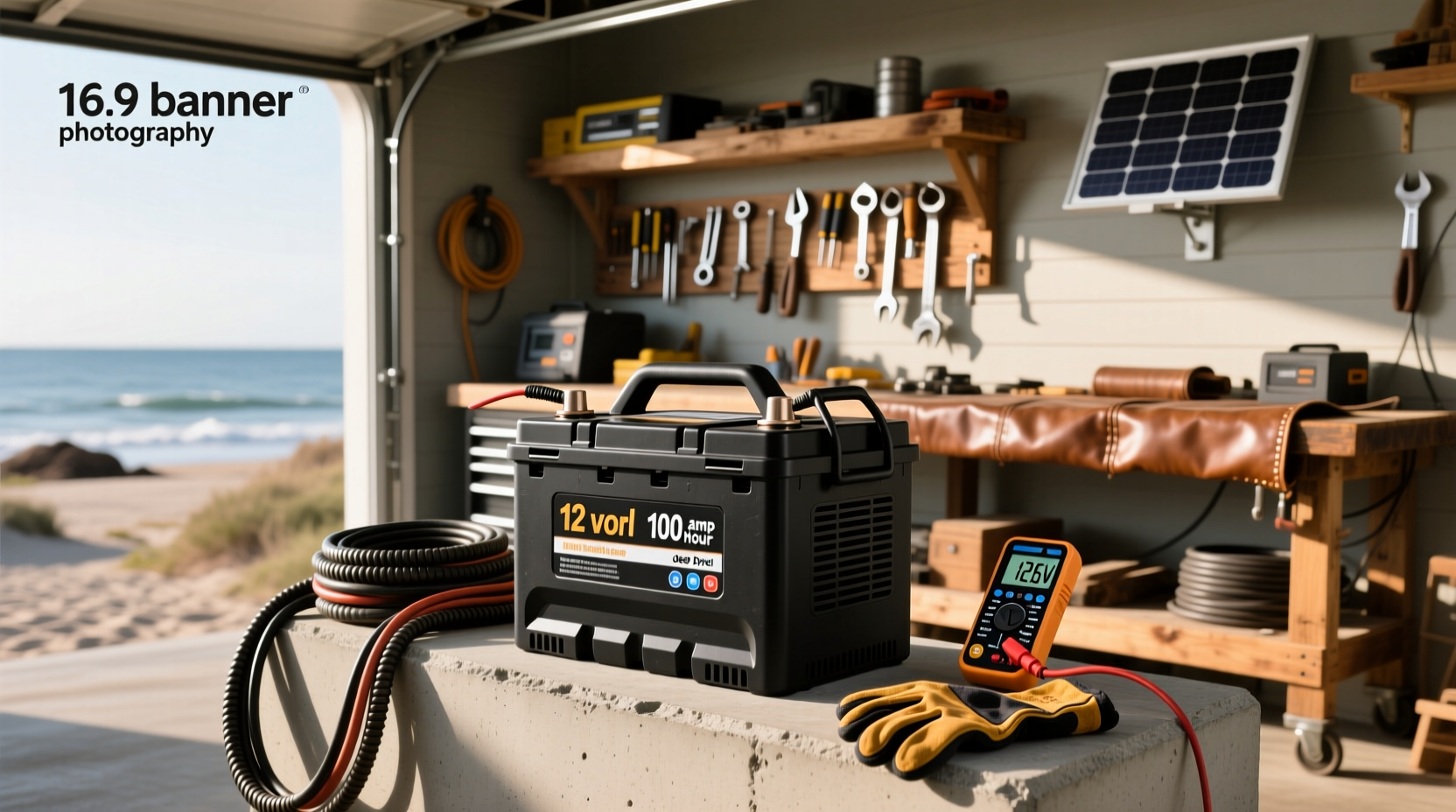
If you’re choosing a 12V 100Ah deep cycle battery for an RV, marine system, or off-grid solar setup — go with a LiFePO4 model unless your budget is under $350 and you’ll only use it seasonally in mild climates. Over the past year, LiFePO4 adoption has surged not just because it’s lighter or lasts longer, but because its real-world usable capacity (80–100% depth of discharge) and 95% charging efficiency cut energy waste and extend system runtime — especially critical when paired with limited solar input or intermittent shore power1. AGM still works for backup-only roles or users locked into legacy charge controllers — but if you’re replacing a failing AGM battery and plan to keep your rig for >3 years, upgrading to LiFePO4 lowers your Levelized Cost of Storage by ~40% over five years2. If you’re a typical user, you don’t need to overthink this: prioritize BMS safety features and cold-weather readiness over brand name or minor voltage tolerances.
About 12V 100Ah Deep Cycle Batteries
A 12V 100Ah deep cycle battery delivers 1,200 watt-hours (Wh) of nominal energy — enough to power a 12V fridge for ~24 hours, run LED lighting and a water pump for 3–4 days, or support a small inverter for basic AC loads. Unlike starter batteries, deep cycle units are engineered for repeated, partial discharges (typically 30–80% depth of discharge) without rapid degradation. They serve three core applications:
- RVs & campervans: powering lights, fans, refrigerators, and USB charging while dry camping;
- Marine systems: supporting trolling motors, fish finders, radios, and cabin electronics;
- Off-grid solar storage: storing daytime PV harvest for nighttime use, often in parallel banks.
The “100Ah” rating refers to amp-hour capacity measured at a 20-hour discharge rate (i.e., delivering 5A for 20 hours). Real-world usable energy depends heavily on chemistry, temperature, and discharge rate — which is why two 12V 100Ah batteries can deliver wildly different runtime in practice.
Why 12V 100Ah Batteries Are Gaining Popularity
Lately, demand for 12V 100Ah deep cycle batteries has accelerated across North America, Europe, and Australia — driven less by novelty and more by tangible infrastructure shifts. First, solar panel prices dropped 35% since 2022, making small-scale off-grid setups accessible to vanlifers and weekend boaters3. Second, major industrial players like EnerSys and Exide have scaled lithium production lines, improving supply reliability and narrowing the price gap between AGM and LiFePO44. Third, Bluetooth-enabled BMS systems now ship standard on mid-tier LiFePO4 models — letting users monitor cell voltage, temperature, and state of charge via smartphone, eliminating guesswork about remaining power. This isn’t hype: it’s measurable operational improvement. If you’re a typical user, you don’t need to overthink this — what matters is whether your use case involves frequent cycling, limited space/weight budget, or sub-zero environments. Those conditions alone justify prioritizing LiFePO4.
Approaches and Differences: LiFePO4 vs AGM
The choice isn’t technical preference — it’s functional alignment. Here’s how they differ where it actually impacts daily use:
| Feature | LiFePO4 (Lithium Iron Phosphate) | AGM (Absorbed Glass Mat) |
|---|---|---|
| Cycle Life | 3,000–7,000+ cycles @ 80% DoD | 300–700 cycles @ 50% DoD |
| Usable Capacity | 80–100% (80–100Ah usable) | ~50% (50Ah usable) |
| Weight | 25–30 lbs (11–14 kg) | 60–70 lbs (27–32 kg) |
| Charging Time | 1–3 hours (full recharge) | 5–10+ hours (full recharge) |
| Efficiency | ~95% (minimal energy loss) | ~80–85% (more heat, less usable energy) |
| Cold Charging | Requires self-heating below 0°C (standard on premium models) | Works down to –20°C — but capacity drops sharply; no heating needed |
When it’s worth caring about: Cycle life and usable capacity directly determine how often you replace batteries and how long your fridge stays cold during cloudy stretches. Weight matters if mounting in tight compartments or balancing axle load in a van. Efficiency affects how much solar you need to fully recharge — a 95% efficient LiFePO4 battery gains ~15% more usable Wh per kWh of solar harvest than an AGM unit.
When you don’t need to overthink it: Minor variations in nominal voltage (e.g., 12.8V vs 13.2V resting voltage) or BMS firmware version rarely impact real-world operation. If your charge controller supports both chemistries — and you’re not operating below freezing — defaulting to LiFePO4 simplifies long-term planning.
Key Features and Specifications to Evaluate
Don’t stop at “12V 100Ah.” Look deeper — these five specs separate reliable performers from short-lived compromises:
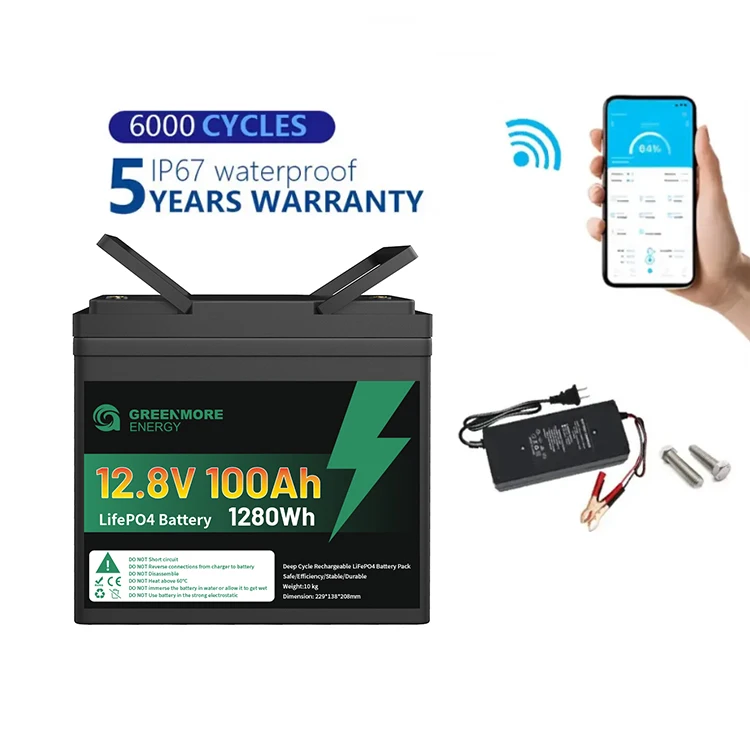
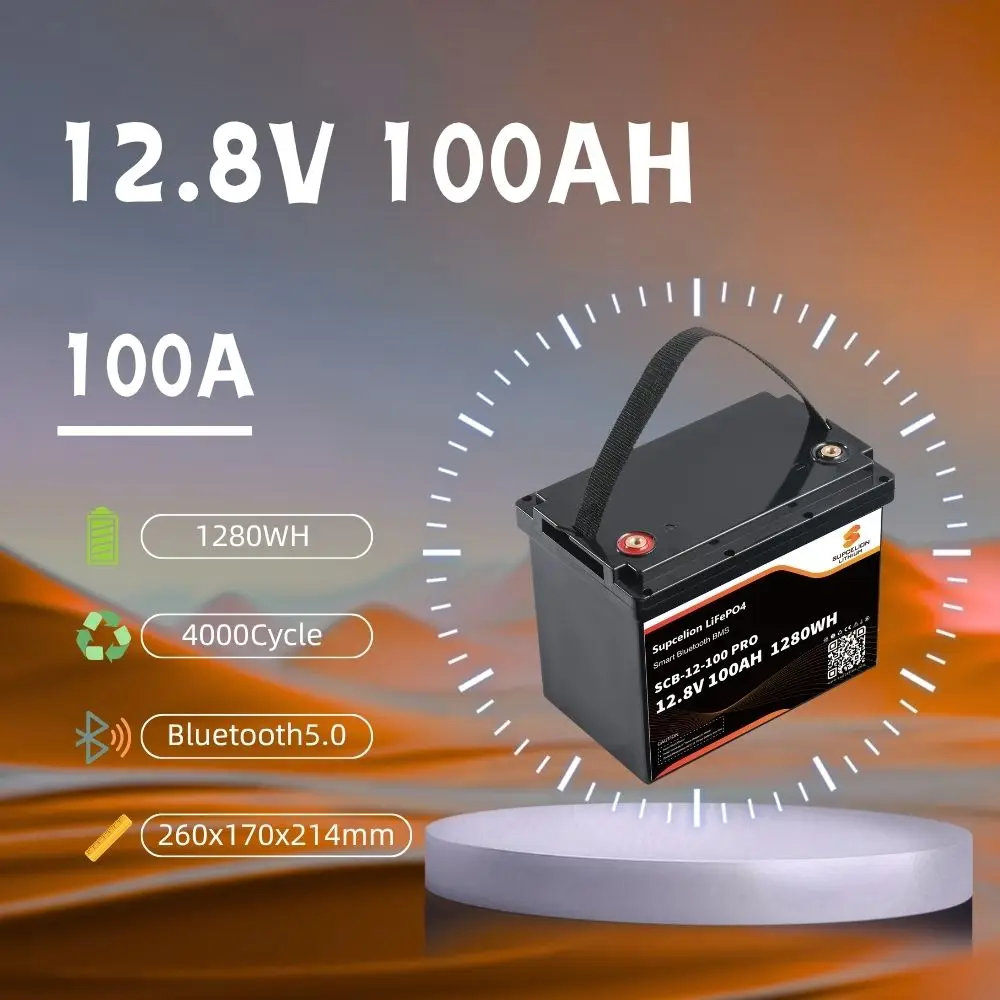
- 🔋 Battery Management System (BMS): Must include low-temperature charge cutoff (prevents lithium plating below 0°C), over-voltage, under-voltage, short-circuit, and thermal protection. Bluetooth connectivity is now standard on most $500+ models — enabling real-time diagnostics and firmware updates.
- 🌡️ Self-Heating Functionality: Critical for winter RVers or northern marine users. A built-in heating pad activates automatically when ambient temperature drops below 0°C and charging begins — warming cells to ~10°C before current flows. Not all “cold-rated” LiFePO4 batteries include this; verify spec sheets.
- ⚡ Continuous Discharge Current: A true 100A rating means stable output up to 1,200W. Some budget LiFePO4 units list “100Ah” but only support 50A continuous — insufficient for high-draw inverters or dual-fridge setups.
- 📦 Cell Grade & Configuration: Prismatic Grade A LiFePO4 cells (not cylindrical or recycled) offer best longevity. Avoid “reconditioned” or “Grade B” claims — request datasheets from suppliers.
- 🔒 Safety Certification: UL1973 (for stationary use) or UL2271 (for mobile applications) confirms independent validation of thermal runaway resistance and mechanical durability. CE and UN38.3 are baseline — not substitutes for UL.
Pros and Cons
✅ LiFePO4 is better if: You cycle daily, need lightweight installation, operate in variable temperatures, or value predictable long-term cost. Its 7,000-cycle lifespan means one battery may last the lifetime of your RV or boat.
⚠️ LiFePO4 is less ideal if: You lack a compatible lithium-ready charge controller or inverter, store your vehicle for >6 months without maintenance charging, or require extreme sub-zero operation (<–25°C) without supplemental heating.
✅ AGM is still viable if: You have existing lead-acid infrastructure, use the battery only occasionally (e.g., seasonal cabin backup), or need a low-risk, plug-and-play replacement with zero configuration.
⚠️ AGM is limiting if: You regularly discharge below 50%, need >24 hours of fridge runtime off-grid, or haul heavy gear where every pound counts.
How to Choose a 12V 100Ah Deep Cycle Battery
Follow this 5-step decision checklist — designed to eliminate common missteps:
- Confirm compatibility first: Check your existing charge controller, inverter, and alternator regulator manuals. If they lack a “LiFePO4” or “Lithium” profile, either upgrade them or stick with AGM.
- Map your coldest operating environment: If you’ll charge below 0°C, self-heating is non-negotiable. Don’t rely on “cold-weather rated” marketing — ask for test reports showing performance at –10°C with heating engaged.
- Calculate real usable watt-hours: Multiply rated Ah × nominal voltage × usable DoD. For AGM: 100 × 12 × 0.5 = 600Wh. For LiFePO4: 100 × 12.8 × 0.9 = ~1,150Wh. That’s nearly double the actual runtime.
- Verify warranty terms — not just duration: A “5-year warranty” that excludes capacity retention or requires annual BMS calibration is weaker than a “3-year full replacement” with documented 80% capacity guarantee at end-of-term.
- Avoid MOQ traps: Some B2B suppliers list “$420/unit” but enforce 50-piece minimums. For testing or single-unit needs, filter for distributors offering sample orders — many now provide drop-shipped evaluation units under $500.
This piece isn’t for keyword collectors. It’s for people who will actually use the product.
Insights & Cost Analysis
Upfront price remains the biggest friction point — but total cost tells a different story:
- AGM: $220–$320. Replaced every 2–3 years. True 5-year cost: $660–$960 + labor.
- LiFePO4 (mid-tier, self-heating, Bluetooth BMS): $480–$680. Lasts 7–10 years. True 5-year cost: $480–$680 (no replacement needed).
Even ignoring labor, downtime, and lost trips due to dead batteries, LiFePO4 delivers ~30–45% lower cost per usable watt-hour over five years. The break-even point occurs around Year 2.5 for daily users — earlier if you factor in reduced generator runtime or smaller solar arrays.
Better Solutions & Competitor Analysis
| Category | Best Fit Advantage | Potential Issue | Budget Range (USD) |
|---|---|---|---|
| Smart LiFePO4 w/ Self-Heating LiFePO4 | Real-time monitoring, safe cold-weather charging, 7,000+ cycles | Requires lithium-compatible charging infrastructure | $520–$680 |
| High-Discharge AGM AGM | Drop-in replacement for legacy systems; robust vibration resistance | Heavy; usable capacity halved; degrades faster with partial cycling | $260–$320 |
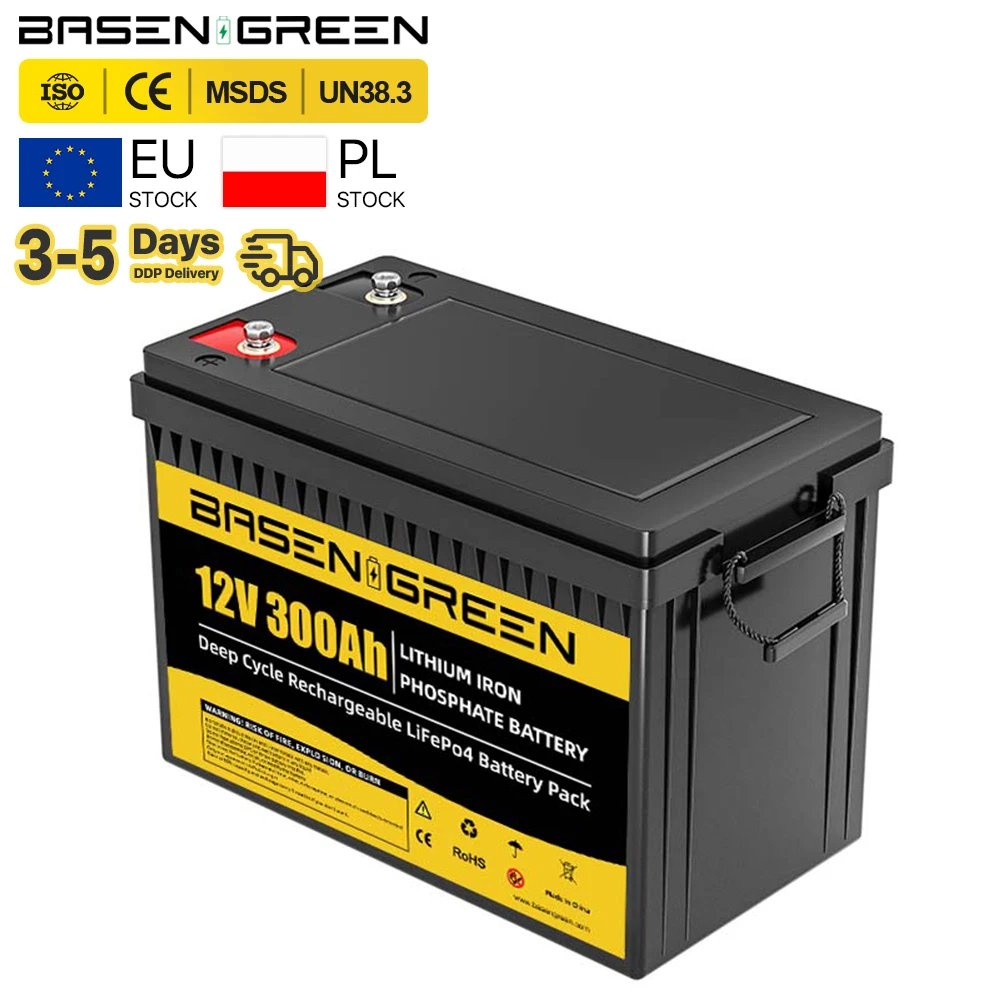
| Entry LiFePO4 (No Heating) LiFePO4 | Lightweight, long life, good for mild climates | Risk of permanent damage if charged below 0°C — no automatic protection | $420–$490 |
Customer Feedback Synthesis
Based on aggregated reviews (RV forums, marine retailers, solar installer reports), top recurring themes:
- Top Praise for LiFePO4: “Fridge ran 36 hours straight on cloudy days — never possible with our old AGMs”; “Lost 40 lbs from our van’s rear axle — handling improved instantly.”
- Top Complaint for LiFePO4: “Heating function didn’t activate until battery was already at –5°C — caused one failed morning charge”; “App disconnects after firmware update — had to reset Bluetooth pairing weekly.”
- Top Praise for AGM: “Plugged right in — no settings changed, no error codes”; “Survived three winters in an unheated shed with minimal maintenance.”
- Top Complaint for AGM: “Capacity dropped 40% after 18 months of weekend use — fridge shut off after 14 hours.”
Maintenance, Safety & Legal Considerations
Maintenance: LiFePO4 requires near-zero maintenance — no watering, no equalization charges. AGM needs periodic voltage checks and occasional surface cleaning. Both benefit from keeping terminals corrosion-free.
Safety: LiFePO4 is thermally stable and does not vent gas under normal operation. AGM is sealed but can vent hydrogen if overcharged — ensure ventilation in enclosed compartments.
Shipping & Compliance: All lithium batteries >100Wh (which includes 12V 100Ah = 1,200Wh) are Class 9 Dangerous Goods. Shipments require UN38.3 test reports and proper labeling. AGM batteries are not classified as dangerous goods — simplifying logistics for small buyers.
Conclusion: Conditional Recommendations
If you need daily reliability, weight savings, or cold-weather charging — choose a self-heating 12V 100Ah LiFePO4 battery with UL2271 certification and Bluetooth BMS.
If you’re maintaining a legacy system, budget-constrained, or using the battery for infrequent backup — a high-quality AGM remains a technically sound, lower-friction option.
If you’re a typical user, you don’t need to overthink this. Prioritize verified cold-weather performance over brand familiarity. Invest in BMS intelligence — not just capacity. And remember: the cheapest battery is the one you don’t replace twice.


