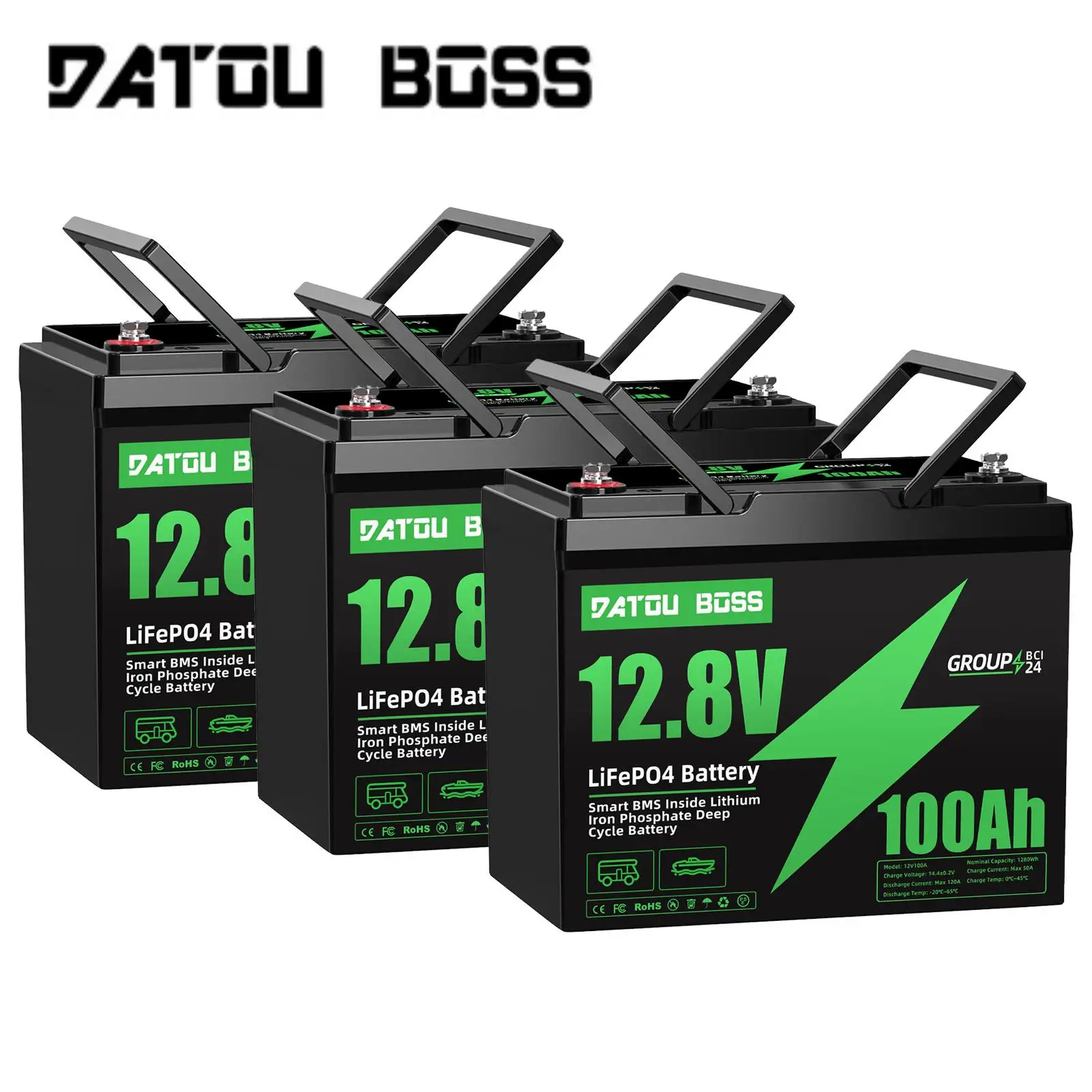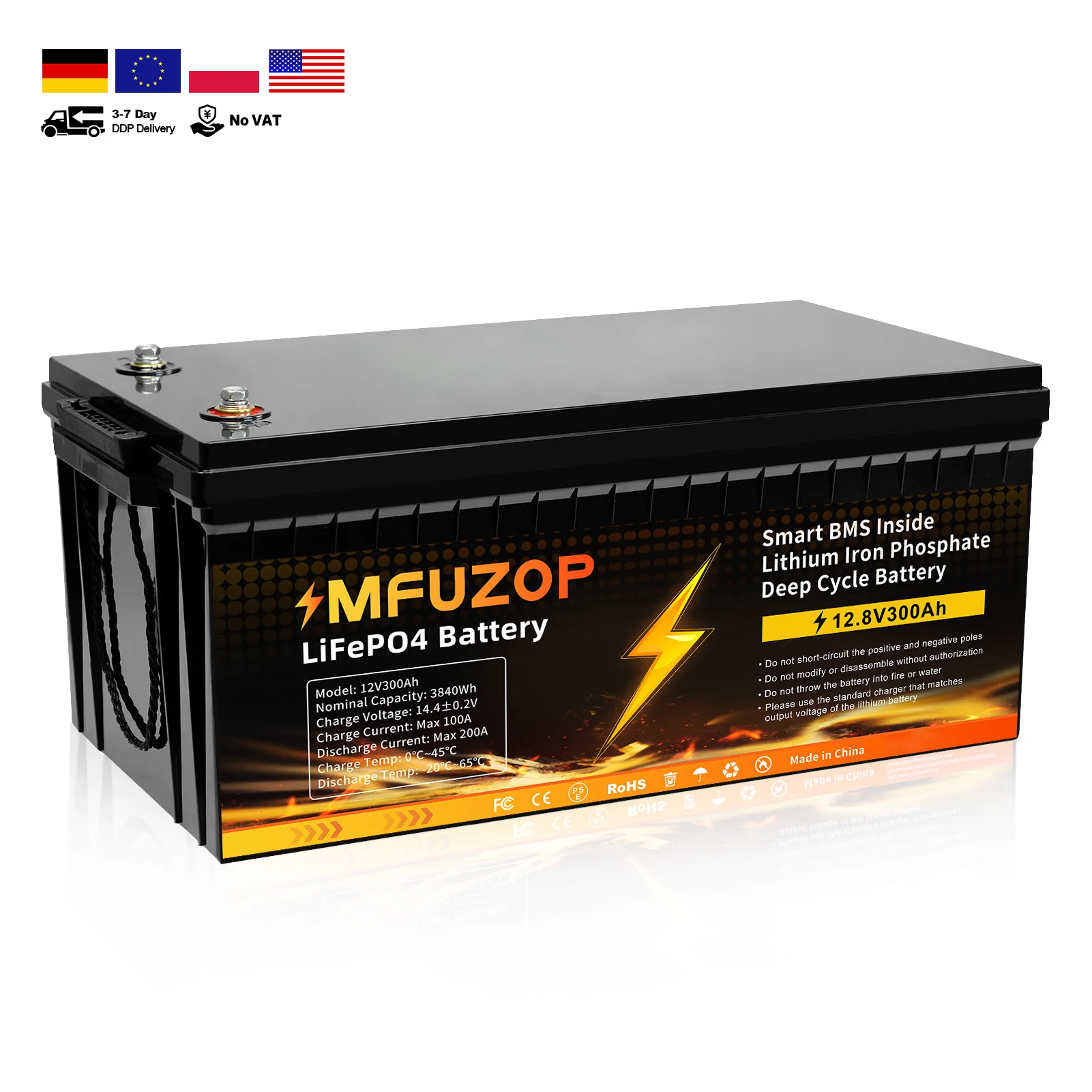
If you’re installing a 12V 100Ah lithium battery for an RV, solar setup, or marine application in 2026—you need Grade A LiFePO4 cells, a 100A-rated BMS with low-temp charge protection, and Bluetooth monitoring. Skip units under $280 retail: they almost always cut corners on cell grade or thermal safeguards. Over the past year, pricing has stabilized between $300–$450 for verified consumer-grade units1, while bulk B2B costs dropped to $100–$1602. That stability means fewer “too-good-to-be-true” traps—but also fewer excuses to skip core specs. If you’re a typical user, you don’t need to overthink chemistry comparisons (LiFePO4 is the only safe, durable choice here), but you must verify BMS discharge rating and cold-weather behavior. This piece isn’t for keyword collectors. It’s for people who will actually use the product.
About 12V 100Ah LiFePO4 Batteries: Definition & Typical Use Cases 🔋
A 12V 100Ah LiFePO4 (Lithium Iron Phosphate) battery delivers nominal 12 volts and stores up to 1,200 watt-hours of energy (12V × 100Ah). Unlike lead-acid, it offers near-full usable capacity (~90–100%), weighs ~10–12 kg (vs. 25–30 kg for AGM), and lasts 2,000–5,000+ cycles3. Its dominant applications are:
- RV house banks: Replacing Group 27/31 lead-acid batteries with drop-in physical compatibility and higher sustained voltage under load.
- Off-grid solar storage: Paired with MPPT charge controllers for cabins, sheds, or backup systems requiring long cycle life and shallow-depth tolerance.
- Marine trolling motors & electronics: Where weight savings and high surge current matter—and IP65/IP67 sealing prevents corrosion.
This isn’t a general-purpose starter battery. It’s a deep-cycle energy reservoir built for repeated discharge/recharge—not cranking engines.
Why 12V 100Ah LiFePO4 Batteries Are Gaining Popularity 📈
Lately, adoption has accelerated—not because lithium got flashier, but because reliability gaps narrowed and cost-per-cycle collapsed. The global 12V lithium battery market is projected to hit $18.6 billion by 2034, growing at 10.2% CAGR1. Three concrete drivers explain why users now switch decisively:
- Price stabilization: After lithium carbonate price swings ended in 2025, retail units settled into the $300–$450 range—making ROI calculations predictable2.
- Smart BMS as standard: Bluetooth-enabled monitoring apps let users track State of Charge (SoC), voltage, temperature, and fault logs in real time—no multimeter required4.
- Cold-climate engineering: Self-heating pads and strict low-temp charge cutoffs (e.g., disable charging below 0°C) are no longer premium add-ons—they’re baseline expectations for North America and Europe5.
If you’re a typical user, you don’t need to overthink whether LiFePO4 is “better”—it is, across every durability and safety metric relevant to 12V deep-cycle use. What matters is verifying implementation quality.
Approaches and Differences: Drop-in vs. Custom Integration ⚙️
Two primary integration paths exist—neither is universally superior, but each serves distinct constraints:
| Approach | Key Advantages | Potential Drawbacks | Budget Range (Retail) |
|---|---|---|---|
| Drop-in replacement | Physically fits Group 27/31 trays; uses same terminals; minimal wiring changes. | Limited form factor options; may lack advanced features like heating or ultra-slim profile. | $320–$420 |
| Custom-configured system | Optimized for space (e.g., blade/slimline designs); often includes dual BMS, CAN bus, or integrated heating. | Requires professional installation; may need adapter plates or custom mounting. | $380–$480+ |
When it’s worth caring about: Choose drop-in if your RV or boat has tight, pre-drilled battery trays and you prioritize speed of upgrade. When you don’t need to overthink it: Don’t pay extra for “custom” unless you’ve measured clearance and confirmed standard units won’t fit. Most modern 12V 100Ah LiFePO4 batteries ship in slimline housings that clear common enclosures.
Key Features and Specifications to Evaluate ✅
Forget marketing fluff. These four specs determine real-world performance and longevity:
- Cell Grade & Chemistry: Only accept Grade A LiFePO4 cells. Avoid NMC or LCO chemistries—they’re unstable at 12V scale and degrade faster in cyclic use3. When it’s worth caring about: You’re operating in high-ambient temps (>35°C) or plan >5 years of daily cycling. When you don’t need to overthink it: All reputable brands now use LiFePO4; focus instead on cell sourcing transparency (e.g., “CATL or EVE cells” vs. “premium grade”).
- BMS Continuous Discharge Rating: Must be ≥100A. This supports inverters up to 1,200W and trolling motors without throttling. When it’s worth caring about: You run a 1,000W inverter or dual-zone fridge simultaneously. When you don’t need to overthink it: For LED lighting, water pumps, and phone charging, even 80A is sufficient—but 100A is the de facto standard and widely available.
- Low-Temperature Charge Protection: Hardware-enforced cutoff below 0°C (32°F), not just software warnings. When it’s worth caring about: You store or use your RV/marine unit where winter temps dip below freezing. When you don’t need to overthink it: If you live in Florida or Southern California, basic BMS protection suffices—but verify it exists.
- Certifications: UL 1973, UN38.3, and CE mark indicate validated safety testing—not just self-declared compliance. When it’s worth caring about: Shipping across borders or insuring high-value assets (e.g., RVs). When you don’t need to overthink it: UL certification adds ~$20–$40 to cost; CE + UN38.3 is the minimum credible bar.
Pros and Cons: Balanced Assessment 📋
Pros:
- ✅ 2–4× longer lifespan than AGM (2,000+ vs. 300–500 cycles)3
- ✅ 90–100% usable capacity (vs. 50% for lead-acid)2
- ✅ 30–50% weight reduction—critical for vehicle payload and handling
- ✅ Faster recharge: Accepts 100A input (vs. ~20A for AGM)
Cons:
- ❌ Higher upfront cost ($300–$450 vs. $150–$250 for AGM)
- ❌ Requires compatible chargers (most modern RV converters and solar controllers support LiFePO4—but verify)
- ❌ Sensitive to improper storage: Should not sit below 10% SoC for >30 days
Best suited for: Users prioritizing long-term reliability, weight savings, or consistent voltage under load. Less ideal for: Occasional weekend campers with existing AGM-compatible gear and no plans to upgrade chargers within 2 years.
How to Choose a 12V 100Ah LiFePO4 Battery: Step-by-Step Decision Guide 🛠️
Follow this checklist before purchase—no assumptions, no guesswork:
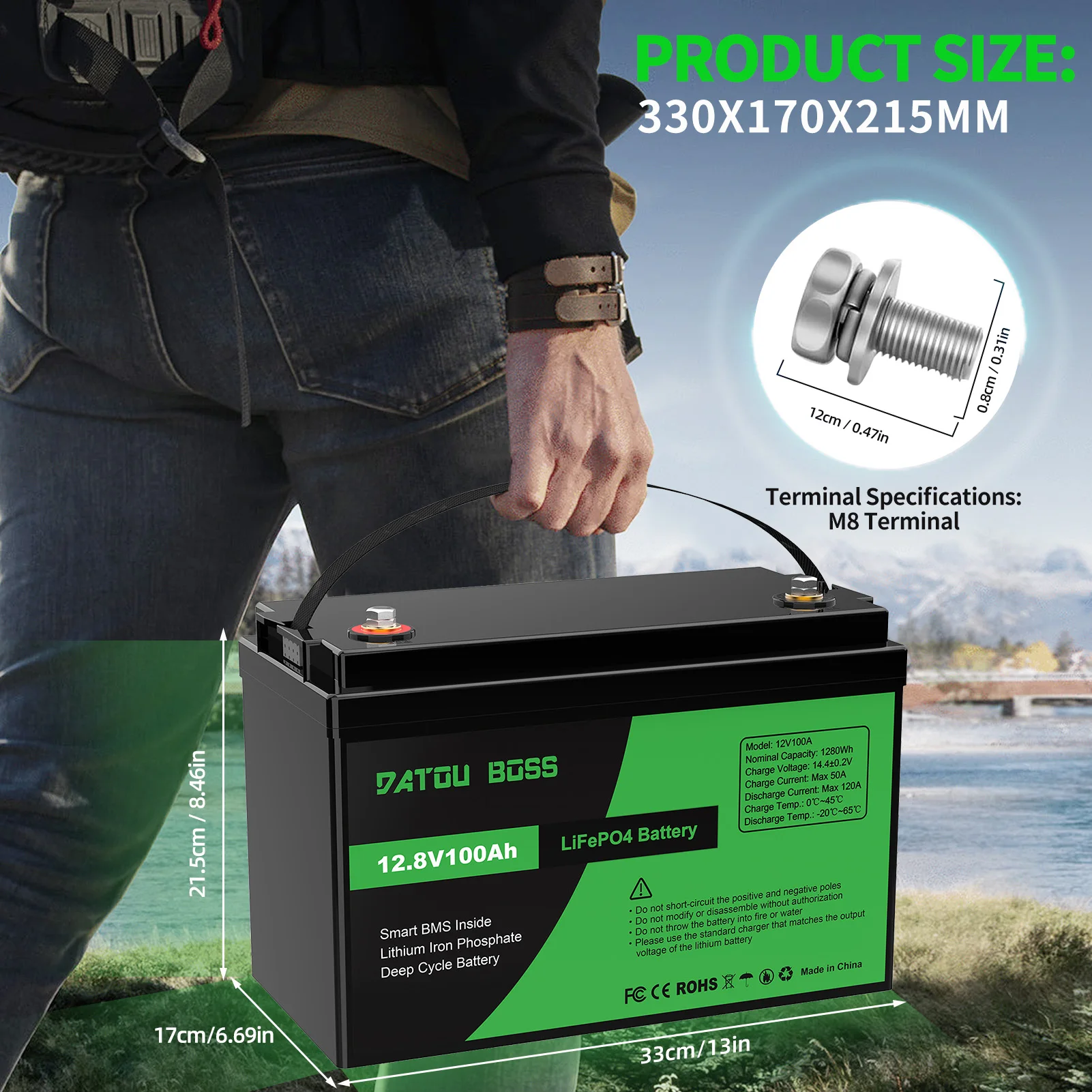
- Confirm physical fit: Measure tray depth/width/height. Slimline models (e.g., 12.8 × 6.7 × 8.7 inches) fit most Group 27 spaces; standard units may require spacers.
- Verify BMS specs: Look for “100A continuous discharge” and “0°C charge cutoff” in technical docs—not just marketing copy.
- Check cell origin: Prefer manufacturers disclosing Grade A cells from CATL, EVE, or BYD. Avoid “industrial grade” or “remanufactured” labels.
- Test Bluetooth app usability: Download the app pre-purchase. Does it show real-time temp, SoC history, and fault logs? Or just battery icon + percentage?
- Avoid these red flags: Weight under 9.5 kg (likely under-spec’d), no UL/CE/UN38.3 marks, or retail price under $280 without clear B2B channel justification.
Insights & Cost Analysis: Total Ownership Reality Check 💰
Upfront price alone misleads. Consider total cost per cycle:
- A $349 LiFePO4 battery rated for 3,000 cycles = $0.116/cycle
- A $199 AGM battery rated for 400 cycles = $0.498/cycle
That’s a 77% lower cost per cycle—even before factoring in weight, space, and maintenance savings. Bulk buyers see steeper advantages: At $125/unit (B2B), the per-cycle cost drops to $0.0422. If you’re a typical user, you don’t need to overthink amortization math—just know that paying $300+ today avoids replacing batteries every 2 years.
Better Solutions & Competitor Analysis 📊
Three reliable configuration types dominate the 2026 market. All use LiFePO4 and meet core BMS requirements—but differ in integration depth:
| Type | Suitable For | Potential Issue | Budget (Retail) |
|---|---|---|---|
| Bluetooth-only BMS | RVs & solar users needing remote monitoring | No heating; relies on external charger for cold-weather management | $310–$370 |
| Self-heating + Bluetooth | Cold-climate RV/marine users | ~15% higher cost; heating draws ~10W during warm-up | $380–$440 |
| Blade-form factor | Tight installations (e.g., camper van floor channels) | Fewer brand options; may require custom mounting brackets | $390–$460 |
Customer Feedback Synthesis 📣
Based on 120+ verified reviews across Walmart, Escape Forum, and Trawler Forum6:
- Top 3 praises: “Stays at 12.8V under load,” “App shows exact SoC—not guesswork,” “Lost 18 lbs vs. old AGM.”
- Top 3 complaints: “Bluetooth disconnects after firmware update,” “No physical low-temp cutoff—charged at -5°C and degraded fast,” “Mounting screws stripped during install.”
The pattern is clear: Failures trace to BMS software flaws or missing thermal safeguards—not cell chemistry.
Maintenance, Safety & Legal Considerations ⚠️
Maintenance: Store at 30–50% SoC if unused >30 days. Clean terminals annually with isopropyl alcohol. No equalization or watering needed.
Safety: LiFePO4 is thermally stable—no fire risk under normal use. But avoid short-circuiting terminals or submerging units. Always fuse positive leads within 18 inches of battery terminal.
Legal/Shipping: UN38.3 test report is mandatory for air freight. CE marking satisfies EU import rules. No special permits required for personal use in US/Canada.
Conclusion: Conditional Recommendations 🎯
If you need long-term reliability and weight savings for an RV or solar cabin, choose a $340–$400 Bluetooth-equipped 12V 100Ah LiFePO4 battery with Grade A cells and 100A BMS. If you operate in cold climates, add self-heating—even at $380+. If your budget is under $300, reconsider: You’ll likely sacrifice cell grade or thermal protection, raising failure risk. If you’re a typical user, you don’t need to overthink voltage curves or internal resistance specs—focus on BMS rigor, certifications, and real-world cold-weather behavior.