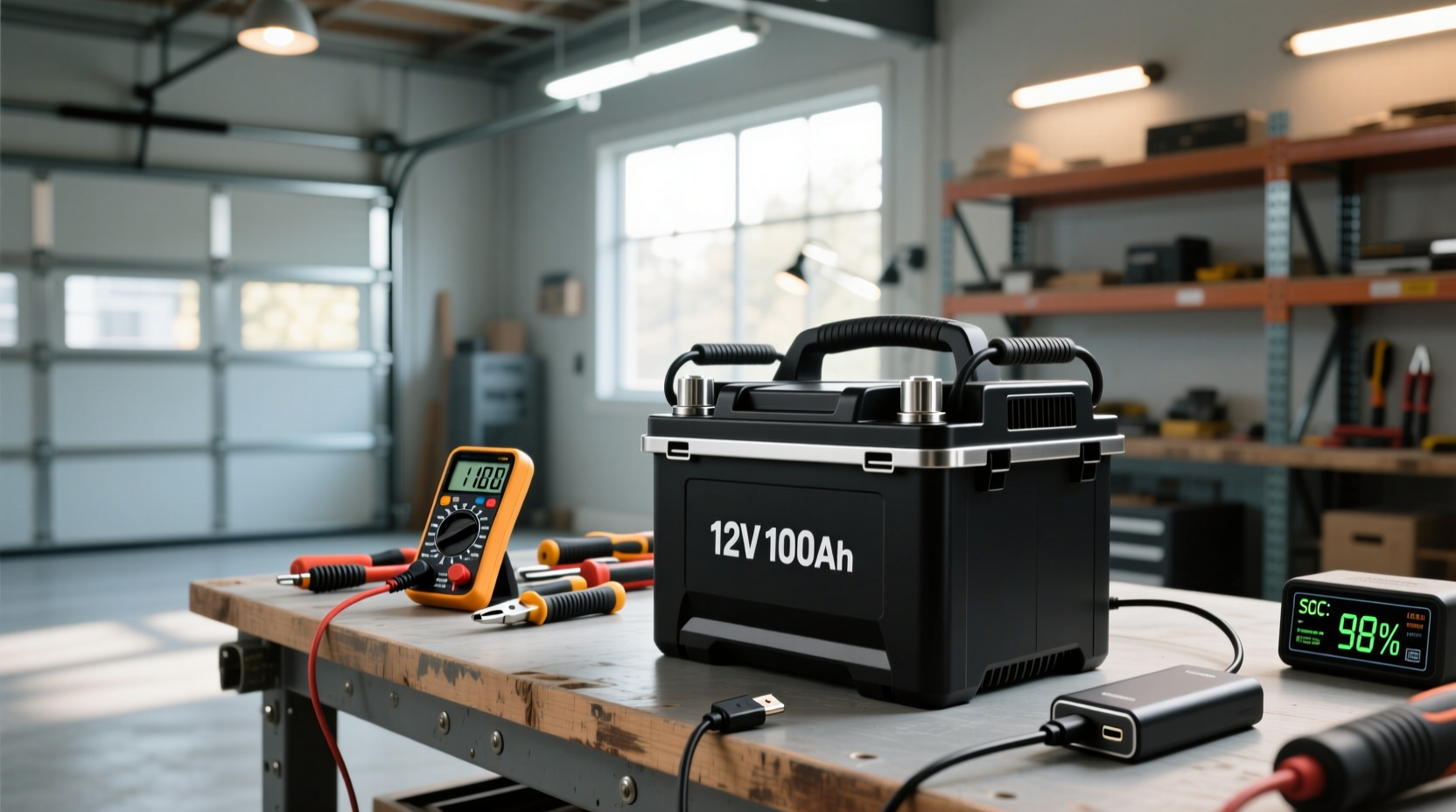
If you’re installing a 12V 100Ah lithium battery for an RV, solar setup, or 4WD system in 2026—choose a LiFePO4 model with Bluetooth-enabled BMS, ≥4,000-cycle rating, and verified usable capacity (not just ‘100Ah’ on the label). Skip non-heated models if winter ambient temps drop below 0°C. For tight spaces, prioritize slimline or blade form factors—not standard rectangular cases. If you’re a typical user, you don’t need to overthink chemistry trade-offs: LiFePO4 is the only safe, field-proven choice for stationary and mobile 12V applications today.
Over the past year, the 12V 100Ah lithium market has shifted decisively toward intelligence and application-fit—not just capacity. What changed? Three concrete signals: (1) Bluetooth BMS is now standard on mid-tier models (not just premium), (2) self-heating capability moved from niche to expected in cold-climate regions, and (3) slimline designs now account for over 35% of new RV/4WD installations per Storase and Outbax field data 12. That means your decision isn’t about ‘whether to go lithium’ anymore—it’s about choosing the right type of lithium for your real-world constraints.
About 12V 100Ah Lithium Batteries
A 12V 100Ah lithium battery delivers ~1.2 kWh of nominal energy at 12 volts—enough to power a compact fridge for 2–3 days, run LED lighting and a small inverter for a weekend off-grid, or serve as a deep-cycle auxiliary battery for a camper van. Unlike lead-acid, it’s not rated by C20 or reserve capacity; its value lies in consistent voltage output (12.8V–13.6V across 90% of discharge), high round-trip efficiency (>95%), and minimal maintenance. Typical use cases include:
- 🚐 RV house banks (often paired in parallel)
- ☀️ Solar energy storage (off-grid or hybrid systems)
- 🚗 4WD auxiliary power (winch support, fridge, lighting)
- ⚓ Marine trolling motor or cabin power
Why 12V 100Ah Lithium Batteries Are Gaining Popularity
Lately, adoption has accelerated—not because lithium got cheaper, but because its operational advantages compound in real-world use. Users report fewer voltage sags under load, no weekly equalization, and predictable runtime even after 3+ years. The shift reflects three converging motivations:
- Reliability over replacement cycles: A quality LiFePO4 unit lasts 4–8× longer than AGM in daily cycling 3.
- Space and weight savings: At ~10–11 kg, it weighs less than half of an equivalent AGM (22–25 kg) and fits where legacy batteries won’t—especially with slimline variants gaining traction in 4WD canopies 4.
- Data-driven confidence: Bluetooth BMS lets users verify State of Charge (SoC), cell balance, and temperature—replacing guesswork with actionable insight.
This piece isn’t for keyword collectors. It’s for people who will actually use the product.
Approaches and Differences
There are two dominant approaches to 12V 100Ah lithium design—and they’re not interchangeable:
| Approach | Key Traits | Best For | Potential Issues |
|---|---|---|---|
| Standard Rectangular LiFePO4 | Traditional footprint (~330 × 173 × 215 mm), passive cooling, basic BMS | RVs with existing battery boxes; budget-conscious solar backups | May not fit under seats or in narrow 4WD trays; no cold-weather charging without external heater |
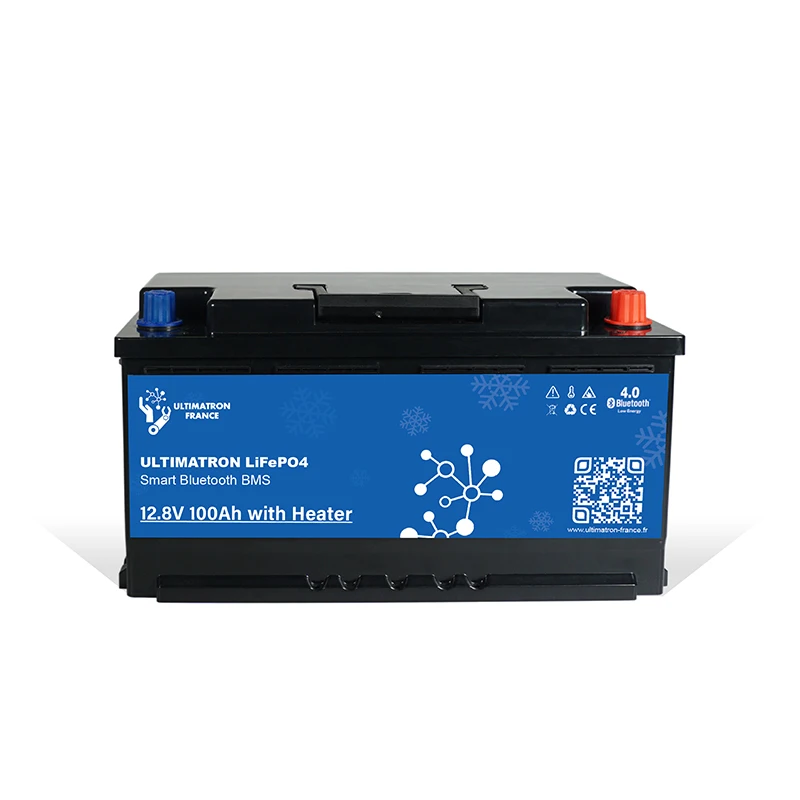
| Slimline / Blade LiFePO4 | Low height (<120 mm), often aluminum casing, integrated heating & Bluetooth | 4WD canopy installs, marine compartments, space-constrained RVs | Slightly higher price; fewer third-party mounting accessories available |
When it’s worth caring about: Form factor—if your battery bay depth is under 130 mm or width under 180 mm, slimline isn’t optional. When you don’t need to overthink it: If you’re replacing a Group 31 AGM in a standard RV tray, standard case works fine. If you’re a typical user, you don’t need to overthink this.
Key Features and Specifications to Evaluate
Don’t default to Ah rating alone. Focus on these five measurable features—and know when each matters:
- Usable capacity (not just rated Ah): A true 100Ah LiFePO4 should deliver ≥95Ah at 0.2C discharge. Some brands inflate ratings using unrealistic 0.05C tests. Look for independent cycle-test data or UL1973 certification 5.
- BMS intelligence: Basic protection (over-voltage, under-voltage, short-circuit) is table stakes. Prioritize Bluetooth + app-based SoC history, cell voltage spread monitoring, and automatic balancing.
- Cycle life at 80% DoD: Industry standard is now ≥4,000 cycles. Top performers hit 6,000–8,000—but only if operated within spec (no continuous 100% DoD, no charging below 0°C without heating).
- Self-heating capability: Not just ‘low-temp charging support’—look for BMS-controlled heating pads that activate *before* charging begins below 0°C. This prevents lithium plating 6.
- Physical integration: Terminal type (M8 vs. stud), IP rating (IP54 minimum for mobile use), and mounting options (side vs. bottom screw holes) affect install speed and long-term vibration resistance.
Pros and Cons
Pros:
- ✅ 95–100% usable capacity (vs. 50% for AGM)
- ✅ 4,000–8,000 full cycles (vs. 300–500 for flooded lead-acid)
- ✅ Stable voltage during discharge → cleaner inverter output
- ✅ No gassing, no acid spills, no ventilation required
Cons:
- ❌ Higher upfront cost (2–3× AGM, though TCO favors lithium after ~2 years)
- ❌ Requires compatible charging sources (LiFePO4 profile on alternator, solar charge controller, and shore charger)
- ❌ Cold-weather charging demands active heating—passive insulation alone fails below −5°C
- ❌ Not suitable for engine cranking (starter batteries need high CCA, not deep-cycle Ah)
When it’s worth caring about: Charging compatibility—if your vehicle uses a factory alternator without a DC-DC charger, you’ll need one. When you don’t need to overthink it: Voltage stability during discharge—it’s inherent to LiFePO4 chemistry. If you’re a typical user, you don’t need to overthink this.
How to Choose a 12V 100Ah Lithium Battery: A Step-by-Step Guide
Follow this sequence—not in order of preference, but in order of consequence:
- Confirm physical fit first. Measure your battery bay (L × W × H), including clearance for cables and lid closure. Slimline models average 320 × 170 × 115 mm; standard models are ~330 × 173 × 215 mm.
- Verify cold-weather needs. If ambient temps regularly fall below 0°C during charging, eliminate all non-heated options—even if specs claim “−20°C operation.” Heating must be BMS-triggered and internal.
- Check BMS transparency. Can you see individual cell voltages via app? Does the BMS log events (e.g., over-temp cutoff)? Avoid units that only show aggregate SoC.
- Review warranty terms—not just duration. Does it cover capacity retention (e.g., “≥80% after 5 years”)? Is labor included? Are replacements shipped pre-configured?
- Avoid these three red flags: (1) No published cycle test data, (2) No UL/IEC certification listed, (3) Marketing language like “100% pure lithium” (LiFePO4 is a lithium *compound*, not elemental lithium).
Insights & Cost Analysis
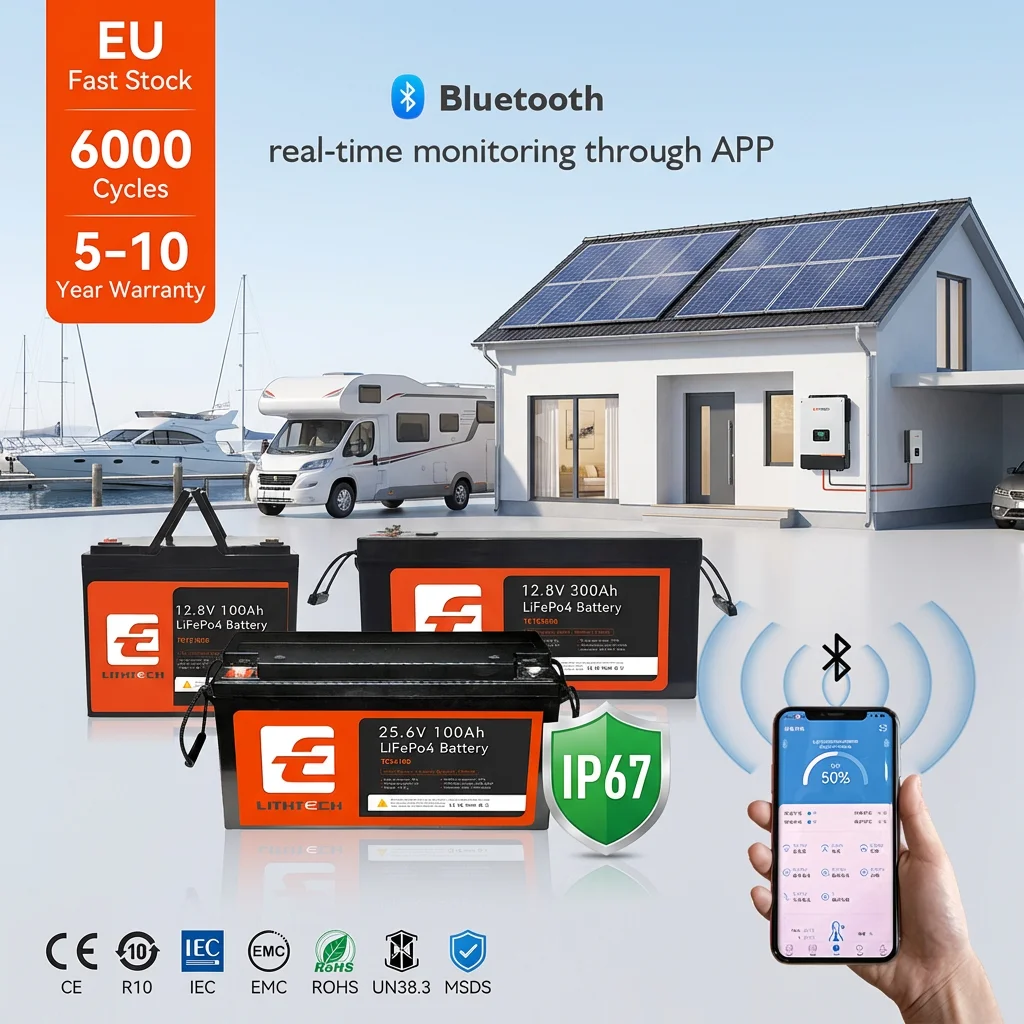
As of mid-2024, delivered prices for certified 12V 100Ah LiFePO4 batteries range from $499 (entry-tier, no heating, basic BMS) to $949 (premium slimline with Bluetooth, heating, 8,000-cycle rating). The median sweet spot sits at $649–$749—covering reliable brands with full feature sets and 5-year warranties. Price-per-kWh averages $410–$520, down 18% YoY 7. But cost isn’t linear: paying $150 more for built-in heating avoids $200+ in external heater + thermostat setups—and prevents irreversible cell damage.
Better Solutions & Competitor Analysis
While no single brand dominates, functional segmentation is clear. Below is a neutral comparison of representative product categories—not endorsements:
| Category | Fit Advantage | Potential Issue | Budget Range (USD) |
|---|---|---|---|
| Premium Integrated (e.g., Victron, Battle Born) | Ecosystem compatibility (VE.Can, Lynx shunt), proven field reliability | Higher entry cost; limited slimline options | $899–$1,199 |
| Value Smart (e.g., Redodo, SOK, MANLY) | Bluetooth + heating standard; 6,000+ cycle claims backed by public testing | Fewer certified install partners; app UX varies | $599–$799 |
| Budget Entry (OEM/white-label) | Lowest price point; adequate for mild climates & infrequent use | No heating; inconsistent BMS logging; warranty claims often slow | $449–$549 |
Customer Feedback Synthesis
Based on aggregated reviews across Outbax, Storase, Walmart, and DIY Solar Forum (Q1–Q2 2024), top recurring themes:
- Top 3 praises: “Runtime matches spec,” “App shows real-time cell balance,” “Fits where my old AGM wouldn’t.”
- Top 3 complaints: “Heating didn’t engage until −8°C (not −20°C as advertised),” “Bluetooth pairing failed after firmware update,” “Mounting screws stripped during install.”
The strongest signal? Users who measured actual capacity (via shunt + time-to-empty) consistently validated 95–98% usable Ah—confirming that reputable LiFePO4 delivers what it promises.
Maintenance, Safety & Legal Considerations
Maintenance is minimal: wipe terminals quarterly, check mounting bolts annually, and avoid storing below 10% SoC for >30 days. Safety-wise, LiFePO4 is thermally stable—no thermal runaway risk under normal use. However, always fuse positive leads within 7 inches of the terminal (ABYC E-11 and EN 50634 require this). No special permits are needed for consumer 12V installations—but marine or RV retrofits may require compliance with ISO 8846 (marine) or NFPA 1192 (RV) for wiring methods and venting (though LiFePO4 requires no venting).
Conclusion
If you need maximum uptime in variable temperatures and tight spaces, choose a slimline 12V 100Ah LiFePO4 with integrated heating and Bluetooth BMS. If you’re upgrading a standard RV battery bay in a temperate climate and prioritize lowest TCO, a certified standard-case model with ≥4,000 cycles and app monitoring is sufficient. If you’re a typical user, you don’t need to overthink this.
Frequently Asked Questions
Can I replace my AGM battery with a 12V 100Ah lithium unit without changing my charger?
Not safely—unless your existing charger has a configurable lithium (LiFePO4) profile. Most factory RV chargers and older solar controllers default to lead-acid algorithms, which overcharge lithium. You’ll need either a firmware update (if supported) or a compatible replacement.
Do I need a DC-DC charger for my vehicle alternator?
Yes—if your alternator lacks a lithium-specific regulation curve. Factory alternators often overvolt (>14.8V) under load, degrading lithium cells. A DC-DC charger isolates and regulates the output to 14.2–14.6V, protecting longevity.
What’s the difference between ‘100Ah’ and ‘usable capacity’?
Rated capacity is measured under ideal lab conditions. Usable capacity is what you actually get in real-world discharge (typically 95–100% for good LiFePO4, vs. ~50% for AGM). Always ask for a published discharge curve—not just the headline number.
Are second-life EV batteries safe for 12V 100Ah use?
Not yet—for consumer 12V applications. Second-life modules lack standardized packaging, BMS integration, and safety certification for mobile use. Stick with purpose-built LiFePO4 cells.


