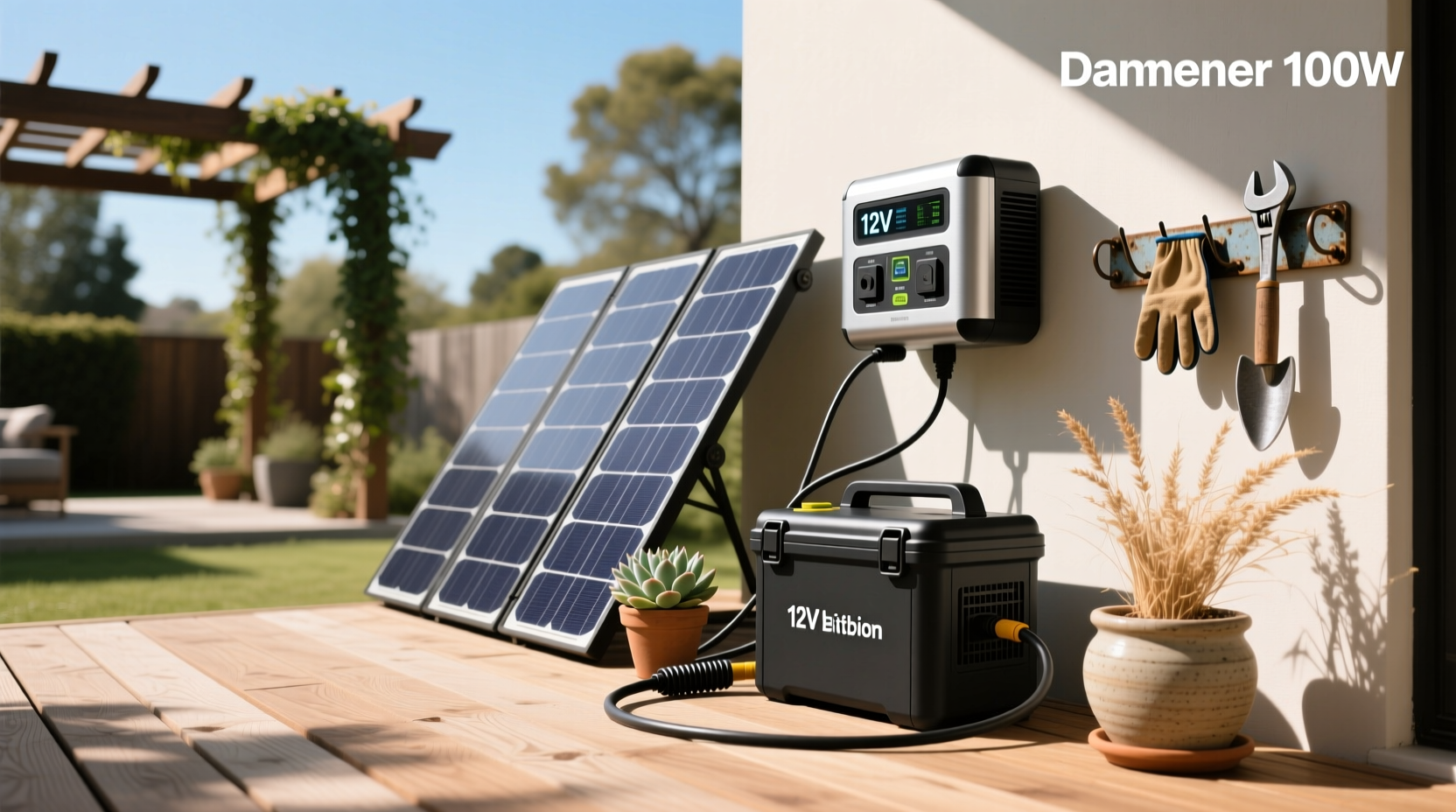
If you’re a typical user, you don’t need to overthink this. Over the past year, 12V 100W solar battery chargers have shifted from niche backup gear to mission-critical power for RVs, off-grid cabins, and emergency kits—driven by real-world efficiency gains in monocrystalline PERC cells (up to 25%) and stronger demand for reliable buffer-charged systems that feed power banks instead of devices directly 1. For most users, rigid 100W panels with MPPT controllers are objectively better for fixed setups like RVs or sheds; foldable versions make sense only if portability is non-negotiable—and even then, weight, durability, and real-world output (often 60–75W under mixed sun) matter more than the “100W” label. Skip panels without IPX4+ rating or monocrystalline PERC cells: they’re not future-proof. This piece isn’t for keyword collectors. It’s for people who will actually use the product.
About 12V 100W Solar Battery Chargers
A 12V 100W solar battery charger is a photovoltaic system designed to deliver up to 100 watts of DC power at ~12 volts—optimized for charging 12V lead-acid, AGM, or lithium (LiFePO₄) batteries commonly used in vehicles, RVs, marine applications, and small off-grid setups. It’s not a standalone USB charger, nor a plug-and-play wall adapter replacement. It’s a component in an energy chain: sunlight → panel → charge controller → battery → load. The “100W” rating is a laboratory-standard STC (Standard Test Conditions) value—measured at 25°C, 1000W/m² irradiance, and AM1.5 spectrum. In practice, real output varies significantly based on temperature, angle, cloud cover, and panel quality.
Typical use cases include:
- 🚐 RV & van life: Maintaining house batteries while parked or supplementing shore power
- ⛺ Camping & cabin use: Powering lights, fans, fridges, or comms gear off-grid
- ⚡ Emergency backup: Keeping security systems, radios, or medical devices powered during outages
- 🛰️ Remote monitoring: Running CCTV, sensors, or telemetry equipment where grid access is unreliable
Why 12V 100W Solar Battery Chargers Are Gaining Popularity
Lately, adoption has accelerated—not because solar tech suddenly got cheaper, but because it became predictably reliable. The global solar charger market is projected to reach $9.03 billion by 2026, growing at 27.33% CAGR 2. Two shifts explain this:
- From luxury to essential: Smartphones and GPS units are now primary safety tools in remote areas. Losing power isn’t inconvenient—it’s risky. Users no longer ask “Do I need solar?” but “Which setup won’t fail me at mile 32 of the Pacific Crest Trail—or during a three-day blackout?”
- From theoretical to measurable performance: Monocrystalline PERC cells now routinely achieve >23% efficiency in commercial panels—up from ~18% just five years ago 1. That means more usable wattage per square foot, especially in low-light or high-heat conditions where older polycrystalline panels falter.
This isn’t hype. It’s engineering convergence: better cells, smarter MPPT controllers, and wider availability of integrated kits mean a $250 100W system today delivers more consistent daily amp-hours than a $500 unit did in 2020.
Approaches and Differences
There are three dominant physical approaches to delivering 100W of solar power at 12V. Each serves distinct needs—and misalignment here causes the most common buyer regrets.
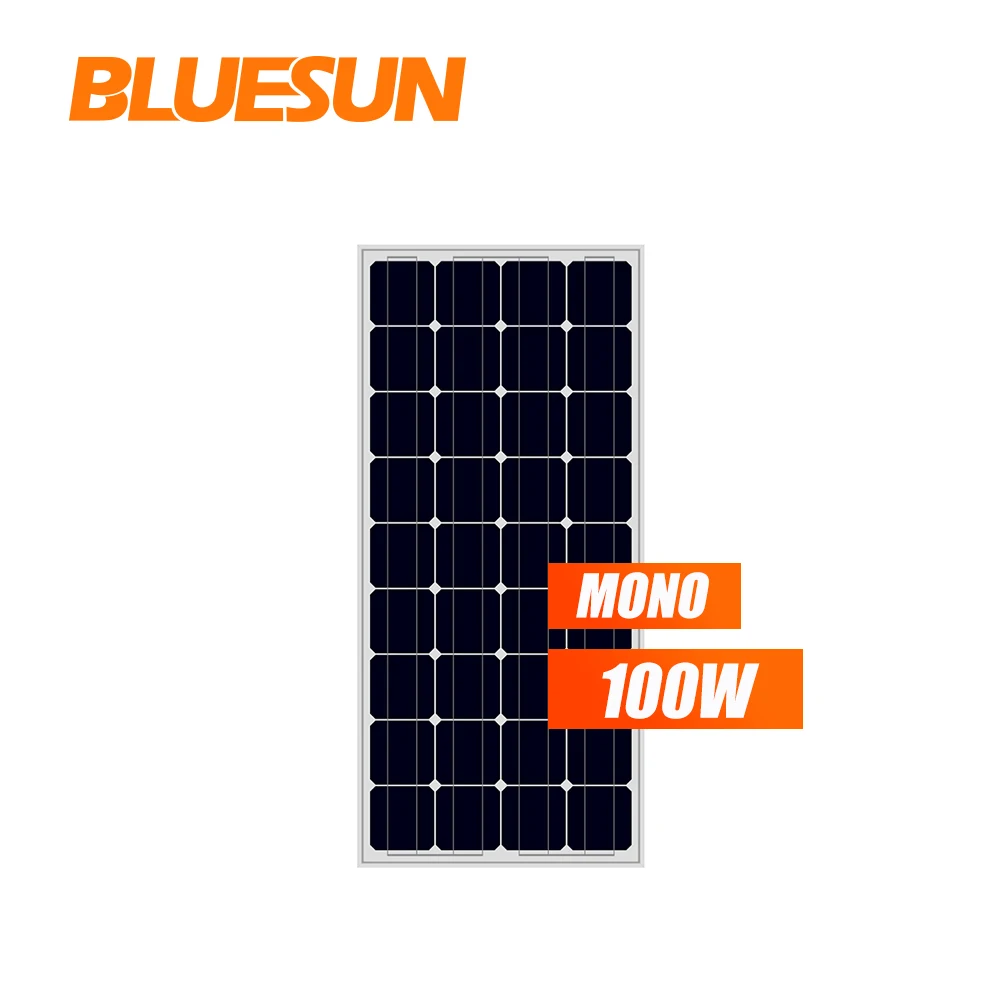
✅ Foldable / Portable Panels
Pros: Weigh 2.2–3.3 lbs, pack into ~18 × 12 × 1.5 in bags, often include built-in USB-A/USB-C outputs and 12V Anderson/XT60 ports.
Cons: PET polymer backing degrades faster than glass; hinge points fatigue; real output rarely exceeds 70W outside ideal midday sun.
When it’s worth caring about: You hike solo or bike-tour and carry all gear yourself.
When you don’t need to overthink it: If your use case involves mounting on an RV roof or shed—foldables offer no advantage and cost more per watt.
✅ Rigid Glass Panels
Pros: 25-year lifespan, IP67-rated frames, higher thermal tolerance, consistent 85–92W output in real-world summer conditions.
Cons: Heavier (15–20 lbs), require mounting hardware and structural support, less forgiving on uneven surfaces.
When it’s worth caring about: You install once and expect 5+ years of zero-maintenance operation.
When you don’t need to overthink it: If you’re rotating panels weekly between locations—rigid units add logistical friction.
✅ Integrated Solar Kits (Panel + Controller + Battery)
Pros: Plug-and-play readiness; eliminates wiring errors; includes MPPT controllers optimized for 12V lithium chemistry.
Cons: Less flexible for expansion; battery capacity often undersized (e.g., 20Ah LiFePO₄ for a 100W panel = ~1 day of moderate use).
When it’s worth caring about: You lack electrical experience or need immediate deployability (e.g., disaster prep).
When you don’t need to overthink it: If you already own a quality 12V battery bank and MPPT controller—adding just a panel is simpler and cheaper.
Key Features and Specifications to Evaluate
Don’t default to wattage alone. Here’s what actually moves the needle:
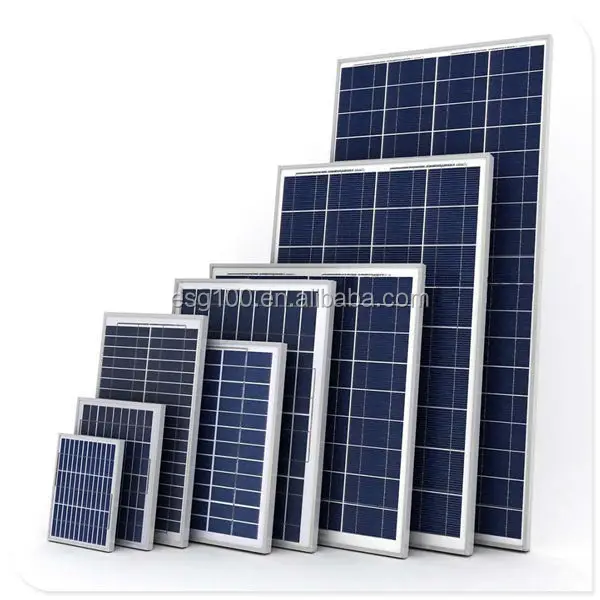
- Cell Type & Efficiency: Monocrystalline PERC is the only viable choice for 100W at reasonable size. Avoid polycrystalline or amorphous silicon—they’re obsolete for this power class. Look for ≥23% efficiency (verified via datasheet, not marketing copy).
- Weather Resistance: IPX4 is minimum acceptable (splash-resistant). IP65 or IP67 is strongly preferred for permanent outdoor mounting 1.
- Controller Compatibility: A 100W panel demands an MPPT controller—not PWM—for meaningful yield gain (15–25% more harvest in variable light). Verify voltage compatibility: most 12V nominal panels output 17–22V VOC—your controller must handle ≥25V input.
- Real-World Output Data: Reputable brands publish “NOCT” (Nominal Operating Cell Temperature) ratings—e.g., “85W @ 45°C”. That’s more realistic than STC.
Pros and Cons: Balanced Assessment
A 12V 100W solar battery charger is powerful enough to sustain moderate loads—but only if matched correctly. Here’s when it shines—and when it falls short.
- ✅ Works well for: Charging 100–200Ah 12V battery banks (AGM/LiFePO₄) at ~5–8% state-of-charge recovery per full sun hour; running LED lighting, 12V fans, small fridges (≤2.5 cu ft), or Wi-Fi routers continuously.
- ❌ Not suitable for: Directly powering high-draw inverters (>300W), air conditioners, microwaves, or electric kettles—even briefly. It’s a charging source, not a primary power supply.
- ⚠️ Critical constraint: Panel orientation and shading dominate actual yield more than brand or price. A poorly angled 100W panel under tree cover may deliver less than a well-placed 60W unit.
How to Choose a 12V 100W Solar Battery Charger
Follow this 5-step decision checklist—designed to eliminate common missteps:
- Define your primary use case first. Backpacker? RV owner? Home backup? Your answer dictates panel type, mounting method, and required accessories.
- Verify battery compatibility. Match panel VOC and controller specs to your battery’s chemistry (e.g., LiFePO₄ requires different absorption voltage than AGM).
- Calculate real daily yield—not nameplate wattage. Use PVWatts Calculator (NREL) with your zip code and tilt angle. Expect 3.5–5.5 sun-hours average. Multiply: 100W × 4.2h × 0.85 (system loss) ≈ 357Wh/day.
- Require IPX4 minimum—and MPPT controller included or confirmed compatible. If the listing doesn’t specify both, walk away.
- Avoid “all-in-one” bundles with generic 10A PWM controllers. They waste ~20% of your panel’s potential and risk battery overcharge with lithium.
If you’re a typical user, you don’t need to overthink this: start with a rigid monocrystalline PERC panel and pair it with a Victron SmartSolar 100/30 or Renogy Rover Elite—both field-proven and firmware-upgradable.
Insights & Cost Analysis
Price has stabilized across tiers. As of mid-2024, expect these ranges (excluding mounting hardware):
- Foldable 100W: $180–$290 (e.g., BigBlue, Jackery SolarSaga variants)
- Rigid 100W (glass, PERC): $140–$220 (e.g., Renogy, HQST, Shenzhen Shine Solar OEM panels)
- Integrated Kit (panel + MPPT + 20Ah LiFePO₄): $380–$520
The rigid panel is consistently the best value per watt *over time*. Foldables justify their premium only when weight and packability are non-negotiable—and even then, their 2–3 year functional lifespan makes them a short-term solution.
| Category | Best Use Advantage | Potential Problem | Budget Range (USD) |
|---|---|---|---|
| Foldable | Ultra-portable; no permanent installation needed | Output drops >30% in partial shade; PET layer yellows after 18 months UV exposure | $180–$290 |
| Rigid Glass | 25-year warranty; stable output in heat/cold; easy to clean | Requires secure mounting; heavier; not relocatable | $140–$220 |
| Integrated Kit | No wiring errors; controller pre-matched; ready in 20 minutes | Battery capacity often mismatched; hard to upgrade components individually | $380–$520 |
Better Solutions & Competitor Analysis
“Better” depends on your constraints—not raw specs. Below is how top-tier options compare on objective metrics:
- Goal Zero Boulder 100: Premium build, rugged casing, excellent customer support—but $399 for a foldable unit that delivers ~68W NOCT. Justified only for expedition teams needing certified drop resistance.
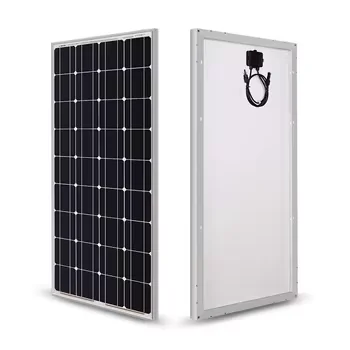
- Renogy 100W Mono: Rigid, PERC, IP67, 25-year linear power warranty. Delivers 87W NOCT. Best all-around value for fixed installs.
- Shenzhen Shine Solar OEM Panels: B2B-sourced, 25%+ lab-verified efficiency, custom sizing available. No retail packaging—but identical cell stacks as $250 branded units.
Customer Feedback Synthesis
Based on aggregated reviews (Treeline Review, Reddit r/SolarDIY, Consumer Reports field tests):
Top 3 praises: “Stays charged through 3 cloudy days,” “MPPT controller recovered 22% more than my old PWM unit,” “Mounts cleanly to my RV roof with zero leaks.”
Top 3 complaints: “Label says 100W but meter reads 62W at noon,” “Hinge cracked after 4 months of folding/unfolding,” “No manual—had to watch three YouTube videos to wire it safely.”
Maintenance, Safety & Legal Considerations
No special permits are required for 12V solar battery chargers in residential or mobile applications in the US, EU, or Canada—as long as circuits remain isolated from AC mains and battery banks are vented (for lead-acid) or housed in UL-listed enclosures (for LiFePO₄). Key safety practices:
- Always fuse the positive line within 18 inches of the battery terminal (15–20A for 100W @ 12V)
- Use MC4 connectors rated for outdoor UV exposure—not generic spade lugs
- Never connect panel directly to battery without a charge controller (risk of overcharge/fire)
- Wipe glass surfaces quarterly with microfiber + distilled water—avoid abrasive cleaners
Conclusion
If you need reliable, set-and-forget power for an RV, shed, or backup system, choose a rigid monocrystalline PERC panel paired with a dedicated MPPT charge controller. If you’re carrying everything on your back and need solar for multi-day trips, a foldable 100W panel works—but verify its NOCT rating and hinge durability before purchase. If you lack electrical confidence or need immediate deployment, a verified integrated kit saves time—but audit its battery capacity against your actual load profile. If you’re a typical user, you don’t need to overthink this: prioritize real-world efficiency, weather sealing, and controller compatibility over brand prestige or flashy packaging.


