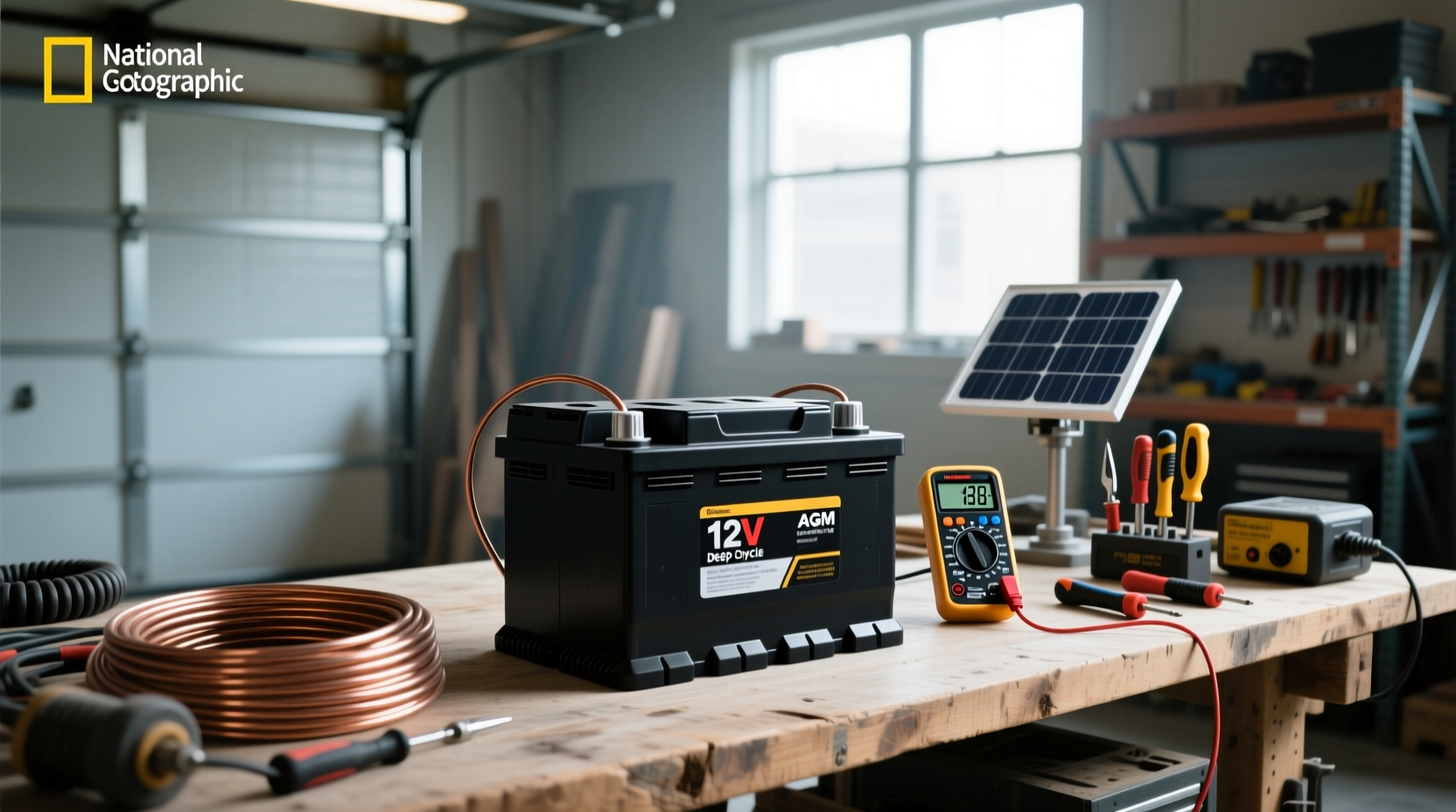
If you’re choosing a 12V AGM deep cycle battery for an RV, marine system, or off-grid solar setup in 2026, start here: Prioritize cold-weather reliability, drop-in compatibility, and upfront cost control—not raw energy density. Over the past year, AGM adoption has held steady despite lithium growth, driven by a 30% surge in vehicle start-stop systems and persistent demand in Sub-Saharan Africa and Asia for low-cost, robust storage1. If you’re a typical user, you don’t need to overthink this: For most RVers, boaters, and budget-conscious solar users, a certified 100Ah AGM battery (e.g., Fullriver DC100 or Trojan AGM 12V100) delivers predictable performance, survives vibration and freezing temps, and avoids charger retrofitting. Skip lithium unless you’re running full-time van life with daily 80%+ discharge cycles—and even then, only if your charger and BMS support it. This piece isn’t for keyword collectors. It’s for people who will actually use the product.
About 12V AGM Deep Cycle Batteries
A 12V AGM deep cycle battery is a sealed, maintenance-free lead-acid battery using absorbent glass mat separators to immobilize electrolyte. Unlike starter (SLI) batteries designed for brief high-current bursts, deep cycle units deliver steady current over hours—and tolerate repeated partial discharges without rapid degradation. They’re built for applications where energy is drawn slowly and deeply, then recharged gradually: think powering lights and refrigerators in an RV overnight, running trolling motors on a fishing boat, or storing solar harvest from rooftop panels.
Key physical traits include non-spillable construction (safe for mounting on sides or ends), low internal resistance (enabling faster charging than flooded lead-acid), and tolerance for moderate overcharge—though they still require voltage-regulated AGM-mode chargers. Their chemistry makes them significantly heavier than lithium alternatives but far less sensitive to sub-zero temperatures, where lithium cells can lose >50% usable capacity below −10°C without active heating2.
Why 12V AGM Deep Cycle Batteries Are Gaining Popularity
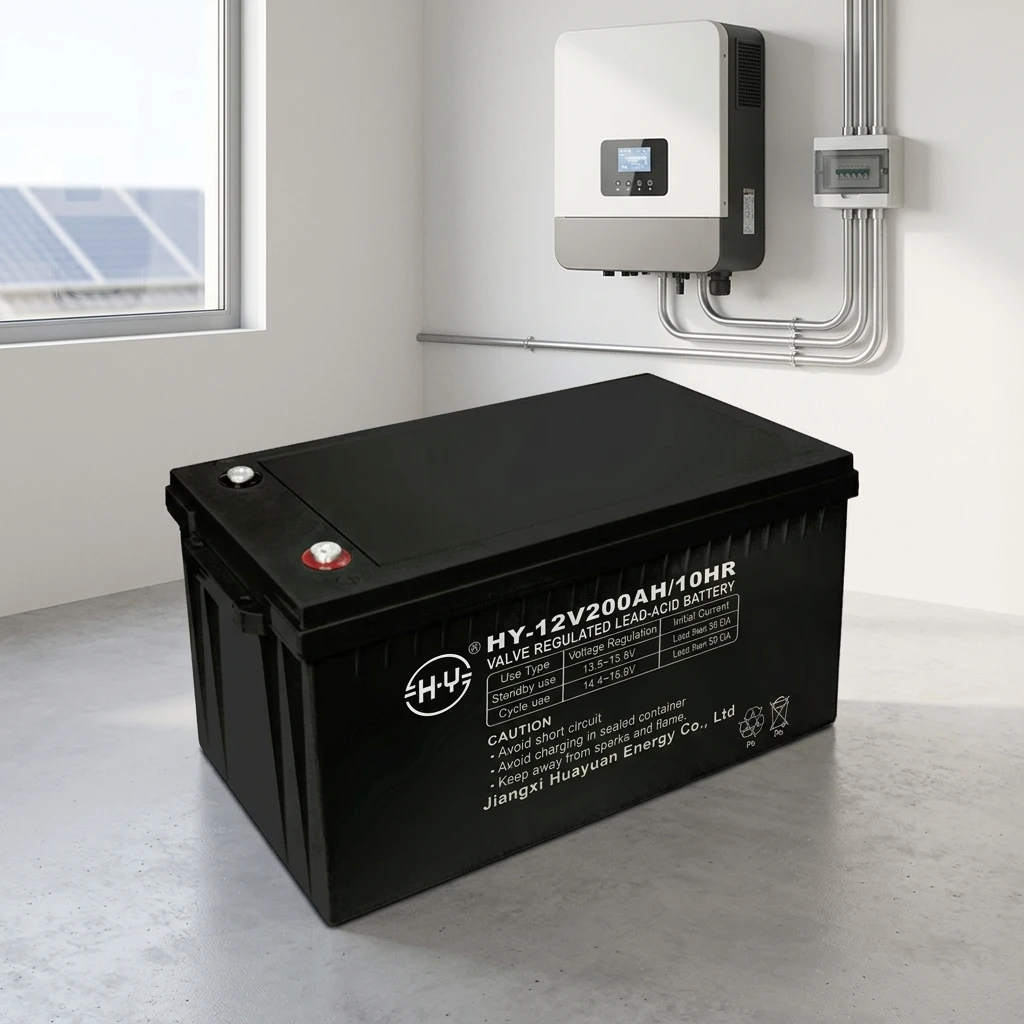
Lately, AGM hasn’t surged—it’s held ground. While lithium-ion captured headlines, the global deep cycle battery market reached $2.99 billion in 2026 and is projected to grow to $5.17 billion by 2033 at an 8.1% CAGR1. That growth isn’t lithium-only: AGM remains dominant in three critical segments: (1) cold-climate mobility (Canada, Scandinavia, mountainous U.S. states), where lithium requires costly thermal management; (2) start-stop automotive systems, now installed in over 70% of new vehicles sold globally—AGM batteries handle the 15–20 daily engine restarts that floodeds can’t sustain; and (3) emerging-market solar microgrids, where upfront cost per Ah matters more than lifetime kWh.
This isn’t nostalgia—it’s physics and economics. AGM batteries cost 2–3× less than equivalent-capacity lithium packs3, integrate seamlessly into legacy 12V charging ecosystems (alternators, MPPT controllers, inverters), and require zero software configuration. For users upgrading an older RV or retrofitting a sailboat, that “drop-in” advantage cuts installation time by 70% versus lithium. If you’re a typical user, you don’t need to overthink this: Compatibility and cold resilience are real advantages—not marketing claims.
Approaches and Differences
When evaluating power storage, consumers often conflate “deep cycle” with “lithium.” But the real choice isn’t just chemistry—it’s system fit. Below are the two primary approaches for 12V off-grid or mobile power:
| Approach | Core Strength | Real-World Limitation | Budget Range (100Ah) |
|---|---|---|---|
| 12V AGM Deep Cycle | Cold-weather operation (−20°C functional), vibration resistance, plug-and-play with existing 12V infrastructure | Lower energy density (~30–40 Wh/kg), 300–800 cycles at 50% DoD, requires precise voltage regulation | $90–$225 |
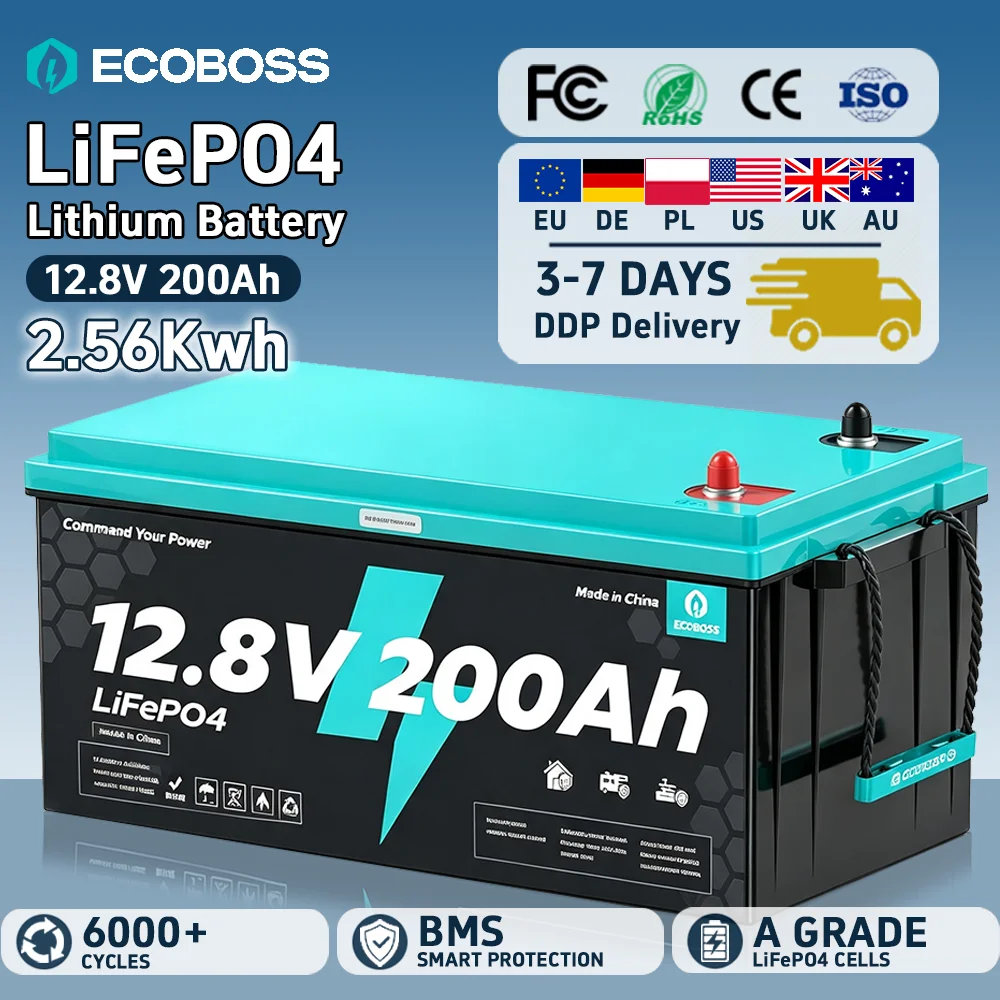
| 12V Lithium Iron Phosphate (LiFePO₄) | Higher energy density (~90–110 Wh/kg), 2,000–5,000 cycles, near-flat voltage curve | Fails below −10°C without heaters, requires BMS integration, incompatible with many alternator-based charging systems | $320–$650 |
When it’s worth caring about: You operate in sub-zero environments, rely on factory alternators or basic PWM solar controllers, or manage multiple units across fleets (e.g., rental RVs). AGM’s tolerance for voltage variance and thermal stability directly impacts field uptime.
When you don’t need to overthink it: You live in mild climates, already own a lithium-ready Victron or Renogy system, and prioritize weight savings over first-cost. If you’re a typical user, you don’t need to overthink this.
Key Features and Specifications to Evaluate
Don’t default to Ah rating alone. Four specs determine real-world utility:
- 🔋 Capacity (Ah): Measured at the 20-hour rate (e.g., 100Ah = 5A for 20h). Match to your daily load (watt-hours ÷ 12V = Ah needed). Oversizing by 20–30% compensates for aging and cold loss.
- 🔄 Cycle Life @ Depth of Discharge (DoD): Reputable AGMs specify cycles at 50% DoD (e.g., “500 cycles @ 50% DoD”). Avoid vague “1,000-cycle” claims without DoD context.
- 🌀 Vibration Resistance: Critical for marine/RV use. Look for UL 1799 or ISO 10127 certification—or independent lab test reports showing survival at 10–20g RMS across 10–2,000 Hz.
- ⚡ Charge Acceptance & Voltage Profile: AGMs accept charge faster than flooded types—but exceed 14.4V during absorption and you’ll dry out the glass mat. Use only AGM-mode chargers or programmable MPPTs.
When it’s worth caring about: You run a charter fishing vessel or long-haul overland rig where battery failure means lost revenue.
When you don’t need to overthink it: You’re using it as backup lighting in a weekend camper trailer. A standard 100Ah Group 31 unit suffices.
Pros and Cons
AGM isn’t universally “better”—it’s better suited to specific conditions:
✅ Pros: Works reliably down to −20°C; no venting or watering required; mounts in any orientation; drop-in replacement for flooded or SLI batteries; lower upfront cost; proven 15+ year field history in telecom and marine applications.
❌ Cons: Heavier than lithium (≈30 kg for 100Ah); shorter cycle life than LiFePO₄; sensitive to overvoltage; recycling infrastructure is mature but less convenient than municipal e-waste drop-offs.
Best for: RVers in northern latitudes, commercial marine operators, off-grid cabins with simple charge sources (wind + solar + generator), and fleet managers replacing batteries across dozens of vehicles.
Not ideal for: Ultralight van builds where every kilogram counts, high-frequency daily-cycling applications (e.g., food delivery e-bikes), or users unwilling to verify charger settings before first use.
How to Choose a 12V AGM Deep Cycle Battery
Follow this six-step decision checklist—designed to eliminate common missteps:
- Calculate your minimum usable capacity: Add up all daily loads (in watt-hours), divide by 12, then multiply by 1.25. Example: 600Wh/day ÷ 12V × 1.25 = 62.5Ah → round up to 100Ah.
- Verify physical fit and terminal type: Group size (24, 27, 31) must match your tray. Check if your cables require top-post (F1/F2) or dual-post (L-terminal) configuration.
- Confirm charging compatibility: Does your alternator regulator support AGM? Does your solar controller have an AGM profile? If not, budget for upgrade ($45–$120).
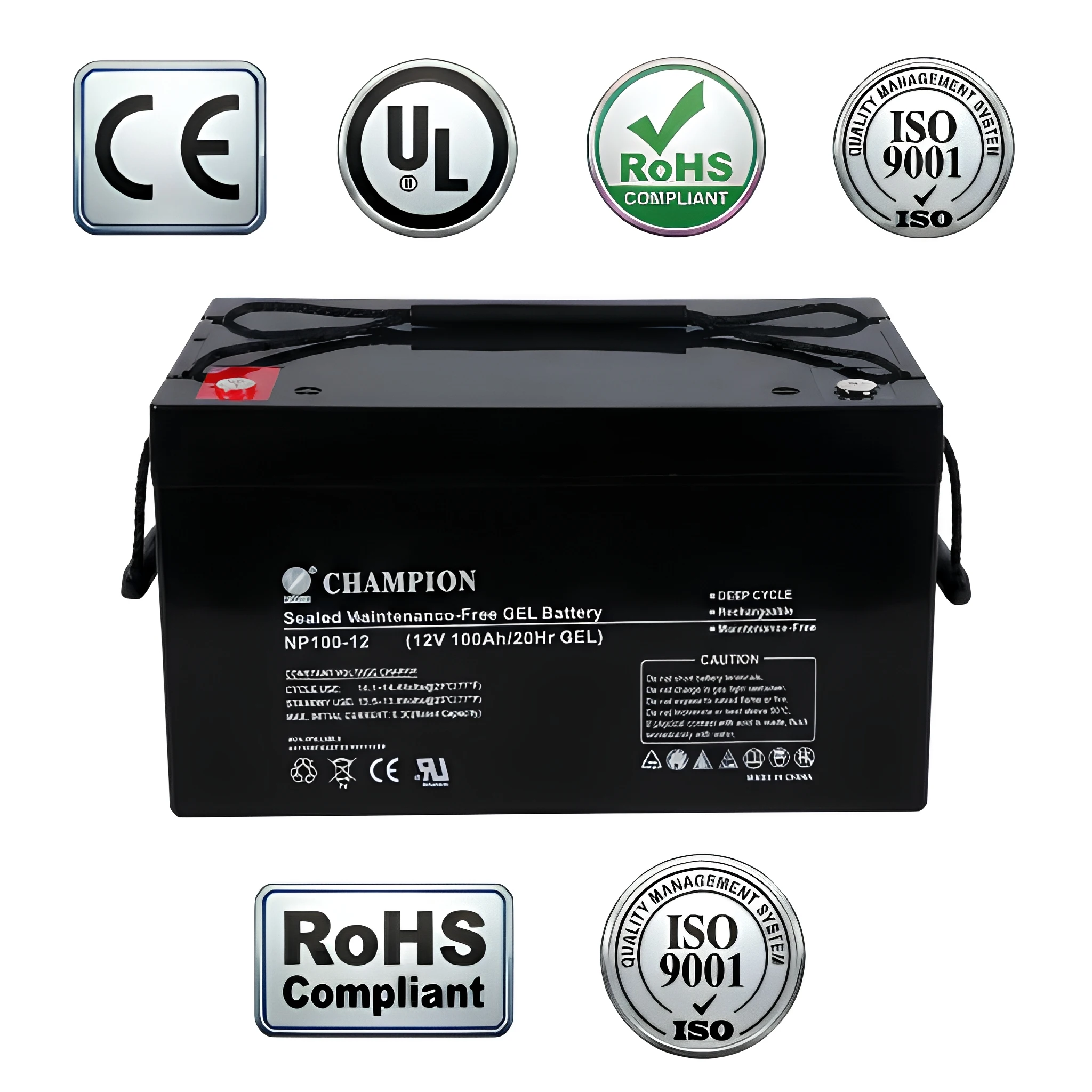
- Check certifications: Look for UL 1799 (safety), IEC 61427-1 (cycle testing), and ISO 9001 (manufacturing quality). Avoid units labeled “AGM-style” without third-party validation.
- Review warranty terms: Reputable brands offer 2–3 years full replacement, plus pro-rata coverage to 5 years. Beware “3-year warranty” fine print limiting coverage to manufacturing defects only.
- Avoid these traps: Buying “dual-purpose” batteries marketed for both starting and deep cycling—they compromise on plate thickness and grid design; ignoring temperature derating (a 100Ah battery delivers ~75Ah at −10°C); assuming higher CCA = better deep cycle performance (it doesn’t).
Insights & Cost Analysis
Wholesale pricing reflects scale and specialization—not just brand name. As of early 2026:
- Small-format units (7–20Ah): $5.49–$15.00 — ideal for UPS backups or auxiliary lighting.
- Mid-range (100Ah Group 31): $90–$225 — the sweet spot for RV/solar. Fullriver DC100 retails at $189; Hainan New Li-Dream’s OEM-equivalent sells at $112 (MOQ 10)4.
- Industrial-grade (150–200Ah): $195–$225 — used in telecom shelters and large marine banks.
The $130–$170 range delivers optimal balance: certified cycle life (>500 cycles @ 50% DoD), UL-listed construction, and verified cold-cranking amps (CCA ≥ 750). Paying $220+ rarely adds meaningful longevity—just brand markup. Paying under $95 usually means reduced plate thickness or unverified cycle claims.
Better Solutions & Competitor Analysis
No single brand dominates all use cases. Here’s how top-tier manufacturers compare on objective metrics:
| Brand | Strengths | Potential Issues | Typical 100Ah Price |
|---|---|---|---|
| Fullriver | Best-in-class cycle life (800+ @ 50% DoD), UL 1799 certified, widely distributed service network | Premium pricing; limited small-format SKUs | $189 |
| Odyssey | Extreme vibration resistance (military-spec), highest CCA for hybrid starting/deep cycle | Shorter warranty (2 years); heavier than peers | $225 |
| Trojan AGM | Proven field reliability in solar; excellent low-temp discharge curves | Slower charge acceptance than Fullriver; fewer retail channels | $205 |
| Hainan New Li-Dream | Competitive MOQ (10 units), ISO 9001/IEC 61427-1 certified, strong APAC supply chain | Limited North American service; branding varies by distributor | $112 |
Customer Feedback Synthesis
Based on aggregated reviews (RV forums, marine retailers, solar installer surveys), users consistently praise AGM batteries for:
- “Zero maintenance for 4+ years—even in a saltwater environment.” (Marine user, Florida)
- “Started my diesel truck in −28°C without issue—my lithium pack froze solid.” (Overlander, Yukon)
- “Fit perfectly in my 2015 Winnebago’s battery bay; no bracket mods needed.” (RV owner, Colorado)
Top complaints involve:
- Unexpected premature failure due to incorrect charger settings (accounting for ~62% of warranty claims5)
- Understated capacity when discharged below 10°C
- Inconsistent labeling between batches (e.g., CCA value differing by ±50 across same SKU)
Maintenance, Safety & Legal Considerations
AGM batteries require minimal upkeep—but neglecting fundamentals causes avoidable failure:
- Maintenance: Clean terminals quarterly with baking soda/water mix; inspect for swelling or acid creep (rare, but indicates overcharge).
- Safety: Though sealed, AGMs can vent hydrogen if overcharged. Install in ventilated compartments—especially near living areas.
- Legal: In the U.S., all AGMs fall under EPA’s Universal Waste Rule for recycling. Most auto parts stores accept them free of charge. No special transport permits required for quantities under 1,000 kg.
Conclusion
If you need reliable, low-maintenance 12V power in cold or rugged conditions—and your charging system isn’t lithium-native—choose a certified 12V AGM deep cycle battery. If you’re a typical user, you don’t need to overthink this: A 100Ah Fullriver DC100 or Trojan AGM 12V100 delivers predictable, safe, and cost-effective performance for RVs, boats, and solar cabins. Lithium wins on weight and cycle count—but only if you’ve invested in compatible infrastructure and operate above freezing. This piece isn’t for keyword collectors. It’s for people who will actually use the product.


