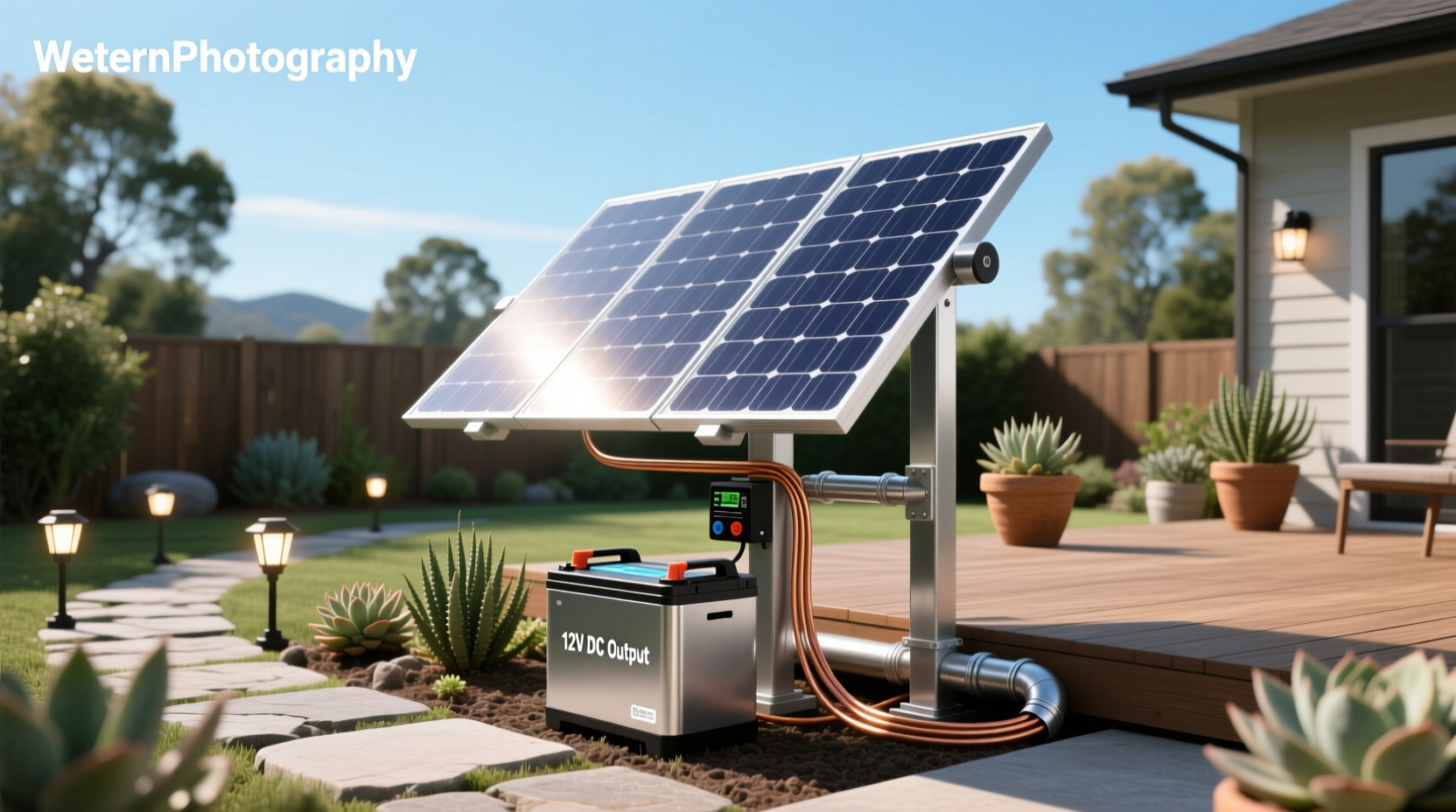
Over the past year, the 12V DC solar panel market has shifted decisively toward N-type cell architectures—especially TOPCon and HJT—with verified efficiencies now reaching 22–26% 1. If you’re outfitting an RV, van, or marine system, choose a TOPCon panel (24%+ efficiency) with integrated MC4 connectors and pair it with a true MPPT charge controller—not PWM. Skip flexible CIGS unless your roof is curved and weight-critical; its 12–18% efficiency and 1–3-year warranty rarely justify the premium over rigid monocrystalline. And if you’re a typical user, you don’t need to overthink this: for most mobile setups under $1,500, a 200W–400W TOPCon kit (panel + MPPT + mounting) delivers the best balance of output, durability, and install simplicity. This piece isn’t for keyword collectors. It’s for people who will actually use the product.
About 12V DC Solar Panels
A 12V DC solar panel is a photovoltaic module engineered to produce direct current at nominal 12-volt system voltage—designed specifically for compatibility with common off-grid batteries (like 12V LiFePO4), charge controllers, and DC appliances used in RVs, campers, boats, and remote cabins. Unlike grid-tied 48V or higher string systems, these panels operate at lower voltage and higher amperage, making them ideal for small-scale, self-contained power generation where simplicity, portability, and low-voltage safety matter more than raw scale.
Typical applications include:
- 🚐 Powering refrigerators, LED lighting, water pumps, and Wi-Fi routers in Class B/C RVs and conversion vans
- ⛵ Supplementing battery banks on sailboats and fishing vessels with limited deck space
- ⛺ Supporting portable solar generators during overlanding or extended camping
- 🛠️ Providing backup power for remote sensors, trail cameras, or gate openers
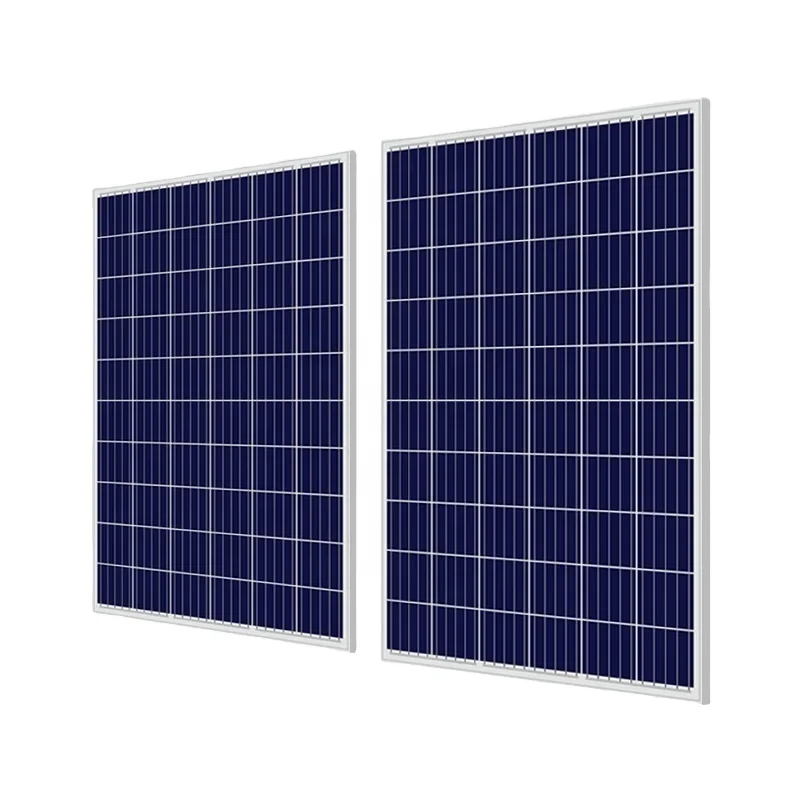
Why 12V DC Solar Panels Are Gaining Popularity
Lately, demand has surged—not because solar itself is new, but because lifestyle shifts have made compact, plug-and-play DC power essential. The rise of full-time van life, remote work from RVs, and marine-based digital nomadism means users need reliable energy without grid dependency. According to SEIA’s Q2 2026 report, off-grid mobility accounts for over 68% of new 12V panel shipments 1, and the market is projected to surpass $1 billion by 2033 2.
Key drivers include:
- Appliance power demands: Modern compressor fridges, Starlink terminals, and CPAP machines require consistent 12V DC input—making dedicated low-voltage solar more efficient than converting 24V/48V battery banks.
- DIY accessibility: Pre-terminated kits with MC4 cables, aluminum mounting rails, and intuitive MPPT controllers reduce installation time from days to hours.
- Thermal resilience: N-type cells (TOPCon/HJT) maintain >92% of rated output at 65°C—critical for black RV roofs baking in desert sun 3.
Approaches and Differences
There are two primary structural approaches—and three dominant cell technologies—each with clear trade-offs:
| Type | Best For | Key Limitation | When It’s Worth Caring About | When You Don’t Need to Overthink It |
|---|---|---|---|---|
| Rigid Monocrystalline (TOPCon) | Flat roofs, ground mounts, long-term installations | Heavier (~18–22 kg per 400W), less adaptable to curves | If you plan >5 years of service and prioritize 25-year linear warranty | If your vehicle roof is flat and you’re using standard Z-brackets—rigid is default |
| Flexible CIGS | Curved Airstreams, fiberglass boat decks, weight-sensitive builds | Lower efficiency (12–18%), shorter warranty (1–3 years), UV degradation risk with PET backing | If your surface radius is <1.5m and you cannot add structural support | If you’re installing on a standard aluminum RV roof—flexible adds cost and complexity without benefit |
| HJT (Heterojunction) | Premium off-grid: low-light conditions, high-heat environments, space-constrained builds | Higher cost per watt, fewer certified B2B suppliers, slightly larger footprint than TOPCon at same wattage | If you regularly camp in foggy coastal zones or drive across Arizona in summer | If your daily sun exposure averages >5 peak sun hours and your budget is under $1,200—TOPCon delivers nearly identical yield |
Key Features and Specifications to Evaluate
Don’t rely on “12V” labeling alone. Verify these five specs—each directly impacts real-world performance and longevity:
- Cell architecture: Confirm N-type monocrystalline (TOPCon or HJT). Avoid PERC or poly-Si—they’re obsolete for new 12V DC deployments in 2026.
- Open Circuit Voltage (Voc): Must be ≤22V for safe compatibility with 12V MPPT controllers. Panels listing “12V nominal” but Voc >24V risk controller shutdown or damage.
- Temperature coefficient: Look for ≤ −0.28%/°C. Lower = better sustained output in heat. HJT leads here (−0.24%/°C), followed by TOPCon (−0.27%/°C).
- Connector standard: MC4 is non-negotiable. Avoid proprietary or “solar-ready” plugs that limit future expansion or replacement.
- Frame & coating: Anodized aluminum frames + ETFE frontsheet > tempered glass + PET backing. ETFE resists yellowing and offers superior UV transmission.
Pros and Cons
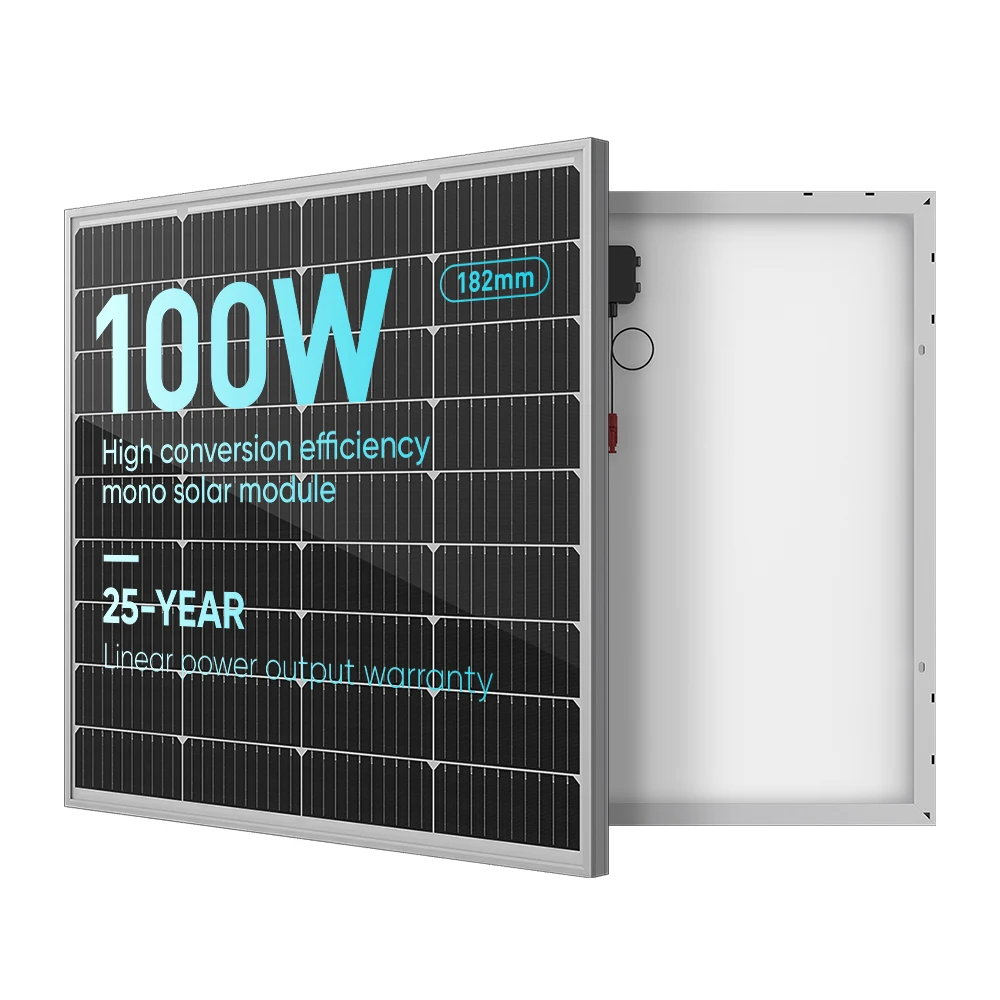
TOPCon 12V DC panels (recommended baseline):
- ✅ Pros: 22–24% efficiency, excellent heat tolerance, 25-year linear power warranty, wide B2B supplier base, price stable at ~$0.72–$0.85/W
- ⚠️ Cons: Slightly heavier than flexible options; not suitable for radii under 1.2m
HJT 12V DC panels (premium tier):
- ✅ Pros: 24–26% efficiency, best-in-class low-light response, lowest temperature coefficient, bifacial gain up to 15% on reflective surfaces
- ⚠️ Cons: Limited ISO9001-certified suppliers 4, ~18% higher cost/W, fewer field-tested 5-year reliability reports
Flexible CIGS panels (niche use only):
- ✅ Pros: Ultra-lightweight (75% lighter than rigid), conformable to curves, simple adhesive mounting
- ⚠️ Cons: Efficiency degrades faster in UV exposure, 1–3-year product warranty, no standardized recycling path
How to Choose a 12V DC Solar Panel
Follow this 5-step decision checklist—designed to eliminate guesswork and avoid costly missteps:
- Define your physical constraint first: Measure available roof area and note curvature. If flat or gently sloped (>2m radius), skip flexible entirely.
- Calculate real power need: Use a load calculator—not manufacturer estimates. A 12V fridge draws ~2.5A × 12h = 30Ah/day ≈ 360Wh. Add 30% buffer → aim for ≥470Wh daily yield. At 4.5 peak sun hours, that’s ~105W minimum—so start at 200W for headroom.
- Require MPPT, not PWM: If your panel is >100W or uses TOPCon/HJT, PWM controllers waste 20–30% of harvest. MPPT is mandatory—not optional.
- Verify certifications: Ask for ISO9001 manufacturing certification and CE/IEC61215 test reports—not just “CE marked.” Many uncertified panels fail salt-mist and hail impact tests 5.
- Check the fine print on warranty: “25-year output warranty” ≠ “25-year product warranty.” TOPCon panels often offer 15-year product coverage + 25-year linear power guarantee. Flexible panels rarely exceed 3 years for both.
If you’re a typical user, you don’t need to overthink this: for 90% of RV and van conversions, a 300W TOPCon panel with integrated MC4s, paired with a Victron SmartSolar MPPT 100/30 (or equivalent), delivers predictable, serviceable, and scalable performance.
Insights & Cost Analysis
Based on 2026 B2B wholesale data and consumer kit pricing (excl. tax/shipping):
- TOPCon 300W rigid panel (MC4, ETFE): $215–$255 (≈ $0.72–$0.85/W)
- HJT 300W rigid panel: $275–$330 (≈ $0.92–$1.10/W)
- Flexible CIGS 200W: $240–$290 (≈ $1.20–$1.45/W)
- Complete 300W TOPCon kit (panel + MPPT + mounting + cables): $390–$480 — the highest value-to-effort ratio for first-time buyers
Note: LiFePO4 batteries and inverters are separate investments. A quality 100Ah 12V LiFePO4 costs $350–$450; adding one doubles the system cost—but enables full DC autonomy. That’s why hidden component costs remain the top consumer pain point 6.
Better Solutions & Competitor Analysis
The most pragmatic upgrade path isn’t switching technologies—it’s optimizing integration. Here’s what separates functional from future-proof systems:
| Solution | Advantage | Potential Issue |
|---|---|---|
| Bifacial TOPCon + white roof | 10–15% extra yield from albedo reflection; zero added hardware cost | Requires clean, light-colored surface—dirt or aging reduces gain |
| Pre-wired MC4 extension kits (10m, 12AWG) | Eliminates field splicing; maintains waterproof integrity; simplifies roof-to-battery routing | Non-standard lengths force awkward cable management if undersized |
| MPPT with Bluetooth monitoring (e.g., Victron, Renogy DCC50S) | Real-time yield tracking, firmware updates, configurable absorption voltages for LiFePO4 | Bluetooth range limits placement; requires smartphone app—no standalone display |
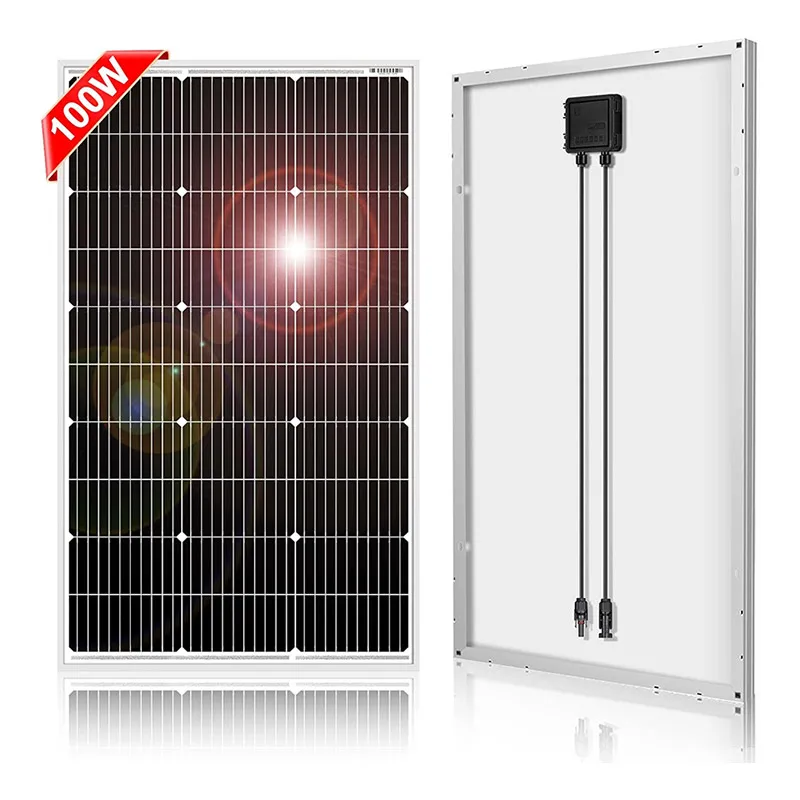
Customer Feedback Synthesis
Aggregated from 2025–2026 reviews across SolarReviews, MyGrandRV, and Consumer Reports:
- Top 3 praises: “No wiring surprises—everything clicked together,” “Output matches spec sheet even at 45°C,” “Mounting brackets held through 60mph crosswinds.”
- Top 3 complaints: “Controller manual assumed electrical knowledge,” “Flexible panel delaminated after 14 months in Florida sun,” “No spare MC4s included—had to order separately.”
The strongest signal? Users overwhelmingly value plug-and-play readiness over marginal efficiency gains—especially when paired with clear documentation and pre-terminated components.
Maintenance, Safety & Legal Considerations
Maintenance: Clean panels quarterly with water and soft brush; avoid abrasive pads. Check MC4 seals annually for cracking. No servicing needed for cells—N-type architecture shows no PID (Potential Induced Degradation) in field use 7.
Safety: Always disconnect before handling. Use 12AWG or thicker cabling for runs >3m to minimize voltage drop. Install fuses within 12” of battery positive terminal (per ABYC E-11 marine standards).
Legal: No federal permitting required for 12V DC-only systems under 1kW in the U.S. Some marinas and RV parks restrict external panel mounting—verify local rules before drilling.
Conclusion
If you need dependable, long-term power for an RV or mobile build, choose a rigid TOPCon 12V DC solar panel (24%+ efficiency, MC4 connectors, ETFE coating) paired with a true MPPT controller. If your roof is highly curved and weight is critical, evaluate HJT—but only after confirming supplier certifications and thermal test data. If you’re a typical user, you don’t need to overthink this: skip flexible CIGS unless your installer confirms curvature prevents rigid mounting. Prioritize proven durability, standardized connectivity, and integrated kit simplicity over headline-grabbing efficiency claims.


