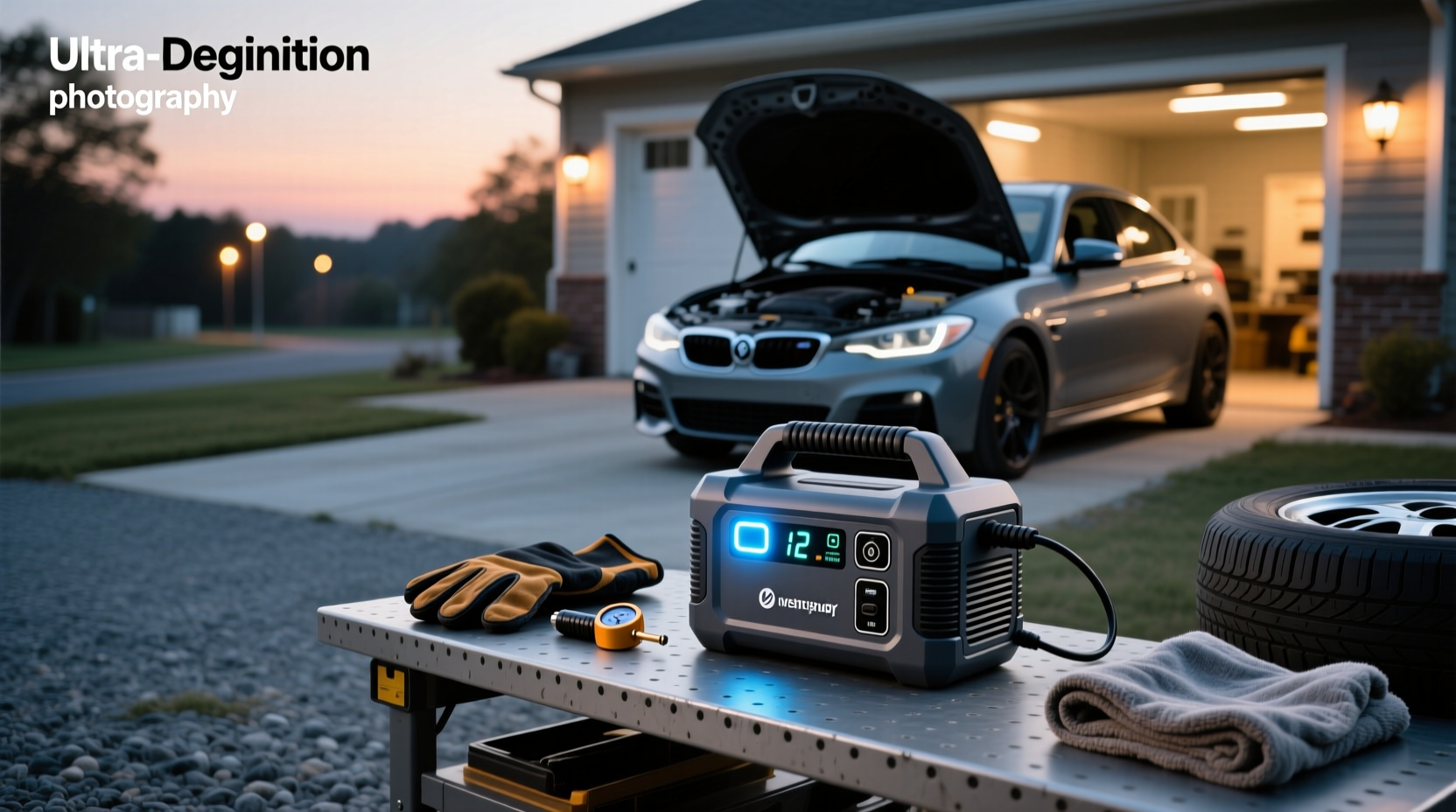
If you’re a typical user, you don’t need to overthink this: choose a lithium-ion 12V jump pack with ≥2000 peak amps, smart clamps, and at least 65W USB-C PD output — it covers 95% of gasoline engines up to 8.0L and doubles as a reliable power bank for laptops and phones. Skip lead-acid unless you run a fleet shop or operate daily in sub-zero conditions. Over the past year, the market has shifted decisively toward multi-functional hubs — not just jump starters — driven by rising demand for integrated air compressors, cold-weather reliability, and EU Battery Regulation (2023/1542) compliance1. That means your 2026 decision isn’t about “can it start my car?” — it’s about how well it serves as a portable power hub across seasons, terrains, and devices.
About 12V Jump Packs: Definition & Typical Use Cases
A 12V jump pack is a self-contained, portable battery-powered device designed to deliver high-current bursts to crank stalled 12-volt automotive batteries — most commonly in passenger cars, SUVs, light trucks, and motorcycles. Unlike traditional jumper cables requiring a second vehicle, modern jump packs are standalone tools that store energy internally, usually in lithium-ion (Li-ion) or, less commonly today, sealed lead-acid (SLA) cells.
Typical use cases include:
- 🚗 Emergency restart after accidental key-off drain (e.g., interior lights left on)
- ❄️ Cold-weather cranking where battery chemistry slows and voltage sags
- 🔧 Off-grid maintenance for RVs, boats, or ATVs without access to shore power
- ✈️ Roadside utility — especially units with built-in tire inflators or USB-C PD ports
Crucially, it’s not a replacement for a failing alternator or deeply sulfated battery — it’s a bridge to get you running long enough to reach service. If you’re a typical user, you don’t need to overthink this: your primary risk isn’t underpowered hardware — it’s misinterpreting “peak amps” as sustained cranking capability.
Why 12V Jump Packs Are Gaining Popularity
Lately, adoption has accelerated beyond emergency use. The global 12V jump starter market is growing at 14.3% CAGR through 2033, with lithium-ion models now dominating >85% of consumer sales2. Three forces drive this:
- Functional convergence: Buyers increasingly expect one device to handle jump-starting, phone/laptop charging, tire inflation, and even LED lighting. Units like the Utrai 2000A with compressor reflect this shift3.
- Cold-climate innovation: Supercapacitor-assisted Li-ion hybrids now maintain performance down to −20°C (−4°F), addressing a top complaint from northern users4.
- Regulatory tightening: The EU Battery Regulation mandates minimum recycled content (12% by 2027) and stricter thermal runaway testing — pushing manufacturers toward higher-grade cells and smarter BMS designs5.
This piece isn’t for keyword collectors. It’s for people who will actually use the product.
Approaches and Differences: Lithium-Ion vs. Lead-Acid vs. Supercapacitor Hybrids
Three core architectures define today’s market — each with clear trade-offs:
| Technology | Key Advantages | Potential Drawbacks | Budget Range (USD) |
|---|---|---|---|
| Lithium-Ion (LiFePO₄ or NMC) | Lightweight (1.2–2.2 lbs), high energy density, fast recharge, low self-discharge (~2–3%/month) | Performance drops below −10°C; requires careful storage (25–85% SOC recommended) | $80–$280 |
| Sealed Lead-Acid (SLA) | Cost-stable, tolerant of deep discharge cycles, performs more consistently in extreme cold (−25°C) | Heavy (4–8 lbs), slow recharge (6–12 hrs), self-discharge ~5–10%/month | $50–$150 |
| Supercapacitor + Li-ion Hybrid | No cold-weather derating, near-instant cranking response, zero fire risk, 500,000+ cycle life | Lower total energy capacity (shorter runtime for accessories), limited USB-C PD support, fewer models available | $220–$420 |
When it’s worth caring about: You live in Minnesota, Alberta, or Scandinavia — or routinely park outdoors in winter. Then SLA or hybrid matters. When you don’t need to overthink it: If you’re in California, Texas, or the UK and store the unit indoors, standard Li-ion is simpler, lighter, and more versatile.
Key Features and Specifications to Evaluate
Don’t default to “peak amps.” Focus instead on four measurable, outcome-driven criteria:
1. Cranking Amps (CA) vs. Peak Amps (PA)
Peak Amps is a 3–5 second surge — useful for specs marketing, but misleading. Cranking Amps (CA) reflects sustained current delivery (typically measured at 30 seconds, 0°C). For gas engines: 1000–1500 CA covers up to 6.0L. For diesel: aim for ≥2000 CA for 10L+ engines6. If you’re a typical user, you don’t need to overthink this: if your vehicle is a 2015–2025 sedan, SUV, or half-ton pickup, 2000 PA with documented CA ≥1200 is sufficient.
2. Battery Capacity (Wh) & Energy Density
Watt-hours (Wh) — not mAh — indicate usable energy. A 55Wh pack can typically jump-start 15–20 times before recharging; an 88.8Wh unit (e.g., WOLFBOX MegaVolt24) supports ~35 jumps plus USB-C laptop charging7. Higher Wh = longer accessory runtime, not stronger cranking.
3. Safety Architecture
Look for hardware-level protections — not just software warnings:
- 🔒 Spark-proof connection (prevents arc on clamp contact)
- ⛔ Reverse polarity detection (cuts power if red/black reversed)
- 🔥 Thermal cutoff (shuts down above 75°C)
- ✅ Certifications: CE, FCC, RoHS, and UL 2743 (for US-based safety validation)
4. Added Utility
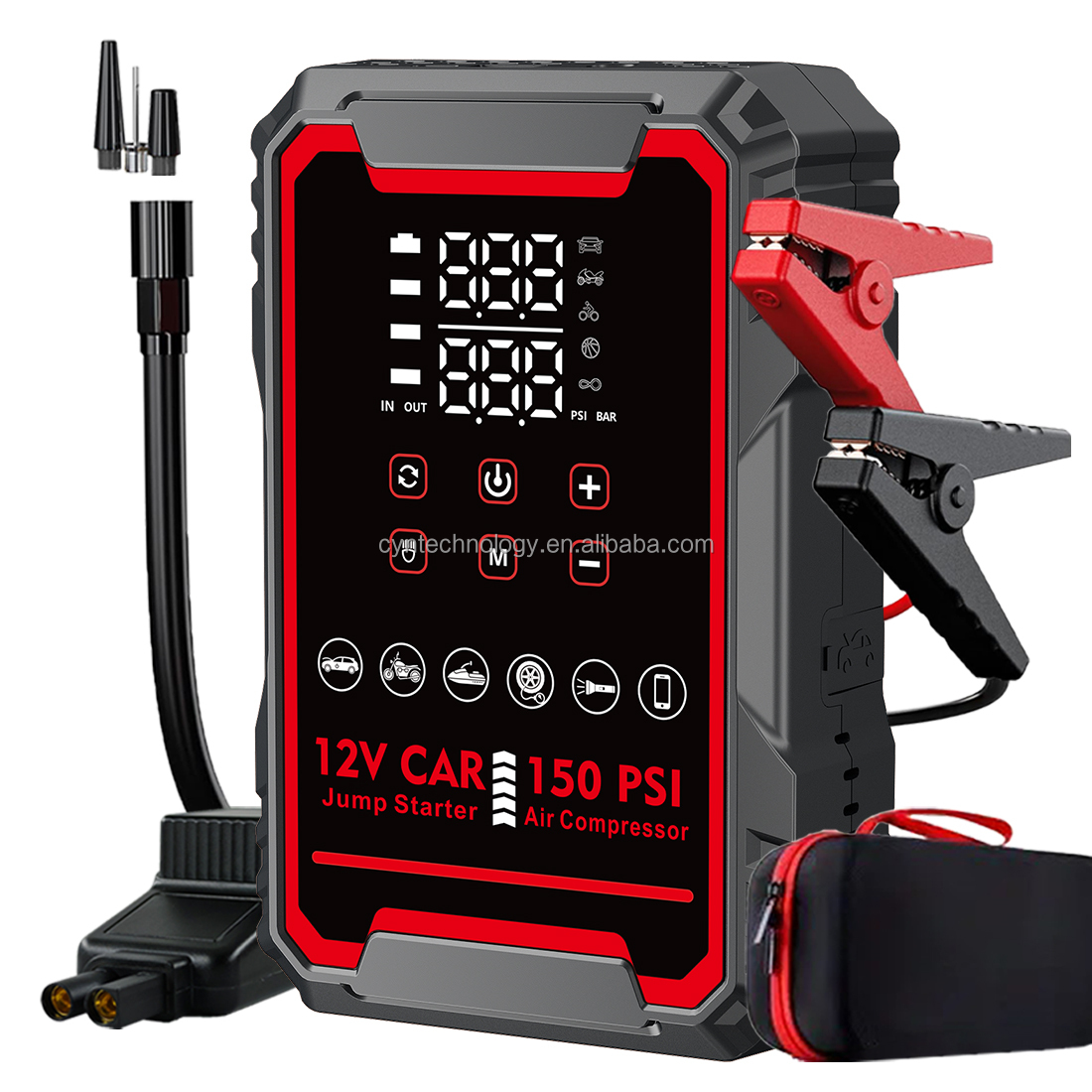
USB-C Power Delivery (PD) is now table stakes. Prioritize units offering ≥65W output — enough to charge a MacBook Air (67W) or Dell XPS (65W) at near-native speed. Integrated air compressors (≥150 PSI, ≥30 L/min flow) add tangible roadside value — but add weight and complexity. When it’s worth caring about: frequent road-trippers or RV owners. When you don’t need to overthink it: urban commuters with garage parking.
Pros and Cons: Who Is This For — and Who Should Skip It?
Best suited for:
- Drivers of gasoline vehicles ≤8.0L displacement
- RV, motorcycle, or boat owners needing portable 12V backup
- Remote workers relying on USB-C PD for laptops during travel
- Fleet managers seeking ISO 9001-certified units for standardized toolkits8
Less suitable for:
- Owners of large diesel trucks (e.g., Cummins 6.7L, Power Stroke 6.7L) without verified 2000+ CA ratings
- Users expecting continuous high-wattage AC output (jump packs are DC-only; inverters require separate hardware)
- Those storing units in unheated garages below −15°C long-term without periodic top-ups
How to Choose a 12V Jump Pack: A Step-by-Step Decision Guide
Follow this sequence — skip steps only if your use case is narrow:
- Confirm engine type & size: Gasoline ≤6.0L → 1500 PA is ample. Diesel ≥6.0L → verify CA rating, not PA.
- Check cold-weather needs: If ambient storage falls below −10°C, prioritize SLA or supercapacitor hybrid.
- Evaluate portability: For glovebox storage, cap weight at 2.0 lbs and length at 7.5 inches.
- Verify safety certifications: Reject any unit lacking CE/FCC/RoHS — these are baseline quality signals, not marketing fluff.
- Assess utility alignment: Need laptop charging? Require ≥65W USB-C PD. Need tire inflation? Confirm compressor duty cycle (≥20 min continuous) and max PSI (≥150).
Avoid these common traps:
- Buying based on “4000A” claims without CA or temperature-rated specs
- Ignoring self-discharge rate — a 10%/month SLA unit may be dead after 3 months in storage
- Assuming USB-C PD works at full wattage while simultaneously jumping — most units throttle PD output during cranking
Insights & Cost Analysis
Price correlates strongly with battery chemistry and feature integration — not raw amp claims:
- $50–$90: Entry-tier Li-ion (≤1200 PA, no USB-C PD, basic safety)
- $90–$180: Mainstream tier (1800–2500 PA, 45–65W USB-C PD, smart clamps, 55–75Wh)
- $180–$320: Premium tier (≥2000 CA, 80+Wh, 65–100W USB-C PD, IP65 rating, compressor option)
Value isn’t linear. A $149 NOCO Boost X GBX155 delivers rugged IP65 build and 4250 PA — justified for contractors — but overkill for a commuter. Conversely, a $79 GOOLOO GP2000 offers strong cost-to-performance ratio for city drivers9. If you’re a typical user, you don’t need to overthink this: spend $110–$160 for balanced capability.
Better Solutions & Competitor Analysis
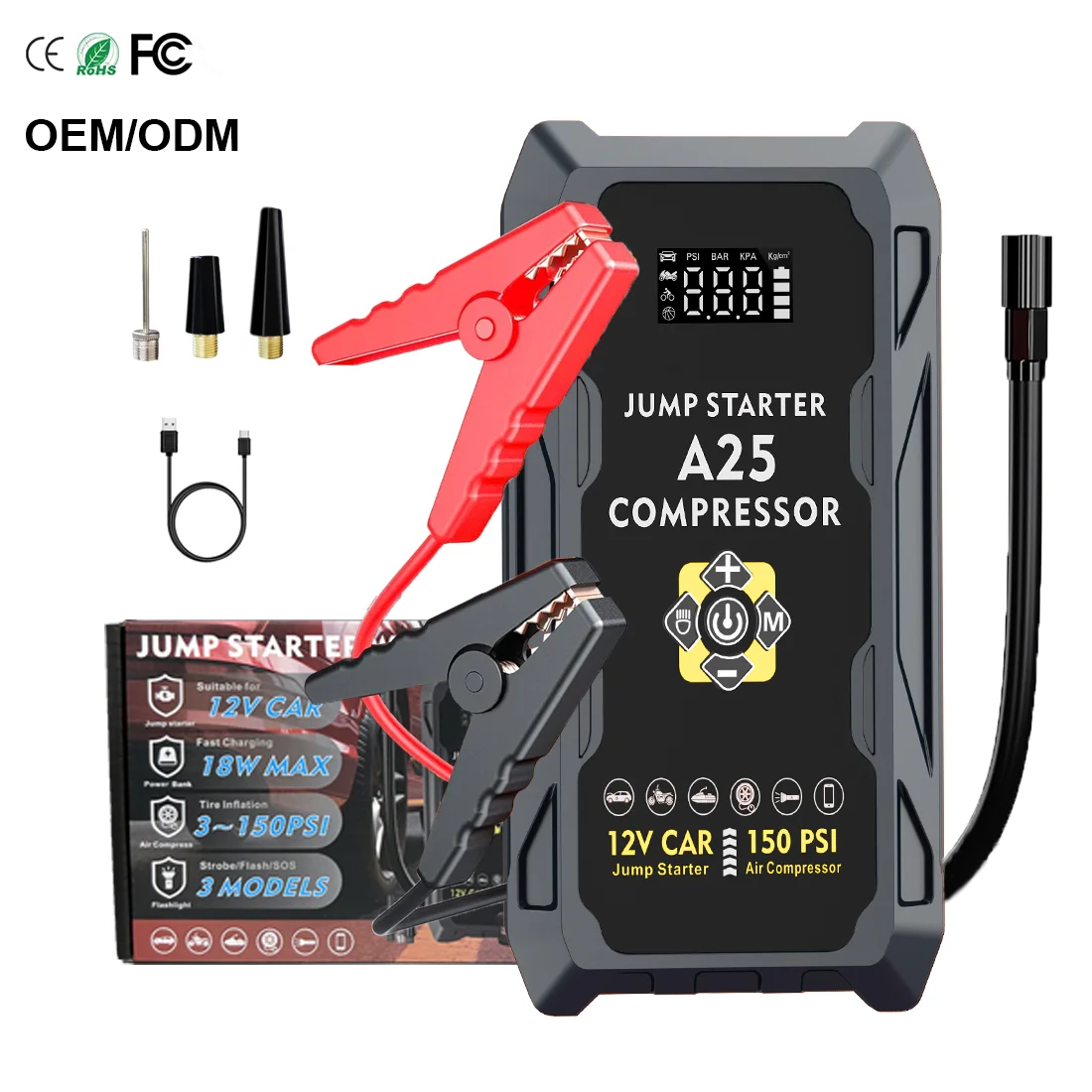
The top-performing categories in 2026 reflect distinct priorities. Below is a functional comparison of representative models:
| Category | Recommended Model | Best For | Potential Limitation |
|---|---|---|---|
| Best Overall Balance | WOLFBOX MegaVolt24 | Gas/diesel up to 10L; includes 65W USB-C PD and 88.8Wh capacity | No integrated air compressor |
| High-Power Ruggedness | NOCO Boost X GBX155 | Field technicians; IP65-rated, 4250 PA, wide-temp operation | Heavier (2.4 lbs); USB-C capped at 30W |
| Budget-Focused | GOOLOO GP2000 | Urban drivers; lightweight (1.4 lbs), intuitive interface | No compressor; max USB-C PD = 18W |
| All-in-One Utility | Utrai 2000A with Compressor | Road-trippers; 2000A peak + 160 PSI inflator + dual USB-C | Weight: 3.1 lbs; compressor duty cycle limits continuous use |
Customer Feedback Synthesis
Based on aggregated reviews across Car and Driver, Road & Track, and Amazon (Q1 2026), top recurring themes:
- Top 3 praises: “Jumped my 5.7L V8 in -12°C with no hesitation,” “USB-C charged my iPad Pro fully twice before first recharge,” “Clamps clicked into place with audible confirmation — no guessing.”
- Top 3 complaints: “Compressor overheated after inflating two tires,” “Battery indicator showed 80% but died mid-jump,” “No low-temp spec sheet — assumed it worked at -25°C, but didn’t.”
The pattern is consistent: satisfaction hinges on transparency of specs, not headline numbers. Units with published CA ratings, temperature derating curves, and USB-C PD load-sharing behavior earn significantly higher trust scores.
Maintenance, Safety & Legal Considerations
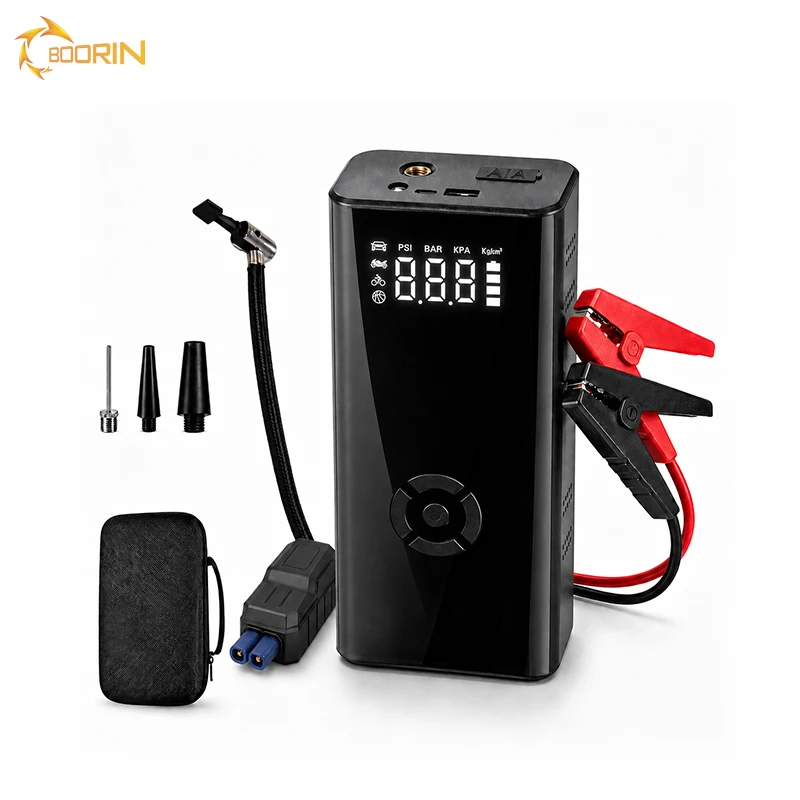
Maintenance: Store Li-ion units at 40–60% charge if unused >30 days. Recharge every 3 months. Avoid full discharges — they accelerate capacity loss. SLA units benefit from monthly equalization charges.
Safety: Never connect clamps while the jump pack is charging. Always attach red to positive (+) terminal first, black to unpainted metal (not negative terminal) second. Disconnect in reverse order.
Legal & Compliance: In the EU, units must comply with 2023/1542 Battery Regulation (recycled content, labeling, take-back schemes). In the US, UL 2743 certification confirms electrical and thermal safety — not required by law, but a strong de facto benchmark10.
Conclusion: Conditional Recommendations
If you need reliable cold-weather cranking for a diesel truck, choose a verified 2000+ CA unit with SLA or hybrid architecture — e.g., NOCO Boost X GBX155. If you need a lightweight, multi-role power hub for daily commuting and weekend trips, prioritize Li-ion with ≥65W USB-C PD and smart clamps — e.g., WOLFBOX MegaVolt24. If you need maximum utility per dollar for occasional use, the GOOLOO GP2000 remains a rational entry point. This piece isn’t for keyword collectors. It’s for people who will actually use the product.


